Sunday, May 31, 2026
Home Blog Page 15

When to Change Your Timing Belt or Chain


Timing belts and chains may not be the first thing that comes to mind when you think of car maintenance. However, they are important components in your vehicle’s engine. They synchronize the rotation of the crankshaft and camshaft(s). This ensures that engine valves open and close at the correct times during each cylinder’s intake and exhaust strokes. Basically, if your timing belt or chain fails, your engine can suffer severe damage.

Before knowing when to change them, it’s good to understand the difference between a timing belt and a timing chain:

Timing Belt
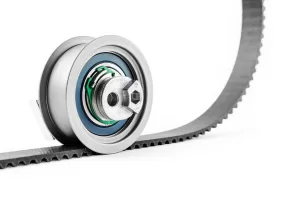
Kit of timing belt with rollers

Timing Belt:

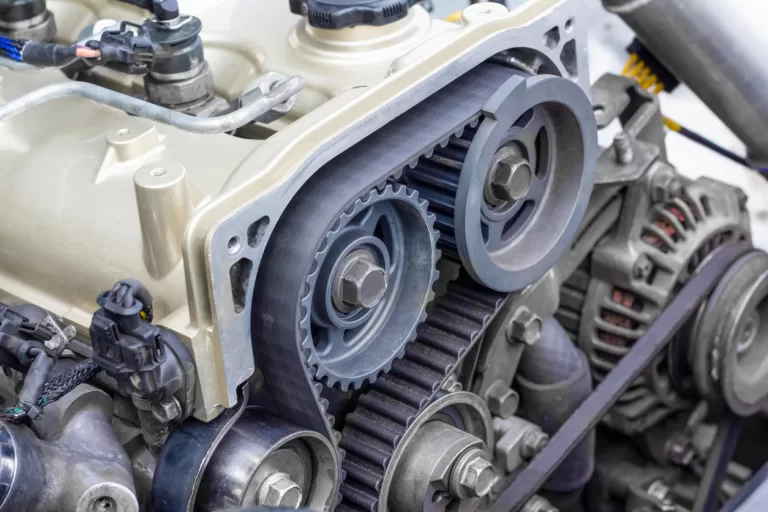
Usually made of rubber, timing belts are quieter and lighter than chains. They have nylon teeth that help them grip and sync with other engine parts accurately. These belts are commonly found in many modern vehicles. They are normally found inside the engine covered by a timing belt cover controlling the opening and closing of engine valves.

Timing Chain:

A metal chain that serves the same purpose as a timing belt, but is generally more robust and designed to last longer than belts. Nonetheless, they can still stretch or wear out over time and may need adjustments or replacement. They are often used in high-performance vehicles. Additionally, they are usually located inside the engine as well, driven by the crankshaft.

When to Change Your Timing Belt or Chain.

Whether your vehicle has a belt or chain, certain warning signs suggest it’s time to consider a replacement. Here is a comprehensive guide to help you decipher how to care for this vital component of your car:

1. Follow Manufacturer Recommendations

The safest bet for determining when to change your timing belt or chain is to refer to your vehicle’s owner manual. Most manufacturers provide a recommended interval, typically measured in miles or years. This will give you a clear guideline on when to replace your timing belt or chain.

Timing Belts: Generally, timing belts should be replaced every 60,000 to 100,000 miles or every 5 to 7 years, depending on driving conditions and the manufacturer’s recommendations.

Timing Chains: In contrast, timing chains are designed to last the lifetime of the engine and usually do not require replacement unless there are signs of wear. However, some chains may need replacement every 80,000 to 120,000 miles due to a lack of maintenance or faulty tensioners.

2. Listen for Noise

If you hear a rattling sound coming from your engine, or if the engine sounds different than usual, it could be a sign that your timing chain or belt is failing. Timing belts might give you the first signals through unusual noises. Meanwhile, timing chains can show issues like a ticking sound if there is a problem.

3. Misfiring Engine

Your vehicle’s engine misfiring or has decreased power can be an indicator of timing issues. This might suggest that the timing belt or chain isn’t aligning components as it should.

4. Check for Oil Leaks

A timing belt is often housed within an engine cover, and oil leaks may occur from wear and tear of the seals. If you notice oil pooling in the vehicle’s vicinity, inspect the timing belt area, as this could indicate another issue. It’s important to get your vehicle inspected promptly. Oil can cause a timing belt to deteriorate faster.

5. Inspect for Wear and Tear

If you can access your timing belt (generally more accessible on vehicles with belts than those with chains), inspect it for cracks, fraying, or wear. Any visible damage means it’s time for a replacement. Timing chains may require more in-depth inspection. This includes checking the tensioner and guides for proper function.

6. Consider Driving Conditions

If you often drive in extreme conditions, such as heavy traffic, high temperatures, or severe cold, your timing belt or chain may wear out faster. In such cases, you might need to replace it more frequently than the standard recommendations.

7. Look for Engine Warning Lights

Modern vehicles are equipped with engine management systems that can alert you if there’s an issue, including with the timing belt or chain. If your “Check Engine” light comes on, it’s essential to have your vehicle inspected. This may signify a timing issue among others.

Also Read: Signs that Indicate a Failing Alternator

The Importance of Replacing 

Failing to replace a timing belt or chain when recommended can result in severe engine damage, which is often both expensive and time-consuming to repair. The timing belt or chain coordinates the movement of the engine’s camshaft and crankshaft, ensuring that the pistons and valves move in perfect synchronization. If the belt or chain breaks while the engine is running, this precise timing is lost. Pistons can collide with valves, leading to bent valves, damaged pistons, or even catastrophic engine failure. Such damage may require a full engine rebuild or replacement, which can cost thousands of dollars and leave the vehicle out of service for an extended period.

Conversely, replacing them at the recommended interval is a proactive step that protects your engine and prolongs its life. Routine maintenance ensures that your engine continues to operate smoothly, efficiently, and safely. It also reduces the risk of sudden breakdowns, which can be dangerous if they occur while driving. If you are unsure about the condition of your timing belt or chain, it is crucial to consult a qualified mechanic. A professional can inspect the component, assess wear and tension, and advise on the appropriate replacement schedule. Investing in timely maintenance not only saves money in the long run but also provides peace of mind, knowing that your engine remains in optimal condition.

By Uche Maxwel

What to Do If You Suspect a Leak in Your Vehicle’s Fluid System


Noticing a puddle of fluid beneath your vehicle can definitely induce a sense of panic, especially when you’re unsure of what it is or where it is coming from. Cars are complex machines, and like any machine, they can develop problems over time.

If you notice fluid leaking while driving, find a safe place to pull over as soon as possible to avoid further damage to your vehicle or risking your safety. Leaks can lead to a plethora of problems, from minor inconveniences to serious mechanical failures that can cause a fatal accident.

Also Read: Why Moisture Presence in Brake Fluid is a Concern

Therefore, a suspected leak in your vehicle’s fluid system is a serious concern, however, acting quickly and effectively can save you time, money, and headaches over these concerns. Here’s what you should do:

1. Identify the Type of Fluid

Once safely parked, if you were driving or the car is initially at your parking spot, conduct a visual inspection of your vehicle. The first step in addressing a suspected leak is to identify the type of fluid leaking from your vehicle. Different fluids have distinct characteristics and recognizing them can help determine the urgency of the situation. Common fluids include:

  • Engine Oil:

Generally brown or black. It has a slippery texture and a distinctive smell. Oil leaks are often found near the engine block or oil pan. If you see this flow under your vehicle, it could indicate a problem with the engine or oil filter or perhaps a loose or damaged gasket.

  • Coolant:

Usually bright green, orange, or pink. Coolant has a sweet smell and feels sticky. It may leak from the radiator, hoses, or water pump. A coolant leak can lead to overheating and, in severe cases, engine failure.

  • Brake Fluid:

This fluid can be clear or light yellow or brown and has a slightly oily texture. Leaks may happen near the brake lines or master cylinder. A drop in brake fluid can severely impact your vehicle’s stopping power, making it critical to address immediately.

  • Transmission Fluid:

Red or pink and oily. It also has a sweet smell. Transmission fluid leaks can affect shifting and lead to severe transmission damage if not corrected. Leaks typically occur near the transmission.

  • Power Steering Fluid:

This typically has a reddish tint and can leak if seals are damaged, affecting handling and steering ease. It’s often found in the reservoir near the engine.

2. Check for Signs of a Leak

If you’re uncertain, whether you have a fluid leak, place a paper towel or a piece of cardboard under the vehicle to catch the drips and analyze their color and consistency. You may as well look for these signs:

  • Puddles or Spots:

Check your parking spot for any puddles or spots, especially near the oil pan, transmission pan, and differential. Different fluids have different colors and consistencies, so knowing what to look for can help narrow down the issue.

  • Warning Lights:

If your vehicle’s dashboard lights indicate low oil pressure, low coolant, or any other warning related to fluid levels, this could signal a leak.

  • Strange Sounds:

Unusual sounds, such as grinding or whining, might indicate low fluid levels in systems like the transmission or steering.

  • Overheating Engine:

If your engine temperature is unusually high, it could signify a coolant leak, which can be detrimental to your engine’s health.

  • Changes in Performance:

If you notice changes in how your vehicle drives, such as difficulty steering, your brakes are less responsive, strange smells or overheating, it’s imperative to investigate further.

Also Read: How Often Do I Need to Change My Brake Fluid

3. Look for Signs of Damage

Inspect the areas where you suspect a leak. A visual inspection of the underbody of your vehicle and the engine bay can yield valuable clues. With proper safety precautions (such as using gloves if necessary), and if you’re comfortable doing so, lift the hood and take a closer look at various components. Here are a few places to check for damage or wear:

  • Get Under the Vehicle: Use ramps or a jack to get a good look at the underbody. Look for wet spots, stains or any signs of fluid accumulation.
  • Check Hoses and Seals: Look for cracks or bulges in hoses, loose connections, and damaged seals. These are common culprits for fluid leaks.
  • Gaskets: Inspect where different engine components meet. A failing gasket can lead to leaks.
4. Consult Your Owner’s Manual

Your vehicle’s manual can guide you to troubleshoot specific issues. It often contains checklists for fluid levels, reservoirs location, the type of fluids your vehicle uses and even recommended maintenance schedules. This will help you when checking fluid levels and determining if the leak is critical.

5. Perform a Fluid Level Check

Ignoring a fluid leak can lead to severe damage, not only to the fluid system itself but to other related components. For example, low brake fluid can compromise your vehicle’s braking ability, while coolant leaks can lead to engine overheating. Once you’ve identified the leaking fluid, check the levels in your vehicle’s reservoir. Open the hood and locate the following:

Engine Oil: Use the dipstick to check the oil level. Remove, wipe it clean, and then reinsert it to check the oil level. If it’s low, top it off but keep an eye on it. Continuous drops may require a mechanic’s attention.

Coolant: Check the coolant reservoir while the engine is cool. Look at the “full” and “low” markers to determine how much fluid is present. If the level is low, add more coolant, but don’t exceed the maximum level.

Brake and Power Steering Fluid: Check their respective reservoirs, again only topping off if they are lower than recommended levels.
If any of the fluid levels are below the minimum mark, it indicates a leak that needs immediate attention!

6. Avoid Driving

While it might be tempting to drive your vehicle regardless, it is best to avoid it until the issue is addressed. Driving with leaking or low fluid levels can cause you bigger problems on the road, such as engine overheating, transmission failure or brake malfunction. If you’re unsure, it is better to be on the side of caution.

7. Take Action

Some leaks might be minor and manageable; others could indicate serious issues that require professional attention. Depending on the severity of the leak and your skill level, you may be able to do some repairs yourself, such as tightening hoses or replacing clamps. However, if the leak is significant or you’re unable to determine the source, it is best to consult a professional mechanic. Although, you may have a couple of options:

  • DIY Repairs: For minor leaks, you might be able to fix them yourself. For instance, tightening clamps on hoses can often resolve small coolant leaks, while an oil filter replacement might fix an oil leak. Consult your vehicle’s manual for guidance.
  • Visit a Mechanic: If you’re unsure, or if the leak is significant, get to a trusted mechanic as soon as possible. They have the experience, tools and resources to identify and rectify the problem effectively. Driving with a leak can exacerbate the problem and lead to more severe damage.
8. Schedule a Professional Inspection

Regardless of your findings, it’s often best to have a trained mechanic inspect your vehicle. They can perform a thorough diagnostic to pinpoint and fix the leak. Ignoring a leak, even if it seems minor, can lead to major damage within a short period of time.

9. Preventative Measures

Once the leak is addressed, consider taking proactive steps to prevent future leaks and keep your vehicle in good condition:

  • Regular Maintenance: Schedule routine check-ups to monitor fluid levels and inspect for wear and tear on hoses and seals.
  • Use Quality Fluids: Always use the fluids specified in your vehicle’s manual to ensure compatibility and performance.
  • Keep an Eye on Changes: Note any changes in how your vehicle performs relative to fluid levels, and don’t hesitate to inspect if you notice something unusual.

As a vehicle owner, it’s essential to stay vigilant about the condition of your car. Fluid leaks are not to be taken lightly. If you suspect a leak in your vehicle’s fluid system, take immediate action by identifying the fluid type, checking levels, inspecting the source, and consulting a professional. A little diligence goes a long way in keeping your car in good shape and on the road.

Read More: 

Tire Rotation Frequency – How Often Should You Rotate Your Tires?


One of the fundamental maintenance practices every car owner needs to be aware of is tire rotation. Tire rotation involves switching the front tires with the back tires and sometimes changing their side as well. This is necessary because tires do not wear evenly; and factors such as weight distribution, alignment, and driving habits contribute to the wear patterns, hence rotating your tires, can aid in extending tire life and boost your vehicle’s handling and safety. But how often should you actually rotate your tires?

Recommended Tire Rotation Schedule

Most automotive experts recommend rotating your tires every 6,000 miles (about 9,660km) to 8,000 miles (about 12900km). However, it’s necessary to consult your vehicle’s owner manual for the manufacturer’s specific recommendations. Some vehicles may have different requirements based on their design and tire type. The front tires and the rear tires experience different wear patterns. Front tires wear out faster on front-wheel-drive vehicles due to steering and braking responsibilities, while rear tires take the brunt in rear-wheel-drive vehicles.

Why Rotate Your Tires?

Before we even address the frequency of your tire rotation, atleast know WHY. There are several factors that can influence your vehicle’s tire rotation, including:

Driving Conditions:
If you frequently drive in harsh conditions (e.g., off-road, on gravel roads, or in heavy stop-and-go traffic), you may need to rotate your tires more often. Equally, aggressive driving, such as quick acceleration and hard braking, can also cause uneven wear.

Tire Type:
Different types of tires (all-season, performance, or winter) may have varying wear characteristics due to weight distribution. Consult the manufacturer’s recommendations and consider your driving habits.

Performance Vehicles:
Sports or high-performance vehicles might require more frequent rotations due to the demands placed on the tires.

Vehicle Type:
Front-wheel drive, rear-wheel drive, and all-wheel drive vehicles all have different wear patterns, which can influence rotation frequency.

Tire Alignment and Balance: Misalignment or imbalance can exacerbate uneven tire wear.

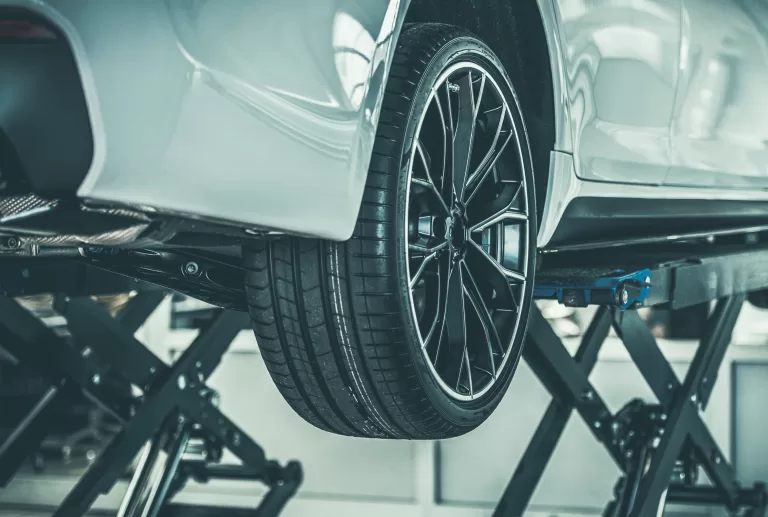
Close-up of a worn low-profile tire
Signs Its Time to Rotate Your Tires

Recommendable, adhering to a schedule is excellent, however, staying alert to your tire’s condition is equally more important. Besides tracking mileage, watch for these indicators that suggest it’s time to rotate your tires:

Vibration or Noise:
If you feel vibrations in the steering wheel or hear unusual noises while driving, it may indicate that your tires are not making even contact with the road.

Visual Inspection:
Pay attention to signs of uneven wear. If you notice irregular wear patterns, it may be time for a rotation. Indicators include balding on one side of the tire or differences in tread depth. Also, if you notice that one tire is considerably more worn than the others, it may be time for a rotation.

Poor Handling and Control:
If your vehicle feels less stable or takes longer to respond to steering inputs, this may be due to uneven tire wear.

Tire Rotation Patterns

There are several common tire rotation patterns, and the best one for your vehicle will depend on the drive type and tire configuration. Here are a few standard patterns:

Forward Cross: For front-wheel-drive vehicles, the front tires are moved to the back on the same side, while the rear tires cross to the front.

Rearward Cross: In this pattern, rear tires go to the front on the same side, while the front tires cross to the back. This is often used for rear-wheel-drive vehicles.

X-Pattern: Suitable for all-wheel-drive vehicles, this involves swapping tires from corners diagonally (front-left to rear-right, and front-right to rear-left).

Side-to-Side: If you have non-directional tires, you can simply move them from one side to the other without changing their position.

The Benefits of Regular Tire Rotation

Increased Tire Life:
Regular rotations can help extend the life of your tires by ensuring that all four tires wear evenly, ultimately saving you money on replacements.

Enhanced Safety:
Evenly worn tires improve traction and handling, reducing the risk of accidents caused by tire failure or poor road grip.

Improved Fuel Efficiency:
Tires with uneven wear can cause drag, leading to decreased fuel efficiency. Rotating your tires can help with better alignment and reduced rolling resistance, which in return improves your fuel mileage.

Better Ride Comfort:
A vehicle that rides on evenly worn tires will provide a smoother and more comfortable ride. You’ll notice less vibration and noise.

How to Rotate Your Tires

If you feel comfortable doing it yourself and you’re handy with tools and have the necessary equipment (like a jack and jack stands), you can rotate your tires yourself. However, for those less experienced or who want the peace of mind that comes with professional service, it is best to visit a tire shop or dealer. Here’s a basic outline on how to rotate your tires:

Tire Rotation
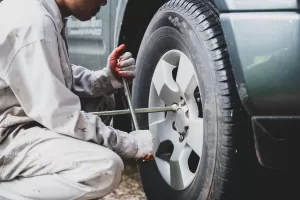
Car repairman holding a wrench which is an essential tool for a Tire Rotation

Gather Tools: You’ll need a jack, jack stands, lug wrench, and a torque wrench.

Loosen Lug Nuts: Before lifting your car, slightly loosen the lug nuts on all wheels (don’t remove them yet).

Lift the Vehicle: Use the jack to lift the vehicle and then secure it with jack stands.

Rotate Your Tires: Follow the recommended rotation pattern (usually front to back and vice versa). If you have a directional tire, make sure to keep them rotated in the correct direction.

Reinstall Lug Nuts: Tighten the lug nuts in a crisscross pattern to ensure even pressure.

Check Pressure: Once rotated, inspect the tire pressure and adjust as needed.

Have a smooth, safe ride

Rotating your tires is a quite simple and vital part of vehicle maintenance; Therefore, don’t skip, rather make tire rotation a part of your regular vehicle maintenance routine. DIY tire rotation is an option, however, having a professional inspect and rotate your tires is highly recommended. Professionals can ensure that your tires are not only rotated but also properly balanced and aligned, further enhancing safety and performance.

By Irene Joseph

Liberia welcomes the 2024 Toyota Land Cruiser Prado


CICA Motors, the sole authorized Toyota distributor in Liberia, has officially launched the highly anticipated All-New 2024 Toyota Land Cruiser Prado into the Liberian market.

The Land Cruiser Prado, also referred to as the “New Original” showcases a striking redesign while preserving its iconic off-road capabilities and robust engineering. Available in two in two distinct editions—standard and limited—this latest release elevates performance, comfort and safety, meeting the demands of both luxury seekers and adventure enthusiast, Navin Chander, Managing Director of CICA Motors Liberia, said at an impressive unveiling ceremony held at the company’s showroom in Sayon Town, Bushrod.

“CICA Motors is excited to announce the launch of our latest product, the All-New 2024 Toyota Land Cruiser Prado, on the Liberian market,” he said. The vehicle is available in both standard and limited editions.”

Chander noted that CICA Motors, also a CFAO group company, will continue to deliver excellence in the automotive industry, providing Liberians with world-class vehicles. The land cruiser’s legacy is built on reliability, epitomized by the motto: “Go Anywhere, Everywhere, Come Back Safe and Sound,”—and the latest products are no different.

“We are thrilled to bring the New Toyota Land Cruiser Prado to Liberia. This vehicle represents the perfect balance between luxury and capability, providing our customers with a versatile driving experience whether they are navigating the city streets of Monrovia or adventuring up country on the rugged terrains,” said disclosed.

“This represents more than just a vehicle; it’s a testament to Toyota’s enduring legacy and our vision for the future. As we honor our roots, we’re also pushing boundaries, much like the Prado itself—equally at home on city streets and rugged terrains.”

“We are committed to continuous improvement for our standard of excellence, both in the vehicles we offer and the service we provide. We are excited about the opportunities ahead to further enhance your driving experience and strengthen our bond with the community.”

Providing insight into the new vehicle, Armah Youlo, CICA Motors Deputy Sale Manager, said, “Today, we unveil not just one, but two extraordinary editions of the Land Cruiser Prado—the Limited Edition, also known as the First Edition, and the Standard Edition, also known as the Adventure Edition.”

The production of the luxurious Limited Brand is a flashback in time, or a ‘Back to the Roots,’ initiative, perfectly bringing into reflection the very first edition of the Toyota Land Cruiser brand produced in the 1960s.

“The Limited Edition, with a total of 5000 units produced worldwide, and only four arriving in Liberia so far, takes us back to our roots, commemorating the inception of the Toyota Land Cruiser Prado. It symbolizes exclusivity, history and an unwavering commitment to delivering excellence. Each unit is a testament to Toyota’s dedication to crafting vehicles that stand the test of time while pushing the boundaries of innovation,” Youlo said during a PowerPoint presentation.

The vehicles represent the pinnacle of luxury, performance and versatility. With the new 8-Speed Automatic Transmission, T24A-FTS turbo charged powerful gasoline (petrol) engine, the Land Cruiser Prado delivers an exhilarating driving experience, combining power and efficiency in perfect harmony.

“Its robust design, advanced technology, and off-road capabilities ensure that every journey is an adventure to remember,” Youlo said. The vehicle costs between US$55K to US$85K

Among the notable features of the vehicle, which is already available in all Toyota by CFAO outlets in Nigeria, is the Electric Power System (EPS)—the first in the Land Cruiser family—that facilitates improved maneuverability. Additionally, the new Stabilizer Disconnect Mechanism anti-roll bar system significantly enhances the vehicle’s off-road capabilities while guaranteeing outstanding comfort.

Key features of the 2024 Land Cruiser Prado

The 2024 Land Cruiser Prado comes with enhance performance, as the vehicles are equipped with advanced off-road technologies, offering superior handling in challenging road conditions. The new Prado is available in 2.8L Diesel and 2.4L Petrol engine with 8 speed automatic transmission.

Both editions also boast an updated exterior, featuring sharper lines, bolder grille, and LED headlights for enhanced visibility. Advanced Technology is also at the core of the new product. Inside, the Prado delivers an enhanced infotainment system, equipped with navigation, smartphone integration and a premium audio experience.

Safety First: Toyota’s renowned safety features, including multi-terrain select, cruise control, and electronic brakeforce distribution, come standard in both editions.

Standard Edition: The Standard Edition Prado is ideal for drivers who prioritize functionality, and off-road excellence. With a spacious, luxurious interior, and powerful engine performance, it continues to be top choice for Toyota enthusiasts.

Limited: For those looking for added luxury, and exclusivity, the limited edition offers refined features such as premium leather seating, enhanced interior finish, and exclusive design elements. It is a perfect blend of performance and sophistication.

The New 2024 Toyota Land Cruiser Prado is available at CICA Motors Liberia showroom located in Sayon Town, Bushrod Island.

Tough Roads Need Tougher Struts – Key Factors to Keep in Mind for Your SUV Strut Replacement


Over the past few years, Sport Utility Vehicles (SUVs) have surged in popularity, becoming the preferred consumer choice in the African car market. With many African regions characterized by rough roads, unpredictable weather and a mix of urban and rural settings. SUVs distinctive blend of ruggedness, spacious interiors and versatile capabilities has earned them a preferential choice for families, adventurers and urban dwellers alike. This is primarily due to their higher ground clearance and often all-wheel drive, that can tackle various terrains, from city streets to off-road trails, catering to drivers seeking both functionality and adventure.

Innovation in Design and Technology

The gravitating rise of the SUVs has spurred innovations in design and technology. Nowadays, modern SUVs often enter the market equipped with advanced safety features, infotainment systems and luxurious interiors that rival those of high-end sedans. Better yet, as the SUV market in Africa continues to evolve, balancing the desires for roominess, powerful performance, flexibility and luxury comfort. It also caters to more affordable options that still deliver reliability and functionality. With options ranging from compact crossovers to full-size SUVs, that gratify both passengers and cargo, to a wide range of preferences and needs.

“The construction of modern chassis in automobiles is becoming increasingly complex and – at the same time – owners of newer vehicle models, in particular SUVs, expect the best possible driving comfort even on challenging road surfaces, typically the condition of many terrains across Africa,” expresses Mick Burke – Group Category & Brand Development Director CAR at Bilstein Group.

“As a result, rubber to metal parts are becoming more and more important as they absorb the vibrations of the road and drivetrain units, contributing significantly to increased driving comfort and sound insulation,” adds Burke.

Suspension Systems Under Pressure

However, despite their primary design to handle a variety of terrains and conditions, SUVs top most preference attribute and one of the most critical aspect, their suspension system, requires cautious maintenance, particularly the struts, to ensure optimal performance and safety. SUVs are generally heavier than standard cars, their struts endure more stress, leading to fatigue over time. Additionally, the off-road capabilities of many SUVs expose struts to rougher surfaces, depending on how often, can accelerate degradation and compromise their performance.

“Although top strut mounts are designed to last, they are subject to significant stress day in, day out. Together with the bearing and coil spring they hold the full weight of the vehicle,” comments Batıkan Açıkgöz – Automotive Engineer / Technical Support Lead (Turkey, Caucasus, Middle East, Africa) at PHINIA.

Açıkgöz further states that, “Due to their constant movement – a typical strut will endure millions of cycles during its lifetime – up to 1750 times for every mile driven on a normal road surface. This constant up and down movement, which is exacerbated by potholes, bumps and curb strikes, pushes and pulls at the mount causing wear overtime. In addition, environmental factors such as ice, water, salt spray, humidity and temperature changes can all cause damage.”

Why Timely Replacement Matters

Replacing struts improves driving dynamics, maintains comfort on bumpy roads and enhance safety by improving tire contact with the road. Failing or worn out struts can turn an SUV a hazard on the road!

Not all manufacturers produce struts equally. It is therefore, critical for you to choose struts replacement that are compatible with your SUV specific make and model. Different SUVs have varying weight distribution and handling characteristics.

SUV Suspension

Most SUVs utilize a combination of independent front suspension and either multi-link or solid axle setups at the rear. This design allows for enhanced articulation, which is essential for traversing rough terrains while maintaining stability.

The suspension’s construction often incorporates heavy-duty components to withstand the stresses of off-road driving, the strut assembly integrates several key elements, including a shock absorber and a coil spring, which work together to absorb impacts from irregular road surfaces and provide stability during cornering.

“A Strut Top Mount is a bonded rubber bush, mounted to the top of the damper and fixed to the vehicle’s chassis, making it an integral part of the suspension assembly,” explains Burke. He further states that, “Exacting rubber formulations are critical in the development of NVH items for SUVs to provide the optimal characteristics and reduce levels of Noise, Vibration and Harshness.”

Strut Selection: Key Factors to Keep in Mind for Your SUV

Quality is supreme when choosing replacement struts for your SUV. Opting for durability and performance can significantly impact your driving experience. “Choosing the right struts is crucial,” asserts Martin Hendriksen – IAMaga CEO and the VP Sales & Business Development – (Africa, Middle East, Australia) at NEXUS, introducing DRIVE+ range. “As SUVs gain popularity across Africa,” continues Hendriksen, “the need for reliable, high-performance struts is growing. For professionals — installers, wholesalers, and fleet managers. Choosing the right struts is vital for ensuring safety, performance, and longevity in SUVs.”

As an SUV owner, you must carefully assess key replacement factors and make informed decisions to preserve your vehicle’s handling, safety, and reliability. Sharing his opinion, Benjamin Edwin – Sales Manager, Southern Africa, Automotive Aftermarket at NTN Europe, says that, “Given the increasing popularity of SUVs in Kenya, especially due to their versatility and ability to handle challenging road conditions, selecting the right struts is paramount.” He further affirms that, “When choosing strut replacements for SUVs, several critical factors should be considered to ensure optimal performance, safety, and longevity of the vehicle.”

  1. Vehicle Specifications:

Different SUVs have varying suspension systems that may require particular struts to maintain proper handling, ride quality, and alignment. “Ensure the struts are compatible with the make, model, and year of the SUV. Manufacturer recommendations and specifications should be followed to maintain vehicle integrity,” recommends Edwin. “Popular SUV models in Kenya include the Toyota Land Cruiser, Toyota Prado, Nissan X-Trail, Mitsubishi Pajero and Subaru Forester,” he adds.

As he notes, Farid Sihocine, Director – Sales & Marketing at KYB Middle East FZE enhances that, “Make sure the struts are compatible with your SUV’s make, model, and year. SUV struts are designed differently from those of passenger cars due to the vehicle’s size and weight. Some SUVs have different trim levels or packages that might affect the type of struts needed.”

2. Driving Habits and Conditions:

Assess your driving needs and preferences. Are you looking for a smoother ride or better handling? Do you frequently drive on rough terrain or smooth highways? Taking the time to evaluate personal driving habits and local conditions when selecting struts can ensure that your SUV remains reliable and roadworthy.

“Off-Road or On-Road? Comfort vs. Performance: Do you prefer a smoother, more comfortable ride or enhanced handling and performance?” ask Sihocine. “If your SUV is frequently used off-road or in rough conditions, you may need heavy-duty or off-road struts designed to handle rough terrain. Struts designed for comfort will offer a softer ride, while performance struts might provide better handling and stability,” he insists.

“Consider the typical driving environment. For instance, Kenyan roads can vary from smooth urban roads to rough rural terrains. Struts designed for off-road conditions with higher durability and better shock absorption may be necessary for such environments,” expresses Edwin.

“African terrains are diverse, from smooth city roads to rough off-road trails,” adds Hendriksen. “To ensure SUVs remain stable and comfortable, it is ideal to choose struts that are engineered for the African roads to handle variability,” he advocates.

3. Load Capacity:

Overloading struts beyond their designed capacity wears them out prematurely or causes failure, especially in SUVs used for towing, carrying heavy loads, or driving off-road.

“If you frequently carry-on heavy loads, choose struts designed to handle increased weight. Heavy-duty struts or with reinforced components can provide better support and durability,” recommends Sihocine.

As Hendriksen distinguishes, “SUVs are versatile, often used for carrying heavy loads. Resilient struts maintain stability and ride quality, even under substantial weight. This reliability is crucial for fleet operators and commercial users who demand consistent performance.”

Emphasizing on load capacity, Edwin complements that, “SUVs often carry heavier loads, including passengers and cargo. It’s crucial to choose struts that can handle the additional weight without compromising performance. High-load-capacity struts can prevent premature wear and enhance vehicle stability.”

4. Type of Struts:

It’s essential to understand the various types available and their implications for performance and ride quality. Conventional hydraulic struts deliver reliable performance and absorb shocks effectively. These struts provide a smooth ride, making them a popular choice for everyday driving. However, if you’re seeking enhanced responsiveness and stability, especially for off-road conditions or spirited driving, you might consider upgrading to gas-charged struts. These utilize a combination of gas and hydraulic fluid, which can improve handling by reducing the amount of “bounce” experienced during travel.

“OEM struts or aftermarket options?” questions Sihocine. “OEM struts are designed to match the original specifications, while aftermarket struts can offer a range of performance enhancements, it is essential to choose your strut technology also; is it Gas-Charged or Hydraulic?” incites Sihocine. “while the Gas-charged struts tend to offer better performance and control, the hydraulic struts provide a smoother ride, also some struts come with adjustable settings for ride height or firmness. If you want the ability to adjust these settings, choose adjustable options,” he elaborates.

Always refer to your SUV’s specifications and consult with a professional mechanic to ensure that the struts you choose are suitable for your vehicle, as using the wrong type can lead to safety issues and performance deficits.

5. Quality and Brand Reputation:

Prioritizing trusted brands known for their durability and performance is essential. Recognized names in the automotive industry often invest in rigorous testing and quality control processes, which can lead to superior products that instill greater consumer confidence.

In Sihocine’s view, “Choose struts from reputable brands known for quality and reliability. High-quality struts can improve the safety and performance of your SUV.”

Similarly, as Edwin remarks, “Opt for high-quality struts from original equipment brands. Proper replacement is crucial, as worn components can increase braking distance by 15%. It is important to note that, struts must be replaced whenever shock absorbers are replaced.”

6. Cost and Budget:

Cost and budget are paramount factors that can significantly influence your decision-making process. The expense associated with replacement can vary widely, depending on the make and model of your SUV, the type of struts you choose—whether original equipment manufacturer (OEM) or aftermarket options—and the labor costs associated with installation.

“Balance the cost of the struts with their benefits. While higher-quality struts might cost more, they often provide better performance and longevity. Consider the long-term value, including potential savings on maintenance and improved vehicle performance,” reasons Sihocine.

7. Warranty and Support:

A warranty protects against defects in materials and workmanship, giving owners peace of mind that their investment will not fail prematurely. It’s also vital to consider the support provided by the manufacturer or the retailer. Quality customer service can make a significant difference when dealing with potential issues after installation.

“A good warranty can provide peace of mind, ensuring that any defects or premature failures will be addressed. Consider struts with a 24-month quality guarantee,” notes Edwin.

Hendriksen adds, “Given the tough conditions in Africa, durability is essential. Struts that are built from high-quality materials that resist wear and corrosion, ensuring a longer lifespan. For professionals, this means reduced fitting time and fewer warranty claims.”

8. Installation and Maintenance:

This includes verifying the weight ratings and features such as adjustable or non-adjustable struts, as mismatches can lead to handling issues and quick deterioration of the components.

According to Hendriksen, “Modern SUVs have advanced suspension systems requiring compatible struts that are designed for seamless integration, ensuring quick, hassle-free installation and reducing the risk of returns due to compatibility issues.”

“Ensure that the struts are installed by accredited professionals. Proper installation is essential to maintain safety and handling. Some struts come as complete assemblies, simplifying the replacement process,” counsels Edwin.

9. Condition of other Suspension Components:

The suspension system connects intricately with multiple components; therefore, you should conduct a thorough inspection of the entire system before purchasing any replacement parts. Look for signs of wear, such as cracks in the bushings, leaks from shocks or struts, or any irregularities in alignment.

In Sihocine word’s, “Check the condition of the other suspension components, like control arms, ball joints, and bushings. If these components are worn out, you need to replace them simultaneously to ensure optimal performance and safety.”

“Like most other parts, there are a few tell-tale signs of a faulty strut mount,” asserts Açıkgöz. “If your customer complains of any of the following, the top strut mount could be at fault: Abnormal noises coming from the steering and suspension system. For example, clunking when driving over bumps or squeaking when maneuvering at low speed

  • Premature and/or uneven tire wear
  • Accelerated wear of shock absorbers
  • Excessive vibration
  • Poor wheel/tire alignment
  • Poor steering return

As well as these common symptoms, a good visual inspection will help to identify possible wear or damage,” He advices,“Look for any signs of corrosion, cracks or tears in the rubber, separation from the metal and excessive movement in the strut assembly. Also check the steering pivot to ensure smooth and free rotation,” indorses Açıkgöz.

Furthermore, consider the age and mileage of your vehicle; older SUVs often require more extensive system evaluations to ensure that all components work harmoniously together.

Also Read: Automotive Suspensions – Understanding the basics of Automotive Suspension

Choose Smart

Choosing struts replacement involves making informed choices that will ultimately enhance your driving experience, prolong the life of your vehicle, and contribute to its resale value.

In Edwin’s summary, “Choosing the right struts for SUVs involves a comprehensive evaluation of the vehicle’s needs, driving conditions, and quality considerations. As SUVs continue to gain popularity in Kenya and other African markets, selecting appropriate strut replacements from a reliable brand, combined with professional installation, will ensure these vehicles maintain their performance, safety, and comfort over time.”

Also assess whether you want to opt for a complete strut assembly or just the strut itself. Complete assemblies typically come pre-mounted with components like the coil spring and upper mount, making installation easier and more efficient.

SUVs and Africa’s Infrastructure Evolution

Moreover, the SUV trend in Africa is not merely a reflection of consumer choice, but also linked to infrastructural developments. As road quality improves and transportation networks expand across various regions, consumers increasingly perceive SUVs as better equipped to handle Africa’s harsh driving conditions.

“Choosing the right struts is vital for ensuring safety, performance, and longevity in SUVs. With a focus on challenging environments like Africa and Latin America, struts that are engineered to excel under the most demanding conditions are ideal. For professionals serving Africa’s growing SUV market, they require reliable and durable solution designed to meet the continent’s specific challenges,” Martin emphasizes.

Rising SUV Popularity Across Africa

As economic growth continues and infrastructure improves, the popularity of SUVs in Africa is likely to soar even higher, reflecting a changing landscape of consumer preferences and driving experiences. The diversity and range available a cross the continent continue to expand, ensuring that there is an ideal SUV model for every need and lifestyle.

According to Burke, proactively analysing newer models is a key principle for us as a company. “However, the data shows that the average age of the vehicle parc across the World has steadily increased over the last 10-15 years. As a result, we must offer a range that is reflective of what vehicles are on the road; those that are ever-present in workshops in need of service, repair and maintenance,” he recognizes.

“Keeping in mind these factors, you will make the right decision when choosing replacement struts for your SUV, with optimal performance, safety, and comfort,” clinches Sihocine.

By Dorcas Kang'ereha

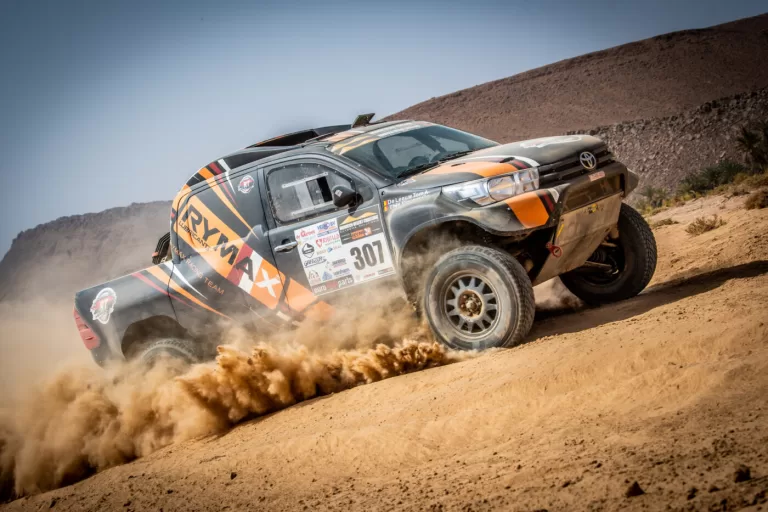
Rymax Lubricants – Extreme Conditions


In the unforgiving terrain of the Dakar Rally, Morocco Desert Challenge, Africa Eco Race, or the Dinaric Rally, where every kilometer tests the endurance of man and machine, the reliability of lubricants becomes paramount. The extreme conditions of such environments shape cutting-edge lubrication solutions, demonstrating the importance of reliable performance for applications across all segments.

Challenges
Extreme conditions in African environments present a spectrum of challenges. From the blistering heat of desert climates to the punishing demands of heavy-duty vehicles and machines must endure high temperatures, heavy loads, abrasive dust, and prolonged operational stress.

Amidst these challenges, Rymax Lubricants has emerged as a notable player in the field of lubrication technology. With a rich history rooted in pushing the boundaries of innovation, Rymax has developed solutions tailored specifically for demanding conditions across diverse sectors worldwide. Their extensive experience in events like the Morocco Desert Challenge and drift festivals such as Gatebil Europe underscores their expertise in formulating lubricants that excel under the harshest conditions imaginable.

African Conditions
Weather conditions vary widely across African markets, presenting unique challenges to vehicles and their components. In the Sahara, for instance, temperatures can soar to over 50°C (122°F), placing immense thermal stress on engines and transmissions. Across South Africa, heavy-duty vehicles face constant strain from carrying substantial loads over rugged terrain, while in urban centers like Lagos, vehicles combat corrosive effects of humidity and airborne contaminants.

Inadequate lubrication under extreme conditions can have serious consequences. Without proper protection, components wear out faster, reducing efficiency and increasing downtime. The desert heat only accelerates thermal breakdown, causing lubricants to lose effectiveness. Oxidation, worsened by heat and oxygen, further degrades lubricants by increasing acidity and forming sludge. In commercial operations, heavy loads add high-pressure demands, requiring lubricants that remain stable and effective under these extreme pressures.

Rymax Lubricants has made significant steps in addressing these challenges. Their advanced synthetic blends are designed to resist thermal breakdown and oxidation, ensuring prolonged lubricant life and enhanced engine protection. For instance, their products are formulated to maintain viscosity and lubricity under extreme temperatures and pressures, providing a reliable shield against wear and tear.

Choosing the Right Lubricant
Selecting the appropriate lubricant for African conditions demands careful consideration of several factors. Viscosity grades play a crucial role, determining the lubricant’s ability to maintain adequate fluidity under varying temperatures and pressures.

High-quality lubricants offer a flexible range of viscosity options tailored to different climates and operational demands, ensuring optimal performance across diverse environments. Additionally, additive packages formulated to fight oxidation, enhance wear protection, and improve thermal stability are essential considerations by Rymax to compose the most optimal lubrication solution. A handy tool offered by the Dutch lubricants manufacturer is the Rymax Oil Advisor. With a few simple clicks, operators can select their application and find the most suitable lubricant for their vehicle or machine. The Oil Advisor Tool can be accessed for free on the Rymax website, or simply check the link: https://rymax-lubricants.lubricantadvisor.com/en.

The advantages of utilizing premium lubricants, such as those offered by Rymax, extend beyond operational efficiency. These advanced formulations significantly prolong equipment life by minimizing wear and corrosion, thereby reducing costly downtime and maintenance intervals. Improved lubricity and reduced friction contribute to enhanced fuel efficiency, translating into valuable savings for fleet operators and individual vehicle owners alike.

Case studies highlight the benefits of these lubricants in extending service intervals and reducing maintenance costs across diverse applications, from heavy-duty mining fleets and electricity back-up systems like generators, to commercial transport vehicles and passenger cars operating in sub-Saharan climates. By investing in high-quality lubricants, businesses and consumers in African markets can achieve sustainable cost savings while maximizing the reliability and longevity of expensive equipment and vehicles.

Proven Success in Africa
Customer testimonials from various African countries highlight the effectiveness of Rymax in overcoming the challenges posed by extreme environments. In Transport and logistics operations throughout Africa, their formulations have demonstrated exceptional durability under heavy loads and high temperatures, surpassing conventional lubricants in both performance and longevity. Testimonials from industry professionals further attest to the benefits of these lubricants, highlighting tangible improvements in equipment reliability and operational efficiency.

With a steadfast commitment to innovation and reliability, Rymax Lubricants has become a trusted partner in enhancing vehicle performance and operational efficiency across Africa. Their dedication to developing high-performance lubricants ensures that vehicles operating in the most extreme conditions can maintain their integrity and performance.

Key Role of Automotive Fillers and Primers in the Painting Process


Automotive painting is a meticulous process that significantly influences both the aesthetics and longevity of a vehicle’s exterior. Central to this process are automotive fillers and primers. In repair and refinishing, fillers and primers are requisite in providing a smooth and durable finish. They serve as the foundation for high-quality paint jobs.

Often referred to as body fillers or putty, fillers are utilized to bridge gaps, repair dents, and smooth out imperfections in the vehicle’s bodywork. They are designed to bond with metal, plastic or fiberglass surfaces, providing a level surface for the inevitable application of paint or clear coat.

Contrarywise, primers serve as an intermediary layer between the bare metal or body filler surface and the paint. They promote adhesion, provide corrosion resistance, and help prevent paint from soaking into the substrate.

“Automotive fillers and primers each play distinct but complementary roles in the painting process,” says Marc Drews Key Account – Marketing Manager at 4CR. “Fillers are used to smooth out surface imperfections, such as dents and scratches, creating a level base for painting. Primers, on the other hand, ensure proper adhesion of the topcoat to the surface, enhancing the durability and longevity of the paint job,” Drews distinguishes.

Types of Fillers and Primers

Types of Fillers
Body Filler: These fillers offer excellent elasticity, making them suitable for applications where flexibility is required, such as around edges or joints. Traditionally used for repairing dents and scratches, body fillers are easy to sand and can be molded to match the contours of the vehicle.

Spot Filler: These are typically used for smaller defects or scratches. They are quick-drying and easy to sand, making them ideal for leveling surfaces and provide a finer finish.

Epoxy Filler: Known for their superior adhesion and durability, epoxy fillers are often used for larger repairs or as a base layer under paint. They can bond well to a variety of substrates, including metal and fiberglass.

Types of Primers
Etching Primer: Ideal for bare metal surfaces, etching primers contain acid that helps to chemically bond the primer to the metal, promoting superior adhesion.

Build Primer: This type provides a thick layer, covering minor imperfections, and can be sanded to achieve a smooth surface before the final painting stage.

Sealer Primer: These primers provide a non-porous finish that is better suited to prevent moisture penetration. They create a barrier between the substrate and the topcoat preventing bleeding through of filler materials.

The role of automotive fillers and primers in the painting process

The use of these materials is key for achieving a high-quality, professional appearance in automotive repainting and refinishing projects. Proper preparation and application techniques, including sanding and surface cleaning, are necessary to maximize the effectiveness of these products.

“We recognize the importance of both these steps and offer products that combine the qualities of fillers and primers,” affirms Drews. “This allows professionals to streamline their workflow without compromising on the quality of the finish. Consistent quality in these products is essential, as it directly impacts the final appearance and durability of the paint job. Professionals trust us to provide reliable, high-performing products that deliver exceptional results, every time,” Drews emphasized.

The Role of Fillers in the Painting Process

Surface Preparation
One of the primary roles of automotive fillers is to prepare the surface for painting. Dents, scratches, and other surface imperfections can compromise the aesthetic appeal of a vehicle. Fillers provide a smooth and level surface, creating a foundation for the subsequent coatings.

Structural Integrity
Many fillers also enhance the structural integrity of the vehicle’s body. After a collision, the surface may not only have superficial damage but may also be structurally weakened. Using a filler helps restore the overall strength of the damaged area, allowing for better performance and safety.

Application and Sanding
Filling materials can be easily shaped and sanded after curing, allowing for precise control in achieving the desired surface profile. This process involves layering the filler and sanding it down progressively to achieve a flush finish with the surrounding areas. A well-prepared surface is crucial for achieving a high-quality paint job.

The Role of Primers in the Painting Process

Adhesion and Binding
Primers are necessary in ensuring that the topcoat of paint adheres effectively to the vehicle’s surface. Applying a primer makes the surface more receptive to paint, reducing the risk of peeling or flaking over time. This improved adhesion is essential for achieving a flawless finish.

Corrosion Protection
Automobiles are often exposed to harsh environmental conditions, which can lead to rust and corrosion. Primers, particularly those formulated with rust inhibitors, provide an extra layer of protection against moisture and other corrosive elements. This protective barrier is vital for extending the lifespan of the vehicle’s finish and preventing costly repairs.

Aesthetic Enhancement
Primers contribute to the aesthetic quality of the paint job. They help to eliminate color inconsistencies and imperfections, ensuring that the final paint application has a uniform appearance. High-build primers, in particular, can fill minor surface scratches and imperfections, enhancing the overall visual quality.

Cost-Effectiveness
Investing in quality primers and fillers can lead to significant cost savings in the long run, reducing the risk of premature paint failure, less rework is required, ultimately saving time and resources in the painting process.

Using Fillers and Primers in Painting Jobs

When applying fillers and primers, proper techniques and conditions are crucial for achieving optimal results. The surface must be clean, dry, and free of contaminants, and the products should be allowed to cure properly before further coatings are applied. This attention to detail can make a significant difference in the longevity and aesthetic quality of the paint job.

Surface Preparation: Properly clean and sand the area to remove contaminants before applying fillers or primers. This step is important to ensure adhesion.

Follow Product Instructions: Each filler and primer has specific mixing ratios and application guidelines. Following these instructions closely will yield the best results.

Layering: Apply fillers in thin layers to avoid cracking during the curing process. Similarly, when applying primer, multiple thin coats are preferable to one thick coat.

Sanding: Once the filler and primer have cured, sand them down to achieve a smooth surface. This ensures that the topcoat applies evenly and looks professional.

Environmental Control: Ideally, the painting process should take place in a controlled environment to minimize dust contamination and affect curing times.

Automotive fillers and primers are integral components of the painting process, contributing to the overall quality, durability, and appearance of the vehicle’s finish. Therefore, investing time and effort into choosing the right fillers and primers is just as important as selecting the perfect color for your vehicle. For businesses in a collision repair shop, the careful selection and application of fillers and primers can significantly impact the final outcome of automotive painting projects.

By Dorcas Kang'ereha

What Affects Your Engine Temperature While You Drive


Engine temperature directly impacts the performance and efficiency of your vehicle. Keeping your engine at the optimal temperature ensures efficient combustion and prevents overheating that can lead to unplanned repair costs. Precise engine temperature allows components to function properly, while extremes can cause damage and reduce the overall lifespan.

While driving, various factors can influence engine temperature. Nonetheless, being conscious of these factors can help you keep your vehicle engine healthy and cool. Engine temperature is measured using a coolant temperature sensor in the cooling system. This sensor sends data to the engine control unit (ECU) which helps regulate the temperature. The cooling system work by circulating coolant through the engine to absorb heat and then dissipate it through the radiator.

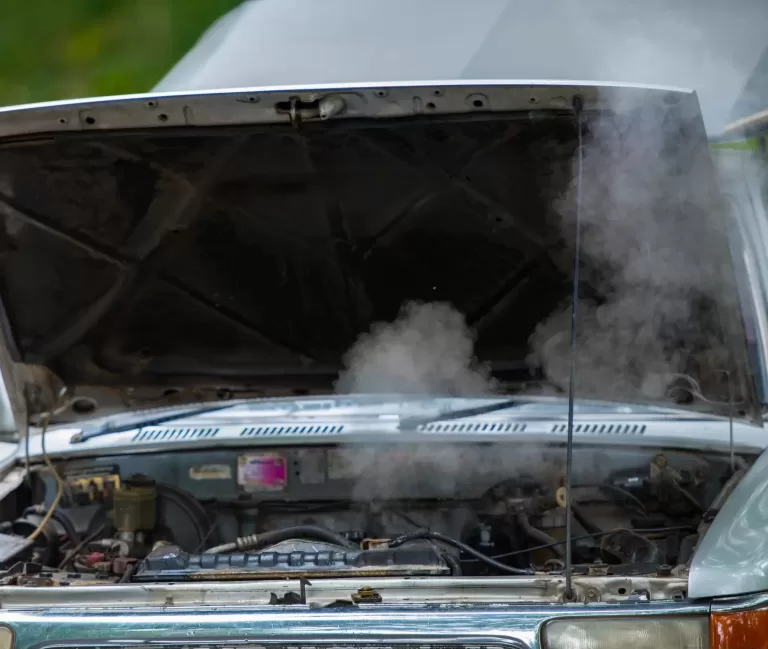
Overheated engine can result in reduced fuel efficiency, loss of power, and potential breakdowns. It is necessary to address overheating issues promptly to avoid engine components damage such as the head gasket, pistons and cylinders. To ensure smooth operations and durability of your vehicle, engine coolants cannot be downplayed.

The role of vehicle engine coolants

When your car’s engine is running, it generates tons of heat, converting fuel into motion and in the process, it generates enough heat to melt a metal! That’s where engine coolants come in to the rescue. Coolants help your engine perform at its best and last longer. The cooling system’s job is to keep the heat in check to prevent your engine from extreme heat up and simultaneously keep it operating at a safe temperature range. Over time, contaminants can build up, this can potentially compromise the cooling efficiency. Follow manufacturer guidelines for replacement intervals to keep your engine in top shape.

Make sure to check the coolant levels regularly, especially before long trips. Topping up with the right coolant prevents overheating and can curb potential damage. Maintain proper coolant levels and use high-quality coolant for effective heat dissipation and prevent corrosion within the cooling system.

Factors Affecting Engine Temperature

Vehicle engines can overheat due to various reasons. Every car owner should understand the importance of a healthy engine temperature. Too hot, and your engine risks damage. Too cold, and performance suffers. According to Abidhussien Kassam – Regional Sales Manager (Middle East, Europe, North America, Africa) at AKINAWA JAPAN, engine temperature is a critical aspect of vehicle performance, and several factors can influence it while driving. “Understanding these factors is essential for maintaining engine health and ensuring efficient operation,” he notes. But what exactly influences that temperature gauge?

1. Engine Load:

The amount of weight the vehicle carries can contribute to engine temperature. The harder your engine works, the hotter it gets. This is because combustion within the cylinders generates heat, and increased load means more frequent and intense combustion. “The load on the engine, such as when towing heavy loads or driving uphill, causes the engine to work harder, generating more heat. Prolonged high engine loads can lead to an increase in engine temperature, which may require additional cooling,” outlines Kassam.

It is clear that, carrying heavy loads, whether passengers, cargo or towing, requires more power from the engine, leading to increased heat generation. This can overwhelm the cooling system, particularly if it is not calibrated for such loads. Additionally, using the air conditioner also increases the engine load taking it to higher temperatures.

2. Cooling System:

The cooling system is your engine’s lifeblood, circulating fluid to absorb heat and transfer it to the radiator. A malfunctioning coolant system can lead to overheating. “The engine’s cooling system, including the radiator, water pump, thermostat, and coolant, plays a crucial role in regulating temperature. If any component of the cooling system is malfunctioning, such as a blocked radiator or a failing water pump, the engine temperature can rise rapidly,” emphasized Kassam.

Regular maintenance of the cooling system, like checking for leaks, ensuring the coolant is at the appropriate level and replacing of worn out components can help manage engine temperature.

3. Ambient Temperature:

Driving in hot weather puts extra stress on your engine, as the air surrounding it is already hot. This makes it rigid for the radiator to cool the coolant effectively. Conferring to Lwipa Nama – Head of Marketing at Dana Oil Corporation | CASTROL in Zambia, environmental factor such as ambient temperature has an impactful effect on engine temperature. “However, quality oils ensure optimal engine performance and temperature control,” she adds.

Amplifying on this factor, Kassam explains that, “The external temperature directly affects the engine’s cooling system. In hot weather, the engine has to work harder to maintain optimal temperature levels, while in colder conditions, the engine may take longer to reach its operating temperature.”

Engines may contrary operate under low temperatures, although prolonged exposure to freezing conditions can lead to problems like coolant freezing. As a vehicle owner, you should be aware of these conditions and monitor the engine temperature gauge and concurrently adjust your driving habits as necessary.

4. Speed and RPM:

“Higher engine speeds generate more heat due to increased combustion and friction within the engine,” asserts Kassam. “Maintaining high RPMs (revolutions per minute) for extended periods, such as during aggressive driving or when climbing steep inclines, can raise engine temperature,” he adds.

Conversely, driving on highways at higher speeds can allow more airflow through the engine compartment, helping to regulate temperature more effectively.

5. Driving Habits:

Driving style is another critical factor. Rapid acceleration and hard braking, can increase engine load and consequently elevate temperature. According to Kassam, “Stop-and-go traffic, long idling periods, and high-speed driving can all influence engine temperature. For example, idling in traffic with limited airflow can cause the engine to overheat, while highway driving typically allows better cooling.”

Stressing on the driving factor, Ms. Nama notes that, aggressive driving, can generate more heat due to increased friction within the engine components. “Driving conditions like heavy loads or stop-and-go traffic definitely have a major effect on the engine temperature,” she adds. However, smooth and steady driving contributes to cooler engine temperatures.

6. Engine Type and Design:

Different engines have varying tolerances and capacities for heat conforming to a varying cooling mechanisms. High-performance engines such as turbocharged engines, for instance, typically generate more heat because they are designed for higher output and efficiency. Compared to smaller engines, larger displacement engines, their configurations and materials also contribute to how quickly heat is generated and dissipated, necessitating for a more efficient cooling systems.

7. Engine Oil Quality and Quantity:

The quality and quantity of engine oil are fundamental to maintaining optimal engine temperature while driving. Using high-quality oil with the right viscosity and additives can greatly enhance an engine’s ability to manage heat and reduce friction.

Commenting on this factor, Kassam states that, “Engine oil not only lubricates the engine components but also helps dissipate heat. “Low oil levels or degraded oil can reduce the engine’s ability to manage heat, leading to higher operating temperatures,” he discerns.

On the same conversation, Ms. Nama remarks that, among the crucial factors influencing engine temperature while driving is the quality and viscosity of the engine oil. “High-quality oil reduces friction and dissipates heat, preventing overheating. Regular oil changes are essential to maintain these properties,” she endorses.

To be on the safe side and caring for your vehicle’s engine, use the recommended oil type and quality. Ensure regular oil changes at the correct level to maintain safe operating engine temperature.

Also Read: How Often Should I Change Engine Coolant

8. Fuel Type and Quality

The type and quality of fuel used in an engine can affect its operating temperature. Fuel with a high octane rating burns more efficiently and can result in steadier engine temperature. In contrast, low-quality fuels may contribute to incomplete combustion, which can increase engine temperature due to excess heat generated by unburned fuel and can potentially cause an engine knock. Moreover, the presence of detergents and additives in premium fuels can also aid efficiency and help regulate temperatures.

9. Airflow and Radiator Condition:

Proper airflow to the engine compartment is essential for cooling. As Kassam highlights, adequate airflow through the radiator is essential for cooling the engine. “Blockages in the grille, radiator fins, or a malfunctioning cooling fan can reduce airflow, causing the engine temperature to rise,” he adds.
As a vehicle owner, ensuring that air intake systems are clean and unobstructed is important for consistent cooling performance.

Also Read: The Role of Thermostat in Regulating Engine Temperature and Radiator Function

10. Age and Condition of the Engine

As engine ages, various components may wear out or become less efficient, such as old water pumps, leaky hoses, or degraded gaskets can contribute to cooling system inefficiencies, leading to higher functioning temperatures. Seeking her thoughts on this point, Ms. Nama categorically emphasized that, “The efficiency of the cooling system significantly depends on the engine’s age and condition.”

Nonetheless, routine maintenance and inspections can help identify issues before they escalate. Moreover, accumulated carbon deposits can obstruct proper airflow and cooling, exacerbating temperature issues.

11. Electrical Systems

An efficient electrical system contributes to cooling components like electric fans and temperature gauges. If the alternator or the battery fails, this may impact the performance of these components, leading to inadequate cooling and ultimately higher engine temperatures, especially during idling or in stop-and-go traffic. Ensuring that these components are functioning correctly, is essential for effective heat regulation.

12. Ignition Systems

The ignition timing can also play a role in engine temperature. Incorrect ignition timing can cause the engine to run hotter than normal. Making sure that, the ignition systems are well maintained is essential for ideal engine temperature.

13. Fuel Mixture:

According to Kassam, “The air-fuel mixture can also impact engine temperature. A lean mixture (more air, less fuel) can cause the engine to run hotter, while a rich mixture (more fuel, less air) can lead to cooler operation but with reduced efficiency.”

Striking a balance between rich and lean mixtures is substantial for best engine operation. Maintaining the right air-fuel ratio helps prevent overheating and promotes efficient combustion. Regular engine checks, tune-ups, and staying acquainted to how your vehicle reacts under various driving conditions can help to achieve this balance.

14. Altitude:

As you drive ascending into higher elevations, several atmospheric shifts occur that affect engine temperature, performance and overall vehicle operation. The weight of the air above us decreases with elevation. This change in air density can significantly impact engine performance. “At higher altitudes, the thinner air can affect the cooling efficiency and combustion process, potentially leading to higher engine temperatures,” comments Kassam.

Engines come equipped with cooling systems designed to regulate temperature through a combination of coolant flow and air circulation. However, at elevated levels, the dynamics of cooling systems change due to the demanding trajectory of decreased airflow causing engines to reach higher temperatures.

While many modern vehicles are designed to withstand fluctuations in performance due to varying environmental factors, consistently operating under high engine temperatures can lead to engine wear and tear, coolant breakdowns and increased fuel consumption.

Keep in Mind

Monitoring engine temperature while driving is essential for vehicle performance and longevity. Staying mindful of the factors that affect engine temperature is key to ensure a smooth operation of your vehicle. As Kassam clinches, his recommendation on maintaining optimal engine temperature, requires a combination of proper vehicle maintenance, driving habits, and awareness of environmental conditions. “Regular checks on the cooling system, oil quality, and ensuring proper airflow can help prevent overheating and ensure long-term engine health,” he encourages.

Indeed, implementing proper maintenance practices, monitoring temperature levels, and adjusting your driving habits accordingly, can prevent engine overheating. In a nutshell, a better understanding of your vehicle’s engine temperature management and maintenance, can lead you to enjoy safer and more reliable journeys on the road.

Read More: 

What to Consider When Choosing the Right Tyre Size for Your SUV


Whether you’re traversing city streets, off-road trails, or highways, selecting the right tyre size can greatly impact your driving experience. Tyres are not just crucial for traction and handling; they also play a significant role in fuel efficiency, ride comfort, and overall vehicle stability. With so many options available, the process can feel overwhelming.

“When selecting the appropriate tyre size for our client’s SUV, we consider several critical factors to ensure optimal performance, safety, and compatibility with their vehicle,” affirms Sammy Mwenda – Business Operations Lead at Atlas Auto Service Centre.

“The automobile manufacturer designs the vehicle to be operated with particular tyre size,” observes Siju Aravindan – Head of MRF Tyre business of Car & General Trading Limited. He further emphasized that, “Choosing a size other than the one specified by manufacturer can compromise the safety of the vehicle, hence we don’t recommend it.”

Before selecting a tyre size, it’s essential to understand how tyre specifications are presented. Every tyre features a set of numbers and letters indicating its size and type. For example, you might see a tire labeled as P225/65R17. Here’s what each of these components means:

P: Indicates the tyre type (P for passenger vehicle, LT for light truck).
225: The tyre width in millimeters, measured from sidewall to sidewall.
65: The aspect ratio, which represents the height of the tyre’s sidewall as a percentage of the width (in this case, 65% of 225 mm).
R: Indicates the tyre construction (R for radial construction).
17: The diameter of the wheel in inches that the tyre is designed to fit.

Also Read: How to Choose the Right Tyres for the Africa’s Driving Conditions

Factors to consider

An ill-fitting tyre can lead to poor handling, increased wear, reduced fuel efficiency, and potentially hazardous driving conditions. So how can you choose the right tyre size for your SUV? Below are several decisive factors to consider in this process.

Manufacturer Recommendations

Always start by referring to the vehicle’s owner manual or the placard on the driver’s door side. It provides recommended tyre sizes and specifications that are tailored to your vehicle. This is the best starting point for understanding what tyre sizes are suitable. Manufacturers provide recommended tyre sizes based on extensive testing to ensure optimal performance. Sticking to these recommendations ensures compatibility with your SUV’s load capacity and handling characteristics.

In his opinion, Aravindan is assertive that, “Customers can choose from various makes, offering a verity of choices for a ‘specific size’ as tyres are standardized for their dimensions.” He contends that, “Any prominent feature will compromise some of the other desirable features as they are mostly a trade-off.”

According to Mwenda, “The first step in determining the right tyre size is to refer to your vehicle’s owner’s manual or the tire information placard located on the driver’s side door jamb. This will provide you with the manufacturer-recommended tyre size, which is crucial for maintaining vehicle performance and safety.”

Consider Your Driving Conditions

Think about where and how you use your SUV. If you frequently drive in off-road conditions, you may need larger, more aggressive tread designs. If you primarily drive in urban environments, a standard all-season tyre may be sufficient.

In Mwenda’s words, “Consider where you primarily drive your SUV—on highways, off-road trails, or in urban environments? Different terrains require different tyre characteristics:
All-terrain tyres are suitable for mixed use. Mud-terrain tyres excel in off-road conditions. Touring or highway tyres are best for smooth road surfaces.”

Load Capacity

If you often carry heavy loads or tow trailers, you’ll need tyres that can handle the extra weight. Each tyre has a load index rating, which specifies how much weight it can safely carry. Make sure that the tyres you select meet or exceed the requirements for your typical usage. “Each tyre has a load index (Weight Ratings) that indicates its maximum load-carrying capacity. Ensure that the selected tyres can support the weight of your SUV when fully loaded, including passengers and cargo,” states Mwenda.

Tyre Width

Tire width is an essential consideration when choosing the right tire size for your SUV. It affects everything from handling and ride comfort as well as fuel efficiency and off-road capability. Using tyres significantly wider than those recommended can lead to issues such as rubbing against the wheel well, increased wear and tear and negatively impacts on steering response and braking performance.

In Mwenda’s perception, “Wider tyres can enhance grip and stability, particularly during cornering. However, excessively wide tyres may increase rolling resistance, potentially reducing fuel efficiency. It’s essential to find a balance that suits your driving style and conditions.”

SUV owners should carefully evaluate their driving habits and conditions when selecting tyre width, considering both performance and practicality. Whether you are commuting in the city or venturing off-road, making an informed tire choice will ensure you and your SUV are safe on a more enjoyable ride.

Rim Size

The size of your SUV’s rims will limit the tyre sizes available. Installing tyres with the wrong rim diameter can compromise safety and performance. Always choose a tire that fits your existing rim size, as altering the rim size can impact handling, braking distance, and overall ride quality. “The rim diameter must match the wheel size of your SUV. Installing tyres with an incorrect rim diameter can lead to improper fitment, affecting handling and safety.” Maintains Mwenda.

Aspect Ratio

The aspect ratio is a numerical representation of a tyre’s profile and is expressed as a percentage. This figure indicates the height of the tyre’s sidewall in relation to its width. For instance, a tyre labeled as 225/65R17 has a width of 225 millimeters, and the sidewall height is 65% of that width, which equates to approximately 146.25 millimeters. The aspect ratio should align with your driving needs, vehicle specifications, and the environments in which you drive.

“The aspect ratio indicates the height of the tyre’s sidewall relative to its width. A lower aspect ratio (e.g., 45) typically results in better handling and responsiveness but may compromise ride comfort. Conversely, a higher aspect ratio (e.g., 70) provides a more comfortable ride but can lead to less precise handling,” singles out Mwenda.

Speed Rating

The speed rating of a tire is determined through rigorous testing processes that assess the tyre’s performance under various conditions. Each rating corresponds to a specific maximum speed, combined with factors that pertain to load capacity and tyre construction.

In Mwenda’s words, “Tyres come with speed ratings that indicate their maximum speed capability under load conditions. Choose tyres with an appropriate speed rating for your driving habits and typical speeds.”

Weather Conditions

Weather patterns significantly impact tyre performance, influencing traction, handling, fuel efficiency and overall safety.

“Depending on your local climate, you may need all-season tyres for moderate weather or dedicated winter/summer tyres for extreme conditions,” says Mwenda. “Winter tyres provide superior traction in snow and ice. Summer tyres offer enhanced performance in warm weather but are not suitable for cold temperatures,” he adds.

Cost Considerations

Tyres are a significant investment and selecting the correct size can save you money in the long run. Settling for a tyre that deviates from the manufacturer’s recommended size can lead to unexpected costs, such as reduced fuel efficiency, premature wear or a compromised driving experience.

As he advice, Mwenda is specific that, “Consider your budget when selecting tyre sizes as larger or specialized tires often come at a premium price compared to standard options.”

Aesthetic Preferences

Sometimes it can be tempting to prioritize aesthetics alone, it is however, important to find a balance between appearance and functionality. Larger tyres can enhance traction and stability, particularly for off-road or all-terrain driving. Even so, they may also affect fuel efficiency and handling dynamics. Before making a decision, determine how much emphasis you wish to place on style versus performance.

“While aesthetics might not affect performance directly, many drivers prefer certain sizes or styles that complement their vehicle’s appearance,” observe Mwenda.

Unsprung Weight

Unsprung weight refers to the mass of components in a vehicle that are not supported by the suspension system. This includes parts like tyres, wheels, brake assemblies, and suspension arms. In contrast, sprung weight encompasses everything supported by the vehicle’s suspension, primarily the body, frame, and interior components.
Managing unsprung weight is vital because it influences how a vehicle interacts with the road surface. The lower the unsprung weight, the better the suspension system can perform.

“Larger or heavier wheels can increase unsprung weight, negatively impacting ride quality and handling dynamics. Lighter wheels often improve acceleration and braking performance,” says Mwenda.

Your SUV’s Suspension

Upgrading to larger tyres may require adjustments to your suspension system to maintain proper alignment and handling. If you’re considering a significant change, consult a professional mechanic or tire specialist for guidance.

Tyre Brands

While premium tire brands have their advantages, budget brands also offer respectable options for those looking to save without sacrificing too much quality. However, when opting for a less-known brand, it’s important to read reviews and ensure the tyres meet safety standards. As Aravindan notes, “There are various brands and makes offering various features suitable for specific road conditions, terrains and other requirements of the customer.”

Choosing the right tyre size for your SUV also involves a deeper understanding of your vehicle’s make and the tyre brands that are available. Right tyres will ensure your safety and that of your passengers, contributing to better fuel efficiency and overall satisfaction with your SUV. Take your time in researching and possibly consulting with a tyre professional to ensure you make the best decision tailored to your vehicle’s specifications and your lifestyle demands.

Terrain Type

The terrain you frequently navigate allows you to tailor your tyre choice to enhance performance, safety and comfort.

Decide best

Tyres are the only contact with the road, and their dimensions can significantly affect handling, ride quality, fuel efficiency, and overall driving experience. Choosing the right tyre size for your SUV involves much more than simply picking a size that looks good.

Investing the time to assess your unique driving needs and understanding the consequences of various tyre sizes, you can ensure optimal performance, enhance your safety and be satisfied. When in doubt, consulting a certified tyre professional can provide personalized advice and help you make the best decision for your vehicle, ensuring peace of mind as you navigate the roads in your SUV.

Read More:

Innoson Launches its First Locally Made Electric Vehicle


Innoson Vehicle Manufacturing Company (IVM) has launched its first locally manufactured electric vehicle. According to Cornel Osigwe, the company’s Head of Communications and Corporate Affairs, the electric vehicle is produced at their facility in Nnewi, Anambra State. He remarked, “I just test drove the first Innoson electric vehicle produced in Nnewi. This is just the beginning.”

Mr. Osigwe noted that this is the company’s first foray into electric vehicle (EV) production. However, information regarding the pricing, number of units manufactured, and the expected timeline for its commercial launch was not provided. According to the International Energy Agency (IEA), electric vehicles are vital for reducing carbon emissions in road transport, a sector that accounts for over 15% of global energy-related emissions.

In recent years, the sale of electric vehicles has surged, fueled by advancements in range, a broader selection of models, and improved performance. Passenger electric cars are gaining traction, with approximately 18% of new vehicles sold in 2023 being electric. Nevertheless, in numerous developing and emerging nations, sales have been sluggish due to the higher acquisition costs compared to traditional vehicles and inadequate charging infrastructure. Besides, the rise in petrol prices following the deregulation of the petroleum industry’s downstream sector could create investment opportunities in the EV market if charging costs prove cheaper than refueling petrol vehicles.

Nigeria’s Electric Vehicle Progress

Regarding Nigeria’s electric vehicle landscape, in 2021, the country launched its first locally assembled electric vehicle, the Hyundai Kona, manufactured by Stallion Motors. This achievement followed a pilot program initiated by the National Automotive Industry Design and Development Council (NADDC) in partnership with Stallion Group and other stakeholders, with a goal of establishing 100 solar-powered electric vehicle charging stations across Nigeria.

The introduction of the Hyundai Kona represented a significant advancement for Nigeria’s automotive sector, paving the way for new opportunities as the global community transitions away from petrol-powered vehicles in light of climate change and emission reduction efforts.

Challenges in electricity supply to support EV deployment in Nigeria remain. Despite Hyundai’s strides in electric vehicles, Nigeria struggles to generate sufficient electricity for its households and industries, producing only about 5,000 Megawatts, whereas the energy demand is approximately 40 terawatts.

The World Economic Forum (WEF) indicates that Nigeria is experiencing one of the highest levels of energy poverty worldwide. Only 25% of rural residents have access to electricity, with many relying on biomass and waste as their primary cooking energy source. Simultaneously, Nigeria contends with some of the costliest electricity in the world, averaging $0.52 per kilowatt-hour (kWh). A recent report from the International Energy Agency (IEA) highlighted that Nigerians depend on backup generators to fulfill about 40% of their electricity requirements.

- Advertisement -