

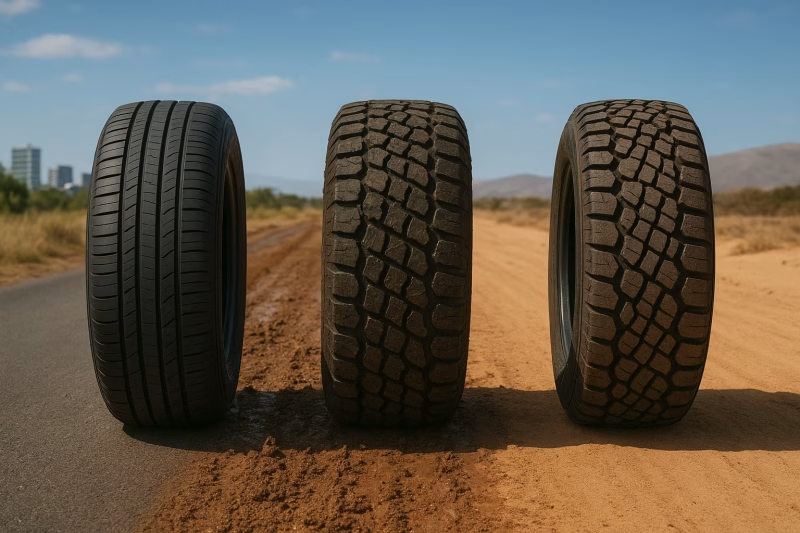
Africa’s roads tell a story of diversity. Whether you drive a compact car in Nairobi city highways, a truck across the Namibian desert, or a 4×4 in Ghana’s rural highlands, understanding how to choose the right tyres for Africa’s unique driving conditions can significantly improve performance, safety, and cost-efficiency. Choosing the correct tyres for Africa’s driving conditions ensures that vehicles operate optimally across various terrains.
Also Read: African Tyre Market: 5 Trends Driving Growth
-
Understand Africa’s Driving Environment
Africa’s driving conditions are as diverse as its landscapes. Some regions offer smooth asphalt highways; others, dusty gravel roads or muddy rural tracks. Each terrain demands tyres designed to handle its specific challenges, which is why choosing the right tyres for Africa’s driving conditions is crucial.
-
Urban Roads:
For drivers spending most of their time on paved city roads, look for highway or touring tyres. These are built for comfort, low noise, and fuel efficiency. They perform best on tarmac, where grip and smooth rolling are key. Opting for the appropriate tyres ensures these features are maximized for Africa’s driving conditions.
-
Rural and Off-Road Areas:
If your daily routes include unpaved, rocky, or muddy roads, all-terrain (A/T) or mud-terrain (M/T) tyres are your best bet. These tyres have deeper tread patterns for stronger traction, reinforced sidewalls for durability, and better resistance to punctures. Ideal for Africa’s rural and mining regions where tyres for Africa’s driving conditions are heavily tested.
-
Mixed Conditions:
For drivers who navigate both city streets and countryside roads, all-season or hybrid tyres offer a balanced solution. They’re designed to adapt to different surfaces without compromising comfort or durability, making them excellent tyres for Africa’s driving conditions.
-
Factor in Climate and Weather Patterns
Africa’s climate varies dramatically. From the tropical rains of West Africa to the arid heat of the Sahel and the temperate coasts of the south. Tyres react differently to temperature and moisture, so climate plays a big role in performance.
-
Hot, Dry Regions:
In places where temperatures soar, tyre rubber can degrade faster. Choose tyres with heat-resistant compounds and strong tread structures to prevent blowouts and excessive wear. Tyres from reputable brands often indicate temperature ratings, an important guide for African drivers.
-
Rainy or Humid Areas:
Similarly, in regions with heavy rainfall, aquaplaning (loss of traction on wet surfaces) is a real danger. Select tyres with wide grooves and deep tread patterns to efficiently channel water away from the contact surface. Tyres labeled as wet-grip or rain-performance are ideal for such environments.
-
Variable Conditions:
Drivers in regions with alternating dry and wet seasons should consider all-weather tyres. They provide dependable grip across multiple conditions, reducing the need to switch tyres frequently.
-
Consider Vehicle Type and Load Requirements
A tyre that works for a sedan won’t necessarily suit an SUV or a heavy-duty truck. Each vehicle type has its own performance and load-bearing needs.
-
Passenger Cars:
Focus on comfort, quietness, and fuel efficiency. Touring or performance tyres are generally suitable for everyday use on well-maintained roads.
-
SUVs and Pickups:
These vehicles often encounter tougher terrains and carry heavier loads. All-terrain or reinforced sidewall tyres are better suited to withstand the demands.
-
Commercial Vehicles and Fleets:
For delivery vans, buses, or long-haul trucks, choose tyres with load-index ratings that match or exceed the manufacturer’s recommendations. Reinforced tyres with steel belts or radial construction can reduce downtime and improve cost efficiency.
Remember, underinflated or overloaded tyres are a leading cause of blowouts. So, always adhere to recommended pressure levels, especially in high-heat or rough driving conditions.
-
Prioritize Safety and Quality Over Price
In many African markets, price remains a major factor when buying tyres. Understandably so, but choosing the cheapest option can often lead to higher costs in the long run through faster wear, reduced fuel economy, or even accidents.
Instead of looking only at upfront cost, consider the cost per kilometer. Premium tyres may last longer, offer better grip, and improve fuel efficiency. All translating into savings over many kilometers of driving.
Also, beware of counterfeit or second-hand tyres, which are unfortunately common in several African markets. Always buy from authorized dealers, check the manufacture date (DOT code), and inspect the tread depth and sidewall condition before purchase.
Also Read: Regularly check your tire pressure and inspect your tire tread and sidewalls
-
Maintenance: The Secret to Longevity
Even the best tyres won’t perform well without proper care. Simple maintenance habits can significantly extend their lifespan:
- Check tyre pressure monthly or more often if driving long distances.
- Rotate tyres every 8,000–10,000 km to ensure even wear.
- Balance and align wheels regularly, especially after hitting potholes or rough terrain.
- Inspect treads and sidewalls for cracks, cuts, or uneven wear.
By maintaining your tyres, you enhance both safety and fuel efficiency while saving money over time, a vital strategy when dealing with tyres for Africa’s driving conditions.
-
Matching Tyre Choice to Driving Purpose
Beyond terrain and climate, consider your driving habits and purpose. If you prioritize speed and performance, go for sport or performance tyres designed for superior grip. If you drive long distances for business, fuel-efficient eco tyres might be more economical. For 4×4 enthusiasts tackling Africa’s wilderness, rugged off-road tyres are non-negotiable. Every driver’s journey is different and their tyres for Africa’s driving conditions should reflect that need.
Also Read: What to Consider When Choosing the Right Tyre Size for Your SUV
Greener and Smarter Tyres for Africa
As Africa is steadily embracing sustainability and innovation, the tyre market is evolving too. Manufacturers are introducing eco-friendly tyres made from sustainable materials, improving rolling resistance to reduce fuel consumption, and even developing smart tyres that monitor pressure and wear via sensors.
These innovations not only improve performance but also align with Africa’s growing focus on green mobility and safety standards. Choosing greener tyres is part of selecting the right tyres for Africa’s driving conditions.
The Right Tyres, The Right Drive
In Africa’s dynamic driving landscape, choosing the right tyres is not just a mechanical decision, it’s an investment in safety, efficiency, and confidence on the road. Whether you are navigating city traffic or conquering off-road adventures, the right set of tyres empowers you to handle every journey with control and peace of mind, particularly crucial when considering tyres for Africa’s driving conditions.
So, before your next drive, take a moment to ask yourself: Are my tyres truly right for the journey ahead, especially in relation to Africa’s driving conditions? Because in a continent where every kilometer tells a story, your tyres should be ready to roll safely, smartly, and strongly.
Read More:

