Sunday, May 31, 2026
Home Blog

Clear Coat vs Base Coat: What Every Car Owner Should Know


Vehicle owners increasingly want cars that not only perform well but also maintain a clean, glossy, and professional finish. Yet many drivers still do not fully understand one of the most important parts of automotive refinishing. Most people simply see “paint.” Whereas, modern automotive refinishing involves multiple protective layers working together to create both color and durability. Understanding how these layers function can help car owners make smarter maintenance decisions, avoid poor-quality repairs, and protect the long-term value of their vehicles.

The Base Coat: Where the Color Lives

The base coat is the colored layer applied to a vehicle during the painting process. It gives the car its visual identity, whether metallic silver, pearl white, deep black, or vibrant red. Without the base coat, a vehicle would have no final color appearance. Modern base coats are designed to deliver smooth coverage, color consistency, and visual depth. In today’s refinishing industry, many workshops across Africa now use advanced water-based and low-VOC paint systems that improve finish quality while reducing environmental impact.

However, the base coat alone is not enough to protect a vehicle. On its own, it remains vulnerable to sunlight, moisture, scratches, road debris, chemicals, and harsh weather conditions. That is where the clear coat becomes essential.

The Clear Coat: The Invisible Shield

The clear coat sits on top of the base coat as a transparent protective layer. Although invisible, it performs one of the most important jobs in automotive refinishing. It protects the paint beneath while adding gloss, depth, and durability. In African countries, this protective layer matters even more because vehicles operate under intense environmental stress. Strong UV exposure, dusty roads, heavy rainfall, coastal humidity, and extreme temperatures can quickly damage poorly protected paintwork.

A high-quality clear coat helps shield vehicles from fading, oxidation, peeling, and surface damage. It also improves resistance to bird droppings, fuel spills, tree sap, and minor abrasions from daily driving. Most importantly, the clear coat creates the glossy finish that many drivers associate with a professionally painted vehicle. Without it, even an expensive paint job can appear dull and unfinished.

Why Poor Refinishing Jobs Fail

Unfortunately, not all refinishing workshops deliver proper paint quality. Across many African markets, low-cost repairs often prioritize speed over durability. Some technicians apply thin clear coats, skip preparation steps, or use low-quality products that fail under harsh weather conditions. As a result, many vehicle owners begin to notice peeling paint, fading panels, loss of gloss, or uneven finishes within a short period. In some cases, the clear coat starts separating from the base coat entirely. This is why car owners should pay close attention to refinishing standards rather than focusing only on price. A cheaper paint job can become far more expensive when repainting becomes necessary again after only a few months.

Technology Is Changing Automotive Refinishing

Fortunately, the refinishing industry is evolving. Professional workshops are increasingly using digital color-matching systems, temperature-controlled spray booths, infrared drying systems, and advanced coating technologies to improve paint quality and consistency.

Manufacturers are also developing more durable and environmentally friendly coatings. Global automotive refinishing leaders continue to invest in water-based systems and sustainable paint technologies that improve performance while reducing emissions. Industry innovations from companies such as Axalta Coating Systems continue shaping modern refinishing standards worldwide.

At the same time, customer expectations are rising. Vehicle owners now demand finishes that look factory-quality, resist harsh climates, and maintain long-term shine.

What Car Owners Should Look For

Before approving any refinishing job, vehicle owners should take time to evaluate the quality standards of the workshop handling their vehicle. A professional paint finish involves far more than simply applying color. It requires proper preparation, controlled working conditions, skilled technicians, and high-quality coating systems designed to withstand years of environmental exposure.

  • Does the workshop use high-quality clear coat products?
  • Is the vehicle painted inside a proper spray booth?
  • Does the technician perform surface preparation correctly?
  • Will the finish include UV protection?
  • Is the workshop experienced in color matching?

These questions matter because poor refinishing shortcuts often remain invisible at first. A vehicle may appear glossy on delivery day, only for peeling, fading, bubbling, or uneven paint texture to emerge months later under harsh sunlight, rain, and road exposure.

Vehicle owners should also pay attention to workshop cleanliness, equipment quality, and previous customer results. A well-organized refinishing facility usually reflects higher professional standards and stronger attention to detail.

The Bigger Picture

In today’s automotive industry, paint does more than improve appearance. It protects investment value, strengthens resale potential, and reflects maintenance standards. That is why understanding the difference between base coat and clear coat matters. The base coat gives a car its color, but the clear coat protects that beauty from the realities of African roads and climate conditions. Additionally, smarter refinishing decisions will separate lasting quality from short-term cosmetic fixes.

Read More:

How Engine Oils Are Transforming Fleet Economics in Africa


For years, engine oil has been treated as a routine expense. Something to buy, use, and replace as cheaply as possible. However, this days, engine oil is not just a consumable; it is a strategic asset that directly influences fleet performance, operational efficiency, and long-term profitability. As transport demands rise and margins tighten, forward-thinking fleet managers should re-evaluate their approach. Such that, lubrication is not seen as a cost center, but as a powerful lever for competitive advantage.

The Shift from Price to Performance

Back in the days, fleet procurement decisions focused heavily on upfront cost. Cheaper oil often appeared attractive, especially in price-sensitive markets. However, this approach ignored the broader impact of lubrication on engine health and lifecycle costs.

High-quality engine oils reduce wear, improve fuel efficiency, and extend service intervals. This means fewer breakdowns, less downtime, and lower maintenance costs. In a business where every hour off the road translates to lost revenue, these benefits matter. The shift toward performance-driven decision-making reflects a deeper understanding of total cost of ownership (TCO), a concept gaining traction across Africa’s fleet sector.

Engine Oil as a Driver of Fuel Efficiency

Fuel accounts for one of the largest expenses in fleet operations. Even a small improvement in fuel economy can deliver significant savings over time. Advanced engine oils, particularly synthetic and semi-synthetic variants, reduce internal engine friction. This allows engines to run more smoothly and efficiently, consuming less fuel under the same operating conditions.

For long-haul trucks and commercial fleets, the impact is substantial. Studies show that improved lubrication can reduce fuel consumption by up to 2–3%. While this may seem modest, it translates into thousands of cash saved annually per vehicle in high-mileage operations. In an environment where fuel prices remain volatile, optimizing lubrication becomes a smart financial strategy.

Extending Engine Life and Reducing Downtime

African fleet often operates under challenging conditions, like, long distances, heavy loads, variable road quality, and extreme temperatures. These factors place immense stress on engines. However, high-performance engine oils are designed to withstand these conditions. They maintain viscosity under heat, resist oxidation, and protect critical engine components from wear and deposits. The result is longer engine life and fewer unexpected failures. Additionally, reduced downtime is one of the most immediate benefits. When vehicles spend more time on the road and less time in the workshop, fleets improve reliability, meet delivery schedules, and strengthen customer trust.

The Role of Oil Analysis and Predictive Maintenance

The evolution of engine oil strategy goes beyond the product itself. It now includes data-driven maintenance practices. Oil analysis is an essential tool for modern fleet management. By regularly testing oil samples, operators can detect early signs of engine wear, contamination, or inefficiencies. This allows maintenance teams to address issues before they escalate into costly repairs. Predictive maintenance, powered by oil data, helps fleets optimize service intervals. Instead of relying on fixed schedules, operators can make informed decisions based on actual engine condition. The shift towards proactive maintenance reduces waste, improves asset utilization, and enhances overall operational control.

Combating Counterfeit and Low-Quality Oils

While the benefits of high-quality engine oils are clear, the African market faces a persistent challenge, counterfeit and substandard lubricants. Fake oils always fail to meet required specifications. They degrade quickly, provide inadequate protection, and causes severe engine damage. For fleets, the consequences include higher maintenance costs, reduced efficiency, and increased risk of breakdowns.

Addressing this issue requires vigilance. Fleet operators must source lubricants from trusted suppliers, verify product authenticity, and educate their teams on the risks of counterfeit products. Quality assurance is not optional, it is essential for protecting both assets and profitability.

Sustainability and Environmental Impact

Sustainability is a key consideration in fleet operations. Governments, regulators, and customers are increasingly demanding environmentally responsible practices. High-performance lubricants reduce emissions by improving combustion efficiency. Such that, extended drain intervals mean less waste oil, reducing environmental impact. In fact, some advanced formulations also support cleaner engines, which contribute to lower carbon output. For fleets looking to align with sustainability goals, choosing the right engine oil is a practical and impactful step.

Digitalization and Smart Fleet Management

The integration of digital technologies is further transforming how fleets approach lubrication. Telematics systems now monitor engine performance in real time. Combined with oil data, these systems provide actionable insights that help optimize maintenance schedules and improve efficiency.

Fleet managers can track trends, identify anomalies, and make data-driven decisions that enhance performance across the entire operation. This convergence of lubrication and technology is redefining fleet management in Africa, creating smarter, more resilient operations.

Changing Mindsets: From Expense to Investment

The biggest transformation is not technological, it is cultural. Fleet operators are beginning to understand that cutting corners on engine oil often leads to higher costs in the long run. Investing in quality lubrication delivers measurable returns through improved efficiency, reduced maintenance, and extended asset life. This shift approach is critical for building sustainable and profitable fleet operations. Those who embrace this shift will gain a clear advantage. They will run more efficient operations, reduce costs, and deliver better service in an increasingly demanding market. In the end, smart lubrication is smart business.

Read More:

Turbochargers and Their Maintenance for Peak Performance


As fuel prices continue to rise and operators demand more performance from smaller engines, turbocharging technology is gaining momentum across the continent. Modern turbochargers allow engines to produce more power without significantly increasing engine size, helping fleets and drivers balance performance with fuel economy. According to industry manufacturers such as Garrett Motion, modern turbo systems now play a critical role in improving fuel efficiency, reducing emissions, and increasing engine power density in both passenger and commercial vehicles.

Why Turbocharged Engines Are Growing in Africa

Africa’s operating conditions demand engines that can work harder for longer periods. Long-distance transport, extreme temperatures, mountainous terrain, overloaded vehicles, and dusty environments place enormous pressure on engines. In response, manufacturers increasingly rely on turbochargers to improve engine output while keeping fuel consumption under control.

A turbocharger works by using exhaust gases to spin a turbine that compresses incoming air into the engine. This compressed air allows the engine to burn fuel more efficiently and generate greater power. The technology enables smaller engines to deliver the performance once expected from much larger engines. Today, turbocharged engines dominate many modern diesel trucks, SUVs, generators, and even compact passenger vehicles entering African markets.

The Hidden Challenge Behind Turbo Performance

Turbochargers operate under extreme conditions. They spin at incredibly high speeds while enduring intense heat from exhaust gases. Industry sources indicate that turbochargers can rotate at over 200,000 RPM while managing extremely high temperatures.

However, under African operating conditions, these stresses become even more severe. Dusty roads, poor fuel quality, overloaded trucks, inconsistent servicing, and stop-and-go urban traffic, shorten turbocharger life significantly if operators neglect maintenance.

Many turbo failures usually begin with poor lubrication, contaminated oil, overheating, blocked air filters, or delayed servicing. Experts in turbo diagnostics note that many symptoms blamed on failed turbos often originate from deeper engine or lubrication problems.

Lubrication: The Lifeline of a Turbocharger

No component matters more to turbocharger health than engine oil. Turbochargers rely on a constant supply of clean, high-quality oil to lubricate bearings and reduce friction at extremely high rotational speeds. When oil quality declines or oil flow becomes restricted, turbo bearings wear rapidly. Carbon buildup can form inside the turbo housing, reducing efficiency and eventually causing catastrophic failure. Maintenance specialists consistently emphasize that regular oil changes and the use of manufacturer-approved lubricants remain the most important steps in protecting turbocharged engines.

In Africa’s harsh environments, operators often need shorter oil-change intervals than standard recommendations. Dust, heat, and long-haul operations place additional strain on lubricants, especially in commercial fleets operating across remote transport corridors. High-performance synthetic oils, withstand high temperatures more effectively and resist breakdown under turbocharger stress.

The Importance of Warm-Up and Cool-Down Practices

One of the most overlooked aspects of turbocharger care is driving behavior. Mechanics and performance specialists frequently warn drivers against aggressive acceleration immediately after starting the engine. Turbochargers need proper oil circulation before operating under heavy load. Allowing the engine to idle briefly after startup helps lubricate turbo bearings and reduces premature wear.

Similarly, after long highway journeys or heavy towing, shutting the engine off immediately can trap excessive heat inside the turbocharger. Allowing the engine to idle briefly before shutdown helps the turbo cool gradually and prevents oil coking inside the bearings. These simple habits can significantly extend turbocharger lifespan, especially for diesel trucks and performance vehicles operating under demanding African conditions.

Smart Diagnostics Are Changing Turbo Maintenance

Technology is also changing how operators maintain turbocharged engines. Modern telematics systems and diagnostic sensors now monitor engine temperature, exhaust pressure, fuel efficiency, and turbo performance in real time. Advanced diagnostics help maintenance teams detect early warning signs before major failures occur. Oil analysis can reveal metal particles, contamination, or overheating patterns linked to turbo wear.

Predictive maintenance systems increasingly allow fleets to identify problems early and reduce costly downtime. For transport companies operating across Africa’s demanding logistics routes, the shift toward predictive maintenance prevents a turbo failure on a long-haul truck, and can save thousands of cash in repairs, delays, and lost productivity.

The Growing Future of Turbo Technology in Africa

Turbocharger technology continues to evolve rapidly. Manufacturers are developing more durable variable geometry turbochargers, advanced cooling systems, and improved aerodynamic designs that enhance both fuel efficiency and reliability.

As African transport, mining, agriculture, and construction industries continue to expand, demand for high-performance turbocharged engines will likely grow alongside them. Fleet operators increasingly want engines that deliver power, fuel savings, durability, and lower emissions simultaneously. However, turbo performance depends heavily on maintenance discipline. Even the most advanced turbocharger cannot survive poor lubrication, neglected servicing, or contaminated air systems.

Reliability Begins with Maintenance

Turbochargers are becoming essential to modern engine performance across Africa. They allow smaller engines to work harder, improve fuel economy, and deliver the power needed for demanding operating conditions.

But, turbo technology also demands smarter maintenance. Operators who prioritize quality lubricants, clean air systems, proper driving habits, and predictive diagnostics will gain longer engine life, lower operating costs, and stronger reliability. In Africa’s increasingly competitive transport and automotive industries, turbochargers are no longer simply performance upgrades. They are now the central to how fleets and drivers balance power, efficiency, and profitability on the road.

Also Read:

Tyre Safety Is the Big Test for Africa’s Fleet Industry


Heavy vehicles keep economies moving. For instance, the fuel tankers crossing East Africa, the mining trucks operating in Southern Africa and freight carriers transporting goods between ports and inland cities. Undoubtedly, commercial transport remains the backbone of trade. However, in every truck carrying valuable cargo lies one of the most critical safety components in fleet operations: the tyre.

Tyre safety is a critical issue shaping fleet efficiency, road safety, and operating costs across the continent. Moreover, due to the rising logistics pressure, poor road conditions, overloading, and extreme weather, operators are forced to rethink how they manage tyres in heavy-duty vehicles. The conversation is not just about avoiding punctures. It is also about preventing accidents, reducing downtime, improving fuel efficiency, and protecting lives.

Why Tyre Safety Matters More Than Ever

We all know that, tyres are the only part of a vehicle that touches the road. Therefore, their condition directly affects braking, handling, stability, as well as fuel consumption. You would agree with me that, when it comes to heavy vehicles, even a single tyre failure can trigger devastating consequences, especially on high-speed highways or overloaded cross-border routes. Besides, industry experts continue to warn that poorly maintained tyres increase the risk of blowouts, reduced braking efficiency, and costly roadside failures.

Across many African countries, transport operators face particularly difficult conditions. Trucks travel thousands of kilometres through heat, rough roads, potholes, gravel surfaces, overloaded corridors, and congested urban centres. These conditions accelerate tyre wear and increase the likelihood of dangerous failures.

At the same time, freight demand is growing rapidly. Road transport continues to carry the majority of goods movement across much of Africa, placing enormous pressure on commercial fleets. According to recent industry analysis, rising freight volumes and harsh operating conditions are making predictive safety systems increasingly important for fleet operators.

The High Cost of Neglect

Even though tyres are very important, many operators still treat tyres as consumables rather than strategic safety assets. This kind of mindset is however, very expensive. Think of it this way; a tyre-related breakdown does not simply stop a truck. It delays deliveries, disrupts supply chains, increases fuel costs, damages cargo, and creates safety risks for drivers and other road users. In long-haul operations, roadside tyre failures can also expose fleets to theft, missed delivery contracts, and reputational damage.

More importantly, tyre neglect can also be deadly. Under inflation, overheating, uneven tread wear, and damaged sidewalls often develop silently before failure occurs. Unfortunately, many fleets only discover problems after a blowout or accident.

Industry road safety initiatives in Southern Africa continue to highlight brake and tyre defects as major contributors to heavy-vehicle risks. Safety experts increasingly argue that fleets can no longer treat tyre management as a compliance exercise alone. It must become part of a broader safety culture supported by real-time monitoring and predictive maintenance.

Africa’s Roads Demand Smarter Tyre Management

Africa presents unique challenges for tyre safety. Long-distance haulage routes expose tyres to sustained heat and heavy loads for extended periods. Mining and construction vehicles operate in abrasive environments that rapidly wear down tyre integrity. Meanwhile, poorly maintained roads in some regions increase the risk of impact damage and uneven wear. These realities are pushing fleet operators toward smarter tyre management systems.

Additionally, fleets are adopting tyre pressure monitoring systems (TPMS), telematics, and digital inspection tools that provide real-time data on tyre condition, pressure, and temperature. Modern systems can alert operators before a tyre overheats or loses pressure, allowing maintenance teams to intervene before a dangerous failure occurs.

Digital tyre tracking is also gaining traction across African fleet operations. Operators are beginning to monitor tread wear, service history, temperature patterns, and cost-per-kilometer performance more closely. Industry reports show that fleets using digital tyre management systems often reduce emergency repairs while extending tyre lifespan and improving fuel efficiency. This shift reflects a broader trend across global logistics: fleets are replacing reactive maintenance with predictive intelligence.

Fuel Efficiency and Sustainability Start with Tyres

Tyre safety not only prevents accidents. It also directly affects operational efficiency and environmental sustainability. Underinflated tyres increase rolling resistance, forcing engines to consume more fuel. Uneven wear shortens tyre lifespan and raises replacement costs. Poor alignment and improper pressure also place additional stress on suspension systems and other vehicle components.

To the fleet operators, who are already struggling with the rising diesel prices, tyre inefficiency creates another hidden expense. Research across fleet industries continues to show that proper tyre pressure and proactive maintenance significantly improve fuel economy and reduce operating costs.

At the same time, sustainable fleet management is becoming more important. Retreading, casing management, and predictive tyre maintenance are helping operators reduce waste while extending tyre life cycles. In Southern Africa for instance, retread technology is increasingly viewed not simply as a cost-saving measure, but as a long-term fleet strategy balancing safety, sustainability, and operational performance.

Technology Is Changing Fleet Safety

The biggest transformation happening in fleet operations today is visibility. Fleet managers no longer rely solely on manual inspections and driver observations. Connected technologies now provide continuous insights into vehicle and tyre condition. Advanced fleet systems combine telematics, sensors, AI-driven analytics, and predictive maintenance platforms to identify risks before they escalate. Operators can now track tyre pressure, monitor abnormal heat buildup, and detect wear patterns in real time.

This technology matters because tyre failures rarely happen without warning. Small pressure losses, heat changes, or uneven tread patterns often appear long before catastrophic failure. The difference today is that fleets finally have the tools to detect these warning signs early. In addition, connected fleet systems are increasingly becoming more affordable across African markets, tyre intelligence is also rapidly becoming part of mainstream fleet management rather than a luxury reserved for large multinational operators.

The Road to Safer Fleets Begins at Ground Level

Tyre safety remains one of the most important issues affecting heavy-vehicle safety across Africa today. The fleets that succeed in the future will not simply own more trucks. They will operate smarter, safer, and more efficiently. That starts with recognizing that tyres are not just rubber components supporting a vehicle. They are critical safety systems that influence every kilometer travelled. In Africa’s demanding transport environment, where uptime determines profitability and road safety remains a growing concern, smarter tyre management is not an option. It is now a business necessity.

More Insights:

Data-Driven Lubrication: Innovations in Oil Analysis


Africa’s transport industry has changed. Today’s fleets operate across longer distances, harsher environments, and increasingly demanding supply chains. Fuel prices continue to rise, delivery timelines are tighter, and competition leaves little room for costly downtime. Under these conditions, old maintenance built on assumptions and routine schedules is no longer enough.

Every unexpected breakdown now carries a ripple effect, delayed deliveries, lost revenue, damaged customer trust, and expensive repair bills. What was once considered a normal operational setback has become a serious financial liability. That is why a quiet revolution is beginning to reshape fleet operations across Africa.

The Rise of Intelligent Fleet Maintenance

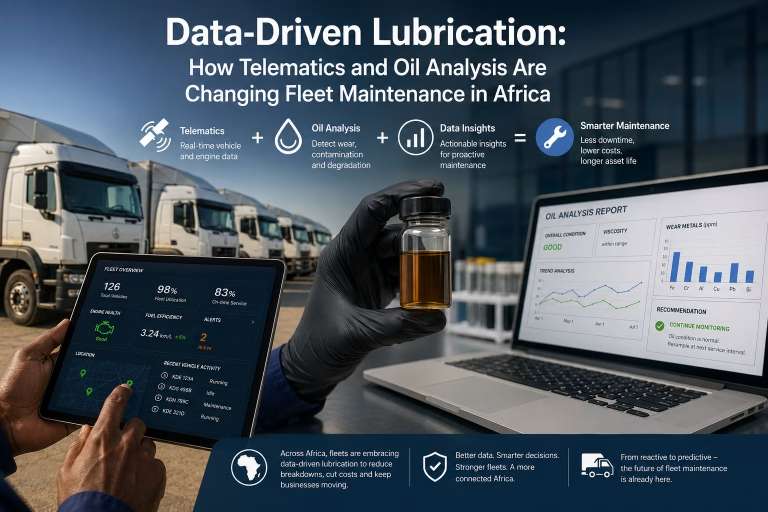
Instead of relying on guesswork, operators are turning to telematics, predictive analytics, and advanced oil analysis to understand what is happening inside their engines before failure occurs. Maintenance is no longer based only on mileage; it is increasingly guided by real-time performance data and engine health insights. The result is a shift from reactive maintenance to predictive decision-making, where fleets can prevent problems instead of simply responding to them. And for an industry where every kilometre matters, this shift could redefine the future of transport across Africa, and that is why a quiet revolution is taking hold.

From routine servicing to intelligent lubrication

Across transport corridors, from the long-haul trucking routes of Nairobi to the freight networks of Lagos and the industrial highways of Johannesburg, a quiet transformation is unfolding inside fleet operations. Fleet managers are beginning to re-examine one of the most underestimated yet essential pillars of vehicle performance: lubrication.

For years, trucks were serviced after a fixed number of kilometers, whether the engine truly needed attention or not. But today’s operating environment is far less predictable. Harsh road conditions, heavy payloads, rising fuel costs, extreme temperatures, and longer delivery schedules are placing unprecedented pressure on engines. In this new reality, traditional maintenance schedules are no longer enough.

Instead of relying only on fixed oil-change intervals, companies are now combining telematics systems with advanced oil analysis to understand what is actually happening inside engines in real time. The connected telematics systems are now acting like digital nervous systems. Sensors installed in trucks continuously monitor engine temperature, load levels, fuel efficiency, mileage, idle time, driving behavior, and overall performance patterns. Every journey generates valuable operational intelligence.

At the same time, lubricant laboratories are telling another side of the story. Oil samples collected from engines are carefully analyzed for contaminants, microscopic metal particles, fuel dilution, soot accumulation, and chemical degradation—silent warning signs that often appear long before mechanical failure becomes visible. When these two streams of intelligence come together, fleet operators gain something they never truly had before; visibility into the real condition of the engine in real time.

The shift from guesswork to precision

In many fleets maintenance routine, every 10,000 kilometers, the oil comes out and fresh lubricant goes in. It is a system built on habit, not necessarily on how a truck actually performs on the road. Yet across Africa’s demanding transport corridors, no two journeys place the same strain on an engine.

For instance, a truck hauling heavy cargo through the steep escarpments of East Africa, crawling through traffic in Lagos, or battling heat and dust on remote mining routes experiences far greater stress than one travelling steadily along a well-maintained highway. Still, under old maintenance models, both vehicles are often treated exactly the same. That is where data-driven lubrication is changing the story.

By analysing real-time engine data alongside oil condition reports, fleet managers can now detect early warning signs such as overheating patterns, abnormal friction levels, or contamination from fuel or dust. According to industry research, predictive systems using telematics can detect failures before they occur, improving reliability and reducing downtime significantly. The result is simple but powerful: oil is changed when it is actually needed, not just when the calendar says so.

Why Africa’s fleets are paying attention

Across Africa, transport rarely follows easy terrain. Trucks travel for days across scorching highways, dusty mining corridors, congested border points, and rough rural roads that test both machines and drivers. From the ports of Mombasa and Durban to inland trade routes stretching deep into the continent, long-distance haulage remains the backbone of commerce. But these demanding conditions place enormous pressure on engines, lubricants, and every moving part inside a fleet vehicle.

Africa’s transport system is unique. Roads vary widely in quality, climate conditions are extreme in many regions, and long-distance haulage is essential for trade. These realities place heavy stress on engines and lubricants. At the same time, operational costs are rising. Fuel remains one of the largest expenses, while unexpected breakdowns can disrupt entire supply chains. In this environment, every hour of uptime matters.

However, fleet operators are increasingly adopting smart systems that combine IoT sensors and analytics to improve efficiency. Platforms inspired by global trends in fleet intelligence, such as those tracking thousands of data points per vehicle daily, are proving that visibility leads to savings and better planning. Even in African markets, emerging solutions are showing measurable results. Studies and deployments in fleet intelligence platforms indicate reductions in breakdowns, fuel waste, and maintenance costs when predictive systems are used effectively.

The science behind oil intelligence

Oil may look simple, but inside an engine it behaves like a living system. It carries heat, reduces friction, cleans internal parts, and protects metal surfaces. Over time, it degrades.

Oil analysis reveals what the eye cannot see. It can detect:

  • Metal particles that signal engine wear
  • Fuel contamination from incomplete combustion
  • Water ingress from seals or environmental exposure
  • Chemical breakdown indicating overheating or extended use

When this information is combined with telematics data, such as engine load patterns or driving conditions, maintenance teams can predict when an engine is moving toward failure. This approach turns lubrication from a routine task into a diagnostic tool.

A real shift in fleet decision-making

In the past, maintenance decisions were often reactive. A truck breaks down, and repairs follows. Today, data is pushing decisions earlier in the cycle. A fleet manager no longer asks, “When was the last oil change?” Instead, the question becomes, “What does the engine data say about its condition right now?”

This shift is already visible in advanced fleet systems that use sensor data and predictive models to optimise maintenance scheduling and reduce operational disruptions. It also changes how drivers, mechanics, and managers interact with vehicles. Drivers become data contributors, mechanics become analysts, and managers become strategists.

Challenges on the road to adoption

Despite its enormous potential, the transition toward data-driven lubrication is not without obstacles. Across many parts of Africa and other developing markets, inconsistent connectivity in remote transport corridors can disrupt the seamless flow of real-time data. Some fleet operators still depend on aging trucks and machinery that were never designed with integrated sensors or digital monitoring systems in mind.

There is also a growing need for technical expertise. Collecting lubricant and telematics data is only part of the equation. The real value lies in interpretation. Maintenance teams must learn how to read oil analysis reports, identify abnormal wear patterns, and translate data into practical maintenance decisions. Without the right skills, even the most advanced monitoring systems risk becoming underutilized.

At the same time, IoT technology is becoming more accessible and affordable, while digital infrastructure across transport and logistics networks continues to improve. What once seemed like a futuristic concept is steadily becoming part of everyday fleet operations. The industry is moving from reactive maintenance to predictive intelligence, and that shift is not a distant possibility, but an emerging reality shaping the future of commercial transport.

The bigger picture: efficiency and sustainability

Beyond the immediate financial savings, the transformation reaches much deeper into the future of fleet operations. Fleet operators no longer treat lubrication as a routine workshop task. They now recognize it as a strategic tool that drives performance, improves reliability, and supports sustainability goals. By optimizing lubrication through data and predictive analysis, operators reduce internal engine friction, slow component wear, and improve fuel efficiency. This smarter approach helps fleets maximize engine performance while lowering maintenance costs and operational downtime.

The result is not only longer engine life, but also fewer roadside breakdowns, reduced downtime, and lower operating costs across the entire fleet. The environmental impact is equally significant. Longer oil life means less waste oil disposal, while healthier engines produce fewer emissions and consume less fuel.

Additionally, what makes this shift remarkable is how dramatically it is changing decision-making itself. Fleets that once relied heavily on experience, instinct, and fixed service intervals are evolving into connected, data-driven ecosystems. Maintenance managers are no longer reacting to failures after they happen; they are using real-time insights to predict problems before they disrupt operations. In many ways, the modern fleet is beginning to think ahead of the road it travels.

Fleet Reliability in Written Data

Data-driven lubrication represents a fundamental shift in how fleets think, operate, and compete. It replaces guesswork with measurable insight, routine servicing with precision-driven maintenance, and costly reactions with intelligent prediction.

For Africa’s transport and logistics industry, where uptime can determine profitability and survival, this evolution is rapidly moving from innovation to necessity. Rising fuel costs, demanding operating conditions, and the pressure to maximize vehicle availability are forcing fleet operators to rethink traditional maintenance models.

Moreover, fleets that embrace this transition early are gaining more and lower operating costs. They are building stronger reliability, longer asset life, greater operational confidence, and a sharper competitive edge. In the years ahead, the definition of a high-performing fleet on African roads may no longer depend solely on the number of trucks it owns, but on how intelligently it keeps them moving. The road ahead belongs to fleets that understand one simple truth: better data leads to better decisions, and better decisions drive better business.

You can explore further, this comprehensive guide on Machinery Lubrication explains how oil analysis supports predictive maintenance in detail.

More Insights:

Water-Based Paint Systems vs Solvent-Based in Automotive


Across the global automotive industry, a major transformation is taking place inside paint booths, refinishing workshops, and vehicle assembly plants. For decades, solvent-based paint systems dominated automotive manufacturing and collision repair because of their durability, fast drying times, and familiar application processes. However, today, the industry is steadily shifting toward water-based paint systems as environmental regulations tighten. In addition, sustainability expectations are rising, and technology continues to improve.

The transition is already well advanced in Europe, North America, and parts of Asia. Increasingly, the same conversation is now gaining momentum across African automotive markets. Body shops, paint suppliers, vehicle assemblers, and regulators are beginning to reassess the future of automotive coatings.

Understand the Difference

The difference between water-based and solvent-based paint systems lies primarily in the liquid used to carry pigments and resins.

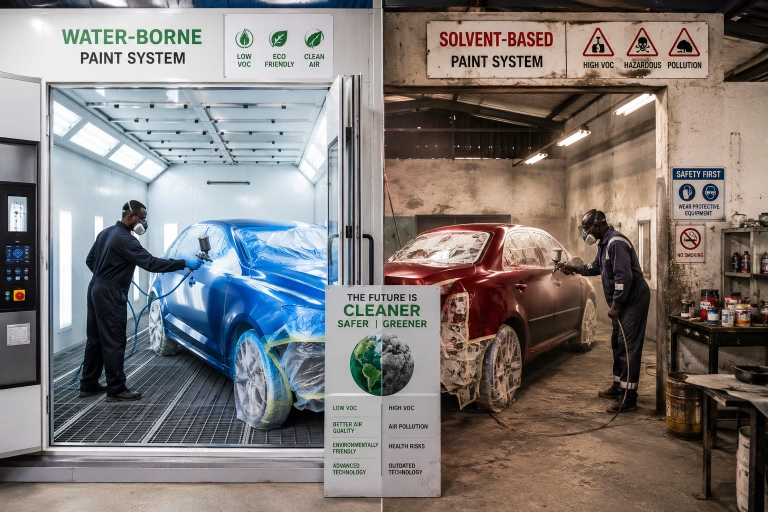
Solvent-based paints rely heavily on chemical solvents known as volatile organic compounds (VOCs). These solvents evaporate into the air during the drying process, releasing emissions that contribute to air pollution and health risks. Solvent paints have been popular because they dry quickly, perform well in different climates, and require less specialized environmental control.

Water-based paints, by contrast, use water as the primary carrier instead of high solvent concentrations. As a result, they release significantly fewer VOC emissions and create a safer working environment for painters and technicians. Over the past decade, improvements in paint chemistry and application technology have dramatically improved the durability, finish quality, and efficiency of waterborne coatings.

Consequently, many global vehicle manufacturers and refinishing companies now view water-based systems as the future of automotive coatings. At the center of this shift lies one important question: can Africa modernize its automotive refinishing sector while balancing cost, performance, environmental responsibility, and operational realities?

Why the Global Industry Is Moving Away from Solvents

Environmental regulation remains the biggest force driving the global transition toward water-based automotive paints.

Governments across Europe, North America, and Asia have introduced stricter VOC emission laws aimed at reducing air pollution and improving workplace safety. These regulations are forcing automotive manufacturers and refinishing workshops to adopt cleaner technologies. In Europe, for example, strict VOC directives have accelerated the widespread adoption of water-based systems across OEM production lines and collision repair centers.

At the same time, consumer expectations are changing. Sustainability is no longer limited to electric vehicles or fuel efficiency. Automakers are now under pressure to reduce environmental impact throughout the entire manufacturing process, including paint operations.

This matters because paint shops are among the largest sources of VOC emissions inside vehicle manufacturing plants. According to industry research, automotive paint operations contribute a significant share of industrial emissions generated during vehicle production. As a result, major automotive brands such as Toyota, BMW, and Tesla continue investing heavily in water-based coating systems to align with sustainability goals. They also want to meet future regulations.

Africa’s Automotive Refinish Industry Faces a Turning Point

Although Africa still relies heavily on solvent-based coatings, signs of transition are beginning to emerge. Across countries such as South Africa, Kenya, Nigeria, and Egypt, demand for modern automotive refinishing solutions is growing steadily. This is due to increasing vehicle ownership, expanding collision repair markets, and rising customer expectations for higher-quality finishes.

At the same time, global paint manufacturers operating in Africa are introducing newer low-VOC coating technologies into local markets. Industry analysts also note growing demand for water-based coatings in African automotive refinishing because of their lower toxicity and environmental advantages.

However, Africa’s transition is unfolding more slowly compared to developed markets. One major reason is infrastructure. Water-based paint systems often require controlled spray booth temperatures, humidity management, improved airflow systems, and specialized spray equipment to achieve optimal performance. Many African body shops still operate with limited infrastructure and older technologies. This is particularly true for small and medium-sized workshops.

In addition, solvent-based paints remain cheaper upfront and easier to apply in challenging workshop conditions where electricity supply, ventilation, and climate control may be unreliable.

Cost vs Sustainability: The Industry Debate

The debate between water-based and solvent-based systems is not just technical. It has become an economic and strategic discussion for African workshops and fleet operators.

Supporters of solvent-based systems argue that they remain practical for many African operating environments. Solvent paints generally dry faster in humid conditions, require less investment in equipment upgrades, and remain widely available across the continent. On the other hand, advocates for water-based systems point to long-term benefits that extend beyond emissions reduction.

Water-based paints improve workplace safety by reducing exposure to harmful chemicals. They also help businesses align with evolving international environmental standards, which is becoming increasingly important for globally connected automotive industries.

Furthermore, advances in waterborne technology have significantly improved color accuracy, finish quality, and durability. Modern water-based coatings now deliver performance levels that closely match solvent-based alternatives in many applications.

For African workshops seeking to attract insurance partnerships, dealership contracts, and premium customers, adopting modern refinishing technologies may increasingly become a competitive advantage.

Skills and Training Will Define the Transition

Technology alone will not determine the future of automotive paints in Africa. Skills development will play an equally critical role. Water-based systems require different application techniques, drying processes, and environmental controls compared to solvent paints. Technicians often need retraining to avoid common problems such as uneven drying, moisture trapping, or inconsistent finishes.

Unfortunately, many African collision repair centers still face skills shortages and limited access to modern refinishing training programs. Industry experts warn that without investment in technical education and equipment modernization, many workshops could struggle to compete as global coating technologies continue evolving. This creates a major opportunity for vocational institutions, paint manufacturers, automotive training centers, and industry associations to strengthen technical capacity across the continent.

What the Future Could Look Like

Africa’s automotive coatings market is unlikely to abandon solvent-based systems overnight. Realistically, both technologies will coexist for years as markets transition gradually based on infrastructure, regulations, and economic conditions.

However, the long-term direction is becoming increasingly clear. Global environmental regulations, vehicle manufacturer standards, and sustainability targets are steadily pushing the industry toward lower-emission coating technologies.

As African automotive markets modernize, pressure for cleaner, safer, and more efficient refinishing systems will continue to grow. Governments may eventually introduce stricter environmental standards for automotive paint emissions. This is especially likely in rapidly urbanizing cities facing worsening air quality challenges.

Meanwhile, international automakers and refinishing brands operating in Africa are expected to accelerate the introduction of water-based technologies. They aim to align regional operations with global standards.

According to SEMA Garage Industry Insights, advancements in waterborne coating technology continue making the transition easier and more practical for automotive repair businesses worldwide.

A Defining Moment for Africa’s Refinish Industry

The shift from solvent-based to water-based paint systems represents more than an environmental trend. It reflects the broader transformation taking place across the global automotive industry. In this new era, sustainability, efficiency, worker safety, and technological innovation are becoming central to competitiveness.

For Africa, the challenge lies in balancing modernization with operational realities. Many workshops still require affordable and practical solutions that fit local economic conditions. Yet at the same time, the continent cannot ignore the direction the global industry is heading.

Ultimately, the future of Africa’s automotive refinishing sector will depend on how quickly businesses, regulators, and training institutions adapt to changing technologies and environmental expectations. The transition may be gradual, but the momentum behind water-based paint systems is becoming impossible to ignore.

More Insights:

Battery Care in Extreme African Heat, How to Avoid Failure


Extreme heat remains one of the most overlooked threats to vehicle performance, particularly battery reliability. Battery care in extreme heat is essential for drivers across African cities such as Nairobi, Lagos, and Khartoum, who increasingly face unexpected battery failures triggered by prolonged exposure to high temperatures and inadequate maintenance practices. Proper battery care in extreme heat can make the difference between a dependable car and costly road trouble.

Unlike cold weather, which weakens battery output temporarily, excessive heat quietly causes long-term internal damage. Elevated temperatures accelerate chemical activity inside the battery, leading to rapid fluid evaporation, internal corrosion, and faster deterioration of critical components. Consequently, many motorists begin experiencing slow engine starts, dim headlights, electrical inconsistencies, and, ultimately, sudden breakdowns often without any clear warning signs. As a result, understanding battery care in extreme heat is crucial for all drivers.

Why African Heat Damages Batteries Faster

Vehicle batteries work through chemical reactions that generate and store electrical energy. However, when temperatures rise above normal operating conditions, those reactions speed up aggressively. Although this may temporarily improve electrical output, it significantly reduces long-term battery durability, especially when battery care in extreme heat is neglected.

In many African regions, under-bonnet temperatures can exceed 50°C during peak daytime operations. This intense heat causes battery fluid to evaporate faster, weakens internal components, and increases the risk of plate corrosion. Furthermore, constant exposure to heat places additional strain on charging systems, alternators, and electrical circuits.

Ironically, many drivers assume a dead battery results from old age alone. In reality, heat is often the silent cause behind repeated battery failures. Therefore, battery care in extreme heat should be a top priority for African motorists.

Warning Signs Drivers Should Never Ignore

Fortunately, batteries usually show warning signs before complete failure occurs. Recognizing these symptoms early can save drivers from expensive roadside emergencies.

Some of the most common signs include:
  • Slow engine cranking during ignition
  • Dim headlights or weak dashboard lights
  • Swollen battery casing caused by overheating
  • Corrosion around battery terminals
  • Frequent jump-start requirements
  • Electrical malfunctions in modern vehicle systems

Moreover, commercial fleet operators should pay close attention to vehicles operating in high-temperature environments or heavy stop-and-go traffic, where batteries experience constant stress.

How to Test a Vehicle Battery Properly

Routine battery testing remains one of the most effective ways to prevent breakdowns. Today, many workshops across Africa use digital battery analyzers to measure voltage, charging performance, and battery health within minutes.

A healthy fully charged battery normally reads around 12.6 volts when the engine is off. Anything significantly lower may indicate weak charging capacity or internal damage.

In addition, technicians often perform load testing to determine whether the battery can maintain voltage under operating pressure. This process is especially important for trucks, buses, construction equipment, and modern vehicles with advanced electronics.

For vehicle owners handling basic inspections themselves, visual checks also matter. Drivers should inspect battery terminals regularly for corrosion, loose connections, or fluid leakage.

According to Bosch Automotive Aftermarket, regular battery inspections and charging-system checks can significantly improve battery lifespan and reduce unexpected failures in hot operating environments.

Practical Ways to Extend Battery Life

Fortunately, several simple maintenance habits can dramatically improve battery performance in extreme African climates.

  1. Keep the Battery Clean

Dust, grease, and corrosion reduce conductivity and strain electrical flow. Cleaning battery terminals regularly helps maintain efficient power transfer and prevents voltage loss.

  1. Secure the Battery Properly

African roads can be rough, especially in off-road, mining, and rural transport environments. Excessive vibration damages internal battery plates over time. Ensuring the battery is firmly mounted reduces vibration-related failure.

  1. Avoid Short Trips

Frequent short-distance driving prevents the alternator from fully recharging the battery. Over time, this weakens battery capacity. Longer drives allow the charging system to restore proper voltage levels.

  1. Reduce Unnecessary Electrical Load

Air conditioning, infotainment systems, extra lighting, and charging devices place additional strain on batteries. Drivers should avoid leaving electronics running when the engine is off.

  1. Test Before Extreme Weather Seasons

Preventive testing before long-distance travel, hot seasons, or heavy commercial operations helps identify weak batteries early before failure disrupts operations.

The Importance of Battery Maintenance in African Mobility

As Africa’s transport sector modernizes, vehicles are becoming more electronically advanced. Today’s trucks, buses, and passenger vehicles rely heavily on sensors, onboard computers, GPS systems, refrigeration units, and digital safety technologies. Consequently, battery performance is also becoming more important than ever.

At the same time, rising fuel costs, logistics demands, and fleet efficiency targets are pushing operators to prioritize preventive maintenance instead of reactive repairs.

Ultimately, battery care is not a minor maintenance routine. It is a critical investment in reliability, operational uptime, and cost control. Additionally, battery water levels in serviceable batteries should be checked regularly, especially during peak heat seasons. Using distilled water helps maintain proper chemical balance. Professional servicing every few months can also significantly improve reliability in extreme environments. In Africa’s extreme heat, smart battery management can mean the difference between uninterrupted mobility and costly downtime.

Also Read:

A Critical Look at Automotive Policy Inconsistency and Import Loopholes in Africa


Across Africa, governments have unveiled bold visions to establish local manufacturing hubs, generate employment, and reduce reliance on imported vehicles. The intent is clear and commendable. However, beneath these ambitions lies a persistent structural weakness that continues to erode progress: policy inconsistency compounded by import loopholes.

The reality is stark. While policy frameworks often promise protection and growth for local industries, inconsistent implementation and regulatory fragmentation dilute their impact. At the same time, porous import controls allow an influx of used and underpriced vehicles, undermining domestic production and distorting market dynamics. The result is a disconnect between policy intent and real economic outcomes.

In my opinion, if Africa is truly committed to building a resilient and competitive automotive industry, it must confront this challenge with urgency and resolve. Without harmonized regulations, firm enforcement, and a unified strategic direction, even the most ambitious plans risk falling short. Sustainable growth will not be driven by policy declarations alone, but by the discipline to implement, enforce, and protect the frameworks designed to nurture the industry.

The Policy Promise vs. Operational Reality

Why ambition alone is not enough to build Africa’s automotive future

Across Africa, governments have rolled out automotive policies aimed at catalyzing local assembly and, ultimately, full-scale manufacturing. These frameworks typically offer tax incentives for locally assembled vehicles, impose restrictions on used imports, and provide investment support to attract global and regional manufacturers.

In principle, the strategy is sound. It reflects a clear ambition; to replicate the success of established automotive hubs by building domestic industrial capacity, creating jobs, and reducing import dependency. But the reality on the ground tells a more complicated story.

Execution has been uneven. Frequent policy reversals, ambiguous regulatory frameworks, and inconsistent enforcement have introduced a level of uncertainty that undermines confidence. Investors, who depend on stability and predictability, remain cautious. Manufacturers face difficulty committing to long-term capital investments without clear, sustained policy direction. Meanwhile, consumers are left navigating a difficult trade-off between affordability and quality, often with limited viable options.

The result? A growing disconnect between policy intent and real-world outcomes. What is designed as a pathway to industrial transformation risks becoming a cycle of stalled progress, where ambition is high, but impact remains constrained. Bridging this gap requires more than well-crafted policy documents. It demands consistency, transparency, and a long-term commitment to execution that builds trust across the entire automotive value chain.

Import Loopholes: The Silent Disruptor

Weak enforcement and policy gaps continue to erode the competitiveness of local vehicle assembly.

Even as governments champion local manufacturing, persistent import loopholes are quietly diluting these efforts. These loopholes manifest in several critical ways. Vehicles are often misclassified to attract lower duty rates, while under-declaration of value reduces the tax burden significantly. Transit and re-export arrangements originally designed to facilitate regional trade, are frequently exploited, allowing vehicles to leak into domestic markets. At the same time, exemptions and special permits, intended for specific use cases, are too often weakly monitored and easily abused.

The cumulative impact is profound. Markets become saturated with low-cost imports, many of them used and falling short of established safety and environmental standards. Price distortions emerge, creating a structural imbalance across the industry.

Meanwhile, for local assemblers, the consequences are severe. These firms operate within formal regulatory frameworks, investing heavily in infrastructure, compliance systems, workforce development, and quality assurance. However, they are forced to compete against cheaper imports entering through informal or semi-regulated channels, where the true cost of compliance is largely bypassed. In effect, this creates an uneven competitive landscape that weakens the growth and sustainability of local manufacturing.

If left unaddressed, these loopholes risk undermining not only industrial policy objectives but also long-term economic resilience. Closing them is not simply a matter of regulation, it is a strategic imperative for building a fair, competitive, and sustainable automotive sector.

The Used Car Dilemma: Balancing Access with Industrial Ambition

Affordable mobility must coexist with policies that stimulate local manufacturing and long-term economic resilience.

The debate over used car imports lies at the heart of Africa’s mobility and industrialization challenge. On one side, pre-owned vehicles remain a critical lifeline, delivering affordable transport solutions to millions of households and small enterprises that would otherwise be locked out of vehicle ownership. They enable commerce, support livelihoods, and sustain everyday mobility across both urban and rural economies.

However, this accessibility comes with a structural trade-off. Heavy dependence on used imports suppresses demand for new vehicles, weakening the business case for local assembly and manufacturing. This has consistently, discouraged investment, stifles job creation, and slows the development of a competitive automotive industry on the continent.

The real challenge is not choosing one over the other, it is designing a system where both can coexist strategically. Without coherent, forward-looking policies, the market naturally gravitates toward cheaper imports, often undermining long-term industrial growth. A balanced approach, one that preserves affordability while gradually strengthening local production capacity. This is essential for building a sustainable and self-reliant automotive market.

The Price of Policy Inconsistency

Unpredictable regulatory environments erode investor confidence, weaken industrial growth, and compromise sustainability outcomes.

Policy inconsistency does far more than create confusion, it imposes tangible economic, industrial, and social costs that ripple across the entire automotive sector.

  1. Investor Uncertainty

Automotive manufacturing is inherently long-term, capital-intensive, and highly sensitive to regulatory stability. Investors require clear, predictable policy frameworks to justify commitments such as establishing assembly plants, localizing production, and building integrated supply chains. When policies shift abruptly or enforcement remains uneven, confidence erodes, and investors default to a cautious, wait-and-see stance, delaying or redirecting critical capital flows.

  1. Fragile Local Value Chains

Inconsistent policy signals undermine the development of robust local supply ecosystems. Component manufacturers depend on stable demand and policy continuity to scale operations and invest in capacity. Without this foundation, supplier networks remain fragmented, limiting industrial depth and preventing the emergence of a competitive, self-sustaining automotive value chain.

  1. Erosion of Public Revenue

Regulatory gaps and import loopholes create opportunities for tax avoidance and revenue leakage. This not only distorts market competition but also deprives governments of vital resources needed to fund infrastructure, workforce development, and sectoral growth initiatives, further constraining long-term economic progress.

  1. Environmental and Safety Setbacks

Weak enforcement frameworks often allow the influx of older, less efficient vehicles into the market. The result is a higher environmental burden through increased emissions and fuel consumption, alongside elevated road safety risks. With time, this undermines national sustainability goals and places additional strain on public health systems.

In Perspective

Policy consistency is not merely a regulatory ideal, it is a strategic imperative. Stable, transparent, and enforceable frameworks create the conditions for investment, industrialization, fiscal strength, and environmental responsibility. Without it, the true cost is measured not only in lost opportunities, but in, stalled progress.

Lessons from Emerging Markets

Experiences from countries that have successfully built competitive automotive industries point to one defining factor: policy consistency.

Sustained progress has come where governments established clear industrial frameworks, enforced regulations consistently, and aligned incentives with long-term development priorities. This stability gives investors the confidence to commit capital, strengthen supply chains, and localize production for long-term growth.

Africa’s challenge is not a deficit of vision. The continent is rich in strategies, roadmaps, and industrial ambitions. The real gap lies in sustained execution, where policies shift too frequently, enforcement remains uneven, and long-term commitments are often disrupted by short-term priorities.

Industry stakeholders, including the African Association of Automotive Manufacturers, continue to emphasize the importance of harmonized continental standards. Their argument is straightforward but critical; without policy alignment and consistent enforcement, Africa risks entrenching itself as a consumption hub for imported vehicles rather than an active player in global automotive production.

A coordinated approach would not only strengthen local manufacturing capacity but also unlock regional value chains, skills development, and technology transfer at scale.

The Case for Policy Harmonization

Africa’s automotive future cannot be built on fragmented policies and disconnected markets. When neighboring countries apply different import rules, tax structures, standards, and enforcement measures, the result is a system full of loopholes that traders exploit by shifting vehicles across borders. This weakens regulation, distorts competition, and undermines long-term industrial growth.

The cost of this fragmentation is significant. Investors face uncertainty, manufacturers struggle to scale operations across multiple markets, and local industries remain vulnerable to inconsistent enforcement. Instead of creating a unified automotive ecosystem, Africa risks operating as a collection of isolated markets with conflicting priorities.

A harmonized regional approach offers a far stronger path forward. Regional economic blocs such as Economic Community of West African States (ECOWAS), East African Community (EAC), and Southern African Development Community (SADC) have a critical opportunity to align automotive policies, standardize regulations, and close cross-border loopholes that continue to undermine the sector.

A coordinated framework would deliver multiple benefits:</h6>
  • Stronger and more consistent enforcement across borders
  • Greater market predictability for manufacturers and investors
  • Expansion of regional automotive value chains
  • Increased investor confidence in long-term industrial projects
  • Improved competitiveness for locally assembled vehicles

Most importantly, harmonization would help transform Africa from a fragmented consumer market into an integrated automotive production hub capable of competing globally. Furthermore, as the continent advances under the African Continental Free Trade Area (AfCFTA), policy alignment is no longer merely a diplomatic ambition; rather, it has become an economic necessity. In the absence of harmonized regulations, the vision of a competitive continental automotive industry will remain difficult to achieve. Conversely, with coordinated and consistent frameworks in place, Africa has the opportunity to unlock scale, accelerate industrialization, and build a more sustainable automotive future.

What Governments Must Do Next

Africa’s next phase requires more than promises. It demands decisive, coordinated action, that can transform the automotive sector into engines of industrial growth, employment, and innovation. Policy ambition alone is not enough. Execution, consistency, and long-term vision will determine whether Africa builds globally competitive automotive industries or remains dependent on imports.

  1. Enforce Existing Policies with Discipline

Africa does not suffer from a shortage of policy frameworks; rather, the real challenge lies in implementation. In many cases, weak enforcement creates loopholes that undermine legitimate investors, distort markets, and weaken public trust. Therefore, governments must strengthen customs oversight, eliminate illegal import practices, and ensure regulations are applied consistently across all players. Ultimately, without credible enforcement, even the most well-designed policies lose their value.

  1. Commit to Long-Term Policy Stability

Automotive manufacturing is inherently a long-term investment business. As such, investors commit billions to assembly plants, supplier development, logistics, and workforce training based on predictable policy environments. However, frequent regulatory reversals, abrupt tax changes, and inconsistent incentives create uncertainty that discourages industrial investment. Consequently, manufacturers become hesitant to expand operations or localize production. To address this challenge, governments must provide clear, stable, and long-term frameworks that allow manufacturers and suppliers to plan, invest, and grow with confidence.

  1. Accelerate Customs and Import Digitization

Modern customs and import management systems can significantly reduce fraud, improve transparency, enhance revenue collection, and strengthen compliance. By digitizing vehicle tracking, valuation, and clearance processes, governments can curb under-declaration, limit corruption, and create a more efficient automotive trade system. Technology-driven systems also provide policymakers with accurate data for smarter planning and regulation.

  1. Strike a Practical Balance Between Affordability and Industrial Growth

The reality is that millions of Africans still rely on affordable used vehicles for mobility and business. However, unchecked dependence on second-hand imports can suppress local manufacturing growth and delay industrial development. Governments must adopt balanced transition strategies, gradually managing used vehicle imports while simultaneously expanding financing options, tax incentives, and credit access for new locally assembled vehicles. Sustainable growth depends on balancing consumer affordability with industrial expansion.

  1. Invest Aggressively in Local Automotive Ecosystems

A successful automotive industry cannot thrive in isolation. It depends on strong supplier networks, skilled labor, reliable infrastructure, and competitive manufacturing capacity. Governments must invest in technical education, industrial parks, logistics systems, energy reliability, and SME supplier development. Building a resilient local value chain will not only reduce import dependence but also create jobs, stimulate innovation, and strengthen regional industrial competitiveness.

Changing the Narrative

Africa’s automotive future will not be secured by restricting imports alone. Real progress depends on building a fair, stable, and competitive ecosystem that inspires investment, supports local industry, and earns consumer confidence. Consumers will always prioritize affordability and value, while businesses will naturally pursue efficiency and profitability. The role of policy, therefore, is not to fight these realities, but to align them with long-term industrial transformation.

Investors need certainty. Manufacturers need clear direction. Supply chains need predictable regulations to grow sustainably. Without coherent and reliable policies, even the most ambitious automotive strategies risk collapsing under uncertainty. But with consistency, Africa can move beyond short-term protectionism and build a resilient automotive industry capable of competing on a global stage.

Africa Must Choose a Clear Direction

Opportunities in Africa are immense. Rising urbanization, growing consumer markets, and regional trade integration position Africa to become a major automotive hub. However, this potential will remain unrealized if import loopholes continue to flood markets with cheap used vehicles, weaken local assembly, and discourage long-term investment.

Africa must choose a clear industrial direction, and commit to it with consistency and enforcement. Africa’s automotive opportunity is immense, yet weak policy coordination and import loopholes continue to undermine local manufacturing and slow industrial growth. In this sector, consistency is not just a policy principle, it is the foundation of investor confidence and long-term competitiveness. Africa must now decide whether to remain a consumer market for imports or emerge as a true automotive manufacturing powerhouse.

More Insights:

Counterfeit Parts in Fleets: A Profit-Killing Problem


The global transport and logistics industry depends on precision, reliability, and trust. However, beneath the efficiency of many fleet operations lies a growing and costly threat; counterfeit automotive parts infiltrate supply chains and silently undermine performance. Additionally, they inflate operational costs and put lives at risk.

For fleet managers focused on uptime, efficiency, and cost control, this issue extends far beyond routine maintenance. Counterfeit parts represent a critical business risk. In fact, they compromise safety, weaken operational integrity, and can severely damage brand reputation in an already competitive industry.

The Growing Threat of Counterfeit Auto Parts

Across Africa and globally, counterfeit automotive parts have become widespread. In fact, recent data shows that over 80% of automotive spare parts in some markets are affected by counterfeiting. This makes it one of the most heavily targeted sectors.

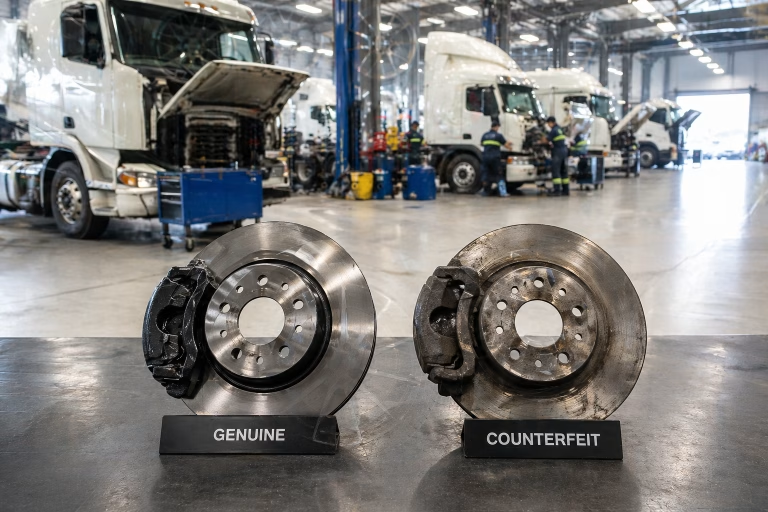
The reason is demand. As fleets age and operating costs rise, many operators seek cheaper alternatives to keep vehicles running. Counterfeiters exploit this demand by producing low-cost imitations that closely resemble genuine components. However, these parts lack the quality, testing, and certification required for safe operation. Today’s counterfeit parts are increasingly sophisticated. From packaging to branding, they often look nearly identical to original equipment manufacturer (OEM) products. This similarity makes them difficult to detect even for experienced technicians.

Why Counterfeit Parts Are a Profit Killer

At first glance, counterfeit parts may seem like a cost-saving solution. However, the reality is the opposite. These components often trigger a chain reaction of hidden costs that can cripple fleet profitability.

  1. Increased Downtime

Fake parts fail faster. Unlike genuine components designed to meet strict durability standards, counterfeit parts are made with inferior materials. This leads to frequent breakdowns, unplanned maintenance, and longer vehicle downtime, directly affecting fleet productivity.

  1. Higher Maintenance Costs

While counterfeit parts are cheaper upfront, they rarely last. Fleets end up replacing them more often, increasing total cost of ownership. In some cases, a single failed part can damage surrounding systems, multiplying repair expenses.

  1. Safety Risks and Liability

Counterfeit parts can fail terribly. Faulty brake systems, defective airbags, or weak suspension components can cause serious accidents. According to industry experts, the danger lies in their potential for sudden failure, putting drivers and other road users at risk.

For fleet operators, this translates into legal exposure, insurance claims, and reputational damage. These costs far outweigh any initial savings.

  1. Fuel Inefficiency and Performance Loss

Substandard parts, such as filters or engine components, reduce vehicle efficiency. Engines work harder, consume more fuel, and deliver lower performance—silently draining operational margins over time.

The Impact on Fleet Operations and the Economy

Counterfeit parts don’t just affect individual fleets; they disrupt the entire transport system. Industry stakeholders, including manufacturers, distributors, workshops, and regulators, all feel the impact. Experts warn that counterfeit components undermine operational reliability and create widespread economic losses across the value chain. Moreover, counterfeit parts damage trust. When a fleet experiences repeated failures, customers lose confidence. Deliveries get delayed, service quality drops, and long-term contracts are put at risk.

How Counterfeit Parts Enter Fleet Supply Chains

Understanding how counterfeit parts infiltrate fleets is essential to effectively preventing their spread. These components typically enter supply chains through several weak control points, including:

  • Unverified suppliers offering suspiciously low prices that undercut legitimate market rates.
  • Online marketplaces with limited or inconsistent quality assurance mechanisms.
  • Informal distribution channels that operate outside regulated supply systems.
  • Cost-driven workshops sourcing cheaper alternatives in an effort to reduce operational expenses.

The rapid expansion of e-commerce has further intensified the challenge. Counterfeiters now exploit digital platforms to distribute fake components on a global scale. Often, they mask these parts behind attractive pricing and convincing listings. These offers are frequently designed to appear legitimate. As a result, it is difficult for unsuspecting buyers to distinguish between genuine and substandard parts until failures occur.

Red Flags Fleet Managers Should Never Ignore

Counterfeit parts are often difficult to identify at first glance, but they typically reveal subtle warning signs:

  • Prices that are significantly below standard market rates
  • Low-quality, inconsistent, or poorly printed packaging
  • Absence of certification marks, traceability codes, or serial numbers
  • Suppliers with no verifiable history, credentials, or industry recognition
  • Components that feel unusually light, rough, or poorly finished in hand

As a rule of thumb, an offer that appears “too good to be true” usually carries hidden compromises in quality, safety, and reliability.

Solutions: How Fleets Can Protect Themselves

To address this escalating challenge, fleet operators must adopt a proactive, disciplined, and system-driven approach. This approach should strengthen every layer of the supply chain.

  1. Source Exclusively from Trusted and Authorized Suppliers
    Engage only certified dealers and verified distributors. Building long-term partnerships with reputable suppliers significantly minimizes the risk of counterfeit infiltration into your fleet operations.
  2. Enforce Robust Procurement Governance
    Establish and standardize clear procurement policies across the organization. Eliminate informal or ad-hoc purchasing practices, particularly those involving unfamiliar or unverified vendors.
  3. Strengthen Capacity Through Targeted Training
    Equip procurement teams and technicians with the skills to detect counterfeit components. Continuous awareness and technical training serve as a critical frontline defense against substandard parts.
  4. Leverage Digital Authentication Technologies
    Adopt manufacturer-provided verification tools such as QR codes, holographic labels, and serial number authentication systems. These technologies offer instant validation of part authenticity and traceability.
  5. Institutionalize Routine Audits and Inspections
    Conduct regular and systematic audits of inventory and installed components. In addition, early detection through scheduled inspections helps prevent counterfeit parts from compromising performance, safety, and operational efficiency.

Industry Response and the Need for Collaboration

Governments and industry bodies are intensifying efforts to curb the proliferation of counterfeit automotive parts. Enforcement agencies are ramping up inspections and compliance checks. Meanwhile, manufacturers are investing in advanced anti-counterfeiting technologies to safeguard product authenticity.

Industry organizations, including the Automotive Aftermarket Suppliers Association, are playing a proactive role in raising awareness and driving the adoption of best practices across the value chain.

However, enforcement on its own is not sufficient. Meaningful and lasting progress depends on strong collaboration between fleet operators, suppliers, regulators, and technology providers. They must work in unison to secure the supply chain and protect end users from risk.

Guarding Fleet Integrity

Counterfeit parts are more than a technical inconvenience. They represent a serious strategic threat to fleet safety, efficiency, and long-term profitability. What may initially look like a cost-saving decision at procurement can quickly spiral into unexpected breakdowns, higher maintenance costs, operational delays, and increased safety risks on the road.

Fleet operator’s priority on quality, should never be treated as an expense to minimize, but as an investment that protects assets and ensures continuity of operations.

Furthermore, strengthening procurement systems, verifying supplier authenticity, and maintaining strict quality controls are essential steps in safeguarding performance and reliability.

Consequently, in today’s highly competitive transport landscape, eliminating counterfeit components is not optional. Instead, it has become a critical requirement for sustaining operational excellence, protecting drivers, passengers, and goods, as well as securing long-term business success.

Read More:

Did You Know Body Roll Is a Suspension Control Issue, Not Just Speed?


Many drivers blame speed when their vehicle leans heavily into corners. It feels logical, that when you drive fast, the car tilts more. However, this assumption misses a critical truth; body roll is primarily a suspension control issue, not just a speed problem. Understanding this distinction can transform how fleet operators, drivers, and vehicle owners approach safety, performance, and maintenance.

What Really Causes Body Roll?

Body roll happens when a vehicle’s weight shifts during cornering. As you turn, centrifugal force pushes the vehicle outward, causing the body to lean away from the direction of the turn. While speed increases that force, the suspension system controls how much the vehicle actually rolls.

Key components like shock absorbers, springs, and anti-roll bars (also known as sway bars) work together to stabilize the vehicle. When these components function properly, they keep the tyres firmly planted on the road and limit excessive leaning. However, when suspension components wear out or fail, body roll becomes more pronounced, even at moderate speeds.

Why This Matters More Than You Think

Ignoring body roll as “just a speed issue” can lead to serious consequences.

  1. Reduced Vehicle Control
    Excessive body roll affects steering precision. The more a vehicle leans, the harder it becomes to maintain control, especially in emergency maneuvers.
  2. Increased Tyre Wear
    Uneven weight distribution places extra stress on tyres, causing premature and uneven wear. This drives up maintenance costs and reduces safety.
  3. Higher Risk of Rollovers
    For high-center-of-gravity vehicles like SUVs, vans, and trucks, uncontrolled body roll increases the risk of rollovers, particularly during sudden turns.
  4. Driver Fatigue
    Constant vehicle instability forces drivers to make continuous corrections, leading to fatigue over long distances, a major concern for fleet operations.

The Suspension System: Your First Line of Defense

If body roll is excessive, the suspension system is usually the culprit. Worn-out shocks, weak springs, or damaged sway bars reduce the vehicle’s ability to resist roll forces.

Modern suspension systems are designed to balance comfort and stability. But over time, components degrade. Fleet vehicles, in particular, face harsher conditions such as, heavy loads, long distances, and rough roads, which accelerate wear. Therefore, maintaining suspension integrity is critical for both safety and performance.

Common Signs Your Suspension Needs Attention

Drivers and fleet managers should watch for these warning signs:

  • Excessive leaning during turns
  • Nose-diving when braking
  • Uneven tyre wear
  • Poor handling or “floating” sensation
  • Knocking or clunking noises

If you notice any of these, it’s time for an inspection.

Shifting the Mindset: It’s Not Just About Slowing Down

Yes, speed matters, but slowing down alone won’t fix poor suspension control. A vehicle with a compromised suspension can still experience dangerous body roll even at relatively low speeds.

Instead, the focus should shift to proactive maintenance and component quality. Investing in high-quality suspension parts and regular inspections delivers better control, improved safety, and lower long-term costs. Body roll is not just a driving habit issue; it is a mechanical reality. Treating it as a suspension problem rather than simply a speed issue empowers better decisions. For fleet operators and everyday drivers alike, control begins beneath the vehicle, not just behind the wheel.

More insights:

- Advertisement -