

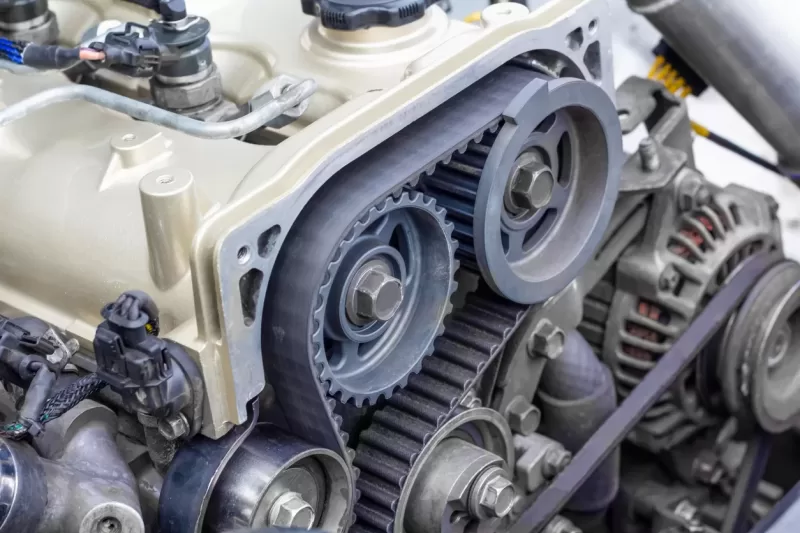
Timing belts and chains may not be the first thing that comes to mind when you think of car maintenance. However, they are important components in your vehicle’s engine. They synchronize the rotation of the crankshaft and camshaft(s). This ensures that engine valves open and close at the correct times during each cylinder’s intake and exhaust strokes. Basically, if your timing belt or chain fails, your engine can suffer severe damage.
Before knowing when to change them, it’s good to understand the difference between a timing belt and a timing chain:
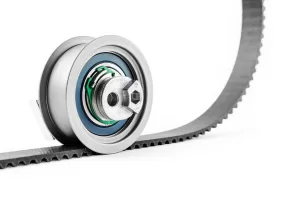
Timing Belt:
Usually made of rubber, timing belts are quieter and lighter than chains. They have nylon teeth that help them grip and sync with other engine parts accurately. These belts are commonly found in many modern vehicles. They are normally found inside the engine covered by a timing belt cover controlling the opening and closing of engine valves.
Timing Chain:
A metal chain that serves the same purpose as a timing belt, but is generally more robust and designed to last longer than belts. Nonetheless, they can still stretch or wear out over time and may need adjustments or replacement. They are often used in high-performance vehicles. Additionally, they are usually located inside the engine as well, driven by the crankshaft.
When to Change Your Timing Belt or Chain.
Whether your vehicle has a belt or chain, certain warning signs suggest it’s time to consider a replacement. Here is a comprehensive guide to help you decipher how to care for this vital component of your car:
1. Follow Manufacturer Recommendations
The safest bet for determining when to change your timing belt or chain is to refer to your vehicle’s owner manual. Most manufacturers provide a recommended interval, typically measured in miles or years. This will give you a clear guideline on when to replace your timing belt or chain.
Timing Belts: Generally, timing belts should be replaced every 60,000 to 100,000 miles or every 5 to 7 years, depending on driving conditions and the manufacturer’s recommendations.
Timing Chains: In contrast, timing chains are designed to last the lifetime of the engine and usually do not require replacement unless there are signs of wear. However, some chains may need replacement every 80,000 to 120,000 miles due to a lack of maintenance or faulty tensioners.
2. Listen for Noise
If you hear a rattling sound coming from your engine, or if the engine sounds different than usual, it could be a sign that your timing chain or belt is failing. Timing belts might give you the first signals through unusual noises. Meanwhile, timing chains can show issues like a ticking sound if there is a problem.
3. Misfiring Engine
Your vehicle’s engine misfiring or has decreased power can be an indicator of timing issues. This might suggest that the timing belt or chain isn’t aligning components as it should.
4. Check for Oil Leaks
A timing belt is often housed within an engine cover, and oil leaks may occur from wear and tear of the seals. If you notice oil pooling in the vehicle’s vicinity, inspect the timing belt area, as this could indicate another issue. It’s important to get your vehicle inspected promptly. Oil can cause a timing belt to deteriorate faster.
5. Inspect for Wear and Tear
If you can access your timing belt (generally more accessible on vehicles with belts than those with chains), inspect it for cracks, fraying, or wear. Any visible damage means it’s time for a replacement. Timing chains may require more in-depth inspection. This includes checking the tensioner and guides for proper function.
6. Consider Driving Conditions
If you often drive in extreme conditions, such as heavy traffic, high temperatures, or severe cold, your timing belt or chain may wear out faster. In such cases, you might need to replace it more frequently than the standard recommendations.
7. Look for Engine Warning Lights
Modern vehicles are equipped with engine management systems that can alert you if there’s an issue, including with the timing belt or chain. If your “Check Engine” light comes on, it’s essential to have your vehicle inspected. This may signify a timing issue among others.
Also Read: Signs that Indicate a Failing Alternator
The Importance of Replacing
Failing to replace a timing belt or chain when recommended can result in severe engine damage, which is often both expensive and time-consuming to repair. The timing belt or chain coordinates the movement of the engine’s camshaft and crankshaft, ensuring that the pistons and valves move in perfect synchronization. If the belt or chain breaks while the engine is running, this precise timing is lost. Pistons can collide with valves, leading to bent valves, damaged pistons, or even catastrophic engine failure. Such damage may require a full engine rebuild or replacement, which can cost thousands of dollars and leave the vehicle out of service for an extended period.
Conversely, replacing them at the recommended interval is a proactive step that protects your engine and prolongs its life. Routine maintenance ensures that your engine continues to operate smoothly, efficiently, and safely. It also reduces the risk of sudden breakdowns, which can be dangerous if they occur while driving. If you are unsure about the condition of your timing belt or chain, it is crucial to consult a qualified mechanic. A professional can inspect the component, assess wear and tension, and advise on the appropriate replacement schedule. Investing in timely maintenance not only saves money in the long run but also provides peace of mind, knowing that your engine remains in optimal condition.
By Uche Maxwel

