

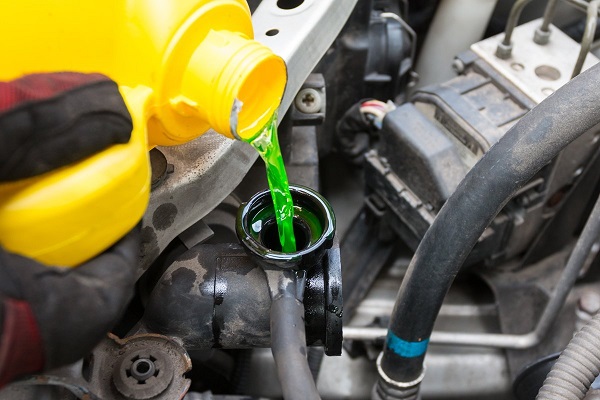
When is the right time to change your engine coolant? Manufacturers advise drivers to change the coolant every 30,000 miles for some vehicles. For others, changing it isn’t even on the maintenance schedule.
Different Brands, Different Recommendations
For example, Hyundai says the coolant in the engine (what many refer to as “antifreeze”) in most of its models should be replaced after the first 60,000 miles. Then every 30,000 miles after that. The interval is every 30,000 miles on some Mercedes-Benz models with some engines. However, on others it’s 120,000 miles or 12 years. On still other Mercedes, it’s 150,000 miles or 15 years.
Also Read: How Often Should You Service Your Heavy Trucks Transmission Fluid?
The Role of Driving Conditions
Some manufacturers recommend you drain and flush the engine’s cooling system. Also, change the coolant more often on vehicles subjected to “severe service,” such as frequent towing. This can generate more heat. The schedule for many Chevrolets, though, is a change at 150,000 miles regardless of how the vehicle is driven.
Many service shops, though including some at dealerships that sell cars with “lifetime” coolant, say you should do a coolant change more often than the maintenance schedule recommends. For instance, every 30,000 or 50,000 miles.
Also Read: What Affects Your Engine Temperature While You Drive
Why Coolant Maintenance Matters
Here’s why: Most vehicles use long-life engine coolant (usually a 50/50 mixture of antifreeze and water) in the radiator. This provides protection against boiling in hot weather and freezing in cold temperatures for several years. This is with little or no maintenance. Modern vehicles also have longer intervals between fluid changes of all types. This is partly because environmental regulators have pressured automakers to reduce the amount of old coolant. Additionally, other waste fluids that must be disposed of or recycled have been reduced.
Also Read: How Can I Tell My Radiator is Leaking
Coolant deteriorates over time, so test it regularly to confirm it’s still effective. You can’t always tell its condition by appearance alone. Even if the reservoir shows a proper level and tests indicate sufficient cooling and antifreeze protection, you may still need to drain the coolant and flush the system.
The coolant can become more acidic over time and lose its rust-inhibiting properties, causing corrosion. Corrosion can damage the radiator, water pump, thermostat, radiator cap, hoses and other parts of the cooling system. This extends to the vehicle heater system. Consequently, it can cause a car engine to overheat.
Also Read: Why You Should Change Your Oil
When to Flush or Replace
Test the coolant in any vehicle with more than 50,000 miles regularly. Check for signs of rust and leaks, and ensure it provides adequate cooling and overheating protection. Perform these checks even if the cooling system appears to work properly and the reservoir is full. Use test strips to measure acidity, and use a hydrometer to measure freezing and boiling protection.
If the corrosion inhibitors have deteriorated, change the antifreeze coolant. Flush the cooling system to remove contaminants, regardless of what the maintenance schedule recommends. It applies regardless of how many miles are on the odometer. On the other hand, if testing shows the coolant is still doing its job protecting from overheating and not allowing corrosion, changing it more often than what the manufacturer recommends could be a waste of money.
Read More:
What to Do If You Suspect a Leak in Your Vehicle’s Fluid System

