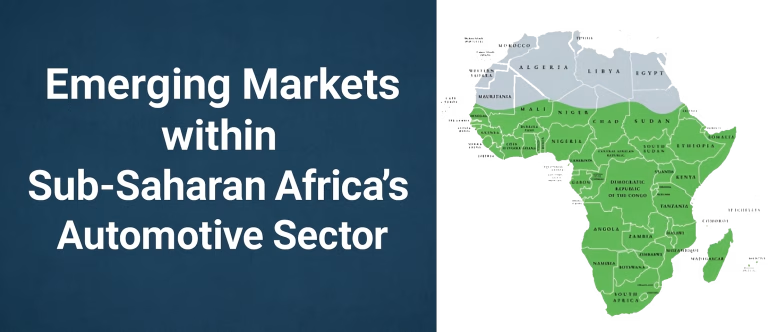


As the world races toward sustainable transport, Africa’s automotive sector is taking a distinctive, forward-thinking route. While electric vehicles (EVs) dominate global discussions, Africa’s reality demands a more inclusive mix of solutions. From hybrid vehicles to hydrogen energy and clean diesel technologies, the continent is crafting a cleaner, smarter and more adaptable mobility future.
The Electric Vehicle Hurdle: Promise Meets Practicality
Electric vehicles hold immense promise, lower emissions, energy independence and cutting-edge performance. Yet, for much of Sub-Saharan Africa, widespread EV adoption faces barriers: limited charging infrastructure, unreliable electricity supply and high import costs.
Africa’s vehicle market still relies heavily on used imports, many incompatible with charging networks. This doesn’t mean EVs have no role. It means Africa’s mobility evolution must remain diverse and practical. EVs will thrive in renewable-powered cities and logistics hubs, but other technologies are vital for the broader market.
Hybrid Vehicles: The Smart Bridge to Cleaner Transport
Hybrid cars are gaining traction as Africa’s most immediate clean mobility solution. By combining internal combustion engines with electric motors, hybrids deliver better fuel efficiency and lower emissions without relying on charging stations.
In Kenya, South Africa, and Morocco, hybrid adoption is rising as drivers seek performance and eco-conscious reliability. Toyota, for example, continues to expand its hybrid lineup across East Africa, reinforcing the shift toward greener transport.
Why hybrids fit Africa’s reality:
- Lower fuel consumption amid fluctuating fuel prices.
- No dependence on electricity grids.
- Compatibility with existing maintenance networks.
Hybrids represent a realistic step forward, an affordable bridge between conventional cars and the electric future.
Hydrogen Power: Africa’s Next Clean Energy Frontier
If hybrid vehicles are the bridge, hydrogen fuel technology could be Africa’s bold leap ahead. Hydrogen-powered vehicles produce electricity through chemical reactions, emitting only water vapor. They are ideal for heavy-duty transport, public fleets and industrial applications.
Africa’s advantage lies in its renewable energy potential. Countries such as Namibia, South Africa, and Morocco are investing heavily in green hydrogen projects, harnessing solar and wind power to produce hydrogen sustainably.
Though infrastructure and regulatory frameworks are still developing, hydrogen innovation could turn Africa into a global clean fuel hub, driving exports, energy independence and carbon reduction simultaneously.
Clean Diesel: Reinventing the Workhorse
Diesel remains the lifeline of Africa’s transport and logistics systems. Powering trucks, buses, and machinery. Fortunately, modern clean diesel technologies are making this fuel more efficient and environmentally responsible.
Through ultra-low sulfur diesel (ULSD), diesel particulate filters (DPFs) and selective catalytic reduction (SCR), modern engines now emit far fewer pollutants.
For Africa, this is an immediate and scalable solution:
- Reduces harmful emissions from existing fleets.
- Avoids costly full-fleet replacements.
- Aligns with global environmental standards.
South Africa has already transitioned to ULSD, and East African nations are gradually adopting cleaner fuel policies. Clean diesel’s evolution ensures progress without disruption, improving sustainability while keeping Africa’s industries moving.
Africa’s Multi-Path Roadmap to Clean Mobility
Africa’s transportation future will not be defined by one technology, but by a strategic blend of innovations.
| Technology | Best Use Case | Key Benefit |
| Electric Vehicles (EVs) | Urban centers, renewable-powered cities | Zero tailpipe emissions |
| Hybrid Vehicles | General public use | Efficient, no charging needed |
| Hydrogen Fuel | Industrial fleets, long-distance logistics | Clean energy scalability |
| Clean Diesel | Freight, buses, construction | Cleaner operations with existing tech |
This multi-path roadmap reflects Africa’s greatest strength, adaptability. By combining short-term efficiency with long-term vision, the continent can achieve clean mobility faster and more affordably than many expect.
Policies, Partnerships and People Power
The transition to sustainable transport in Africa depends on collaboration. Governments play a crucial role in:
- Introducing incentives for low-emission vehicles.
- Improving fuel quality standards.
- Supporting renewable energy investments.
Partnerships between local manufacturers, global automakers, and research institutions will also drive innovation and affordability. Equally important is skills development. Training mechanics, technicians, and engineers to maintain and design next-generation vehicles. Building human capital ensures Africa owns its clean mobility future.
Africa’s Advantage: Innovation Through Necessity
What sets Africa apart is its ability to leapfrog legacy systems. Just as mobile money transformed finance, clean mobility innovations can redefine transport accessibility.
Africa’s growing renewable capacity, young workforce and rapidly urbanizing populations create the perfect foundation for scalable, sustainable solutions. The continent is not just catching up, it’s reimagining mobility for its own context.
A Future Fueled by Diversity
Africa’s automotive evolution goes beyond EVs. By embracing hybrid efficiency, hydrogen innovation, clean diesel reliability, and eventually, widespread electrification, the continent is crafting a mobility model that’s practical, inclusive, and future-ready. The future of clean mobility in Africa is not about copying the West, it’s about creating a path where innovation meets reality, and sustainability meets opportunity.