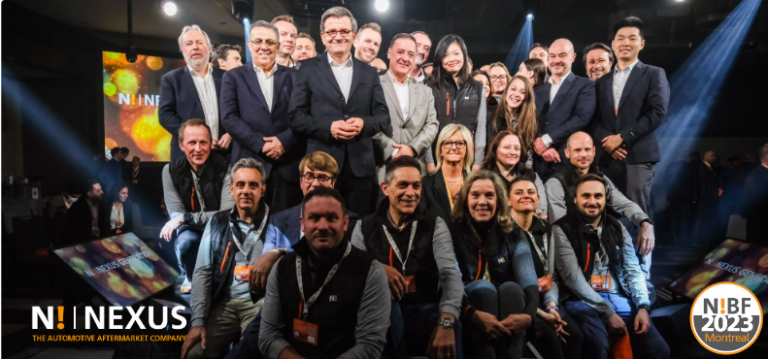
Prior to its creation decade celebration, the 9th edition of the NEXUS Business Forum took place in Montreal (Canada). More than 550 leaders from the global automotive aftermarket attended, including 70 global suppliers and more than 150 members. This occasion provided the platform for Gaël Escribe, CEO of NEXUS, to detail his strategy deployment roadmap. He updated the NEXUS’ community about the ITG’s good health and leadership. He also anticipated and outlined the automotive aftermarket revolution in the context of transformation.
A ninth edition under the sign of the American show
During the plenary, Gaël Escribe undertook an open discussion with 3 journalists: Jim Merle from USA, Mohamed Aredjal from Europe and Warwick Robinson from South Africa.
During this, he outlined the deployment of the N! strategy for the coming years ahead through dedicated teams with focused objectives:
– A « community priority » to feed intensively N! partners’ growth plans & increase of the compliance ratio on a global level.
– Creation of a NEXUS investment activities department including Mobilion fundraising, start-ups incubation, Sparker development and regional consolidation projects to come.
– Launch of transactional activities with a dedicated management to purpose more easily opportunities for suppliers. There are benefits for members and in fine, a positive impact on the compliance ratio. This will be launched in the coming months.
Hundreds of speed date business meetings were organized to connect the community and accelerate business opportunities. Workshops addressed key topics and enabled free discussion between members of the N! Community and experts.
All the guests enjoyed a hockey game between the Canadians VS Tampa Bay Lighting at Center Bell on Tuesday evening. This was offered by NEXUS and Delphi Technologies. The NEXUS Gala dinner and awards ceremony took place at Windsor Train Station on Wednesday and sponsored by Total Energies. Valeo Services was awarded Supplier of the Year, Interland (Member of the Year), Europart (HD Member of the Year) and TMD (HD Supplier of the Year).
A first NEXUS Climate Day to answer the climate emergency
For the very first time, NEXUS organized a Climate Day, reuniting sustainable experts & committed companies to draw a concrete & common roadmap in terms of sustainability. This was with the active support of key suppliers, including founding partners: Bosch, Delphi, Mahle, Mann & Hummel, Meyle, SKF, TotalEnergies & Valeo. Additional support came from Bilstein, Brembo, Elring, KYB, NTN & NRF.
The expected outcome of this first edition was a call for action to build the common roadmap. It aimed to make the NEXUS supply chain sustainable, based on the NEXUS sustainability hexagonal model (cf. figure below).
The next step forward will feature a digital edition of Climate Day. NEXUS will release it after the United Nations Climate Day next fall and onboard new players to help define its sustainable standards. This will take place before the next physical edition every year during NEXUS Business Forum 2024.
Gaël Escribe said: “It was such a pleasure to welcome all N! community here, in North America, for the very first time. The aim of our Climate Day is to make us stronger together by putting sustainability at the fore front of our priorities. This is a very operational and active initiative.”
About NEXUS Automotive International
Established in 2014 by CEO Gaël Escribe, NEXUS Automotive International, the automotive aftermarket (AA) company, is shaping the future of the AA.
Thanks to an entrepreneurial, innovative and agile mindset, N! disrupts the industry, bringing innovative solutions for a more sustainable, digital and connected mobility. At the same time, it supports its community of more than 150 members in 140 countries, allied with 76 global suppliers, by providing services to accelerate their growth.
N! is offering new approaches and new ideas for a connected, global and consolidated world of tomorrow to accelerate the success of car and heavy duty spare parts and services distributors and manufacturers, through 18 regional structures that connect them.
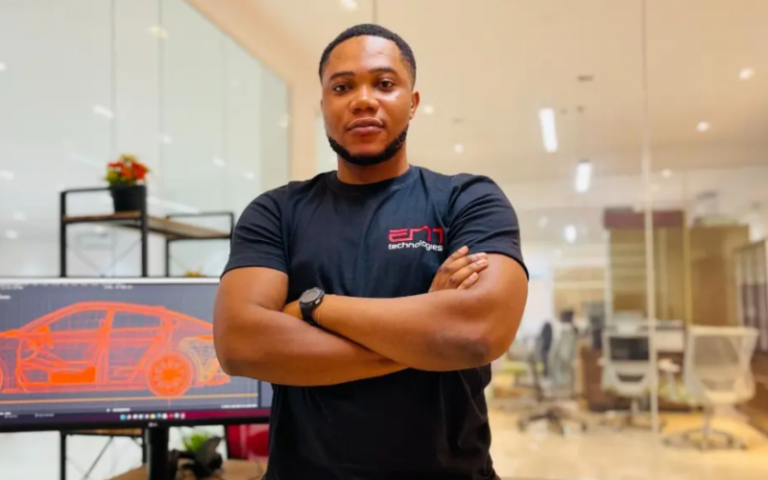
EN1 Technologies has begun moves to transform Africa’s automotive landscape with the development of solar-powered vehicles in Nigeria and other countries in Africa. The Chief Executive Officer EN1 Technologies, Onomor Eseoghene Benjamin, made this known while addressing journalists recently.
While explaining the motive for the initiative, Benjamin noted that the lack of stable electricity remains a major deterring factor for many people looking to buy and use electric cars on the continent.
ENI Technologies explained further, “Charging stations do not adequately solve this problem because it takes an average of 45 minutes to fully charge an electric vehicle at a charging station. This feels like a lifetime compared to the time required to refuel a petrol car, not to mention the high cost of setting up charging stations across the continent.
“To address this issue, the team at EN1 is building a production-level car that does not require a charge from an electrical power outlet for months, thereby eliminating the need for stable electricity in every country the company ships its cars into.”
The firm noted that powered by the sun with detailed and well-engineered solar cells fused into the frunk, hood, and trunk of the car, the EN1 ULTRA generates its own power of up to 50 km of range daily without any additional form of charging.
“On full charge, the Ultra provides a range of up to 605 km, making it the perfect car for daily commuting and long road trips. The Ultra’s advanced charging technology makes it possible for it to be charged at home or while on-the-go.
“This solution is particularly important for countries like Nigeria, which do not have stable electricity. With the solar option, EN1 hopes that you never have to charge the car for months from an electrical outlet.
“But the EN1 ULTRA isn’t just about sustainability and innovation. It’s also about style and comfort. The Ultra has a sleek and modern design, combining cutting-edge technology and unmatched performance. The car’s interior is designed with luxury and convenience in mind, featuring the latest technology and features to make your driving experience as enjoyable as possible.
EN1 is a cutting-edge company that has made a grand entrance into the automotive industry. Driven by a passion for innovative design, exceptional engineering, and unparalleled performance, the company is determined to set itself apart from other well-established brands like Tesla and Lucid.
With an unyielding commitment to achieving perfection and excellence in the driving experience, EN1 has made a promising start with the launch of its flagship product, the Ultra.
The company also promises this is the beginning of a remarkable journey towards transforming the automotive landscape with state-of-the-art technology and unparalleled design.
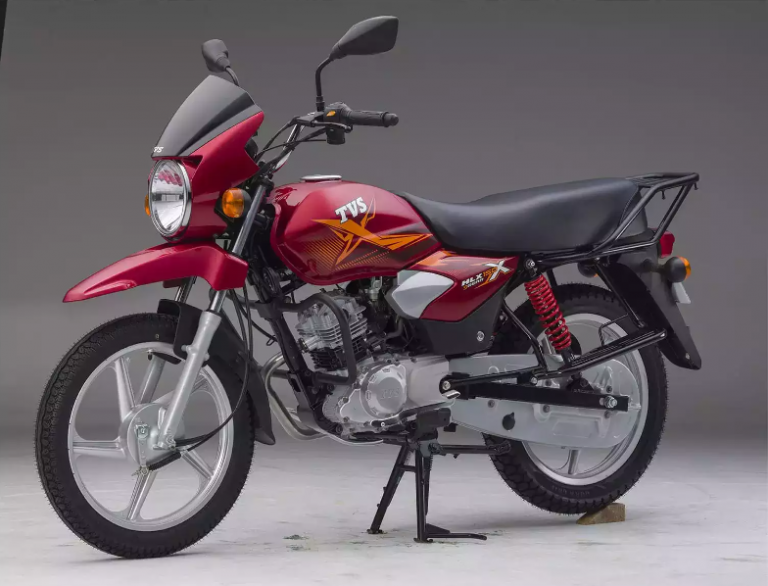
TVS Motor Company, a leading manufacturer of two- and three-wheelers has launched 7 new products in Ghana, Africa. It has introduced the Bebek – TVS Neo NX, three variants of the TVS HLX series (TVS HLX 125, TVS HLX 150 & TVS HLX 150X), the TVS Apache 180, and the TVS King three-wheeler series.
The company says it aims to expand its reach and explore new opportunities and avenues for growth in the region. TVS Motor Company ranks amongst the top 5 two-wheeler companies in the world with a presence in over 80 countries across Africa, South East Asia, the Indian sub-continent, Latin America and the Middle East.
Rahul Nayak, VP – International Business, TVS Motor Company said, “We take pride in our diverse and robust product portfolio that encompasses Bebeks, motorcycles, and three-wheelers, catering to the needs of customers seeking daily and last-mile connectivity in Ghana. Our products are engineered specifically to cater to the demands of the African market while delivering superior quality and reliability.”
Dev Bulani, MD, Arash Motors said, “We are excited to partner with TVS Motor Company and bring a range of mobility solutions to Ghana that addresses specific requirements of varied customers.”
About TVS
TVS Motor manufactures the largest range of two-wheelers, starting from mopeds, to scooters, commuter motorcycles, to racing inspired bikes like the TVS Apache series and the TVS Apache RR310. Whatever your requirement be, we have one for everyone.
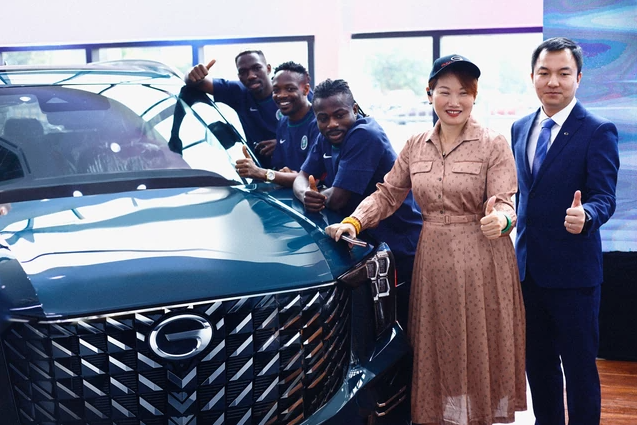
GAC Motors has unveiled its ultra-modern G-Style showroom in Abuja, the nation’s capital. This is in line with its commitment to the development of the automobile industry in Nigeria, Leading SUV automobile company.
The showroom which has several sections such as a motor exhibition stand, express maintenance, general repair and four-wheel alignment is the second GAC G-Style showroom in Nigeria after the Lagos debut in 2022.
Among the cars on display is the brand-new GS8, a premium SUV created with the intent of meeting the high luxury requirements of business leaders on a budget. With its luxurious cabin space covered in Alcantara and leather of the highest quality, geometric face design, roaring Euro 6 engine power and diversified luxury interior and exterior upgrade, the GS8 is a masterpiece in design with a flair of Chinese elements to meet European standards.
Chief Diana Chen, Chairman of GAC Motor in her remarks said the company believes in long-term investments, especially in Nigeria, which is an important market for “our Africa expansion plans, especially in West Africa where we have identified opportunities of developing a collaborative automotive industry hub amongst the countries in the region.”
“As a frontier for the fortune global 500 Company of the automobile industry, Africa has become very important for the sustainability of GAC Motors. We are therefore accelerating our growth strategy on the continent by playing a pioneering and leading role in the development of the automotive industry,” she said.
According to Chen, GAC Motor investments in Nigeria have recorded significant milestones such as the establishment of a world-class automobile assembly plant in Lagos and facilitating the successful operation of the first private taxi project, LAGRIDE, a joint venture partnership with the Lagos state government with a pilot fleet of 1,000 units of brand new sport utility vehicles (SUVs). She stated that the e-hailing taxi scheme has changed the overall appearance of the public transportation system in Lagos state and also provided job opportunities for the youths.
Chen said as part of its corporate social responsibility, GAC Motor will continue to partner with and support the sports industry, the Nigeria Football Federation (NFF) and the creative industry despite the current economic challenges facing the country.
She listed poor automobile policy, lack of adequate power supply and insecurity as some of the challenges faced by GAC in its operations in Nigeria. Earlier in his remarks, Chairman of NFF, Ibrahim Gusau who led a delegation of super eagles players to the event said the federation is pleased with its partnership with the automobile giant.
“The three-year-old partnership between the NFF and GAC Motor is in two forms. First, they support us with funds to manage our national teams and they also provide vehicles for our key officers. It is a very good partnership that we are committed to. They are supporting us immensely to ensure that the Super Falcons have a good showing in the forthcoming Female World Cup in Australia. I want to ensure you that we will do everything possible to improve this partnership,” he said.
Founded in 1954 and headquartered in Guangzhou, GAC Motor, the fifth-largest automobile manufacturer in China began operations in Nigeria in 2014.
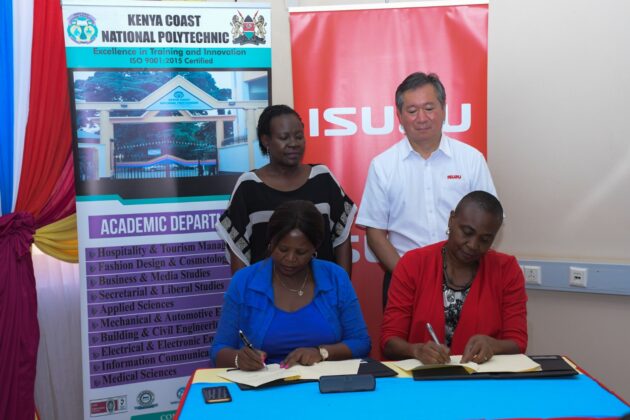
In a Memorandum of Understanding (MoU), the program will see the institution’s best automotive students being onboarded for a one-year course in theory and practical skills in automotive repairs and maintenance tasks before being deployed within the Isuzu network.
Ministry of Education State Department for Technical and Vocational Education and Training Institutions (TVET) Principal Secretary Esther Muoria urged TVET to forge gainful partnerships with industry players.
“It is such partnerships that will help identify market gaps that TVET institutions should fill through competent training to meet the market demand,” Muoria said.
“This is mainly because priorities have since shifted from just educating and training to giving skills to the youth,” she added.
The collaboration will empower KCNP students to carry out in-depth, hands-on research and garner insights into the intricacies of technologically advanced vehicles. Students will study a wide range of parts, technology, and systems, including fuel systems, engines, ignition systems, vehicle chassis, and body engineering, and much more.
“Through this partnership, tomorrow’s innovators will be empowered with first-hand knowledge in automotive systems. This will also enhance the future of their employability to make them industry-ready for Isuzu or the market,” Isuzu EA Managing Director Rita Kavashe said.
Autochek, the automotive technology company making car ownership more accessible and affordable across Africa, has appointed US automotive industry leader and veteran, Robert Granados to its board of directors to support its ongoing growth and expansion.
Robert has over two decades of global experience in leading and growing technology companies focused on providing solutions for the automotive industry value chain. He is currently CEO of CloudOne, a marketing company that helps auto dealers find and engage customers. He was Senior Vice President and General Manager at DealerTrack Technologies, where he led various units, including the finance and lender networks, inventory management and transportation, CRM, and independent dealer websites. Post the acquisition of DealerTrack Technologies by Cox Automotive Inc., the global leader in providing automotive solutions, he served as Senior Vice President, Strategy, at Cox Automotive, where he performed assessments of new growth opportunities, expansion of current business offerings, and effectiveness of current products and services.
He served as Operating Partner at SNH Capital Partners, where he was CEO of the Automotive Portfolio which comprised of National Credit Center, the leading provider of comprehensive data, software and marketing solutions to US dealerships and ProMax, the leading software provider to retail automotive dealers, offering award winning CRM, desking, website, credit, and lead generation solutions. He was also CEO of MAX Digital, a leading automotive inventory management and merchandising platform, supporting the company through a successful exit in 2021.
He will bring this vast experience to Autochek, supporting the integration of the Pan-African automotive industry to drive shared value for consumers, manufacturers, financial institutions and other stakeholders.
Autochek provides best in class technology and advisory solutions to car dealers, financial institutions and other stakeholders in Africa’s automotive ecosystem, supporting them to improve credit decisioning, collections, pricing, portfolio management and product development, as well as deliver an enhanced customer experience.
Since launching in 2020, Autochek has driven the penetration of auto-financing across Africa, enabling more consumers and businesses across North, West, East and South Africa to access financing solutions to purchase their desired vehicles. In less than two years of operations, the company has worked with more than 70 financial institutions and more than 2,000 dealerships to process more than 80,000 car loan applications. Leveraging the vast reach of its online marketplace, the company originates auto loans powered by data analytics that makes it easier for financial institutions to offer credit to consumers.
Etop Ikpe, CEO of The Autochek Group, said, “We are excited to have someone of Robert’s calibre on our board with his vast experience from the most advanced automotive markets in the world. He has played a major role in building many successful automotive technology companies and we are looking forward to leveraging his experience to support our continued growth as a company.
Robert Granados said, “There is a great opportunity to transform lives and livelihoods across Africa by making car ownership more accessible and affordable, and I am thrilled to be supporting Etop and the team to make this happen. Autochek has achieved so much success in a short period of time and I believe there is so much more to come.”
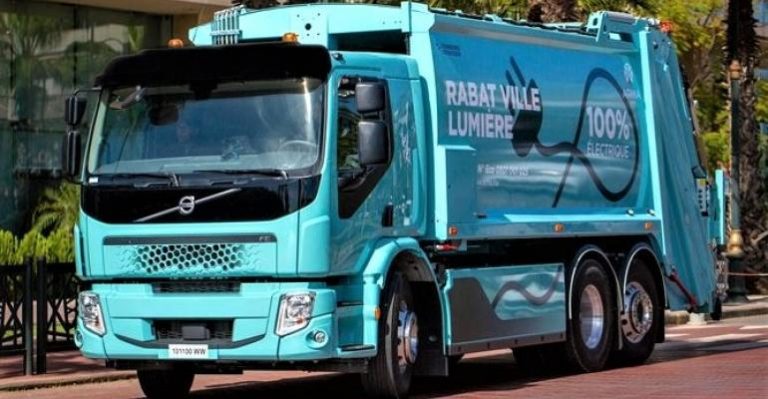
Volvo Trucks delivers its first all-electric heavy-duty truck to the African continent. The refuse collection vehicle has been delivered to a Moroccan company, Arma, in the city of Rabat and is the first BEV truck from a global manufacturer to be in commercial operation in Africa.
The automaker suggests that by replacing the existing Volvo FE diesel truck with a Volvo FE electric on a typical route, approximately 30 tons of CO2 could be saved every year. There is a growing push to produce greener energy in Africa, especially solar. Morocco is a leader in solar power and home to the world’s biggest concentrated solar power facility, Noor Quarzazate, located 124 miles (200 km) southeast of Marrakech. The Volvo FE Electric is one of six all-electric Volvo truck models already in production.
Martin Nilsson, Managing Director of Volvo Trucks Morocco, says: “This clearly shows that zero-emissions trucks have a role to play in many parts of the world. Volvo is the first global brand with heavy electric trucks in commercial operation in Africa. We have the broadest electric-truck lineup in the industry, which makes it possible to electrify a large part of heavy transports today.”
Sub-Saharan African (SSA) countries are in urgent need of alternative energy sources for transport to stave off the growing burden of fuel dependency and subsidies, as well as an electricity storage solution to leverage their abundant renewable energy resources, according to Mordor Intelligence. Electric vehicles, powered by electricity and running on battery storage, offer a potential solution to both of these problems. Many SSA countries are expected to make large power capacity investments in the next decade.
Countries including Saudi Arabia and the United Arab Emirates are becoming early adopters of BEVs in the Middle East. The Saudi Arabian Standards Organization has plans to issue regulations for the use of electric vehicles. The Road Transport Authority of the United Arab Emirates has issued advisory messages and worked to develop charging stations in the country.
Although the electric-vehicle market in the African region is in the nascent stage, Mordor notes, various key players are trying to establish new facilities for product development, increasing their presence in the market. For instance, in March 2022, Volvo Cars launched the Volvo XC40 Recharge. The XC40 Recharge has a total output of 402 hp (300 kW) and 487 lb.-ft. (660 Nm) of torque that accelerates from 0-97 mph (100 km/h) in 4.9 seconds. It has a 78-kWh battery capacity that promises a 260-mile (418-km) range on a single charge. BMW introduced the EX electric vehicle in Dubai in November 2021.
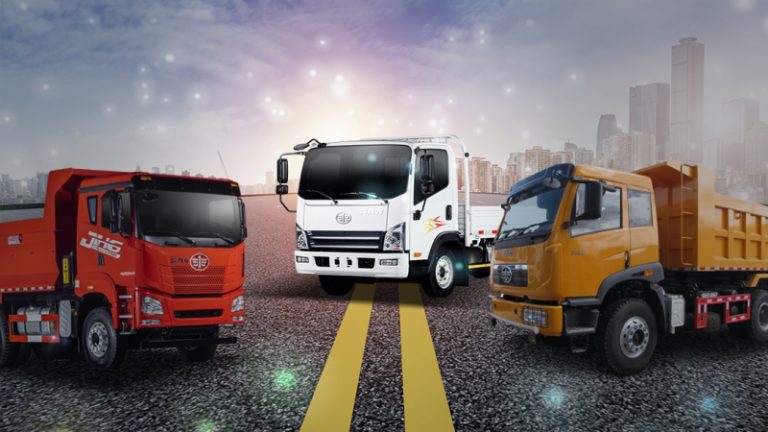
Islamic lender Gulf African Bank (GAB) has inked a deal with TransAfrica Motors to finance customers buying Chinese First Automotive Works (FAW) trucks from the motor dealer. Gulf African Bank head of business, Saada Mohamed said the agreement would see customers – Muslim and non-Muslims – access up to 80% financing for up to four years.
“At GAB, one of our aims is to ease the financial load of our existing and potential customers in the current business environment through such partnerships,” said Ms Mohamed.
The lender will charge customers 14.25% interest on the loans on a reducing balance basis for up to 48 months. It is expect the turnaround time not to exceed 72 hours. Customers will, however, enjoy a repayment holiday on a case-by-case basis. The deal will boost the auto dealer’s sales despite the overall slump in the new vehicle industry.
Total unit sales in the formal vehicle sector shrunk 6.3 percent to 13,352 from 14,250 in the year to December 2022. The shortage of semiconductors —used in electronic devices— has hurt the production of global automakers. Semiconductors control electrical current, making them essential in battery management and in-car entertainment, among other systems.
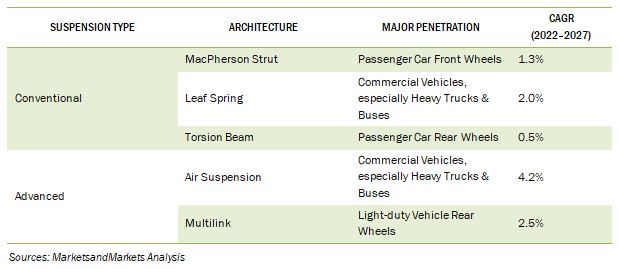
Automotive suspension plays a key role in any vehicle’s efficient and smooth functioning. Different types of suspension architecture include MacPherson strut, torsion beam, double wishbone, multilink, leaf spring, and air suspension. The selection of each architecture varies in a vehicle depending upon factors such as ride control requirement, space availability, the vehicle segment, and the suspension system’s cost. Though most passenger cars use a torsion beam in the rear to increase the boot space, the MacPherson strut dominates the front wheels. In contrast, SUVs and Luxury vehicles use multilink suspension systems to provide more comfort to the passengers. Commercial vehicles in developing countries such as China, India, Mexico, and Brazil primarily use leaf spring suspensions. Commercial vehicles in more developed western countries such as the US, Germany, and the UK use air suspension systems in their suspension modules.
Automotive OEMs are investing in R&D to introduce innovative suspension systems to enhance ride comfort. For example, in August 2020, ZF Friedrichshafen designed an air suspension with ECAS technology to address issues such as higher fuel consumption, decreased rider comfort, and compromised passenger safety and vehicular instability. The market for suspension systems is mainly driven by the increasing demand for luxury vehicles, especially passenger cars, and the increasing preference of buyers for a comfortable ride and smooth operation of the vehicle. Asia Pacific is expected to be the leading market for suspension systems, owing to the increasing vehicle production in countries such as China, Japan, and India.
Increased demand for SUVs & luxury passenger cars would drive the demand for advanced suspension systems.
The adoption of independent suspensions has increased over the years owing to their various advantages. According to MarketsandMarkets analysis, the market for independent suspensions such as MacPherson strut, double wishbone, and multilink is expected to grow at 1.3%, 1.4%, and 2.5%, respectively, in terms of value, during the forecast period. This growth can be attributed to independent suspensions offering more stability to vehicles. An independent suspension type’s weight is less, making it a preferred choice for heavy vehicles. Passenger cars generally employ an independent suspension at the front and a dependent suspension at the rear wheel. Hence, both independent and dependent suspensions are required. MacPherson strut is one of compact passenger cars’ most preferred front independent suspensions. Low manufacturing costs and better stability are attributed to the growth of the MacPherson suspension system. A double-wishbone is another independent suspension type, providing superior comfort, dynamics, and road holding. However, as the production cost of the double wishbone is higher, it is generally used in premium models, such as Alfa Romeo, Toyota Tundra, MG Rover TF, Honda Accord, and Aston Martin DB7. The double wishbone suspension is also employed in high-performance racing cars owing to its design complexity and increased number of parts, such as joints and bearings. However, with technological advancements, mid-high segment vehicles such as Toyota Camry, Fortuner, and Honda Accord have opted for the double wishbone. According to MarketsandMarkets analysis, the growth rate of the air suspension market is expected to be 4.2% during the forecast period.
The demand for SUVs has also increased in the past few years globally. The SUV & sub-compact SUV market has witnessed considerable growth in countries such as the US, China, India, and Mexico, owing to the vehicles’ low cost, compact size, advanced designs, better ride comfort, and better maneuverability. This has increased the adoption of multilink suspensions in these vehicles. The decreasing cost of multilink suspension and ease of adjustment has increased the adoption of multilink suspension in the rear axle in mid to high-segment cars, as these segment customers demand higher ride comfort. Mahindra Scorpio, Volkswagen Tiguan, and Kia Sportage are some of the common SUVs equipped with multilink suspensions. Globally, the multilink suspension volume market is expected to grow at 2.7% over the forecast period.
Increased adoption of air suspension systems in buses and trucks
Air suspension replaces a conventional steel spring suspension in heavier vehicle applications, like trucks, tractor-trailers, and passenger buses, thus reducing overall vehicle weight and subsequent CO2 emission.
Earlier, the leaf spring suspension was used in heavy commercial vehicles. The low manufacturing cost and the ability to distribute the load over a wider area made leaf springs a preferred choice for heavy trucks and buses. However, semi-active and active suspensions have been developed due to technological advancements allowing the air suspension system to enter the market. Adopting the air suspension system is higher in buses as comfort and ride control are primary requirements in buses. Hence, the demand for air suspension in luxury buses has risen significantly. Currently, air suspension is no longer a premium feature. Still, it has become a standard feature, especially in developed regions such as Europe and North America, as customers prefer comfort and can pay higher prices for the products. Companies that provide air suspension systems in their truck and bus models include Volvo (9400 B8R, FM series), Daimler AG (Actros L, Tourismo, and Citaro series), Scania (City Bus 4×2, S-series), and ISUZU (LT 134PR BUS series). This feature is still in its introductory phase in Asia Pacific due to the region’s cost sensitivity toward products.
Bus air suspension systems have evolved in terms of technology, components, and other parameters. In the case of heavy-duty trucks, the demand for air suspension is growing, owing to the demand for efficient transportation of goods, increasing special applications of trucks, such as refrigerated trucks and containers carrying fragile and expensive goods. The increasing demand for HCVs also aids this growth due to the globally booming e-commerce sector. The global HCV production is expected to grow from ~0.8 million units in 2022 to 8.6 million units by 2027, according to MarketsandMarkets analysis.
As the air suspension system increases its penetration in HCVs, it will likely follow the growth of global HCV vehicle production, as evidenced by the projections below.
Automotive Suspension – Supply Chain and Ecosystem:
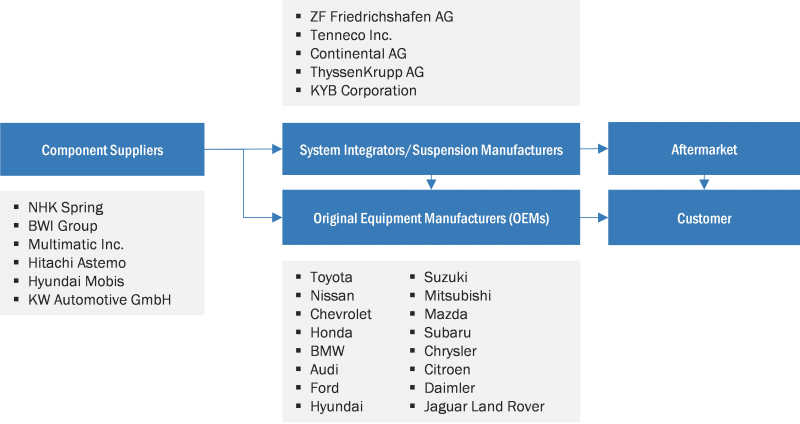
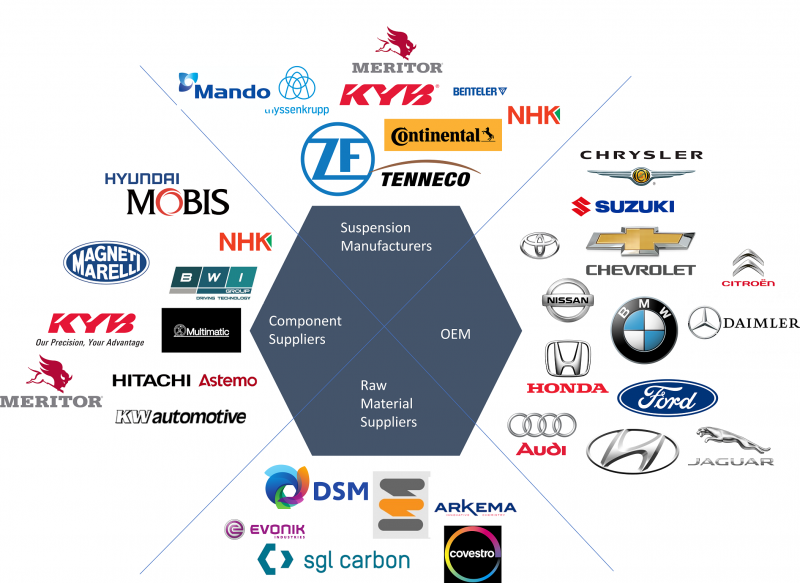
The automotive suspension market supply chain includes suspension component manufacturers, system manufacturers, and OEMs. Component suppliers provide suspension components such as shock absorbers, springs, links, and control arms to tier-1 system manufacturers. The system integrator integrates a complete suspension system and offers it to various OEMs per specifications.
FIGURE 2Automotive Suspension System Market: Supply Chain Analysis
Sources: Secondary Research & MarketsandMarkets Analysis
FIGURE 3 Automotive Suspension System Market Ecosystem
Sources: Secondary Research & MarketsandMarkets Analysis
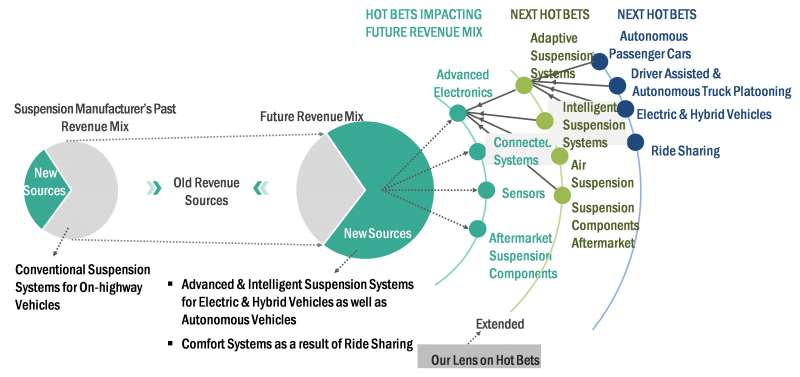
Automotive Suspension – Future Revenue Shift and Recommendations:
FIGURE 4Shifting focus from Passive toward Active Suspension Systems
Source: Secondary Research and MarketsandMarkets Analysis
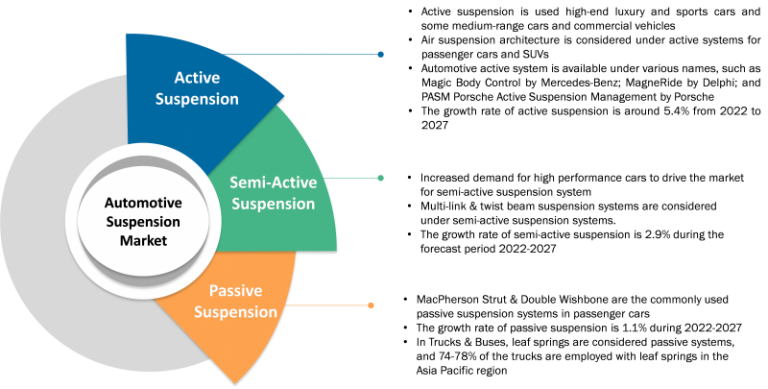
The growth of the automotive suspension market is directly proportional to the production of passenger vehicles. In line with growing luxury vehicles, the market for premium SUVs has risen significantly. According to MarketsandMarkets Analysis, of total premium cars produced globally, the share of premium SUVs stood at ~53% in 2016, which grew to ~68% in 2022. US, Canada, China, Japan, and South Korea lead the premium SUVs market, constituting more than 90% of total production globally. The factors attributing to the growth of premium SUVs over premium sedans are better and more powerful engine performance, and hence the demand for safety and comfort ha increased which has led to the installation of independent suspension systems in SUVs and luxury passenger cars. On the other hand, the rising concerns about global warming and the federal and state governments’ support to reduce air pollution are driving the EV market. Electric vehicles will witness high penetration of MacPherson strut, double wishbone, and multilink suspension systems. High-end EV models such as Porsche Taycan and BMW i4 use air suspension in both front and rear axles. Mid-segment vehicles such as the Kia EV6 and Tata Nexon use MacPherson strut in front and torsion beam or multilink suspension in the rear. Thus, the semi-active and active systems are expected to register high growth rates of 2.9% and 5.4% during the forecast period. With the increased demand of semi-active and active systems, the adjacent markets such as sensors, ECUs and other electronic devices market are also growing. Hence, suspension manufacturers & Tier II suppliers have adopted various growth such as new product launches, mergers & acquisitions, supply contracts, partnerships, and others to diversify their global presence and increase their market share. The automotive suspension market is consolidated. ZF Friedrichshafen AG, Tenneco Inc., Continental AG, ThyssenKrupp AG, and KYB Corporation are the top players in the market, with a 60-70% share. These players are based in North America, Europe, and Asia Pacific.
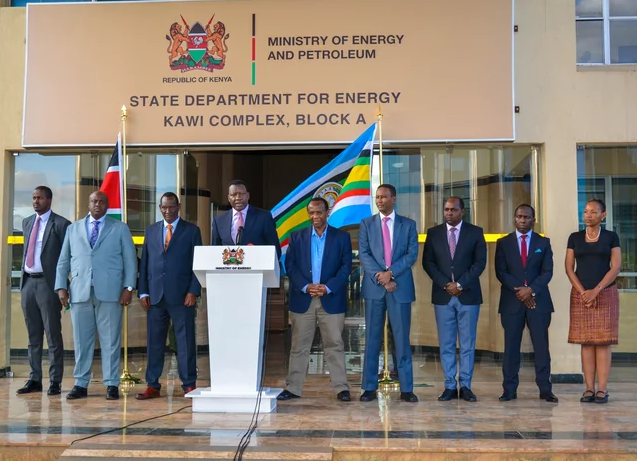
Kenya has signed deals with UAE’s ADNOC and Saudi Aramco for the supply of petroleum products with a six months credit period, a move designed to curb demand for dollars that has weakened the Kenyan Shilling. This is according to the Energy Minister, Davis Chirchir.
The East African nation is switching to the longer payment period from settlement on delivery, to remove the need for importers to spend hundreds of millions of dollars every month. The deals were signed on Friday, Energy Minister Davis Chirchir told a news conference, after the two firms were picked from seven bidders.
Under the six-month agreement, Saudi Aramco will supply two diesel cargo consignments monthly while the Abu Dhabi National Oil Company (ADNOC) will supply three cargo consignments of super petrol monthly.
“We did receive seven bids. The product will now be paid for in Kenyan shillings and this will ensure the dollar is available for other sectors of the economy. We have closed and signed a deal with Aramco of Saudi for the supply of two products for a period of six months,” Chirchir said.
Foreign currency traders have cast doubt on the ability of the plan to stem the pressure on the shilling currency, saying it merely amounts to a postponement of demand. The plan is also being challenged by some private petitioners at the High Court. The court is expected to give its initial directions on the case on Tuesday.


 The demand for SUVs has also increased in the past few years globally. The SUV & sub-compact SUV market has witnessed considerable growth in countries such as the US, China, India, and Mexico, owing to the vehicles’ low cost, compact size, advanced designs, better ride comfort, and better maneuverability. This has increased the adoption of multilink suspensions in these vehicles. The decreasing cost of multilink suspension and ease of adjustment has increased the adoption of multilink suspension in the rear axle in mid to high-segment cars, as these segment customers demand higher ride comfort. Mahindra Scorpio, Volkswagen Tiguan, and Kia Sportage are some of the common SUVs equipped with multilink suspensions. Globally, the multilink suspension volume market is expected to grow at 2.7% over the forecast period.