Tuesday, June 2, 2026
Home Blog Page 29

Automotive Engine Oil


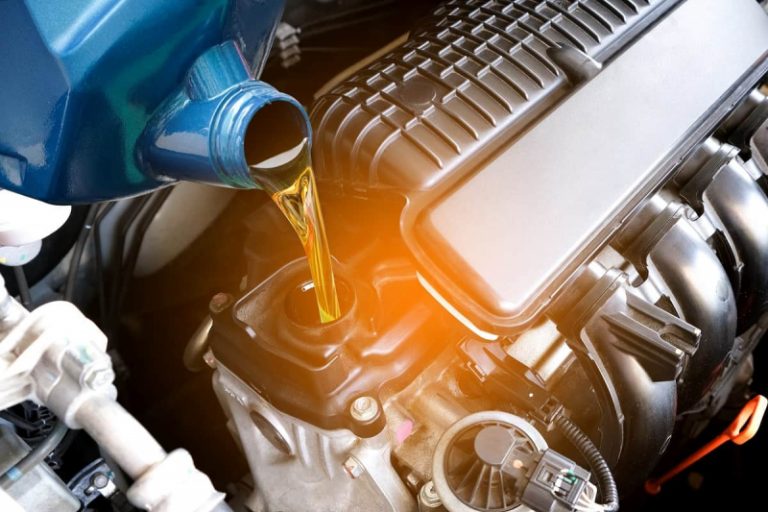
Automotive Engine Oil is an essential fluid for lubricating a car’s internal combustion engine. It combines base oils with additives such as antiwear agents and detergents. These ingredients increase the oil’s viscosity index, which improves its ability to lubricate the car’s engine. It is important to choose the correct type of automotive oil for your car. Read on to learn more about the different types of Automotive Engine.

Also Read: Truck Engine Oil Quality Lubricant

Drivers commonly use conventional oil in older cars, especially those no longer under warranty. It costs less than synthetic oils and suits people who prefer to change their own oil. If you change your oil regularly, you can use conventional oil without affecting your warranty coverage. However, remember that manufacturers design conventional automotive engine oils specifically for gasoline-fueled passenger cars and light trucks. Regardless of the type of automotive engine you have, you should regularly change the oil in order to keep your car’s engine clean.

Also Read: The Role of Additives in Motor Oil Performance

Analysts segment the automotive engine oil market by type and grade. The costs and viscosities of base oils vary across categories. More processed and refined oils cost more. Depending on processing levels and intended applications, manufacturers offer synthetic products at a wide range of prices. In general, full synthetics rank as the most expensive because producers make them from petroleum chemicals and design them to be fully synthetic.

Factors driving the automotive engine oil market

A number of factors are driving the African automotive engine oil market. The growth of automobiles in developing countries is one of the major factors driving the industry. A growing population and urbanization are contributing to the growth of the sector, while infrastructure expansion, rapid urbanization, and aspiration to own a car are propelling demand for Automotive Engine Oil. These factors will continue to drive the market into the future. However, many challenges still remain in the industry, including volatile prices and an increase in competition.

Also Read: Oil Analysis: How can it benefit your Bus fleet operations?

Population Growth and Rising Car Ownership

As Africa’s population grows, experts predict that the demand for automotive engine oil will rise. The fastest-growing region will be the passenger vehicle segment, with the largest share of the market. A growing middle-class population and rapid urbanization will fuel growth in the passenger vehicle market. In the developing Africa, owning a car is a symbol of social status. Consequently, the demand for motor oil will continue to rise.

Influence of Automotive Sales and Economic Growth

Another factor driving the growth of the Automotive Engine Oil is the rising automotive sales and the growing middle class in developed countries are also driving the market for engine oil in this region. This is an indication that the demand for automotive engine oil will continue to grow due to the increasing number of car sales which is a major driver for the growth of this industry.

Also Read: Oil Maintenance and Monitoring of Commercial Bus Fleet

Segmented by vehicle type, passenger cars are the fastest-growing segment, while utility vehicles comprise the second- and third-largest segments. By type, passenger cars comprise the largest portion of the automotive engine oil market. A variety of factors drive these vehicles, including the rising production of passenger cars and the expansion of road networks. It is important to note that the automotive engine oil market has many different types of products and services. The best way to find the right one for your car is to do a little research on the different options and decide which one suits you. Whether you’re looking for a high-mileage oil or a low-mileage oil, it is essential to make a decision before purchasing. The right product will protect your vehicle and reduce problems down the road.

Volkswagen takes over vehicle assembly operations in Ghana


Volkswagen has taken over the new vehicle assembly operations in Ghana from the brand’s licensed retailer, Universal Motors Limited (UML). UML was awarded the assembly contract when Volkswagen officially established Volkswagen Ghana, a 100 per cent subsidiary, in August, 2020. UML assembled models such as the Tiguan, Teramont, Passat, Polo, Amarok and T-Cross on behalf of Volkswagen, using semi-knocked down assembly kits imported from South Africa.

Volkswagen Ghana has subsequently opened a new 5000m² vehicle assembly facility, which is located near the Port of Tema, in Accra. It has an installed capacity to assemble 5,000 units a year and the facility will churn out the T-Cross, Tiguan, Amarok and Virtus sedan. In the beginning, the new assembly facility will create about 80 jobs, including local third-party service suppliers. VW was the first automotive company to be registered under the Ghana Automotive Development Programme (GADP).

Chairperson and Managing Director, Volkswagen Group, South Africa, Martina Biene, said: “Ghana is an important market for our sub-Saharan Africa expansion plans, especially in West Africa, where we have identified opportunities of developing a collaborative automotive industry hub among countries in the region.”

“The hub concept will ensure that each country with an automotive development policy or economic interest in the automotive industry has an important role to play in the supply value-chain.

“We believe the African Free Trade Continental Area will be the catalyst, which will unlock trade barriers and promote regional collaboration among the countries.”

“Ghana’s commitment to the development of its automotive industry is evident in the GADP, which is still the blueprint automotive policy in the region in terms of creating an enabling environment for the establishment of an automotive industry in sub-Saharan Africa.”

Ghana is the fourth Volkswagen assembly location in sub-Saharan Africa. The other locations are in South Africa, where Volkswagen has been manufacturing vehicles for more than 72 years, as well as Kenya and Rwanda. Volkswagen has a presence in 17 countries in sub-Saharan Africa where it sells passenger and commercial vehicles through licensed importers.

“As the last frontier for the global development of the automotive industry, sub-Saharan Africa has become very important for the sustainability of Volkswagen,” Biene said.

Automotive Insurance


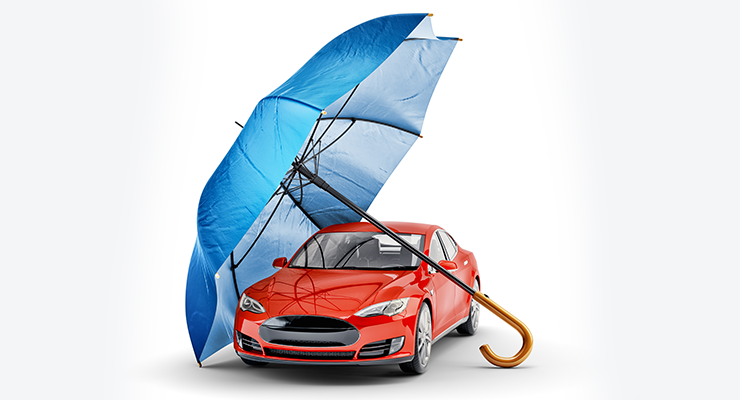
Automotive Insurance is an important factor to consider when looking at car insurance. Auto insurance companies provide different levels of coverage for their customers, depending on their level of risk as drivers and the vehicle. In many countries, the minimum level of coverage required by law is liability coverage.

Liability coverage will only pay for damage that you cause to someone else’s property or that you damage in an accident. However, at times one is required to purchase more than liability coverage. They also usually have a limit on the amount of damages; your policy will cover in the case of an accident. A good way to estimate how much coverage you need for your motor vehicle insurance is to contact your agent. An experienced agent will be able to give you an accurate estimate of what your policy will pay for in the event of an accident.

Additionally, it is crucial that you purchase additional insurance coverage, such as collision and comprehensive coverage, if you want to protect yourself from high costs associated with an automobile accident. In the event where, the other party’s insurance company offers no injury coverage or limited medical benefits, you should consider purchasing additional automotive insurance to cover these costs.

Automotive insurance is a good idea whether you are required to carry full liability insurance or not. It is a requirement for every road worthy car to have adequate medical and collision coverage in the case of an accident, regardless of whether the accident is your fault. These requirements will increase in upcoming years as more vehicles are on the road.

Liability coverage comes in many different forms, including bodily injury liability coverage, property damage liability coverage, and no-fault coverage. Bodily injury liability coverage pays medical expenses resulting from an automobile accident, while property damage liability coverage pays for damages to another person’s property. No-fault coverage is just the bare minimum that requires drivers to purchase. It pays the other driver’s legal expenses and any other costs not covered by your insurance company.

Each type of insurance serves different purposes, and your choice of coverage will depend on your driving history, the value of your car, and the amount of available discounts. Every insurance policy has a minimum required level of liability coverage, but most insurers require more than that. For instance, a no-fault state may require that you purchase at least bodily injury liability coverage, and you may also need to purchase collision coverage if you are at fault in a certain accident.

Will we have enough batteries to power our electric-vehicle future?


The move to renewable energy sources and electrified transportation constitutes a megatrend, a global seismic shift in energy production, storage and consumption. But there are dark clouds forming, clouds reminiscent of another time. The United States has handed over the supply chain for this future to offshore suppliers of the critical materials used in the workhorse of the megatrend, the lithium-ion battery. These include lithium from South America and Australia; cobalt, primarily from the Democratic Republic of the Congo; and nickel, copper, phosphate and manganese from countries where relations could sour overnight. Nickel from Russia, for example, is off the market because of the country’s invasion of Ukraine.

An additional concern is the role of China in processing these materials, many of which end up in Chinese-made batteries. Australian mines produce just under half of the global lithium supply, but most of that is exported directly to China for processing. Another concern is that many mines producing critical materials have been bought by the Chinese. The Chinese role in the global supply of essential commodities is ubiquitous. Whether these come from Africa, South America or elsewhere in Asia, China has a presence.

As attendees heard at a virtual press briefing, which I organized and hosted last month for the United States Energy Association, the relentless growth in demand for the lithium-ion battery has put the supply chain under severe pressure. Lithium-ion batteries owe their huge demand to their light weight. At present, there is no alternative in transportation that offers the portability of these batteries.

But when it comes to utility storage of electricity, where weight is not an impediment, quite a few technologies are in the wings. One, iron flow, is held up only by domestic supply chain issues, according to Eric Dresselhuys, president of ESS Inc., a leading supplier of long-duration energy storage. This technology has additional advantages, because the drawdown time is longer than the two to four hours for a lithium-ion battery. The drawdown is eight to 10 hours, and all the components are sourced domestically, according to Dresselhuys.

Another storage technology is the old standby for starting cars: the lead-acid battery. John Howes, president of Redland Energy Group, points out that for stationary uses, lead-acid has many advantages; high among them is that there is a complete recycling regime in place — something in its infancy with lithium-ion. Obviously, there are weight issues with lead-acid batteries and iron batteries, but these aren’t at issue in storage for utility operations, which is vital for wind and solar generation.

During the height of the energy crisis in the 1970s, I once asked the chairman of Gulf Oil over dinner if the oil industry had ever consulted with the automobile industry on expected future demand for gasoline. His answer: “No.” Out of curiosity, I pursued the subject and asked automobile manufacturers if they had ever questioned oil companies about whether there would be enough fuel for their cars. Detroit’s answer: “No.”

Both parties went along expecting the other would be there, playing their complementary roles: Oil companies producing enough products to meet the demand of an ever-growing population of internal combustion engines. These parties, with everything at stake, relied on the unseen hand of the market to provide for the other in a synchronized symbiosis. With a few tough spots, that had worked since the early days of the automobile.

It all came crashing down when a third and unexpected force upset the market: the Arab oil embargo. That not only produced immediate dislocation in supply and demand, but it also pointed up underlying resource concerns. The demand for lithium-ion batteries is likely to grow. In a recent study, McKinsey & Co. predicts stress, but it is hopeful that new lithium mining techniques may help alleviate the possible shortage. McKinsey sees a huge increase in demand during this decade, without allowing for disagreements between nations, and disruptions stemming from geopolitics.

The assumption has been that there would be enough production of lithium-ion batteries to shoulder the responsibility. Now comes a reckoning, also triggered by a political action like the Arab oil embargo. There was no real substitute for oil, but there are many better technologies and cutting-edge companies working hard at finding alternative batteries. That will take time. In the short term, your electric vehicle could cost more than it should, and it may be hard to get hold of one.

Automotive Coatings Market


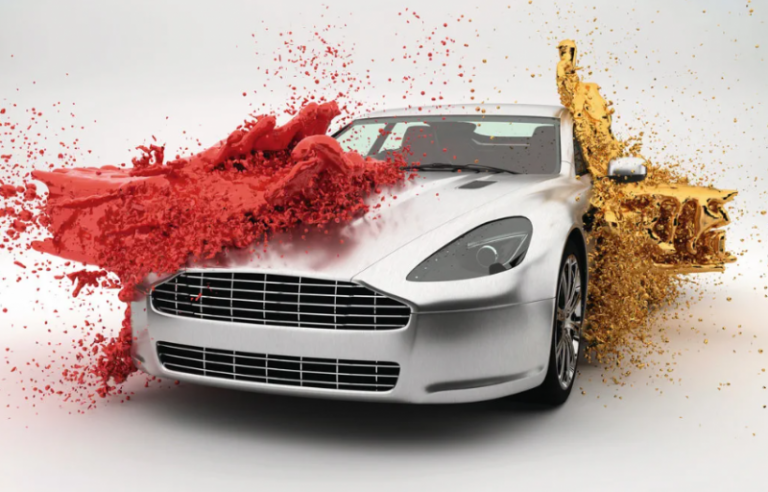
The global automotive coatings market is divided into OEM and refinish applications. OEM applications are applied by a paint shop or assembly plant. Refinish applications are applied on automobiles in a clean repair facility or at home. The end-use of each type of coating is dependent on its properties. For example, a car’s interior is coated with different colors than a vehicle’s exterior. In addition, the characteristics of automotive finishes differ from one application to the next.

The growth of the automotive coatings market is due to the increasing use of lightweight materials. Earlier, the car bodies were made of steel, but today’s cars contain around 30% aluminum and high-strength steel. Additionally, other lightweight materials such as magnesium, polymer composites of glass, carbon-fiber-reinforced thermosets, and plastics are finding their way into the industry. As a result, automotive coatings are becoming increasingly important to the industry and as a result, the market is likely to grow at a faster rate.

While many companies have limited experience with automotive coatings, there are some innovations that are bringing new products to the market. The automotive coatings market has a number of growth drivers. Increasing demand for customized automobiles and the rising rate of road accidents has led to an increased need for repair and maintenance activities.

Moreover, consumers are increasingly choosing to modify their cars. In addition to these, automotive refining coatings offer improved aesthetic appeal and resistance to corrosion. The environment-friendly refinish coatings are popular among customers because they produce minimal VOC emissions and are environmentally friendly.

The demand for car coatings is expected to reach USD 21 billion by 2026. The market will grow due to rising competition and rapid adoption of environmentally friendly products.

Currently, manufacturers are developing economic UV-cured solutions for vehicles. These products are environmentally friendly and offer low-toxicity levels. The high-end market will be a lucrative sector for companies. There are many factors contributing to the growth of automotive coatings. However, the market is likely to remain competitive and will continue to grow.

How to swap out a car battery yourself


Changing a car battery at home is an easy way to save cash on car maintenance. You can buy your new battery anywhere, including online, and install it yourself instead of paying high garage or service center prices. Car batteries typically cost between $50 and $200 depending on your vehicle. Once you have the battery, the process typically takes 30 minutes to complete.

Important: Always consult with your owner’s manual to confirm the exact battery location and the specifications for a replacement.

How to be sure a car battery needs to be replaced

When your car won’t start, there are several electrical issues that could be the problem. Jumpstarting the car can give you enough charge to get you where you need to go, but it can also mask electrical problems that drain your battery, regardless if it’s old or new.

You need to test the battery before replacing it. There are other causes of a no-start or a dead battery, including problems with the alternator, a short circuit or other electrical issue. If these are not addressed, the new battery will run down and the car will not start again.

In general, car batteries typically last about 3 to 4 years. Factors like heat, heavy use, and unsecured battery hold-downs can all impact how long a battery lasts.

Signs of bad battery include:

Zero response when you turn the key. When nothing happens and there are no warning lights on the dashboard when you turn the key, that means the car has a dead battery. Starter cranks slower than normal. When you turn the key, does the starter motor crank slowly, struggle or hesitate? These are signs the battery needs to be checked.

Dim headlights. Dim headlights when the car is off can be a sign of a bad battery. Dim headlights when a car is running can be a sign of a bad alternator.
Battery or charging system warning lights appear. Some cars have warning lights that tell you the battery is dead or about to die. Battery has cracks or leaks. If your battery has any cracks, leaks or damage, it should be replaced immediately.

An inexpensive electronic device called a multimeter can be used to measure the voltage of the battery. This can help determine whether it needs replacement.

Quick tip: It’s always smart to check your roadside assistance plan offerings. For example, AAA tow trucks carry a battery tester, while some plans offer free battery testing.

What you need

Replacement battery
Eye protection and protective work gloves
Ratchet and socket, wrench and locking pliers. Common sizes for battery terminal and connector bolts are 5/16” (10mm) and ½” (13mm)
Wire brush and steel wool
Battery cleaner spray and battery anti-corrosive gel

Step 1: Find the car battery

Put the car in park, turn it off, and remove the key. Before you locate the battery, make sure the engine has cooled down. Most car batteries are in the front, mounted on a plastic or metal tray, under the hood. Some cars have the battery in the trunk.

Step 2: Locate and disconnect the battery terminals

Batteries have two terminals where the cables are connected. They may be covered by plastic covers. There will be a black one (negative) and a red one (positive). The terminals may also be marked with + for positive and – for negative.

Always disconnect the negative cable first. Wearing work gloves and eye protection and using a wrench, loosen the bolt that tightens the negative connector to the battery terminal. Once loose, gently twist the cable connector back and forth as you lift it up to remove it from the battery terminal.

Next, remove the positive cable. Using the wrench, loosen the bolt that tightens the cable to the battery terminal. Once loose, gently twist the cable connector back and forth as you lift it up to remove it.

Step 3: Remove the old battery

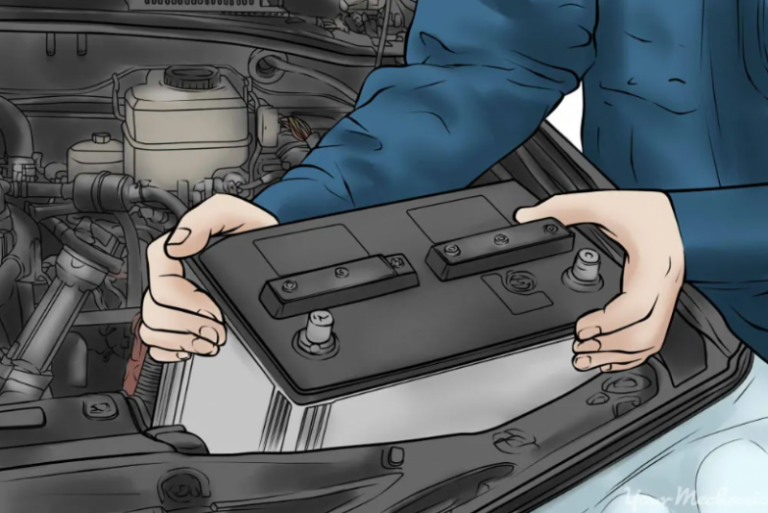
Car batteries are secured with a metal bar over them or a metal clamp at the base. Loosen the bolt that secures the holding bar or clamp so you can remove it and lift the battery out of the car. Batteries have caustic liquid inside, so be sure to always keep it upright.

Quick tip: To ensure you don’t forget anything, take a photo with your phone to remember what the connections look like when the battery is fully set up.

Step 4: Clean the battery tray and terminal connectors

Terminal connectors corrode over time, and now is a great opportunity to give them a thorough cleaning. Using battery cleaner and a wire brush, clean the connectors and the battery tray. Alternatively, you can use a baking soda paste by mixing two tablespoons of baking soda with a teaspoon of water. Use steel wool to clean inside the connectors then thoroughly dry everything. Inspect the cables and connectors to ensure they are not damaged or frayed.

Step 5: Install and secure the new battery

Double-check to make sure that the position of the new battery matches the red and black terminals. Lower the new battery into the car and onto the mounting shelf. Re-attach the clamp or hold-down bar and tighten the bolt to secure it. Before reconnecting the terminals, consider using protective felt washers or some battery anti-corrosive protection gel on both terminals.

Always connect the positive cable to a new battery first. Be sure the connector is pushed all the way down on the terminal. Tighten the bolt. Repeat the same steps for the negative connector to the negative terminal.

Step 6: Close the hood and start the car

New car batteries normally come charged and are ready to go right away.

Recycling used car batteries

If you change a car battery yourself, remember that they cannot be thrown away in ordinary trash. The old battery can be returned to the seller of the new battery, as sometimes a refundable core fee is charged.

In most states, any retailer who sells new batteries is required to accept used ones for recycling. Check with your local auto parts store. Place the old battery in several trash bags and be sure to always keep it upright. Do not keep it, batteries emit toxic gasses and can leak. Properly dispose of it as soon as possible.

Conclusion

Changing your car battery yourself is an easy way to save money on car maintenance. Be sure to properly test the battery to make sure it needs replacing. Remove the negative connector first, then the positive connector from the old battery and remove it. Install the new battery then connect the positive connector first and finally the negative connector last. Dispose of the old battery properly at an auto parts store or recycling center. However, a loose battery or loose electrical connections can be very dangerous. If you’re not comfortable doing any part of this process, most auto parts stores will install batteries you buy there for free.

Africadetails


Africadetails – an online web portal for  all related matters, discussions, news, events & services in the African continent.

Castrol Kenya, Rubis Energy Kenya partner to launch a wide range of oil lubricants


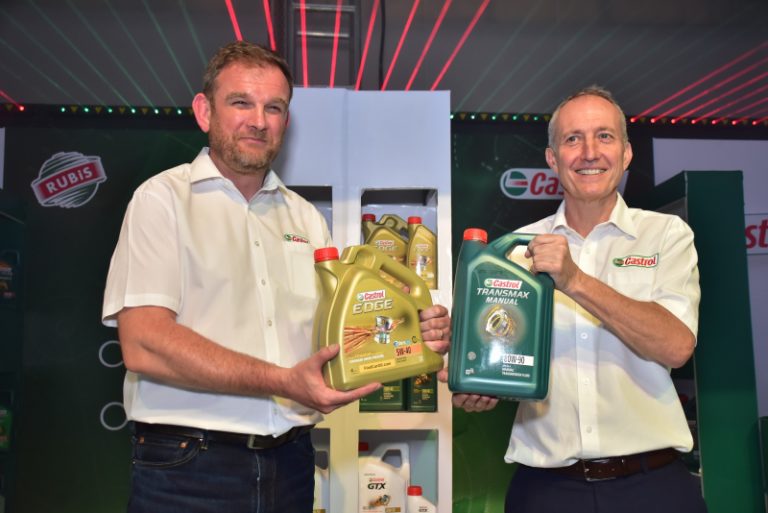
Castrol Kanya and RUBiS Energy Kenya have partnered to launch Castrol oil lubricants products in Kenya. The oils are currently available at the over 260 RUBiS Energy Kenya stations countrywide.

Speaking during the launch of the partnership, Ed Savage, Castrol Kenya – Country Manager said, “The partnership with RUBiS Energy Kenya is timely as customers seek oil products that are designed to suit their everyday mechanical needs. Castrol will leverage RUBiS Energy Kenya’s countrywide footprint to ensure that customers are able to get the oil lubricants at all service stations countrywide.”

“Castrol also provides a ‘Car Engine Oil Finder tool’ to ensure customers are getting the right oil. The app makes it quick and easy for customers to have all options and make the right choice when it comes to oil. This supplements the owner’s manual and dictates the industry specification, type, and grade of oil the manufacturer specifies for the engine,” he added.

“In our journey to provide our customers with the best quality products and experience, we are strategically partnering with leading brands that are customer centric and offer quality products to our customers. Through our partnership with Castrol, customers will be able to access a wide range of premium quality lubricants,” said RUBiS Energy East Africa Group CEO and Managing Director for Rubis Energy Kenya, Mr. Jean-Christian Bergeron.

Castrol has a wide range of oils and fluids suited for the various market segments including car, motorcycle, and commercial vehicle engines as well as industrial, marine, technology, and innovation applications. The engine oils cater to petrol, diesel, and transmission machinery.

Castrol oil lubricants will be available at over 260 RUBiS Energy Kenya retail stations, all major lubricant distributors and wholesalers, franchise workshops and spares shops countrywide.

The range of products includes Castrol EDGE, Castrol MAGNATEC, Castrol GTX, Castrol VECTON, Castrol CRB and Castrol Transmax fluids.

New leadership announced for Nissan Africa


Nissan Africa has taken the next step towards unlocking the potential of the African market, by unveiling a new leadership structure that will take effect from 1 April 2023 to drive the company’s mid-term plan.

“These are clear signals of the importance of Africa to Nissan globally through this new increased focus on the continent” says Joni Paiva who was newly appointed as Africa President. Paiva will also continue his current position as Divisional Vice President, overseeing Sales and Marketing, India.

Sherief Eldessouky has been appointed Managing Director of Nissan Africa with effect from 1 April 2023, replacing Mike Whitfield, who will now become the Group Strategic Advisor for Policies, Political Affairs and External Relations.

Nissan Africa
Mike Whitfield, Group Strategic Advisor for Policies, Political Affairs and External Relations. | image: Nissan Africa

“I am thrilled about this opportunity, I have been given,” says Whitfield who established Nissan Africa as a regional business unit in 2020 “Africa is a key market with an unmatched growth potential and the way we unlock that will be through a combination of intelligent mobility solutions and creating a coalition of willing countries to develop a thriving and sustainable automotive manufacturing industry.

Eldessouky, who previously combined the twin roles of being Nissan Egypt country director and driving the transformation of Nissan Africa, has spent his life in the automotive industry in a career that has taken him from his native Egypt to Brazil, China, Korea, the United States and Uzbekistan, among others.

He joined Nissan in 2020 as head of the OEM’s automotive manufacturing operation in Egypt and was appointed country director at the end of that year.

“Nissan is well positioned on the continent, with an incredible legacy,” says Eldessouky, our job as a management team has been to establish just how we bring more wealth and value to a region with promising automotive growth opportunities with its rate of 42 vehicles per 1000 compared to the global average of 182.”

“I am confident that with the team we have in Africa and the support that we get from our Nissan colleagues in the rest of the world, that we will achieve this.”

Nissan Africa
Mohamed Samad, Country Director Nissan Egypt. | image: Nissan Africa

The position of country director Nissan Egypt will be filled by Mohamed Samad, who will return to Cairo from Japan where he has been based.  Kabelo Rabotho remains country director for Nissan South Africa.

Maciej Klenkiewicz, currently Managing Director RBU Central Eastern Europe (CEE) will expand current scope to include Independent Markets Africa, making the most of his previous ASEAN importer management experience replacing Hide Kuwayama who is assuming a new position in Nissan’s global headquarters.

“These are exciting times for Nissan Africa,” says Paiva. “We have a very strong management team in place to drive the medium-term plan of ‘Let’s Build’ and to deliver the mobility solutions that Africa needs.”

The appointments, which take effect on 1 April 2023, are the latest iterations in a raft of changes and consolidations which have seen Nissan Africa take responsibility for the North African territories of Algeria, Morocco and Tunisia last year.

Car Battery Recycling Market Gears Up for Future Boom


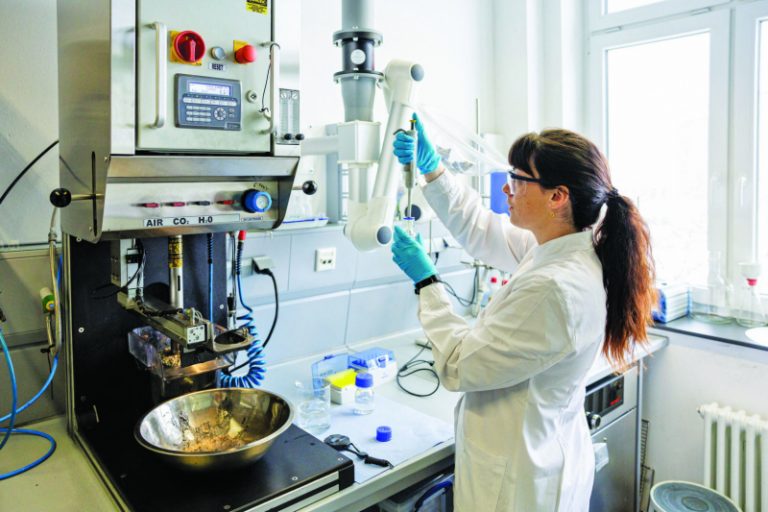
Researcher Anna Vanderbruggen peers into a vat of dark bubbling liquid. This is the result of a process she has developed to recover graphite from old lithium-ion batteries. Although graphite represents up to a quarter of the weight of the batteries, no one has yet come up with a viable plan to recycle it. This challenge is a part of the broader efforts in battery recycling, according to Vanderbruggen.

The 29-year-old researcher is still fine-tuning her battery recycling method but has already received an award from the European Institute of Innovation and Technology (EIT) for her efforts.

As Europe shifts gear from fossil fuel vehicles to electrified cars, recycling graphite as well as other elements in batteries is gradually becoming a major focus. All the more so as the continent seeks to wean itself off its reliance on countries like China for raw materials.
Vanderbruggen told AFP that battery manufacturers had not shown interest in recycled graphite until now because they could buy it cheaply from China.

Her method, developed at the Helmholtz Research Institute in Freiberg, Germany, involves extracting graphite from “black mass”, a powder that also contains cobalt, nickel, lithium and manganese.

“You put the black mass in water and add some chemicals and air bubbles, like in a jacuzzi,” Vanderbruggen, who is from France, said.

“The graphite attaches itself to the bubbles, whereas the metals are hydrophilic and therefore remain in the water.”

Vanderbruggen also works as a consultant for businesses exploring the opportunities that arise from recycling electric car batteries in the future.

Rising costs
Increasing raw material costs and shortages have led to a surge of interest in the field. The price of lithium has increased by 13 percent over the past five years, according to Philippe Barboux, a professor of chemistry at PSL University in Paris. He said recyclers have not recovered lithium on a large scale until now because it was not profitable.

But that looks set to change with 350 million electric cars expected to be on the road worldwide by 2030. This is a significant increase. The number is up from 16.5 million in 2021, according to the International Energy Agency (IEA).

Barboux said that in 10 years, manufacturers will produce so many batteries. They will have to incorporate battery recycling to handle lithium reuse, which is necessary to avoid shortages.

In theory, the technology now exists to recycle almost all the materials that make up lithium-ion batteries. This is according to the experts interviewed by AFP.

German group Aurubis, one of Europe’s largest suppliers of non-ferrous metals, claims to be able to recycle at least 95 percent of the metals. This recycling process applies to “black mass” at a pilot plant it has set up in Hamburg. French mining group Eramet, Belgium’s Umicore, and German carmaker Mercedes have also launched similar ventures. The majority of such projects are still in their pilot stages.

Also Read: Tesla inks deal to get key battery component outside China

‘Huge growing market’

“It’s a huge growing market and we want to play a role in it,” said Ken Nagayama, head of business development for battery materials at Aurubis, who is currently working on a graphite recycling process.

He believes there will be “sufficient market supply to develop a plant for battery recycling on an industrial scale during the second half of the decade.”

Since the batteries tend to last seven or eight years, there are not yet “enough batteries at the end of their life” to feed the recycling market, said Serge Pelissier, director of research at the Gustave Eiffel University in Lyon.

There are also many different models of car batteries. This situation makes it difficult to set up a standardised recycling system. It is unlike those available for mobile phones and laptops. The market for recycling car batteries will probably not reach its full potential until the “early 2030s”. This is according to Alex Keynes of the Transport and Environment NGO.

Also Read: China Looks to Africa in Race for Lithium

Swedish and Norwegian joint venture Northvolt-Hydro, a pioneer in the field, is aiming to recycle the equivalent of 500,000 batteries by 2030. This would represent around half of the batteries likely to be available for recycling by that time, according to estimates from consultancies.

The European Union wants new batteries to incorporate 16 percent recycled cobalt and six percent recycled lithium and nickel by 2031. The company aims to meet this by promoting high rates of battery recycling, targeting at least 70 percent of old battery weight by 2031.

“If they recover new components like graphite, they will be able to meet these requirements,” Vanderbruggen said.

- Advertisement -