Egyptian auto-tech startup Helpoo has secured an undisclosed amount of funding from Saudi firm Morni Holding to help it scale. Helpoo is an integrated tech-enabled service application that offers timely, high-quality motor vehicle insurance inspections, insurance claim management, and road assist services in Egypt.
The platform aims to set new service standards in the field of inspection and damage assessment for motor vehicles and road rescue services, and become the leading partner for insurance companies. It is the only company with its type of license and approval provided by the Financial Regulatory Authority (FRA).
It has now secured funding from the Saudi Arabia-based firm Morni Holding, which offers a diverse range of products, including an electronic auction platform, the first third-party administrator of motor claims licensed by the Saudi Central Bank, and the first end-of-vehicle life facility in the MENA.
The investment is part of Morni Holding’s long-term plan to invest US$10 million in the Egyptian market by 2030, through its exclusive advisor Exits Mena, a provider of investment services in the financial technology sector in Egypt and the Middle East.
Helpoo will use the funding to strengthen its market footprint, expand operations, and generate revenue streams through new product line extensions. Morni Holding will also provide Helpoo with technical and strategic support through ongoing consultations, training and exchange of expertise.
“We are thrilled to announce that our recent investment in the Egyptian roadside assistance industry will have far-reaching and positive implications. It will drive potential economic benefits by attracting foreign capital and expertise, creating jobs and boosting economic activity, and spurring technological advancements and innovation as we bring our cutting-edge technologies and best practices to help propel Helpoo into its next growth phase. Moreover, this investment marks a significant step in fostering strong investor relations between Egypt and Saudi Arabia, paving the way for increased cooperation and expansion opportunities,” said Shehail Alshehail, managing director of Morni.
Car accidents can have a profound impact on an individual’s physical and mental well-being. Even seemingly minor accidents can result in significant emotional distress and trauma. In fact, research conducted by the National Institutes of Health has shown that more than 30% of individuals who survive car accidents develop symptoms of post-traumatic stress disorder (PTSD). As experienced car accident attorneys can attest, emotional distress is a common outcome of these types of incidents.
Given the potential for devastating consequences, it is crucial to take proactive measures to prevent car accidents from occurring in the first place. By implementing safe driving practices and adhering to traffic laws, individuals can significantly reduce their risk of being involved in a car accident. Additionally, maintaining one’s vehicle and ensuring that it is in good working condition can also help prevent accidents from happening.
It is important to remember that even minor car accidents can have long-lasting effects on an individual’s physical and mental health. Therefore, taking steps to avoid such incidents is essential for promoting overall well-being and preventing unnecessary suffering. By prioritizing safety and being mindful of one’s actions on the road, we can all work towards creating a safer and healthier community for ourselves and those around us. Additionally, seeking legal support from experienced car accident lawyers can help those who have been involved in accidents navigate the legal process, negotiate with insurance companies, and receive the compensation they deserve for their injuries and emotional distress.
The Importance of Regular Vehicle Maintenance to Prevent Accidents
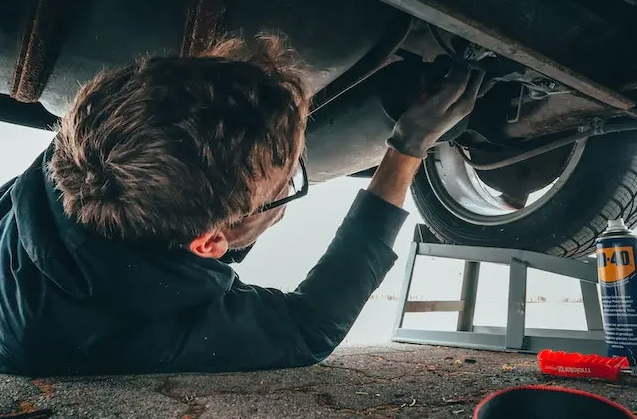
Regular vehicle maintenance can help prevent accidents caused by mechanical failure. Many accidents occur due to worn-out brakes or faulty tires. Therefore, it is crucial to have your car inspected by a mechanic regularly. A mechanic can identify and repair any issues with your vehicle before they become a problem. Neglecting vehicle maintenance can put you and your passengers in danger.
One critical aspect of regular vehicle maintenance is checking and changing the oil regularly. Engine oil lubricates the moving parts of the engine, preventing overheating and reducing wear and tear. Neglecting oil changes can cause engine damage and, in some cases, engine failure, which can lead to accidents.
Tips for Checking and Maintaining Tires to Improve Vehicle Safety
Tires are an essential aspect of ensuring the safety of your vehicle. It is crucial to maintain them properly to prevent accidents that may arise due to blowouts, skidding, and hydroplaning. To ensure that your tires remain in good condition, it is necessary to perform regular maintenance checks. One of the most important things to keep in mind is to check the air pressure regularly and ensure that they are inflated correctly.
It is also recommended to rotate your tires every 5,000 to 7,500 miles to ensure even wear. This will help extend the life of your tires and improve their overall performance. Additionally, it is essential to replace your tires when the tread wears down to 2/32 of an inch. This is because worn-out tires can be dangerous and may cause accidents on the road. By following these simple steps, you can ensure that your tires are well-maintained and safe for driving. Remember, proper tire maintenance is critical to keeping yourself and others safe while on the road. So, make sure to take care of your tires and stay safe!
How Proper Brake Maintenance Can Save Lives on the Road
Brakes are essential for safe driving. Regular brake maintenance can prevent accidents caused by brake failure. To maintain your brakes, check the brake pads regularly and replace them if they are worn down. Have your brakes inspected by a mechanic if you notice any unusual noises or vibrations when you apply the brakes. Proper brake maintenance can save lives on the road. It is important to also check the brake fluid level and replace it if necessary. Brake fluid plays a crucial role in the braking system by transferring force from the brake pedal to the brakes themselves. Without enough brake fluid, the brakes may not function properly and could lead to dangerous situations on the road. Additionally, make sure to have your brakes inspected at least once a year to ensure they are in good working condition. By following these simple maintenance tips, you can help prevent accidents and keep yourself and others safe while driving.
The Dangers of Distracted Driving and Tips to Avoid It
Distracted driving is a leading cause of car accidents. According to the National Highway Traffic Safety Administration, distracted driving claimed 2,841 lives in 2018 alone. To avoid distracted driving, avoid using your phone while driving, keep your eyes on the road, and avoid eating or drinking while driving. If you need to use your phone, pull over to a safe location. By avoiding distracted driving, you can prevent accidents and keep yourself and others safe on the road. It is important to remember that distracted driving is not limited to just phone use or eating while driving. Other common distractions include adjusting the radio, applying makeup, and talking to passengers. It is crucial to stay focused on the road at all times and eliminate any potential distractions. Remember, safety should always be your top priority when behind the wheel.
Car accidents can have a significant impact on both physical and emotional well-being. Preventive measures such as regular vehicle maintenance, safe driving practices, and seeking support from mental health professionals and car accident attorneys can help reduce the likelihood of accidents and mitigate their effects.
Future research on car accidents could include examining the efficacy of preventative measures such as technology that prevents distracted driving, the impact of social support on recovery after car accidents, and the long-term effects of car accidents on mental health. Additionally, further research could explore the intersection of car accidents with other societal issues such as race, class, and gender, and how these factors may influence the likelihood of accidents and recovery. By prioritizing research, education, and prevention efforts, we can work towards a future with fewer car accidents and a more supportive community for those who have been affected by them.
Hyundai Motor Co plans to exit Russia and sell its manufacturing plants there to a Kazakh company, South Korean media reported on Wednesday. South Korean TV network MBC reported that negotiations to sell Hyundai’s factories in Russia are in the final stage, adding that the automaker has been waiting for a final approval from the Russian government.
“It is true that there are ongoing discussions regarding the sale, but nothing has been decided,” Hyundai Motor said, according to the TV network.
Hyundai Motor suspended operations at its Russian operation last year. In March, the automaker said it was reviewing “various options” for its Russian operation. In a statement to Reuters on Thursday, Hyundai Motor said it was reviewing various scenarios for the future of its business in Russia, adding no decision had been made so far.
Many factories in Russia have suspended production and furloughed workers due to shortages of high-tech equipment because of sanctions and an exodus of Western manufacturers since Moscow invaded Ukraine last year.
Hyundai Motor, together with affiliate Kia Corp, is among the world’s top 10 biggest automakers by sales and builds about 200,000 vehicles per year in Russia, about 4% of its global production capacity.
Along with Renault, Hyundai and Kia were among top three selling brands in Russia before the war. Now as global players have pulled out, Chinese brands are replacing them in Russia’s war economy.
WesBank, one of South Africa’s biggest banks, says the transition to New Energy Vehicles (NEVs) will go beyond replacing internal combustion engines (ICE) with new technologies but will also be crucial to reaching the global goal of carbon neutrality by 2050.
WesBank, RMB and FNB, all divisions of FirstRand, hosted a thought leadership roundtable with industry experts and key government policymakers to address the key challenges facing the transition to NEVs. Although he did not attend the conference, Minister of Trade, Industry, and Competition Ebrahim Patel announced that his department will finalise its EV strategy for the country by the end of the current financial year, which ends in March 2024.
“RMB encourages public-private collaboration to enable the transition to NEVs and, in so doing, to positively impact on the future of South Africa’s automotive industry,” said Nana Phiri, Head of Corporate Client Segment RMB.
“We are encouraged by the government’s willingness to promulgate regulation and create a framework within which our domestic, export-led automotive sector can secure investment and ensure the continued viability of the automotive sector in South Africa.”
“RMB is committed to funding sustainable projects that will fuel the NEV supply chain and enable reliable and efficient national infrastructure to support South Africa’s NEV footprint.”
WesBank CEO Ghana Msibi said that the company acknowledged that the shift towards decarbonisation was not solely linked to vehicle finance or finance in general.
“We are committed to contributing to a sustainable future beyond our core business operations,” Msibi said.
Moreover, he said that South Africa has the opportunity to lead the continent regarding climate mitigation, given the country’s natural resources, such as coal, natural gas, wind, and solar power.
WesBank said that the nation’s automotive industry is one of the biggest in Africa and is a major contributor to the domestic economy, meaning it needs to quickly and successfully transition to NEVs.
Despite Africa having the mineral needed for battery electric vehicles (BEVs), the continent currently only has a small share in global vehicle manufacturing. Furthermore, Africa’s demand for vehicles is set to grow threefold in the next 10 years, which presents a major opportunity for all those involved.
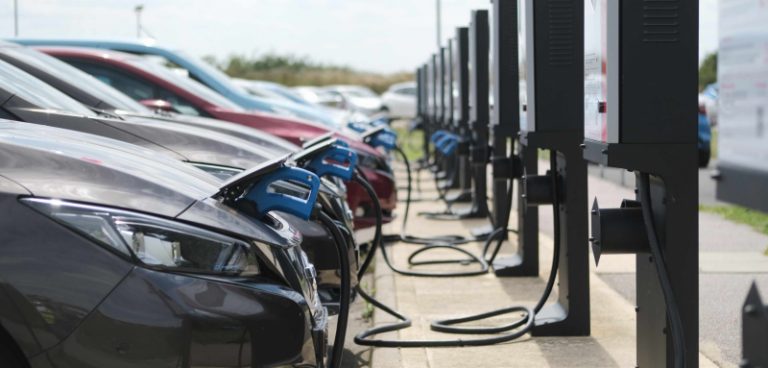
WesBank stressed that NEVs face several challenges in achieving wider acceptance among South African consumers, including constraints on product availability, a lack of awareness around range anxiety and the cost of ownership, questions over the reliability of electricity supply, and a limited grasp on the technology.
“The lack of education among customers on the benefits of NEVs, particularly BEVs, remains a significant challenge for all stakeholders. Another primary obstacle to wider adoption of NEVs in South Africa has been the significant initial investment required to establish a reliable and efficient national charging infrastructure,” Msibi said.
“While we see noteworthy growth in hybrids being financed, the sale of pure electric vehicles remains slow. The hurdle we face in finalising policies and regulations pertaining to the long-term future and sustainability of the South African automotive industry is an imperative one to overcome, to enable us to make decisions with confidence and kickstart progress.”
According to MarketsandMarkets analysis, the brake systems market, by value, is estimated to be USD 22.2 billion in 2022 and projected to reach USD 28.1 billion by 2027, at a CAGR of 4.8% from 2022 to 2027.
Automotive brakes play a crucial role in any vehicle’s safety and functioning. A typical brake system comprises various components, including an ABS control module, disc brakes, drum brakes, brake pedal, emergency brake, wheel speed sensors, brake booster, master cylinder, and brake pedal.
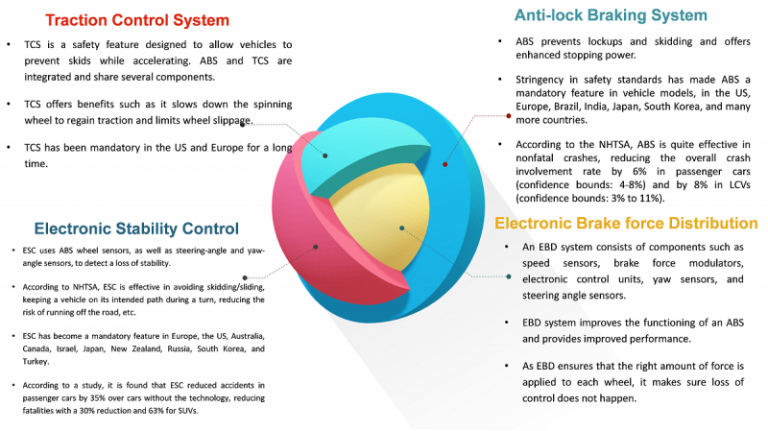
According to Utah.gov, total stopping distance is the distance a vehicle travels from the time a hazard is spotted and the brake pressed on until the vehicle stops. Most passenger vehicles are about 3,000–4,000 pounds. A passenger vehicle weighing 4,000 pounds, traveling under ideal conditions at a speed of 65 miles per hour would take 316 feet to stop. In comparison, a fully loaded tractor-trailer weighing 80,000 pounds, traveling under ideal conditions at a speed of 65 miles per hour will take 525 feet to stop. Around 60-90% of the vehicle’s stopping power comes from the front wheels. Thus, with the implementation of regulations for reduced stopping distance for enhanced safety, the adoption of disc brakes is expected to grow significantly. Use of electronic braking systems such as Anti-lock Brake Systems (ABS), Brake Assist (BA), and Electronic Brakeforce Distribution (EBD) can help reduce the stopping distance. According to the Royal Society for the Prevention of Accidents (ROSPA), ABS ensures the shortest distance in which a vehicle can be brought to rest is achieved. BA is based on the ABS technology of a vehicle and is usually used in combination with ABS. BA helps reduce the stopping distance by 45%. Thus, in the coming years, the adoption of ABS and BA is expected to grow due to the regulatory norms for vehicle safety.
Currently, Europe has the highest penetration of ESC globally. However, Asia Pacific is expected to be the fastest-growing market for ESC during the forecast period. This is mainly due to the steps respective governments and vehicle manufacturers took to make ESC a mandatory feature. According to the Ministry of Transport of Malaysia, all automakers are required to produce and sell new cars with ESC from July 2018. The Indian government is also expected to make ESC and autonomous emergency braking (AEB) a mandatory feature by 2023. Volvo AB (Sweden), Bayerische Motoren Werke AG (Germany), Audi AG (Germany), and General Motors Company (US) are among the leading ESC-equipped car manufacturers.
Increased demand for luxury passenger cars and electric vehicles to provide the opportunity for the growth of advanced braking systems
The stringency in passenger vehicle safety regulations is projected to increase the adoption of advanced brake systems. Passenger cars in Europe and North America already have significant penetration of advanced brake systems, and this penetration rate is expected to increase in the coming years. Passenger cars and SUVs with all four-wheel disc brakes are gaining popularity in Asia Pacific and RoW due to stringent safety standards making these braking systems mandatory. According to MarketsandMarkets Analysis, of total premium cars produced globally, the share of premium SUVs stood at ~53% in 2016, which grew to ~68% in 2022. US, Canada, China, Japan, and South Korea lead the premium SUVs market, constituting more than 90% of total production globally.With the reduced stopping distance regulations in SUVs the demand for disc brakes in SUVs is increasing. On the other hand, the rising concerns about global warming and the federal and state governments’ support to reduce air pollution are driving the EV market. Electric vehicles will witness high penetration of regenerative braking. According to recent technological developments, regenerative braking has the potential to improve fuel economy up to 30% in hybrid vehicles. Also, it can allow up to 60-70% of the available kinetic energy to be recovered during braking.
Using a regenerative braking system helps reduce brake emissions to a huge extent. For instance, according to Conference Eurobrake 2019, Vacuum-independent regenerative braking systems in electrified vehicles can decrease brake dust emissions by even more than 95%. The reason: regenerative braking systems allow the recovery of kinetic energy and initiate an emission-free generator braking. Thus, using advanced braking systems helps reduce non-exhaust emissions in automobiles. Governments worldwide are offering subsidies and incentives to encourage electric vehicle adoption. The demand for electric vehicles is increasing exponentially and is projected to continue soon, offering an attractive opportunity for regenerative braking system suppliers.
Sources: MarketsandMarkets Analysis
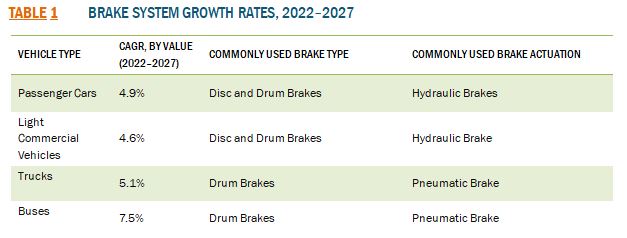
The passenger car brake system market is expected to be the largest solely due to the highest market share of production among all vehicle types. Bus is expected to be the fastest growing segment; however, from a low base, mainly due to implementation of safety regulations, making advanced brake systems a mandatory feature in coming years. Asia Pacific is expected to be the largest market for brake systems due to the shifting trend toward electronic braking systems and technological advancements.
Increasing demand of brake friction products in the aftermarket
Vehicle parc & the average replacement life of brake friction products is the key factor influencing the brake friction products aftermarket growth. The vehicle parc of Asia Pacific is projected to register a CAGR of 3-4% from 2022 to 2027. Factors responsible for this growth include an increasing average life span of vehicles, longer life of products, and increasing average miles driven. OEMs are moving from drum brakes to disc brakes in passenger cars and LCVs; hence, the market for disc brakes is projected to witness significant growth in the Asia Pacific region. Europe, which has been a pioneer in developing advanced products, has witnessed a tremendous increase in the average life of a product. This is expected to have an adverse impact on the brake fiction products aftermarket. For instance, ceramic disc brakes, which are estimated to have 35-40% extra life as compared to metallic brake discs, may run for the whole vehicle life. The development of advanced products thus poses a threat to the replacement market for brake friction products. Recent mandates regarding stopping distance in commercial vehicles have boosted the demand for brake discs and brake pads. As per the European Commission, a mixed braking system, which has a disc brake in front and a drum brake in the rear, has the lowest stopping distance. Hence, mixed braking systems are installed in heavy vehicles. Additionally, most European countries have banned asbestos brake pads and are now concentrating on lowering the copper percentage in brake discs to avoid brake dust pollution. This has led to the introduction of carbon and ceramic brake discs with a higher brake disc life. However, the introduction of advanced brake products is reducing the replacement cycle of brakes in the region.
Increased adoption of hydraulic wet brakes across off-highway vehicles
Hydraulic wet brakes are mainly used in agricultural tractors and construction equipment. A wet braking system is also called an oil-cooled or oil-immersed disc brake system. Wet brakes are a modern alternative to dry braking systems. Wet brakes offer better-stopping power, withstand harsh working conditions, and do not require frequent maintenance/repairs. This hydraulic wet brake system makes stopping the vehicle when driving through water/wet roads easier, enhancing the vehicle’s safety. All key tractor manufacturers use wet disc brakes, while only the economy models are equipped with dry disc or drum brakes. The hydraulic wet brake segment is expected to be the largest off-highway brake system market during the forecast period. Technological advancements in advanced braking systems and increasing sales of tractors, wheel loaders, and excavators are expected to drive the off-highway brake system market. Asia Pacific is the largest market for hydraulic wet brake systems. This is mainly due to the largest tractor markets ― India and China. According to MarketsandMarkets analysis, Asia Pacific accounted for ~75% of total agricultural tractor sales globally. An increase in farm mechanization is significantly boosting tractor sales, driving the hydraulic wet disc brake system market. Also, growing stringency in safety regulations in Europe and North America is expected to increase the hydraulic wet brake system market further.
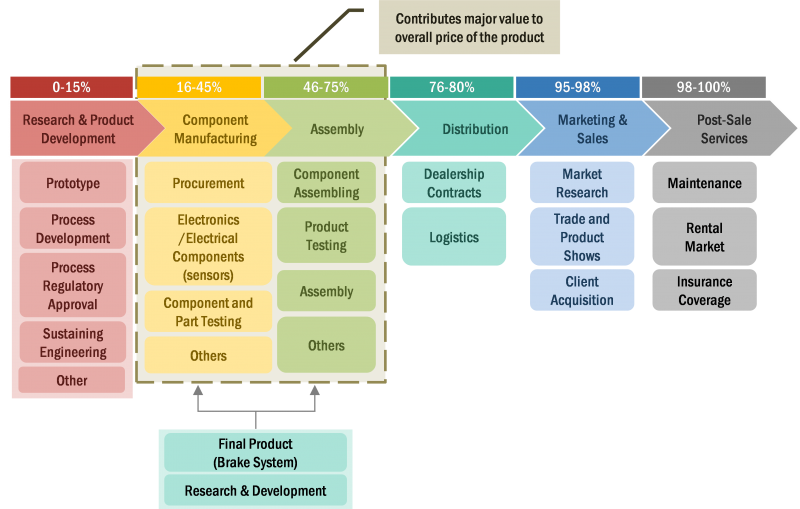
Automotive Braking System – Value Chain:
The value chain of the automotive brake system begins at the R&D stage, that includes sustainable engineering and product development. This is followed by raw material purchase and manufacturing. R&D activities are divided into in-house and outsourced tasks. In-house activities involve actual analysis and electronic interpretation of testing parameters, whereas non-critical areas are outsourced. The final product is then marketed and sold to OEMs.
Figure: Automotive Braking System Market: Value Chain Analysis
Others*include other materials, components, etc. Others** include sub-distributors, etc. Source: Annual Reports, SEC Filings, Press Releases, Investor Presentations, Expert Interviews, and MarketsandMarkets Analysis
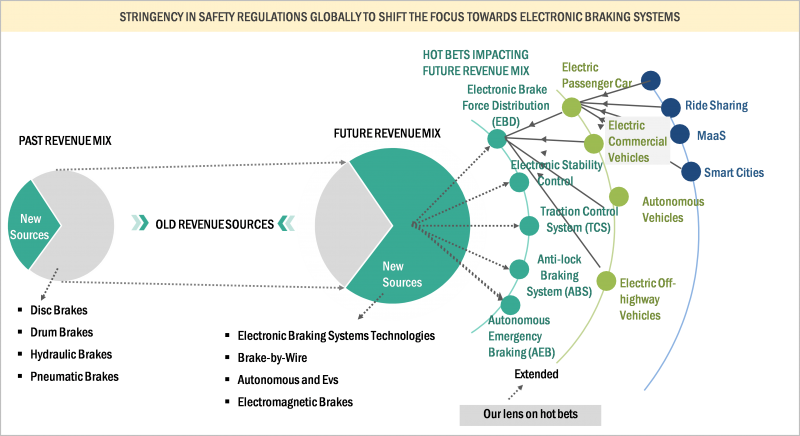
Automotive Braking System – Future Revenue Shift and Recommendations:
Source: Secondary Research, Industry Associations, Expert Interviews, and MarketsandMarkets Analysis
The growth of the automotive brakes market is directly proportional to the production of vehicles. In line with growing luxury vehicles, the market for premium SUVs has risen significantly. According to MarketsandMarkets Analysis, of total premium cars produced globally, the share of premium SUVs stood at ~53% in 2016, which grew to ~68% in 2022. US, Canada, China, Japan, and South Korea lead the premium SUVs market, constituting more than 90% of total production globally. The factors attributing to the growth of premium SUVs over premium sedans are better and more powerful engine performance. Hence, the demand for safety has greatly increased, leading to the installation of advanced braking technologies in SUVs and luxury passenger cars.
On the other hand, the rising concerns about global warming and the federal and state governments’ support to reduce air pollution drive the EV market. Electric vehicles will witness high penetration of regenerative braking. According to recent technological developments, regenerative braking has the potential to improve fuel economy up to 30% in hybrid vehicles. Also, it can allow up to 60-70% of the available kinetic energy to be recovered during braking.
The market is led by players focusing on extending their product offerings to brake system customers worldwide. Leading companies in the market include Robert Bosch (Germany), Continental AG (Germany), ZF Friedrichshafen AG (Germany), Akebono Brake Industry Co., Ltd. (Japan), and Brembo S.p.A (Italy). These companies have developed new solutions and undertaken supply orders, partnerships, and agreements to gain traction in the growing market for brake systems. For instance, in 2022, Brembo S.p.A introduced its the renewed GP4-MS brake caliper for motorcycles. This caliper is designed for nickel-coating treatment to offer strength and performance at high temperatures. The increasingly stringent active safety regulations mainly drive the market for braking systems. Asia Pacific is expected to be the leading market for braking systems, owing to the increasing vehicle production in countries such as China, Japan, and India.
Increasing vehicle emissions and awareness of environmental sustainability have led countries to implement stringent vehicular emission norms. To comply with these regulations, exhaust systems and after-treatment technologies reduce pollution from vehicle tailpipes. With the introduction of updated emission regulations, the newer after-treatment devices such as diesel oxidation catalysts, diesel/gasoline particulate filters, selective catalytic reduction, ammonia slip catalysts, electrically heated catalysts, exhaust gas recirculation systems, and lean Nox traps are equipped with new vehicles. With newer After-treatment devices installed in diesel engines are diesel particulate filters (DPF), diesel oxidation catalysts (DOC), lean NOx trap (LNT), and selective catalytic converters (SCR); and for gasoline engines include gasoline particulate filters (GPF).
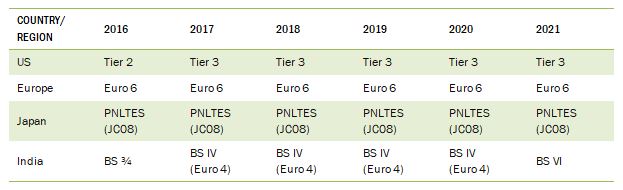
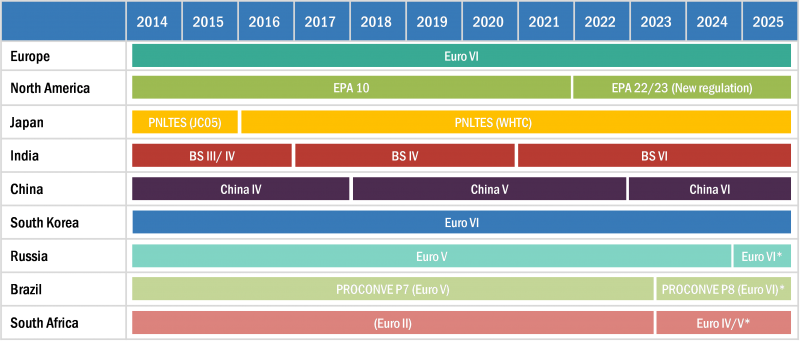
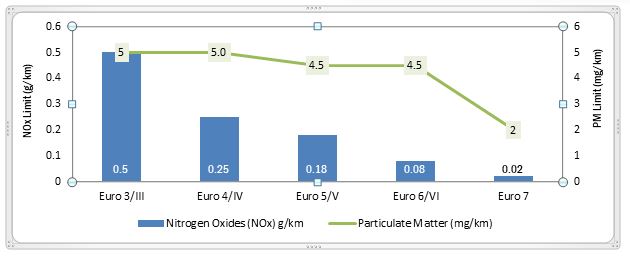
For on-road vehicles, Europe follows the most stringent regulations concerning vehicular emissions. Euro 6 is the ongoing emission regulation established by the European Union directive to reduce harmful gases like carbon monoxide (CO), nitrogen oxide (NOx), hydrocarbons, and others from a vehicle’s exhaust system. In the Euro 6 standards, NOx limit is 84% lower than the Euro 3 level and DOC helps reduce the NOx, CO, and HC emissions by 42.0%, 38.5%, and 1.73%, respectively. Most other countries follow Euro standards such as Euro 5 and Euro 6. The US follows Tier 3 regulations for the light duty vehicle segment. Emerging economies with rising vehicle production like China which implemented China 6 emission regulation and India introduced new standards of BS 6 emission standards on April 1, 2020, which is equivalent to Euro 6. Countries from other parts of the world that are adhering to the Paris Agreement for a reduction in vehicle emissions are planning to introduce more stringent emission regulations. Countries such as Brazil, Russia, and South Africa are planning to introduce emission regulations like Euro 5 and Euro 6 post-2023. This will result in more emission stringency and a reduction in vehicle weight. Manufacturers are shifting toward exhaust after-treatment devices through advanced components and technologies to comply with emission standards. Thus, this is expected to fuel the demand for exhaust systems in on-highway vehicles.
TABLE 1 historic overview of ON-ROAD VEHICLE EMISSION REGULATIONs For passenger vehicles, 2016–2021
Source: European Commission, EPA, Secondary Research, Interviews with Experts, and MarketsandMarkets Analysis
To meet the regulatory requirement, OEMs are needed to install after-treatment devices like diesel particulate filters (DPF), diesel oxidation catalysts (DOC), exhaust gas recirculation (EGR), and other emission control devices are used as a catalytic converters in automotive exhaust systems to transform all harmful and toxic gases from engines into less harmful pollutants will also drive the exhaust system market parallelly.
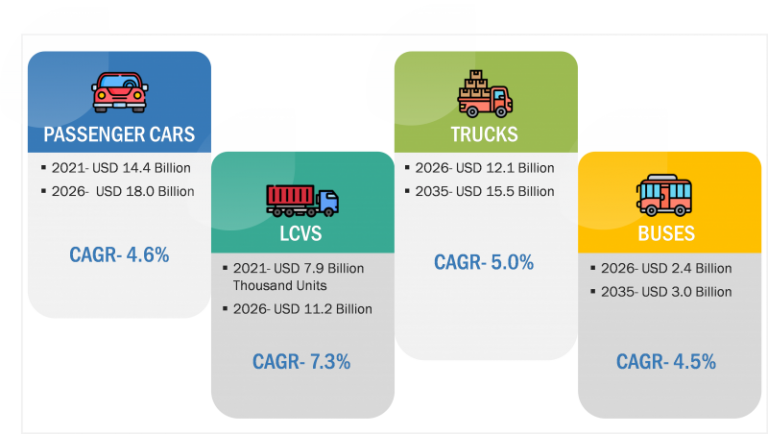
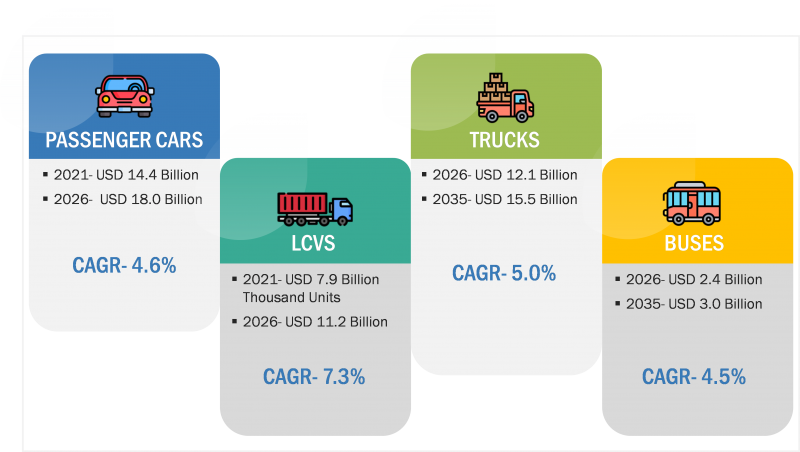
The current emission regulation that is being followed in India is the Bharat Stage VI, an adapted version of the Euro VI regulation, which limits CO emission for passenger cars, HCVs, and two and three-wheelers. Furthermore, a more stringent BS6 Stage 2 is expected to be implemented in April 2023, which will mandate that BS6 Stage 2 compliant cars meet the emission norms in real-world driving conditions as well. Similarly, Europe proposed Euro 7 Regulation lately, which monitors tailgate and other vehicular emissions from the tires and brakes. According to MarketsandMarkets analysis, the global exhaust system market will grow by USD 47.9 billion by 2026 at a CAGR of 5.3% during the forecasted period.
FIGURE 1 EXHAUST SYSTEM (OE) MARKET, BY ICE VEHICLE TYPE (USD Billion)
Source: MarketsandMarkets analysis
1.1.1 CLASS D AND ABOVE PASSENGER VEHICLES DEMONSTRATE STRONG DEMANDDOC and DPF are assumed to have 100% installation rates in Europe, the US, Japan, South Korea, and Canada for all diesel vehicle types—passenger cars, LCVs, trucks, and buses. This penetration is driven by ongoing emission norms such as Euro 6 and EPA 10. These standards have made installing DOC and DPF in diesel engines mandatory. Class D, E, and F diesel passenger vehicles in Europe and North America are mostly fitted with SCR technology, as diesel engines with more than two liters are mostly equipped with SCRs.
Heavy commercial vehicles, including trucks and buses, are not equipped with LNT devices due to large-capacity engines’ limited benefits. In the US and Canada, SCR has been employed in medium and heavy-duty vehicles since 2007, and this technology requires DEF (32.5% urea) to reduce NOx emissions. In 2010, the Environment Protection Agency (EPA) implemented regulations, which led to the increased application of SCR in the trucks segment. Until August 2014, all new medium- and heavy-duty trucks and buses in North America had installed SCR. Increased adoption of SCR has led to a rise in demand for DEF, as the dosage of DEF is approximately 3-5% of diesel consumption.
1.1.2 OFF-RAOD VEHICLES CAN BE A PROMISING MARKET FOR EXHAUST SYSTEM SUPPLIERS
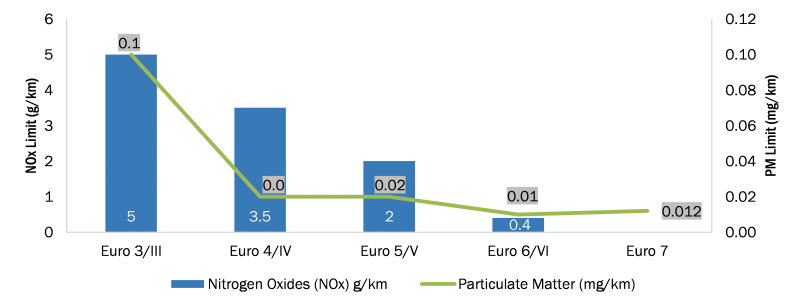
Considering the increase in global demand for off-highway equipment, controlling Greenhouse Gas (GHG) emissions from vehicles and equipment has become a major challenge. Almost all developed countries have established programs/norms to deal with GHG emissions in the transportation industry. Most countries follow Euro standards such as stage V. The PM limit of the Stage V standard is 97% lower than that of Stage I, and the hydrocarbon (HC) + nitrogen oxides (NOx) limit is 94% lower. Countries following the Euro standards include Brazil, Russia, and South Africa. Exhaust after-treatment devices play a significant role in meeting these standards as it improves fuel economy. These heavy machines are mainly equipped with DPF and SCR to reduce harmful exhaust gases as these vehicles are equipped with heavy engines.
Exhaust system manufacturers and OEMs need to continuously manufacture emission exhaust after-treatment devices and components for off-highway equipment to adhere to emission regulations set by governments
Note: * Speculated Source: European Commission, EPA, Secondary Research, Expert Interviews, and MarketsandMarkets Analysis
Regulatory bodies are constantly upgrading environmental laws to curb carbon emissions. For instance, in India, BS-VI stage 2 norms are implemented from April 1, 2023, onwards, which require Real Driving Emissions (RDE) test to measure the pollutant level of hydrocarbons. This needs On-board Diagnostics (OBD2) to be installed standard. To comply with the regulation, the powertrains must be upgraded and equipped with an onboard self-diagnostic device, which monitors various factors, including changing driving behavior and real-time traffic conditions.
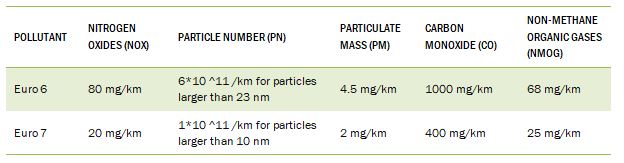
Further, Euro 7 standards will be adopted by the European Commission for all motors, such as cars, buses, vans, and lorries, from July 1, 2025, targeting zero carbon emission. The Euro 7 regulation includes various real driving emissions (RDE), including the emissions from the brakes and tires of ICE and EVs. In-depth emission monitoring from different vehicular systems is required to achieve the agenda. The commission has proposed that there will be a 45% reduction in CO2 from 2030 in the HCVs followed by 65% emission reductions from 2035 and a 90% emissions reduction from 2040 when compared with the 2019 emission levels. It is also proposed that by 2035, the Euro 7 will lower the total NOx emissions from cars and vans by 35% compared to Euro 6, and by 56% compared to Euro VI from buses and lorries, which would aid the net zero emission targets of 2050. However, it demands many interim emission regulations to sculpt the existing industry to be equipped for the net zero-emission future.
FIGURE 2 EURO 3 to Euro 7: NOX & PM EMISSION REDUCTIOn for passenger cars
Source: Secondary Resources and Transport & Environment Insights
FIGURE 3 EURO 3 to Euro 7: NOX & PM EMISSION REDUCTIOn for heavy-duty vehicle
Source: Secondary Resources and Transport & Environment Insights
TABLE 2 POLLUTANT limit reduction under euro 6 & proposed euro 7 regulations
Source: Secondary Resources and Transport & Environment Insights
1.3 NEED FOR ADVANCED EXHAUST SYSTEM- AFTER TREATMENT TECHNOLOGIES
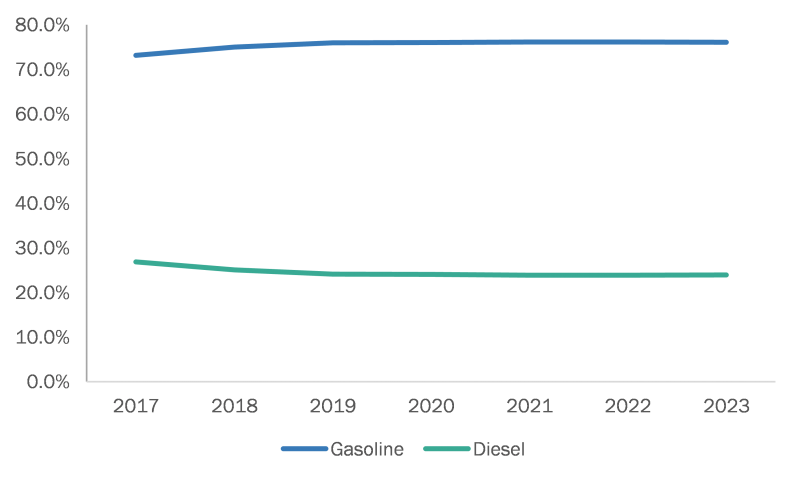
FIGURE 1 Gasoline vs. diesel passenger vehicle share (%), 2017-2023
Source: Secondary Resources and MarketsandMarkets Analysis
With more stringency in emissions norms, the demand for gasoline vehicles are increasing and a sharp decline in diesel engine had been noticed. In diesel engines, advanced after-treatment devices are needed to be deployed in the vehicles. These technologies are expected to comply with strict NOx emissions and require close-coupled catalysts, dual urea injection, electric catalyst heaters, and high filtration substrates. Implementing various emission standards has shifted DOC to remain a crucial technology for diesel engines where it converts carbon monoxide & hydrocarbon to carbon dioxide but also decreases the mass of diesel particulate emissions. Further DPFs help to remove 95% of harmful PM emissions. They can be pretty temperamental and will only work under the right conditions. Under Euro VI-e, a new generation of cordierite DPF was developed to meet the targets while maintaining a lower pressure drop and high ash capacity.
1.3.1 DIESEL OXIDATION CATALYSTS (DOC)
DOC uses advanced substrate substances that catalyze chemical reactions and transform harmful emission gases into non-hazardous substances. Mixed metal oxides and zeolites are utilized as advanced to improve performance and weight reduction of the technology. In modern vehicles, DOC is getting installed with other after-treatment devices such as DOC and DPF to improve efficiency and limits harmful gases. DOC technology will get integrated with an engine control system that alters timing and quantity of fuel injection to restrict the pollutant level. Using advanced substrates will improve the design and deliver efficient outcome for a long time and also reduces maintenance cost at a significant rate
1.3.2 DIESEL PARTICULATE FILTER (DPF)
The diesel particulate filter (DPF) helps reduce particulate matter and carbon emissions from a diesel engine. It is used for the removal of particulate matter from exhaust gas by physical filtration. DPF is usually made of either cordierite or silicon carbide honeycomb structure with channels blocked at alternate ends. The usage of filter material plays a critical role and a few filter materials such as silicon carbide, aluminum titanate, cordierite, and ceramic fibers provide an improved filtration process. However, DPF needs to follow either active or passive regeneration periodically to burn out the accumulated particulate matter soots. used in the DPF. This technology is also get installed combined with after-treatment devices such as Diesel Oxidation Catalysts (DOC) and Selective Catalytic Reduction (SCR) to reduce harmful gases and enhance operational efficiency.
1.3.3 SELECTIVE CATALYTIC REDUCTION (SCR)
Automotive OEMs increasingly adopt SCR, an advanced active emission control technology. It breaks down the hydrocarbons and NOx into water and nitrogen. It uses expensive metals such as palladium, rhodium, and platinum combined with ceramic bricks that act as a catalyst and the injection of automotive ammonia, more commonly known as diesel exhaust fluid (DEF) or AdBlue, to achieve low emission levels. High-efficiency SCR technology is getting developed along with advanced dosing control for precise injection rate of urea, ammonia slip catalyst, and urea quality sensors. Advanced materials such as multiple metal oxides, vanadium-based, zeolites, etc. are used to boost emission control. Also, it can be integrated with the engine control system to control the flow and timing in the fuel injection system to optimize results
The SCR technology reduces NOx emissions by nearly 90%. Therefore, its usage in most diesel vehicles across the globe is mandated under the new emission norms. SCRs trap NOx more efficiently compared to LNTs in vehicles with large engine capacities. Hence, passenger cars and LCVs with an engine capacity of above 2.0 liters are generally equipped with SCRs as they emit more NOx than vehicles with smaller engine capacities. This led the SCR to hold the largest market share with USD 39.2 billion, registering a CAGR of 6.7% globally.
1.3.4 EXHAUST GAS RECIRCULATION (EGR)
EGR: An exhaust heat recovery system is an energy recovery system that transfers heat from process outputs at high temperatures to another part of the vehicle temperature process. An exhaust heat recovery system turns thermal losses into energy in a vehicle. This technology has caught the attention of car and heavy-duty vehicle manufacturers as an efficient way to save fuel and reduce vehicle CO2 emissions. This technology is also used in hybrid vehicles. With the increasing stringency in emission norms, OEMs and exhaust system manufacturers are developing advanced exhaust heat recovery systems such as thermoelectric generators (TEG) and organic ranking cycle (ORC). These exhaust heat recovery technologies help convert a sizable amount of exhaust heat energy and store and reuse it in another useful form for driving auxiliary vehicle functions or giving an extra boost to the engine when required. Currently, vehicles have little usage of exhaust heat recovery. However, with increasing technological advancements, exhaust heat recovery will witness tremendous growth as it can offer efficient thermal management in the vehicle.
1.3.5 GASOLINE PARTICULATE FILTER (GPF)
Gasoline particulate filters (GPFs) are used to nullify the emission effects and reduce the emissions levels of GDI engines. GPFs prevent the accumulation of soot and enable continuous regeneration of the filter. GPFs were primarily developed in North America as there is a high dependence on gasoline engines, with 88% of passenger cars and LCVs running on gasoline engines. Some GPF-equipped models are Ford Mustang, Volkswagen UP GTI, Tiguan, and Mercedes-Benz S-Class. In other regions such as Europe and Asia Pacific, adopting new emission standards and authorities provisions for OEMs to sell and promote vehicles that run on cleaner fuels will drive the demand for gasoline particulate filters. Similar to DOC, and DPF, GPF devices can be used in combination with other systems such as Three-Way Catalysts (TWCs) and NOx traps to cut down the emissions significantly. This technology also requires a regeneration process to remove the particulate matter content.
To go further, some of these after-treatment devices are combined, enabling automotive OEMs and exhaust system manufacturers to limit vehicle emissions within required regulatory restrictions. The most used after-treatment device combination includes SCR and DPF. This combination removes more than 70% of all gaseous as well as particulate matter. The SCR reduces NOx to N2 (nitrogen) and water in the presence of a reductant, while the DPF filters particulate matter. For example, BASF’s Catalysts division is offering a combination of a Diesel Oxidation Catalyst (DOC) and a Lean NOx Trap (LNT). This DOC and LNT combination offers the high HC and CO removal efficiency of a fully formulated DOC, with the ability of an LNT to trap and reduce NOx. This combination enables exhaust systems to efficiently control the emissions within the Euro 6 emission limits for diesel engines. Thus, such combinations are driving the demand for after-treatment devices and the exhaust system market.
CONCLUSION
The global automotive industry was already moving toward the complete electrification of vehicles so follow the stringent rules set by the governing bodies. The upcoming trend for hybrid electric vehicles and Euro 7 regulations for ICE engines till 2025 will generate a potential movement by shifting the focus toward introducing compliant emission reduction technologies. However, the OEMs are actively investing hue in developing diagnostic tools and after-treatment devices which compile all the proposed regulations and reduce the carbon footprints globally. Powertrain technology has already undergone a transformation and technological advancements that aim to reduce the production of greenhouse gases. In the next coming years, OEMs will be more focused on introducing sustainable technologies which will have the capacity to actively drive the future of the automobile industry. Thus, investing resources in developing technologies like EVs, hybrid, plug-in vehicles, catalytic converters, and aftermarket devices in emission control technologies will benefit the industry and the environment the most.
Diesel vehicle registrations have declined for a few years all over the world. The real-driving emissions testing and government programs to further discourage diesel vehicle use (e.g., by restricting their circulation or increasing taxes on diesel fuel) are the other significant reasons behind the recent diminish in diesel vehicle share of overall vehicle production.
This has led to new advancements in gasoline engines, such as using gasoline direct injection engines (GDI). These GDI engines offer higher fuel efficiency, and the performance also increases when coupled with a turbocharger. The gasoline direct injection (GDI) system is one such advancement that injects highly pressurized (200 bar) fuel directly into the combustion chamber to improve fuel efficiency and performance boost. As per the EU Transport and Environment Agency, GDI engines are expected to replace the existing Port Fuel Injection (PFI) gasoline engines to a large extent in 2021.
However, one of the major drawbacks of GDI engines is the high generation of particulate emissions. Hence, a gasoline particulate filter is used to keep the particulate emission in check. As a result, using a GDI system with technologies such as turbochargers and gasoline particulate filters will result in improved performance and cleaner emissions. Thus, the demand for GPF is expected to increase with growing GDI vehicle sales, especially in the US, Japan, and Europe. Thus, the GPF segment is expected to register the highest growth rate of 15.9%during the forecast period due to the growing demand for gasoline direct engines.
The passenger car and light commercial vehicles will continue to contribute a significant share of the exhaust system market in the coming years. The growing installation rate of SCR to curb NOx emissions is expected to lead to the demand for SCR technology.
Forvia (Germany), Tenneco Inc. (US), Eberspächer (Germany), Johnson Matthey (UK), and Umicore (Belgium) are the key after-treatment device suppliers. These companies are developing various advanced after-treatment devices to gain traction in the market and to aid emission reduction.
Autochek, the automotive technology company making car ownership more accessible and affordable across Africa, has announced the acquisition of a majority stake in AutoTager, an Egyptian automotive technology company that makes it easier to find and buy cars, to deepen its presence in North Africa and support the company’s ongoing growth.
AutoTager is a venture backed startup that is removing the friction from the car buying and selling process in Egypt, enabling easier access to vetted vehicles and financing for consumers, and connecting dealers with serious buyers and technology solutions to improve their operations. The company was founded in 2021 by Amr Rezk, a serial entrepreneur that has founded and co-founded multiple successful companies, including Fundseer, a leading private equity GP/LP coordination platform. Amr has deep experience operating in and investing in various geographies across Africa and the Middle East, with a track record of building and sustaining high growth enterprises. Prior to becoming an entrepreneur, Amr worked with several large institutions including Goldman Sachs, EFG-Hermes and the Qatar Investment Authority where he led the Private Equity and Venture Capital Funds Investments Team. He has an academic background as an economist and holds an MBA from Harvard Business School.
The acquisition represents Autochek’s entry into Egypt, which is Africa’s second largest economy and the continent’s second largest automotive market. The country’s strategic geographical position, skilled workforce, large domestic market and the successful reforms undertaken by the country’s government in recent years has enabled dynamic growth and made it one of the largest recipients of Foreign Direct Investment (FDI) in Africa over the past decade.
This acquisition also represents the third for Autochek in less than a year and the sixth in under two years, reflecting its emergence as the leading Pan-African automotive technology company. The company now has active operations in 9 countries across East, West and North Africa, with a partner-led footprint of more than 2,000 dealers and workshop locations. This unrivalled footprint enables unparalleled insights into vehicle-related transactions and positions Autochek and its subsidiaries to deliver effective solutions for the needs of a wide range of stakeholders in Africa’s automotive ecosystem.
Commenting on the acquisition, Olajide Adamolekun, Group CFO and co-founder of Autochek, said, “Amr’s background and track record is as impressive as it gets and I am delighted to have him on board. His experience will be invaluable as we enter the Egyptian market and continue on our mission to improve the automotive finance value proposition on the continent and catalyse more growth across the automotive ecosystem. There are many parallels between Autochek and AutoTager, and we are looking forward to building on these parallels to deliver more growth and success in the months and years to come.”
Amr Rezk, CEO and Founder of AutoTager, said, “We are thrilled to partner with Autochek to pursue several sizable and unique opportunities in the automotive space. Autochek has deep automotive expertise and brings a proven playbook and several all-weather strategies that have been tested and validated in multiple complex high growth markets. The company’s track record of concurrently operating various business models in the automotive space is stellar and provides us with a wide menu of options and cutting-edge tools to offer AutoTager’s customers a truly unique proposition. We have very exciting plans and are confident that the global OEM and financing partnerships that Autochek has secured will also provide us with differentiated access allowing us to lead in our space while targeting high quality top decile returns”.
About Autochek
Autochek is an automotive technology development company that is building the infrastructure to make car ownership more accessible and affordable in Africa. With active operations in 9 countries across East, West and North Africa, a partner-led retail footprint in over 2,000 dealers and workshop locations, and more than 70 banking partners, Autochek is improving Africa’s automotive finance value proposition by bringing all relevant stakeholders together to enable easier access to more financing options as a catalyst for growth in Africa’s automotive industry.
Following the confirmation in May 2022 of a zero-emission model line, INEOS Automotive has today announced it is developing its brand new electric 4X4 vehicle in conjunction with industry-leading automotive supplier, Magna.
INEOS Automotive’s new 4X4 will represent a unique proposition for customers. Smaller than the Grenadier, this all-new battery electric model will be zero emission and will deliver world-class off-road capability, without compromising on-road comfort or performance.
INEOS has worked with Magna previously on series engineering and development for the Grenadier station wagon and pick-up models. It is well placed to take on INEOS Automotive’s third model line and has signed an agreement to start production of the new 4X4 at Magna’s Graz, Austria facility in 2026. Part of the development process for this new 4X4 will include a rigorous testing programme on Austria’s Schöckl mountain, which is close to Magna’s complete vehicle assembly facility.
“Having worked together on the engineering of the Grenadier, we’ve seen first-hand the value of applying Magna’s agility, knowledge, and experience to a complete vehicle development programme. Deepening our collaboration is a natural next step as we use the Grenadier as a springboard for our continued growth as a global automotive brand with this third model line,” adds Lynn Calder, CEO of INEOS Automotive.
Magna is one of the world’s largest automotive suppliers and independent contract manufacturers. It produces a number of different models for various automakers covering conventional ICE, hybrid and electric vehicles at its complete vehicle assembly facility in Graz.
To find out more about Grenadier prices, technical specifications and options, visit www.ineosgrenadier.com.
MediaTek has introduced Dimensity Auto, its next generation automotive platform designed to provide automakers with a wide variety of cutting-edge technologies needed for the future of intelligent, always-connected vehicles. As part of this platform, MediaTek Dimensity Auto offers a comprehensive portfolio that includes Dimensity Auto Cockpit, Dimensity Auto Connect, Dimensity Auto Drive, and Dimensity Auto Components.
Building off of MediaTek’s world-leading premier mobile chipset brand, Dimensity Auto represents the company’s industry-leading expertise in performance, power efficiency and SoC integration. The automotive platform benefits from MediaTek’s extensive cross-platform, industry-leading technologies to provide automotive solutions featuring high-performance computing, impressive AI, extensive feature integration, innate energy efficiency, all while meeting automotive-grade reliability standards.
“With the Dimensity Auto platform solutions, we are extending MediaTek’s technological advantages in the automotive segment to the next level,” said Jerry Yu, Corporate Senior Vice President and General Manager of CCM Business Group. “Our goal is to leverage decades of expertise across several categories in technology to deliver the smart life on wheels, as we work together with the world’s top automotive brands to create a more intuitive, immersive, safe, and comfortable driving experience.”
Dimensity Auto Cockpit
The cockpit and infotainment systems are vital to the human machine interface experience in each vehicle. Because of this, Dimensity Auto Cockpit is designed to be the world’s fastest smart cockpit, bringing MediaTek’s flagship-grade experience in Smart Home and Entertainment to vehicles, and is built using leading chip manufacturing processes to maximize feature integration, performance, and power efficiency.
Dimensity Auto Cockpit features include:
A complete portfolio of solutions with hardware and software scalabilityv
MediaTek’s high-performance AI multi-processors, equipped with both deep learning accelerator (MDLA) and vision processing unit (MVPU)
High-performance 3nm advanced process, efficient power consumption and scalable AI processor
MediaTek MiraVision smart display technology, supporting multiple displays and up to 8K 120Hz screens in HDR
Support for multiple HDR cameras and dedicated DSP for microphone audio processing
Full suite of entertainment streaming and decoding, taking advantage of MediaTek’s extensive expertise in computing and multimedia
Fast boot time
Dimensity Auto Connect
With the rapid development of the Internet of Vehicles, MediaTek’s unique wireless communication technology portfolio that includes 5G, Wi-Fi, Bluetooth, navigation, and NTN (Non-Terrestrial Network) satellite communications gives it an industry advantage in the future of always-connected vehicles. Using a combination of high-speed telematics and top-performance Wi-Fi networking, Dimensity Auto Connect will help drivers stay consistently connected with the world around them.
Dimensity Auto Connect consists of the following connectivity features:
Cutting-edge automotive communication technologies based on 3GPP open standards, including MediaTek 5G NTN technology, 5G RedCap for better performance than 4G, and more
5G Sub-6GHz with Carrier Aggregation technology for extended range and multi-gigabit data speeds
Wi-Fi 7, equipped with MediaTek’s unique hardware offload technology to save CPU computing resources
Supports high interoperability and coexistence of multiple wireless network standards, including Wi-Fi, Bluetooth, and 5G
Comprehensive GNSS coverage for more accurate positioning
Dimensity Auto Drive and Dimensity Auto Components
Utilizing the high-performance capabilities of MediaTek’s AI Processing Units (APU), Dimensity Auto Drive enables ADAS solutions and provides a scalable and comprehensive open platform to provide partners with intelligent assist and autonomous driving solutions.
Additionally, component diversity is essential for the automotive market. With continuous investment in the automotive market, MediaTek is introducing Dimensity Auto Components, which provides reliable automotive-grade chipsets and stand-alone components for new generations of connected, intelligent vehicles. This is accomplished through MediaTek’s leading-edge technology ideal for the automotive industry, including:
Striving for better power management solutions while driving
Support for advanced integrated display technology paves the way for flexible OLED screens and large-screen, multi-display options for new EV units
Determining the positioning and navigation of your vehicle, even in underground parking structures, tunnels and other satellite dead zones
MediaTek’s Automotive Commitment
The era of intelligent, always-connected vehicles has arrived, and the demand for in-vehicle electronics continues to grow exponentially. MediaTek will become an increasingly important participant through its extensive technology leadership, and human-centric approach to product development. MediaTek is committed to investing in innovative automotive technologies, which will provide the global market with a portfolio of reliable high-performance computing, and innately intelligent solutions that focus on energy efficiency. MediaTek will continue to work closely with global partners and customers to expand its current automotive product portfolio with a commitment to openness to jointly promote the acceleration of intelligent systems, ecosystem and new user experiences that will revolutionize intelligent, always-connected vehicles.
To learn more about MediaTek’s Dimensity Auto automotive platform, please visit: https://www.mediatek.com/products/automotive
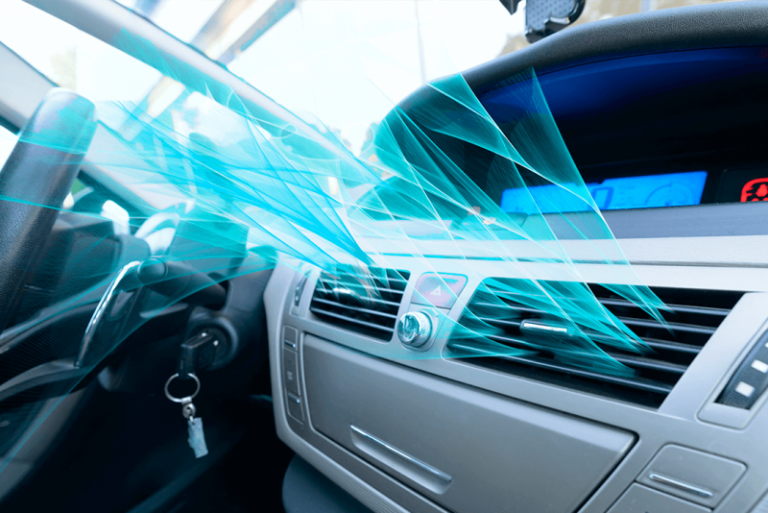
Among the most important features of an automobile is its air conditioning system. This is necessary for a number of reasons: it provides a comfortable environment inside the car, it reduces the temperature inside the vehicle, and it’s healthy for the driver and passengers. It also keeps the vehicle cool in extreme weather conditions. These are some of the basic functions of automotive air conditioners. Here are a few of them.
The first component of a car’s air conditioning system is the compressor. It uses forced convection to reduce the temperature of a high-pressure liquid refrigerant. The refrigerant is then blown through the compressor and sent to the evaporator. The evaporator, which resembles a heat exchanger, takes the heat from the passenger compartment and turns it into a breathable evaporator. The vapor is then circulated throughout the car’s passenger compartment to provide cooling.
Next, the refrigerant gas vapor is sent into the engine bay. The compressor is a high-pressure, low-temperature pump. This pressurized gas is then pumped to the evaporator, which is similar to a heat exchanger. The evaporator condenses the hot refrigerant containing the lubricant oil. This cooled evaporator distributes the cooled evaporation through a fan inside the car’s passenger compartment.
The automotive air conditioning system works with the reverse Rankine cycle to regulate the temperature and humidity of the air in the car. The refrigeration system contains a compressor and an evaporator. The air is then cooled through an air duct. The air cooled in the car is then distributed to the passengers. After the system is complete, the car’s passengers can enjoy the air conditioning in the car. You will appreciate this feature of your automobile!
The cooling system absorbs heat from inside the car and disperses it outside. The system relies on multiple components, and if one of these fails to work properly, the entire system will fail to function properly. The components of automotive air conditioning are all essential for the proper functioning of the car. Without them, the unit would not function at all. Its lubricant oil is essential for the efficient operation of the system.
The components of an automotive air conditioning system are composed of four main parts. The compressor is the most important part of the system and costs the most to repair. The compressor must be checked regularly to ensure that the refrigerant is in the proper amount. It is important to ensure that the refrigerant is maintained at the correct level to avoid overheating. Moreover, the condenser is a small device that controls the overall flow of air through the vehicle.
The components of an automotive air conditioning system are very complex and intricate. These components are designed to be installed and operated properly. If you want to know more about these components, you can contact your local dealer. There are many parts that can affect the performance of your HVAC system. However, the most important part is the compressor. These are the main components of the automotive air conditioning unit. They are vital for keeping the car comfortable in any kind of climate.