A car is an expensive investment, which is why it’s essential to maintain it properly. Neglecting to keep up with your vehicle’s primary care can cause many problems, such as poor performance, lower fuel efficiency, and costly repairs.
The good news is that you can extend your car’s life and keep it running smoothly with some maintenance! In this blog, we explore the top ways to maintain your vehicle correctly so you can ensure it lasts as long as possible:
Take Your Car in for Service
Scheduling regular service appointments is one of the best things you can do for your car. A trained mechanic can spot potential issues before they escalate into bigger problems.
During a service appointment, the mechanic will check your car’s fluid levels, brakes, and other essential components. They can also change your oil and filter, crucial to keeping your engine running smoothly.
Keep Up With Your Maintenance Records
It’s hard to overstate the importance of keeping records of your vehicle’s service appointments, repairs, and other maintenance performed. These records can help you keep track of when it’s time for your next appointment. Plus, complete maintenance records can increase your car’s resale value if you sell it!
You can keep a physical or digital file of these records, including receipts and invoices. Using a mobile scanning app (here’s an option) is an excellent way to stay organized because it allows you to instantly capture documents and images from your device’s camera and turn them into PDFs.
Prevent Auto Theft
Auto theft is a severe problem that can lead to the loss of your vehicle and its contents. But there are some steps you can take to prevent this from happening to you.
First, always lock your doors and close your windows when parking your car. Park in well-lit areas, and avoid leaving valuables visible in your vehicle. You might even install a car alarm or anti-theft system; it can be well worth the investment!
Change Your Windshield Wipers
Your windshield wipers are crucial to maintaining visibility on the road. Over time, they can become worn and ineffective, so it’s recommended that you change them out every six months (or when they start to streak or squit. Changing your wipers is a quick and easy process that can significantly boost your driving safety.
Clean Your Car
Keeping your car clean is more than a matter of aesthetics. It can also prevent damage to your vehicle. Dirt, grime, and debris can accumulate on and inside your car, leading to corrosion, rust, and other problems. Regularly washing and cleaning your vehicle can also improve your driving experience and prevent unpleasant odors from developing.
Stay Safe
Car accidents can be costly, both financially and physically. You can minimize your risk of accidents by keeping yourself and your vehicle in good shape. Here are a few steps to take:
Avoid distracted driving by putting your phone away and focusing on the road.
Follow the speed limit, and obey the traffic signals and signs.
Regularly maintain your vehicle by checking the tires, brakes, and other crucial components.
Ensure your windshield is clean and free from obstructions that could hinder your visibility.
Never drive under the influence of drugs or alcohol.
Conclusion
Properly maintaining your vehicle is essential to its longevity and performance. It involves taking your car in for service, organizing maintenance records, preventing auto theft, and implementing the other tips above.
You might be surprised how effective these strategies are for extending the life of your vehicle, saving you money on repairs, and allowing you to enjoy a smoother driving experience. Your car will run like new for years to come!
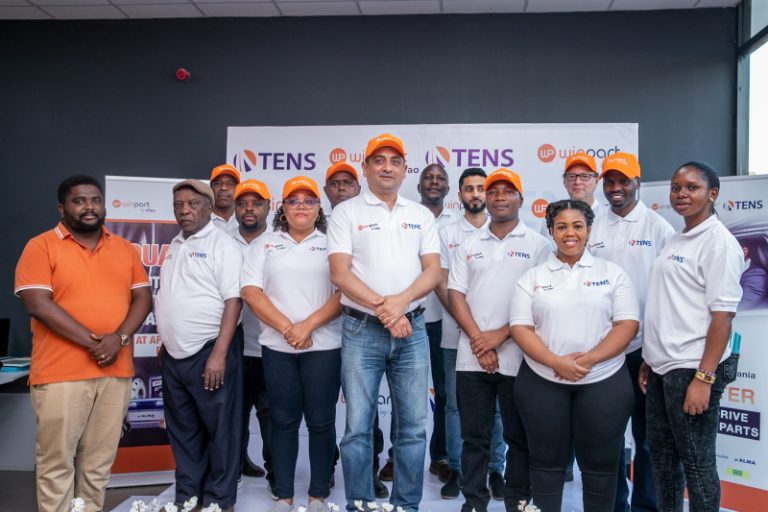
The leading automotive distribution networks, CFAO Motors has partnered with local companies to launch an automotive dealership in Iringa and Morogoro regions, dubbed Winpart. The launch events in Iringa and Morogoro were attended by representatives from CFAO Motors Tanzania, TENS, and Wheelerz, and were aimed at introducing the Winpart product line to the Tanzanian market.
Speaking at the event, managing director of Wheelers, one of the local partners based in Iringa, Said Mohamed Sood, highlighting the need for quality spare parts in the region. “Many customers are struggling to obtain original automotive spare parts when their cars break. So we decided to partner with CFAO Motors Tanzania who offers original automotive spare parts through Winpart,” he said.
Through the partnership with CFAO Motors Tanzania, Wheelers and other local companies will be able to access original spare parts directly from the manufacturers. CFAO’s Winpart is the only dealer in Tanzania that procures automotive parts directly from manufacturers, ensuring that customers receive genuine parts.
“We have installed the latest and modern equipment so that our services are provided timely and with superior quality products,” the Wheelerz MD added.
The marketing coordinator at CFAO Motors Tanzania, Erca Uisso emphasised the company’s commitment to quality and credibility. “We’ve been working in partnership with TENS for many years. They are known for their quality services and credibility in Morogoro and neighboring regions,” she said.
TENS CEO, Peter Ngowi also expressed his satisfaction with the partnership, calling CFAO’s Winpart “a new line of products” that will help supply customers with quality spare parts that last longer and ensure their cars are safe.
“We are very happy with this partnership because CFAO Motors came up with a solution for ordinary car owners, supplying customers with parts that have good quality which when fitted, can last longer and the car will be safe,” Mr Ngowi said.
The launch of CFAO’s Winpart dealership in Iringa and Morogoro marks an important step towards providing quality spare parts to the Tanzanian market, and the partnership with local companies like TENS and Wheelers ensures that customers have easy access to genuine parts.
Nissan Motor Co., Ltd. has announced the following executive committee changes which will take effect from July 1, 2023. “In response to the constantly evolving market conditions, we will introduce a flatter and agile leadership structure, which will further empower regional and functional leadership. The new executive committee will work as a cohesive team to accelerate Nissan NEXT progress in the final year of delivery and formulate the next mid-term plan to realize Nissan’s growth plans,” said Makoto Uchida, president and chief executive officer (CEO).
With this change, the chairpersons of the regional management committees (MC), Guillaume Cartier, senior vice president (SVP), MC AMIEO (Africa, Middle East, India, Europe and Oceania); Jérémie Papin, SVP, MC Americas; and Shohei Yamazaki, SVP, MC China will become members of the executive committee and will report directly to Makoto Uchida, CEO.
In addition, Ivan Espinosa, SVP for Global Product Planning & Global Program Management will be a member of the executive committee and will expand his scope to include Global Motor Sports. Espinosa will report to Makoto Uchida, CEO.
In addition, the current members of the executive committee will expand their scope and will change their reporting to Makoto Uchida, CEO:
Asako Hoshino, executive vice president (EVP) and Chairperson of MC for Japan-ASEAN overseeing Global Marketing and Sales, Global Customer Experience, Global INFINITI, will add Global Aftersales within her scope.
Hideyuki Sakamoto, EVP, Manufacturing and SCM, will add responsibility for Purchasing.
Stephen Ma, chief financial officer (CFO) overseeing Finance, Control, M&A, Tax & Customs, Global IS/IT, Investor Relations, will add Operations Performance as a new area of responsiblity.
Kunio Nakaguro, EVP, R&D, will continue his current areas of resposibility.
All other EC members will retain their scope and reporting.
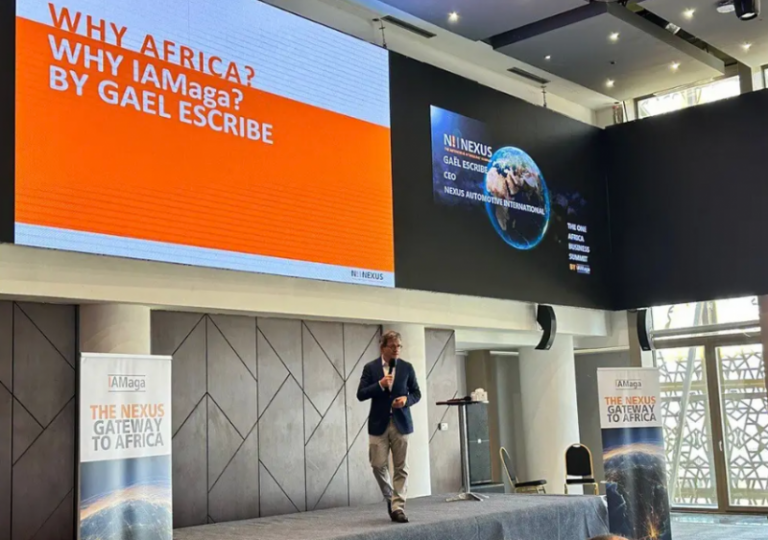
The African focus has been part of the NEXUS DNA from the beginning and Africa constitutes 4% of the N! global turnover and 15% of the N! member base. NEXUS will now take a further step forward in Africa with the IAMaga regional structure, which organized its first event in Cairo from 14th to 15th June.
More than 110 members of the N! community have met, discussed, and inspired each other through a plenary and workshops dedicated to the specificities of the African markets.
As a result, with amongst the lowest motorization rates in the world (42 cars per 1,000 people in some cases), and the expectation that used ICE powered vehicle imports will grow, Africa will develop as a growth market for traditional parts. To accomplish this, IAMaga will not only deliver the regular NEXUS services but also offer unique activities tailored specifically to meet the needs of African members. Through its dedicated efforts, IAMaga aims to lead and inspire business development across the continent.
Specifically, ‘The One Africa Business Summit’ organized by IAMaga, delivered valuable insights and discussions on the African automotive aftermarket tailored to the specific needs and demands of the African aftermarket. The workshops focused on crucial topics such as anti-counterfeit measures, digitization, sustainability and developing aftermarket talent in Africa.
In particular, the event brought together an exceptional group of keynote speakers and industry leaders, representing such renowned companies as NEXUS Automotive International, Bosch, TecAlliance, Afrik21, Automotive Academy, REP-R International, Cypheme and IAMaga.
Effective lobbying of African governments across a wide range of pertinent topics (trade barriers, fake goods, human capital development, access to foreign exchange,…)
African Vehicle Parc Data projects will be developed and deployed (members will work together to improve the quality of data)
Commercialize Authenticate by IAMaga CONNECT (powered by Cypheme)
A battery recycling POC project will launch in Mauritius with one of the NEXUS members
An Africa Talent Day will take place early in 2024, which will focus on the upliftment of human capital on the continent.
“Time has come to support our African community and develop a dedicated strategy for the African market specificities! It is also a great opportunity for N! to be inspired by this continent of innovation and to create new business opportunities”said Gaël Escribe, CEO of NEXUS Automotive International.
Martin Hendriksen, VP Sales & Business Development – Africa, Middle East, India & Australia at Nexus Automotive International, said: “IAMaga will develop new and very specific African initiatives to bring more value to our community on the continent, the work starts now!”
Established in 2014 by CEO Gaël Escribe, NEXUS Automotive International, the automotive aftermarket (AA) company, is shaping the future of the AA.
Thanks to an entrepreneurial, innovative and agile mindset, N! disrupts the industry bringing innovative solutions for a more sustainable, digital and connected mobility. At the same time, it supports its community of more than 163 members in 139 countries, allied with 100 global suppliers, by providing services to accelerate their growth.
In addition, N! is offering new approaches and new ideas for a connected, global and consolidated world of tomorrow to accelerate the success of car and heavy-duty spare parts and services distributors and manufacturers, through 16 regional structures that connect them.
NEXUS’ consolidated turnover was more than 40 billion euros in 2023.
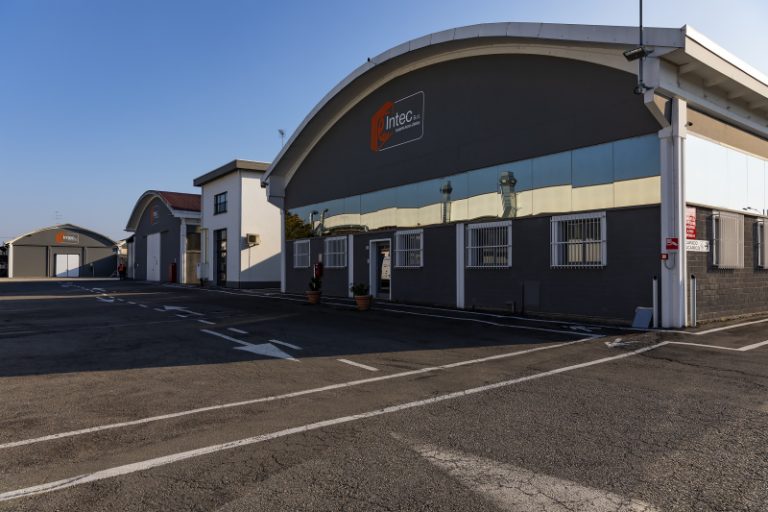
The Catalan family company Briolf, formed by several industrial companies in the field of chemical specialties, has made public the agreement of June 12, 2023 by which it acquires 100% of the company INTEC srl. This announcement marks a significant milestone in Briolf’s growth plan, as it completes its third acquisition in the last 18 months and consolidates its position as a major player in the sector in Europe.
INTEC is a family company with more than 50 years of history located in the province of Reggio Emilia. It is a benchmark in the automotive refinishing paint sector and has successfully developed a line of putties, pastes and adhesives focused on the composite materials sector. These products have multiple industrial applications in both technological and demanding markets such as the design and construction of ships or wind turbines in the wind energy sector.
Quantitatively, the incorporation of INTEC into Briolf means integrating a highly qualified team of nearly 40 people, as well as a turnover of almost 13 million euros by the end of 2022.
According to the company, “this acquisition is perfectly aligned with the 2022–2026 Strategic Plan as it allows us to continue increasing our degree of diversification while strengthening our current lines of business”. And they emphasize that “In this case, we do it by adding a completely new technology and sector within the Group at the same time as we expand our value proposition in the bodywork market with a brand and clientele complementary to Roberlo’s business”.
Briolf Group closed 2022 with growth close to 25% and reached a turnover of more than 190 million euros. Despite the political and economic turbulence on a global scale, the expectation for this 2023 is to exceed the barrier of 250 million euros thanks to the combination of organic growth and the contribution of the last two acquisitions of Italian companies (ARECO in November 2022 and now Intec in June 2023).
About Briolf:
Briolf a family-owned industrial group with a highly diversified and global presence in the coatings and chemicals specialties sector for more than 55 years. Briolf’s mission is to create solutions for enhancing the appearance of surfaces, extending their life and maximizing their performance.
Our vision is to diversify, grow and strengthen our position in the industry, while maintaining our core identity intact. This core identity is encapsulated in our motto. PEOPLE. PASSION. CHEMISTRY.
The Group works closely and thoroughly alongside companies to provide them with the optimal technological, strategic and economic framework to help them develop in a satisfactory and sustainable manner over the long term.
Today, more than 1000 people from more than 35 companies serve our customers in more than 120 countries and in 9 business sectors.
In the past financial year 2022, Briolf’s income grew by 25% and reached 192 million euros. With the new addition, the main companies (without subsidiaries) that currently make up Briolf are:
Roberlo Spain Automotive refinishing and industrial painting
Kenyan automotive marketplace Peach Cars is announcing its $5 million seed round led by Japan-based The University of Tokyo Edge Capital Partners (UTEC) and other angel investors, including Shintaro Yamada (founder and CEO of Mercari), Peter Kenevan (VP, Head of Japan at PayPal), and Hiroaki Ohta (general partner at Japan’s Waseda University Ventures).
The startup, founded by Kaoru Kaganoi and Zachary Petroni in 2020 to democratize car ownership in sub-Saharan Africa, starting with Kenya, will use the money to grow the business, hire more talent and double down on R&D as it expands its tech solutions, according to a statement.
In an interview with TechCrunch, Peach Cars’ founders narrated how more than a decade of combined experiences living in sub-Saharan Africa and talking with friends and industry peers made them see an opportunity in Kenya’s used cars market. According to CEO Kaganoi, unlike in Japan, trusted second-hand items marketplaces in Kenya were few and far between. The existing ones, however, lacked price transparency and were riddled with information asymmetry, fraud, non-secure payments and awful customer experience.
“I struggled to get affordable second-hand items, including furniture and electronics, when I moved into Kenya,” said the CEO. “I also struggled to find good condition vehicles as well as there are no established inspection methods and service providers, and you need to know a good mechanic yourself to get these quality checks done at a personal level.”
But before launching Peach Cars, the founders had to consider certain factors. To grow and build marketplaces, it’s paramount to check for the viability of such a market and if the unit economics makes sense. Also, the importance of establishing operations cannot be overemphasized. To accomplish that with commission-based businesses, Peach Cars understood that it needed to aim for high-value asset classes in Kenya. It also helped that both founders have experiences in the mobility space, with stints at ride-sharing app-cum-super app SafeBoda where they worked as operators.
Kaganoi, in the interview, also pointed out that while there’s a widely held notion that Africans, due to living in a “satchetized” economy, make small purchases without thinking much about the process and outcomes, spending a minute in a mall in Africa gives a different perspective where you find people caring about the experience. “The idea is why can’t we give everyone, whether you’re buying a car for $4,000 or $40,000, the same experience: a delightful one,” the chief executive explained.
Additionally, Kaganoi noted that Africa’s young population and booming middle class have yet to establish a strong relationship with automotive mechanics and are looking for convenient customer-centric and trusted services to meet their needs. He stated that Peach Cars was consequently founded to bring transparency and a better experience to Kenya’s car ownership and maintenance process.
The company claims to have developed a smart engine check device that utilizes Peach’s proprietary-built software to automate its car inspection process. The 225-point inspection system, benchmarked against Japanese auto industry standards, as 80% of cars in Kenya are of Japanese make, gives a complete and accurate report of all the systems in the vehicle.
Peach Cars is similar to Autochek and Moove, larger African mobility startups whose pitches revolve around car ownership and automotive repairs (in Autochek’s case). However, they differ in that Autochek and Moove are more on the asset financing and management side with B2C or B2B2C models, while Peach is a pure C2C marketplace like Jiji. According to Petroni, Peach has an edge over Jiji because it educates users on the car ownership lifecycle, has faster discovery processes with better transaction and payment management and, most importantly, car maintenance and servicing.
“Customers would like to find truthful and transparent ways to maintain their vehicles; hence Peach is accommodating its needs by providing the car care service,” the COO said. “Peach can leverage its inspection methods and information for the better diagnosis of the vehicles and the quality assurance of the fixes made on vehicles.”
The car marketplace collects service fees and commissions on successful transactions between sellers and buyers. It gets additional revenue streams from providing value-add services, including administrative work for transactions on agreements, inspections, change of ownerships, secured payment and handovers. As a result, Peach – which has sold “hundreds of cars” and is looking to launch a near-fully automated inspection center in 2024 – currently generates over $200,000 in GMV monthly, 10x its numbers from two years ago when it launched, according to its founders.
“Peach is pioneering the most customer-centric, trustworthy, and advanced used-car platform in Sub-Saharan Africa by coupling their operational excellence with smart IoT devices and data analysis,” Kiran Mysore, Principal at UTEC, who joined the startup’s board, said on the investment. “UTEC is proud to partner with Peach and foster Japan-Africa collaboration by augmenting Peach with Japanese automotive expertise and network.”
Nissan South Africa has reaffirmed its commitment to adventure and performance by hosting media for a thrilling edition of the Nissan Spirit of Africa challenge. Nissan’s partnership with the exciting Spirit of Africa property, which is celebrating its 19th year, highlights the brand’s dedication to fostering a community of adventure-seeking offroad enthusiasts. It also serves as the perfect showcase for the all-terrain capabilities and advanced technologies in the Nissan Navara.
Over 300 teams entered the inaugural Nissan Spirit of Africa challenge, which ended on 5 June, with the much-anticipated finals are scheduled to take place on 13-16 July.
“We are proud of the turnout for the first edition of Nissan’s Spirit of Africa, which saw drivers contest to secure their spot in the finals. Through all the dust, terrain, sport and navigation – Nissan is excited to see what our motoring associates can do behind the wheel of the rugged and redefined Nissan Navara,” said Stefan Haasbroek, Nissan Africa Chief Marketing Manager Director.
Renowned for its challenging terrain and thrilling atmosphere, the Spirit of Africa challenge was created by eleven-time South African Rally Drivers champion and local motor racing legend, Sarel van der Merwe. It has been described as the “toughest 4×4 challenge in Africa” and provides the “average” driver with an opportunity to test their off-road driving ability in a competitive environment.
With its reliability, brute power, and cutting-edge technology, the Nissan Navara is the ideal choice for navigating the wild terrain of the Spirit of Africa. Several locally built, highly capable Nissan Navara’s have been made available for the media leg of the event, each expected to be pushed to the limit. Through rough terrain marked by steep inclines, muddy crossings, and heart-stopping descents that demand precision, speed, and endurance – the Nissan Navara has your back.
“The Nissan Navara has been meticulously enhanced for African roads, offering a bakkie that is not only competitive globally, but also tailored to thrive in the unique conditions found in Africa. Our commitment to delivering the right products for South Africa and the markets we serve across the continent is evident in the Navara’s innovative design and capabilities,” concluded Haasbroek.
As part of Nissan’s dare to move and commitment to pushing boundaries, defying limits, and bringing the thrill of offroad adventure to the forefront, the carmaker also recently launched the ‘Nissan Adventure Club’. Designed to empower its customers with knowledge of their Nissan vehicle’s features and capabilities by taking it through its paces on the off-road track while learning important defensive driving techniques.
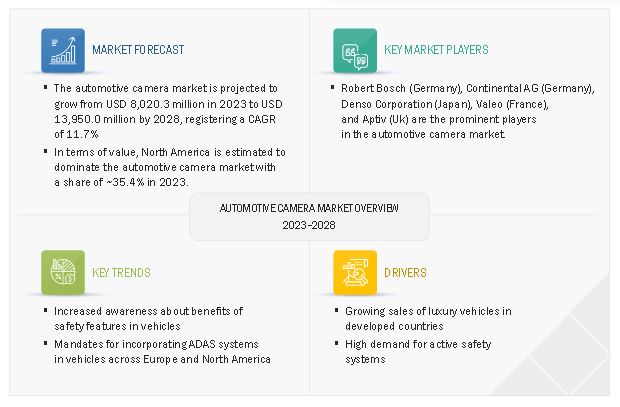
According to MarketsandMarkets Analysis, the automotive camera market is estimated to be USD 8.0 billion in 2023 and projected to reach USD 13.9 billion by 2028, at a CAGR of 11.7%. The market growth can be attributed to improved road safety standards, supportive legislation, consumer awareness of active safety features, high customization, and customer-centric technological development. These factors have encouraged OEMs to focus on developing automotive cameras, attracting the targeted audience globally.
Automotive Camera Market – Global Trends
Source: MarketsandMarkets Analysis
Driver Assistant Features – Key Fueling Factor for the Growth of Automotive Cameras
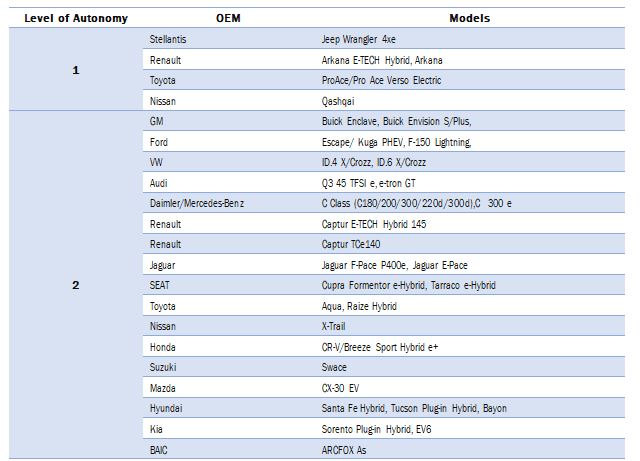
With an increase in demand for driver assistance systems and increasing automation of modern vehicles, the installation of automotive cameras is growing. Most passenger cars come with Level 1 autonomous systems. However, with increased sales of premium passenger cars, Level 2 autonomous systems are also getting popular. Some luxury vehicles are also equipped with Level 3 autonomous features. Presently, ~90% of autonomous cars have L1 autonomous features – adaptive cruise control, lane departure warning, tire pressure monitoring systems, and adaptive front lights. The L2 autonomous cars contribute to ~9% and come with features such as automated park assist, highway Chauffeur, highway pilot, and autopilot. The penetration of L3 vehicles is <1%. Most of these driver assistance features in L1 and L2 vehicles require an image sensor/camera. With the increase in demand for these vehicles, the demand for automotive cameras is set to rise.
OEMs and Their Autonomous Models:
Source: MarketsandMarkets Repository, Secondary Research
Furthermore, in the next five years – post-2027, the Level 3 autonomy is projected to showcase a potential growth in mid-tier and luxury passenger cars owing to technological advancements. Level 3 (conditional automation) autonomy requires automated functions like Intelligent Park Assist, Night Vision System, Intelligent Cruise Control, and high-resolution camera features. With this, advanced camera systems like fusion sensors would be more required.
The North American and Asia Pacific regions are expected to lead the automotive camera market. These regions have government mandates for various vehicle safety features. For instance, NHTSA mandated the installation of backup cameras for all new vehicles under USD 10,000 by 2018. Euro NCAP implemented a regulation for deploying Driver Monitoring Systems in all new vehicles by 2024 to get the highest crash & safety ratings, which involves the installation of a DMS camera. In 2021, Japan mandated all new cars to have an automatic braking system to prevent accidents, including cars or pedestrians. These regulatory mandates are driving the demand for driver assistance features in these regions and will propel the demand for automotive cameras.
The automotive camera market comprises several global players, making it highly competitive. Continental (Germany), Robert Bosch (Germany), Valeo (France), Aptiv (Ireland), and Denso Corporation (Japan) are projected to dominate the automotive camera market with their high investment in new product development, merger, and acquisition with the potential players in the global market. Top OEMs plan to launch Level 3 semi-autonomous vehicle models and conduct testing on Level 4 autonomous vehicles. This will create huge opportunities for the key manufacturers to launch advanced camera-based solutions and offer futuristic growth prospects for the overall automotive camera market in the coming years.
Hence, growing initiatives for safety vehicle features and increasing penetration of camera-based solutions are primarily driving the growth of the automotive camera market. In contrast, rising demand for electric vehicles and new model launches with advanced features will create lucrative growth opportunities for the futuristic growth of the automotive camera market.
Advanced Driving Assistance System (ADAS) is projected to provide the opportunity for the growth of automotive cameras.
Electric Vehicles – Future Opportunity for Automotive Camera Manufacturers
Moving towards sustainable mobility options, electric vehicle sales is gaining momentum worldwide, giving rise to futuristic opportunities for the growth of the automotive camera market. Electric vehicle sales increased by 16% from 2020 to 2021 globally. With the clean vehicle targets set by different governments, the demand for electric passenger cars is expected to grow at a CAGR of ~22% from 2022 to 2030. As the installation rate of automotive cameras is highest in electric passenger cars, the growing sales of electric passenger cars are set to increase the sales of automotive cameras.
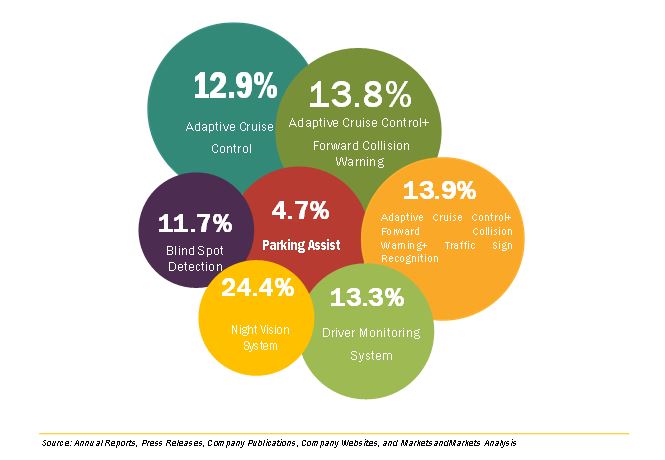
Blind Spot Detection (BSD), BSD+Lane Keep Assist+Lane Departure Warning, and Intelligent Park Assist are the top three driver assistance systems in electric vehicles. Unlike traditional gasoline-powered vehicles, EVs produce very little noise, making them difficult for pedestrians and cyclists to hear. This can increase the risk of accidents, especially when changing lanes or merging onto a highway. BSD is an important ADAS feature for EVs that can significantly improve driving safety, increase awareness, reduce stress, and offer environmental benefits.
Adaptive Cruise Control (ACC) and ACC+Forward Collision Warning are expected to be the fastest-growing camera applications in electric vehicles. Mercedes-Benz GLC series, Ford F-150 Lightning, Volkswagen ID.5, Citroen C5 X, Ioniq 6, Toyota Harrier PHEV, Mazda CX-60 PHEV, and BMW i7 xDrive 60 are a few of the models offered with the ACC feature.
In electric vehicles, Parking Assist Systems and Blind Spot Detection Systems account for approximately 50% of the overall market. In contrast, Night Vision System is projected to be the fastest-growing segment during the forecast period. However, the specific penetration rate may vary depending on the automaker, vehicle model, and market segment. It’s worth noting that the automotive industry is continuously evolving with new technologies and may have introduced new ADAS features to propel automotive camera sales.
In addition, the automotive camera is gaining traction in electric trucks and buses, which will drive the automotive camera market soon. The ADAS features like pedestrian detection, collision warning, and driver monitoring system will play a pivotal role in the electric bus development, which is anticipated to generate the demand for automotive cameras. According to a study, the electric bus market is projected to amount to USD 678 Bn by the end of 2030, with a growth rate of 14% from 2022 to 2030. This growth is attributed to the shift generated by the emission regulations from national governments. Features like Lane Departure Warning, Automatic Emergency Braking, and Adaptive Cruise Control are the most implemented camera-based solutions in electric commercial vehicles, shaping the automotive camera market in the upcoming years.
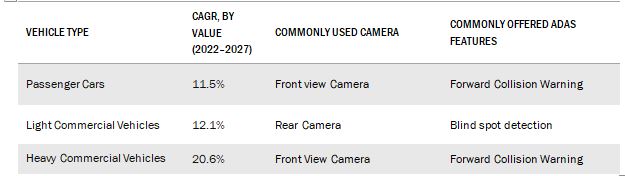
Automotive camera growth rates, 2022–2027
Sources: MarketsandMarkets Analysis
Digital Cameras to lead the Automotive Camera Technologies
The automotive camera market has been segmented based on technology into digital, infrared, and thermal. Digital cameras are used for ADAS applications, such as park assist, lane departure warning, adaptive cruise control, and blind spot detection. These cameras are strategically placed in the vehicle’s front, rear, and side to provide driving and parking assistance. Driver monitoring systems deploy infrared cameras, which use infrared light to detect and analyze the driver’s facial features, such as irritation, happiness, fear, and drowsiness levels. Alternatively, night vision systems use thermal cameras that enhance driving safety in darkness, rain, fog, and snow.
Considering the park assist, lane departure warning, BSD and ACC as the fastest and largest driver assistance systems using cameras, which use digital cameras, digital cameras are projected to lead the automotive camera market.
Increasing penetration of camera-based convenience features in luxury vehicles generates a positive impact on the sales of automotive cameras
Starting at over US$45,000, the luxury vehicle segment includes cars with high-end technologies like automotive cameras, infotainment, information clusters, and more. Premium EVs are being introduced by Jaguar (UK), Mercedes (Germany), Audi (Germany), and Porsche (Germany). Additionally, automakers are working to offer cutting-edge features at affordable costs.
To provide convenient parking solutions, major premium automakers like Audi, Mercedes, Cadillac, and BMW offer convenience features like a surround-view or a 360-degree view. Drivers can maneuver in confined parking spaces with ease. In segments of luxury and premium vehicles, these features are considered standard. Major OEMs are also developing camera-based features, like driver authentication, allowing drivers to customize their cabin settings and driving conditions for a pleasurable experience. These features will initially be used in luxury vehicles. Therefore, it is anticipated that the increased use of camera-based convenience features in luxury vehicles will increase demand for automotive cameras and turn them into a significant source of income for manufacturers.
On the other hand, the introduction of autonomous vehicles will probably encourage the deployment of a few camera systems, and the typical number of cameras in a vehicle will probably rise as the level of autonomy does as well. NXP claims vehicles with Three to six cameras and other sensors would be used with level 3 autonomy. Cellularye, 8g_tJU To address the shortcomings of existing camera-based applications, numerous start-ups are working to enhance the functionality of camera-based solutions. Autonomous vehicles require a variety of sensors, including cameras, radars, and other devices that sense their surroundings, even though the technology is still in its infancy. Autonomous vehicles will significantly alter how fleet operators, providers, and ride-sharing businesses operate. OEMs and camera suppliers will strategically work together to speed up the commercial production of autonomous vehicles, which will further expand the market.
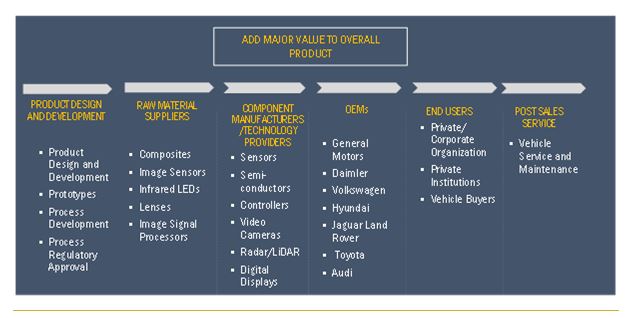
Automotive Camera Market– Supply Chain:
The automotive camera market supply chain comprises several participants, from research and product development executives to end users. OEMs partner with Tier-1 component manufacturers and technology providers to build a strong regional customer base.
The automotive camera market value chain comprises R&D executives, raw material providers, component manufacturers, OEMs, and service providers. Manufacturers often establish partnerships with other retail operators. In a few instances, government organizations across various regions make their key contact points for professional and custom installers.
Figure: Automotive Camera Market: Supply Chain Analysis
Source: Secondary Research, Industry Associations, Expert Interviews, and MarketsandMarkets Analysis
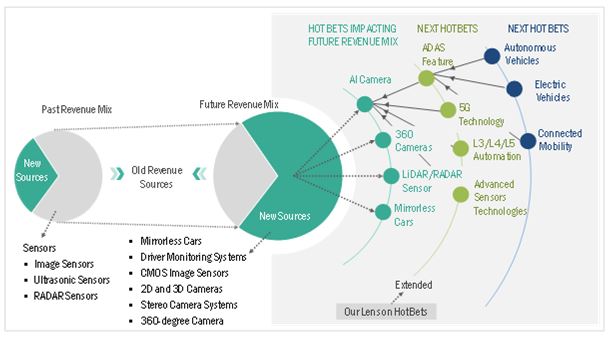
The automotive camera market is expected to witness a revenue shift in the coming years, from rear cameras with applications of parking assist to ADAS applications and connected mobility. ADAS offer features critical in road safety and mandated by regulatory authorities in different countries, which are expected to play a vital role in the market growth. Besides, developing vehicle-to-vehicle communication infrastructure and connected vehicle technologies will impen the automotive camera market. Connected vehicle technology comprises telematics, infotainment, and combined telematics & infotainment. These technologies enable vehicle access to safety, information, navigation, and remote diagnostics. In the future, with the advent of semi-autonomous and autonomous vehicles, these technologies are estimated to have a wide presence in semi-autonomous and autonomous vehicles. Autonomous vehicles will be constantly connected and communicate with the network of automatic navigation systems and connected car services. Semi-autonomous vehicles can be operated for an extended time with the help of connected devices with little input from the driver.
The electric two wheeler industry has rapidly evolved with ongoing developments in design, features, engineering, motor power, and battery technologies. With the upcoming government mandates on emissions caused by vehicles, the automotive industry is focusing on efficiency, emission-free propulsion, and innovative technologies.
The electric two-wheeler industry has witnessed rapid growth with constant developments in engineering and technology. Technological advancements, including simulation software, reality tools, telematics units, and GPS, and disruptive trends, such as the use of energy-efficient electric propulsion and innovative battery technologies, have boosted the demand for electric scooters and motorcycles. In addition to this, Policies that support electric two-wheeler (E2W) consumers and manufacturers are essential to accelerate the adoption of E2Ws and stimulate the expansion of domestic E2W production globally. The governments show signs of their intention to adopt cleaner transport modes, including electric two wheeler. Several policies have been implemented to support E2W development, such as the reduction of special consumption tax and registration fees. For Instance, FAME, or Faster Adoption and Manufacturing of (Hybrid and) Electric vehicles, is India’s flagship scheme for promoting electric mobility. Currently, in its 2nd phase of implementation, the government provides a direct incentive of Rs 15,000 (USD 182) per kWh of battery capacity (i.e., a maximum of 40 percent of the vehicle cost) on an electric scooter/motorcycle to the buyer as a subsidy.
Market players will likely invest in electric two-wheelers to enhance their vehicle performance and lower cost. While these vehicles are expected to enhance the performance and range of electric two wheelers, factors such as significant charging time, high price, limited life of batteries, and inadequate availability of charging stations make users hesitant to opt for electric two wheelers over ICE two wheelers. Thus, electric two-wheeler manufacturers and government support are likely to overcome these challenges by developing advanced batteries with higher range, innovative fast and rapid-charging solutions.
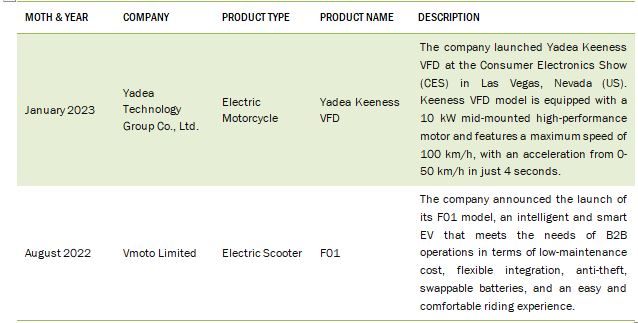
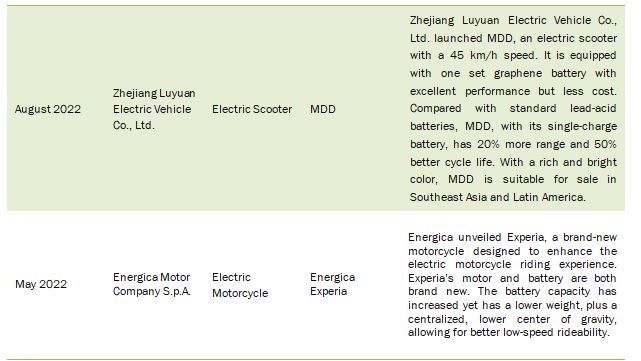
The manufacturers are focused on launching electric scooter and motorcycle models. The table below covers a few of the new models launched by key manufacturers.
Electric two wheeler launch, by OEMs, 2022-2023
Source: Press Release and Company Website
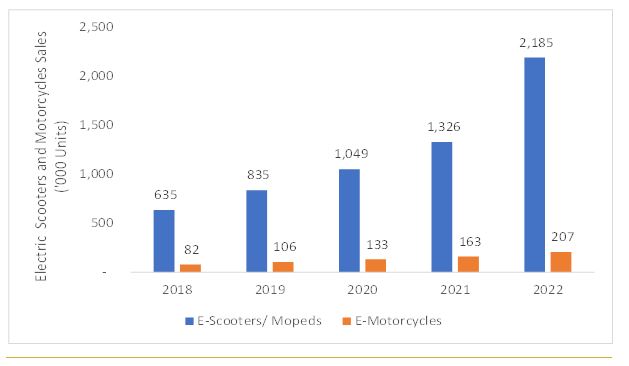
The electric scooter and motorcycle industry is witnessing technological developments to meet customer demand and be future-ready. Electric scooters and motorcycles have a lower operating cost than conventional two-wheelers. Increasing crude oil prices and the need for eco-friendly mobility alternatives are opening opportunities for the market. Electric two-wheelers are low in cost relative to ICE two wheelers and a sustainable means of transportation. They can leverage existing and future mainstream electric vehicle charging infrastructures. Governing bodies have launched initiatives to build charging facilities. The schemes are funded with huge budgets, focused on promoting electric two-wheelers through subsidies.
Global ELECTRIC SCOOTER AND MOTORCYCLE Sales, 2018-2022
Source: Global EV Outlook 2023, Secondary Websites, News Portals, Automotive Databases, Company Annual Reports, and MarketsandMarkets Analysis
As per Atin Jain, Team Lead (Automotive and Transportation domain) at MarketsandMarkets Research, “The demand for advance battery technologies with higher driving range miles is rising due to which most electric two wheelers manufacturers have invested on R&D to offer safe battery chemistry and design features. The Asia Pacific region is among the most promising markets for electric scooters and motorcycles as the region hold more than 90% of the market share in 2023”. Further, as per Jeet Shah, Senior Research Analyst (Automotive and Transportation domain) at MarketsandMarkets Research, “Favorable government regulatory policies and initiatives coupled with growing awareness of emission-free vehicles will propel the market growth of electric scooter and motorcycle in the near future.”
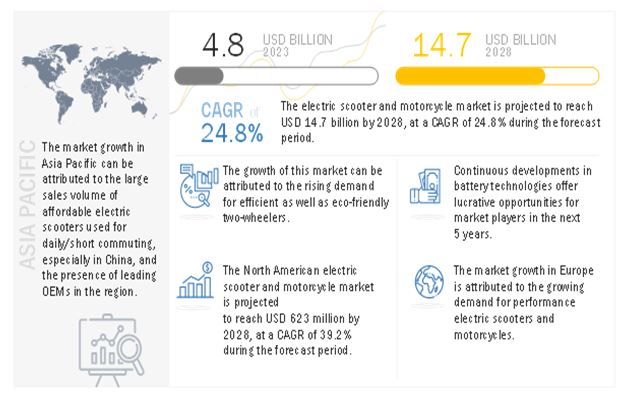
INCREASING DEMAND FOR EFFICIENT AND EMISSION-FREE COMMUTES TO DRIVE MARKET GROWTH
Source: MarketsandMarkets Analysis
According to MarketsandMarkets research, the global electric scooter and motorcycle market is projected to reach USD 14.7 billion by 2028, starting from USD 4.8 billion in 2023, growing at a CAGR of 24.8%. The market growth is governed by improved battery technology, supporting government policies and regulations, and the consistent launch of new electric scooters and motorcycle models.
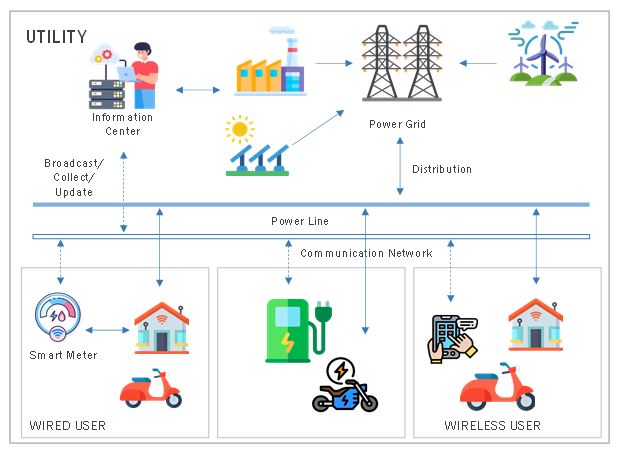
Smart IoT-based technology used in electric two-wheeler charging stations
Source: Secondary Research and MarketsandMarkets Analysis
The increasing adoption of smartphones and connectivity solutions has inspired electric two-wheeler manufacturers to connect smartphones with electric two-wheelers and infrastructure instrument clusters for more enhanced operation. Smartphones can be easily connected via wireless LAN (WLAN), USB, or Bluetooth. Most electric two-wheeler charging station manufacturers have been developing smart electric two-wheeler charging stations with IoT-based features for load management and smart connectivity. Home charging stations these days come with software for charging analysis of electric two-wheelers. On the other hand, public and semi-public electric two-wheeler charging stations come with smart payment and power management features for better power control and ease of electric two-wheeler charging by customers.
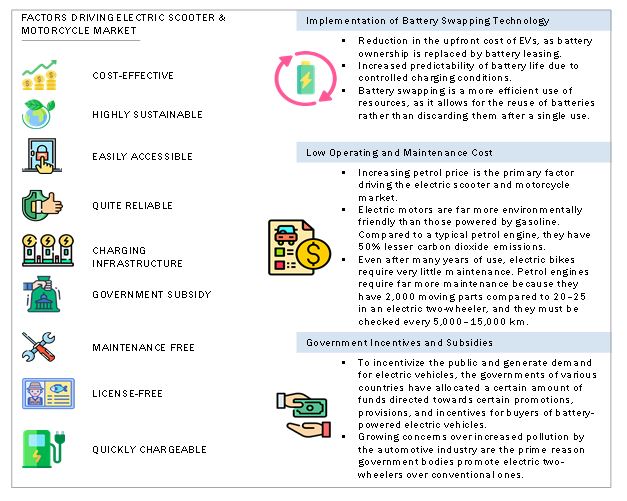
KEY DRIVING FACTOR FOR THE ELECTRIC SCOOTER AND MOTORCYCLE MARKET
Source: Secondary Research and MarketsandMarkets Analysis
Government incentives and subsidies
Growing concerns over increased pollution by the automotive industry are the prime reason government bodies promote electric two-wheelers over conventional ones. They have recognized the need to promote energy-efficient vehicles to reduce the increasing pollution. To attract and encourage people to buy electric two-wheelers, government bodies of different countries are introducing lucrative schemes and incentives that include formidable discounts, free electricity (initially), and free public charging stations. Governments are also working with manufacturers to build charging and manufacturing facilities, exempting them from taxation. These factors are expected to drive the electric scooter and motorcycle market in the future.
Advancements in battery technology
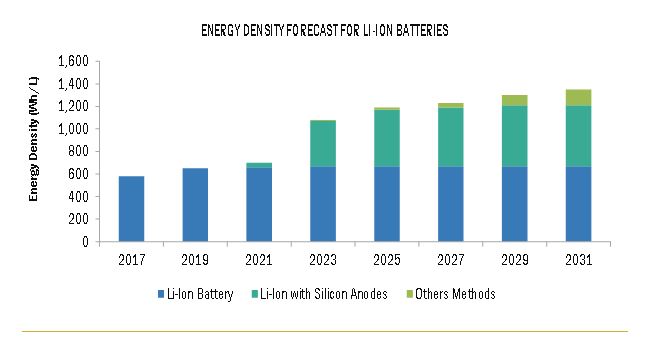
The battery is a significant component in an electric scooter or motorcycle. Technological advances in batteries, especially regarding their charge density, making them extractable and more competitive, are the focus of the electric scooter segment’s leading research and development efforts worldwide. Currently, companies are providing multiple charging options that include a portable charger that can be used to charge vehicles in public places. Besides, charging stations are also installed at homes for convenience.
Several companies in EV battery technology have made substantial improvements. For instance, in June 2022, CATL unveiled its Qilin Battery, the third generation of its CTP (cell-to-pack) technology. The battery delivers a range of 1,000 km, has an energy density of up to 255 Wh/kg, and is expected to be mass-produced in 2023. Such ongoing developments in the field of EV batteries are targeted towards improving the range of electric two-wheelers, with most major EV battery manufacturers innovating in the battery design and chemistry to extend the range of EVs to eliminate the requirement for regular charging.
Average energy density (Wh/L) of li-ion batteries, 2017–2031
Source: Sila Nanotechnologies and Secondary Research
Implementation of battery swapping technology
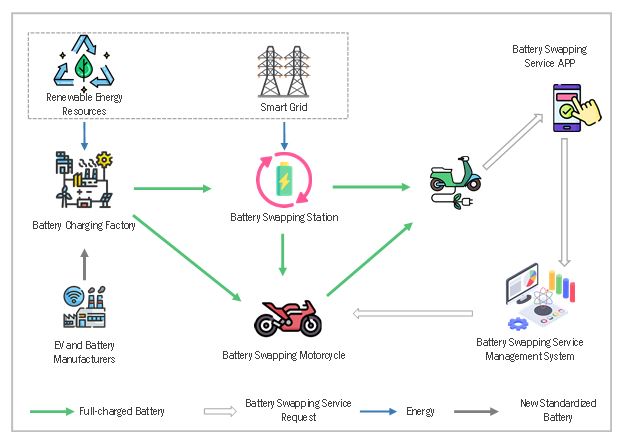
Battery swapping is a new technology that allows the owners of electric vehicles to swap out their dying or dead batteries with fully charged ones. This development could completely transform the EV market and improve the comfort and ease of long-distance driving for motorists. Automatic and manual battery switching are the two main methods used in battery swapping. The automated approach involves changing the batteries with a robotic arm, much like the changing of oil at a gas station. In a manual technique, a drained battery must be removed from the car and replaced with a fully charged one.
Battery swapping system
Source: Research Papers
key target by market players
Yadea Technology Group Co., Ltd. Witnessed Rapid Globalization, Multiple Tech Breakthroughs and Esthetic Innovations
Yadea Technology Group Co., Ltd. has a range of products designed for personal use and commercial deliveries, with a specific focus on improving its existing product line. With 60 million users worldwide and goods that are currently sold in 100 countries and regions, Yadea’s global future appears to be brighter beyond 2022. Yadea’s products are presently sold on five continents. The Company has created several overseas subsidiaries with qualified product R&D and sales teams to carry out more systematic localized operations to satisfy the needs of regional users in nations like Germany, Vietnam, and the US. In June 2022, the company launched its latest offering in the popular Guanneng range. The all-new Guanneng 3 represents a new generation of long-range, intelligent electric vehicles with breakthrough, long-lasting battery technology.
Hero Electric ExpectS 12-30 million electric 2-wheelers in India by 2030
Hero Electric has huge brand equity and is the market leader in the Indian electric scooter market. The brand has been recognized globally, offering more opportunities for global expansion. It has the largest market share in the Indian electric two-wheeler segment. It is strongly focused on growth and has partnered with many companies. Hero Electric about the projections for two-wheelers. According to the Company Managing Director, even if 30 percent of industry volumes go electric, this would translate into “about 10-12 million units” by 2030. On a more optimistic level, the 30 million mark is attainable if the entire two-wheeler buyer base embraces e-mobility in the next decade.
Okinawa Autotech will invest more than USD 26 million in new product development over the next three year
Okinawa Autotech, a manufacturer of electric two-wheelers, announced that it would spend USD 26.4 million (25 million euros) to create new models and powertrains over the next three years. According to the corporation, the project will be developed at its first research and development facility in Italy, opened in January 2023, and established in collaboration with its joint venture partner Tacita. An electric cruiser motorbike is expected to be the first item created at the global center in India in the coming months.
key technology development
Battery Related Services
Various Chinese companies have developed ideas like integrating batteries with technologies like the Internet of Things (IoT). These concepts will enable battery traceability, continuous monitoring of battery health, and detecting or preventing battery failure by early detection of issues. The adoption of integrating services will also allow battery providers to collaborate with OEMs by providing them with valuable auto-generated feedback on battery performance. This will enable OEMs to work on further battery performance improvement.
Companies like CATL and NIO have launched the Battery-as-a-Service (BaaS) model that will provide battery services like battery swapping to save time on re-charging the battery. This model will enable EV users to save money by renting the batteries instead of buying them with EVs.
Regenerative Braking
Regenerative braking is already present in conventional ICE as well as electric four-wheelers. This phenomenon is now being introduced to electric two-wheelers to make them more efficient, resulting in an increased riding range. Due to their design, electric two-wheelers are more suitable for regenerative braking than ICE two-wheelers. Ola S1 has regenerative braking in which energy from braking is returned to the battery. Regenerative braking is a mechanism or phenomenon where the kinetic energy or momentum that would have otherwise been wasted due to deceleration and braking is recovered, stored, and then used accordingly. In the case of electric two-wheelers, the energy recovered might help improve the range. Electric two-wheelers consist of batteries, drive, control, and transmission systems, having fewer moving parts and different designs than ICE two-wheelers. This makes electric two-wheelers more suitable for regenerative braking.
For three days this fall, Las Vegas is where aftermarket challenges meet solutions. AAPEX 2023 is back in town, bringing the automotive industry together at the Venetian Expo. Reconnect with a global community of auto parts & technology suppliers, distributors, and retailers. Advance your expertise through hands-on training. And take in live demos and product exhibits to stay up to date with the constantly changing technology in today’s vehicles. AAPEX isn’t some flashy Las Vegas car show. It’s where the aftermarket industry rolls up its sleeves to take on challenges, build relationships, and keep businesses running at full speed.
AAPEX is dedicated to bringing the best talent to the automotive aftermarket industry, and as part of this initiative is offering two options for students to attend this year’s event, as well as, an opportunity for aftermarket companies to get involved in the program.
The first option is, the Student Sponsorship Program that invites students to apply to attend AAPEX for first-hand industry experience and networking opportunities. Students selected for participation will receive two days of learning, including access to all AAPEX training and general education sessions, as well as hosted functions. Participants will receive complimentary AAPEX registration, reception tickets, a three-night hotel stay in Las Vegas, and a food and transportation stipend. To apply, visit the Student Sponsorship Program. Applications are due by Thursday, Aug. 24.