

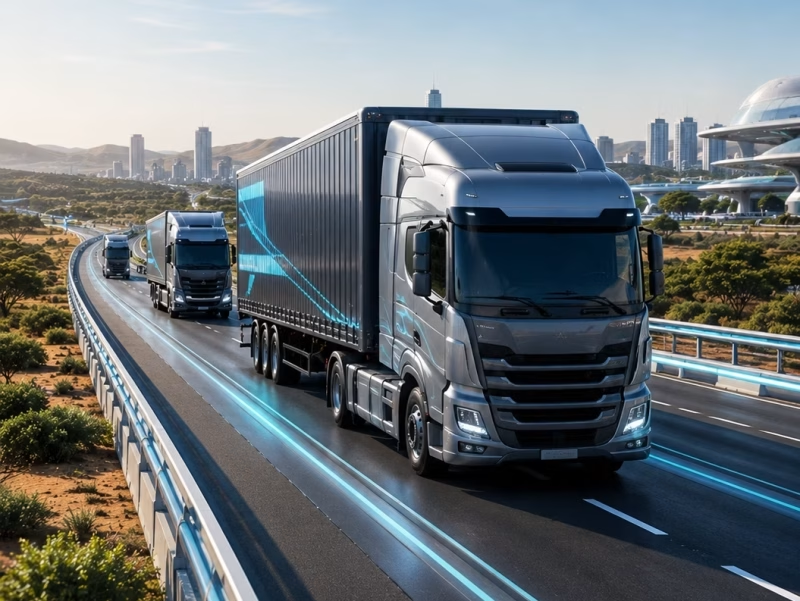
Africa’s commercial transport is facing mounting pressure from the rising fuel prices, expanding trade networks, urban congestion, stricter environmental expectations, and the, growing customer demands for faster deliveries. At the same time, technology is transforming how goods move around the world.
By 2036, African fleet operations may look dramatically different from today. Trucks will become smarter, logistics systems more connected, and maintenance increasingly predictive. Electrification, automation, digital tracking, and data-driven operations will no longer be futuristic concepts discussed at conferences. They will become essential tools for survival in a highly competitive transport environment. The question here is not whether Africa’s transport sector will change. The real question is how quickly fleets can adapt.
The Rise of Smart Fleets
The future fleet will not simply consist of trucks moving cargo from one location to another. It will operate as a connected digital ecosystem powered by data.
Already, fleet operators across African countries are adopting telematics systems that monitor fuel consumption, vehicle location, engine health, tyre pressure, driver behavior, and route efficiency in real time. By 2036, these systems will become standard across much of the industry. Additionally, artificial intelligence and predictive analytics will play a major role in fleet decision-making. Instead of waiting for mechanical breakdowns, operators will use predictive maintenance systems that identify faults before they occur. Sensors embedded throughout vehicles will continuously analyze engine performance, braking systems, lubrication conditions, battery health, and tyre wear.
This shift will fundamentally change fleet operations. Managers will schedule maintenance based on live vehicle conditions rather than fixed service intervals. Downtime will decrease, fuel efficiency will improve, and fleets will operate with far greater reliability. More importantly, connected logistics systems will also allow operators to optimize routes dynamically using traffic data, weather conditions, fuel usage patterns, and delivery priorities.
Electrification Will Grow, But Gradually
Electric commercial vehicles are gaining global attention, and Africa is not remaining outside this transition. However, the continent’s shift toward electric trucking is happening gradually and unevenly. Electric vans and light commercial vehicles are already making practical sense for shorter city routes. In these areas, charging infrastructure is easier to develop. As a result, cities facing air pollution and congestion challenges will increasingly encourage low-emission transport solutions.
However, long-haul heavy-duty trucking across Africa presents more complex realities. Many freight routes stretch across remote regions with inconsistent power infrastructure and limited charging networks. For this reason, diesel engines will likely remain important for many years, especially in cross-border logistics and mining operations.
Instead of a full overnight transition, the future will involve mixed-energy fleets. Some operators may combine electric urban delivery vehicles with highly efficient diesel trucks or hybrid systems. Others may use alternative fuels or hydrogen-powered technologies as infrastructure develops.
Global manufacturers continue investing heavily in zero-emission commercial transport solutions. Companies such as Volvo Trucks are already developing electric and hydrogen-powered heavy vehicles that could influence future African fleet strategies.
Sustainability Will Become a Business Requirement
For years, sustainability discussions often felt disconnected from Africa’s transport realities. However, that is changing rapidly. By 2036, sustainability will become a competitive requirement rather than a public relations strategy. Fleet operators will focus more aggressively on fuel optimization, route planning, tyre management, aerodynamic vehicle design, predictive maintenance, and lower-emission technologies. Furthermore, smart logistics platforms will also help reduce unnecessary mileage and idle time, cutting both fuel costs and emissions simultaneously.
At the same time, governments across Africa may introduce stricter vehicle emissions standards and transport regulations as climate concerns continue to grow globally. The fleets that adapt early will likely gain stronger access to regional and international logistics partnerships.
Warehousing and Logistics Will Become Smarter
Commercial transport does not operate independently. The future of fleets is deeply connected to the evolution of warehousing, distribution centers, ports, and digital commerce.
Africa’s growing e-commerce sector is already reshaping logistics patterns. Customers now expect faster deliveries, greater shipment visibility, and real-time tracking throughout the delivery journey. Therefore, by 2036, smart logistics networks will seamlessly integrate warehouses, trucks, ports, and delivery systems into fully connected operations. This level of connectivity will enable faster decision-making, improved route optimization, reduced delivery delays, and far greater efficiency across Africa’s commercial transport industry.
Automated inventory systems, AI-powered dispatch platforms, digital cargo tracking, and intelligent routing systems will likely become more common across major logistics corridors. Ports such as Mombasa, Durban, Lagos, and Tanger Med may evolve into highly digitized trade hubs. These ports may connect directly to intelligent inland freight systems. This integration will improve efficiency, but it will also increase pressure on fleet operators to modernize their operations.
Drivers Will Still Matter, But Their Roles Will Evolve
Despite growing automation, human drivers will remain central to Africa’s commercial transport industry for the foreseeable future. Fully autonomous heavy trucking may expand in some parts of the world. However, Africa’s complex road conditions, infrastructure gaps, unpredictable traffic environments, and regulatory challenges make widespread driverless trucking unlikely in the near term. Nonetheless, the role of drivers will change significantly.
Future drivers may operate vehicles supported by advanced driver-assistance systems, real-time monitoring tools, fatigue detection technology, collision avoidance systems, and digital communication platforms. Additionally, drivers will increasingly become technology operators as much as transport professionals. Fleet companies may need to invest heavily in digital skills training, safety education, and technology adaptation programs.
At the same time, driver welfare may receive greater attention. Fatigue management, safer cabins, ergonomic vehicle design, and improved working conditions could become more important as fleets compete for skilled operators.
Infrastructure Will Shape the Speed of Change
Africa’s transport future will depend heavily on infrastructure investment. Smart highways, modern border systems, improved road networks, renewable energy expansion, reliable electricity supply, and digital connectivity will all influence how quickly advanced fleet technologies spread across the continent. Some countries may advance faster than others. For example, major economic hubs with stronger infrastructure investment may become early leaders in intelligent logistics systems. In contrast, other regions may adopt changes more gradually.
The African Continental Free Trade Area (AfCFTA) could also accelerate transport modernization by increasing regional trade demand and encouraging cross-border logistics integration. As trade volumes rise, pressure will grow for faster border clearance systems, more efficient freight corridors, and stronger transport reliability.
Cybersecurity and Data Will Become Critical
As fleets become more connected, they will also become more vulnerable to digital risks. Future transport companies will have to manage enormous amounts of operational data. This data includes vehicle diagnostics, shipment tracking, customer information, and route systems. Cybersecurity will also become important as fleet operations rely more heavily on cloud platforms and connected technologies.
Protecting fleet systems from cyberattacks, data breaches, and operational disruptions will become just as important as protecting physical cargo. Fleet companies that manage data intelligently and securely will gain major competitive advantages.
The Fleet of 2036
By 2036, Africa’s commercial fleets will bear little resemblance to the trucks that dominate the continent’s roads today. Vehicles will be smarter, maintenance will be predictive, and logistics networks will be seamlessly connected. Furthermore, operational decisions will increasingly be driven by real-time data. Yet despite this technological evolution, the industry’s fundamental purpose will remain unchanged: keeping people, goods, and economies moving.
Success in this new era will not belong solely to those who invest in the latest technologies. It will belong to operators who can strategically combine innovation with a deep understanding of Africa’s unique operating realities. The strongest fleets will be those that strike the right balance between efficiency and affordability. They will balance reliability and sustainability, as well as innovation and practicality.
Ultimately, the future of commercial transport in Africa will not be shaped by a single breakthrough technology or industry trend. It will be defined by the ability of fleet operators to anticipate change, adapt to new challenges, and turn emerging opportunities into competitive advantage. As the industry accelerates toward a more connected and intelligent future, one reality is becoming increasingly clear. The fleets that lead Africa in 2036 will not simply move cargo more efficiently. They will redefine what excellence, resilience, and mobility mean on the continent’s roads.
More Insights:
Why Bus and Truck Aftermarkets Are the Hidden Giants of African Mobility
How Data and Telematics Are Powering Smarter Fleet Management Across Africa
How Engine Oils Are Transforming Fleet Economics in Africa
Tyre Safety Is the Big Test for Africa’s Fleet Industry
Counterfeit Parts in Fleets: A Profit-Killing Problem

