

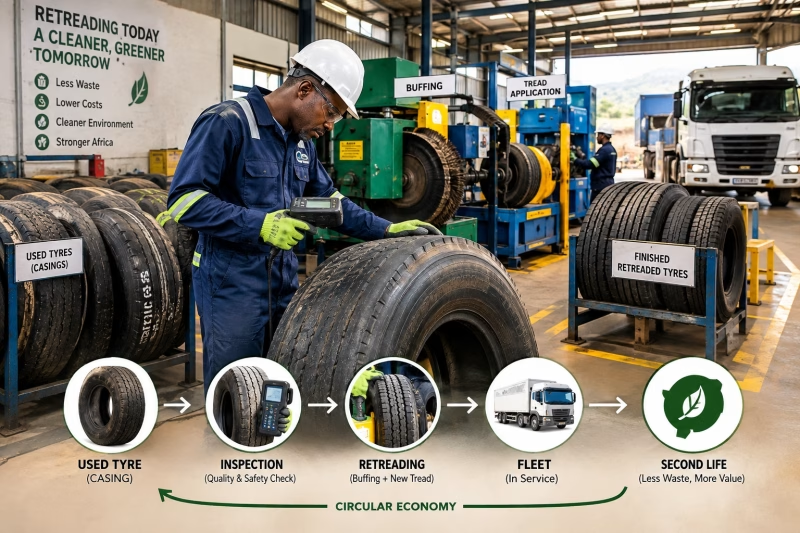
Across many African markets, the growing vehicle population is creating a tyre-waste problem that the automotive aftermarket can no longer ignore. Every vehicle eventually needs replacement tyres, but the old casing does not always need to become waste.
Retreading offers a different business model. Instead of discarding a potentially serviceable tyre casing, operators inspect it, repair it where necessary and replace the worn tread. The result is another service life from an existing asset.
For African fleets facing high operating costs, expensive imported tyres and unreliable supply chains, that model could create both environmental and commercial value. The bigger question is whether Africa can build the collection, technical, regulatory and investment systems needed to make retreading a mainstream industry.
The Tyre Waste Problem Is Already Here
Africa does not have a shortage of used tyres. It has a shortage of organised systems for managing them. Research published in Frontiers in Sustainability shows that West African countries face major gaps in end-of-life tyre data and management infrastructure. A separate study on Togo estimates that about 30,500 tonnes of end-of-life tyres accumulate annually. Researchers found that 65% of these tyres are burned while another 25% are dumped.
These practices create environmental and health risks while also destroying economic value. South Africa illustrates the scale of the challenge. South Africa’s 2024 Industry Waste Tyre Management Plan indicates that only about 20% of waste tyres were recycled. Researchers also identified stockpiling, dumping and burning as continuing problems. For the aftermarket, this represents more than a waste-management issue. It represents a missed business opportunity.
Retreading Turns Waste Into an Asset
A tyre casing can contain significant remaining value after its tread wears out. Retreading captures that value instead of sending the entire tyre towards disposal. The process typically involves casing inspection, buffing, repair where necessary, application of new tread and controlled curing or bonding, depending on the retreading method. Good retreaders therefore need trained technicians, quality control systems and reliable equipment. The economics can be compelling, particularly for commercial fleets.
The U.S. Tire Manufacturers Association reports that around 15 million tyres are retreaded annually in the United States, including nearly 44% of commercial truck tyres in the US and Canada. Its research also shows that retreading can reduce oil consumption by 15 gallons per tyre and material use by about 90 pounds compared with producing a new tyre. These figures come from a mature market, so African operators should not simply copy the numbers. However, they demonstrate the commercial potential of keeping a tyre casing in service for longer.
Continental provides another industry benchmark. The company says it retreads more than one million truck and bus tyres globally each year and reports that retreaded tyres can reduce CO₂ emissions by up to 50% compared with new tyres, based on Fraunhofer research.
Fleets Could Become the Biggest Customers
The strongest African market for retreading may sit in commercial transport. Trucks, buses, mining vehicles, agricultural machinery and other heavy-duty vehicles consume tyres continuously. For these operators, tyre costs directly affect cost per kilometre, vehicle availability and fleet profitability. A fleet manager therefore needs more than the cheapest tyre purchase price. The real question is how much value the tyre delivers throughout its complete life.
Retreading can support this approach by creating a lifecycle model around the tyre casing. Fleets can monitor tyre condition, recover suitable casings and return them to service instead of purchasing a completely new tyre every time. Bridgestone says retreaded tyres can use less than one-third of the raw materials required for new tyres. The company also treats retreading as a core element of its commercial-tyre circular business strategy. That creates an important lesson for Africa: tyre management should become a service, not simply a product sale.
Quality and Trust Will Decide the Market
Retreading will not grow if customers associate it with unsafe or low-quality tyres. This is one of Africa’s biggest pain points. A circular tyre economy requires clear standards for casing inspection, repair, retreading, testing and traceability. It also requires technicians who understand tyre construction and can identify casings that should never return to service.
The industry must therefore separate professional retreading from informal tyre repair. Manufacturers, fleet operators, regulators, tyre dealers and training institutions can work together to establish technical standards and certification. Fleet operators should also maintain tyre histories so they can track casing performance, damage, tread wear and retread cycles.
Build the Collection Network First
A retreading plant cannot operate efficiently without a dependable supply of suitable casings. Africa therefore needs collection systems connecting fleets, workshops, tyre dealers, transport companies and retreaders.
Informal businesses should not automatically become excluded from this system. South African research shows that informal tyre dealers already play an important role in extending tyre life and moving used tyres through local markets. However, exclusion from formal collection systems can push businesses towards dumping or burning. A better model would bring suitable informal operators into organised collection, sorting and recovery networks while enforcing safety and environmental standards.
Policy Can Unlock Private Investment
Governments also have a role to play. Extended Producer Responsibility schemes can require tyre producers and importers to contribute to end-of-life management. Import levies, recovery targets, tax incentives and procurement policies can help create predictable demand.
The Togo research proposes an EPR model combining tyre import levies, manufacturer responsibility and government financial incentives. African governments can adapt such approaches to local market conditions rather than simply copying policies from Europe or North America.
Africa Can Turn Retreading Into a Growth Industry
The opportunity goes beyond waste reduction. A stronger retreading industry could create jobs in tyre inspection, collection, logistics, manufacturing, equipment maintenance, quality control and fleet management. It could also reduce pressure on foreign exchange by extending the productive life of imported tyre casings.
For fleet operators, the opportunity is equally practical: lower lifecycle costs, better casing utilisation and potentially less exposure to replacement-tyre supply disruptions. Africa already has a substantial stream of used tyre casings, some of which could support a circular tyre economy. What it lacks is a sufficiently connected business system around that material.
The winning strategy is not to treat the worn tyre as rubbish. It is to treat the casing as an asset, build reliable collection networks, invest in professional retreading capacity, train technicians, enforce safety standards and create policies that reward circular business models.
Retreading will not solve Africa’s tyre-waste problem on its own. But if the automotive aftermarket can connect fleet economics, technical quality and environmental responsibility, retreading can become far more than a waste solution. It can become a serious African business.
More Insights:
Why Fleet Profitability Starts Where Rubber Meets the Road
Why Battery Technology Matters for Modern Vehicles in Africa
Did You Know Poor Suspension Reduces Tyre Lifespan?
Stellantis Opens First Vehicle Dismantling Centre in Africa
Kenya to assemble 130 Chinese electric buses in 2023

