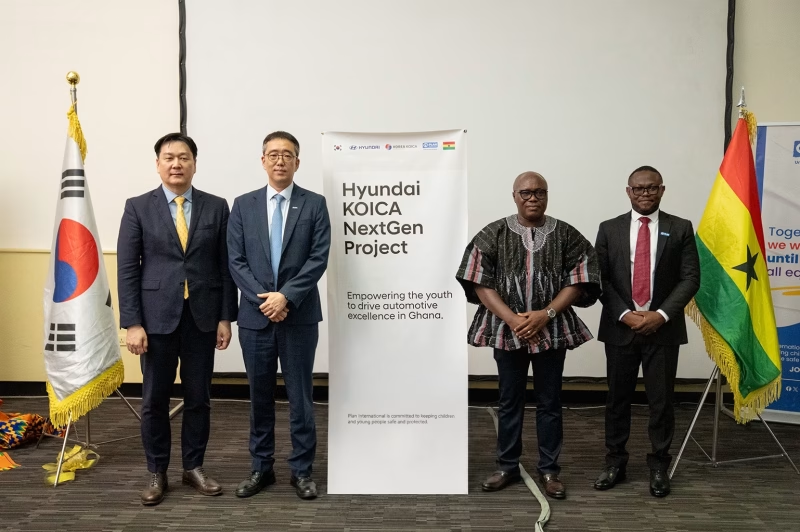
Hyundai Motor Company and the Korea International Cooperation Agency (KOICA) have launched Hyundai-KOICA NextGen in Ghana to strengthen automotive skills and prepare young people for changing vehicle technology.
Building Skills for Modern Vehicles
The project, launched in Accra following a September 3 ceremony, forms part of Hyundai Motor’s global Hyundai Continue Creating Shared Value initiative. KOICA’s Inclusive Business Solution programme supports the five-year project, which Hyundai Motor and KOICA will jointly fund with KRW 5 billion. Plan International Korea and Plan International Ghana are implementation partners.
The initiative responds to gaps identified in a baseline assessment. Hyundai and KOICA report that 80% of surveyed educational institutions lack an up-to-date curriculum, while 70% of equipment is more than 10 years old. Only one-quarter of instructors have electronic diagnostic knowledge, and 12.5% have experience with electric vehicles.
These gaps make industry-aligned training increasingly important as Ghana develops its automotive sector and prepares for hybrid and electric vehicle technologies.
Two New Training Centres
Hyundai-KOICA NextGen will establish two maintenance technology education centres with practical facilities. The project will train teachers on updated curricula so they can transfer new technical knowledge to students at nearby institutions.
The programme will also strengthen internal-combustion-engine training and introduce hybrid and EV maintenance curricula. The Commission for Technical and Vocational Educational Training will certify the updated curricula.
Supporting Youth Employment
The project will provide scholarships and internships for vulnerable students. It will also organise annual job fairs and offer startup education and consulting to support employment and entrepreneurship.
Hyundai and KOICA expect the initiative to reach 405 teachers and young people. By combining technical training, practical experience and employment support, the project aims to create a stronger pipeline of technicians for Ghana’s evolving automotive industry. The approach also seeks to strengthen links between institutions and automotive industry employers.
Read More:
Hyundai Motor to Exit Russia, Selling its Plants
Egypt and AAAM on Technical Support for AIDP
Hyundai Export Plans Target Africa, Gulf and Latin America
How Smart Garages Are Changing African Automotive Service
Aftermarket Skills Crisis: Who Will Repair Tomorrow’s Vehicles?

