
The automotive aftermarket is facing a skills challenge that is becoming harder to ignore. Vehicles are becoming more electronic, connected, software-driven, and increasingly electric, yet many workshops still depend on technicians trained mainly around mechanical systems. This creates a widening gap between vehicle requirements and workshop capability.
For you as a vehicle owner or fleet operator, this gap has practical consequences. A shortage of qualified technicians can mean longer waiting times, higher repair costs, repeated repairs, and difficulty finding a workshop capable of handling advanced systems. For workshops, it can mean lost business.
The question is no longer whether the aftermarket needs more technicians. It is whether it has enough technicians with the right skills for tomorrow’s vehicles.
Modern Vehicles Are Changing the Job
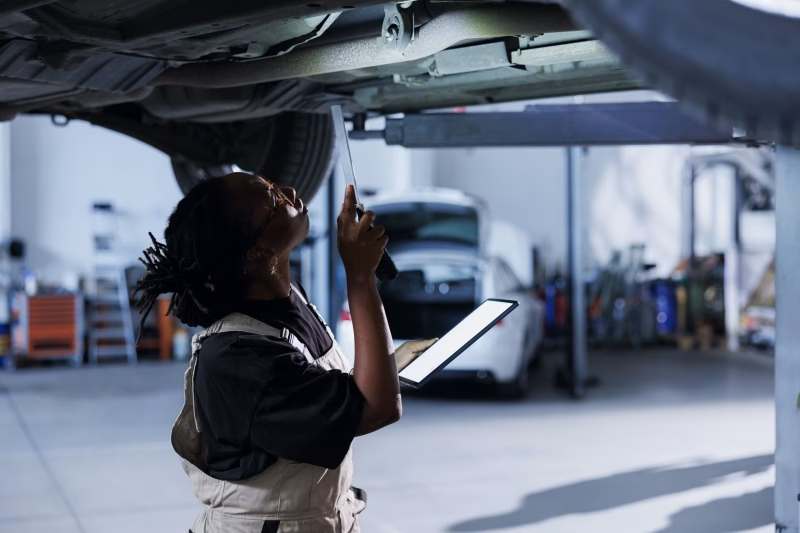
Today’s technician must understand mechanical systems alongside electronics, diagnostics, software, sensors, communications networks, and high-voltage systems. Advanced Driver Assistance Systems (ADAS), for example, can require accurate diagnosis and calibration after repairs involving cameras, radar, windscreens, suspension, steering, or body components. Electric and hybrid vehicles add complexity, requiring knowledge of battery management, high-voltage safety, electric motors, power electronics, and charging systems.
Industry research shows that this challenge is not limited to Africa. The Institute of the Motor Industry reported in 2026 that 74,734 UK technicians were EV-qualified, but projected demand could exceed supply by more than 43,000 technicians by 2035. Its ADAS research also shows technician supply growing more slowly than demand. The figures demonstrate a wider reality: technology can advance faster than workforce capability.
Africa Faces a More Urgent Challenge
Many workshops operate with limited access to modern diagnostic equipment, technical information, specialist training, and manufacturer-level support.
This shortage also threatens service quality. When technicians lack the right diagnostic skills, workshops may rely on trial-and-error repairs, outsource specialist work, or turn customers away, increasing costs and weakening trust across the wider aftermarket service chain.
Kenya provides a clear example. A 2026 study on automotive diagnostic training found that trainees can leave programs with adequate theoretical instruction but limited practical exposure to modern diagnostic technologies. The research identified inadequate workshop equipment, limited hands-on opportunities, and weak industry links as important contributors to the skills gap.
Kenya’s e-mobility transition highlights the challenge further. A GIZ-supported assessment found shortages in skills covering battery technologies, charging infrastructure, hybrid and EV technologies, and local assembly and manufacturing. It also identified limited access to EVs and diagnostic tools and a lack of standardized EV skills certification.
The message is clear: simply increasing the number of graduates will not solve the problem. Training must produce technicians who can perform real-world work.
Training Must Move Closer to Industry
Training institutions need modern vehicles, diagnostic equipment, scan tools, EV systems, ADAS calibration equipment, and safe high-voltage training environments.
Industry also needs a stronger role in curriculum development. Workshops, distributors, vehicle manufacturers, parts suppliers, and technology providers understand the skills technicians actually need. Their involvement can keep training relevant.
Kenya’s TVET system already offers training in motor vehicle mechanics, motor vehicle technology, and motor vehicle electrics. The next step is ensuring these pathways evolve quickly enough to reflect connected vehicles, EVs, diagnostics, cybersecurity, and ADAS.
Apprenticeships and dual-training models can also make a major difference. Institutions can combine theory with supervised workplace experience. This exposes trainees to real vehicles, faults, safety procedures, and workshop productivity.
Workshops Must Invest Too
Workshop owners must treat skills development as a business investment. A workshop that buys advanced diagnostic equipment without training its technicians has not solved the problem. Technicians who stop learning risk becoming less competitive.
Workshops should create annual training plans, identify technology gaps, and prioritize high-demand skills. Partnerships with parts distributors, OEMs, diagnostic-tool manufacturers, and technical institutions can make training more accessible.
Technicians should also embrace continuous learning. Short courses in diagnostics, EV safety, ADAS calibration, electronics, software, and data interpretation can expand their capabilities and create new career opportunities.
The Customer Pays When Skills Fall Behind
When a workshop cannot diagnose a fault correctly, customers may face unnecessary parts replacement, repeated visits, extended downtime, or expensive outsourcing.
For fleet operators, the consequences can be greater. A vehicle waiting for a specialist technician is an asset generating no revenue. Delayed repairs can disrupt deliveries, passenger services, construction projects, and agricultural operations.
Technician capability is therefore a fleet-management issue. Fleet managers should evaluate whether their maintenance partners have the equipment, certifications, diagnostic capabilities, and training needed for the vehicles they operate.
A Practical Path Forward
Africa can address the skills crisis by connecting education, industry, and investment more closely. Governments can support modern TVET facilities, standardized certification, apprenticeships, and incentives for emerging automotive skills. Training institutions can strengthen practical learning and industry partnerships. Workshop owners can invest in tools and technician development. Manufacturers and suppliers can expand technical training and information access.
Modern technicians are not simply mechanics. They are increasingly diagnostic specialists, electrical technicians, software-aware problem solvers, EV specialists, and ADAS experts. These emerging roles can create new employment and entrepreneurship opportunities for Africa’s young workforce.
The aftermarket cannot wait for tomorrow’s vehicles to arrive before preparing the people who will repair them. Connected cars, ADAS, hybrids, and EVs are changing workshop requirements today.
The real competitive advantage will belong to businesses that build skills before technology creates a crisis. Investing in people, equipment, practical training, and continuous learning will reduce downtime, improve repair quality, strengthen customer confidence, and help Africa’s automotive aftermarket remain competitive. The key question is whether the industry is willing to train them today.
Read More:
N!Academy Training Program in Partnership with Phinia in Nairobi
How Smart Garages Are Changing African Automotive Service
Hydrogen vs Electric Trucks: Which Technology Fits Africa Best?
Egypt and AAAM on Technical Support for AIDP
Nissan SA trains technicians for new Ghana plant

