

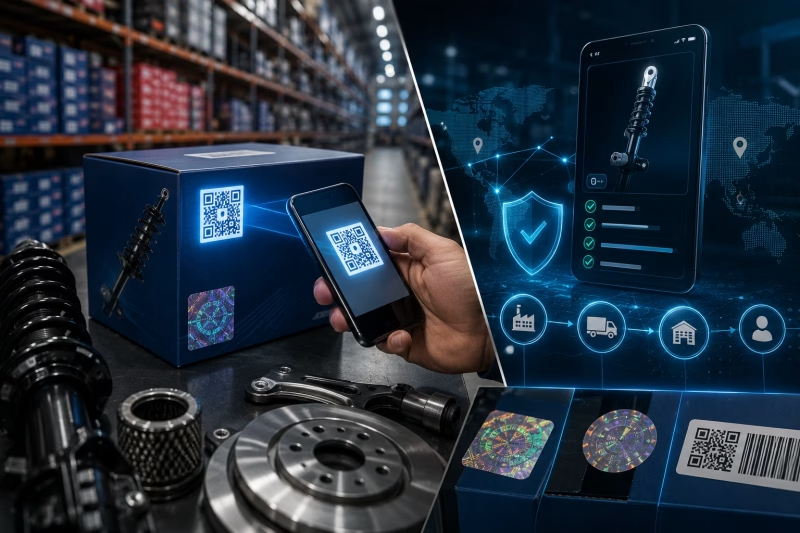
Counterfeit products continue to infiltrate global automotive aftermarket supply chains, creating significant risks for businesses, vehicle owners, and road users alike. The challenge extends far beyond lost revenue. Counterfeit parts can compromise vehicle safety, damage equipment, increase maintenance costs, and erode trust in legitimate brands. To combat this growing threat, aftermarket manufacturers are increasingly turning to a powerful new weapon: smart packaging. Today, packaging is no longer just a protective container. It has evolved into a digital security tool that helps manufacturers authenticate products, engage customers, and protect supply chains from fraud.
The Growing Cost of Counterfeit Parts
The automotive aftermarket has experienced significant growth in recent years, driven by rising vehicle ownership, longer vehicle lifespans, and increasing demand for replacement parts. Unfortunately, counterfeiters have followed the same trend.
Fake products often look nearly identical to genuine components. Modern printing technology allows counterfeiters to copy logos, labels, colors, and packaging designs with alarming accuracy. In many cases, even experienced technicians struggle to distinguish genuine products from fake ones through visual inspection alone. The consequences can be severe.
A counterfeit oil filter may fail to remove contaminants effectively. Fake brake pads can reduce stopping performance. Counterfeit suspension components may wear out prematurely, increasing safety risks for drivers and passengers. For fleet operators, the financial impact can be equally damaging. Premature failures lead to unexpected downtime, higher repair costs, and reduced operational efficiency.
As a result, manufacturers have begun investing heavily in anti-counterfeiting technologies that make products easier to verify and much harder to replicate.
How Smart Packaging Is Transforming the Automotive Aftermarket
Smart packaging combines physical security features with digital technologies to verify product authenticity throughout the supply chain. Instead of relying solely on printed labels, manufacturers now integrate unique identifiers into product packaging that customers, distributors, and workshops can verify instantly.
These technologies include:
- QR codes
- NFC (Near Field Communication) tags
- Serialized security labels
- Tamper-evident seals
- Holographic authentication features
- Blockchain-enabled traceability systems
Each solution creates an additional layer of protection against counterfeit activity. A technician can scan a QR code using a smartphone and immediately verify whether a product originated from an authorized manufacturer. Some systems also provide batch information, production dates, installation guidance, and warranty details. This creates a direct connection between the brand and the end user while making counterfeiting significantly more difficult.
QR Codes Become a Powerful Defense Tool
Among all smart packaging technologies, QR codes have emerged as one of the most widely adopted solutions.
They offer several advantages:
- Low implementation cost
- Easy consumer adoption
- Instant verification
- Real-time tracking capabilities
When scanned, a secure QR code can direct users to a manufacturer-controlled authentication platform where they can confirm product legitimacy. Manufacturers can also monitor scan activity to identify suspicious patterns. For example, if the same code is scanned repeatedly from multiple locations, the system may flag potential counterfeit activity. This allows brands to detect suspicious activity early and respond before counterfeit products spread further through the supply chain.
Serialization Creates a Digital Identity
Another increasingly popular strategy involves product serialization. Instead of assigning identical labels to thousands of products, manufacturers generate a unique digital identity for every individual package.
This identity can be linked to:
- Production records
- Distribution channels
- Shipping information
- Warranty registration
- Service history
Serialization enables end-to-end product traceability, from manufacturing facilities to the final customer. For aftermarket suppliers, this level of transparency improves inventory management while strengthening protection against counterfeit infiltration.
Building Consumer Confidence Through Transparency
Smart packaging does more than prevent fraud. It also builds customer confidence. Today’s consumers increasingly expect transparency from brands. They want to know where products originate, how they were manufactured, and whether they meet quality standards. By allowing customers to verify authenticity instantly, manufacturers demonstrate accountability and reinforce trust. Many companies now use smart packaging to provide additional value beyond authentication.
After scanning a product, users may gain access to:
- Installation instructions
- Technical specifications
- Maintenance tips
- Product registration portals
- Warranty support
This transforms packaging into an interactive customer experience rather than a simple product container.
The Role of Data in Counterfeit Prevention
One of the most significant advantages of smart packaging is the data it generates. Every scan generates valuable insights into where, when, and how products move throughout the supply chain.
Manufacturers can use these insights to:
- Detect unauthorized distribution channels
- Identify counterfeit hotspots
- Monitor regional demand
- Improve supply chain visibility
- Strengthen inventory control
As data analytics and artificial intelligence continue to evolve, these insights will become even more valuable in combating counterfeit activity.
Industry organizations such as the Automotive Anti-Counterfeiting Council (A2C2) continue to encourage manufacturers, distributors, and consumers to adopt stronger anti-counterfeiting practices and product verification measures.
Challenges Still Remain
Despite its advantages, smart packaging is not a complete solution. Counterfeit networks continue to evolve and adapt. Some criminals attempt to copy QR codes, duplicate labels, or create fake verification websites.
Manufacturers must therefore combine multiple security layers rather than relying on a single technology. Education also remains essential. Workshops, distributors, retailers, and consumers must understand how to use authentication tools correctly. The most effective anti-counterfeiting strategies combine technology, awareness, and strong supply chain management.
The Future of Smart Packaging in the Aftermarket
The next generation of smart packaging is already emerging, bringing even greater levels of traceability, automation, and supply chain visibility.
Emerging innovations include:
- Blockchain-enabled authentication
- Digital product passports
- AI-powered fraud detection and anomaly monitoring
- Connected packaging ecosystems
- Internet of Things (IoT) tracking technologies
These advancements will provide greater visibility across the supply chain while making counterfeit products increasingly difficult to introduce into legitimate markets. As vehicle technology becomes more advanced, the importance of genuine replacement parts will only increase. Manufacturers, distributors, and workshops cannot afford to compromise on product authenticity.
Turning Every Package into a Security Shield
As counterfeiters become increasingly sophisticated, the automotive aftermarket must continue evolving its defenses. Smart packaging is proving to be one of the industry’s most effective tools, combining authentication, traceability, and customer engagement in a single solution. In the battle against counterfeit parts, the packaging itself has become a frontline defense for protecting brands, safeguarding consumers, and preserving trust throughout the supply chain.
The shift reflects a broader industry trend toward transparency, data-driven decision-making, and supply chain integrity. As smart packaging technologies continue to evolve, they will play an increasingly important role in protecting brands, supporting distributors, and helping consumers purchase genuine products with confidence. In the fight against counterfeiters, smart packaging is rapidly becoming one of the automotive aftermarket’s strongest defenses.
More Insights:
Counterfeit Auto Parts: A Silent Threat Growing Across Africa
Fake Parts, Real Accidents: How Counterfeit Auto Parts Are Endangering Lives in Africa
Counterfeit Automotive Lubricants: How Innovative Solutions are Crushing Counterfeits and Defend Quality
KEBS unveils SMS Code to Verify Car Details & Mileage
Counterfeit Parts in Fleets: A Profit-Killing Problem

