Monday, June 1, 2026
Home Blog Page 57

Pioneer’s approach for telematics service for high efficient global logistics in ASEAN


Pioneer Corporation (“Pioneer”, hereafter) has been providing information sharing services utilizing in-car cameras, telematics insurance solutions using drive recorders equipped with communications functionality, and fleet management services for many years. Pioneer also develops solutions for issues in various industries utilizing massive amounts of data collected by these services and solutions, together with data analysis techniques.

On this occasion, Pioneer’s “PoC * of telematics service for high efficient global logistics in ASEAN” has been selected under “The Program for Strengthening Overseas Supply Chains(Type 2: Development for Product/Service Value Chain)” publicly solicited by the Japan External Trade Organization (“JETRO”, hereafter). The Support Project aims to create more resilient supply chains, especially in the Asian region, and to strengthen economic and industrial cooperation between Japan and ASEAN countries, in light of the vulnerabilities in Japanese supply chains made apparent by the spread of the COVID-19 pandemic.

Pioneer will demonstrate its telematics services in Thailand and the Mekong region, with a view to introducing “logistics planning optimization solutions” that will improve the efficiency of land transportation in the region.

  • *PoC : Proof of Concept

Outline and purpose of demonstration project

Project name PoC of telematics service for high efficient global logistics in ASEAN
Project start period December 2020 (planned)
Areas where demonstration will be conducted Thailand and the Mekong region
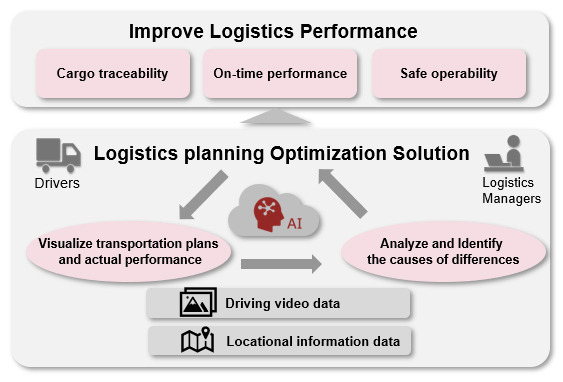
Purpose Currently, logistics in the ASEAN region is facing issues in terms of the shortage of data for quantitatively evaluating business conditions and efficiency. In addition to visualizing the state of transportation operations, the “logistics plan optimization solution” developed by Pioneer identifies the causes of differences between delivery plans and actual performance by performing multifaceted data analyses centered around driving video data. Plans are also reviewed automatically according to the state and scale of the identified causes of differences, enabling improvements in the work efficiency of logistics managers and drivers.
Through this demonstration project, Pioneer will quantitatively measure and evaluate land transportation in Thailand and the Mekong region, validate the effectiveness of its solutions in improving logistics performance attributes (such as cargo traceability, on-time performance, and safe operability), and aim to introduce solutions which contribute to increasing the resilience of supply chains in the region.
【Optimization solution that visualizes and analyzes transportation plans to minimize differences with actual performance】

Looking ahead, Pioneer will continue in its aim to resolve social issues on a global scale by co-creating new solutions produced using driving video data, in collaboration with professionals in various industries, and providing them in their optimal form.

Source: Pioneer
Scania launches Electrically Assisted Steering


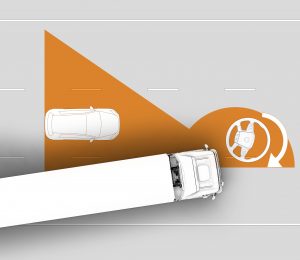
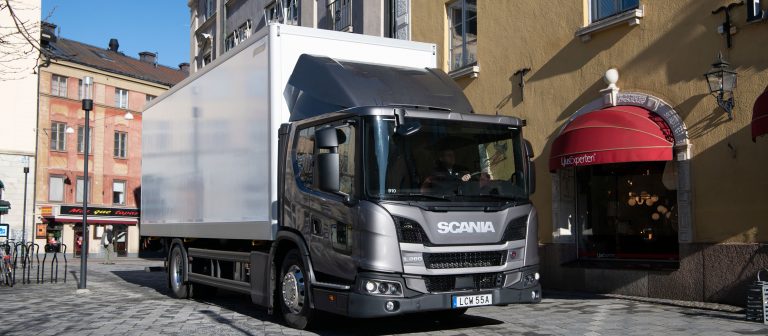
Scania is introducing EAS as an option on its trucks. The electrically assisted steering will enhance the driving experience and enable new or improved driver support systems. Together they will help reduce the mental load on drivers from handling huge vehicles such as truck combinations on busy high-ways. The EAS-based ADAS functions are active at speeds above 60 km/h, although drivers must still keep their hands on the steering wheel.

“The electrically assisted steering is a great addition to our offer, enabling significant capabilities in the name of increased comfort and road safety,” says Stefan Dorski, Senior Vice President and Head of Scania Trucks. “Reducing some of the mental load that comes with being responsible for huge vehicles is a great support to all the truck drivers out there serving the rest of us.”

Scania’s EAS system is electro-hydraulic, speed dependent and offers functionality such as active return and compensation for side wind-induced offset. The control algorithm includes factors such as velocity, ensuring that the steering wheel torque is always proportional to the resistance coming from the wheels. With the electro-hydraulic steering, the wheel steers back to neutral by itself. This is extra beneficial when reversing.

“EAS and the support systems should be exactly that, supportive,” says Dorski. “We have no intention to take away our renowned road-handling capabilities or the great feel of driving a Scania. And it is important to understand that the driver is still responsible and in command, despite the comfort and safety functions.” 

Scania trucks with EAS can be ordered with several smart support systems that , based on a de-facto standard in the automotive industry, all are identified using confusing acronyms. Scania’s answer is to bundle these support systems into three packages – named Detection, Prevention, and Comfort – that will guide potential customers by through a simple and logical structure.


Most of the functions can be activated or deactivated by the driver. Some also have partly overlapping functionality, depending on factors such as speed, monitoring area, range and the availability of road markings in good condition.

The EAS-based systems all share a common warning logic with escalating levels of activation with sound, coloured lights or, eventually in some cases, active steering of the truck.

Comfort and/or safety

The three new functions that are made possible by the EAS introduction are the following, adding either comfort or increased safety:

LKA – Lane Keep Assist 

LKA is constantly monitoring the lane markings to keep the vehicle centred in the lane by utilising active steering. LKA provides support when it is activated and the activation conditions (speed of at least 60 km/h) are fulfilled.

LDW AS – Lane Departure Warning with Active Steering

This is an extension to the standard LDW function. It not only detects potential lane departures but also intervenes by steering the vehicle back into the lane. Intended lane changes, when the driver makes use of the direction indicator lamp, are of course not affected.

LCP – Lane Change Collision Prevention 

LCP works together with Scania’s Blind Spot Warning system to avoid lane change incidents. When BSW triggers its most intense warning, by detecting for example another vehicle, LCP uses active steering to stop the lane change (even if the direction indicator lamps are activated) and bring the truck back to its former lane. “EAS brings more capabilities than you might first think of,” says Dorski. “Not only does it add comfort and relief for all kinds of normal driving, but it can also help mitigate incidents. The ADAS features help by taking out some of the concrete stress factors, such as blind spots, which is highly beneficial for truck drivers.”
Source: Scania

Nissan appoints Japan Motors as vehicle assembly partner in Ghana


Nissan today appointed longtime partner Japan Motors Trading Co. as its local partner in an all-new vehicle assembly facility in Accra. The appointment is a result of the 2018 memorandum of understanding between Nissan and the government of Ghana to lay the foundation for a sustainable automotive manufacturing industry in the country.

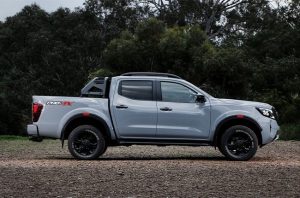
The first model to be assembled at the new facility will be the all-new Nissan Navara pickup, unveiled by Nissan earlier this month. Nissan has a long heritage within the pickup segment and the new model will be produced to specifications created for the African market.
The continued development of Nissan’s African manufacturing base is a key part of the company’s regional midterm strategy under the Nissan NEXT global transformation plan. Once operational, the Ghana facility will add to Nissan’s existing African production capacity at plants in South Africa, Egypt and Nigeria.

The announcement demonstrates Nissan’s ongoing commitment to investing in Ghana, as well as the expansion of the country’s automotive sector through the Ghana Automotive Development Policy.

“Ghana presents a great opportunity for investment, partnership and growth for Nissan,” said Shinkichi Izumi, managing director of Nissan Africa South. “Establishing a long-term automotive industrial development policy will provide investors with further confidence, boost the local economy and create jobs. We look forward to the continued partnership as Japan Motors officially begins assembling Nissan vehicles in Ghana.”

Construction of the new facility is already underway, as are the recruitment and appointment of new employees, skills development and technical training to share and apply Nissan’s global quality production standards.
“Japan Motors sees great potential in Ghana,” said Salem Kalmoni, managing director of Japan Motors. “We’re thrilled to make this significant investment and to be in a partnership that will unlock job opportunities and contribute to the economic development of Ghana. With world-class training, the local assembly plant will deliver an excellent product to meet our customers’ needs.”

Audi and KIT are working on recycling method for automotive plastics


A large number of components in automobiles are made from plastics. They have to meet exacting safety, heat resistance and quality requirements. That is why, so far, only petroleum-based materials have been suitable for manufacturing plastic components in automobiles that are subjected to particularly intensive wear. Such materials are not recyclable in most cases. Whereas plastics of the same type can often be mechanically recycled, recycling of mixed plastic waste poses a major challenge. Audi and the Karlsruhe Institute for Technology (KIT) are therefore launching a pilot project for chemical recycling as part of the “Industrial Resource Strategies” THINKTANK in order to feed such mixed plastic fractions back into a resource-conserving circular system.

“We want to establish smart circular systems in our supply chains and make efficient use of resources,” says Marco Philippi, Senior Director Procurement Strategy. “Chemical recycling has great potential for this: If plastic components can be produced from pyrolysis oil instead of petroleum, it would be possible to significantly increase the proportion of sustainably manufactured components in automobiles. In the long run, this method can also play a role in end-of-life vehicle recycling.”

Scania invests in battery assembly plant


With the rapid expansion of Scania’s electrified range of trucks, buses and engines, the company plans to, over several years, invest well over 1 billion SEK in a battery assembly plant in Södertälje, Sweden. The initial step is a 18,000-square metre facility and the construction will start early 2021 with the aim to be fully operational by 2023.

“This is a tangible manifestation of our determination to take a leading role in heavy vehicle electrification, which is needed to fulfil our commitment to science-based climate targets,” says Ruthger de Vries, Head of Production and Logistics at Scania. “Operating an on-site battery assembly plant is a prerequisite for large-scale production of electric vehicles and it also establishes Scania clearly as a part of the battery production value chain.”

The plant which will be built adjacent to the chassis assembly plant in Södertälje will assemble battery modules and packs from cells which will be delivered from Northvolt’s battery factory in Skellefteå, Sweden. The assembled packs form battery systems tailored for Scania’s modular production.

“Scania continues to invest in the Stockholm Region and to build end-to-end electrification competence. Electrification will transform transport and this latest investment in Scania’s operations in Södertälje will further strengthen Sweden as a centre of cutting-edge innovation within heavy vehicle electrification”, says de Vries. 

In 2015, Scania started series production of hybrid buses and in 2019 of its first fully electric bus range. This was recently followed by the introduction of Scania’s plug-in hybrid truck and the fully electric truck. Series production of the electric truck starts in 2021. Meanwhile, electrified industrial and marine power solutions are being developed. Scania will now gradually ramp up production, which is centred in Södertälje.

Employing a staff of 200, most recruited from within the company, the battery assembly plant will be highly automated from incoming goods throughout production to delivery. Staff handling manual elements of battery module assembly, such as fitting cable harnesses, will be trained in electrical safety and protection.

Battery packs will be tailored for varying applications and delivered to the nearby chassis assembly, which is concurrently being reorganised for parallel assembly of electric and combustion engine vehicles.

Hyundai Motor Company and INEOS to Cooperate on Driving Hydrogen Economy Forward


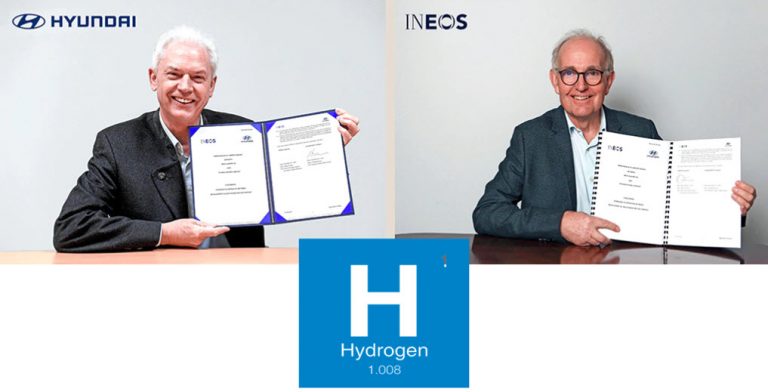
Hyundai Motor Company and INEOS today announced the signing of a memorandum of understanding to explore new opportunities to accelerate the global hydrogen economy.

Hyundai and INEOS will jointly investigate opportunities for the production and supply of hydrogen as well as the worldwide deployment of hydrogen applications and technologies. Both companies will initially seek to facilitate public and private sector projects focused on the development of a hydrogen value chain in Europe.

The agreement also includes the evaluation of Hyundai’s proprietary fuel cell system for the recently announced INEOS Grenadier 4×4 vehicle. This cooperation represents an important step in INEOS’ efforts to diversify its powertrain options at an early stage.

Hyundai’s proprietary modular fuel cell system, which evaluation vehicles will use, has already proven reliable and effective in the Hyundai NEXO SUV. The world’s first dedicated hydrogen-powered SUV has the longest driving range among hydrogen-powered vehicles in the market. Hyundai is one of leading company in the field of fuel cell technology having started the world’s first mass production of fuel cell electric vehicles in 2013.

“INEOS’ move into the development of a fuel cell electric vehicle and hydrogen ecosystem marks yet another milestone towards sustainable and clean transportation,” said Saehoon Kim, Senior Vice President and Head of Fuel Cell Center at Hyundai Motor Company. “Hyundai believes this will provide an important low-carbon option across a wide range of sectors. We also hope our decades-long expertise in hydrogen fuel cell work in synergy with INEOS’ expertise in field of chemistry to realize the mass production of green hydrogen and fuel cells for the Grenadier.”

Peter Williams Technology Director INEOS, said, “The agreement between INEOS and Hyundai presents both companies with new opportunities to extend a leading role in the clean hydrogen economy. Evaluating new production processes, technology and applications, combined with our existing capabilities puts us in a unique position to meet emerging demand for affordable, low-carbon energy sources and the needs of demanding 4×4 owners in the future.”

INEOS recently launched a new business to develop and build clean hydrogen capacity across Europe in support of the drive towards a zero-carbon future. The company currently produces 300,000 tons of hydrogen a year mainly as a by-product from its chemical manufacturing operations.

Through its subsidiary INOVYN, INEOS is Europe’s largest existing operator of electrolysis, the critical technology that uses renewable energy to produce hydrogen for power generation, transportation and industrial use. Its experience in storage and handling of hydrogen combined with its established know-how in electrolysis technology, puts INEOS in a unique position to drive progress towards a carbon-free future based on hydrogen.

In 2018, Hyundai Motor Group announced its mid- to long-term roadmap, Fuel Cell Vision 2030, to increase annual production of hydrogen fuel cell systems to 700,000 units by 2030.

About Hyundai Motor Company

Established in 1967, Hyundai Motor Company offers a range of world-class vehicles and mobility services in more than 200 countries. Hyundai Motor sold more than 4.4 million vehicles globally in 2019, and currently employs some 120,000 personnel worldwide. The company is enhancing its product lineup with vehicles designed to help usher in a more sustainable future, while offering innovative solutions to real-world mobility challenges. Through the process, Hyundai aims to facilitate ‘Progress for Humanity’ with smart mobility solutions that vitalize connections between people and provide quality time to its customers.

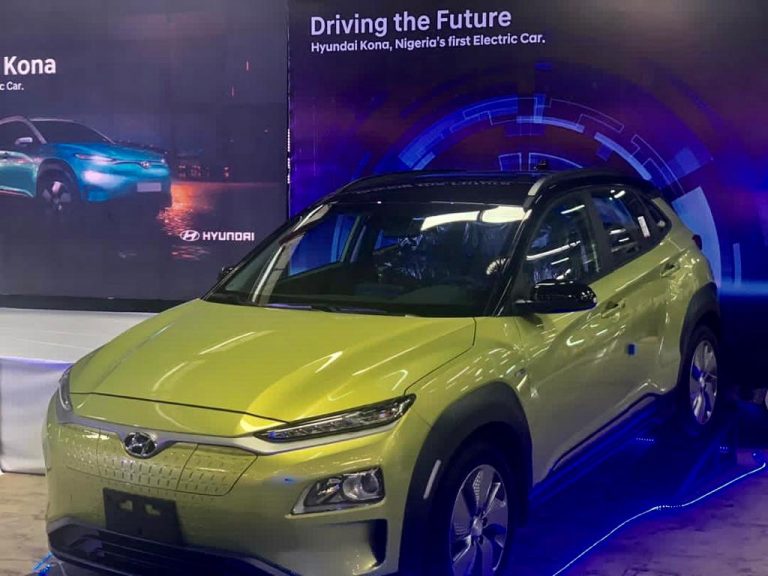
Stallion Motors launches its Hyundai-Kona, a 100% electric car


Stallion Motors, the Nigerian automobile company will put its new electric car assembled in Nigeria on the market before the end of 2020. According to the company, the “Hyundai-Kona” will contribute to the reduction of greenhouse gas emissions in this West African country.

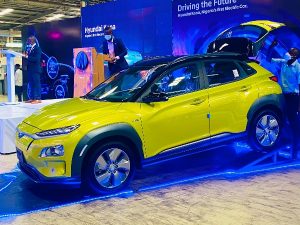
The “Hyundai-Kona” will soon be on the streets of Nigeria. This 100% electric car is assembled on site by Stallion Motors. The model will be put on the Nigerian market before the end of 2020, according to the Nigerian car company.

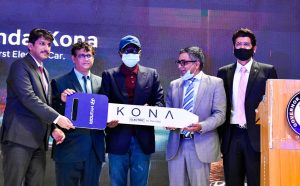
Presented on November 13th, 2020 by Stallion Motors, this vehicle can travel 482 km after 9.35 hours of charging. Once the “Hyundai-Kona” is on the road, Stallion Motors plans to sensitise the population to a change in behaviour. The aim of the Nigerian company is to help protect the environment by reducing CO2 emissions.

The promotion of electric cars

“Currently, Nigerian electricity consumers living in R1 category dwellings are charged only 4 naira per kW (over US$0.010). This means that when the Hyundai-Kona goes on sale in Nigeria, its owner will only have to pay 316 Nigerian naira (about US$0.83) for a full charge if he plugs the car into the public power grid,” says Stallion Motors.

The presentation of the “Hyundia-Kona” comes in a particular context in Nigeria. This West African country wants to reduce its carbon emissions by 179 million tonnes per year by 2030 through the adoption of renewable energy and decarbonised mobility. At the end of 2018, the Nigerian government signed a memorandum of understanding with Volkswagen for the construction of a car assembly plant in the country. The partnership also concerns the creation of a training academy in collaboration with the German government and the “broader” technical training of the community in the field of automotive skills.

“A complete network of Volkswagen vehicles and services will also be developed in Nigeria, subject to its commercial viability,” Volkswagen indicated after the signature of the agreement in 2018.

Plentywaka expands its ride-hailing service into Delta State


Plentywaka, the first bus-hailing app in Nigeria, today announces the launch of WakaCab, a new car-hailing service with fully-trained drivers for commuters within Delta State starting with Asaba. In an ambitious move to tackle Southern Nigeria’s limited transport links, the transport startup has broken into the hotly-contested taxi-hailing space to deliver a technology based service for local commuters.

Building on the success of Plentywaka’s popular bus-hailing service, WakaCab can be booked for personal and shared rides on the company’s app, which is available on Google Playstore and the IOS App store. For commuters in Asaba and later in Warri before Christmas, the new launch of WakaCab eradicates the need to locate a taxi at one of the major roads such as Okpanam or Nnebisi Road, making commuting in and around the city much easier. Irrespective of their location, riders can select a driver within a one to five kilometer radius, be issued a QR code which is scanned upon entering the vehicle and make payments via cash or Plentywaka’s e-wallet system, Wakapurse.

Discussing the launch, Plentywaka’s President and Co-Founder, Johnny Enagwolor said “Expanding the Plentywaka brand into Delta State with a car-hailing service, after launching in 2019 is a testament to our success and the importance of staying true to the vision. But it also shows our commitment to solving the issues of transport in Nigeria; and that does not necessarily mean a one size fits all approach to each state. We recognised that there was a large shortfall in private car and technology driven services compared to the other states we operate in, therefore the proposition had to be different for Asaba and Warri.”

As part of the company’s launch into Delta State, Plentywaka will also introduce its Plentywaka Vehicle Partnership (PVP) scheme to the city, which allows users to register their vehicles on the Plentywaka app and earn over N250,000 per month. Similar to the Uber-style model, users also have the opportunity to earn an income as drivers on Plentywaka’s PVP scheme; providing they pass the company’s official training scheme and vehicle inspection.

Alongside its move into Asaba, Plentywaka will also extend its car-hailing service to the state of Warri, marking the latest push in a spree of activity which has seen the company recently announce a partnership with Innoson Vehicle Manufacturing (IVM) as well attract over 45,000 customers to its platform, despite only launching in September 2019.

Throughout the course of 2020, the platform has diversified its business model to tackle the challenges of the global pandemic and its transition into the car-hailing space is another example of the company’s willingness to adapt to its surrounding environment. Earlier this year, Plentywaka also introduced Logistics by Plentywaka and Staff Bus Solutions in direct response to the challenges of COVID-19, showcasing the company’s flexible approach to the movement restrictions caused by the pandemic.

Emergi to launch electric vehicles in Liberia


The Dutch start-up Emergi, specialised in renewable energy technologies, plans to put its first electric vehicle, called “Kekeh”, on the Liberian market. To go from the prototype stage to the production phase, Emergi is looking for capital. The start-up recently launched a fundraising campaign to raise 10,000 euros.

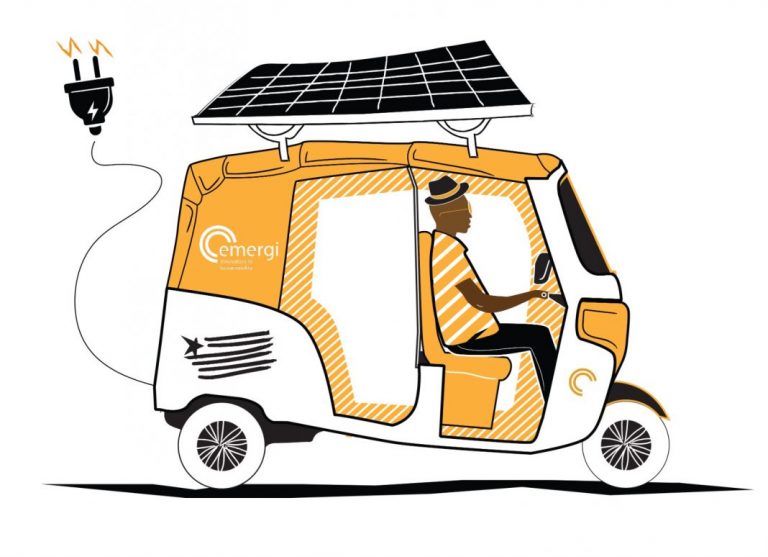
A carbon-neutral urban mobility solution could soon be on the market in Liberia. Called “Kekeh”, the three-wheeled electric vehicle was manufactured by Dutch start-up Emergi, which specialises in renewable energy.

“We have conducted extensive market research among Kekeh drivers and other renewable energy players in Liberia and we are convinced that these electric vehicles will improve both the cost of ownership (from €3,415 to €2,134 per year) and driver experience while reducing CO2 emissions,” says Emergi.

Currently, the start-up operating in West Africa is facing a problem: the unavailability of funds to move from the prototype stage to the production phase of the electric Kekeh’s. So Emergi recently launched a fundraising campaign for Liberians. The campaign, which ends on December 4, 2020, could help mobilize funds to launch the large-scale production of electric vehicles for urban transport, in a context where galloping fuel shortages are putting a strain on drivers in the capital, Monrovia, and beyond. “With 3,500 euros (just over 746,000 Liberian dollars), we can put an additional electric Kekeh on the market, as well as a solar-powered recharging station,” says Emergi. Initially, the young company hopes to raise 10,000 euros.
The driver’s protection

According to Emergi, the electric Kekehs that will be introduced to the market will include innovations to increase driver income and safety, including mobile phone payment, in-car security cameras for drivers, GPS support and solar-powered charging stations. “Our project will also be more inclusive, creating quality jobs for drivers, especially women, as well as for mechanics, experts in electric vehicles and renewable energy, and IT specialists,” says Dutch start-up Emergi.

Dong Feng and El Nasr to introduce electric cars in 2021


In partnership with Chinese Dongfeng Motor Corporation, El Nasr Automotive Manufacturing Company plans to commence production of Egypt’s first locally assembled electric car. Priced at LE350,000 (US$22,295), the cars will be the Chinese model of the Nissan Leaf, this is according to the country’s Minister of Public Business Sector, Hisham Tawfik.

“45% of the car will be made with locally produced parts, and this portion is expected to increase to 55% within two years,” affirmed Hisham Tawfik.

In December 2019, the ministry announced the deal it made with the Chinese company to build electric passenger cars on the production lines of Egypt’s El Nasr Automotive Manufacturing Company. The project will revive the Nasr production lines, which have been suspended since 2009. Production capacity is expected to reach around 25,000 electric cars annually, within a few years.

Egypt has the second largest automotive market in Africa, and the 42nd largest in the world. In recent years, the country has sought to revive its local automotive assembly market, including signing an MoU with Mercedez-Benz to develop an assembly factory in the Suez Canal Economic Zone.

The country has offered automotive companies a number of incentives to establish assembly factories in the country, including reducing or abolishing customs fees for imported parts and equipment.

- Advertisement -