Monday, June 1, 2026
Home Blog Page 38

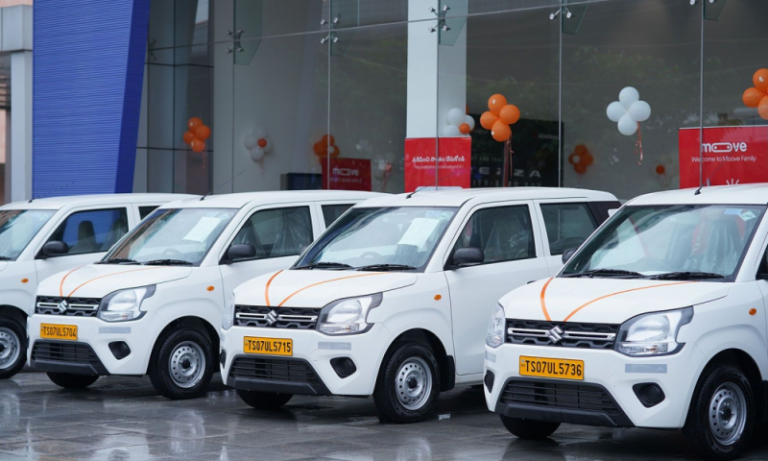
Moove signs agreement with MUFG and Suzuki to promote financial inclusion for Mobility Gig Workers across Africa


Moove, the world’s first mobility fintech, has announced the signing of a Memorandum of Understanding [MoU] with MUFG, one of the world’s leading financial groups and Suzuki, one of the world’s leading suppliers of vehicles to mobility businesses. Through this MoU, Moove, which provides revenue-based financing to mobility entrepreneurs, aims to advance financial inclusion and job creation as well as upskilling opportunities in the sector.

Signed at the eighth Tokyo International Conference on African Development [TICAD] conference, the tri-party agreement is one of the first to involve an African fintech company and underscores the opportunity to leverage technology to improve the livelihoods of millions of people in emerging markets. Moove’s alternative credit scoring technology will enable access to vehicle financing to mobility entrepreneurs, backed by the strength of MUFG’s financial services capabilities and Suzuki’s expertise in supplying durable, high performance and fuel efficient vehicles.

Launched in Lagos, Nigeria in 2020, Moove is a mission-led company committed to empowering mobility entrepreneurs to be productive and successful through providing access to vehicle financing and other financial services. Moove has since scaled to seven markets across sub-Saharan Africa and six markets in MENA, Asia and Europe, and its customers have completed over 7 million trips in Moove-financed vehicles.

The MoU creates a framework for the parties to work closely together on solving other challenges in mobility, including providing access to finance for more female customers as well as improving road safety and training support for mobility entrepreneurs.

Kenya introduces digital vehicles number plates to curb tax evation and crime


The Kenya Government has rolled out new generation number plates for all imported motor vehicles in a bid to curb tax evasion and theft. This is according to Dr. Fred Matiang’i, the country’s Interior Cabinet Secretary who also termed the move a dragnet of curtailing the tax evasion within the car importing business sector.

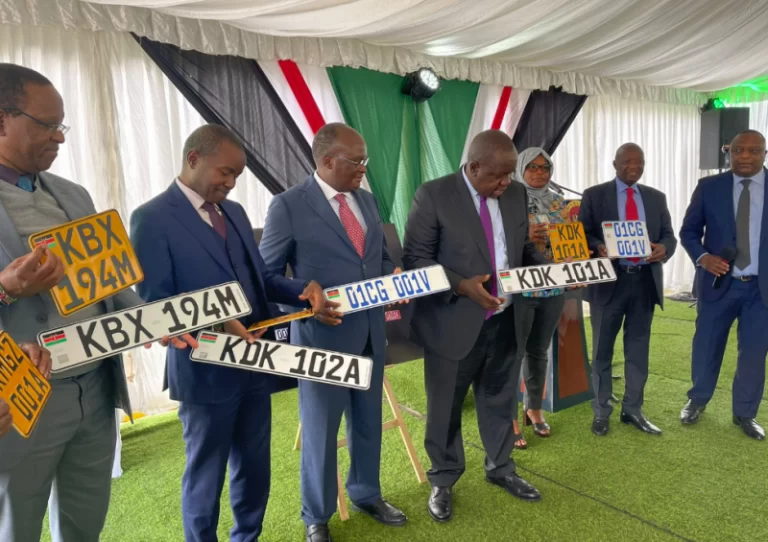
Kenyans will part with Ksh3,000 to replace the old motor-vehicle number plates with the digital ones equipped with security features to curb crime and theft cases. The digital plates were unveiled during the launch of the new number plates at the GSU Recce unit Headquarters in Ruiru, Nairobi on Tuesday, August 30.

All automobiles, including motorbikes and three-wheelers, trailers and tractors, both private and government-owned, and those used by diplomats and international organizations will adopt the new generational plates.

“When the NTSA team calls on Kenyans to change the plates, let us obey and get it done within those 18 months. Issuance of new plates will begin with newly registered vehicles from the KDK series and replacement of existing ones to start from October 1, 2022,” Matiang’i stated. He added that the digital number plates would be synchronised with the Kenya Revenue Authority (KRA) systems to nab dealers who relent in paying taxes.

“We are doing this because we want to address the security of our country. We want to help other agencies such as KRA to function properly, uplift the financial sector and improve transparency,” he stated.

Some of the security features will be visible to the naked eye whereas others will only be accessible to law enforcement agencies. Besides a unique template, they’ll feature a specially-imprinted national flag, hologram, watermark, unique and different serial numbers for rear and front plates that are linked to the vehicle’s chassis number and customized font.

The smart plates, which will be easily identifiable to law enforcement officers, will also store information such as year of manufacturer, type and colour of vehicle, engine number, transmission type, date and place of manufacture, and insurance details. Existing plates were said to lack adequate security features thereby making it difficult for enforcement agencies to identify the fake ones supplied by unauthorised personnel.

He further pointed out that the new plates would cover 12 categories of vehicles as per the legal notice 62 of 2016. He also disclosed that the number of motorists had risen to 4.8 million from 3.2 million last year.

“The plates form a basis for tracking and monitoring vehicles in the country which have risen significantly,” he explained.

Championing Ghana’s Automotive Industry


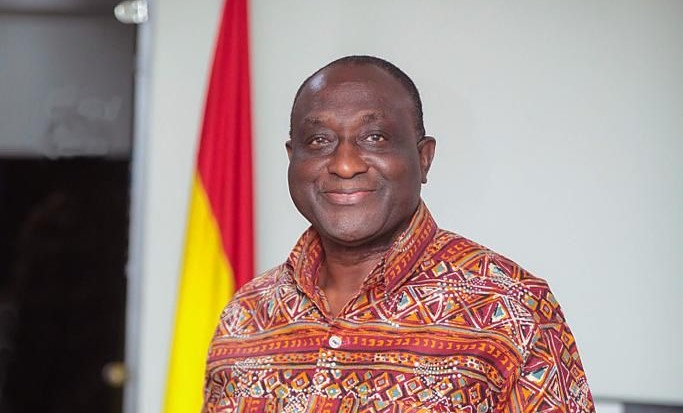
Minister of Trade and Industry, Alan Kyerematen on the sidelines of the 8th Tokyo International Conference in Tunis, Tunisia, signed a Memorandum of Understanding (MoU) with Toyota Tsusho Corporation to continue to develop mutual collaboration for contribution to the Ghanaian automotive industrialisation sector, economy and society.

It is recalled that in August 2019, he signed an MoU with Toyota Tsusho Corporation during the TICAD-7 Summit in Yokohama, Japan for the establishment of the Toyota Tsusho Manufacturing Ghana (TTMG) vehicle assembly plant.

The Plant was finally launched in June 2021. TTMG is currently assembling the Toyota Hilux (SKD). It would commence the assembling of Suzuki Swift vehicles before the end of this year, 2022.

The new MoU signed by Mr. Kyerematen seeks to explore opportunities in capacity and people development and enhance the potential to export vehicles assembled in Ghana to neighboring countries. According to the Trade minister, it is also aimed at the possibility of manufacturing the vehicle parts locally to help to develop the automotive market and industry in Ghana.

Government’s delegation at the conference included Shirley Ayorkor Botchwey, Minister for Foreign Affairs and Regional Integration, Deputy Minister of Finance, John Kumah, and other Senior Government officials as well as Ghana’s Ambassador to Tunisia.

TICAD is a Summit-level international conference on Africa’s development initiated by Japan in 1993. The conference brings together African countries and development partners, including international and regional organisations, donor countries, Asian countries, the private sector and Civil Society Organizations, to deliberate on Africa’s development. TICAD-8 focused on promoting fair and transparent development financing for Africa.

In his address, Mr. Kyerematen shared strategies to guide Africa’s industrialisation agenda highlighting political commitment; technology and innovation; medium and long-term financing; as well as seizing opportunities that the Africa Continental Free Trade Area (AfCFTA) market presents to both investors from Africa and Japan.

Inchcape launch new Range Rover L460 model in the Kenyan market


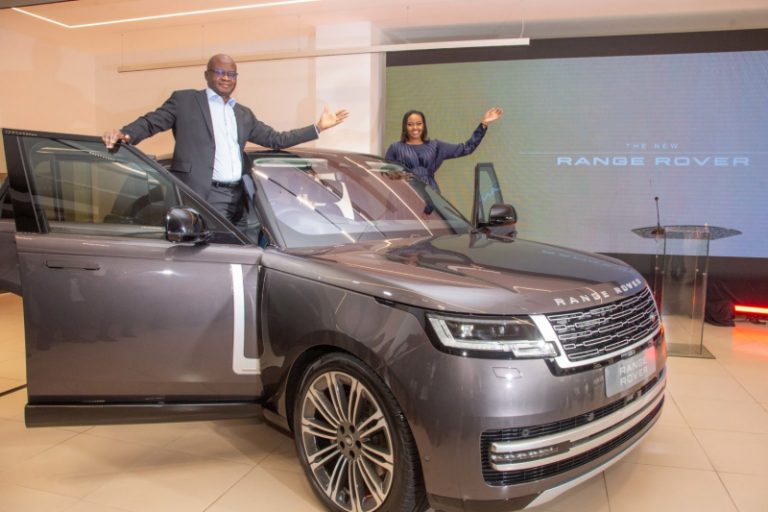
Inchcape Kenya has introduced the new Range Rover L460 into the Kenyan automotive market, adding to the significant array of luxury SUV’s the company offers under its Jaguar Land Rover franchise. Dubbed as ‘the most desirable SUV’, the vehicle is the first of the L460 model and will be available in different variants which include the High Standard Equipment (HSE), Autobiography, SV, the 1st Edition only available in the first year of manufacture.

The New Range Rover is available with a choice of powerful Ingenium 4.4 litre V8 petrol and a 3.0-litre six-cylinder diesel engine that have an electric super charger.

Speaking during the media launch event held at the Jaguar Land Rover Showroom, Inchcape Africa Managing Director, Francis Agbonlahor, noted that the vehicle upholds its reputation of pioneering innovation with the suite of technologies designed to enhance convenience, efficiency and safety.

“The new Range Rover L460 incorporates Software-Over-The-Air (SOTA) updates meaning the vehicle will constantly evolve and remain up to date as it matures,” he said.

The new Range Rover has an advanced Pivi Pro infotainment system that provides immediate start-up and its complemented by a 13.1-inch Interactive Driver Display screen with high-definition graphics and configurable layout” said Mr. Agbonlahor

The vehicle’s body is 50% stiffer than before, creating a safe and strong body designed to accommodate the new 23-inch wheels – a first for Land Rover – and 815mm diameter wheel combinations.

Additional features that make the vehicle the ultimate SUV experience include the Adaptive Cruise Control and the Steering Assist which smooth out body movements resulting from sudden changes in speed, headrest speakers with next-generation noise cancellation and a new clean air technology that significantly reduces odours and viruses – creating one of the quietest, most relaxing, luxury travelling experience yet.

The vehicle is now available for purchase in Kenya at the Inchcape’s Land Rover showroom.

Audi set to join Championship in 2026


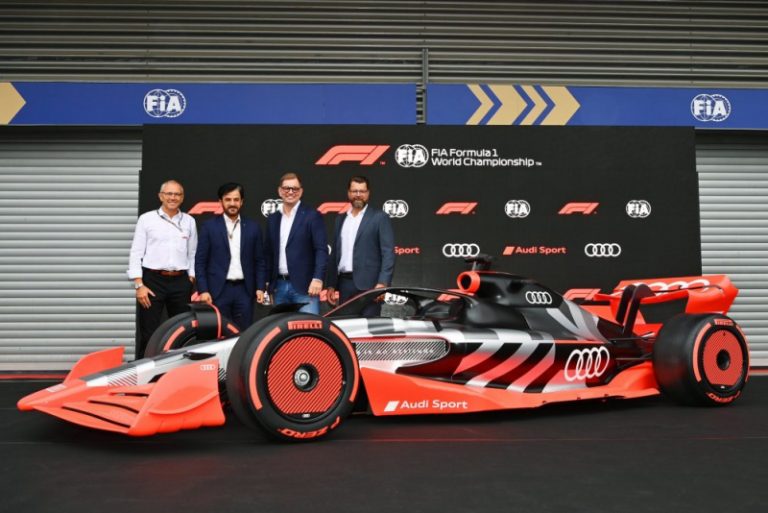
German manufacturer Audi who are also part of the Volkswagen Group have confirmed their entry into the Formula 1 World Championship season from 2026. Audi will join the F1 World Championship from the 2026 season as a power unit supplier and F1 setting a target of being Net Zero Carbon by 2030.

“I am delighted to welcome Audi to Formula 1, an iconic automotive brand, pioneer and technological innovator,” said F1 President and CEO Stefano Domenicali, who worked for Volkswagen for a stint starting in 2014. “This is a major moment for our sport that highlights the huge strength we have as a global platform that continues to grow.

“It is also a big recognition that our move to sustainably fuelled hybrid engines in 2026 is a future solution for the automotive sector. We are all looking forward to seeing the Audi logo on the grid and will be hearing further details from them on their plans in due course.”

Audi announced its entry for 2026 at a press conference at Spa, ahead of this weekend’s Belgian Grand Prix, which featured Chairman of the Board of Management of AUDI AG Markus Duesmann, Member of the Board of Management for Technical Development Oliver Hoffmann, Domenicali and FIA President Mohammed Ben Sulayem.

The manufacturer said they will announce a decision on which team they will be “lining up with in 2026 by the end of this year”. Audi Sport’s facility in Neuburg will be where the power unit is developed, marking the first time in more than a decade that F1 powertrain will be built in Germany.

“Motorsport is an integral part of Audi’s DNA,” said Duesmann. “Formula 1 is both a global stage for our brand and a highly challenging development laboratory. The combination of high performance and competition is always a driver of innovation and technology transfer in our industry. With the new rules, now is the right time for us to get involved. After all, Formula 1 and Audi both pursue clear sustainability goals.”

Hoffmann added: “In view of the major technological leaps that the series is making towards sustainability in 2026, we can speak of a new Formula 1. Formula 1 is transforming, and Audi wants to actively support this journey. A close link between our Formula 1 project and AUDI AG’s Technical Development department will enable synergies.”

Audi say there are already test benches for F1 engine testing as well as for electric motor and battery testing in their Neuburg base. They are currently working on getting personnel, buildings and technical infrastructure in place by the end of the year. They will then have three years to finetune the PU before entering F1.

Adam Baker, who has held several senior positions for manufacturers and teams in motorsport while also spending three years at the FIA, will run the Formula 1 project as CEO.

African and Japanese delegates meet to promote continent’s growth

0

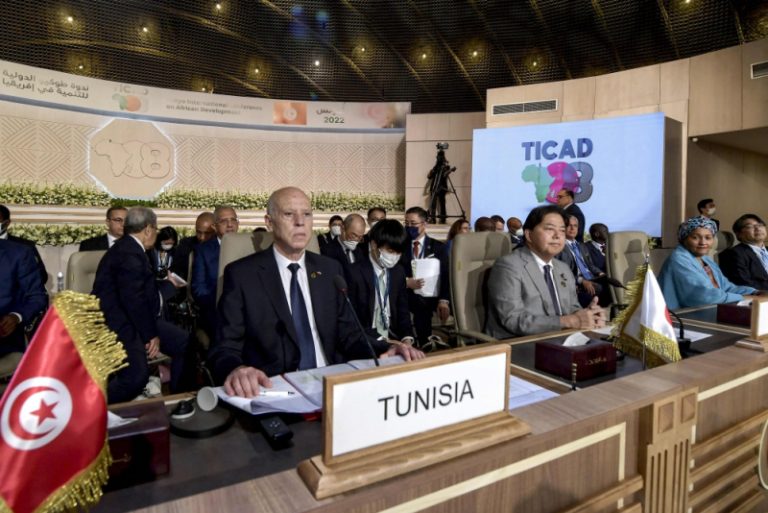
African heads of state and a Japanese delegaton have met in the Tunisian capital Tunis for talks on promoting “African-led” development. Tunisian President Kais Saied welcomed visitors to the 8th Tokyo International Conference on African Development – or TICAD.

Japanese Prime Minister, Fumio Kishida, has tested positive for Covid-19 and used a video link to join the summit, chaired by African Union Chair, Macky Sall. President Sall of Senegal spoke of his faith in the conference.

“Almost 30 years after its launch, the Tokyo International Conference for African Development continues to deliver on its promises with concrete results in the areas of education, agriculture, health and water, to give just a few examples,” he said.

On the agenda are measures aimed at countering China’s influence on Africa.  China has been steadily increasing its influence in the region in recent years, notably through its ambitious “Silk Roads” project.

However, the summit is especially important for Tunisia as the country continues to suffer from a political and economic crisis, made worse by the covid pandemic and, more recently, the war in Ukraine affecting wheat imports.

Tunisia hopes to take advantage of the summit to attract investors for about 80 projects worth 2.7 billion dollars in the health, automotive, space and renewable energy sectors, which are expected to create 35,700 jobs.

Some 30 heads of state are at the summit, which lasts until Sunday,

Steel industry revival will boost Automotive Manufacturing


The Executive Vice Chairman/ Chief Executive, National Agency for Science and Engineering Infrastructure (NASENI) Prof. Mohammed Haruna said the revival of the nation’s steel industry is a must for the development of automotive manufacturing in the country.

He said without fixing the steel industry, the nation’s automotive aspiration would not be realised. He said the Federal Government should adopt Public-Private Partnership (PPP) model to fund steel complexes.

He said Nigeria should not own more than 40 per cent equity in such partnership. Haruna, who made the submission in a presentation to the steel council in Abuja, said NASENI will invest in any venture, targeted at producing iron and steel products from Nigeria raw material, with the private sector and the steel council.

He said the government should support local production by levying a development for tax on steel imported into Nigeria He said the government should raise fund or generate a fund for privatized Ajaokuta Steel with incentives to guarantee its completion. He added: “In the past planning of 1958 and the postindependence, it was only government that has financial muscles to fund steel projects. “Now private sector can conveniently undertake such investment to fund steel complexes but in PPP model. Federal Government of Nigeria should not own more than 40 per cent equity in such partnership.

“Government should raise fund or generate a fund for privatised Ajaokuta Steel with incentives to guarantee its completion. “Government should thereafter support local production by levying a development for tax on steel imported into Nigeria during the resuscitation period to fund the establishment of steel development fund which is accessible to investors.”

“The new National Steel Council has to resist the temptation of using foreign consultants and the so-called development partners who are here to corrupt the officials and offers foreign travels as free meals to ensure that the country geopolitical interference and sectional partisan politics.”

He assured the council that NASENI will seek its board’s approval to invest in any venture, targeted at producing iron and steel products from Nigeria Raw Material, with the private sector and the council

Mikano Motors, Durojaiye Foundation in joint campaign for safer roads in Lagos


Efforts to make Lagos roads safer got a boost recently when Durojaiye Relief Foundation (DRF), in partnership with the assemblers and marketers of Geely brand of vehicles in Nigeria, Mikano Motors, spearheaded a road safety awareness initiative in the state recently.

The campaign was geared towards sensitising motorists and pedestrians on the need to embrace proper road safety measures for safer travel experience on Lagos roads. Supported by the Lagos State Traffic Management Authority (LASTMA), the campaign kicked off with a courtesy visit by DRF’s executive committee and LASTMA’s mayor commandant to Mikano International’s Motors Division headquarters.

During the visit, they were briefed on the planned activities for the road safety awareness campaign. Also in attendance were other LASTMA officials and Mikano Motors staff. The briefing was followed by a two-day road show, where members of the National Union of Road Transport Workers (NURTW), Lagos chapter and other road users, were sensitised on the importance of obeying basic traffic and safety rules.

Some of the rules focused on included using safety belts, avoiding distractions; not texting and driving, not driving while under the influence or when fatigued, amongst other vital road safety best practices. To emphasise the importance of proper maintenance as the best approach for keeping vehicles in the best shape and ensuring the safe transport of passengers across the state, some motorists benefitted from complimentary oil change as an added incentive. 

The Durojaiye Relief Foundation is renowned for the numerous philanthropic initiatives which have touched the lives of numerous Nigerians through their community outreach programmes, skill acquisition and youth empowerment schemes. 

Mikano Motors Division, which is Nigeria’s fastest-growing automotive brand and home to Geely, Maxus and ZNA autos, was in full support of the campaign, with an impressive motorcade showcasing a selection of their premium vehicles.

NADDC, Africar unveil Nigeria-Assembled Mini-cars for Taxi Services


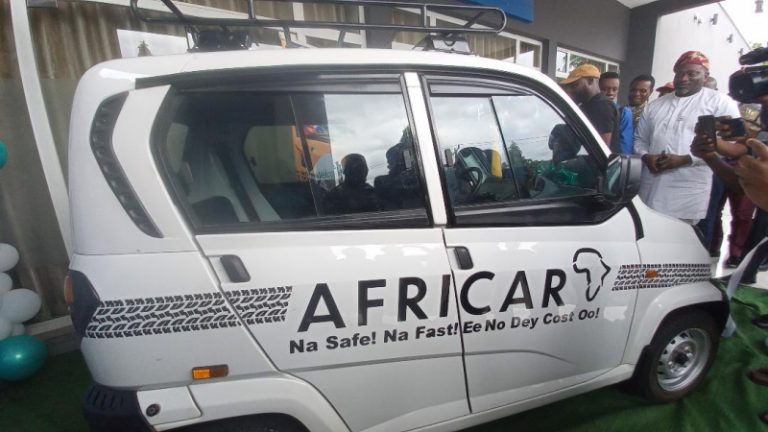
Vasco Technology Solutions Limited, popularly known as Africar, in partnership with the National Automotive Design and Development Council (NADDC), has introduced a new ride-hailing service to ease transportation difficulties across the country.

Reports indicate that no fewer than 115 Nigeria-assembled mini-cars have been launched by the Minister of Trade and Industry, Otunba Niyi Adebayo, for shuttle services in Ibadan, Oyo State capital.

Africar, operating under a conglomerate known as Stallion Group, is a platform that has the potential to transform the transportation industry by providing both employment opportunities and low-cost rides.

Speaking during the launching, the director-general of the National Automotive Design and Development Council (NADDC), Jelani Aliyu, said the launching of the mini-cars, which is of international standards, is, therefore a step in the right direction.

Aliyu, represented by the Director, Industrial Infrastructure Department, Dr. Nua Omisanya, said the Council had worked tirelessly to ensure the survival and growth of the Nigerian automotive industry, with a view to enhancing the industry’s contribution to the national economy.

According to him, the newly introduced mode of transportation will enhance basic mobility for all, including visitors, easing mobility for students, workers and communities from various suburban areas to the city centre.

“NADDC continues its unwavering dedication to the support of local automotive production, and also continues to promote some of the latest technologies being developed,” he added.

Also speaking, the chief executive officer (CEO), Africar, Sahil Vaswani, said all the cars being used for the project were assembled at Stallion Group’s Von Plant in Lagos.

He added that the company and NADDC developed the Bajaj Qute cars purposely for the new ride-hailing taxi for Nigeria and would be taken to other states in the country, after Ibadan.

He said: “This car is assembled in Nigeria by Nigerians and is environmentally friendly, with 50 per cent lower carbon emissions than the average car.”

Toyota sells stake in Kenya IT firm after row with State


A unit of Japanese multinational Toyota has sold its stake in Kenyan information technology firm Seven Seas Technologies after the company went into a legal fight with the government over a Sh4.7 billion contract. The latest regulatory filing of Seven Seas with the Registrar of Companies Company shows that Toyota Tsusho has transferred its entire stake of 9.5% in recent months.

A 21% stake held by private equity firm Actis has also changed hands. The was previously owned by collapsed Dubai-based firm Abraaj. The shareholder exits followed a two-year legal battle between the government and Seven Seas over the cancellation of the contract to wire 98 State hospitals that, among others, allowed remote treatment or telemedicine.

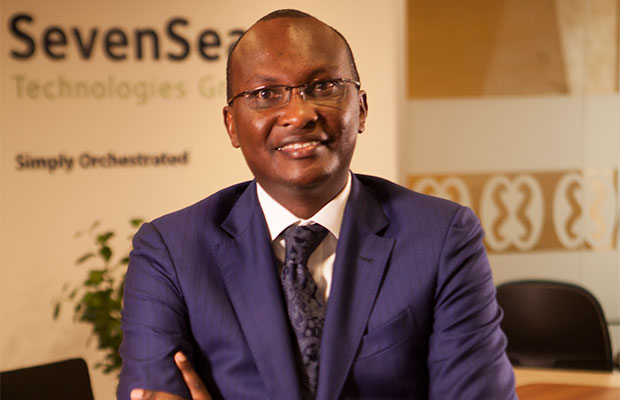
“The institutional investors exited because of reputational risks. They don’t like drama,” Michael Macharia, the CEO and co-founder of SevenSeas told the Business Daily on Monday. “I bought the shares when the shareholders said they were seeking out,” he added without disclosing the value of the stake sales.

Toyota Tsusho described CSV Africa as a fund for social contribution for creating jobs and economic independence in Africa and invested in agricultural projects in Zambia and leather sewing business in Ethiopia. The funds from Toyota Tsusho were used to expand Seven Seas’ health sector interests. Toyota Tsusho has had a presence in Africa for nearly 100 years.

Besides the automotive sector, it is involved in Kenya in the development of the energy sector, agricultural industrialisation, oil and mineral reserves. Private equity firm Actis got the 21% stake in 2019 after it acquired the rights to manage funds privately owned by Abraaj, which was the largest buyout fund in the Middle East and North Africa until its collapse in 2018.

Abraaj filed for provisional liquidation in 2018 after investors, including the Bill & Melinda Gates Foundation, accused the firm—which had stakes in Brookside Dairies and Java — of mismanaging its money. Its top executives faced criminal charges levelled by US prosecutors and pleaded guilty to several of them, including fraud and racketeering.

Actis did not stay long in Seven Seas, says Mr Macharia, linking its exit to the multi-billion shilling suit with the Ministry of Health. The Business Daily was unable to get an immediate comment from Toyota Tsusho and Actis over the stake sales.

Seven Seas protested the cancellation, insisting the State declined to offer a Letter of Support, a security document that gives banks comfort to lend project money to firms or individuals, which is customary in a majority of State projects. The tech firm says the Letter of Support hitch made it difficult to secure a loan from KCB Group, triggering the two-year legal suit that underlined the torturous journey of entrepreneurs working on State projects.

“And I have found that the Second respondent (Ministry of Health) was in breach of both payment obligations under the contract and the obligation to provide a government letter of support. Both defaults are material breaches of the Second respondent’s contractual obligations,” ruled Mr Ringera.

“It was the Ministry of Health’s default in providing the claimant with a government letter of support that prevented Seven Seas from achieving completion of the project,” he added.

He awarded the firm Sh1.59 billion ($13,288,091) for breach of contract, loss of profits and costs incurred after the cancellation. The tech firm received an additional Sh52 million for costs related to the suit.

The arbitrator heard Seven Seas sought funding and got offers, including equity financing for the project worth $30.8 million (Sh3.68 billion), which Mr Ringera said was more than the capital required for the health ICT deal.

Seven Seas was betting on the health sector, especially State deals, to make its next billions and drive its revenues. The firms in the multi-billion shilling leasing deal included China’s Shenzhen Mindray, India’s Esteem Industries, General Electric and Philips.

Seven Seas was expected to digitise the 98 hospitals, including the national referral facilities — Kenya National Hospital and Eldoret-based Moi Teaching and Referral Hospital. This was to allow remote hospitals in places like Turkana to tap expertise from well-staffed hospitals like KNH through telemedicine.

Source: BD

- Advertisement -