Monday, June 1, 2026
Home Blog Page 36

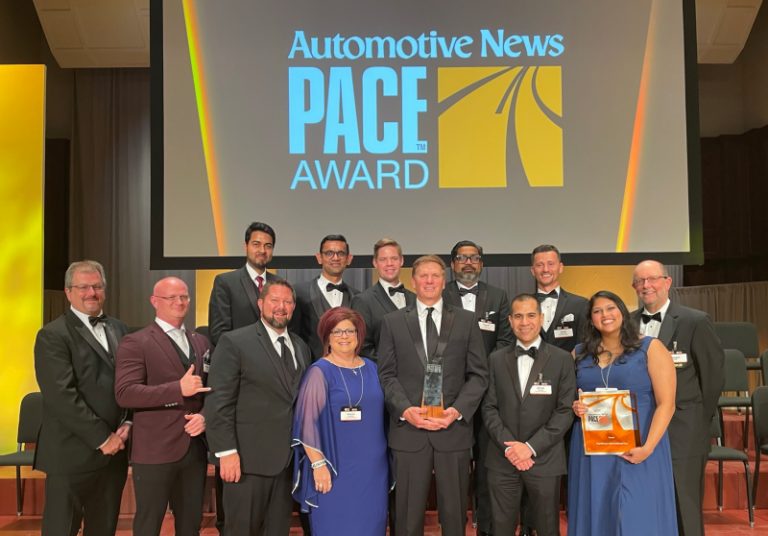
Martinrea Wins 2022 Automotive News PACE Award for GrapheneGuard™ Coated Brake Lines


Martinrea International Inc. (TSX: MRE), a diversified and global automotive supplier engaged in the design, development, and manufacturing of highly engineered, value-added Lightweight Structures and Propulsion Systems, was named a 2022 Automotive News PACE Award winner at the awards ceremony on September 19. The prestigious award recognizes automotive suppliers for superior innovation, technological advancement, and business performance.

Martinrea was recognized for its Brake Lines with GrapheneGuard™, which marks the first use of graphene in an automotive brake line application. Martinrea recognized the potential of graphene and developed the revolutionary GrapheneGuard™ coating technology which incorporates graphene into nylon. The development of GrapheneGuard™ is a convergence of material science innovation and process engineering that brings to the automotive market a brake line coating that has unmatched properties. The new sophisticated material can provide up to 25 percent weight savings while simultaneously demonstrating superior strength, greater abrasion protection, and improved chemical resistance, all while utilizing current manufacturing equipment and processes.

“Being recognized as a PACE Award winner among the top innovations in the automotive industry is a testament to both our commitment to developing innovative solutions and to graphene’s ability to address key challenges in the automotive industry,” said Pat D’Eramo, President and Chief Executive Officer of Martinrea. “With the proven potential to reduce weight while delivering enhanced performance, we are also exploring opportunities to improve other automotive components through graphene-enhanced products.”

The 28th annual PACE Awards were presented by Automotive News. The competition was open to suppliers that contribute products, processes, materials, or services directly to the manufacture of cars or trucks. The Automotive News PACE Award is accepted around the world as the industry benchmark for innovation.

Martinrea earned an Automotive News PACE Award following an extensive review by an independent panel of judges including a comprehensive written application and a virtual site visit.

For complete details of the Automotive News PACE Award, visit www.autonews.com/pace.

About Martinrea International Inc.
Martinrea International Inc. (TSX: MRE) is a leader in the development and production of quality metal parts, assemblies and modules, fluid management systems, and complex aluminum products focused primarily on the automotive sector. Martinrea currently operates in 57 locations in Canada, the United States, Mexico, Brazil, Germany, Slovakia, Spain, China, South Africa, and Japan. Martinrea’s vision is making lives better by being the best supplier we can be in the products we make and the services we provide. For more information on Martinrea, please visit www.martinrea.comFollow Martinrea on Twitter and Facebook.

Globenewswire

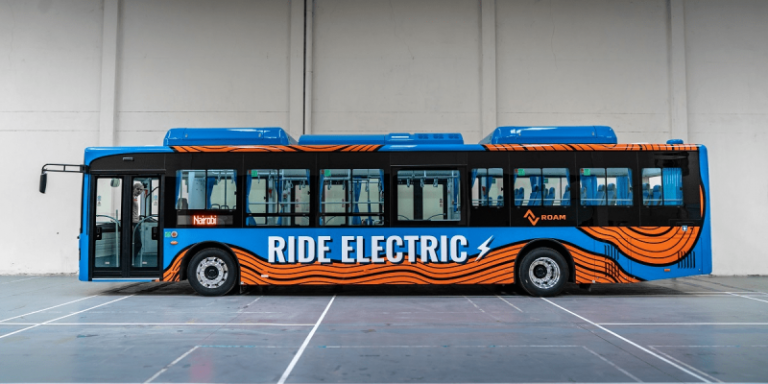
Why Electric Mobility Should Top President Ruto’s Economic Agenda


It is time electric mobility became the norm in Kenya. This will unlock thousands of new decent jobs, manage our unsustainable cost of fuel and contribute immensely to better health. Thankfully these three are at the heart of Kenya Kwanza’s manifesto. In this regard, I suggest that electric mobility be prioritized by the Ruto administration.

In order to further appreciate why electric mobility is the way to go, let us take a quick trip to Norway.

electric mobility
Dr. Isaac Kalua Green is the Founder and Chairperson of Green Africa Foundation

Imagine paying parking fees that are 50 percent less than normal parking fees. Imagine also driving for free on the Nairobi expressway. This is what happens in Norway for electric vehicle motorists. They pay less parking and zero toll charges, amongst other tax exemptions. It’s no wonder Norway has the highest number of electric vehicles in the world per capita. Indeed, in 2020, electric cars in this Scandinavian country constituted almost 75 percent of all new car sales. The owners of these vehicles spend no money on fuel!

This vindicates the power of policies to boost electric vehicle sales. That’s why Kenya need to act speedily to enact and implement numerous pivotal electric car-friendly policies. For starters, there should be zero rating or exemption of import and excise duties not just on electric vehicles but also on their spare parts, batteries and charging station equipment. Incidentally, Rwanda adopted this policy measure in 2021.

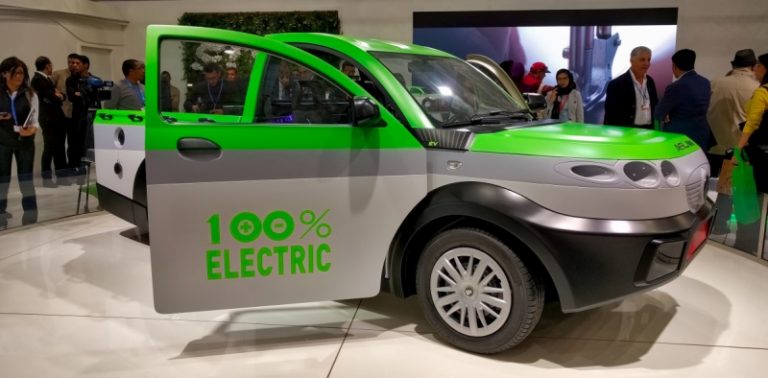
A practical incentive entails reduction of corporate tax from 30% to 20% for the first five years for investors operating electric vehicles assembly plants and charging stations. This would accelerate local production by companies like Autopax Limited. India took similar action in 2017, leading to increased local production of electric vehicles.

For local electric mobility to thrive, there is need for a corresponding local production of advanced batteries. That would significantly reduce electric vehicles’ cost. As such, the Government must incentivize billion-shilling investments into this sector. In February this year, US President Joe Biden’s administration announced plans of investing Shs360 Billion to strengthen U.S. Supply Chain for Advanced Batteries for Vehicles and Energy Storage.

With the right incentives, Kenya can attract multi-billion-shilling investments into local production of advanced batteries.

Even more relevant for Kenya and other African countries, electric motorbikes and motorcycles are now becoming accessible for ordinary consumers. Considering that Boda Boda business is one of Kenya’s mainstays, there is a massive market for ebikes. Their main attraction is their affordability to maintain which is why existing local makers must be fully supported.

Against this backdrop, Honda which is the world’s largest motorcycle manufacturer, plans to introduce 10 or more electric motorcycle models globally by 2025. Further to this, it aims to increase annual sales of electric models to 1 million units within the next five years. This speaks to the broad market opportunities of electric mobility. Just as is the case with electric cars, generous tax incentives will go a long way in enabling and expanding local production of electric motorcycles.

Indeed, electric mobility can reduce our high cost of living as we also create jobs, save lives and boost our economy. Think green, act green!

About the author:

Dr. Kalua Green is the Founder and Chairperson of Green Africa Foundation, an organization that was founded in the year 2000 that champions Sustainable Development in Africa.

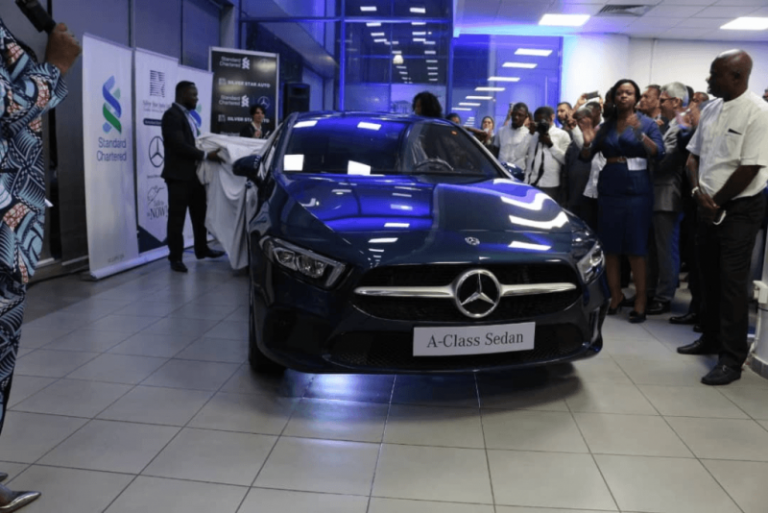
Ghana auto dealer Silver Star Auto no longer authorized Mercedes-Benz representative


After becoming a household name for being the local dealer for Mercedes-Benz for 25 years, serving the Ghana automotive market, Silver Star Auto Limited (SSAL) has announced that it is no longer the authorized dealer for Mercedes-Benz in Ghana. “We bring to your attention some very important updates. Thanks to your patronage, custom and support, has been becoming a household name for being the local dealer for Mercedes-Benz for 25 years.” says SSAL in a statement.

The company further revealed that, “Due to change of circumstances beyond our control and in spite of the last two years being the best years for SAL and Mercedes-Benz (both for strong and sustained growth, as well as leading the market share by far in Ghana for luxury vehicles).”

“Mercedes-Benz, Germany has without direct or indirect engagement, decided to select a new dealer for Ghana opting instead to appoint a multinational company in Ghana that also will be their dealer in several other West African countries.”

“We have tried our level best to make a case with Mercedes-Benz in Germany without luck, all appeals failed to have produce any response from them leaving
us no choice but to seek redress from the courts.”

“In the meantime, Management of Silver Star Auto has been expanding the horizons with several new and exciting brands for our market. We are the authorised distributors of Peugeot and Citroën vehicles, some of the finest European vehicles. We are proud to say that SAL and Peugeot is the third global vehicle manufacturer in Ghana to start assembly of vehicles in Ghana in March 2022.”

“Earlier this year, we have partnered up with Volvo Eicher Commercial Vehicles of India to bring to Ghana very competitive and high quality light and medium – duty trucks and buses. Distribution of leading IVECO Trucks from Italy has been secured to begin operations later this year.”

“Although we have not been treated fairly by Mercedes-Benz, we continue to make investments in new brands, facilities, human resources and training to continue serving our customers to the highest standard they deserve.”

“Lastly, we want to assure you that with the 25 years rich experience backed by track record, knowledge, tools and facilities, genuine spare parts and internationally trained technicians, we shall remain your independent trusted partner for your Mercedes-Benz advice, support and aftersales service.”

“Thank you for your support and commitment, without which our journey so far would not have been possible. We look forward to an even stronger offering and relationship with our cherished customers and stakeholders and thank you immensely for giving us the opportunity to be of service to you.”

TotalEnergies Ghana opens first EV charger


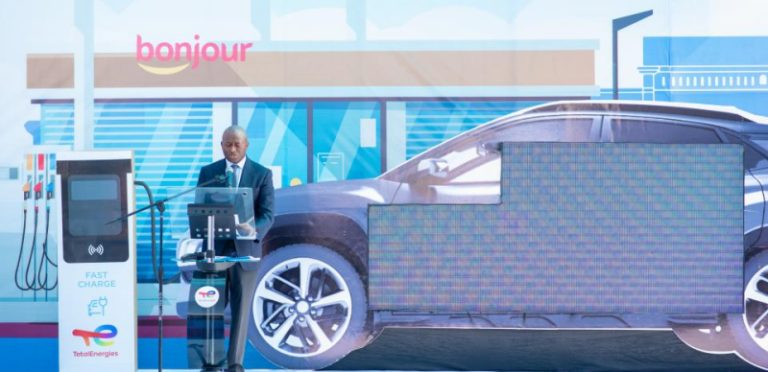
TotalEnergies Marketing Ghana PLC has commissioned its first Electric Vehicle (EV) charging unit in Ghana at the Liberation Road TotalEnergies Service Station in Accra. This is part of efforts to boost the increasing demand and usage of Electric vehicles in the country.

Managing Director of TotalEnergies Marketing Ghana PLC, Mr. Olufemi Babajide in his address indicated that the EV charging unit is the first in West Africa and serves as a momentous contribution to the automotive industry. According to him, the aim is to reduce the carbon footprint and support the Paris Climate Ambition by meeting the target of Net Zero by 2050 by reducing carbon emissions.

Senior Vice President at TotalEnergies Marketing and Services Africa, Mr. Jean Philippe Torres also emphasized on plans by TotalEnergies to support countries committed to the development of Electric charging units.

He said “The demand for supporting new types of mobility comes from all over the continent. Today, TotalEnergies’ objective is to support the development of electric charging units in countries that have a proactive approach about electric mobility. All countries can count on TotalEnergies to support them in the deployment of adapted infrastructures. We can respond on a case-by-case basis thanks to our wide network of service stations throughout the territory and by relying on solid partnerships.”

He also added that the establishment of an EV charging unit in Ghana is a concrete example of TotalEnergies’ ambition to be a world class player in the energy transition and to be the preferred partner in the customer carbon neutrality journey.

Mr. Olufemi Babajide also announced that the company had introduced an added service of providing free wi-fi at some selected TotalEnergies Service Stations. He said the service allows customers to access secure and compliant internet access at the service station and the aim is to enhance customer experience.

Also present for the commissioning was Mr. Philippe Ebanga, Executive Vice President of TotalEnergies Marketing and Services – West Africa. In his address, Mr, Ebanga said “In addition to e-mobility, one of many strategies that the company has implemented includes the solarization of the retail network, which so far has been deployed in seventy-four (74) service stations with many more to come by the end of the year 2022. This is in line with the company’s ambition to reduce our emissions to achieve carbon neutrality by 2050 across our global operations”.

Representative from the Ministry of Energy, Mr. Solomon Adjetey speaking on behalf of the Energy Minister lauded efforts by TotalEnergies in establishing these charging units by stating that “data shows that currently there are over 1000 electric vehicles in Ghana, and the deployment of these charging units at TotalEnergies service stations is a step in the right direction”.

Renault Tanger to launch first electric car manufacturing line in 2023


Renault Tanger, a French car manufacturer, has announced plans to launch its first electric car manufacturing line in 2023. The company made the announcement during a ceremony celebrating the 10th anniversary of the company in Morocco, Renault said in a statement.

Since its launch in 2012, the Tangier plant has produced an accumulated figure of 2.3 million vehicles supplying more than 70 markets around the world. With the new line, the company aims to produce 17,000 electric vehicles annually. The new model is set to comprise 50% recycled material and to be 95% recyclable by the end of its life, added the company’s statement.

Expressing their satisfaction at doing business in Morocco, Renault noted that their positive experience in the North African country is a “statement” to the potential success of the “Made in Morocco” label.

Speaking during the ceremony, Morocco’s Minister of Trade and Industry, Ryad Mezzour, said that Renault’s 10th anniversary in Morocco is also a celebration of “a successful partnership” between Morocco and the Renault Group.

Mezzour further added that the partnership is strategic and promising, stressing: “Renault is once again consolidating its role as a driving force in the development of the automotive industry in Morocco, an industry that is making a steady transition towards electrification and sustainable mobility.”

The minister added, “The launch of production of the first electric vehicle on the Tangier production lines illustrates the attractiveness of the Moroccan industrial enterprise. We have the means and skills to achieve our goal and meet our challenge.”

Earlier this week, Morocco’s industry minister said that the country is aiming to build on its successful experience in car manufacturing and become a regional industrial hub for electric car manufacturers.

Morocco World News

Morocco to double the production of electric cars in two years


Ryad Mezzour, Morocco’s Minister of Industry and Trade, has announced that the country’s electric car production capacity iis expected to rise to 100,000 vehicles per year in two to three years, doubling current production. “This goal can be achieved with current industrial capacities, without taking into account future foreign investments,” Mezzour said, according to Asharq Business.

The automotive industry is Morocco’s second largest sector. At the end of July, the industry had a turnover of around $5.6 billion, according to the Arab media. The Kingdom is also home to Renault and Stallantis factories that produce around 700,000 cars annually, of which 50,000 are electric.

Most of the vehicles produced in Morocco are exported abroad, especially to EU countries, where it was recently agreed to ban the sale of internal combustion engine cars from 2035. The Moroccan automotive industry expects to reach an annual production capacity of about one million electric cars in the coming years. To do so, it will need to secure the supply of batteries, which is essential for this type of vehicle. To this end, the Ministry of Industry and Trade announced last July that it was negotiating with battery manufacturers to build a factory before the end of 2022.

This facility will provide a major boost to the automotive sector and facilitate the shift towards electric cars to reduce carbon emissions. Morocco is committed to this project, not only because of the benefits to be gained, but also because of its reserves of cobalt, an essential element for the manufacture of electric batteries.

The Kingdom, which has been extracting cobalt since 1930, is one of the five largest producers of this material worldwide, according to data from the company Managem collected by Asharq Business. The company is also involved in the production of electric cars, as in June it signed an agreement with Renault whereby the French company will buy cobalt sulphate for the production of batteries.

Another company of note in this area is the French-Italian company STMicroelectronics, which specialises in the manufacture of electronic products and semiconductors. This summer it inaugurated a new production line at its Bouskoura plant dedicated to elements used in electric cars, including next-generation chips.

Despite efforts to boost electric cars, electric cars do not account for more than 4% of total car sales in Morocco. During the first half of the year, 83,831 electric cars were sold, according to Asharq Business. Minister Mezzour confirms this and attributes this phenomenon to the weak charging infrastructure. The government is therefore devising a plan to strengthen charging points in order to boost demand for electric vehicles, Mezzour told the media.

Adel Bennani, head of the Moroccan Association of Car Importers, also attributes the low demand for electric cars to the lack of awareness campaigns by the government.

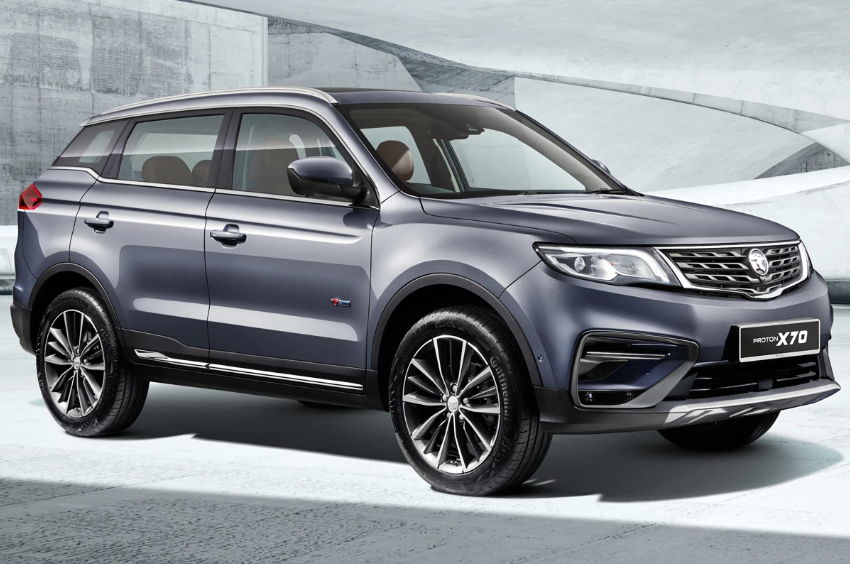
Proton X50 and X70 launched in South Africa


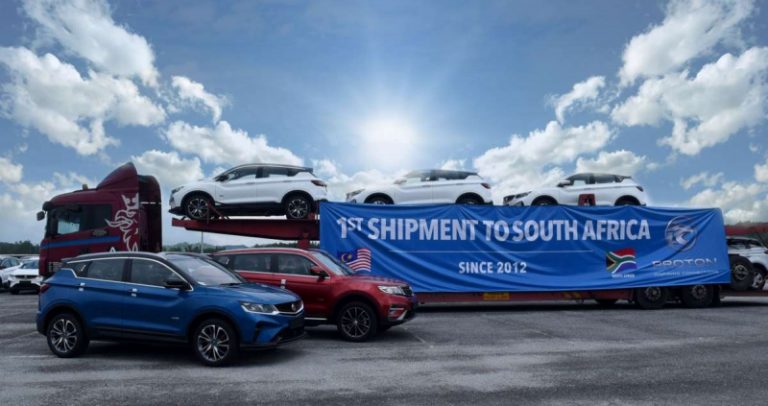
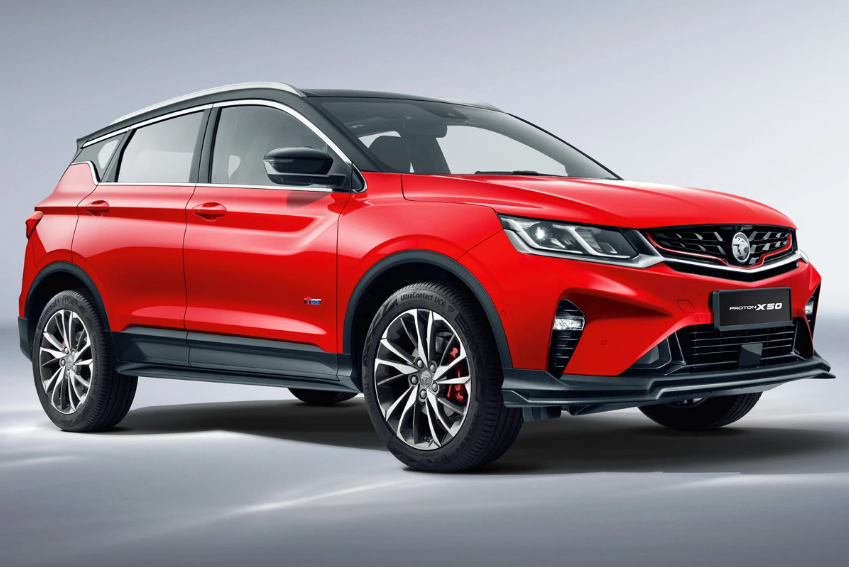
Ten years after it exited the market, national car maker PROTON is now officially back in South Africa. The relaunch of the brand occurred at an event hosted by Combined Motor Holdings (CMH), Proton’s official distributor, that coincided with the local launch of the Proton X70 and Proton X50. Both models are now available as CBU models to customers in the Rainbow Nation and will be joined by the Proton Saga later in the year or the beginning of 2023.

Speaking during the launch Jebb McIntosh, Chief Executive Officer of CMH said, “When the Proton brand became available, CMH jumped at the opportunity for several reasons, but mostly because we saw a gap in the market for a quality SUV within an affordable price bracket. There are many luxury brands selling SUVs in South Africa, but most are simply unaffordable to the average car buyer here.”

“Our plan is to have 25 dealers within six months, the first 17 of which have already undergone sales and technical training. A full range of replacement parts are also already in stock in our distribution centre so our customers can buy the vehicles with confidence,” he added.

Growth in export volume vital to PROTON’s expansion plans
Export sales remain a vital part of PROTON’s business plan. While the company continues to reclaim market share in Malaysia’s automotive market, it needs to exploit the latent potential in international markets to make its push towards becoming a leading automotive brand in the region.

For 2022, export sales as at the end of August stand at 4,040, an increase of 33.9% over the total number of sales for 2021. With the addition of South Africa to the list of export markets the company is hopeful of ending the year with an even bigger percentage in growth.

“PROTON is aggressively pursuing export sales as we believe it is one of the pillars to growing our overall volumes. There is a lot of potential for growth in our international markets, not just for the Proton brand but for the local automotive industry too so we want to establish a firm foothold while these markets are still accessible. Our aim is to achieve 6,000 export sales this year and while we remain confident of achieving our goal, there is a lot of work ahead of us to identify suitable partners to gain entry to more countries to achieve bigger goals in the future,” said Roslan Abdullah, Deputy Chief Executive Officer, PROTON.

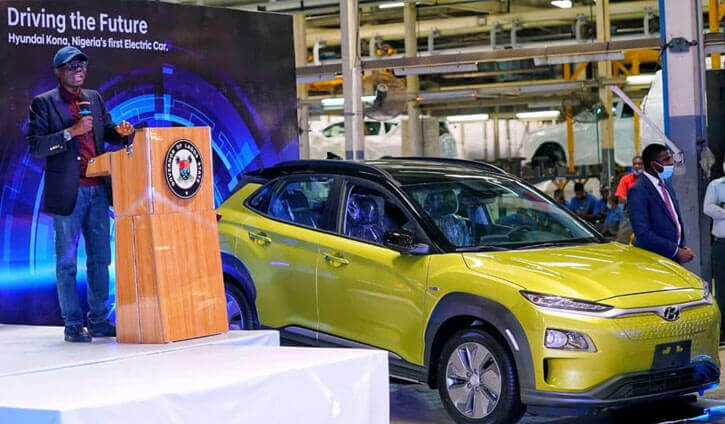
Nigeria to commence electric car manufacturing


The Nigerian government has signed a Memorandum of Understanding (MoU) with Israeli and Japanese companies to commence manufacturing and assembling of electric vehicles in Nigeria. The agreement was signed by the National Agency for Science and Engineering Infrastructure (NASENI) in partnership with the Israeli, Japanese and Nigerian companies, in Abuja, according to NAN. The companies are Peramare Enterprise of Israel and SIXAI of Japan.

Is Nigeria ready for electric vehicles manufacturing?

The Isreali Ambassador to Nigeria, Michael Freeman, said that the partnership would help address the many challenges affecting the transport and environmental sectors in Nigeria.

  • He said, “It is a project that is a partnership with Israeli, Japanese and Nigerian companies taking place in Nigeria.
  • “What is special about this project is that it is a timely project that combines Israeli technologies, Japanese technologies, Nigerian entrepreneurship and innovation together to create a project that is going to work fabulously.
  • “We are talking about bringing electronic Motorcycles into Nigeria which will be a program that is green, environmentally friendly.”

He added that it offers people a cheap way and safe way of transportation and even has a technology to ensure that the motorcycles are only used for legal and appropriate purposes, and also solves issues of fuel scarcity, green technology, and the need to provide cleaner, cheaper, easier transport.

  • “I believe that a programme that is going to start in Nigeria will be successful and will go across Africa,” Freeman added.

Prof. Mohammed Haruna, Executive Vice Chairman, NASENI, said the project Nigeria would see to the manufacturing of Nigerian-made electrical vehicles in the nearest future as this is the attempt to domesticate certain technologies in Nigeria, especially in the automobile industry has not worked with continuous importation.

  • He said, “NASENI has come into this now with the perfect partners, Japanese and Israeli companies their technologies are proven and known.
  • “But most importantly, Nigeria will not just be consuming this technology, we are here to make sure that we domesticate, produce and manufacture in Nigeria.”

Dr Ayal Raz, Representative of Israeli Company, Peramare Enterprise, added that this innovative idea is going to change so many things in the face of Nigeria.

  • It will bring green energy which means cheaper cost of transport and we all know what that means for our people.
  • “It will give work to the people because it is industry, we are going to put a factory here, we will start with assembling then building. It will give us less pollution and greener air.
  • “Nigeria is safe to do business and by the special grace of God it is going to come during the first quarter of 2023, “ Raz said.

Mr  Sasi Shilo, Chief Executive Officer (CEO), SIXAI, and Japanese Partner said that his company beyond production is keen on supporting the African continent, Nigeria build a sustainable nation with clean and safe technologies.

  • We really want to contribute to African nation with our technology. What we want to bring is not only to produce but what we want to achieve is to support the African nation to be sustainable.
  • “Through our products with safety and environmentally friendly features in our technology,” Sasi said.

Hon. Wadada Aliyu, Chairman, PAN Nigeria Limited, added that it is historic because Nigeria is conforming with the order of the day which is green environment and memorable because NASENI has set the ball rolling.

  • “This synergy between Israeli, Japan, NASENI and PAN as a facility where the assembling will be done, I think the sky will be a starting point of technological evolution in Nigeria,” Aliyu said.

source:nairametrics.com

R500 million automotive manufacturing facility opened in KZN


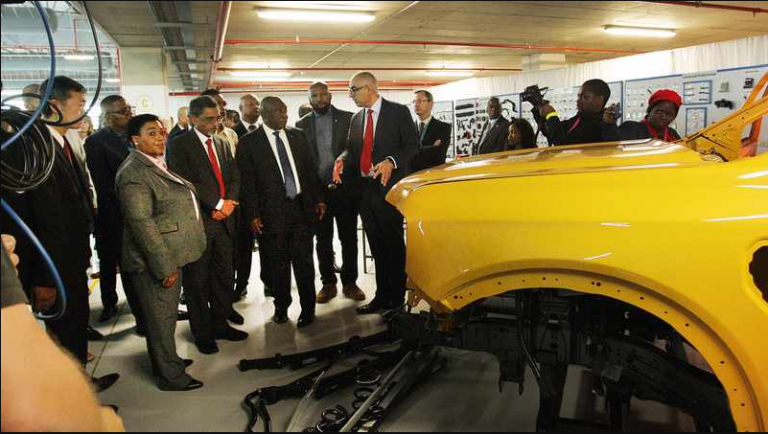
President Cyril Ramaphosa has officiated the launch of the Metair Investments subsidiary Hesto Harnesses, where a new 35 000 square-metre state-of-the-art manufacturing plant was unveiled in KwaDukuza, KwaZulu-Natal. According to President Ramaphosa, Ford and Metair Investments reflects a long-term confidence in South Africa as a key link in the global automotive value chain.

In partnership with Yazaki Corporation, Hesto Harnesses manufactures wiring harnesses and instrument clusters for supply to South African-based automotive Original Equipment Manufacturers (OEMs) Toyota, Isuzu, Nissan and Ford. The President was very impressed at the grand opening of Metair’s R500 million manufacturing facility for automotive sector parts.

“I’ve never been as impressed as I am this morning by just walking on the floor of this factory and seeing the great enthusiasm on the faces of the workers. I saw not only enthusiastic faces and people, 70% of them women, all of them so beautiful.

“The youthfulness of the people who work here and the cohesion. Just meeting the people here made my day. This has been a great exposure what Hesto does and exhibition of what we have achieved here,” the President said.

The President said that the reindustrialisation of South Africa’s economy is a key pillar of the Economic Reconstruction and Recovery Programme.

He said that government has developed several industrial policy measures and is implementing far-reaching reforms to unlock growth opportunities in priority industries.

These include the automotive industry and extend to areas such as clothing and textiles, chemicals and plastics, steel and metals fabrication, green industries, the digital economy and network industries like energy and transport.

Localisation

Speaking on the concept of localisation, President Ramaphosa said that government will continue to drive increased localisation as the domestic sector moves into electric and other new energy vehicle assembly platforms.

“Wherever we go as we push forward with the concept of localisation, we are finding that industry players are responding quite positively to it and I would like to thank you for having responded positively to localisation, I have seen the localisation effort at play here.

“I was also impressed to hear how much localisation you have paid attention to, by getting certain percentage of workers from around the factory, which makes various communities to feel as one with the companies. As we move forward with our localisation efforts into various other platforms, we are moving forward with the objective that we have set ourselves,” the President said.

He added that he understood that Metair is both supplier and a business partner to the vehicle assemblers, and that the company has been a driving force in achieving localisation targets. Through these efforts, he said the company has secured multiple contracts from Ford South Africa to support their production expansion strategy in South Africa.

The President emphasised that the automotive sector in South Africa is one of the biggest beneficiaries of foreign direct investment in the country. Despite all the challenges, 2021 was a significant year for automotive investments.

“We need to work together to unlock new business opportunities, transformation and employment creation in South Africa’s component manufacturing landscape, just as we need to promote new investments in technology and skills. That is why the localisation rate in the Automotive Production Development Plan is targeted at 60 per cent by 2035,” he said.

The President reiterated that South Africa remains one of the preferred investment destinations in Africa and is an important gateway for markets and other business opportunities throughout the continent.

He said that the African Continental Free Trade Area will further open opportunities for the development of export markets, the growth of industrial bases and the expansion of regional value chains.

“The South African economy has the potential to achieve a higher growth trajectory through unlocking competitive advantages in key sectors of the economy. As government, our role is to create an enabling environment for businesses such as this one to flourish. We are hard at work to implement institutional and governance reforms to support a sustained recovery in business and investor confidence,” he said.

Job creation

The President has reiterated that unemployment remains one of the greatest challenges affecting livelihoods of individuals, the well-being of families and the development of society.

“It is therefore significant and most welcome that this facility will create over 4,000 employment opportunities, which will translate into a R30 million monthly spend on salaries and wages being injected into the iLembe District,” the President said.

He said that the benefits of this investment will also be felt by maintenance, catering and other service providers that will be contracted to support these operations.

Skills Development

The President highlighted the the strong skills development mandate that is being implemented across the Metair stable, including a new multi-million rand bursary and apprentice training programme.

“It is pleasing that there is a strong focus on female candidates, as is the fact that Hesto Harnesses is predominantly a female-driven operation with 70 percent of employees being female,” he said.

President Ramaphosa commended Trade, Industry and Competition Minister Ibrahim Patel, KwaZulu-Natal Premier, Nomusa Dube-Ncube, the Mayors of Illembe and KwaDukuza and iNkosi uDube and their teams for their contribution in making the project come to fruition.

He said that this project, like many other projects in the automotive sector, was made possible because of the policy certainty created by the Automotive Master Plan and the Automotive Production and Development Programme.

“In this project we have demonstrated that we can build and rebuild together. We commend Ford for the confidence demonstrated by this major investment. We also laud the partnership between Hesto and Japanese company Yazaki,” the President said.

Source close: sanews

Kenyan startup Bimaleo launched to offer real-time auto insurance policies


Kenyan startup Bimaleo has launched a platform offering private and commercial drivers access to real-time, personalised auto insurance policies. Formed in late 2020 by Shreyas Patel and George Richard, Bimaleo spent over a year developing its platform and building relationships with partners, and is now live to onboard customers.

Patel said the team had more than 15 years worth of experience in the telematics sector, and had noted that the insurance sector in East Africa was ripe for digital disruption. Bimaleo set out to utilise existing infrastructure to offer personalised auto insurance policies based around use.

“Currently insurance is bought for the year or in installments digitally. We believe that purchasing motor insurance when you want to use your vehicle will allow for cost savings and improve claims processing by tapping into real-time data through telematics hardware,” Patel said.

The startup’s “as needed” and Bimaleo “by the mile” products are offered instead of the industry-standard full-year premiums based on approximations and estimates, which the company said had historically made prices unfair. Bimaleo customers earn additional discounts for good driving behaviour.

“Bimaleo’s digitally native offering is built around Kenya’s modern driver’s needs, featuring secure and simple policy purchase, automated claims, and complimentary innovative driving features. Drivers who use their cars infrequently, work and live locally, and drive safely can expect annual average savings of 50% over what they were paying their previous auto insurer,” Patel said.

Angel-funded so far, Bimaleo is seeking VC funding this year. The startup, whose revenue model works on an agency principal and charges on value added services, is only available in Kenya for now but aspires to be a pan-African marketplace.

- Advertisement -