Monday, June 1, 2026
Home Blog Page 35

McLaren Automotive celebrates the start of Artura deliveries in the Middle East


McLaren Automotive, the British creator of luxury, high-performance supercars, has announced the start of regional deliveries of its high-performance hybrid supercar, the McLaren Artura, in the Middle East and Africa region.

All new from the ground-up, and built on brand-new vehicle architecture, this next-generation supercar is set to drive future growth for the company and is expected to contribute to circa 50% of the brand’s regional sales in 2023.

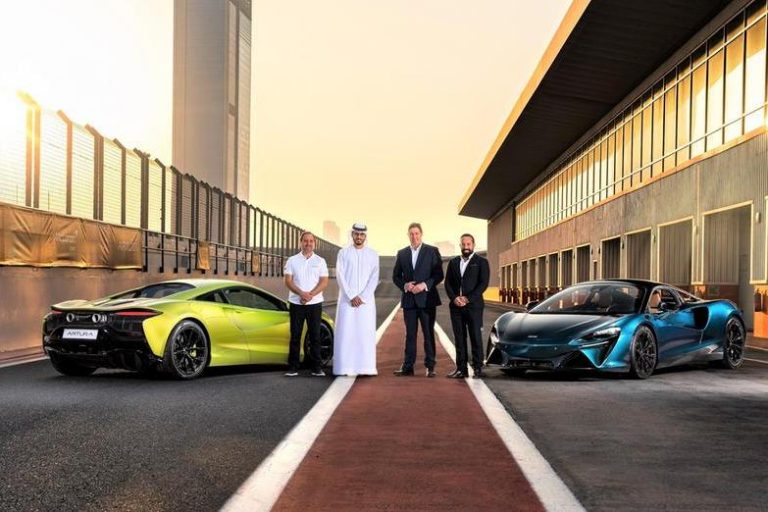
Celebrating the start of deliveries of the McLaren Artura, an exciting track-driving event for McLaren customers and enthusiasts, as well as key automotive and technology media, was held from the iconic Dubai Autodrome and provided the VIP guests with an opportunity to test drive the first series high-performance hybrid supercar from McLaren Automotive.

“We are thrilled to start the regional deliveries of the all-new McLaren Artura, a car that will spearhead McLaren into the new era of supercar technology and performance,” said Mohamed Fawzi, Market Director – Middle East & Africa, McLaren Automotive.

“The Artura has been very well received by the customers and enthusiasts in the Middle East & Africa region, and we are excited for them to experience the breath-taking performance and dynamic excellence embodied in this beautiful supercar.”

The first regional deliveries are set to commence in the UAE, and will be managed by the new McLaren Dubai, represented by Performance Tuning L.L.C., part of the Khalifa Juma Al Nabooda Group of Companies.

This latest regional Retail Partner operates from a transitionary sales facility, backed by a dedicated service centre operated by an expert team of McLaren-trained engineers. The new Service Centre, which is brand’s largest in the Middle East, focuses on providing a seamless customer-experience to support the sustainable growth of the brand in the UAE market.

The brand new and state-of-the-art McLaren Dubai showroom, currently under construction, is set to open doors for business in 2023.

“We are honoured to conclude our first successful year of operations as McLaren Dubai with first customer deliveries of the all-new Artura,” said Juma Khalifa Al Nabooda, Board Member, Khalifa Juma Al Nabooda Group of Companies.

“Having driven the car, I can testify that it represents an all-new chapter for McLaren Automotive and we are tremendously excited to have it in our offering. I am confident that we can match its engineering excellence with a customer-centric ownership proposition to ensure that we continue to exceed the expectations of our discerning clientele in Dubai and Northern Emirates.”

The new McLaren Artura is a result of more than half a century of McLaren’s racing and road-car experience and know-how. This revolutionary supercar is a distillation of every attribute inherent in a McLaren, combined with faster throttle response, lower emissions, and the ability to run in pure EV mode, thanks to its ground-breaking electrified powertrain. It is the first model built on the new McLaren Carbon Lightweight Architecture (MCLA), which sets new standards for advanced chassis design and features a wealth of weight-reduction measures, resulting in class-leading lightest dry weight of 1,395kg*, and a DIN kerb weight of 1,489kg*.

At the heart of the Artura is an all-new lightweight 2,993cc twin-turbocharged V6 petrol engine, paired to a bespoke eight-speed transmission and a compact e-motor, which provides the supercar with instant torque and improved throttle response.

The package generates a combined power output of 680PS (671 bhp) and 720S Nm of torque, which translates to a class-leading power-to-weight ratio of 488PS per tonne*, as well as truly breath-taking performance figures. The Artura’s top speed is electronically limited to 330km/h with 0-100km/h reached in just 3.0 seconds* and 0-200 km/h in 8.3 seconds*.

Available to order now from McLaren retailers, the McLaren Artura comes with a standard three-year service plan, five-year vehicle warranty, six-year battery warranty and 10-year body warranty. For more information on the all-new McLaren Artura, please visit: https://cars.mclaren.com.
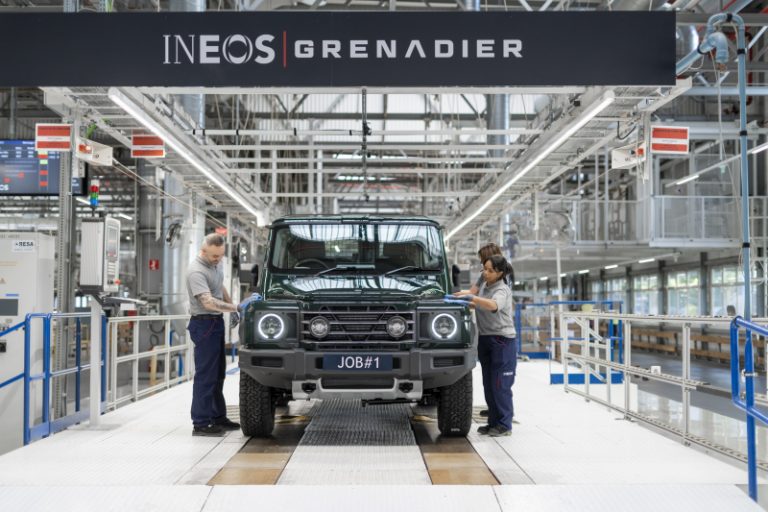
INEOS AUTOMOTIVE BEGINS PRODUCTION OF GRENADIER 4X4


INEOS Automotive has reached a significant milestone as it starts series production of the Grenadier 4X4 at its facility in Hambach.

“We’ve come a long way since the project kicked off in 2017 and this is a landmark moment for INEOS Automotive as a vehicle manufacturer,” said Mark Tennant, INEOS Automotive Commercial Director. “To get to this point is a testament to the resilience and hard work of the entire INEOS Automotive team, our development partners and our suppliers – for which we thank them all as we now look forward to making our first deliveries to customers.”

Global supply chain issues continue to constrain output, but customer deliveries in volume are expected from early December. To support those deliveries, INEOS Automotive has built an extensive network with over 200 sales and service sites worldwide. To find out more about Grenadier prices, technical specifications and options, visit www.ineosgrenadier.com.

About INEOS Grenadier

In 2017, INEOS Chairman Jim Ratcliffe, a car enthusiast and experienced adventurer, identified a gap in the market for a stripped back, utilitarian, hard-working 4×4 engineered for modern day compliance and reliability. INEOS Automotive Limited was formed and a senior team of automotive professionals assembled to bring the vision to reality with a fresh perspective of 4×4 development and manufacturing.

Combining rugged British spirit and design with German engineering rigour, the Grenadier will be a truly uncompromising 4×4 built from the ground up. Engineered to overcome all conditions, it will provide best-in-class off-road capability, durability, and reliability to those who depend on a vehicle as a working tool, wherever they are in the world.

INEOS Automotive is a subsidiary of INEOS (www.ineos.com), a leading manufacturer of petrochemicals, speciality chemicals and oil products. It employs 25,000 people across 39 businesses, with a production network spanning 183 sites in 29 countries. From paints to plastics, textiles to technology, medicines to mobile phones, materials manufactured by INEOS enhance almost every aspect of modern life. In 2021, INEOS had sales of $65bn.

KAM Signs Partner to Drive Growth of Automotive Industry


Kenya Association of Manufacturers (KAM) has partnered with the African Association of Automotive Manufacturers (AAAM) to drive the sustainable development and growth of the automotive industry in Kenya. The partners said that the goal would be achieved by scaling up production, increasing trade, and driving the global competitiveness of Kenya’s automotive industry.

AAAM CEO Dave Coffey predicted that with a progressive policy, Kenya’s automotive industry is set to increase its market share locally and regionally.

“The increased focus on building value chains and enhancing trade shall spur the demand for automotive industry products. As seen in Morocco and South Africa, an enabling business environment attracts investors who have thriving automotive industries,” Coffey said.

“Through this partnership, we shall collaborate to enhance scale, spur industrialisation and deepen localisation of goods manufactured by Kenya’s automotive industry,” said Coffey.

KAM Chief Operating Officer (COO) Tobias Alando expressed the Association’s optimism that the partnership shall give impetus to the automotive industry in the country.

“Kenya’s Automotive Industry is the most established in the region. However, it continues to face challenges, such as a shortage of skilled labour force, low levels of research and development and a lack of long-term financial solutions for the sector to enable investments in technology,” Alando said.

“By collaborating with AAAM, we shall continue to develop automotive policies geared towards positioning Kenya as a production and trade hub, integrating EAC into the value chain and providing market linkages for sector players,” he said.

The MoU was signed during AAAM’s visit to Kenya to enable participants to understand Kenya’s automotive industry and provide linkages with investors. The partnership signing came weeks after KAM asked the Kenyan government to address gaps hindering manufacturers from benefitting from the Africa Continental Free Trade Area (AfCFTA).

At the time, Alando observed that whereas the trade agreement provides the best opportunity to realise the country’s regional, national and business goals, Kenya is yet to put in place mechanisms to ensure the country takes full advantage of the benefits it presents.

“Kenya’s export market in Africa is expected to increase with the full implementation of AfCFTA. However, if unaddressed, challenges such as dwindling country competitiveness, lack of product competitiveness, supply chain constraints, unconducive business environment, and institutional and infrastructural constraints shall hinder local manufacturers from reaping the benefits that come with AfCFTA.”

Alando gave recommendations to enable Kenyan manufacturers to thrive under the trade agreement.

“At the firm level, Kenya’s business community needs to develop export strategies for various trade agreements including EAC, COMESA and AfCFTA; implement business development programs to penetrate and expand to new markets and develop the capacity to be able to meet the demands of the African markets. At the national level, we urge the government to prioritise the conclusion of pending areas in the negotiations; work on competitiveness drivers to ensure Kenya takes advantage of the African market and fully implements the National AfCFTA Strategy.”

“We remain cognisant of the benefits that come with AfCFTA, such as job creation, movement of goods and skills transfer.This will require tariff harmonisation, capacity building on requirements to trade under the regime, and simplification and automation of processes. We have also set up call centres at all border points to support traders and ensure efficient service delivery.”

Alfa e-Parts announces plan to increase its range of MAF Sensors


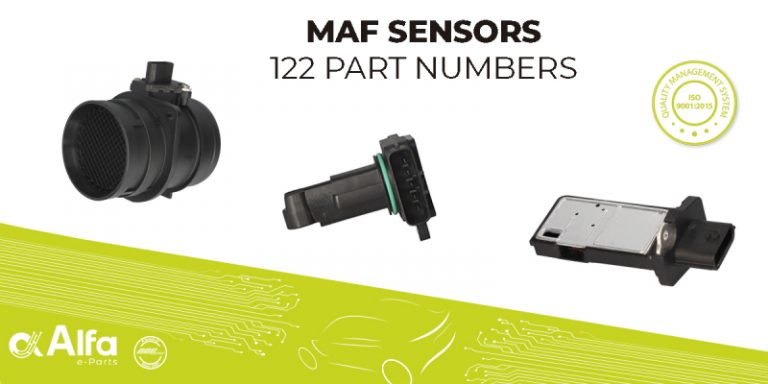
Alfa e-Parts, the newest brand from the European Division of BBB Industries (BBB), continues to increase its offering. With 122 part numbers currently in its catalog, Alfa e-Parts will add more than 100 new MAF sensors to its offering in early 2023. The MAF sensor measures the amount of air that enters the engine to create an optimal air fuel ratio, so the engine works efficiently. Its main failure symptoms include losing vehicle power, rough idle, and increased fuel consumption.

Alfa e-Parts is committed to providing a product 100% designed, manufactured and tested under rigorous and demanding quality tests. The brand leverages BBB’s rich history to offer high quality parts and service to meet its customers’ expectations.

For more information on Alfa e-Parts MAF sensors, please visit the following link: informational brochure. This brochure includes information about all Alfa e-Parts part numbers, the original equipment code and the brand of the vehicle to which the part numbers correspond.

About Alfa e-Parts

Alfa e-Parts is a new brand of BBB Industries, a leading American company in the remanufacturing industry, which focuses on the development and commercialization of electrical and electronic spare parts for the automotive sector at a global level. We have three clear highlights: quality, range and service.

About BBB Industries

BBB Industries, LLC is an industry leader in the sustainable manufacturing of starters, alternators, hydraulic and air disc brake calipers, both hydraulic and electric power steering products, and turbochargers for aftermarket industries. Through its various acquisitions in Europe as led by Industrial Metalcaucho, BBB also supplies an assortment of nondiscretionary repair parts across more than 64 countries. TerrePower is a division of BBB that services the electric vehicle and renewable energy sectors. Founded in 1987, BBB Industries, LLC is a private company headquartered in Daphne, Alabama. Please see www.bbbind.com for more information.

Nissan holds first ever continent wide communications masterclass


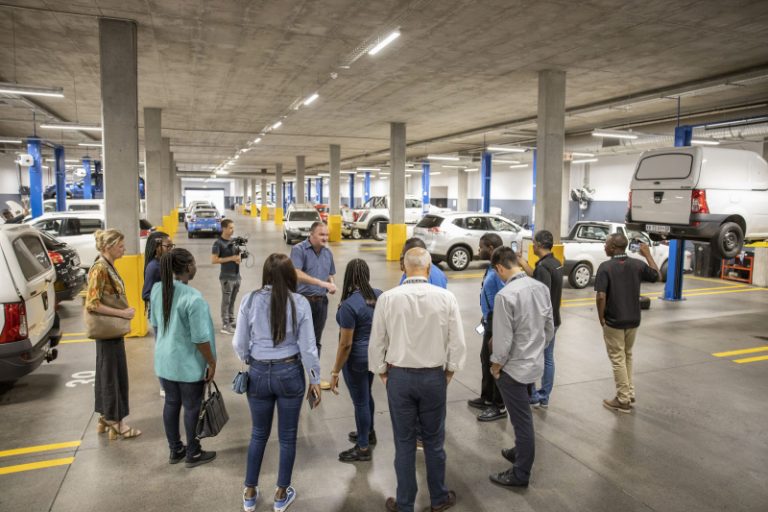
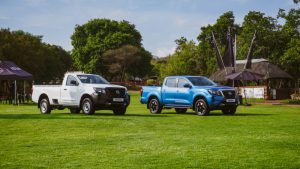
Nissan Africa Managing Director Mike Whitfield has hailed the company’s inaugural corporate communications masterclass session as a resounding success. Attended by 25 high level communicators from Nissan dealerships in seven African countries; the key markets of Angola, Ghana, Nigeria, Ethiopia, Kenya, Mozambique and Zimbabwe, the three masterclasses blended cutting edge practical learning with hands on experience of the award winning all new built of more Nissan Navara.

“We have the best people and the best products,” says Whitfield, “but we also have to be the best in telling our story too – both within the company and across the continent.”

Katherine Zachary, Nissan’s regional vice president for communications, agrees. Opening the masterclass from Paris, France, where she is based, she told the delegates that corporate communication was not a ‘nice-to-have’ but a ‘must have’.

“We do more than just tell stories, we analyse other news, we see potential problems and we identify opportunities.”

The masterclass, conceptualised by Nissan Africa’s head of communications Ramy Mohareb and Nthabiseng Motsepe was facilitated by former newspaper editor Kevin Ritchie and former motoring journalist and automotive industry specialist Leo Kok.

“The brief was to cover everything from understanding how newsrooms work and effective communication with the media all the way to crisis management, hosting press releases and preparing executives to be interviewed by journalists, whether in person, in studio or, as is becoming more commonplace, virtually via Zoom,” said Motsepe.

“We achieved what we set out to do and a lot more,” said Mohareb, “it provided us with the opportunity to get together, to put faces to names after the COVID 19 lockdown, to brush up our skills and also learn more about Nissan.

“We were able to take the Navara off road, understand the cutting-edge Nissan Qashqai and hear from our marketing experts what their plans are for the years ahead as well as receive a top-level briefing on the very exciting Nissan Customer Experience programme that is being rolled out.”

Africa, said Whitfield, comprised 54 very different markets, which was precisely why the company had set up its unique Regional business Unit at the end of 2020 with its dual headquarters in Cairo and Pretoria.

“Telling the Nissan Africa story can’t be effectively done from just one country on the continent any more than it can be done outside the continent. As Africans, we know that if you want to go fast, you go alone, but if you want to go far, you go together. Bringing in our partners from these markets for this pilot project is part of that philosophy.”

How Apps Support Supply Chain Management and Logistics

0

Supply chain management is now essential for survival and not just optimization! All processes and procedures must be designed in such a way that the needs of the customers are satisfied. Here, the use of digital solutions supports process design within the supply chain. For example, the networking of logistical processes ensures more transparency in the supply and shipping chains. The delivery reliability, quality and flexibility as well as the level of service can be increased enormously as a result. But the end users in logistics also benefit from the digital solutions: These enable mobile working, reduce time expenditure and offer the possibility of accessing relevant data sources from anywhere.

Apps for supply chain management and logistics

While large companies often rely on individual, digital solutions, there are numerous apps for supply chain management (SCM) and logistics that smaller companies can also benefit from. SCM apps are often used in the following areas:

Route Planning

Route planning is one of the biggest challenges of fleet management. Plan faster and better, use the vehicle fleet more efficiently and produce less CO2 emissions are just a few of the goals set in logistics. Increasing stops, daily restrictions and tons of new data make manual route planning time-consuming and complicated. With a planning and navigation app, however, routes with truck restrictions, traffic disruptions and border crossing times can be easily planned. In addition, cost-optimized routes can be calculated, for example by determining routes without tolls. The head office also benefits from live traffic information.

Shipment Tracking

Using import functions, loads can be completely recorded, processed and supplemented with subsequent release for automatic disposition. The supply chain and delivery are monitored in real time and transmitted to all necessary recipients. With a scanner function and the option of capturing signatures, deliveries including a time stamp and geo-coordinates can be proven without a doubt. With the help of GPS tracking, the location and estimated time of arrival of the freight can also be identified in real time.

Warehouse Management

The main goal of any warehouse management is to minimize costs through optimized inventories and smooth processes while at the same time ensuring high availability of the relevant items for the customer. There are also apps for warehouse management that can be connected to the company’s own ERP system. For example, inventories, inventory changes and demand forecasts can be easily determined and, thanks to the transparency provided, allow purchasing decisions to be made more cost-sensitively.

Order/Document Management

With apps, scheduling and order management can also be easily digitized in the company. Work processes are streamlined so that more orders can be processed per employee with better service. Central document management means that important documents can be viewed while on the move; Freight documents and the like are therefore always available, important documents cannot get lost.

Arealcontrol Spps Simplify SCM

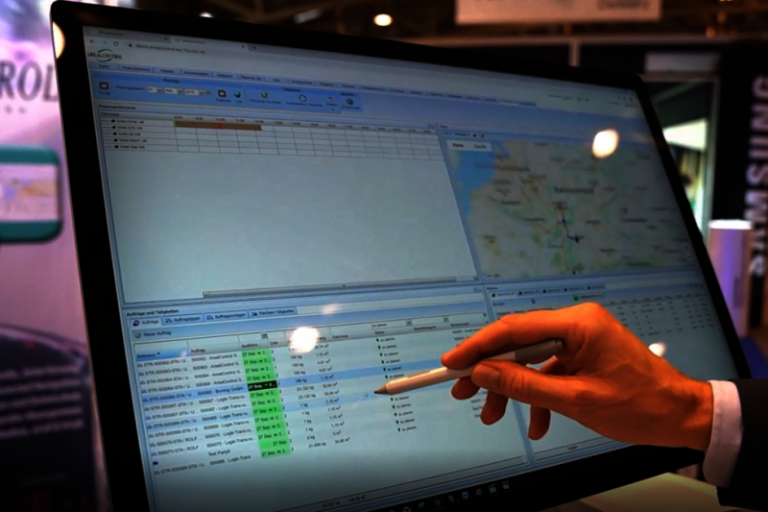
Award-winning and innovative apps from Arealcontrol, such as B. the ArealPilot 360° app for the digital order and activity documentation or the ArealPilot 360° PartnerTMS bring complex work processes of the SCM to a handy format. With a modular structure and flexibly adaptable, they make it easier for transport and logistics companies, but also for construction and trade companies or courier and delivery services to get started with digitalization.

Still unsure which app can contribute to the success of your business? Then feel free to contact us!

Nissan reclaims number one market share in Zimbabwe


Nissan Africa regional general manager for Central Africa Linda Mazimhaka has praised the country’s national sales companies in Zimbabwe for their effort in restoring the automaker to the number one position in the market since the start of 2022.

“We really do have some of the best dealers imaginable,” he says, “they are proactive and extremely enthusiastic. Even though they are competitors, they are able to work incredibly well together, often in very difficult economic situations.”

The most recent period had been a case in point, he says, a combination of tough trading conditions; the effects of the COVID 19 lockdown, foreign exchange restrictions and supply issues precipitated by the global semi-conductor shortage.

“At one stage last year, because of all of these factors, Nissan had ranked number four in the market, but thanks to the leadership at Croco, Clover Leaf, Amtec and AMC, our four authorised Zimbabwean Nissan dealerships, the brand has made its way back slowly and surely to the pole position it held before COVID-19”.

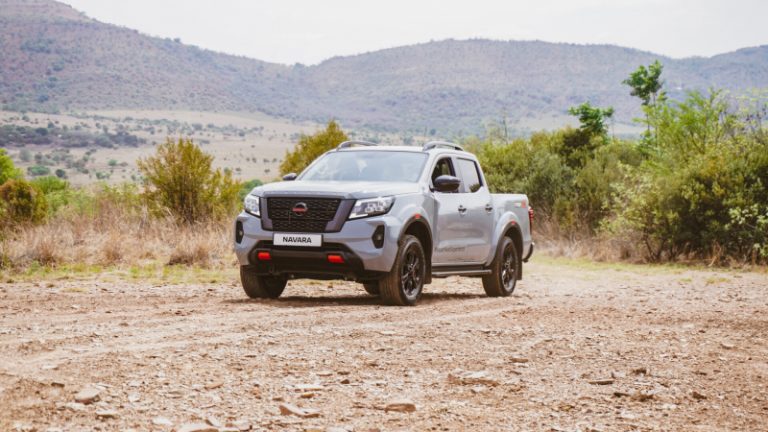
The efforts of the dealers had been assisted by the highly successful launch of the all new, built of more Nissan Navara.

Nissan “The response to this vehicle, which is the toughest vehicle Nissan has ever designed and is built in Africa by Africans for Africans according to the highest global standards, has been a major driver in winning back market share,” says Mazimhaka.

“But the Nissan Magnite has also been a great drawcard for us too, as well as our work horse half ton NP200 LCV. Zimbabwe is an immensely special place for Nissan Africa – and a very important market too. We have been there continuously since we opened our first showroom more than five decades ago, and it’s also a country where we are traditionally the undisputed market leaders.

“Thanks to Croco, Clover Leaf, Amtec and AMC, the four companies who together make up Nissan Zimbabwe, we are back up there once again.”

Metalcaucho returns from the summer with more than 700 new part numbers


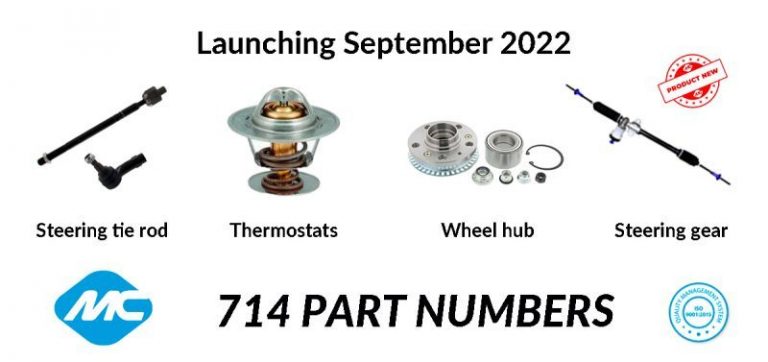
Metalcaucho, leading European supplier of aftermarket spare parts in rubber and metal for the automotive sector, releases 714 new spare parts covering 46 different product families. Most prominent is the wide range of ball joints that are included in the catalog: 182 steering tie rod ends, 40 steering tie rod axle joints, and 30 ball joint wheel suspensions. This release also includes link bars, thermostats, wheel hubs, and steering gears (a key family that continues to increase with 9 more spare parts).

New products with improved performance

Metalcaucho’ s parts are manufactured with the same specifications as the original equipment manufacturer. This process gives the company the ability to improve the original equipment designs to offer its customers products with a longer useful life. Included in this release are 24 part numbers with these improvements incorporated.

The most important families of the new launch are:

  • Steering tie rod ends = 182 part numbers
  • Thermostatos = 57 part numbers
  • Wheel hubs = 56 part numbers
  • Silentblocks = 42 part numbers
  • Engine mounts = 41 part numbers
  • Steering tie rod axle joints = 40 part numbers
  • Link bars = 33 part numbers
  • Ball joint wheel suspensions = 30 part numbers
  • Shock absorber mounts = 25 part numbers
  • Oil turbo tubes = 23 part numbers
  • Hoses = 22 part numbers
  • Stabilizer bar bushings = 17 part numbers
  • Clutch master cylinders = 12 part numbers
  • Belt tensioners = 11 part numbers
  • Steering gears = 9 part numbers
  • Water pumps = 9 part numbers

About Metalcaucho (MC)

Metalcaucho is a leading company in Europe in the supply of spare parts after-sales in rubber and metal for the automotive sector. Founded in 1987 and headquartered in Barcelona, Metalcaucho has an extensive range of spare parts of more than 30,000 part numbers. In order to maintain its international leadership, the company is committed to constant innovation by supplying high quality products with a reliability equivalent to official pieces at a more competitive price and a high level of service. The company is owned by BBB Industries, the industry’s leading American remanufacturing company.

About BBB Industries

BBB Industries, LLC is an industry leader in the sustainable manufacturing of starters, alternators, hydraulic and air disc brake calipers, both hydraulic and electric power steering products, and turbochargers for aftermarket industries. Through its various acquisitions in Europe as led by Industrial Metalcaucho, BBB also supplies an assortment of nondiscretionary repair parts across more than 64 countries. TerrePower is a division of BBB that services the electric vehicle and renewable energy sectors. Founded in 1987, BBB Industries, LLC is a private company headquartered in Daphne, Alabama. Please see www.bbbind.com for more information.

Axalta Launches Tech Tips to Fix Common Paint Issues


Axalta, a leading global supplier of automotive paint and coatings, has launched an ongoing series of refinish training videos. These are designed to help automotive repair bodyshops deal with troublesome, yet common paint defects. The series includes tips to fix common paint issues that bodyshops often encounter. This initiative is particularly significant for bodyshops aiming to address recurring paint issues efficiently. In fact, if you are seeking tips to fix common paint issues, these videos are an essential resource.

Addressing Common Paint Defects

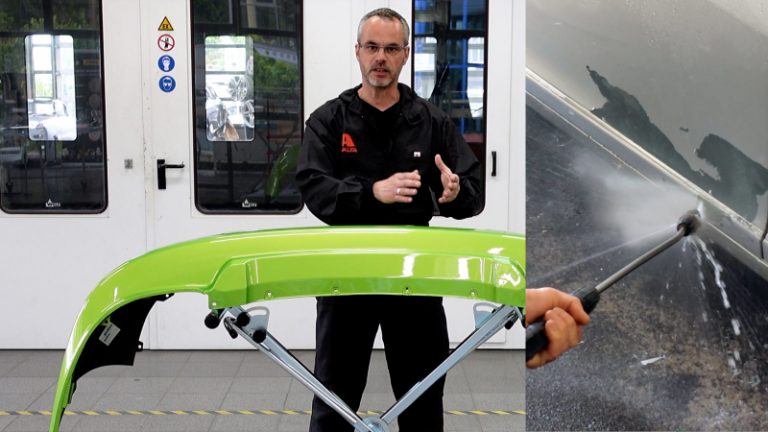
The first six videos are available now, to view free of charge. The videos cover a range of issues refinishers deal with regularly, including poor paint adhesion on plastic parts, solvent popping, peroxide bleeding, water spotting, poor opacity and correct sanding. These resources provide practical help for anyone working in or managing bodyshops regardless of their global location. In addition, the videos also showcase the truly global nature of Axalta’s Refinish business. Presenters represent Axalta Refinish training leaders from EMEA, the US, Australia and Asia.

Practical Learning for Better Paint Quality

Each tutorial video runs for less than four minutes and clearly explains each paint defect, its causes, practical repair solutions, and, most importantly, the preventive measures refinishers can take to avoid poor results from occurring in the first place. It’s of great benefit for bodyshops looking to improve outcomes and enhance service quality. Moreover, these segments are filled with practical tips to fix common paint issues for bodyshops of any size.

Supporting Excellence in Automotive Refinishing

Tony Mitchell, International Training Leader for Axalta’s Refinish business in Europe, Middle East and Africa, says, “We know our bodyshops strive for 100% customer satisfaction so it is always disappointing when preventable issues affect the quality of paint finishes. This series of videos support refinishers not only to excel at the paint repair process, but also to add value for their customers around the world every single time. What’s more, the videos are accessible to everyone, so we are pleased to offer our wealth of coatings experience to everyone, Axalta customer or not.” In this way, bodyshops gain valuable insights regardless of their size or customer base. Additionally, tips to fix common paint issues can give bodyshops an edge in customer satisfaction.

Accessing the Tech Tips Video Series

To watch the Tech Tips Global Paint Defects video series, visit the playlist here on the Axalta Refinish EMEA YouTube channel or, visit, www.axalta.eu/tech-tips. For more information on Axalta Refinish, visit, www.refinish.axalta.eu. These resources are a valuable reference for both new and established bodyshops exploring advanced repair techniques. For further support, bodyshops can find more tips to fix common paint issues directly within the Tech Tips series.

About Axalta Refinish

Axalta Refinish – part of Axalta, a leading global company focused solely on coatings – is a valued, reliable global paint repair partner to our customers, who demand nothing short of total customer satisfaction. We give them confidence in our fast, efficient, high-quality coating technologies and integrated digital business processes. In turn, this makes the entire paint repair journey faster, easier and more profitable.

With more than 150 years of experience in the coatings industry, our dedication to innovation and our constantly-developing technology means we offer our customers an unlimited colour choice for perfect colour matches. Most importantly, we work tirelessly to anticipate our customers’ needs. In this way, they can address the challenges they face every day. Moreover, we have an impressive portfolio of brands for every bodyshop requirement, every segment of the market, and every level of market maturity. As a result, our solutions are tailored for bodyshops seeking quality and efficiency. For more information visit refinish.axalta.eu and follow us on LinkedIn

About Axalta

Axalta is a global leader in the coatings industry, providing customers with innovative, colourful, beautiful and sustainable coatings solutions. Our products serve light vehicles, commercial vehicles, and refinish applications. Additionally, we coat electric motors, buildings facades and other industrial applications. Our coatings are designed to prevent corrosion, increase productivity and enhance durability. With more than 150 years of experience in the coatings industry, the global team at Axalta continues to find ways to serve our more than 100,000 customers in 130 countries better every day with the finest coatings, application systems and technology. This commitment extends to bodyshops throughout the automotive and industrial sectors. For more information visit axalta.co.za and follow us @Axalta on Twitter.

Also Read:

Electric bikes – the affordable & practical vehicle option in Africa

By Seth Onyango


From four wheels to two, or even three-the pursuit of cost-effective transportation is accelerating the adoption of electric bikes in Africa as gas prices soar. Analysis shows that e-bikes, with their considerable cost advantages, are spreading much faster than other electric vehicles on the continent, with e-commerce and delivery services driving market penetration. Light, battery-powered models of transportation are becoming very popular in Africa’s big cities, where the number of people who need to get to work every day is growing quickly.

Kenya has become a hotspot of e-bike growth after several start-ups chose to set up shop in the country’s capital. In February 2021, Kenya-based ARC Ride launched an electric motorcycle-based service for Uber Eats deliveries in Nairobi. ARC Ride is now on course to grow its fleet to more than 2,000 electric eBikes and electric three-wheelers (Tuk Tuks) to ply different routes in Nairobi by the end of 2022.

ARC is also building its charging network to facilitate in-city charging of e-bikes on its network. The service also wants to expand into other African markets after its e-mobility services were well received in Kenya.

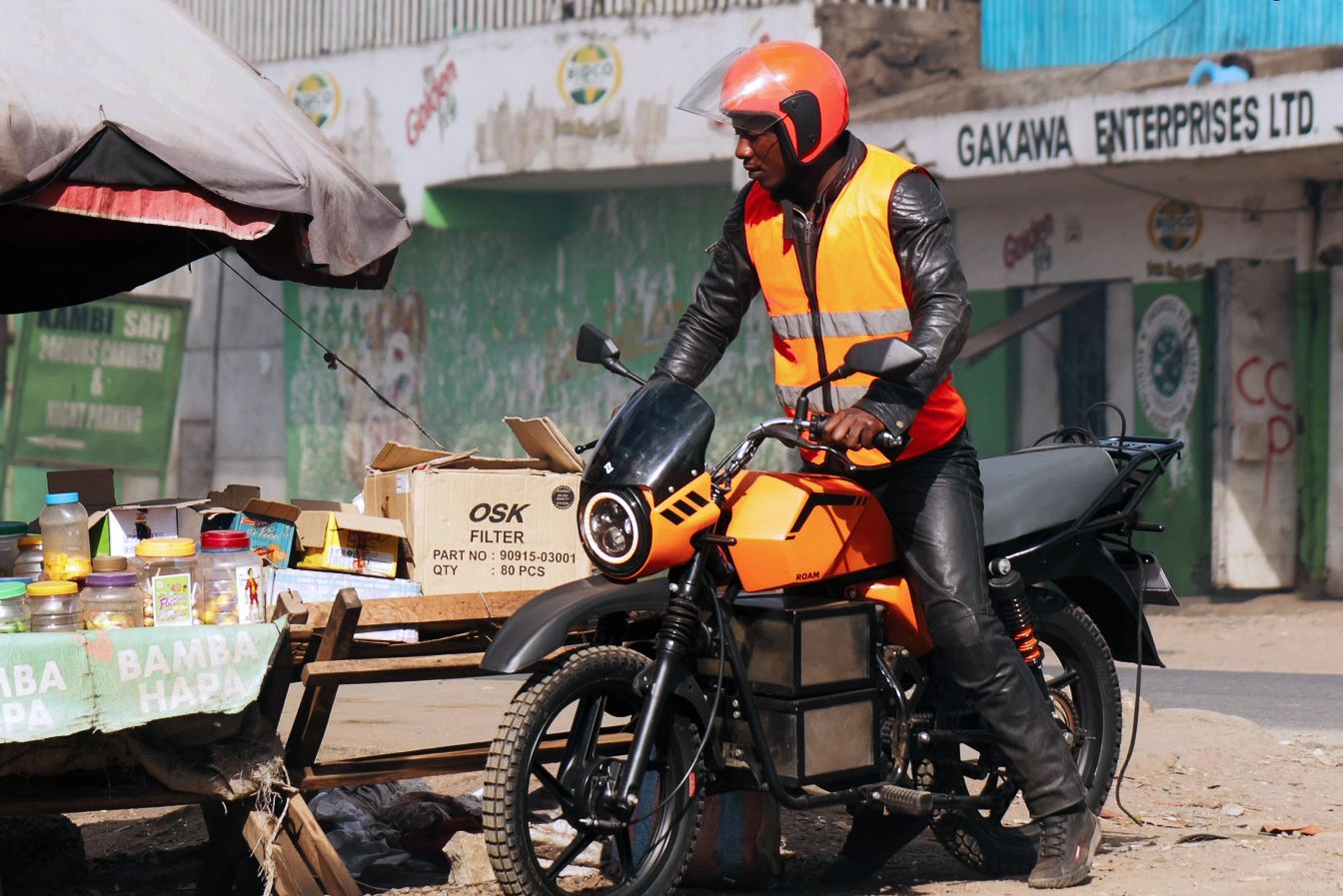
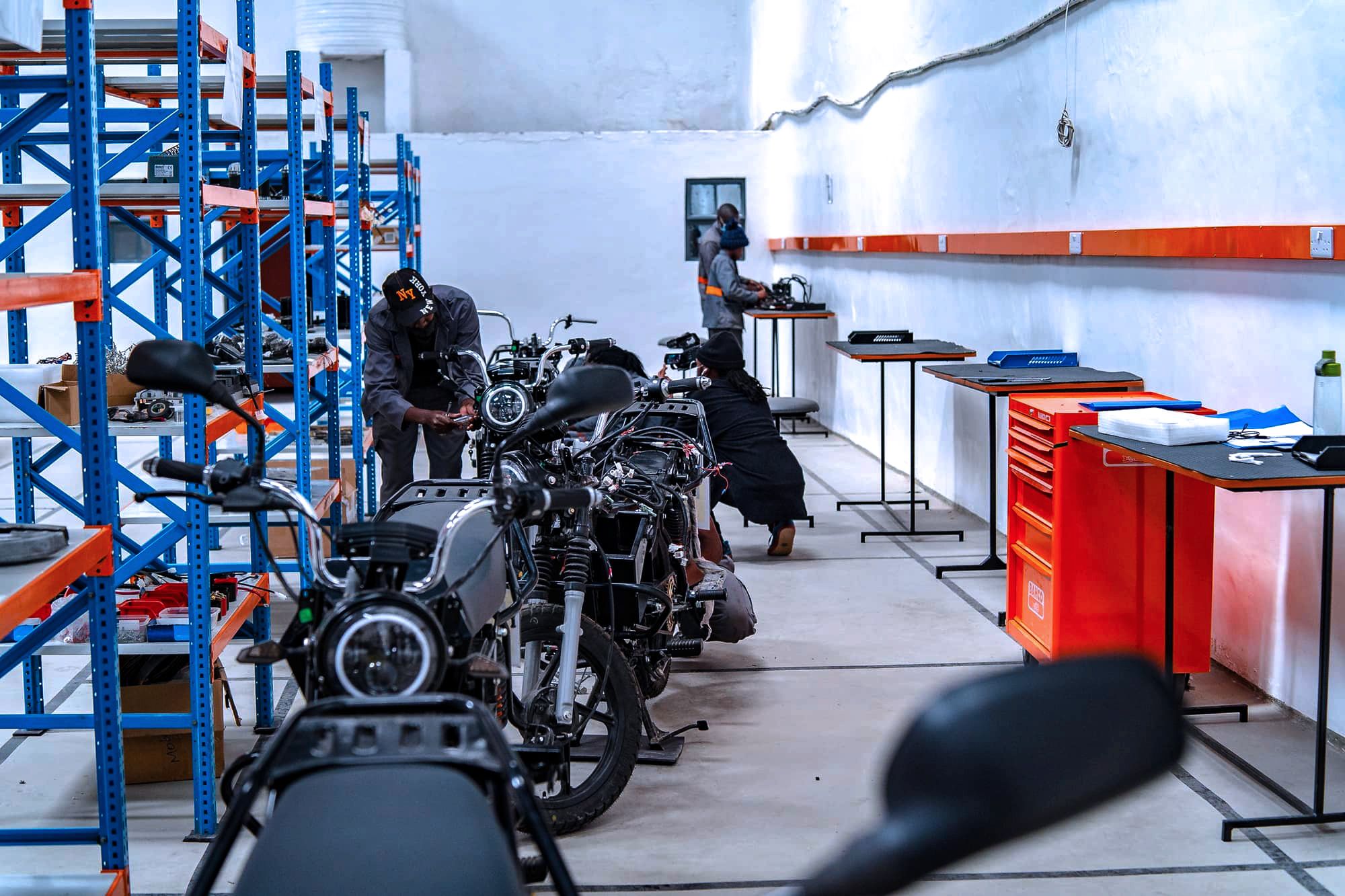
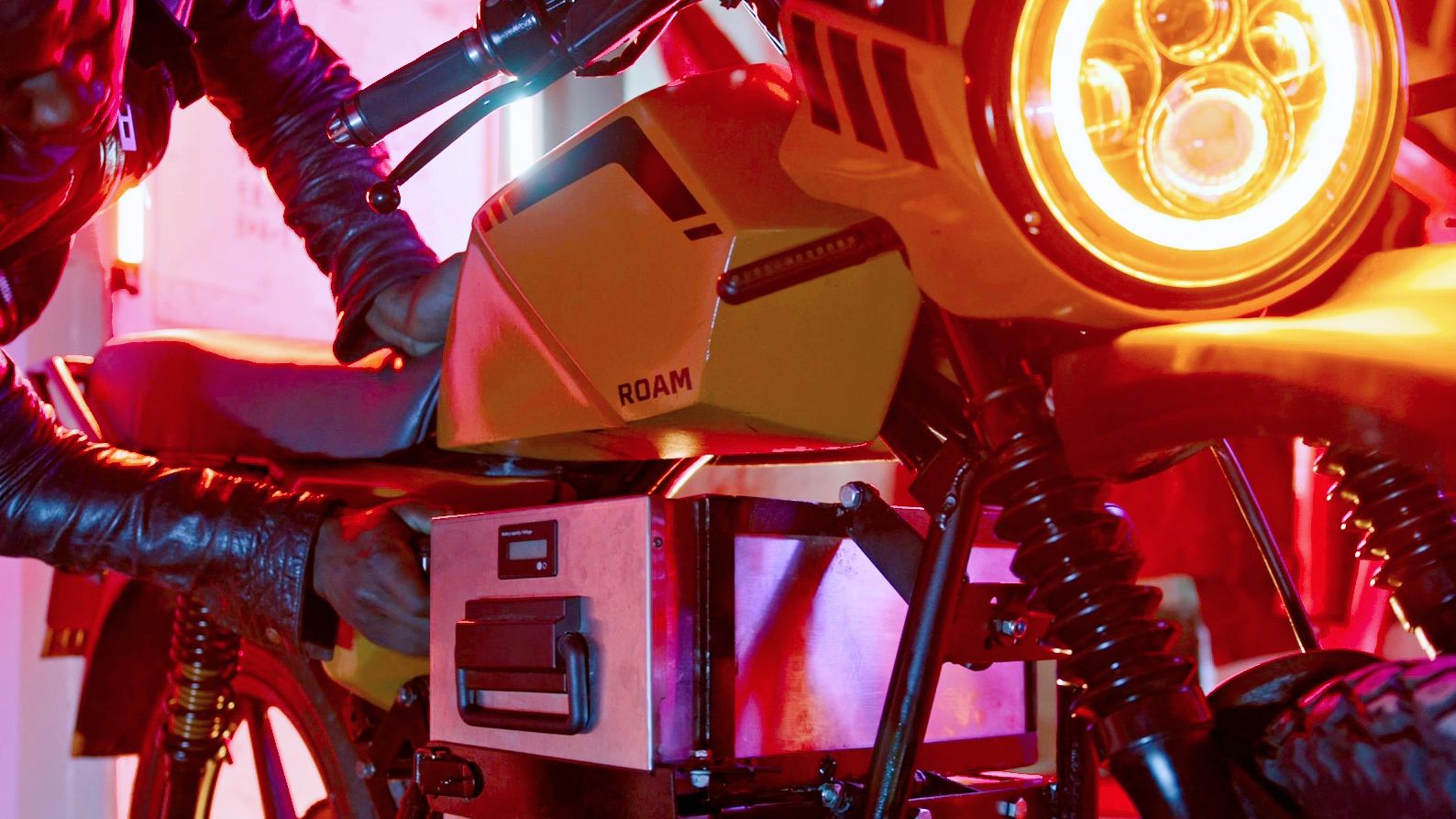
Meanwhile, another 3,000 Kenyan-designed-and-built electric bikes are expected to hit the streets of Kenya and other African cities following a strategic partnership between global ride-hailing firm Uber and a Swedish-Kenyan firm, Opibus, now known as Roam.

Albin Wilson, Chief Strategy & Marketing Officer at Roam, told bird that with the adoption of electric transportation, Africa can significantly slash local emissions.

“We feel like we shouldn’t get Africa stuck in the old ways of the west. Africa has the possibility now to leapfrog into new technology and start correctly from the beginning, by not weighting historical mistakes that include a lot of fossil fuel vehicles,” he said.

Roam said that it is counting on Uber’s presence in African markets to speed up the widespread use of electric cars on the continent.

“We’re seeing a huge demand for locally-designed electric motorcycles on the African continent, and by working with Uber we’ve now been able to prove the feasibility for large-scale deployment. Next year we’re scaling up our production to meet the market demand, both in Kenya and in the region,” explained Mikael Gånge, Co-Founder and Chief Sales Officer of Roam.

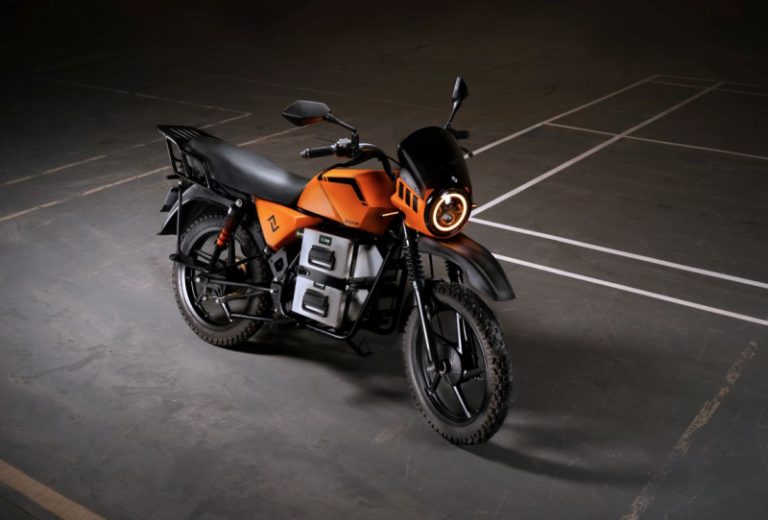
Motorcycles, pedelecs, scooters, and other battery-powered two- or three-wheeled bikes with an electric motor for propulsion are examples of e-bikes. Some can be partially pedalled or fully electrically propelled, depending on their configuration, and are seen as a tool to help reduce the carbon footprints from daily commutes.

Electric motorcycles in Africa have 40% lower per-mile fuel and maintenance costs than their fossil-fuel counterparts.

The United National Environment Program (UNEP), which sees e-bikes as a cheaper and healthier mode of transportation for African cities, is funding e-bike projects in several African countries.

According to Global Fleet (GF), the UN agency projects sales of both electric and traditional two- and three-wheeler motorcycles to jump 50 per cent by 2050. In Kenya alone, UNEP estimates that motorcycles will triple to five million this decade, driven by services like ARC.

UNEP’s Emob calculator shows that a global shift to electric motorcycles could prevent 11 billion tonnes of carbon dioxide emissions, more than double the annual energy-related emissions in the United States of America, from being released into the atmosphere.

Globally, the electric bike market size was valued at US$ 45.75 billion in 2021 and is forecast to reach US$ 109.53 billion by 2030-a growth of some 10 per cent per annum-while Astute Analytica figures show the Middle East and Africa eBike market was valued at USD 822.22 million in 2021 and is projected to reach US$ 1.7 billion by 2029. Lithium-Ion accounts for the largest battery type segment in the respective market because these batteries are smaller in size and long-lasting.

In November 2021, Africa’s e-commerce giant, Jumia, said it had begun replacing “hundreds” of the fuel-based delivery motorbikes used by its riders through a partnership with a Kenyan start-up, eBee Africa.

Jumia said that switching to E-bikes was in line with the company’s efforts to be an environmentally friendly business.

“This pilot with eBee is the beginning of a conscious push across Africa into EVs. We hope we can play a part, as early adopters, in speeding up the penetration of the industry in Africa, “said Jumia Services Country Manager, Ankur Agarwal.

According to Global Fleet, the governments of Kenya, Uganda, Rwanda, Ethiopia, Burundi, Madagascar, and Seychelles are cooperating to spearhead the region’s transition to e-mobility. In East Africa alone, there are more than 20 start-ups and companies that sell and make electric motorcycles and three-wheelers.

“While these vehicle types are not yet as popular in Africa as they are in Asia—where the proximity of and joint ventures with China are fuelling the market—this may soon change,” GE notes.

In Rwanda, startup Ampersand plans to scale up the number of electric motorcycles from its current fleet of 56 drivers on the country’s roads to several thousand and also grow in the Kenyan market by the end of 2022, as it eyes the potential to electrify the around 5 million fuel-powered motorcycles in East Africa.

Another Kenyan startup, Ecobodaa, with a similar business model to Ampersand, began the production of its electric bike brand in November as it ramps up the roll-out of battery swap stations across the country. Ecobodaa is betting on a rent-to-own business model to boost uptake.

While there is plenty of buzz around e-mobility in East African countries, East Africa is hardly the only region to experience a rapid increase in the e-bike market.

Bonafide Research’s South Africa Electric Bicycle Market Overview, 2027, shows the market will expand significantly in the forecast period as the pursuit of healthy lifestyles, fitness trends, and recreational activities drive sales.

In West Africa, Nigeria’s Federal Ministry of Power in April unveiled 10 electric-powered motorcycles manufactured by MAX Nigeria under its Electric Vehicle Opportunities in rural and peri-urban communities in Nigeria. Germany and the EU, which are part of the project, hope significant adoption of the eBikes will follow.

The African market is also attracting investors from outside of Africa. The most recent ones came from Asia.

In July last year, Indian EV maker, One Electric, announced the start of deliveries for its motorcycle brand, Kridn, in Kenya, with plans to expand to four more African countries in 2022.

Global Fleet notes that more companies are also taking notice of Africa’s EV potential, including Mellowcabs, based in Stellenbosch, South Africa, which operates 60 light-duty electric delivery vehicles in Botswana and Namibia, as well as South Africa.

“Japan’s Yamaha Corporation took part in funding for electric motorcycle delivery company MAX.NG. The company is on track to launch 1,000 EVs in Nigeria by the end of 2021,” its analysis shows in part.

- Advertisement -