Tuesday, June 2, 2026
Home Blog Page 24

How can I tell if the Insurance Company is treating me fairly after a car accident?


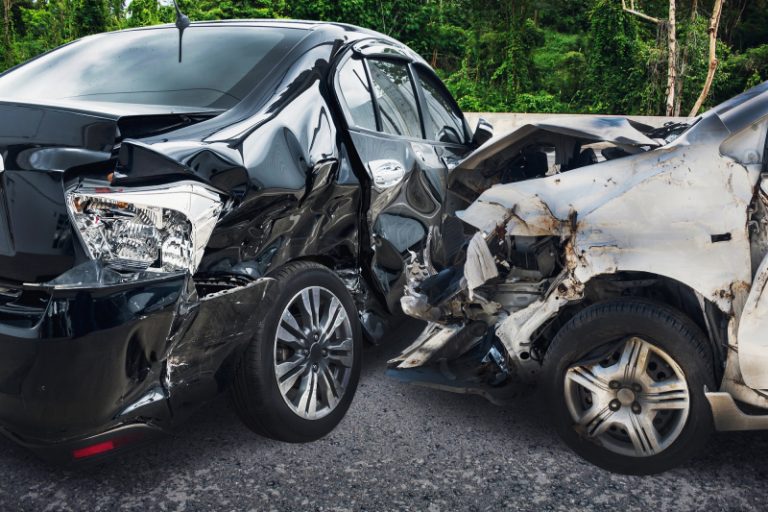
Car accidents can be traumatic experiences, and dealing with insurance companies afterward can add to the stress. The insurance company’s main goal is to minimize its financial liability, which may not always align with your best interests as the policyholder. “Car accident victims require empathy besides compensation. In most cases, victims are left with devastating injuries and loss that may alter their lives permanently. A little kindness to such a person might make so much a big difference besides the compensation, which in most cases are not commensurate to the injury/loss suffered,” says Mr. Sospeter Opondo Aming’a, the Managing Partner at SOKLAW Advocates. As such, it’s essential to understand your rights and responsibilities as a policyholder and know how to tell if the insurance company is treating you fairly. Here’s what you need to know about determining whether your insurance company is acting fairly toward you and your claim.

[YUMPU epaper_id=”68440189″ width=”512″ height=”384″]

Understanding your insurance coverage after an accident

Automobile insurance is mandatory in most countries and is designed to provide coverage for damages and injuries resulting from car accidents. “In a world filled with unpredictable twists and turns, the necessity of insurance cannot be overstated,” remarks Ms. Lauretta Oyile, a Lawyer at Simba & Simba Advocates.

“In the context of a car accident, it may only qualify for settlement under an insurance policy if three prerequisites are satisfied. One, the insurance policy should be valid and active. Two, the accident must have been an event contemplated under the policy. Three, the accident must not fall within an exception or have arisen due to the negligence, carelessness or recklessness of the insured,” she clarifies.

She further explicates the prerequisites, notwithstanding, the insured is also required to give notice of the accident to the insured, furnish particulars in sufficient detail using the prescribed format and within reasonable timelines, and substantiate the claim. The law imposes a duty upon a party who seeks reliance of their statements as true to give evidence of their truth. Different insurance companies have formulated claim forms to enable them reconcile and settle claims. The insured, is expected to give full particulars of their claim using those forms. The claim should equally be made within set timelines provided under the policy or customarily within twenty-four (24) hours.

“Once the insurer has been supplied with the requisite information, they may opt to settle the claim out of court. In the event they do not, the claim may be subjected to legal proceeding before a court or tribunal for the determination of their liability. Once liability is proven, the insurer has an obligation to pay the insured, the assignees of the insured or Third Party. It is only upon such payment that the insurer is deemed to have discharged their obligation and the claim settled,” she compliments.

Your insurance policy will outline the types of coverage you have, including liability, collision, and comprehensive coverage. Your insurance policy will also specify your financial responsibility in the event of an accident, including your deductible and policy limits. Your deductible is the amount you pay out-of-pocket before your insurance kicks in. Policy limits are the maximum amount that your insurance company will pay out for a claim. It’s also important to note that insurance companies are businesses and their primary goal is to make a profit. This means that they may try to minimize payouts or deny claims altogether if they believe it will benefit their bottom line. If you feel like your insurance company is not treating you fairly after an accident, there are steps you can take to protect yourself. “Insurance policies create certain rights and obligations for the parties involved. Key among the obligations include the duty of the insured to disclose all material facts within their actual and perceived knowledge to the insurer. Material information is any circumstance that would influence the judgment of a prudent insurer in fixing the premium or determining whether they would take up the risk,” elaborates Ms. Oyile.

Insurance companies are working for their interests

During the investigation process, it is important to remember that insurance company partners such as adjusters and investigators are working for their interests rather than yours. While they may seem friendly and helpful on the surface, their ultimate goal is to minimize payouts on claims. “A fair insurer will guide an accident victim on the documentation they require and the process they have to undergo in order to have their claim settled. A shorter claim settlement turn- around time will also account for fairness. Many insurers take accident victims in circles with the excuse of investigations, even where the facts are straight. Last but not least, the amount of settlement should also be reasonable and commensurate with the injuries suffered. An insurer should not take advantage of the victim’s desperation to meagerly compensate them,” highlights Mr. Aming’a. This means that they may use tactics such as downplaying injuries or damages sustained in an accident in order to reduce payouts. “The perception is that insurance companies do not usually want to pay out their claims. They are believed to utilize loopholes to latch onto evade liability,” adds Ms. Oyile. They may also try to pressure you into accepting a settlement offer that does not fully compensate you for your losses. Accusations of bad faith can arise when an insurance company fails to act fairly and honestly toward its policyholders. Some examples of bad faith accusations include:
– Failing to investigate a claim properly.
– Refusing to pay a valid claim without justification.
– Delaying payment on a valid claim without justification.
– Offering an unreasonably low settlement amount.
– Misrepresenting policy provisions or coverage limits.

Recognizing when an insurance settlement offer is too low

When you’re involved in a car accident, one of the most important things to consider is whether or not the insurance company is offering you a fair settlement. But how do you know what a fair settlement offer looks like? According to Gillian Ombogo, a legal practitioner at Ombogo and Company Advocates, the relationship between an insurance company (insurer) and the policy holder (insured) is in form of a legally binding contractual agreement, which is the insurance policy document. Before signing, you ought to read and understand the fine print of the document and seek clarification from the insurer on any terms, conditions, restrictions or limitations that may seem unclear. “This may sound simple, but is a very important step that could prevent anguish and loss, in the unfortunate event of an accident. Having said this, the best way to detect unprofessionalism from either party to the contract is when they fail to act in utmost good faith and contrary to the terms of the policy document,” affirmed Ms. Ombogo.

Every case is different and there are many factors that can impact the amount of money you receive. However, there are some general guidelines that can help you determine if an offer is too low. Firstly, consider the extent of your injuries, lost wages, and other damages. If your needs aren’t met by the settlement offered, you may need to seek a better offer. It’s important not to rush into accepting a settlement offer without first reviewing all the details and ensuring it covers all your losses. Insurance companies may try to pressure you into accepting an offer quickly before you have had time to fully assess your damages and expenses. Insurance companies are businesses, which means they’re always looking for ways to save money. One way they do this is by offering low settlements in hopes that policyholders will accept them without question.

Seek out a car accident attorney for your case

In conclusion, being involved in a car accident can be a traumatic experience that can leave you feeling vulnerable and helpless. It is important to understand your rights as a policyholder and to know how to determine if the insurance company is treating you fairly after an accident. Even with precautions taken, there may still be instances where an insurance settlement offer is too low or unfair. This is where hiring an experienced car accident attorney becomes crucial. In this case, you will have the options to seek out compensation even if the insurance company is unwilling to settle with you fairly.
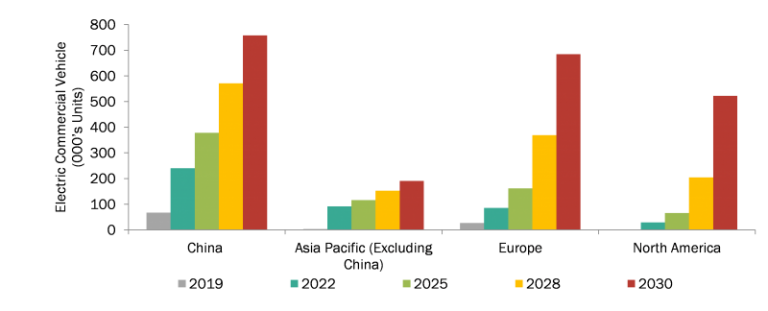
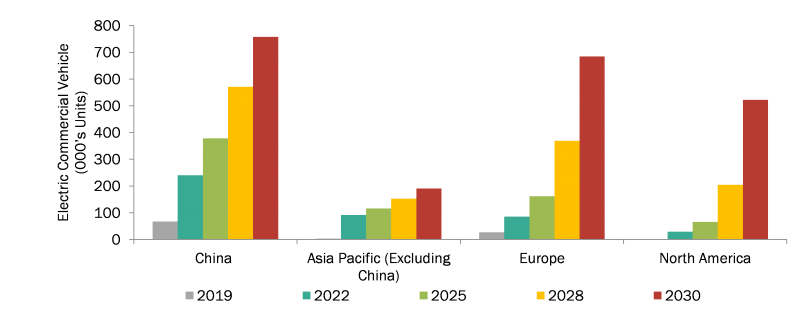
ELECTRIC COMMERCIAL VEHICLE MARKET


The transport sector is one of the most significant contributors to GHG emissions globally, owing to which many countries worldwide are focusing on converting the existing fleet of commercial vehicles to zero-emission electric vehicles. With the upcoming government mandates on emissions caused by vehicles, the automotive industry is focusing on efficiency, emission-free propulsion, and innovative technologies. The electric commercial vehicle market is expected to witness significant growth during the forecast period, driven by e-commerce, logistics, delivery and mobility growth. Major R&D activities in electric commercial vehicle focus on to use of energy-efficient electric propulsion, higher vehicle range and innovative battery technologies, which have boosted the demand for electric commercial vehicles. While these vehicles are expected to enhance the performance and range of electric commercial vehicles, factors such as significant charging time, high price, limited life of batteries, and inadequate availability of charging stations make users hesitant to opt for electric commercial vehicles over ICE commercial vehicles.

The use of electric commercial trucks would also greatly benefit logistics companies, whose profits have been steadily declining due to the continually rising fuel prices. Key OEMs such as BYD (China), Mercedes Benz Group AG (Germany), AB Volvo (Sweden), Nikola Motors (US), and Volkswagen AG (Germany) have launched electric commercial vehicles in recent years.

The manufacturers are focused on launch of electric commercial vehicles models. The table below covers a few of the new models launched by key manufacturers.

ELECTRIC COMMERCIAL VEHICLE LAUNCH, BY OEMS, 2022-2023

MONTH & YEAR COMPANY PRODUCT TYPE PRODUCT NAME  DESCRIPTION 
March 2023 BYD Electric Pickup Truck Pickup Truck BYD announced to launch an electric pickup truck in 2023.
December-2022 AB Volvo Electric Truck VOLVO FH Electric, VOLVO FM Electric, VOLVO FMX Electric
December 2022 Tesla, Inc Electric Truck Semi Tesla, Inc officially launched Semi, a heavy-duty electric truck. Semi is currently the only electric commercial vehicle that offers a range of 800 km on a single charge.
September-2022 DAF Electric Truck DAF LF Electric The company launched its electric truck DAF LF powered by LFP batteries with a range of 280 km and a battery capacity of 282 kWh. The truck will be used for light distribution services.
September-2022 Mercedes-Benz Group AG Electric Truck eActros Long Haul Mercedes-Benz Group AG launched its long-range electric truck eActros Long Haul. It is equipped with a battery capacity of 600 kWh, uses LFP battery cells, and has a range of 500 km.
February 2022 BYD Electric Truck Q1 BYD unveiled an electric truck, which offers a 255 kWh lithium iron phosphate battery, a range of 200 km on a single charge, and can reach a top speed of 85 km/h

Source: Press Release and Company Website

The electric commercial vehicle industry is witnessing technological developments to meet customer demand and be future-ready. Electric commercial vehicle have a lower operating cost than conventional commercial vehicles. Increasing crude oil prices and the need for eco-friendly mobility alternatives are opening opportunities for the market. Electric commercial vehicles have low operating cost relative to ICE commercial vehicles and a sustainable means of transportation. They can leverage existing and future mainstream electric vehicle charging infrastructures. Governing bodies have launched initiatives to build charging facilities. The schemes are funded with huge budgets, focused on promoting electric commercial vehicle through subsidies.

CHINA VS GLOBAL ELECTRIC COMMERCIAL VEHICLE SALES, 2019-2030

Source: Global EV Outlook 2023, Secondary Websites, News Portals, Automotive Databases, Company Annual Reports, and MarketsandMarkets Analysis

As per Atin Jain, Team Lead (Automotive and Transportation) at MarketsandMarkets Research, “The electric commercial vehicle market is growing rapidly, driven by factors such as excessive emissions by fossil fuel-powered commercial vehicles, fluctuations in fuel prices, and government subsidies, incentives and favorable policies. Continuous improvements in charging infrastructures have also led to adoption of electric commercial vehicles across the globe. R&D activities are being carried out to improve battery technology, reduce battery cost, reduce charge time and increase vehicle range. With countries worldwide setting targets to reduce their vehicle emissions, the demand for low-emission vehicles, including electric vehicles, is growing. The electric commercial vehicle market is expected to grow.”

INCREASING DEMAND FOR EFFICIENT AND EMISSION-FREE COMMUTES TO DRIVE MARKET GROWTH

Source: MarketsandMarkets Analysis
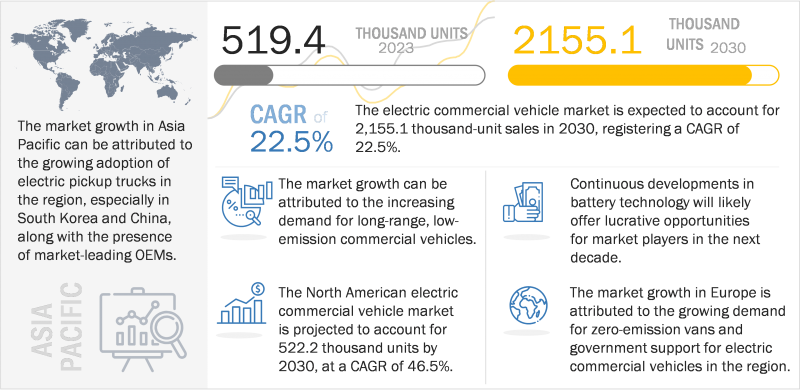
According to MarketsandMarkets research, the global electric commercial vehicle market is projected to reach 2,155.1 thousand units by 2030, starting from 519.4 thousand units in 2023, growing at a CAGR of 22.5%. The market growth is governed by improved battery technology, supporting government policies and regulations, and the consistent launch of new electric commercial vehicle models.

According to MarketsandMarkets research, the global electric commercial vehicle market is projected to reach 2,155.1 thousand units by 2030, starting from 519.4 thousand units in 2023, growing at a CAGR of 22.5%. The market growth is governed by improved battery technology, supporting government policies and regulations, and the consistent launch of new electric commercial vehicle models.

PURCHASE ORDER/SUPPLY CONTRACT FOR ELECTRIC COMMERCIAL VEHICLES 

MONTH/YEAR PURCHASE ORDER/SUPPLY CONTRACT
February 2023 Ford Motor Company (US) announced winning the US Postal Service contract to supply 9,250 E-Transits as electric mail vans.
October 2022 AB Volvo (Sweden) announced supplying 20 VOLVO FH electric trucks to Amazon (US) in Germany for delivery.
October 2022 Performance Team announced deploying Class 8 battery-electric trucks from Volvo Trucks North America in Southern California in response to customer demand for sustainable short-haul warehouse and distribution center operations.
October 2022 Electric truck rental company Sixt (Germany) announced purchasing 100,000 electric vehicles from BYD (China) through 2028. Sixt will deploy the vehicles to Germany, France, the Netherlands, and the UK.
October 2022 PepsiCo (US) announced the delivery of 100 electric truck Semi to be used in its fleet for delivery purposes.

Source: Secondary Research, Company Websites, EV Associations, and Country-level Automotive Organizations

KEY DRIVING FACTOR FOR THE ELECTRIC COMMERCIAL VEHICLE MARKET

  1. GOVERNMENT INCENTIVES AND SUBSIDIES 

Various governments have launched attractive initiatives and schemes to facilitate the adoption of electric commercial vehicles. In developed countries, governments have begun the use of electric commercial vehicles, such as vans and trucks. The UK has set a target for new cars and vans to be zero-emission by 2035 and is offering grants and tax incentives to encourage the adoption of electric vehicles. Likewise, Canada has mandated all new passenger vehicles sold in the country to be zero-emission by 2035. It is investing in charging infrastructure and offering incentives to support the adoption of electric vehicles. Governments are also promoting electric trucks to reduce pollution attributed to diesel engine trucks. For instance, Ontario, Canada’s largest province, has introduced a new rebate program for buyers of Tesla’s semi-electric truck, promising up to 60%, or nearly USD 59,000, of the incremental purchase cost of electric trucks. Emerging economies, such as China and India, also plan to introduce zero-emission commercial vehicles in the near future.

  • TABLE 1 RECENT GOVERNMENT INITIATIVES TO BOOST THE DEMAND FOR ELECTRIC COMMERCIAL VEHICLES  
Country Announcement/Policies to Support the Demand for EV/ECVs
Germany The German government is investing Euro 500 million in expanding the country’s charging infrastructure for electric trucks and buses. The goal is to have 1,000 publicly accessible fast-charging stations for commercial vehicles by the end of 2023. Germany set up a USD 145 billion package for infrastructure development, tax reductions, and other subsidies to achieve its 10 million EVs goal by 2030. It has also invested USD 2 billion in hydrogen-based infrastructure development.
China In June 2023, the Chinese government announced a substantial tax incentive package of 520 billion yuan (~USD 72 billion) over the next four years. Under this extended policy, New Energy Vehicles (NEVs) that are purchased in 2024 and 2025 will be eligible for a complete exemption from purchase tax (a maximum of 30,000 yuan (~USD 4,150) per vehicle). For 2026 & 2027, this exemption will be reduced by half (5,000 yuan (~USD 2,000)). This extension is expected to not only boost the sale of electric vehicles but also expected to boost the Chinese economy after the pandemic.
US Consumers in the US currently receive approximately USD 7,500 as tax credits for the purchase of an all-electric or plug-in hybrid electric vehicle. This incentive will be phased out once an automaker sells over 200,000 EVs.

California launched the Clean Vehicle Rebate Project. The project includes rebate funding for low-income consumers and rebates for the purchase or lease of EVs.

The City of Toronto announced converting 50% of its fleets into EVs. A considerable part of them will be for long-distance travel and use FCEVs.

Source: Secondary Research, MarketsandMarkets Analysis

  1. ADVANCEMENTS IN BATTERY TECHNOLOGY

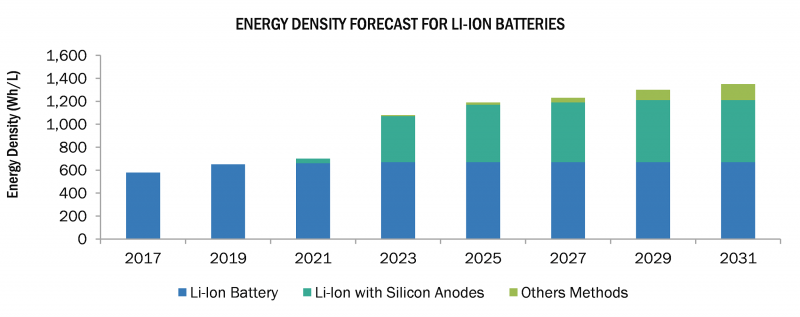
The battery is a significant component in an electric commercial vehicle. Technological advances in batteries, especially regarding their charge density, making them extractable and more competitive, are the focus of the electric commercial vehicle segment’s leading research and development efforts worldwide. Currently, companies are providing multiple charging options that include a portable charger that can be used to charge vehicles in public places. Besides, charging stations are also installed at homes for convenience. Several companies in EV battery technology have made substantial improvements. For instance, in June 2022, CATL unveiled its Qilin Battery, the third generation of its CTP (cell-to-pack) technology. The battery delivers a range of 1,000 km, has an energy density of up to 255 Wh/kg, and is expected to be mass-produced in 2023. Such ongoing developments in the field of EV batteries are targeted towards improving the range of electric commercial vehicles, with most major EV battery manufacturers innovating in the battery design and chemistry to extend the range of EVs to eliminate the requirement for regular charging.

AVERAGE ENERGY DENSITY (Wh/L) OF LI-ON BATTERIES, 2017–2031

Source: Sila Nanotechnologies and Secondary Research

KEY TARGET BY MARKET PLAYERS 

  1. RIVIAN ANNOUNCED TO INCREASE PRODUCTION CAPACITY TO 1 MILLION UNIT/YEAR by 2030

Rivian successfully launched its IPO and now has almost USD 12 billion (on top of USD 10.5 billion raised previously) to expand its EV business. The company wants to grow quickly and reach a volume of at least 1 million electric vehicles per year by 2030.  The long-term plan for Rivian is to have a total of four assembly plants around the world, including one additional factory in the U.S. and probably one in Europe and one in China. The second factory in the U.S is expected to also produce in-house developed battery cells (potentially in-house developed).  In February 2022, the company shared ambitious plans to acquire 10% of the EV market by 2030.

  1. GENERAL MOTORS ANNOUNCED ITS AMBITIOUS EV GOALS 

General Motors became the first conventional car company to pledge to sell only zero-emission cars and trucks by 2035. GM has committed to invest USD 35 billion in its transition to selling only EVs by 2035, and is aiming for carbon neutrality by 2040. About 50% of the U.S. production will be converted to EVs by 2025, and has announced four battery plants in the U.S. The company has also partenered  with Pilot and Flying J will accelerate the expansion of charging infrastructure and enable long-distance electric travel via a network of 2,000 chargers.

  1. TESLA ANNOUNCED TO BUILD ROBOTAXI BY 2024

In April 2022 the company plans to build a dedicated robotaxi by 2024. The robotaxi will be a self-driving vehicle that will not have a steering wheel or pedals. The company announced that the robotaxi will be “highly optimized for autonomy” and that it could potentially cost less than a bus or subway ticket. Tesla, Inc is not the only company that is working on robotaxis. Other companies that are developing robotaxis include Waymo, Uber, and Lyft. However, Tesla, Inc is one of the leading companies in the field of self-driving technology, and it has the potential to be a major player in the robotaxi market.


Disclaimer: MarketsandMarkets™ provides strategic analysis services to a select group of customers in response to orders. Our customers acknowledge when ordering that these strategic analysis services are solely for internal use and not for general publication or disclosure to any third party.

MarketsandMarkets™ does not endorse any vendor, product, or service profiled in its publications. MarketsandMarkets’™ strategic analysis constitutes estimations and projections based on secondary and primary research and is therefore subject to variations.

MarketsandMarkets™ disclaims all warranties, expressed or implied, with respect to this research, including any warranties of merchantability or fitness, for any particular purpose.

MarketsandMarkets™ takes no responsibility for incorrect information supplied to it by manufacturers or users.

Trademarks, copyrights, and other forms of intellectual property belong to MarketsandMarkets™ or their respective owners and are protected by law. Under no circumstance may any of these be reproduced, copied, or circulated in any form without the prior written approval of MarketsandMarkets™ or its owner—as the case may be.

No part of this strategic analysis service may be given, lent, resold, or disclosed to any third party without express permission from MarketsandMarkets™.

Reproduction and/or transmission in any form and by any means, including photocopying, mechanical, electronic, recording, or otherwise, without the permission of MarketsandMarkets™, is prohibited.

For information regarding permission, contact:

Tel: 1-888-600-6441

Automakers chart path for electric vehicles adoption, development


Stakeholders and local automakers are championing the adoption of Electric Vehicles (EVs) usage in Nigeria as an alternative to petrol-driven vehicles to cushion the effects of fuel subsidy removal on citizens as well as promote clean energy.

At the event, U.S. Undersecretary of Commerce for International Trade, Marisa Lago said not only are they committed to combating the climate crisis and view EVs as critical technologies to facilitate the clean energy transition, she said more importantly, new jobs will be created. Revealing that U.S. companies are eager to find opportunities to expand business relationships with Nigerian counterparts, she added that transitioning to EVs present a tremendous opportunity to drive innovation in the automotive sector and provide good-paying jobs for Nigerians, while simultaneously addressing climate change and reducing dependence on fossil fuels.

She went on to reveal that supportive infrastructure is crucial for widespread adoption of EVs. “The availability of charging stations is a fundamental aspect of the enabling environment for an EV industry to thrive. But, there is a chicken-and-egg conundrum since companies are not likely to invest in charging infrastructure until there’s a critical mass of EV drivers. Also, individuals will be reluctant to buy EVs until there is a reasonable recharging infrastructure.”

Also pointing out that the cost of EVs, which is still relatively high compared to conventional vehicles, remains a barrier, and wondered if the costs could be reduced through local manufacturing, targeted investment in R&D or collaborations with industry leaders from around the world to achieve economies of scale.

“Also, to attract both domestic and foreign players in the sector, it will be critical to have a supportive regulatory framework of consistent policies, standards and regulations that are aligned with international best practices that encourage investment and innovation. In addition to advancing EV technology, we must equip the workforce with the education and skills necessary to support the growth of the industry. A skilled workforce can fill the employment opportunities generated by the growth of the sector, positioning Nigeria as a regional hub for manufacturing, maintenance and technology development.”

Head of Corporate Communications, Innoson Group, Cornel Osigwe, said they paused producing EVs because of the unavailability of batteries, which he said remain very expensive.

He, however, said companies could come together to produce batteries locally since all the raw materials are available in Nigeria. Osigwe said the government needs to get involved in battery production and provide an enabling environment for the market to thrive.

Scania Representative, Abimbola Adekoya, said a lot is happening in the various segments of the EV value chain in Nigeria. “We need to be deliberate in recognising and relying on strengths, collaborating and position as a block to strongly influence policy shaping in a manner that will positively impact the EV space in Nigeria.

An attendee present stated that some people have argued that the country suffers from poor power but wondered how many times EV users need a high-power charge. “I have been using an EV for a decade and I’ve only had a high-power charge 12 times in that period. The solutions are there. A four-hour charge will take you over 300 km.”

Senior Vice President of Corporate Services, Oando Clean Energy, Alero Balogun, said the cost of financing EVs would be a challenge but investor finance is available.

Chairman, Codes and Standards Committee, Nigerian Institution of Mechanical Engineers (NIMech), Seun Faluyi, said it is more practical to expect that mass adoption of EVs will be more driven by cost avoidance rather than policies in Nigeria and lowering the cost of development and deployment of EV production and infrastructure will be a key success factor. He said the most likely starting point where impact and progress can be made will be the first mile-last mile segment of the transport industry in urban centres, which includes motorcycles, tricycles and mini-buses.

The EV market is at the intersection of the transportation, automobile and power industries. Standardisation for charging, regardless of geographical location or electricity distribution company connected, will need to be talked about in terms of rates, measuring and monitoring charging activity, among others.

Chief Executive Officer/Founder, SWAP, Seyi Ògúntunde said though the major issue is cost, as drivers don’t have the capital to purchase brand new vehicles, possibilities abound and people have started embracing it. “We set up a mini charging station around Berger where we have most of the drivers. They pick up the charged batteries in the morning and return it at night. The adoption rate has increased, because it’s easier for them to drive and more cost-effective. Now, most of them are coming to us, asking to convert their vehicles because they’re saving money on fuel and maintenance.”

Head Mobility, Renewable Energy and Mobility, Sterling Bank Plc, Akin Akingbogun, said EVs are driven by three separate sectors of the economy: automobile, road infrastructure and energy/power. He said they would focus on partnerships that would convert ICE vehicles to EVs and stressed the need for the availability of charging stations across the country. He added that a major concern with EVs is standards. “How do we ensure standards are met and kept across the board? Standardisation is very important because users should be able to move across the country and region and be able to charge anywhere.”

President of the Renewable Energy Association of Nigeria, Ayo Ademilua, said they intend to partner with stakeholders to roll out charging stations across the country, especially standalone charging stations. “We know affordability is a major issue so we are proposing pay-as-you-go platforms. We want the vehicles to be given out on leases while users pay monthly.

It will also have an app that shows charging stations in real-time so that users know where next they can charge.” He revealed that many players are launching two and three wheelers later this year and need to partner.

At the end, the ideas put forward for the hackathon include a pay-as-you-go platform for EV cars, charging station location apps, capacity building platform, battery design, fintech financing solution for the full purchase of EVs, database for the EV space, tech solution to manage driver behaviour and market education.

Others include IOT on devices for ‘state of charge’, rideshare, charger stations, curriculum development for schools to support ecosystem, tracking energy assets, combining on-grid and off-grid solutions, a pricing model that works, leveraging already existing energy distribution networks as electricity charging stations and standard regulation framework development.

By Benjamin Alade and Tobi Awodipe

Smart Manufacturing is the Future of Automotive Manufacturing


The latest phase of digitization in manufacturing or “smart manufacturing” has transformed the automotive industry. Through the growing use of artificial intelligence (AI), machine learning, and automation, auto manufacturers are now more than ever able to overcome operational difficulties and solve maintenance issues before they occur. Here are some of the key aspects and technologies auto manufacturers are using:

  1. Digital twins: A digital twin, also known as a surrogate model, is a virtual representation used to reflect a real-world product. This digital counterpart simulates the real product’s performance. An automobile’s digital twin is made up of the entire automobile: its software, mechanics, and behavior. The use of a digital twin allows automotive manufacturers to replicate the production process and identify potential complications or failures. Examples include:
    • Product testing. A digital twin allows automotive manufacturers to experiment with different designs to optimize product performance. A digital twin of a car tire allows manufacturers to virtually simulate the tire performance in different weather conditions.
    • Predictive maintenance. Predictive maintenance forecasts when automotive components will break down and to fix them preemptively. Digital twins allow automotive companies to identify potential issues and schedule maintenance before the problem occurs.
    • Performance monitoring. Digital twins constantly collect and analyze data on the vehicles they replicate. Tesla, for example, creates a digital twin of all its vehicles. These virtual replicas are used to determine whether a car is working as intended. Tesla uses this information to update vehicle performance.

    North America accounted for around 38% of the digital twin market in 2021. The global digital twin market size is projected to reach US $155.83 billion by 2030, with a Compound Annual Growth Rate (CAGR) of 37.5% in the next seven years. The automotive and transport sector is expected to account for the fastest growth rate percentage as developments in electric vehicles drive the adoption of digital twin technology.

    [YUMPU epaper_id=”68440189″ width=”512″ height=”384″]

  2. Internet of Things: Automotive Internet of Things (IoT) is a system of devices that exchange data through an internet connection. This allows automotive devices to share information with other vehicles connected to the internet. Vehicles manufactured with IoT collect performance data and share it with the cloud. Manufacturers can then process this data and assess potential risks and necessary steps for moving forward. IoT allows manufacturers to communicate maintenance system updates to consumers so manufacturers may address issues before a car breaks down.
  3. AI in supply chain: AI has made the transition from raw material to the manufacturing of the vehicle to customer delivery significantly easier. For years, one of the biggest challenges in the automotive industry has been the risk of a single, small mistake affecting the entire manufacturing process. A problem with one supplier tier, for example, can stop the entire vehicle manufacturing process. AI-powered supply chains can adapt and respond to any unforeseen issues in the manufacturing process. AI-based approaches have the potential to reduce forecasting errors by 30 to 50 percent. “Smart factories” are becoming increasingly prevalent, as manufacturers are replacing the error risk of manual labor with self-improving systems. Several renowned automotive manufacturing companies are working towards fully automated AI systems that can make supply-chain management decisions autonomously.
  4. Machine learning: The use of machine learning and AI systems are powerful tools for precision manufacturing in the automotive industry. Machine learning systems assist manufacturers in detecting anomalies and improving designs. In the automotive industry, an appealing design can increase sales by over 30%. Machine learning can predict the popular aesthetic appeal and generate alluring and innovative designs.
  5. AI customer experiences: Automotive manufacturers have recently been relying on artificial intelligence to improve customer experiences. AI can provide customers with virtual sales assistants. AI learns from past purchases and customer interactions to provide tailored insight to each customer based on their needs. The increased adoption of AI among manufacturing companies allows companies to use data from prior interactions to predict market forecasts.

As the automotive industry continues to expand, manufacturers should be aware of the increasing use of AI, machine learning, and automation leaders in the automotive industry are using. “Smart” manufacturing is prevalent throughout the manufacturing lifecycle, from supply chain to customer services. Manufacturers looking to remain competitive should remain up to date on the rapidly progressing uses of digitization and AI in the sector.

Special thanks to Massa Almufti, a summer associate in Foley’s Dallas office, for her contributions to this article.

By: Peter Loh, partner at Foley & Lardner LLP

Unlocking new avenues – Turning cars into profitable investments


Owning a car for personal use in Kenya’s urban life has almost become a basic need. Especially if you have a family. However, a shifting perspective is emerging as individuals and entrepreneurs recognize the potential of cars as profitable investments. From ride-hailing services to delivery platforms, cars can be transformed into revenue-generating assets that contribute not only to personal mobility but also to financial growth.

A few years ago, cars were seen as liabilities due to their high purchase price, maintenance costs, and depreciation. However, the rise of the sharing economy and digital platforms has transformed the way we view car ownership. Instead of being merely a mode of transportation, cars can now be leveraged to generate income. This paradigm shift has given rise to opportunities that were previously unimaginable.

  1. Joining the Ride-Share Revolution

Ride-hailing services like Bolt, Little Cab and Uber have gained significant traction in Kenya’s urban areas. With a well-maintained and presentable car, one can employ a driver or opt to have a weekend side hustle as a ride-hail driver, catering to the growing demand for convenient and reliable transportation. This option allows car owners to earn a consistent income while maintaining flexible working hours. Cars best suited for this are Daihatsu, Toyota Pixis, Suzuki Alto, Nissan Dayz, Suzuki Hustler among others that have an engine rating of 600cc to 700 cc.

  1. Tapping into E-Commerce Boom

The rapid growth of e-commerce in Kenya has fueled the demand for efficient and timely delivery services. Car owners can capitalize on this trend by partnering with delivery platforms such as Glovo or Jumia Food. By delivering packages or food orders, individuals can earn money while contributing to the logistics infrastructure of the country. Some of the cars to consider for this are those with a large trunk space and 1000cc to 1600cc like Nissan Advan, VW Touran, Nissan Caravan, Toyota Porte, Toyota Spade.

  1. Car Rentals: Catering to Travelers and Tourists

Tourism is a significant industry in Kenya, attracting both local and international visitors. Car owners can convert their vehicles into rental options for tourists looking to explore the country at their own pace. Some options to consider include Suzuki Jimny, Toyota Noah, Honda Stepwagon, Mitsubishi Pajero. This list is largely open due to the vast options that clients may request, based on their choice of destination, number of travelers, and cost of hiring the unit.

  1. School Transportation

In Kenya, providing school transportation during your daily commute can be both rewarding and community-focused. Parents highly value safe and dependable transportation for their children, making your service invaluable. The advantage is that the school schedule often aligns with your daily commute, optimizing your time and resources.

Minivans like the Toyota Noah, Mitsubishi Delica, Toyota Voxy, or Nissan Serena  are excellent choices due to their ample space and reputation for reliability. They come equipped with sliding doors for easy entry and exit. Alternatively, you can use any four-door car that meets safety standards, especially if it’s part of your daily work commute.”

  1. VIP Transportation:

The demand for luxury transportation experiences has risen with the increasing affluence in the EA region. High-profile individuals, business executives, and tourists seeking personalized and exclusive travel options have paved the way for upscale transportation services.

Car owners can tap into this market by offering VIP transfers, airport pickups, and chauffeur services in vehicles equipped with premium amenities and exceptional comfort. Luxury SUVs like the RangeRover, Mercedes-Benz ML and GL, BMW X5 among others offer a seamless blend of opulence and reliability. The VIP transfers and travel sector not only offers a lucrative opportunity for car owners but also contributes to Kenya’s reputation as a high-quality destination for travelers seeking sophisticated transportation solutions.

Kenya’s evolving economic landscape presents numerous opportunities for turning cars into profitable investments. The shift from considering cars as mere expenses to recognizing their potential as income generators has opened doors for individuals to diversify their income streams.

Whether through ride-hailing, delivery services, rentals, advertising, or niche transportation, car owners can leverage their vehicles to achieve financial growth while contributing to the country’s overall development. As the digital economy continues to expand, the potential for cars as revenue-generating assets is poised to grow even further.

By Sam Amira, Autochek

Truckers – The backbone of logistics in South Africa


Negative publicity abounds around truckers, their impact on our roads, driving habits and so much more. Dig a little deeper and you will find that there is far more to it than what our initial perceptions may lead us to believe.

Owing to the fact that the major industrial and consumer output of South Africa is land locked, located in the interior of the country, our economy is reliant on efficient transport systems for both import and export. The rail network has struggled to compete with truckers, who deliver door to door, thus reducing double handling, reducing risk, and vastly improving delivery times, making truck transport the preferred option.

The costs of fuel, repair and maintenance, and insurance are constantly rising and squeezing margins in the road freight industry. Drivers have a major influence on all these factors and can safeguard the sustainability of the business through safe and efficient driving.

[YUMPU epaper_id=”68357659″ width=”512″ height=”384″]

“To recognise the expertise and awareness of effective truck drivers, we launched the #ThankYouTrucker campaign in conjunction with the Road Freight Association (RFA), three years ago,” says Elvis Mutseura, Product Marketing Manager of Iveco, “ the objective of which is to pay tribute to the Truckers who keep the logistics industry moving, to raise awareness about the important contribution that the drivers  make and to provide motivation for those that are entering into their trucking journey.”

Truck drivers carry a great deal of responsibility, not just in ensuring that the deliveries remain profitable and are delivered timeously, but also in terms of road safety.

“Any incentive that leads to responsible behaviour in trucker performance will have many unseen consumer benefits,” adds Gavin Kelly, CEO of the RFA.

The #ThankyouTrucker campaign is looking for the most extraordinary freight driver, a remarkable individual who goes above and beyond the call of duty. Some of the criteria used to judge the drivers, include their helpfulness, trustworthiness, dependability, safety records as well as the care and passion that he or she display towards their chosen career.

Drivers are nominated by company owners, operations managers, direct line managers or fleet managers and only South African drivers in the road freight industry in South Africa can be nominated. The nomination period is open till 2 September 2023, voting is open to anyone, but limited to one vote per person/device. The driver who receives the most votes wins and the winner will be announced on www.thankyoutrucker.co.za on 9 October 2023.

In addition to recognition that comes from winning the competition, the overall winner will receive a R50 000 cash prize. The first runner-up receives R10 000 and the second runner-up R5 000.

Electrifying the Transit – Growth in the Electric Bus Market


The transport sector is one of the most significant contributors to GHG emissions globally, owing to which many countries worldwide are focusing on converting the existing fleet of commercial vehicles to zero-emission electric vehicles. Electric buses are expected to transform global mass transit in the coming years by improving air quality, reducing noise levels, and increasing fuel efficiency. However, the industry would face challenges such as high costs for developing charging infrastructures. Unlike many developed countries, the lack of charging infrastructure is one of the major challenges in developing countries’ electric bus market growth. Also, battery technology/range and cost are the other restraining factors limiting the demand for electric buses.

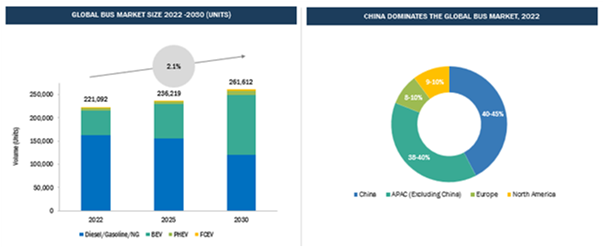
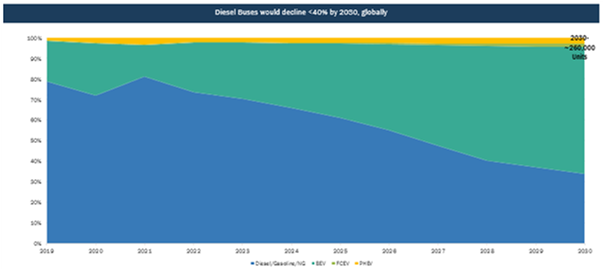
In 2022, the global bus market crossed 220,000 units, where electric buses share was slightly more than 25%. The electric bus share in the global bus market was ~20% in 2019. The growth in electric bus demand is due to two reasons – growing support from the government in terms of incentives & tax exemptions and aggressive targets set by countries to achieve 100% fleet electrification. China’s contribution to the global electric bus market in 2022 was >80%. According to an analysis by MarketsandMarkets, the global bus market is projected to cross 260,000 units by 2030, to which electric buses will contribute more than 55%.

  • FIGURE 1 GLOBAL BUS MARKET share by propulsion (INCLUDING CHINA), 2019–2030
Source: Secondary Research, MarketsandMarkets Analysis
China: The all-time leader

The overall China bus market contributed to >40% of the global bus market, whereas China’s electric bus demand was >80% of the global electric buses in 2022. The EV subsidies in China were set to expire in 2022. However, in June 2023, the Chinese government announced a substantial tax incentive package of 520 billion yuan (~USD 72 billion) over the next four years. Under this extended policy, New Energy Vehicles (NEVs) that are purchased in 2024 and 2025 will be eligible for a complete exemption from purchase tax (a maximum of 30,000 yuan (~USD 4,150) per vehicle). For 2026 & 2027, this exemption will be reduced by half (5,000 yuan (~USD 2,000)). This extension is expected to not only boost the sale of electric vehicles but also expected to boost the Chinese economy after the pandemic.

  • FIGURE 2 China Vs Global Electric Bus Market, 2022
Discover the impact of electric buses on public transport, zero emissions, and the challenges of charging infrastructure
Source: Secondary Research, MarketsandMarkets Analysis
European Electric Bus Market – Driven by CO2 Emission Targets

Heavy-duty vehicles (lorries, buses, and trucks) contribute to >25% of GHG emissions from road transport and more than 6% of total EU GHG emissions. Considering the same, European Commission proposed revising the Regulation on CO2 emission standards for heavy-duty vehicles. Previous targets were to reduce CO2 emissions to 15% by 2025 and 30% by 2030; however, with the new proposed targets, these are revised to a 45% reduction in CO2 emissions by 2030. These aggressive targets would help to achieve the EU’s 2050 climate neutrality target. To accelerate the faster deployment of zero-emission buses in cities, the EU also proposed to make all new city buses zero-emission as of 2030.

The European bus market crossed 19,000 units sale in 2022, representing ~9% of the global bus market. Europe’s electric buses contributed to 22% of the total European bus market, which according to an analysis by MarketsandMarkets, is projected to cross 50% by 2026. The European region is expected to achieve a >90% electrification of buses by 2030.

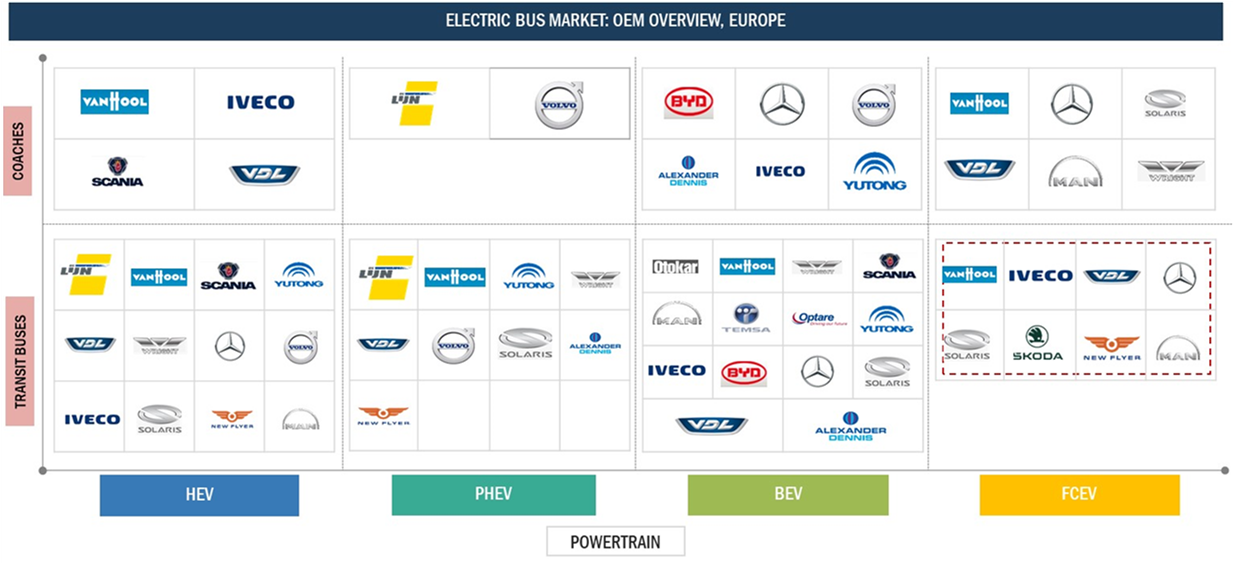
Both BEV and PHEV propulsions presently dominate the electrification in the European bus market. However, with time, the battery electric buses would have an edge in the European electric bus market. Also, the Transit and City buses largely dominate the European bus market, contributing to >65% of the total European bus market. Considering the new targets to replace all existing city buses with electric buses, this segment would achieve 100% electrification by 2030. Alternatively, the electrification in the other bus applications, such as coaches, & midi buses, would be comparatively lower.

The current European bus requirement is in 3 types – 9m (around 60 pax), 10-11m (75-85 pax), and 12m (100 pax). Considering the electrification of the buses, the ideal customer requirement can be the same as current ICE buses. However, electric buses’ most significant challenge is increasing drive range without decreasing passenger capacity.

For instance, Citaro Diesel has a passenger capacity of ~103 with a driving range of ~400 km. When operators replace the standard batteries with NMC batteries (~198 kWh), they reduce the driving range to <150 km and the passenger capacity to <80. To achieve a driving range of >250 km, engineers increase the battery power to ~400 kWh, which again reduces the passenger capacity to ~60.

Solid-state batteries (Citaro Solo) address this challenge by attaining a range of 320 km with a battery capacity of 441 kWh and a passenger capacity of 88 — an increase of 20 passengers compared to NMC batteries.

Six manufacturers — Yutong, BYD-ADL, Mercedes, IVECO, VDL, and Solaris — dominate the European electric bus market, contributing to >90% of total sales in 2022. Below is a quick overview of the key propulsion technologies available with these players.

Discover the impact of electric buses on public transport, zero emissions, and the challenges of charging infrastructure
Source: Secondary Research, MarketsandMarkets Analysis
Indian Electric Bus Market – Driven by CO2 Emission Targets

The Indian bus market crossed the 70,000 units mark in 2022, of which the electric buses were ~3%. The electric bus share in the total Indian bus market is expected to cross 20% by 2030. The Indian electric bus market is driven by central and state governments’ initiatives to promote electric commercial vehicles. In April 2019, the Government of India approved the Phase II of Faster Adoption and Manufacturing of (Hybrid &) Electric Vehicles in India (FAME) Scheme with an outlay of Rs. 10,000 Crore for three years. This phase aims to generate demand by supporting 7,000 e-Buses, 500,000 e-3 Wheelers, 55,000 e-Passenger Cars (including Strong Hybrid), and 1 million e-2 Wheelers. The scheme offers INR 20,000 subsidy per kWh for e-buses.

Using this subsidy, the state governments have targeted to convert their existing fleets to electric. Below is the list of orders for electric buses from a few state governments:

  • TABLE 1 list of orders for electric buses from indian state governments
Source: Secondary Research, MarketsandMarkets Analysis

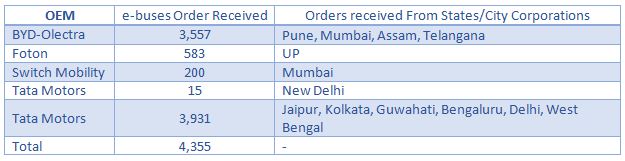
Most of these electric buses are transit/city buses, and a few are midi-buses. The only challenge with the Indian bus industry is that it heavily depends on China and foreign OEMs for battery technology. Also, the market is diversified with a few Indian OEMs like Tata Motors, Ashok Leyland (Switch Mobility), and PMI Electro Mobility. These three players contributed to ~40% of the electric bus market in India in 2022. BYD also has a significant presence in India, with >25% market share in 2022. Below are the future orders that these OEMs have bagged:

  • TABLE 2 electric bus orders received by OEMs in india
Source: Secondary Research, MarketsandMarkets Analysis

The Indian electric bus market in the future will be driven by Smart City projects, overall improvements in the road infrastructure, and investments in charging infrastructures. However, challenges such as raw material sourcing (especially for batteries), technology, and supply chain disruptions will still haunt the Indian electric bus industry for the next few years.

North America:

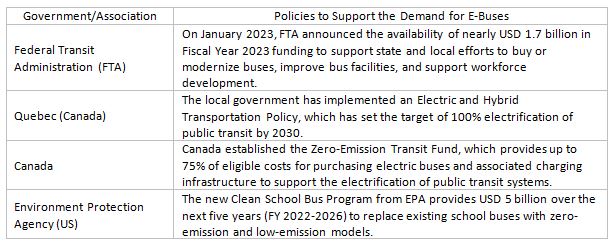
North America’s bus market accounted for 10% of the global bus market in 2022. Bus electrification in the region is at a nascent stage, where the contribution of electric buses in the total North America bus sales was ~4% in 2022. However, according to MarketsnandMarkets estimations, electric buses would contribute to >60% of the total bus sales by 2030. This growth is mainly due to government support in incentives and exemptions. For instance, On June 26, 2023, Federal Transit Administration (FTA) announced a funding of USD 1.69 billion for Low- and No-Emission Grants for Buses and Bus Facilities project selections. This would support 130 projects for people and communities in 46 states and territories. Also, EPA (Sept 2022) announced that it would double the funding awarded for clean school buses. The 2022 rebate program will fund ~2,500 school bus replacements.

Transit/City Buses and then school buses dominate the North American market. These two applications would have the highest potential for electrification. The number of electric buses in operation is growing rapidly, and government incentives are helping to make them more affordable. As the market grows, more innovative technologies and government incentives to make electric buses more affordable and attractive to transit agencies can be seen.

  • TABLE 3 Recent government initiatives to boost the demand for electric buses

Source: Secondary Research, MarketsandMarkets Analysis

The future of electric buses is bright. With continued investment in research and development, the technology of electric buses will continue to improve. As the cost of electric buses comes down and charging infrastructure becomes more widespread, there will be more electric buses on the roads in the future.

Author: Amey Amanaji, Associate Director, MarketsandMarkets Research Pvt Ltd.

Conquering Financial Barriers: Achieving Affordable Car Ownership in Kenya


In Kenya, the Automotive industry is facing new challenges due to the introduction of various taxes. As a result, aspiring car owners are finding it difficult to fulfill their dreams of having a vehicle. However, amidst these financial constraints, there is a promising solution that can turn car ownership into a reality – car financing.

With the constant fluctuation in exchange rates, the cost of imported goods, including cars, has skyrocketed, making it increasingly difficult for many Kenyans to buy a car outright. Nevertheless, car financing emerges as a convenient and affordable option for prospective car owners. By breaking down the cost of the car into manageable monthly installments, car financing makes owning a vehicle achievable, even during these challenging economic times.

[YUMPU epaper_id=”68357659″ width=”512″ height=”384″]

Purchasing a new car in cash can be a substantial financial burden. Fortunately, the evolution of the car financing space now allows buyers to spread the cost of a new car over an extended period, making it more affordable and manageable. With fixed monthly payments, car buyers can budget effectively and maintain control over their finances while still being able to drive the car of their dreams.

The unpredictable fluctuations in exchange rates have significantly impacted the cost of importing vehicles. However, opting for car financing through a trusted local partner like Autochek can help mitigate the risks associated with currency fluctuations. By doing so, buyers can lock in the price at the time of purchase, ensuring a stable and predictable payment plan that shields them from adverse effects.

ALSO READ: Motor Vehicle Financing – How to choose a budget friendly financing

Car financing from companies like Autochek also expands the range of vehicle options available to buyers. Instead of settling for a less desirable option due to budget constraints, financing enables individuals to choose a car that perfectly suits their needs and preferences. This not only enhances the driving experience but also ensures an investment in a reliable, fuel-efficient, and modern vehicle that will serve them well in the long term.

Speaking during a recent motorshow in Nairobi, Sam Amira, marketing and communications manager at Autochek said “In times of economic uncertainty, maintaining savings and investments becomes crucial. Car financing offers a way to avoid exhausting savings for a one-time purchase, allowing buyers to use those funds for other essential expenses or investment opportunities. This prudent approach helps safeguard their financial future while still fulfilling the aspiration of owning a new car.”

Another advantage of car financing is its potential to establish or improve credit history. Making timely payments and adhering to the financing agreement demonstrates financial responsibility and creditworthiness, which can be beneficial when seeking credit for other major purchases or investments in the future.

In these challenging economic times, owning a new car may seem daunting, but car financing empowers Kenyans to overcome financial obstacles and turn their dream of driving a brand-new car into a reality. From mitigating exchange rate risks to preserving savings and investments, car financing offers numerous advantages that enable individuals to navigate through uncertain times while achieving their goals.

As the economy evolves, embracing car financing through a financing company can be the key to unlocking new possibilities and prosperity in Kenya’s automotive industry, especially in these challenging economic times. Begin your pre-qualification journey with Autochek today and drive away with your car in just 24 hours!

By Sam Amira, Autochek Africa

Sono Motors launches first Bus with Solar Bus Kit


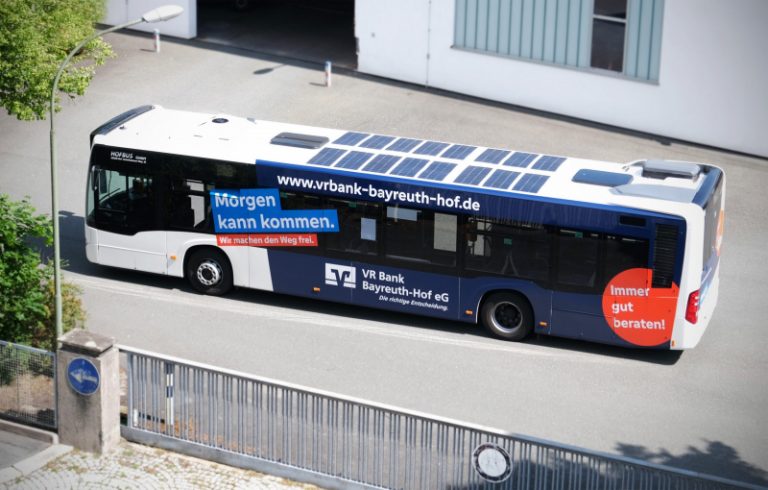
Sono Motors, the solar technology company has launched an innovative pilot project in public transportation in Hof in the north-east of Bavaria. A bus operated by Stadtwerke Hof was equipped with an updated version of Sono Motors’ Solar Bus Kit, a solar retrofit solution for buses.

The installation was carried out for the first time together with ÖPNV-Service Hagen. The expertise of the company extends to the areas of cabling, repair, maintenance and services for local public transportation. The company has more than 15 years of experience as a service provider for local public transport and modernises around 4,000 commercial vehicles every year.

[YUMPU epaper_id=”68357659″ width=”512″ height=”384″]

In Hof, a Mercedes-Benz Citaro C2 was equipped with 16 semi-flexible PV panels, the installed power of the modules in total is around 1.4 kWp. To install the modules on the roof of the bus, double-sided tape was used for the first time, with a total weight of only 50 kg for all materials used in the project. The solar power generated in this way is fed into the battery to support the conventional diesel engine and save CO2 emissions. The first HofBus bus with integrated solar bus kit from Sono Motors has been on the road in the city of Hof since it received road approval from the German Technical Inspection Agency (TÜV). To serve as a comparison, an identically constructed mild hybrid bus without a PV system is being simultaneously operated. These comparative figures will make it possible to optimally compare driving performance and energy consumption within a certain distance travelled.

Working together to make local public transportation emission-free

“We at Sono Motors are very pleased to partner with HofBus GmbH. We believe the installation of our Solar Bus Kit for the first time on a vehicle from the HofBus fleet will demonstrate what a quick, easy and cost-effective solution the Solar Bus Kit is for sustainable reduction of emissions from public transportation,” says Jona Christians, CEO and co-founder of Sono Motors.

“We are very excited about the results of the pilot project. We hope that it will serve as a model for other environmentally friendly mobility solutions,” explained Stadtwerke Hof Managing Director Jean Petrahn. The project is part of Stadtwerke Hof’s long-term strategy to promote the switch to electric mobility. The HofBus fleet is to be continuously converted to emission-free power trains in the coming years.

“We are proud to present our first project in cooperation with Sono Motors. We will continue to work with Sono Motors’ customer service and logistics in order to maximise production capacity in Europe and offer fast, professional retrofitting and maintenance. We are looking forward to future projects,” said Luca Bochhammer, Managing Director, ÖPNV Service.

FORWARD-LOOKING STATEMENTS
This press release includes forward-looking statements. The words “expect”, “anticipate”, “intend”, “plan”, “estimate”, “aim”, “forecast”, “project”, “target”, “will” and similar expressions (or their negative) identify certain of these forward-looking statements. These forward-looking statements are statements regarding the Company’s intentions, beliefs, or current expectations. Forward-looking statements involve inherent known and unknown risks, uncertainties, and contingencies because they relate to events and depend on circumstances that may or may not occur in the future and may cause the actual results, performance, or achievements of the Company to be materially different from those expressed or implied by such forward looking statements. These risks, uncertainties and assumptions include, but are not limited to the risks, uncertainties and assumptions set forth in the Company’s filings with the U.S. Securities and Exchange Commission (“SEC”), which are accessible on the SEC’s website at www.sec.gov and on our website at ir.sonomotors.com. Many of these risks and uncertainties relate to factors that are beyond the Company’s ability to control or estimate precisely, such as the actions of regulators and other factors. Readers should therefore not place undue reliance on these statements, particularly not in connection with any contract or investment decision. Except as required by law, the Company assumes no obligation to update any such forward-looking statements.

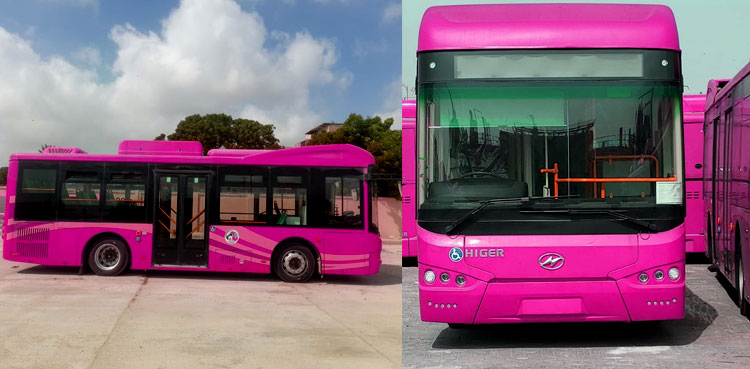
Sindh’s pink buses to have female drivers


The Sindh government has decided to initiate special programmes to train women how to drive buses, specifically for its flagship women-only pink buses project, The News reported.

Provincial Minister for Information and Transport Sharjeel Inam Memon approved the decision in the 10th board meeting of the Sindh Mass Transit Authority (SMTA) on Wednesday, along with other decisions taken in the previous meeting of the authority.

Memon told the meeting that the inclusion of female bus drivers would not only promote gender equality but also strengthen the sense of safety and security during women’s commutes.

[YUMPU epaper_id=”68357659″ width=”512″ height=”384″]

Empowering women in all fields was the vision of the Pakistan Peoples Party (PPP) Chairman Bilawal Bhutto Zardari, he added.

The meeting also considered providing subsidies for the People’s Bus Service following the approval by the cabinet.

The board discussed the feasibility studies for the second phase of the Peoples Bus Service, which includes the addition of 500 buses as well as the introduction of an environment-friendly electric taxi service.

Memon said that the implementation of the second phase of the People’s Bus Service is expected to significantly reduce travel problems for the people, bringing relief to the public.

The transport minister further stated that the introduction of an environment-friendly electric taxi service would not only create a positive environmental impact but also generate new employment opportunities.

Moreover, the SMTA board meeting also reviewed the progress of the Red Line Bus Rapid Transit (BRT) project.

The meeting was attended by Transport Secretary Saleem Rajput, SMTA Managing Director Kamal Dayo, Traffic Deputy Inspector General (DIG) Traffic Ahmed Nawaz Cheema, planning and development department representative Sikandar Shaikh and Karachi Transport Chief Executive Officer Tufail Paliju.

Source


- Advertisement -