
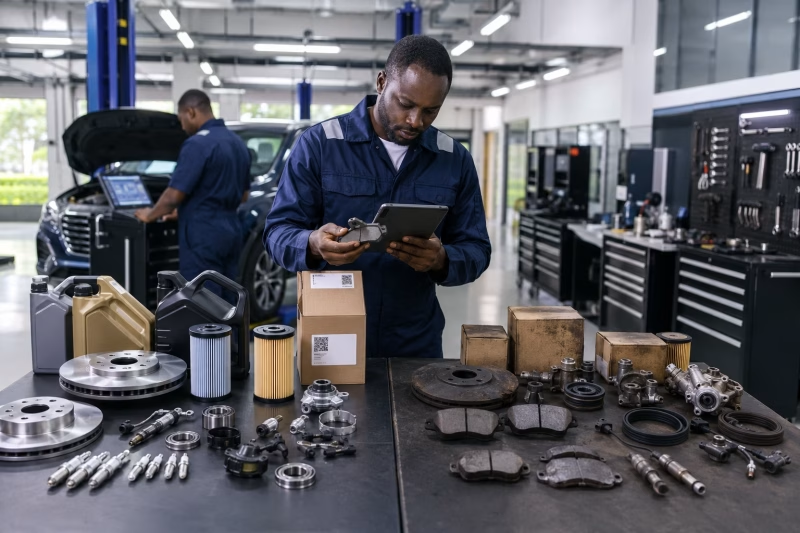
Millions of vehicles require regular servicing, replacement parts, and routine maintenance every year. Alongside this growing demand, however, the counterfeit automotive parts trade is expanding just as rapidly. Brake pads that resemble premium brands. Filters packaged almost identically to genuine products. Bearings, suspension components, spark plugs, electrical sensors, and lubricants bearing convincing labels. Counterfeiters have become increasingly sophisticated, making it far more difficult to distinguish fake products from authentic ones. This raises an important question: Can workshops really tell the difference between counterfeit and genuine automotive parts?
The answer is both reassuring and concerning. Experienced workshops can often identify obvious counterfeits, but today’s fake products are becoming increasingly difficult to detect without specialised knowledge, digital verification tools, and trusted supply chains.
Counterfeit Parts Have Become More Convincing
Years ago, identifying counterfeit parts was relatively straightforward. Poor packaging, spelling mistakes, inferior materials, and rough finishes often exposed fake products immediately. Today, counterfeiters invest heavily in replicating genuine packaging, branding, labels, serial numbers, holograms, and product finishes. Some fake parts even arrive in professionally sealed boxes that closely resemble original manufacturer packaging.
At first glance, many counterfeit products appear genuine. Unfortunately, appearances rarely reflect quality. A counterfeit brake pad may look identical to a genuine product while using lower-grade friction materials. A fake oil filter may fit perfectly but contain inferior filter media that fails to protect the engine. Counterfeit bearings, sensors, and suspension components may perform adequately at first but often fail prematurely under normal operating conditions.
Experience Still Matters
Professional technicians develop strong instincts through years of handling genuine components.
Many experienced mechanics recognise subtle differences, including:
- Surface finish quality
- Material consistency
- Product weight
- Casting precision
- Machining accuracy
- Packaging quality
- Label alignment
- Print clarity
- Manufacturing markings
These observations remain valuable, but experience alone is no longer enough. Counterfeit products continue to evolve, reducing the visual differences that workshops have traditionally relied on.
Price Can Be an Early Warning Sign
Unusually low prices remain one of the strongest warning signs of counterfeit products. If a premium component sells significantly below normal market value, workshops should investigate carefully before purchasing. Counterfeit suppliers often attract buyers through substantial discounts that appear too good to ignore.
However, purchasing cheaper components can quickly become expensive when premature failures result in warranty claims, customer complaints, repeat repairs, or damaged reputations. Professional workshops increasingly recognise that the lowest purchase price rarely delivers the lowest long-term operating cost.
Trusted Suppliers Make the Biggest Difference
Perhaps the most reliable defence against counterfeit parts begins long before installation. Reputable workshops increasingly purchase components only from authorised distributors, certified wholesalers, and recognised OEM supply networks.
Working with trusted suppliers provides several advantages:
- Product traceability
- Manufacturer warranties
- Technical support
- Reliable inventory
- Consistent product quality
- Faster recalls when necessary
Strong supplier relationships significantly reduce the risk of counterfeit products entering workshop inventory.
Technology Is Changing Product Authentication
Fortunately, manufacturers are responding with increasingly sophisticated authentication technologies. Many automotive brands now incorporate digital verification systems directly into product packaging.
These include:
- QR code verification
- Unique serial numbers
- Secure holograms
- Tamper-evident packaging
- Mobile authentication apps
- Blockchain-based traceability
- Digital product passports
Technicians can often scan a QR code using a smartphone to confirm whether a product originates from an authorised manufacturer. Some systems instantly verify production batches, manufacturing dates, and distribution channels, making counterfeit substitution far more difficult. Technology is becoming one of the most effective tools workshops have for combating counterfeit products.
Training Is Becoming Essential
Counterfeit detection is no longer solely the responsibility of purchasing departments. Modern workshops increasingly train technicians to identify suspicious products before installation. Manufacturers now provide technical seminars, authentication guides, online learning platforms, and visual comparison materials that help technicians recognise counterfeit indicators. Investing in continuous training protects customers while safeguarding a workshop’s reputation. As vehicles become more sophisticated, technicians must continuously update their knowledge—not only in vehicle repair but also in product authentication.
Counterfeit Parts Affect More Than Repairs
Many people view counterfeit parts primarily as a financial issue. In reality, they represent a major safety concern.
Poor-quality counterfeit components can compromise critical vehicle systems, including:
- Braking performance
- Steering control
- Suspension stability
- Engine reliability
- Electrical systems
- Airbag sensors
- Fuel delivery
A single counterfeit component can place drivers, passengers, and other road users at risk. For commercial fleets, equipment failures also increase downtime, operating costs, insurance claims, and lost productivity. Vehicle safety begins with component quality.
Customer Trust Depends on Transparency
Today’s customers expect more than technical expertise. They expect workshops to provide genuine parts, explain their recommendations, and stand behind the quality of every repair. Forward-thinking repair centres increasingly explain where replacement parts originate, why genuine components cost more, and how customers can verify authenticity themselves.
Some workshops even allow customers to scan authentication codes before installation. This level of transparency builds confidence and strengthens long-term customer relationships. In competitive markets, trust often becomes a workshop’s greatest competitive advantage.
Africa’s Growing Market Needs Stronger Protection
Africa’s expanding automotive sector creates enormous opportunities for manufacturers, distributors, and repair businesses. Unfortunately, growing demand also attracts counterfeit suppliers seeking to exploit supply chain weaknesses. Governments, customs authorities, manufacturers, distributors, workshops, and consumers all have a role to play in protecting the integrity of Africa’s automotive aftermarket.
Stronger enforcement, improved product traceability, continuous technician training, and greater public awareness will help reduce the circulation of counterfeit automotive parts across the continent. The businesses that invest in authenticity today will likely become tomorrow’s most trusted automotive service providers.
Winning with Authenticity and Expertise
So, can workshops really tell the difference between counterfeit and genuine parts? Increasingly, the answer is yes—but not through visual inspection alone. Experience remains invaluable, but it must now be supported by trusted suppliers, digital authentication tools, technician training, and stronger automotive supply chain transparency. Counterfeit automotive products continue to evolve. Fortunately, manufacturers are responding with more advanced verification systems, stronger supply-chain controls, and closer collaboration across the industry.
Ultimately, the workshops that consistently deliver safe, reliable repairs will be those that treat product authentication with the same level of importance as mechanical expertise. In today’s automotive aftermarket, identifying genuine parts is no longer just a purchasing decision— it is a commitment to road safety, technical excellence, customer confidence, and long-term business success.
For additional guidance on combating counterfeit automotive components and strengthening supply chain integrity, explore the resources available through the International Trademark Association (INTA), which provides valuable insights into brand protection, anti-counterfeiting strategies, and intellectual property best practices for global industries.
More Insights:
Counterfeit Auto Parts: A Silent Threat Growing Across Africa
Fake Parts, Real Accidents: How Counterfeit Auto Parts Are Endangering Lives in Africa
Counterfeit Parts in Fleets: A Profit-Killing Problem
How the Aftermarket Is Using Smart Packaging to Stop Counterfeiters
Counterfeit Automotive Lubricants: How Innovative Solutions are Crushing Counterfeits and Defend Quality

