

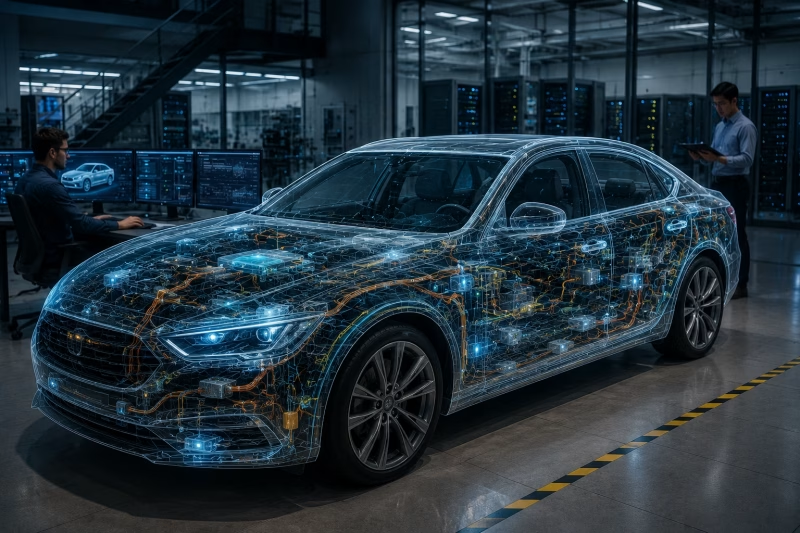
Your vehicle is no longer just a machine with an engine and wheels. It is a connected digital platform that relies on software, sensors, cloud connectivity, and wireless communication to make every journey safer, smarter, and more efficient. Features such as over-the-air software updates, smartphone integration, Advanced Driver Assistance Systems (ADAS), connected navigation, remote diagnostics, and fleet telematics have transformed the driving experience.
However, greater connectivity also introduces new risks. As vehicles become more digital, cybersecurity is emerging as one of the automotive industry’s most important safety priorities. Protecting connected vehicles from cyber threats is no longer only an information technology concern. It is becoming essential for protecting drivers, passengers, fleet operators, businesses, and critical transportation infrastructure.
For Africa, where connected mobility is expanding alongside digital transformation, building strong automotive cybersecurity practices today will help create a safer and more resilient mobility ecosystem for the future.
Modern Vehicles Are Computers on Wheels
A modern vehicle may contain more than 100 electronic control units (ECUs) that manage everything from engine performance and braking to steering, airbags, infotainment, and battery management. These systems constantly exchange data through internal communication networks while many also connect to external services through cellular, Wi-Fi, Bluetooth, or satellite technologies.
This digital architecture enables manufacturers to improve vehicle performance remotely, diagnose faults, optimize maintenance schedules, and introduce new software features without requiring workshop visits. While these innovations improve convenience and efficiency, they also create potential entry points that cybercriminals could attempt to exploit if security measures are inadequate.
Cybersecurity Is About Safety
When you hear the word cybersecurity, you probably think of computers or smartphones. Today, it also applies to the vehicle you drive every day. Automotive cybersecurity goes far beyond protecting personal information. It helps prevent unauthorized access to systems that affect your safety every time you drive. By protecting critical vehicle functions, manufacturers reduce the risk of interference that could compromise vehicle operation or passenger safety.
Manufacturers design multiple security layers to prevent malicious interference with critical systems such as:
- Steering
- Braking
- Acceleration
- Battery management
- Driver assistance technologies
- Remote access functions
Strong cybersecurity helps ensure these systems operate exactly as intended throughout the vehicle’s life.
Connected Vehicles Require Continuous Protection
Unlike traditional vehicles, connected vehicles continue communicating long after they leave the factory.
Manufacturers regularly deliver software improvements through secure over-the-air (OTA) updates. These updates improve functionality, introduce new features, correct software errors, and strengthen cybersecurity as new threats emerge.
This approach helps keep your vehicle secure throughout its service life without requiring frequent dealership visits. Just as you would not ignore a scheduled oil change or brake inspection, you should not ignore software updates either. They help keep your vehicle secure, improve performance, fix software issues, and strengthen protection against emerging cyber threats.
Fleets Face Growing Cyber Risks
Commercial fleets increasingly depend on digital technologies to improve efficiency. If you manage a fleet, connected technologies give you real-time visibility into vehicle location, fuel consumption, maintenance schedules, driver behaviour, and cargo conditions. While these systems improve productivity, they also increase the importance of cybersecurity.
A successful cyberattack could disrupt fleet operations, interrupt deliveries, expose sensitive business information, or create operational downtime. If you operate a fleet, cybersecurity should become part of your routine maintenance and risk management strategy. Connected fleet platforms improve efficiency, but they also require strong digital protection to safeguard operations and business data.
Electric Vehicles Depend on Secure Software
Electric vehicles (EVs) rely even more heavily on software than conventional vehicles. Battery management systems continuously monitor charging, energy flow, temperature, and performance. Charging stations communicate with vehicles to manage electricity transfer efficiently, while mobile applications allow owners to monitor charging remotely.
If you already own an electric vehicle or are planning to buy one, cybersecurity deserves as much attention as battery range and charging convenience. Secure software protects charging, battery performance, and communication between your vehicle and charging infrastructure. As electric mobility expands across Africa, strong cybersecurity will be essential for building consumer confidence and protecting charging infrastructure.
Artificial Intelligence Increases Both Opportunity and Responsibility
Artificial intelligence (AI) is becoming central to modern automotive systems. AI supports predictive maintenance, driver monitoring, collision avoidance, route optimization, and autonomous driving technologies.
These intelligent systems process enormous amounts of data every second. Protecting them from unauthorized access is essential to maintaining safe, reliable vehicle operation. To keep these systems secure, manufacturers invest heavily in encryption, secure software development, continuous monitoring, and vulnerability testing. Cybersecurity now forms an integral part of automotive software engineering rather than an afterthought.
International Standards Are Raising Expectations
Governments and regulators worldwide now recognize vehicle cybersecurity as a critical road safety issue. International standards now require manufacturers to integrate cybersecurity throughout vehicle design, production, operation, and end-of-life management.
These frameworks encourage manufacturers to:
- Identify cybersecurity risks early.
- Monitor emerging threats continuously.
- Secure software throughout the vehicle lifecycle.
- Respond quickly to newly discovered vulnerabilities.
- Protect customer data and connected services.
As African automotive markets continue integrating into global supply chains, compliance with international cybersecurity standards will become increasingly important for manufacturers, importers, distributors, and suppliers.
You Can Help Protect Your Vehicle
Manufacturers build security into modern vehicles, but you also play an important role. The good news is that a few simple habits can significantly reduce cybersecurity risks.
You can significantly reduce cybersecurity risks by adopting a few simple digital safety practices, including:
- Installing software updates promptly.
- Using strong passwords for connected vehicle apps.
- Downloading only official mobile applications.
- Avoiding unauthorized software modifications.
- Servicing connected vehicles through qualified technicians.
- Protecting personal login credentials.
Just as regular maintenance protects mechanical components, responsible digital habits help protect connected vehicle systems.
Africa Can Build a Secure Mobility Future
As connected mobility expands across Africa, governments, manufacturers, workshops, fleet operators, and vehicle owners all have a role to play in building a secure digital mobility ecosystem. Connected vehicles, intelligent fleet management, electric mobility, and smart transportation systems are rapidly becoming part of everyday life. By integrating strong cybersecurity into this growing ecosystem today, Africa can support innovation while protecting drivers, businesses, and critical transport infrastructure.
Governments, manufacturers, workshops, fleet operators, and vehicle owners all have a role to play. Together, they can build a secure connected mobility ecosystem that supports innovation while protecting people and businesses. Workshops can invest in technician training. Fleet operators can adopt cybersecurity management policies. Consumers can remain informed about safe digital practices. Taking these steps now will help create greater confidence in connected mobility while supporting innovation and economic growth.
Cybersecurity Is Driving the Future of Vehicle Safety
Vehicle safety has traditionally focused on stronger structures, airbags, seatbelts, and braking systems. While these innovations remain essential, digital protection is becoming equally important as vehicles become increasingly connected and software-driven. The future of automotive safety will depend on combining physical protection with digital resilience. Manufacturers that prioritize cybersecurity will strengthen customer trust, protect valuable data, improve vehicle reliability, and reduce operational risks.
Whether you own a family car, manage a commercial fleet, or are planning your next vehicle purchase, cybersecurity deserves the same attention as airbags, brakes, and seatbelts. By keeping your vehicle’s software up to date, using trusted applications, and following good digital security practices, you help protect your vehicle, your personal data, and everyone who travels with you.
For readers interested in global guidance on automotive cybersecurity and connected mobility, the International Organization for Standardization (ISO) provides valuable information on standards supporting safer automotive software and cybersecurity available at ISO/SAE 21434
Read More:
Cybersecurity Risks on Vehicle Tracking Systems
Automotive Softwares – Full Control For Your Car
The Role of Automotive Software in Enhancing Vehicle Safety
Smart Manufacturing is the Future of Automotive Manufacturing
Simba Corporation unveils new Ashok Leyland ECOMET Truck

