
For many fleet operators, engine oil is often treated primarily as a consumable replaced at scheduled service intervals. Once the oil change is complete, little attention is given to what the lubricant can reveal about the engine and its components. That approach is becoming increasingly difficult to justify.
Fleets face rising operating costs, expensive components, demanding delivery schedules, and growing pressure to improve vehicle availability while controlling total cost of ownership.
The New Lubrication Economy Is Changing the Mindset
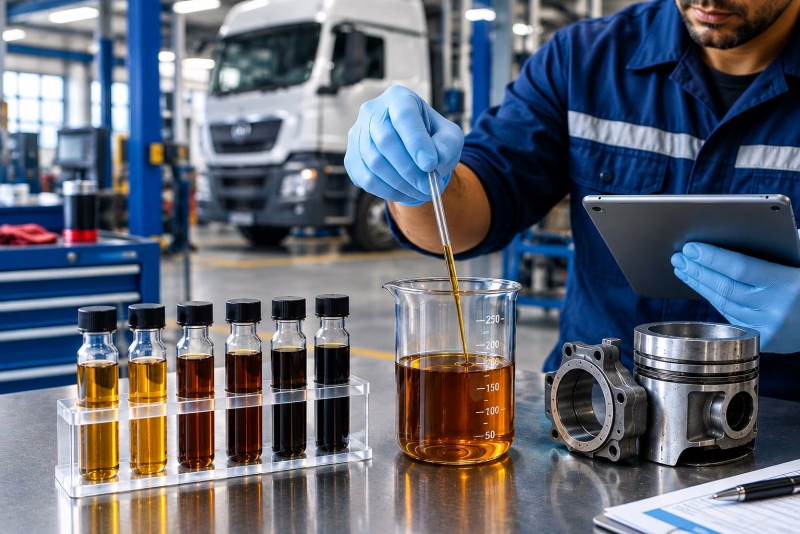
Instead of viewing oil solely as a consumable, fleet operators are increasingly recognising it as a source of valuable maintenance intelligence. A small oil sample can provide insight into what is happening inside an engine before problems become visible or result in an unexpected failure. As a result, oil analysis is becoming an increasingly valuable component of modern fleet maintenance.
Toon Van Grunderbeeck, Managing Director at Lubretec bv, explains: “Oil analysis should not be viewed simply as a test of the lubricant. It is a way of gaining insight into what is happening inside the engine before problems become visible or result in an unexpected failure.”
This distinction is important. A conventional oil change follows a predetermined maintenance schedule, while oil analysis provides additional information about both the condition of the lubricant and what may be happening inside the equipment. For fleet operators managing dozens or hundreds of vehicles, this information can support more informed maintenance decisions.
Wear Metals Can Provide an Early Warning
Unexpected component failure remains one of the biggest concerns for fleet managers. An engine failure can take a vehicle out of service, disrupt deliveries, increase repair costs, and create significant operational losses.
According to Van Grunderbeeck, a well-structured oil analysis programme can identify early signs of abnormal wear. Wear metals can indicate developing problems in components such as bearings, gears, and other moving parts.
An increase in wear metals does not automatically mean that a component will fail. However, a significant or sustained upward trend can signal the need for further investigation.
Van Grunderbeeck explains: “A trend showing increasing wear metals, for example, can provide an early warning that justifies further inspection or planned maintenance before a component fails in service.”
This gives maintenance teams an opportunity to investigate potential problems and plan corrective action before a breakdown occurs.
Contamination Can Accelerate Wear
Wear is only part of the equation. Dirt, coolant, water, and other contaminants can enter an engine and accelerate component deterioration. They can also reduce the lubricant’s ability to protect critical moving parts.
Van Grunderbeeck notes that oil analysis can detect contaminants such as dirt, coolant, and water. He explains that identifying contamination early can help prevent secondary damage while avoiding unnecessary lubricant and component replacement.
This is particularly important for vehicles operating in demanding environments. Dust, high temperatures, water ingress, poor storage conditions, and challenging operating conditions can all increase the risk of contamination. Rather than simply replacing contaminated oil and returning the vehicle to service, fleet operators should investigate the source of contamination and address the underlying problem.
Lubricant Condition Matters
Engine oil does not remain in the same condition throughout its service life. Heat, oxidation, contamination, mechanical stress, and operating conditions can gradually change its properties.
According to Van Grunderbeeck, changes in viscosity, oxidation, and additive levels can reveal when a lubricant is no longer providing the protection the engine requires.
This information can help fleets make better oil-change and maintenance decisions. Changing oil too early can increase lubricant consumption and maintenance costs. However, extending an oil-change interval without supporting condition information can increase the risk of lubricant degradation and component wear. Condition-based information provides a more informed approach.
Trends Matter More Than Isolated Tests
A single oil analysis can provide useful information, but its real value increases when results are tracked over time.
Van Grunderbeeck emphasises: “The key is to move from isolated oil tests to trend-based condition monitoring.”
This means sampling the same engine consistently and comparing results over successive intervals.
According to Van Grunderbeeck, regular sampling, consistent sampling procedures, and accurate interpretation allow maintenance teams to establish what is normal for each engine and recognise deviations early.
For example, a gradual increase in wear metals may be more significant than an isolated result that does not form part of a broader trend. Consistency is therefore essential. Fleet operators should follow standardised sampling procedures, maintain appropriate sampling intervals, and ensure that results are accurately interpreted.
From Oil Testing to Lubrication Reliability
Oil analysis should not operate as an isolated maintenance activity. Van Grunderbeeck describes it as one component of a broader Lubrication Reliability™ strategy that involves controlling contamination, selecting the right lubricant, applying it correctly, monitoring its condition, and using the resulting information to improve maintenance decisions.
This broader approach matters because oil analysis alone cannot compensate for poor lubrication practices. Using the wrong lubricant, storing lubricants incorrectly, introducing contaminants during filling, or neglecting filtration can undermine equipment reliability even when oil analysis is performed regularly. Fleet operators therefore need to manage the entire lubrication process effectively.
Turning Maintenance Data into Value
The real value of oil analysis comes from acting on the information it provides. Maintenance teams can use oil analysis trends to prioritise inspections, investigate abnormal wear, schedule repairs, and make better-informed decisions about lubricant replacement.
This can contribute to:
- Fewer unexpected breakdowns
- Better maintenance planning
- Longer component life
- Reduced lubricant waste
- Lower repair costs
- Improved vehicle availability
- Lower total cost of ownership
For commercial fleets, these benefits can directly affect profitability because vehicle downtime can quickly translate into lost revenue and disrupted customer deliveries.
Technology Is Strengthening Condition Monitoring
Oil analysis is also becoming part of a broader predictive maintenance ecosystem. Modern fleet maintenance programmes can combine lubricant analysis with telematics, engine diagnostics, vibration monitoring, sensor data, and digital fleet management platforms. This creates a more comprehensive picture of vehicle condition.
Instead of relying on one maintenance indicator, fleet managers can compare information from multiple sources to identify developing problems and determine where further investigation may be required. The result is a shift from maintenance based primarily on time or mileage towards a more condition-based approach.
Prevention Creates a Competitive Advantage
Fleet operators cannot eliminate every mechanical failure. They can, however, improve their ability to identify developing problems and act before those problems become more costly. That is where oil analysis provides a significant advantage.
Van Grunderbeeck summarises the benefit for fleets: “For fleets, this means fewer surprises, better maintenance planning, longer component life and, ultimately, a lower total cost of ownership.”
The lubrication economy is therefore moving beyond the simple question, “When should we change the oil?” to a more valuable question: “What is the oil telling us about the vehicle?”
The answer can provide valuable insight into wear, contamination, lubricant condition, and emerging maintenance needs. For fleet operators, oil analysis is therefore no longer simply a laboratory test. When used correctly, it becomes a practical decision-making tool that can support reliability, efficiency, and long-term cost control.
As Africa’s commercial vehicle and logistics sectors continue to grow, fleet operators face increasing pressure to maximise vehicle uptime while controlling operating costs. Turning lubrication data into maintenance intelligence can help them make better decisions, reduce avoidable downtime, and manage vehicles more efficiently.
The competitive advantage is not simply in changing oil at the right time. It is in understanding what the oil reveals—and acting on that information before a small warning becomes a costly failure.
More Insights:
Oil Analysis: How can it benefit your Bus fleet operations?
Key Indicators It’s Time for an Oil Analysis for your Heavy Trucks
Russian auto manufacturers look to East African Assembly Plants

