

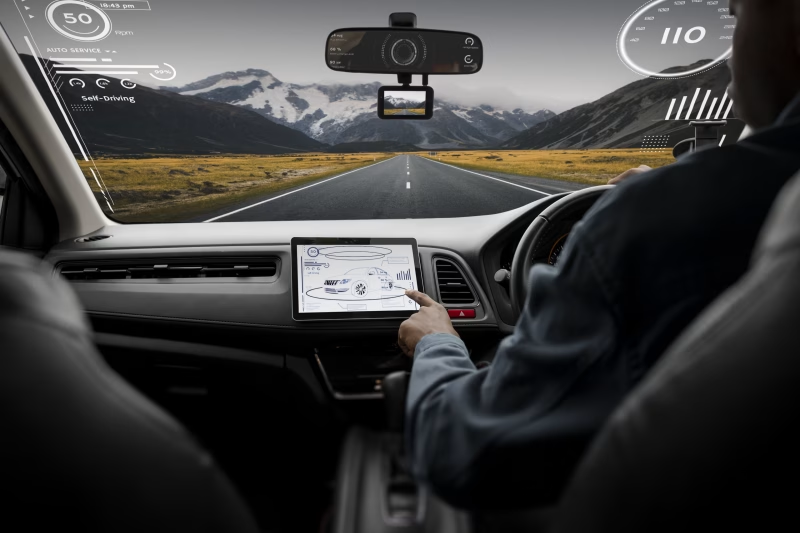
When you settle into the driver’s seat and turn the key, you are placing your trust in more than just an engine and four wheels; you are engaging with a sophisticated ecosystem of protective technologies. As a responsible driver, it is important to stay informed about the top innovations in car safety technology to ensure your own well-being and that of your passengers.
Here are the top 10 innovations in car safety technology, highlighting their importance in enhancing road safety and providing you with a better understanding of these cutting-edge advancements.
-
Automatic Emergency Braking (AEB)
AEB systems detect potential collisions and automatically apply the brakes if the driver fails to respond in time. These car safety technology systems significantly reduce rear-end collisions and are becoming standard in many new vehicles. Studies have shown AEB can reduce rear-end crashes by up to 50%.
Also Read: Auto Safety Innovations in Advanced Driver-Assistance
-
Lane Departure Warning and Lane Keeping Assist
Lane Departure Warning Systems (LDWS) use cameras or sensors to monitor the vehicle’s position within its lane. If the system detects that the driver is drifting out of the lane without activating the turn signal. The system alerts the driver that they are drifting out of their lane and can steer the car back into position. LDWS helps prevent accidents caused by unintentional lane departures, which are a common cause of collisions.
-
Blind Spot Detection Systems
Blind Spot Detection (BSD) is a safety feature that uses sensors or cameras to monitor the areas around your vehicle that are difficult to see with your mirrors. If another vehicle enters your blind spot, BSD will alert you with a visual or audible warning. These car safety systems monitor areas that are difficult to see and alert drivers when vehicles are in their blind spot. This technology improves awareness and prevents collisions during lane shifts.
-
Adaptive Cruise Control (ACC)
Adaptive Cruise Control (ACC) is an advanced driving assistance system that automatically adjusts a vehicle’s speed to maintain a safe distance from the vehicle ahead. It uses radar, LIDAR or camera-based sensors, to detect the speed and distance of the vehicle in front and adjust the throttle and brakes accordingly. This technology reduces driver fatigue during long drives and also helps prevent rear-end collisions.
-
AEB and ESC Systems
Automatic Emergency Braking (AEB) systems use the same sensors as Forward Collision Warning (FCW) systems to detect an imminent collision. However, AEB systems go a step further by automatically applying the brakes if the driver fails to react in time. This technology has shown to significantly reduce the severity of accidents and even prevent them altogether.
On the other hand, Electronic Stability Control (ESC) is a safety system that helps prevent skidding and loss of control during sudden maneuvers or on slippery roads. ESC uses sensors to monitor the vehicle’s speed, steering angle and wheel rotation. If the system detects that the vehicle is losing traction, it automatically applies the brakes to individual wheels and adjusts the throttle to help the driver maintain control.
-
Tyre Pressure Monitoring System
Tyre Pressure Monitoring Systems (TPMS) use sensors to monitor the air pressure in each tyre. If the system detects that a tyre is underinflated, it alerts the driver with a warning light on the dashboard. Proper tyre inflation is crucial for vehicle safety, as underinflated tyres can lead to reduced handling, increased stopping distances and even blowouts.
-
Advanced Airbag Systems
Airbags are a safety feature that has been around for several decades but continues to evolve and improve. Airbags are designed to deploy in the event of a collision, providing a cushion of air to protect occupants from impact. Modern airbag systems use advanced sensors and algorithms to determine the severity of a collision and deploy the appropriate number of airbags to provide optimal protection. They use sensors to detect the severity of a crash, the occupant’s size and position and whether they are wearing a seatbelt. Based on this information, the airbags deploy with varying force and timing to provide optimal protection. These advancements in automotive safety technology significantly reduce the risk of airbag-related injuries.
-
Adaptive Headlights and Night Vision
Adaptive Headlights are a car safety feature that uses sensors and advanced electronics to adjust the headlight beam pattern based on the vehicle’s speed, steering angle and weather conditions. This technology helps improve visibility at night by illuminating the road ahead more effectively, reducing the risk of accidents caused by poor visibility.
In contrast, Night Vision systems use infrared cameras to detect objects and pedestrians in low-light conditions. The system displays the images on a screen inside the vehicle, providing the driver with an enhanced view of the road ahead. This technology helps prevent accidents caused by limited visibility at night, especially in rural areas or on poorly lit roads.
-
Rearview Camera and Parking Assistance
Rearview Cameras are a car safety technology feature that provides drivers with a clear view of the area behind their vehicle when reversing. Rearview cameras use a camera mounted on the rear of the vehicle to display a live video feed on the vehicle’s dashboard or infotainment system. This technology helps to prevent accidents caused by blind spots or objects behind the vehicle.
With the parking assistance, advanced 360° camera systems give drivers a bird’s-eye view of their surroundings, making parking and low-speed maneuvers safer and easier, especially in tight urban spaces.
-
Traffic Sign, Pedestrian and Cyclist Detection Systems
This feature reads and displays road signs—such as speed limits and stop signs—on the driver’s dashboard, ensuring better compliance and heightened awareness. This detection feature helps drivers stay informed and avoid traffic violations.
Additionally, modern vehicles can now recognize pedestrians and cyclists in or near the vehicle’s path, providing alerts or even braking automatically to prevent accidents. The impact of this feature protects vulnerable road users, a key focus of global road safety strategies.
Also Read: The Role of Automotive Software in Enhancing Vehicle Safety
Driving Towards a Zero-Accident Future
The continuous pursuit of car safety technology is a testament to the industry’s commitment to protecting lives and making our roads safer for everyone. From real-time decision-making to machine learning, the future innovations promise even more robust protections for drivers, passengers and pedestrians alike. More sophisticated systems are yet to emerge, further reducing the risk of accidents and ultimately driving us closer to a future with zero fatalities on the road. The integration of these cutting-edge technologies is not just about convenience, it’s about saving lives. Everyone’s safety is the cornerstone of trust in transportation.

