Sunday, May 31, 2026
Home Blog Page 87

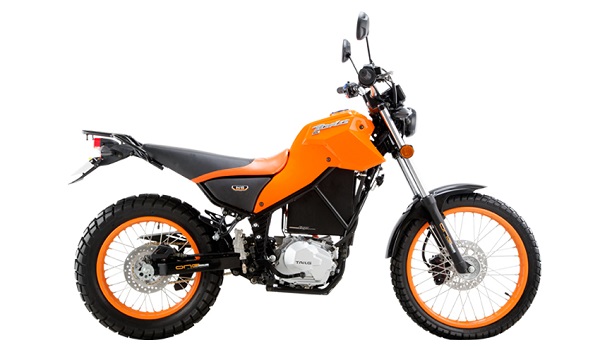
Chinese firm set to pilot electric motorbikes in Kenya


Chinese electric vehicle manufacturer TAILG Group said that it is set to pilot electric motorbikes in Kenya as art of its entry in the local market. Jayson Huang, an official with the group, said that the introduction will take place in the western inland port city of Kisumu in July.

“We intend to pilot 50 motorbikes in the city as part of our entry into the Kenyan market,” Jayson told journalists on the sidelines of the ongoing fourth session of the United Nations Environment Assembly in Nairobi.

Jayson said that motorbikes will contribute to the reduction of carbon dioxide as part of efforts to eliminate greenhouse gas emissions.

He said the company that is collaborating with the UN Environment Programme (UNEP) will be sending technicians to Kenya to help fix the equipment required.

The company that has plants in Chinese cities, including Dongguan, Wuxi, and Tianjin, plans to expand to Ethiopia and Uganda after setting base in Kenya.

Anyang Nyong’o, Governor for Kisumu County welcomed the company, adding that the project will help reduce pollution in the city.

Nyong’o said that such initiatives should be taken up as they help solve pollution and electricity problems and keep people healthy.

“The program comes at a time when we are working on a modern transport system that will help us decongest the city,” he added.

Rob De Jong, head of mobility unit at UNEP, said that the UN agency is currently working on a project that aims at integrating electric two wheelers and three wheelers into existing urban transport modes in developing countries.

“We are piloting and developing a comprehensive policy framework in Ethiopia, Kenya, Uganda, Philippines, Thailand and Vietnam,” he added.

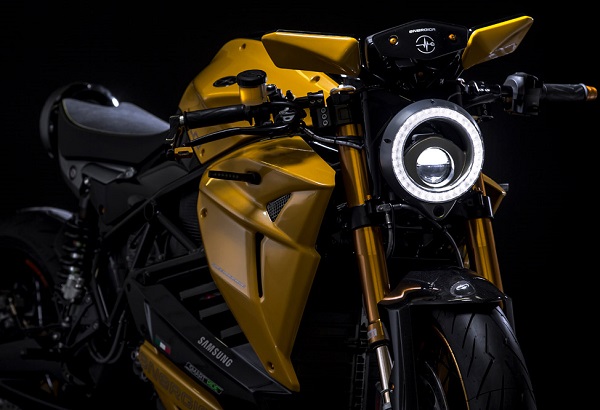
Samsung and Energica revolutionize the world of two wheels

0

Innovating to improve people’s lives, expand their experiences and support their passions by letting them do things that they could not do before. Setting out on a path that has not been explored to date, this innovation meets and revolutionizes mobility on two wheels. Samsung Electronics Italia, in collaboration with Energica Motor Company S.p.A., announces Smart Ride, a project that has as its aim a completely new riding experience.

In Italy, a country where motorbike market is growing (with a 4.3% increase in registrations during the first half of 2018), urban mobility on two wheels is a crucial subject, not only with a view to reducing emissions and easing traffic, but also in terms of technological development for the introduction of innovative solutions for motorcyclists.

The collaboration between Samsung and Energica, the first Italian manufacturer of electric motorbikes, fits into this scenario. This partnership originated from the companies’ shared values, such as great attention to quality, research and technological innovation. All these elements have allowed the development of a cutting-edge project, Smart Ride, which offers a new way of experiencing motorbikes. It is a solution which perfectly reflects the Do What You Can’t philosophy of Samsung: at the service of people and their passions, innovation lets them achieve objectives which otherwise would be completely out of reach.

At Samsung, we are aware that innovation can play a key role because it enables revolutionary projects with direct impact on everyday life. This is exactly the reason why we are committed to continue exploring new sectors, where ideas can be transformed into real projects thanks to technology,” explains Francesco Cordani, Head of Marcom at Samsung Electronics Italia. “With the objective of developing a solution of great importance and quality, we wanted to work with a valued brand in the world of two wheels like Energica which, thanks to its experience and innovative approach, represents a partner of excellence to start out on this journey with the creation of the Smart Ride project.

 “We are proud to be at the side of a global leader like Samsung in the Smart Ride project,” emphasizes Livia Cevolini, CEO at Energica Motor Company S.p.A. “Our corporate idea is firmly rooted in the well-known Italian Motor Valleyengines and innovation have always been in our DNA. Over the past few years, we have interpreted the market’s need by anticipating products and solutions that are unique in the world. We have gone beyond the status quo offered by current technology, creating a new know-how. By creating innovation. I hope that the Energica and Samsung visions connected in this new Smart Ride project can be an inspiration for electric mobility in Italy and beyond its borders.”

SMART RIDE: THE BOLID-E PROTOTYPE

The prototype conceived by Energica Motor Company for Smart Ride has been designed starting from the electric old-style Eva EsseEsse9, the newly proclaimed Best Electric Bike of the Year 2018. The result is “Bolid-E”, a speed machine which exalts the concept of speed as an emotion: a futuristic motorbike in which Samsung technologies and Energica expertise come together. The logo takes up this concept, showing, in the second letter, the graphic design of the headlights which, with their hollow profile, emphasize the sensation of speed and getting permeated by the wind. Bolid-E is the evolution of the key concept of Eva EsseEsse9: an alchemy of passion and tradition projected towards future at high speed.

SMART RIDE

Smart Ride, a project managed and developed in all its phases in Italy by Samsung and Energica, aims at making possible the interaction – through NFC and Bluetooth connectivity – between Samsung Galaxy Watch and the Energica motorbike, guaranteeing a brand new riding experience. The Energica motorbike is also fitted with intelligent mirrors. The Head-up Displays consist of two Samsung Galaxy A series devices integrated into mirrors which, thanks to the videos generated by the two cameras – one rear and one front – on the motorbike, revolutionize road safety, analyzing images in real time and warning the rider of any hazards and obstacles ahead.

FAR FROM THE MOTORBIKE

Thanks to the interaction with the Samsung smartwatch through the dedicated “Energica” app, the rider can control her/his Energica motorbike via Bluetooth, checking battery level and related autonomy, and displaying the position of the bike on a map (based on the integrated GPS module on the vehicle). It is also possible to display in real time the average consumption, the power supplied, information on the journey such as total and partial (TRIP) odometer and performance of the vehicle (Speed, Torque, Power, RPM). Through the Horn function, riders can sound the horn directly from the Samsung smartwatch to be able to locate their bikes or as a deterrent for criminals.

BEFORE SETTING OFF

Samsung and Energica are also revolutionizing the way the motorbike is started: through the interaction (NFC) between the Galaxy Watch and the vehicle, a virtual key can be created which allows, merely by putting the smartwatch near the tank, starting the motorbike. In addition, owners can share their virtual key with a selection of contacts from their address book. Before setting off, you can also set your destination and start recording the journey.

ON THE WAY

Smart Ride is a project that not only aims at innovating the riding experience, but also at guaranteeing a high level of safety on the road. Thanks to the intelligent mirrors – the Samsung Head‑up Displays – it is possible to see, without any distraction, useful information on the journey, such as possible obstacles, the presence of vehicles in blind corners or pedestrians on the road. Furthermore, while travelling it is possible to check the availability of AC or DC type charging stations nearby, thanks to the GPS module integrated in the Samsung Galaxy Watch.

RELIVE EMOTIONS AND SHARE PASSIONS

The Energica riding experience is characterized by speed and performance: by activating the Track Recording function, it is possible to virtually relive the emotions of the journey on your Samsung Smart TV thanks to videos recorded by the built-in cameras on the motorbike and data captured by the smartwatch. In addition, using Smart Ride, the Energica riders can share their passion with friends through the Track Sharing and Key Sharing features. With a view to guaranteeing safety that is as effective as possible, Samsung and Energica have implemented a remote monitoring system to track the motorbike when it is used by several people. It is possible to display on a map the current position of the user and her/his Energica motorbike, define a range within which the motorbike can be used and get notified when it goes too far away.

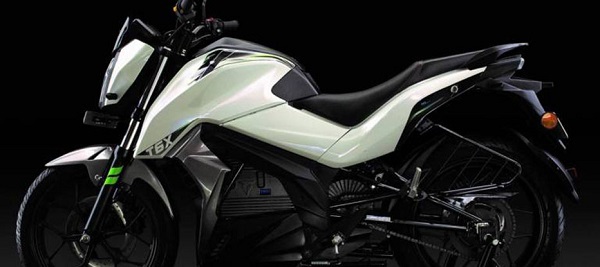
The Tork’s upcoming electric motorcycle

Tork T6X  Engine

As the T6X is an all-electric bike, it will be powered by a 6 kW or 8 BHP electric motor, which churns out a peak of 27 Nm of torque. This will be mated to an automatic transmission.

Tork T6X Chassis

The e-bike is built on the sturdy yet light-weight trellis frame, which incorporates its battery pack, among other electronics. It is also expected to have telescopic front forks and a monoshock at the rear.

Tork T6X Range

With a juiced-up battery, the Tork T6X has a claimed range of over 100 km. That coupled with a claim of up to 80% charging in just an hour, could be a severe threat to the current 200cc motorcycles.

Tork T6X Performance

As an 8 BHP motor powers the e-bike, it has a claimed top speed of 100 kmph, though actual road-tests are yet to be conducted. The bike is also equipped with Tork’s latest technology, TIROS (Tork Intuitive Response Operating System). This will allow the selection of riding modes that will alter the power delivery.

Tork T6X Pricing

When the bike was first revealed as a concept, it was slated to be priced around the Rs 1.25 lakh mark. Now, though the company has maintained the price figures, it would be safe to assume that the after sales service and availability of spares would not be an issue.

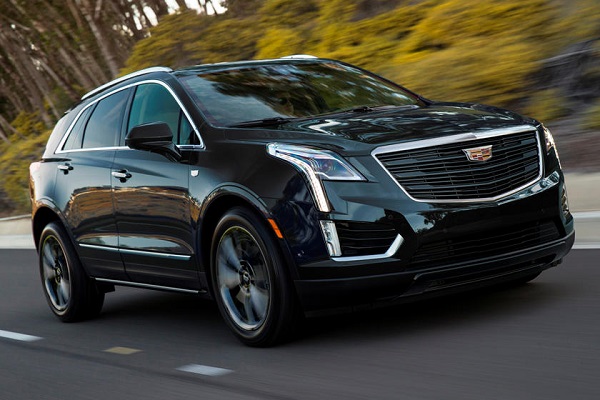
2019 Cadillac XT5 Gets A Sporty New Look


The 2019 Detroit Auto Show was only a month ago, but it feels like a distant memory. Now, the next event on the annual auto show calendar has opened to the media. No, not Geneva, but the 2019 Chicago Auto Show.

At the show, Cadillac has revealed a new Sport package for the XT5 that adds darkened exterior styling elements inspired by Cadillac’s new Sport models, giving the crossover a more aggressive appearance. “The new XT5 Sport package harmonizes styling cues from Cadillac’s new Sport models, first launched on XT4 and all-new XT6,” said Steve Carlisle, Cadillac president.

“It gives our best-selling XT5 a dark, aggressive appearance and expands customer choices within our successful crossover portfolio.”

The new limited-edition Sport package is offered on the XT5’s Luxury and Premium Luxury trims. Distinguishing elements include a gloss black grille with Galvano surround, LED headlamps, signature lighting and cornering lamps, neutral-density (clear) taillamp lenses, side-assist steps, 20-inch aluminum wheels with Technical Gray finish, and Sport pedals. Two interior color choices are also available: Cirrus/Jet Black with Diamond Cut aluminum trim or Jet Black with Diamond Cut aluminum trim.

Inside, the XT5 Sport package is equipped with the same features as the Luxury and Premium Luxury trims, including Adaptive Remote Start, a Bose eight-speaker audio system, leather-appointed heated front seats (heated and ventilated on Premium Luxury), automatic heated steering wheel and a programmable memory height power liftgate.

It also features an 8-inch-diagonal color touchscreen and available embedded navigation, which comes as standard with the Premium Luxury trim. Connectivity features also include Apple CarPlay and Android Auto capability, Cadillac Connected Apps and an available 4G LTE Wi-Fi hotspot with a 3GB/three-month data trial.

As with all 2019 Cadillac XT5 models, power is provided by a 3.6-liter V6 that produces 310 hp paired with an eight-speed automatic transmission. The 2019 Cadillac XT5 Sport Edition package costs $2,995 on the Luxury trim and $1,995 on the Premium Luxury trim.

In the US, the Luxury trim’s starting MSRP is $49,490 (including destination), with orders starting in the spring.


Mazda celebrates Miata’s 30th anniversary with new special edition


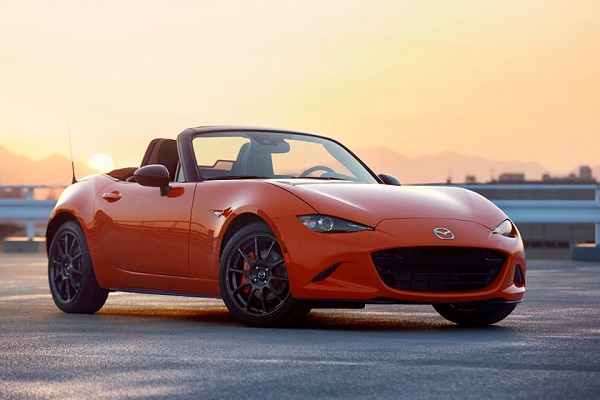
Mazda revealed a new model 30 years ago, that would revolutionize the affordable sports car segment, the MX-5 Miata. To celebrate the original Miata’s reveal at the 1989 Chicago Auto Show, Mazda has now pulled the wraps off the MX-5 Miata 30th Anniversary Edition at the same show. Limited to just 3,000 units worldwide including soft top and RF variants, after selling over one million units over 30 years, this 30th Anniversary Edition seems like the perfect tribute for such a legendary sports car.

So, what else do you get with this special model, besides an awesome shade of Racing Orange paint? The 30th Anniversary Edition also includes unique Rays forged aluminum wheels, a 30th Anniversary badge (with the production number out of 3,000), Brembo front brake calipers and Nissin rear brake calipers in orange, orange accents on the seats, door trim, dashboard, and shift lever, Recaro seats, Bilstein dampers (on manual models), Bose sound system with nine speakers, and Apple CarPlay/Android Auto functionality.

Mazda originally planned to use the yellow color found on the original 1989 Miata but wanted to go further than simply reusing an old color. The Racing Orange paint uses a precision blend of the pigments to create the optimum balance of chroma and brilliance.

The 30th Anniversary Edition also features subtle cues to celebrate the Miata’s heritage. Those wheels, for example, were co-developed by Mazda and Rays to look like the ones used in the Global MX-5 Cup race. Soft top Japanese specification models will use 16-inch wheels while all overseas models will use 17-inch wheels.

Power remains unchanged, so the car will continue to use a 2.0-liter four-cylinder SkyActiv engine producing 181 horsepower. Preorders are available now and with just 3,000 available globally (500 of which will be sent to the US), we suggest you get your order in quickly. Pricing starts at $34,995 for the soft top and $37,595 for the RF – the automatic transmission adds around $500 but please for the love of all that is holy, get the manual.


2020 Nissan Rogue Sport arrives with fresh Styling And Tech


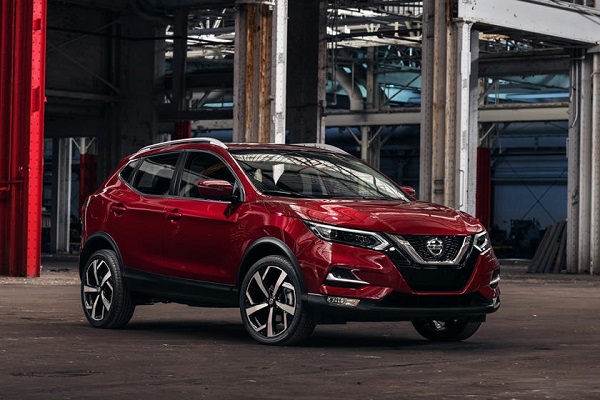
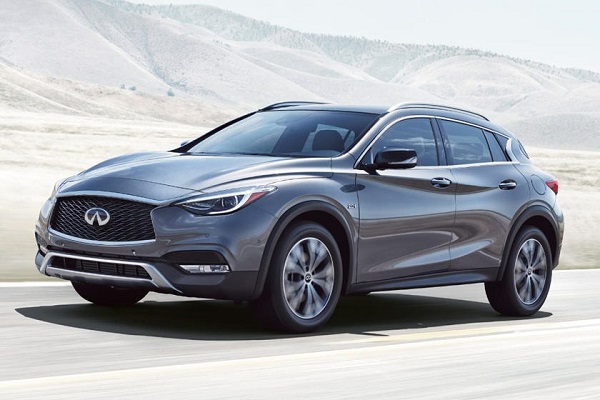
Two years ago, Nissan decided to bring over the Qashqai crossover from Europe. But since Americans likely couldn’t pronounce ‘Qashqai’ and the Rogue had just finished the year as one of the best-selling vehicles in the US, Nissan decided to rebadge it as the Rogue Sport. While this model has only been on the market for a few model years, it was released in Europe back in 2013 so a refresh is now in order.

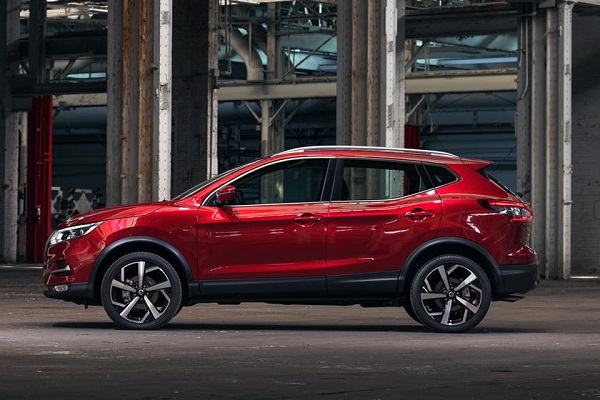
Nissan has revealed a refreshed 2020 Rogue Sport. This face lifted model includes updated front and rear fascias, revised trim levels and option packages, and a slew of new safety technology.

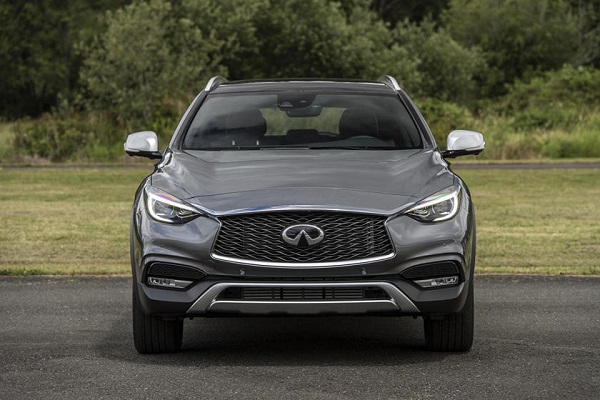
Nissan has attempted to further differentiate the compact Rogue Sport from its larger Rogue sibling with a new hood, Vmotion grille, and bumper, redesigned rear taillights, and LED daytime running lights. Nissan has also added a new 19-inch aluminum wheel design along with two new colors called Nitro Lime Metallic and Monarch Orange Metallic.


The biggest addition for the 2020 model year is the expansion of Nissan’s Safety Shield 360 technology to all trim levels. Safety Shield 360 was formerly offered on the SV and SL grades but will now be offered on the base S trim as well. This suite of safety features bundles in automatic emergency braking with pedestrian detection, rear automatic braking, lane departure warning, blind spot warning, rear cross traffic alert, and high beam assist.

The 2020 Rogue Sport will continue to offer Nissan’s ProPILOT Assist technology, which offers single-lane “hands-on” driving assistance. ProPilot is able to control the accelerator, steering, and braking under certain conditions to offer semi-autonomous driving. Nissan hasn’t made any changes under the hood, so a 2.0-liter four-cylinder producing 141 horsepower will be the only engine option sending power to front-wheel-drive or all-wheel-drive though a Xtronic transmission.

When we drove the 2018 Rogue Sport, we noted how acceleration felt adequate for the segment though we’d never object to a more powerful version. Pricing hasn’t been announced but we expect it to remain close to the 2019 model’s starting price of $22,240. Nissan says the 2020 Rogue Sport will arrive in dealers starting in fall 2019.

Say hello to the affordable Tesla Model Y SUV


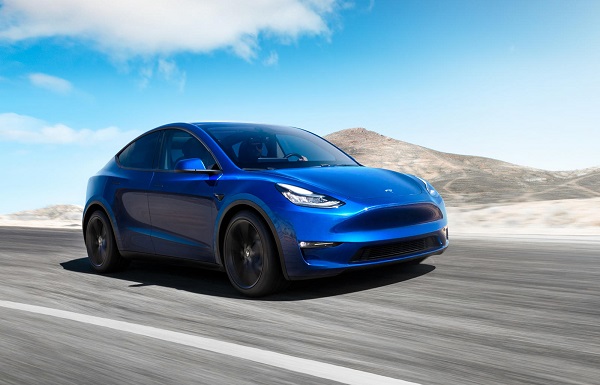
After a slew of teasers and a live reveal event that was wrought with delays, Tesla’s affordable crossover, the Model Y, is finally here. But it will be a while before you can have one on your driveway.

Telsa says the Long Range version, which is more expensive, won’t arrive until fall 2020. If you want the cheaper Standard Range model, you’ll be waiting until 2021. In the meantime, Tesla will be happy to take a $2,500 deposit to hold the car for you while it uses the money to build the Model 3 sedan.

Pricing for the base model starts at $39,000, for which you will get a 230-mile range and a 5.9-second 0-60 mph time. The Long Range model costs $42,700 and bumps the range up to an impressive 300 miles while dropping the 0-60 mph time to 5.5 seconds. There will also be a Dual Motor All-Wheel Drive version for $46,700, which only does 280 miles on a charge but improves the 0-60 mph time to 4.8 seconds. Finally, the $55,700 Performance Model matches the Dual Motor’s 280-mile range while dropping the 0-60 mph time to just 3.5 seconds.

Buyers will have their choice of five colors, though only Solid Black is a no-cost option. There are also optional 19-inch Sport Wheels for $1,500 to replace the base 18-inch Aero Wheels.

Inside, the Model Y looks pretty much identical to the Model 3. Much to our surprise, buyers can opt for a third-row seating package for $3,000. Just a warning, the three-row model won’t be available until 2021 and the seats look pretty cramped. Tesla’s Autopilot semi-autonomous driving features can be added for $3,000, while for $5,000 Tesla will offer “Full Self-Driving Capability,” which is currently waiting for regulatory approval.

Are you excited for the Model Y, or would you rather save the wait to buy one of the other affordable EV crossovers like the Kia Niro EV or Hyundai Kona Electric?

Here is what Volkswagen plans to reveal in 2019

0

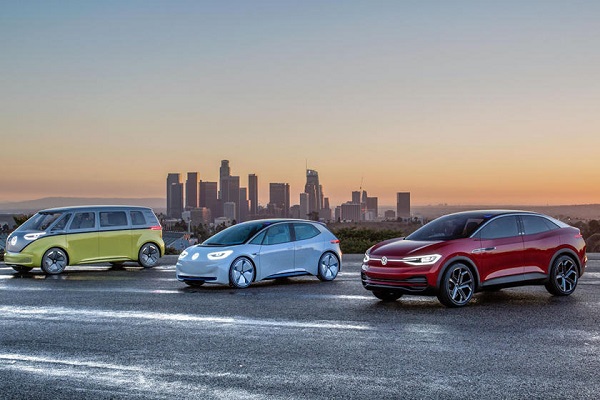
Even though we see countless spy shots and leaked images, automakers like to keep their future product plans as secretive as possible. Sometimes these product plans can be leaked out to the public and other times the automakers willingly release them. At Volkswagen Group’s annual press conference, the 12-brand group revealed its future plans, which include 70 fully electric models over the next decade. We are excited to see how VW reinvents itself as an electric automaker but for now, we wanted to focus on six new cars that were confirmed for a 2019 release.

The VW Group will launch over 90 models in 2019 and has officially confirmed what six of them will be. On the conventional side, VW will reveal a new five-seat SUV and Audi will introduce a new Sportback version of the sub-compact Q3. As we’ve seen from spy shots, Porsche will also introduce a Coupe version of its Cayenne SUV to rival the BMW X6 and Mercedes GLE Coupe. Finally, Bentley will be refreshing the Flying Spur, which should now come as a plug-in hybrid.

The final two models on the chart include new electric versions of the VW Bora and Lavida, which are both sold in the Chinese market only. The VW Group’s first wave of EV models, which arrive in the next few years, includes a long list of models in the VW ID lineup, Audi e-tron line, and derivatives of the Porsche Taycan.

VW also teased a second wave of vehicles, which will include 15 new EVs to reach a 22 million unit sales goal by 2025. This second wave remains a complete mystery, as none of the 15 models were shown or even hinted at during the presentation. At least we can look forward to seeing at least six new models in 2019, including the most highly-anticipated EV since the Tesla Model 3, the Porsche Taycan.

Infiniti to exit Western Europe in 2020

0

A report claimed that Nissan’s luxury division Infiniti is planning to exit the European market due to poor sales. At the time, a company spokesperson clarified that there was “no truth” in the report and that “Europe remains an important region for Infiniti.” However, it turns out these rumors were correct. Infiniti has officially announced a restructuring plan that includes withdrawing from Western Europe in early 2020.

As part of this plan, Infiniti will shift its focus to its largest growth markets in North America and China while continuing its smaller operations in Eastern Europe, the Middle East, and Asia, which “continue to grow.”

Models Production

Infiniti will also cancel production of the Q30 and QX30 crossovers at its manufacturing plant in Sunderland, UK. Production of these two models will end by the middle of 2019. Infiniti announced plant management will “discuss any impact on the plant with employees and their representatives.”

Also Read: Nissan gives Japan version of Infiniti Q50 self-driving upgrade

The automaker also promises to find alternative opportunities for any employees affected by its withdrawal from Western Europe. Once the process is complete, Infiniti will shut down all its franchise agreements in the region, “providing the support and services necessary to ensure a smooth transition.”

Diesel Models

Moving forward, Infiniti will electrify all new cars by 2021 and discontinue all of its diesel offerings. The company will place more focus on its SUV lineup in North America. Additionally, they will bring five new vehicles to China over the next five years. Infiniti will “work to improve quality of sales and residual value, and realize more synergies with Nissan Motor Company.”

” Infiniti hopes these changes will enable it to “become a top challenger brand in the premium segment.”

Sadly, Infiniti’s exit from Europe doesn’t come as a huge surprise. The luxury division launched in Europe back in 2008 to compete with its more established luxury German rivals, but sales have been steadily declining. According to data released by Carsalesbase, Infiniti sold 13,775 units in Europe in 2016, but this figure dropped to 12,571 in 2017 and 6,250 in 2018.

Read More: 

Easy Car Maintenance Tips


We have grown so accustomed to using cellphones, TVs, computers, and home appliances that need no regular maintenance and are simply replaced when they stop working that we often assume our vehicles are just as maintenance-free and reliable. Because we stay so busy every day, we often overlook the care our cars truly need.

But modern vehicles aren’t electronics. Rather, they’re incredibly complex machines—mechanical devices made of thousands of parts, many of which move up, down, or around. And of course, they roll on inflatable rubber tyres. Some of these components need occasional attention to keep them operating properly, and others eventually require replacement.

The Value of Regular Maintenance

There are many reasons to take care of your daily wheels. Regular maintenance is quick, easy, and cheap, while major repairs are expensive. It’s also comforting to know that your car, SUV, or truck is in good shape regardless of its age or mileage, with no need to worry about delays or breakdowns on long trips or your commute. Well-maintained vehicles last longer and hold more of their resale and trade-in value than neglected ones. In other words, take care of your car and it will take care of you.

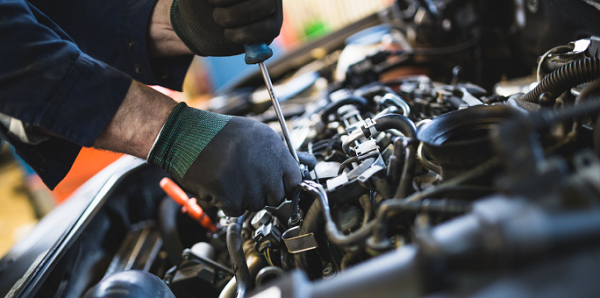
The good news is that you don’t have to be a car enthusiast or even marginally mechanically inclined to keep your car in top shape. And it takes hardly any time. Here’s a list of six easy things to check that have the potential to prevent costly problems and keep your vehicle humming happily for many years. We’ve provided illustrations to help you find the components under the hood that need to be examined. But it’s always a good idea to read your owner’s manual to locate these items on your particular vehicle and to know the manufacturer’s service recommendations for them.

Building a Routine That Works

We suggest you start by inspecting everything on this list the first time through to make sure your car is ready to go. Beyond that, it’s all about periodic checks and maintenance—such as oil changes—as dictated by the owner’s manual and common sense.

Also Read: Oil Maintenance and Monitoring of Commercial Bus Fleet

How’s the Oil Level?
Oil is the lifeblood of your engine. Oil lubricates all the moving parts in your car’s engine, so you never want to let it run low. Almost all modern car engines are built and sealed so well that they do not consume a significant amount of oil between recommended oil and filter changes. But you won’t know for sure if your car is an exception to the rule unless you check. Or maybe you drive an older car that does use some oil. Here’s how to check your oil:
  • Make sure the engine is off.

Open the hood. The release is usually found under the driver’s-side dash; the safety catch is under the lip of the hood.

  • Find the (usually well-labeled) engine-oil dipstick, and pull it out.

(It’s often yellow, for easy spotting.) Wipe the end with a clean cloth, replace the dipstick fully back into its sheath, and pull it out again.

  • Now look at the tip; the markings indicate a range from full to one-quart low.

You will see a light coating of oil on the end of the dipstick. If it’s between the minimum and maximum lines, you’re good. If it’s at or below minimum, add a quart of your vehicle’s recommended oil. (You’ll find that listed in the owner’s manual.)

  • You add oil by twisting off the cap marked with the oil-can symbol
(which often also has the word “oil” on it) that sits in plain view atop the engine and pouring in a quart of oil.
  • Be sure to wipe any drips off the engine; oil can smoke when it gets hot.

Your engine doesn’t just need enough oil, it needs clean oil. So be sure to get the oil and oil filter changed at the mileage intervals recommended in the owner’s manual.

Also Read: How Often Should I Change Engine Coolant

Make Sure You Have Windshield-Washer Fluid
  • The windshield-washer reservoir is located under the hood.
  • Washer tanks often use translucent plastic, allowing you to check the level visually. However, many sit tucked out of sight, so you can’t tell how full they are unless you fill them to the brim.
  • Pop the reservoir cap. It’s marked with the icon of windshield-wiper spray. Fill the reservoir with washer fluid.
  • Do not use pure water; freezing temperatures will cause the water in the reservoir to turn to ice, rendering your wipers useless. Commercial washer fluid has alcohol in it that keeps it from turning solid in all but Alaskan-winter temperatures.
Check the Tyres’ Air Pressure

Newer cars have a tyre-pressure warning light to let you know that your tires are low on air, but older cars do not. In any case, it’s best to purchase a tire-pressure gauge at an auto-parts store for a few dollars and check your tyre pressures to make sure they’re set correctly. Here’s what you need to know:

  • A sticker on the driver’s door pillar lists the proper inflation pressure for when the tyres are cold (meaning that you haven’t yet driven on them that day).
  • If you set the pressures after driving for more than a few miles, raise them by three pounds per square inch because tyres warm up and their pressures increase during driving.
  • Check your tire pressures once a month for a couple of months. If the pressures remain steady, you can check them quarterly, as you know the tires are holding air.

Also Read: How Can I Tell My Radiator is Leaking

Is the Radiator Full?
The radiator contains coolant that keeps your engine’s temperature under control, and it can be checked visually. Here’s how:
  • Find the coolant reservoir under the hood. It’s made of translucent plastic, marked with “min” and “max” lines, and is, in all likelihood, holding a green fluid.
  • When the engine is cool, the coolant level should reside between the lines.
  • If it’s low, buy some antifreeze and top it off.
  • Never attempt to refill the cooling system through the radiator cap! If the engine is warm, loosening the radiator cap—the black cap located atop the radiator as shown in the illustration above—can cause it to spit back scalding water. Always refill through the reservoir, which is not under pressure.
  • If the coolant is low during your initial check, recheck it monthly. If it keeps disappearing, you have a problem and need to bring the car to a dealer or repair shop.
  • If the coolant level remains in the zone, you’re good to go for a long time. Coolant lasts for years, but not indefinitely. Replacing it is a job for a repair facility. Check your owner’s manual to see how often the manufacturer suggests it be replaced.

Also Read: What to Do If You Suspect a Leak in Your Vehicle’s Fluid System

Brake-Fluid Check

When you push on the brake pedal, you are pumping brake fluid through the system to the brakes. For most cars, the brake-fluid reservoir is translucent plastic, so you can see if it’s full. And like most other systems, today’s brake systems are well sealed and almost never leak. Here’s how to check the brake-fluid level:

  • If the brake reservoir is full when you check it, your brake system has integrity.
  • If fluid is low, purchase brake fluid and refill the reservoir.
  • Check it weekly. If the fluid level continues to go down, however slowly, take the car to a repair facility. You have a problem that can make driving dangerous.
  • Like coolant, brake fluid ages over time and requires replacement at regular long-term intervals. Check your owner’s manual to determine the recommended mileage for replacement, and have a qualified shop perform the service.

The other brake items that wear out are the brake pads. Pads can last for 20,000 miles or more—sometimes much more—depending on your car and driving conditions. However, checking this at home isn’t easy. When a car is under warranty, technicians usually inspect the brake pads as part of routine scheduled maintenance.

Checking Brake Pad Condition

If you drive an older car, you’ll need a shop (or a mechanically inclined friend who knows brakes) to establish how much meat there is on the pads. It’s valuable to know the remaining pad life because you want to anticipate when you’ll need to replace them. If you wait too long, the pad linings can wear through to the metal backing plates and do big damage to the car’s brake rotors. So get a handle on remaining brake-pad life.

Need Tyres?

Tires are the all-important connection between your car and the road. You don’t want to let them wear until they’re bald. At that point, the tires act like water skis on wet roads and ride on a thin film of water, making it much easier for the driver to lose control. Tread should be visible across the tyre. Better still, use a penny to check if the depth of the tread is adequate. Here’s how:

  • Insert the edge of the penny into the tread

Making sure Lincoln’s head is upside down (the top of the president’s head should be touching the tread), with the head facing so you can see it.

  • If you can see all of Lincoln’s head

The tread grooves are too shallow (about 2/32 of an inch or less) to drive in wet weather; those grooves channel rainwater away and keep the tyre in contact with the road. Replace your tyres!

  • If you’re unsure about whether the tyres are due for replacement

See a tyre dealer. It’s also a good idea to rotate your tyres front to rear annually to even out the wear. And if you live in the cold-weather states, it’s smart to invest in a set of winter tyres.

That’s the easy stuff, and if all you do is occasionally check these six areas, you’ll be fine a long way down the road—literally and figuratively. Leave the rest to the experts.

- Advertisement -