Sunday, May 31, 2026
Home Blog Page 79

2019 Audi S4 Gets New 3.0 TDI With 347 HP


After the SQ5 SUV and S5 Coupe/Sportback, Audi has also updated the S4 with its new TDI powerhouse, making the most potent diesel in this segment. The S4 sedan and Avant compete with the BMW M340i, M340d, and Mercedes-AMG C43. Even though switching to a diesel seems like career suicide, we think Audi’s decision is the right one, particularly as fans of the quattro brand have always enjoyed some extra torque. We’ve even heard some crazies who say TDI sounds better than anything else.

Also Read: Audi approves Hydrotreated Vegetable Oil for use in V6 diesels

The 3-liter V6 is the same one as before, capable of delivering an impressive 347 HP (255 kW) at 3,850 rpm and 700 Nm (516 lb-ft) of torque between 2,500 and 3,100 rpm. Besides normal turbocharging, the motor also uses a 48-volt electric system to power an electric compressor.

Also Read: Audi and KIT are working on recycling method for automotive plastics

Because it’s more frugal, the TDI will be the only version of the S4 and S4 Avant in Europe. The line that includes gasoline-powered legends like the supercharged V6 and the 4.2 FSI ends here.

Audi claims that the TDI-powered S4 sedan gets to 100 km/h in 4.8 seconds while the Avant needs 4.9 seconds, both being one tenth of a second slower than with TFSI. The vehicle delivers strong fuel economy, rated at around 6.2 l/100 km (45.6 mpg UK), which corresponds to CO2 emissions of about 162 grams per kilometer. At the moment, we don’t have pricing information, but we can expect a price increase of at least a couple of thousand euros.

Also Read: Verizon Inks First 5G Automotive Deal with Audi

Otherwise, it’s the usual handsome but understated Audi, which got mild updates last year. It’s beginning to show its age, which is why the company is currently working on a major facelift with fresh headlights and maybe even a new dashboard, which is the main thing holding the A4 family back.

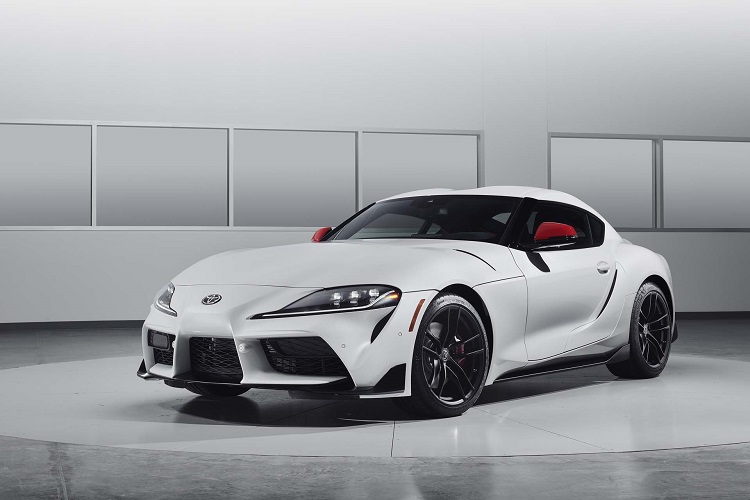
Toyota Supra coming to the U.S. in Four-Cylinder Guise


It’s been nearly half a year since the 2020 Toyota Supra was revealed, and in all that time we’ve only heard that North America is only getting the 335-hp 3.0-liter turbo I-6 version. A certification we discovered on the Air Resources Board (ARB) website has revealed that a 2.0-liter turbo I-4-powered Supra has been certified for sale in California, along with the BMW models that share its engine.

Toyota will offer the Supra with a four-cylinder engine in its home market of Japan. Two states of tune are available, 194 hp and 236 lb-ft of torque, and 255 hp and 295 lb-ft. If those sound familiar, it’s the same exact output as the mechanically related turbo-four BMW Z4 roadster. The same engine is also used in the base 2019 BMW 3 Series. An eight-speed automatic is the only transmission listed in the Supra’s certification, so it’s likely that will be the less powerful Supra’s exclusive gearbox choice just as it is in Japan. Having a smaller engine under the hood should also result in a lighter Supra and better weight distribution versus the six-cylinder-powered car.

With the BMW-sourced 2.0-liter turbo-four certified, the arrival of a less powerful, more efficient and cheaper Toyota Supra in North America is imminent. Adding a four-cylinder model will likely lower the price tag down to somewhere in the mid- to high-$40,000 range, which would put the turbo-four Supra in close proximity to uber sport compacts like the Subaru WRX STI and Volkswagen GolfR, and V-8-powered pony cars such as the Chevrolet Camaro SS and Ford Mustang GT. The six-cylinder-powered model’s $50,920 starting price means the sports coupe is out of the average consumer’s reach. In terms of fuel economy, the 2020 Supra is surprisingly efficient at 24/31 mpg city/highway with the six-cylinder engine. A 2.0-liter turbo-four could improve on those numbers even more.

The four-cylinder-powered Toyota Supra could be a late addition since the first iterations coming to the U.S. are all powered by the 3.0-liter turbo I-6. For those looking at the 86 but want more power and torque, the Supra will likely be a new option provided you can stomach the higher price tag. The previous-generation Supra was available with a choice of a naturally aspirated or turbocharged I-6, the former being the more attainable model.

Toyota has commented on our findings, with a spokseperson stating that, “BMW took steps to certify an engine for a variety of uses. At this point, Toyota’s plans for the Supra in the U.S. include only the 3.0-liter inline six that will be in the 2020 Supra when it goes on sale this summer.” With that said, we suspect that the 2.0-liter turbo-four is still coming to the North American-spec Supra—just not this year. The turbo-four option could arrive sometime in 2020. Though Toyota offers two turbo-four engines in Japan, expect the more powerful 255-hp, 295-lb-ft version to come to North America to serve as the Supra’s new entry-level model.

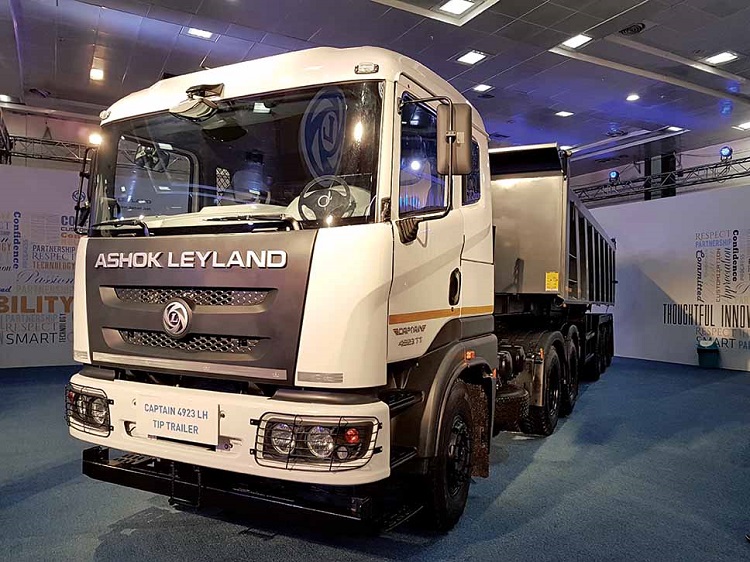
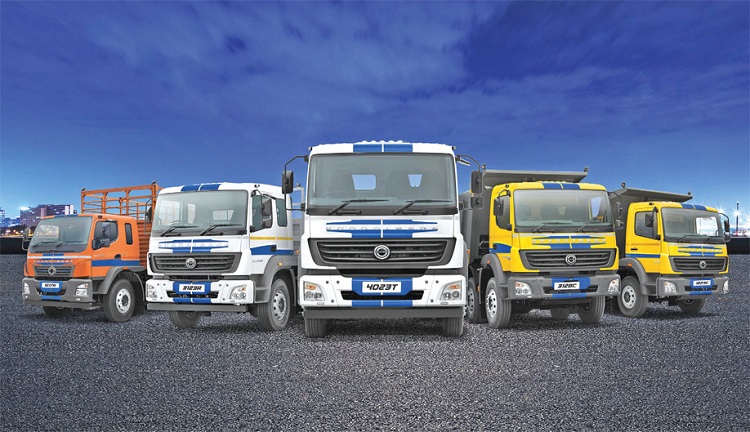
Ashok Leyland eyeing CIS countries, Africa for setting up assembly plants

0

Commercial vehicle major Ashok Leyland is looking to set up more assembly plants overseas, including the CIS region and African countries, as part of plans to scale up its global operations, a top company official said.

The company is banking on its new range of medium and heavy commercial vehicles (M&HCV) and light commercial vehicles (LCVs) to help it enter new regions beyond its traditional stronghold such as the Middle East, SAARC countries and pockets of Africa.

The Chennai-based Hinduja flagship firm is in the process of developing a new modular platform on which it plans to roll out its future medium and heavy products from next year.

The company, which has earmarked a capex of Rs 1,500 crore for various projects during the current fiscal, is also working on a separate platform for light commercial vehicles (LCVs). The company expects to roll out the new range of products from April next year.

Brand Solutions

“In some markets where volumes are promising we can also put some assembly plants. But these would be established in a very cost effective manner, rather putting up large manufacturing facilities,” Ashok Leyland Chairman Dheeraj Hinduja told PTI in an interview.

When asked if the company has identified some of the countries where it would like to set up such units, he said: “In Africa, we have looked at Kenya and Ivory Coast. Both these countries are quite significant. We are considering some of the CIS countries as well.”

Hinduja said the company in some places might even consider partnerships whether it is local body builders or people who might already have existing units.

The new product range would add a lot more thrust for the company in new markets.

“Our traditional markets have been the Middle East, SAARC countries and pockets of Africa. With the LCV and ICV range (Boss and Guru) we will be able to enter ASEAN market as well. Putting all this together with new range we see the growth in international markets coming in a much stronger way,” Hinduja said.

The company, which currently exports 10-12%  of its total production annually, expects the overseas shipments to rise up to 20 per cent over the next five years driven by new range of products and entry into new markets.

“We see it (exports out of total production) slowly move up to 15 per cent, even moving up to 20 per cent in the longer term. I would say within a time frame of five years we should get to 20 per cent,” Hinduja said.

Ashok Leyland currently has manufacturing operations across nine countries, including the UAE, Bangladesh, Sri Lanka, Nigeria and the UK.

The company is now among the top ten truck makers globally, besides being among the top five bus makers globally.

KeNHA emberk on technology to curb truck overloading


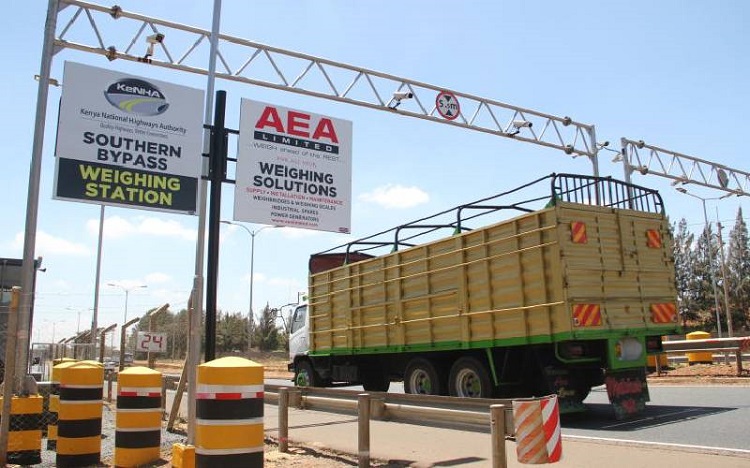
The Kenya National Highway Authority (KeNHA) has announced plans to set up 15 additional Virtual Weighbridge Stations (VWS). The move seeks to boost efficiency in the monitoring of commercial vehicles.

It will also raise the number of Virtual Weighbridge Stations to 25, with KeNHA having begun operations of such stations last year. Areas mapped out for the stations include Salgaa, Yala, Mukumu, Malaba, Kitale, Mulot, Kajiado, Emali, Masii, Malili, Kibwezi, Mwatate, Nuno, Bondo and Sabaki. The stations, which do not require physical manning will collect and transmit data for analysis to the control centre located in Mlolongo, Athi River.

Trucks step on highspeed weigh-in-motion sensors with independent scales that transmit the average weight to the computers. From the system, one can know the speed of the truck and length. The CCTV cameras also capture its number plates and overview of the whole vehicle. For example at the Mlolongo station when trucks hit above 3,500kg (limit stipulated by law) they are given a green light but when they fail they are flagged off to the station for further checks.

A police chase car is sometimes on standby to pursue those who don’t comply since their details have been captured and can be flagged down at any other weighbridge.There are huge penalties for such behaviour, including fines of up to Sh1.5 million as stipulated in the East Africa Vehicle Road Control Act 2016. KeNHA Deputy Director Road Asset and Corridor Management Muita Ngatia told Financial Standard last week that virtual stations are cost-effective, help with the protection of roads from premature damage caused by overloading and are also protecting the freight businesses from unfair competition caused by overloaders.

He said the bids for their installation and management would soon be put out. KeNHA spent Sh514 million on the ten stations after it entered a three-year contract with Avery East Africa Ltd (AEA).

Analytical capabilities 

The 10 stations began operations late last year. This followed a three-year contract between KeNHA and Avery East Africa. AEA would install, integrate and maintain. They are located on the Southern Bypass 1, Southern Bypass 2, Sagana, Yatta, Kamulu, Kaloleni, Ahero, Eldoret, Mayoni, and Laisamis.The control centre at Mlolongo is manned 24 hours with “advanced analytical capabilities”. “No, there is no contract with anyone.

We will soon be advertising for the same for bidders to express interest after which the bids will be evaluated before award,” he said.The contract expires next year and Ngatia said it would procure another three years with the company. “The contract for the ten virtual stations is for three years (2017-2020) at Sh514 million. Upon expiry, KeNHA will procure another three-year management, operation, and maintenance contract,” he said.

Overloading of trucks is one of the major causes of damage to roads. The stations aim to also protect pavement and bridge structures against premature damage.KeNHA says this will lead to better data collection which in turn informs the planning and improvement of road designs. Furthermore, the stations are more cost-effective. Since inception, the efficiency and cost-effectiveness of weighbridges have been improved.

However, KeNHA says crafty transporters are posing a challenge with some concealing number plates with pieces of clothing, mud and even going extreme by removing the plates altogether.This prevents the cameras on the station from capturing the number plates. Ngatia further said the virtual stations are placed on locations that are hard to avoid with a major challenge being that trucks also branch off from main highways to hidden routes when they near the station then join the highway after bypassing the station.

Muita said cases of overloading have reduced since operationalisation of the gadgets in October last year — mostly buoyed by transporters knowledge that they are being monitored.

“For example, around 2010 the Northern Bypass overload was in excess of 60 per cent but as we speak today compliance is over 90%,” he said.Muita said the few cases were mostly from local transporters ferrying construction materials such as sand, adding that  KeNHA had initiated self-regulations through asking truckers to form saccos.

He said the State agency will not do away with static weighbridges but would play a complementary role with the virtual ones.There are 11 static weighbridges at Mtwapa, Mariakani, Dongo Kundu, Isinya, Juja, Mlolongo, Gilgil, Suswa and Webuye. The five on the northern corridor at Dongo Kundu, Mariakani, Mlolongo, Gilgil and Webuye have a high-speed weigh-in-motion scale.

“There is a whole difference between static weigh stations and virtual in that the static is manned or operated while the virtual are remote but collect and transmit data to the control centre.“The static stations will continue being maintained as such, including others that will come up downstream across the road network,” said Ngatia. “The virtual and static play complementary roles, thus the need to keep and enhance both,” he added.

Trans Africa Motors Opens FAW Trucks Showroom in Nairobi

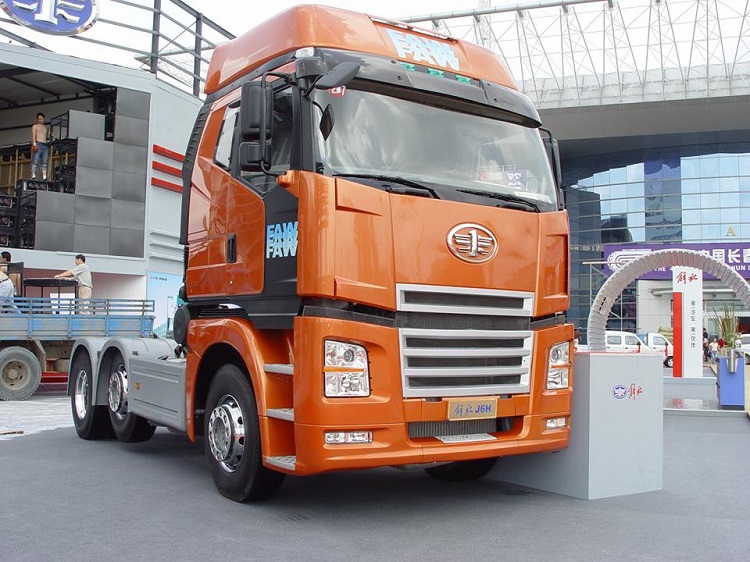
Transafrica Motors Limited (TAM), a leading motor vehicle dealer in East Africa specializing in global brand FAW, has opened a new state-of-the-art showroom in Nairobi. The new facility is located on Enterprise Road, off Mombasa Road. TAM serves its customers countrywide from its strategic branches located in major towns across Kenya – Mombasa, Nairobi, Nakuru, Eldoret and Kisumu.

Transafrica Motors has invested $2 million in a new showroom for its Chinese trucks franchise First Automotive Works (FAW) in Nairobi’s Industrial Area as part of its expansion plans.

Founded in 1953, FAW (First Automotive Works), is a Chinese state-owned automotive manufacturing company. Its principle products are buses, light, medium and heavy duty trucks. It became China’s first automobile manufacturer when it unveiled the country’s first domestically produced passenger car and is one of the big four Chinese automakers.

Sales Performance

The motor dealer does not report its sales performance but trucks of 3.5 tonnes and above are among the fastest-selling and account for about 40% of all orders in the new vehicle segment, according to data from Kenya Motor Vehicle Industry Association (KMI).

“We have invested $2 million to put up this showroom for FAW trucks. It is part of our continued investments in our vehicle brands,” said Ali Zubedi, Transafrica’s Managing Director.

Also Read: FAW Trucks SA celebrates 3 decades of excellence in the Southern African market

Besides FAW trucks, Transafrica also holds the local franchise for Indian Sonalika tractors, Japanese TCM forklifts, Fawde generators, SANY machinery and Honda cars.

Upcoming policy changes are, however, set to benefit the FAW trucks business the most as local assemblers of commercial vehicles get more protection and incentives from the government.

Tranasfrica in 2014 invested $7 million in an assembly plant in Mombasa with a capacity to produce 600 FAW trucks per annum. The company says it plans to invest an additional $12 million to scale up capacity of the plant to 2,000 units in the near term in response to increased demand.

The draft of the National Automotive Policy says the government will give priority to the production of commercial vehicles (buses, trucks and minibuses). The document, for instance, proposes a total ban on importation of used fully built commercial vehicles.

Tata focus on trucks manufacturing for Africa


Indian industrial group Tata says its decision to ditch manufacturing passenger vehicles and focus instead on building large commercial vehicles in SA was necessary to ensure the company was viable on the continent.

When Tata started doing business in Africa, it made bold forecasts for the growth of its various business arms, including chemicals, technology, hospitality and power generation. In SA, executives predicted great things for Tata cars and bakkies. As one brashly declared: “Our attitude is to go big or go home.”

They went home. Despite partnering with a local import group, light-vehicle sales made little headway and Tata withdrew from the market in 2017. “We had the wrong products for this market,” admits Tata Africa Holdings CEO Len Brand. “It was a mess.”

Since Brand became CEO in August 2016, Tata Africa has shed almost all its activities except trucks and buses and now manages them from India. “We can be a conduit for them in Africa but it’s for them to take it further,” he says. “We still have a couple of Raj hotels in our portfolio but otherwise we are sticking to what we know and what we do best,” Brand says.

“Best” wasn’t always very good. Truck sales were healthy but after-sales service wasn’t. “Availability of spare parts was poor,” Brand says. “If you broke down, you were in trouble.” Many first-time customers did not come back a second time.

Brand has concentrated on that side of the business in the past three years. Parts availability has improved considerably. “We are now fanatical about keeping you on the road,” he says.

Or on the dirt. Tata trucks are aimed at customers less concerned with technological innovation than with a durable, robust vehicle for African conditions. The Tata-owned brand Daewoo is for more upmarket customers.

Clarion launches speakerless sound for cars

0

Clarion announced its new speakerless audio system for cars, using a vibration alert, Clarion’s Infoseat system, built into car seats to create speakerless audio.

While currently only being used for cars, this new type of sound reproduction could offer opportunities in other areas, including the installation market.

The speakerless audio technology concept was unveiled in January at CES, Las Vegas and  is based on a system which receives a signal directly from a car stereo, much like a conventional speaker.

The system conveys an impulse to the dashboard, acting like the diaphragm of a speaker to reproduce the sound.

The system situated behind the rear-view mirror directs air towards the windscreen, creating a virtual subwoofer to deliver sound.

The system also incorporates built-in tweeters to expand the frequency range of the trebles.

Why Kenya eyes East Africa Automotive export market

0

Kenya is planning to develop a policy that will boost motor vehicle exports to East Africa. Stephen Odua, Director of Private Sector Development at the Ministry of Industry, Trade and Cooperatives told journalists in Nairobi that all relevant stakeholders are currently reviewing the national automotive policy.

“When in place the new policy will help Kenya to scale up local production of vehicles so that the country’s exports of automotive products to the East African Community bloc can increase from the current five percent of local production to 15% by 2022,” Odua said during the national automotive policy validation workshop.

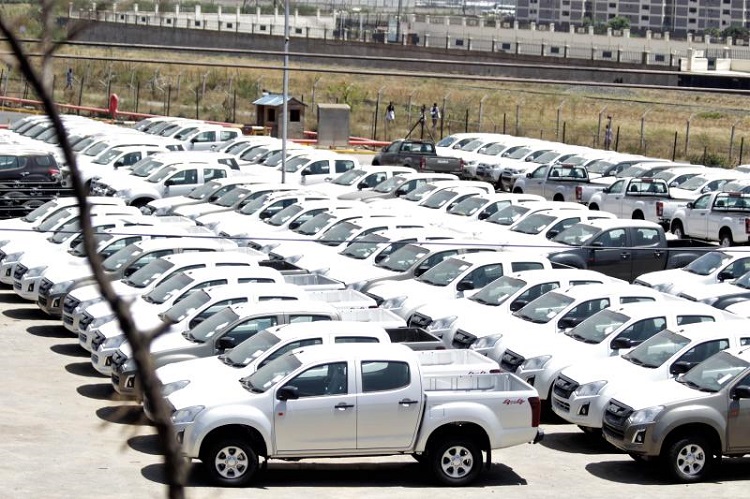
Odua said that the growth of the local automotive industry was slowed by the liberalization of the economy which allowed cheaper imported second-hand vehicles, noting that over 85% of all cars registered annually are imports.

He revealed that a robust local vehicle assembly sector will enable Kenya to increase exports to Africa by taking advantage of the African Continental Free Trade Area.

Odua added that currently Kenya has over two million vehicles, which comprise of both imports and local assembled automobiles, saying that Kenya is keen to discourage importation of vehicles in order to spur the manufacturing sector.

According to government data, Kenya assembled locally approximately 5,100 vehicles in 2018.

Liebherr go electric with mining equipment


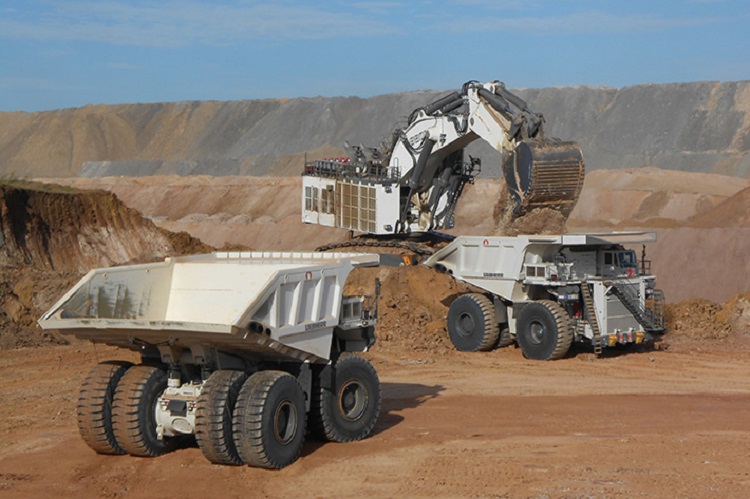
At Bauma Munich, Liebherr has presented two electric machines for the mining segment, the R 9200 E and the T236. The R 9200 E is a 100% electric driven 210 tonne excavator which has an rated output of 850kW (1,139HP).

According to Liebherr, the 9200 E balances performance with environmental consciousness and has up to 25% less maintenance costs compared to a diesel excavator.

Liebherr offers a cable reel option for all electric drive excavators. This concept offers the machine better mobility and less manpower requirements. The cable reel is autonomous and has a capacity of 245-300m, depending on the excavator type.

The T 236 is a diesel electric driven 100 tonne mining truck. The rear axle is driven by an electric motor, which draws its energy from a diesel engine.

When gradients change while climbing uphill, mechanically driven heavy-duty vehicles need to switch gear. High forces act on the drive wheels during this load change. Grade and payload variation can result in inefficiency for mechanical drive trucks which limits the ability to maximise and maintain speed on grade.

The 100 tonne T236

Capitalising on decades of proven experience in Off–Highway-Truck technologies, the T 236 is said to take advantage of Liebherr’s electric drive system innovations with the introduction of the vertically integrated Litronic Plus Generation 2 AC drive system. The T 236 performs its job with continuous power to ground to maximise speed on grade.

Since its first presentation to the public at MINExpo 2016 in Las Vegas, US, the T 236 has successfully completed its testing phase and is today operating at the Erzberg Iron mine in Austria. Another unit recently started operation in South Africa.

Metso enters new territory with development of Truck Body


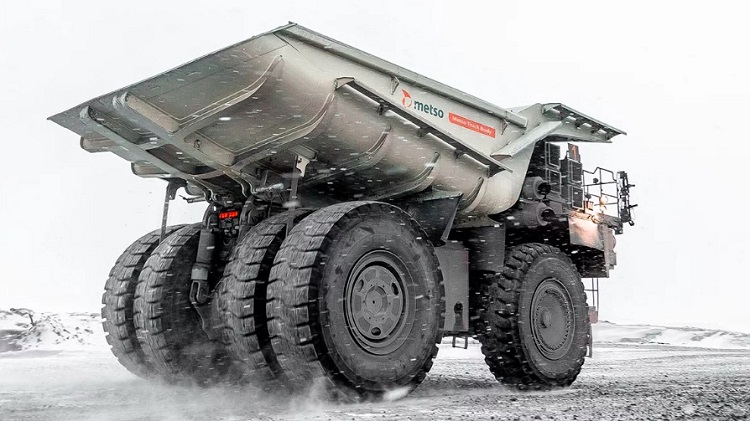
Metso has launched its haul truck body at the Bauma 2019 show in Munich, Germany, showcasing the expansion of its product portfolio into new territory. “The Metso Truck Body is a ground-breaking innovation that combines the benefits of rubber and high structural strength steel, enabling mines and quarries to haul more with less,” the company said.

Lars Skoog, Vice President, Mining Wear Lining & Screening, Metso, said: “Hauling is one of the most cost-intensive components of a typical mining or quarrying operation. In addition to fuel and labour, there’s plenty of maintenance involved too.

“To ensure cost efficiency, a haul truck should carry as much payload as possible on every round. At Metso, we set out to tackle this challenge and designed a truck body that requires minimal maintenance while maximising payload. The result is a lower operating cost per hauled tonne.”

The Metso Truck Body is a lightweight, rubber-lined tray designed for off-highway trucks. The elastic rubber absorbs the energy of every impact, preventing it from reaching the frame and thus allowing for a lighter-than-usual, high structural strength steel frame beneath the rubber. Thanks to this, the body can absorb maximum shock at the lowest possible weight.

Metso has been supplying its tried-and-tested rubber lining for haul trucks for several decades with outstanding results both in reducing the need for maintenance and improving the working environment for truck drivers.

Metso said: “The proven benefits include up to six times more wear life compared to traditional steel lining, half the noise, and 97% less vibration. Our latest innovation, Metso Truck Body, takes this concept to another level by combining the wear protection and working environment benefits of rubber with the payload-maximising abilities of a lightweight body.”

Skoog added: “Many mines prefer lightweight truck bodies because they enable the carrying of more payload. However, the problem with these traditional lightweight bodies is their lack of durability – they often have to be replaced in every one or two years, or repaired, which gets expensive.

“The Metso Truck Body provides an unprecedented solution that is both light and durable. The rubber lining and high structural strength steel frame have been engineered in a seamless process, utilising the best qualities of both materials.”

A typical Metso Truck Body weighs 20-30% less than a traditional steel-lined truck body, according to Metso. Depending on the application, this translates into a payload increase of several tonnes.

The Metso Truck Body is available globally for all major off-highway truck models used in mining and quarrying. Several lining options ensure application-specific fit, even in operations that struggle with problems such as carry-back.

- Advertisement -