After 2021 South Africa’s automotive industry growth is set to be bigger when government policy demanding more than 50% local content kicks in. Promising growth in demand by vehicle manufacturers for South African made automotive components cannot hide underlying challenges faced by the local components industry.
According to the National Association of Automotive Component and Allied Manufacturers (Naacam), South African component suppliers grew average rand sales by 10.7% in real terms between 2016 and 2018.
This is well ahead of vehicle production growth. The top 25% of suppliers grew sales by 16.5%. Average job numbers grew 3.5% over the period. Among leading companies, the figure for 2018 alone was 6.4%. Average supplier operating profits rose 6.2% in 2017 and 4.3% in 2018. Productivity also improved.
The problem with these positive numbers is that many of them lag behind growth rates in rival supplier industries in developed and developing markets. Put simply, these markets are improving faster than South Africa meaning local suppliers risk becoming less globally competitive.
Michael Sacke, CEO of Commercial Vehicle Manufacturer Isuzu SA, said: “We are all part of global ecosystems and purchasing decisions are made elsewhere, for the good of the group.”
Also concerning is that, according to the B&M report, fewer motor companies believe there are opportunities to increase purchases from current direct suppliers, or to commit to longer-term relationships. Despite this, Naacam Director Renai Moothilal said: “Opportunities exist in the areas of supplying more of current products, supplying additional products in the existing range, and supplying newly developed products.”
Some good news
The good news for South African suppliers is that, from 2021, the government automotive policy will require motor companies to increase the value of local content in their vehicles by at least 50%. The current industry average of 38% must reach 42% by 2023, then 60% by 2035.
Some in the industry want this target to be imposed individually on each vehicle manufacturer. “Why should I have to exceed 60% and drag up the average because someone else is lagging?” said one MD – but Sacke said the idea is not feasible for his company, which bought the Port Elizabeth vehicle assembly assets of General Motors when the US company divested at the end of 2017.
Isuzu SA, which produces bakkies and trucks, expects to build about 24 000 vehicles in 2019, the smallest number, by some distance, of South Africa’s seven major manufacturers.
“We simply don’t have the volumes that would make it feasible to undertake wholesale localisation,” Sacke said. “Realistically, we’ll never get local content above 30% to 40%.” He accepts this means Isuzu SA won’t receive some incentives from the updated Automotive Production and Development Programme (APDP).
However, he says the company has an important role to play in the economy.
“We employ 1 000 people in the assembly plant and another 4 000 in our dealer network. We support 430 service and component suppliers and spend billions of rand every year. We may be small in motor industry terms but we are a significant player in the economy, particularly in the Eastern Cape.”
The European Union reached a decision to implement tougher safety regulations, which will have implications for vehicle connectivity technology. The so-called General Safety Regulation (GSR) still requires final approval by ministers of the 28 EU member states, but many automotive suppliers expect that, once it takes effect in 2022, advanced safety technology will quickly spread from mostly premium vehicles today to lower market segments as well.
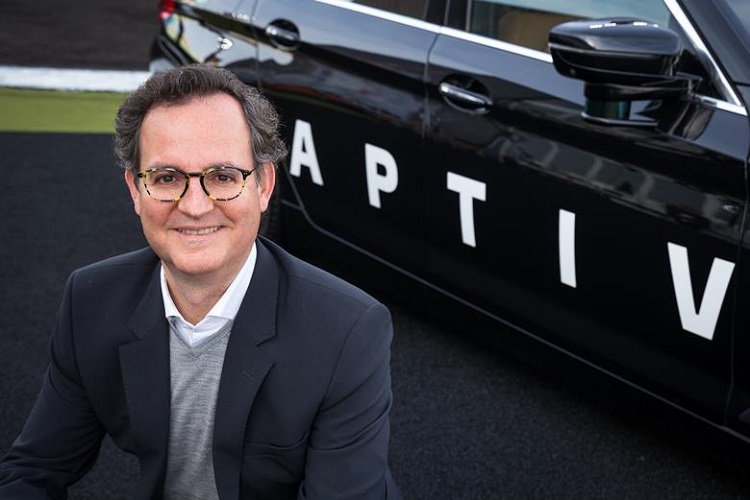
In an interview with automotive IT International, David Paja, President, Advanced Safety and User Experience, at automotive supplier Aptiv, discussed the impact of the EU rules and the role of safety technologies in a changing industry. Paja’s division makes components and systems for infotainment and connectivity, body controls and security systems, as well as active and passive safety electronics and autonomous driving software.
With autonomous vehicles likely to become the norm in the next 20 years or so, how long will we still need active safety technology? After all, these systems are designed to compensate for the shortcomings of a driver, who may not be at the wheel a few years from now?
In many ways these are building blocks. In robo-taxis you won’t need these systems, but in Level 3 vehicles the driver still takes over control once in a while. Driver-assistance systems such as radar and cameras are building blocks toward full automated solutions. There will be a lot of re-use of these technologies in fully automated vehicles. Also, bear in mind that not all vehicles will become autonomous in the near future. From a business-case point of view, it makes more sense, for example, to automate a taxi than a privately owned vehicle.
2. Is regulation a big factor in the adoption of safety technology?
As a technology provider, we tend to stay away from judging political decisions. Instead, we focus on the technology. From our point of view, many technologies exist in premium vehicles that can be deployed in volume cars as well. Europe tends to be slightly ahead when it comes to regulation and that has been driving the adoption of driver assistance features at a bit faster pace than elsewhere, but it’s not a big difference. With the new Brussels regulations, we’re likely to see a slight acceleration in adoption.
3. Automotive safety is a good area to be in for an automotive supplier.
We started investing in this technology 20 years ago and there was no big revenue back then. But we’ve seen a big adoption curve in the last five years. Aptiv is committed to the space and we believe safety technologies bring value to the end customers. We’ve seen 60 percent annual growth in active safety sales over the past two years and we’re at 1 billion dollars a year today. We expect our sales volume to double by 2022.
4. You have a broad portfolio of safety technologies. Can you pick a few that you think are more important than others?
First, I would mention our scalable Automated Driving Satellite Compute Platform, which allows you to do your computations away from the sensors in one safety controller. Each sensor now has its own control unit. Our technology is more cost-effective and allows the adoption of technology into entry-level vehicles. We first launched this on the Audi A8 three years ago and it’s now in several cars. The second technology is interior sensing and driver monitoring, which is being rolled out across BMW’s vehicle range. It’s important to know whether a driver is distracted and we can monitor, for example, the way his head is pointed or the direction of his gaze. We use machine learning here, too. It’s important because half a second of improved reaction time prevents 60% of all accidents.
5. You mentioned machine learning. How does Aptiv use artificial intelligence in general?
We are increasing our capabilities in this domain and use machine learning for sensing, classifying things and understanding what sensors see. We also use it in sensor fusion and in defining how a car should react to a particular situation.
6. How big is your team?
We have around 3,000 engineers in the active safety domain globally. That’s double the number two years ago. About 70% of those engineers are systems and software engineers, and that includes machine-learning and data experts.
7. Do you have trouble hiring people with the digital skills that you need?
There’s obviously a big fight for talent going one. It’s one of the reasons we acquired (autonomous driving specialist) nuTonomy in 2017. That company offered a way to get talent and expertise in robotics and more depth in machine learning.
NAJ Tracking Ltd, offers Fleet Tracking, Fuel management and 24Hrs vehicle recovery solutions. They are created by Family and corporate values, demonstrated by motor security personnel, 24Hrs surveillance solutions.
Africa Automotive News conducted an interview with Kassim Hassanali, NAJ Tracking Ltd Operations Director in regards to tracking devices market in Africa.
How is Naj Tracking Limited performance since its inventory?
NAJ Tracking has grown progressively from car digital accessories enterprise to undisputed FLEET & FUEL TRACKING COMPANY, Bagging over 10 technology and innovation Awards in the last 2 years. And as the CEO I have won 3 awards including top 40 Under 40 MEN in Kenya.
How is the African market in regards to tracking devices and software development?
Tracking in most African countries lags behind due to limited GSM/GPRS coverage on which most devices relies on for data upload, but in countries with better coverage like Kenyan market where Tracking is picking up, Another important factor is software wise in terms of functionality & performance –The European developed software’s are still most preferred compared to locally developed Systems because of their prowess in Fleet reporting capabilities.
As a car tracker developer, are there challenges in the market industry in Africa?
The African market is being saturated with cheap, unlicensed poor performance software’s from Asia, which is affecting ability of offering African market with state of the art quality systems, other underlying issue is lack of access to software’s development tools, to allow developers to come up with a functional effective systems that are user friendly and on point.
If yes, what do you think can be done to address the challenges?
Critical Tracking information is held by these systems, with millions of automotive data fleet reports being generated, and thus the government should deal with quarks, operating as Vehicle tracking service providers. With unlicensed software’s used in transport industries to enhance Africa development of high quality systems.
Any, considerations of partnership with other car tracking developers?
Yes, we are looking forward to partner with other developers mostly in our neighboring borders of Uganda, Tanzania and Rwanda; this is to give us a position to venture in the untapped market in these countries.
In terms of developing products, what is your expansion strategy?
Our number one priority is to have the very best products in the telematics industry today and especially maintaining our core in Fuel Management. Naj Tracking has also partnered with Banks & Asset finance institutions, Transport industries, Parastatals, vehicle leasing companies, Taxis and Tours companies.
Having Branches has made it easier for our clients to get quality service country wide & establishment of mini control rooms within the East Africa region to monitor and recover vehicles fast and timely in motor security operations.
The award winning digital motor security company, NAJ Tracking Ltd, offers Fleet Tracking, Fuel management and 24Hrs vehicle recovery solutions. They are created by Family and corporate values, demonstrated by motor security personnel, 24Hrs surveillance solutions.
Uniquely pronounced with 10 awards, including the East Africa maritime awards in Vehicle tracking and Fuel management by their European Technology. Since their establishment they have grown with branches county wide in Kenya.
Success rate
Having partnered with the very best in Europe for Fleet & Fuel tracking hardware manufactures & software developers, their system enjoy a success rate of 99-100% accuracy, with an integrated system capability hence it can take over 30 add ons.
Eg, Driver behavior & identification, driver rating, Sos panic buttons, voice monitoring, temperature sensors,GPS/GPRS/Glonass satellite receiver capability with critical accuracy in Fuel tank, Fuel consumption, Refuel and Fuel theft in real time reports. Also their system offers Fleet management & maintenance capable of managing fleet events of next service, insurance expiry, spare parts & batteries warranties etc
Market coverage
Outside Kenya NAJ Tracking Ltd is currently working with logistics companies in Uganda, Southern Sudan & Rwanda with their award winning NAJ PRO 4 Fuel Tracking system. Plans are in pipeline to venture into East Africa market.
Meeting customers’ needs
Their sole responsibility is to listen, understand and identify the particular need of their Fleet customers thereafter offer them unique tailor made solution in terms of:-
Functionality-They need their products or services to function the way the customer need in order to solve their problem or desire.
Price-Customers have unique budgets with which they can purchase a product or service. Thus they offer different varieties of products in Fleet and Fuel Tracking.
Convenience-Naj Tracking Ltd strive best that their products are convenient solution to the function their customers are trying to meet.
Design-Along the lines of experience, the product or service needs to be slick to make it relatively easy and intuitive to use. This include Android/ios Apps & web applications.
Compatibility– Through their Technical Support they try as much as possible to fabricate their product and make it compatible with other products their customer is already using
Performance– correct Fleet accurate performance enables their customers to achieve their goals and places their products are superior.
Efficiency-the key element in efficiency is to streamline an otherwise time-consuming process for their client through process automation.
Product range
In addition to products and services they are offering they are looking and in the process of expanding their operation but not limited to, Speed limiters, Dashcams With Gps, Container locking to make NAJ Tracking Ltd ,a one stop shop digital solution provider for logistics companies.
The 22nd AUTOEXPO 2019 – International Trade Expo on Automotives, Spare parts, Accessories & Transportation is the largest trade event held annually in Tanzania.
The exhibition attracts exhibitors from more than 28 countries and visitors from all over East & Central Africa, thus giving exhibitors an excellent opportunity to explore several countries in one time.
Over the past few years,Tanzania has emerged as a major regional trade centre. This is mainly due to the very friendly and businesslike atmosphere it offers to foreign investors and products. Duties are considerably low and re-exports to neighboring countries are either very low or exempted.
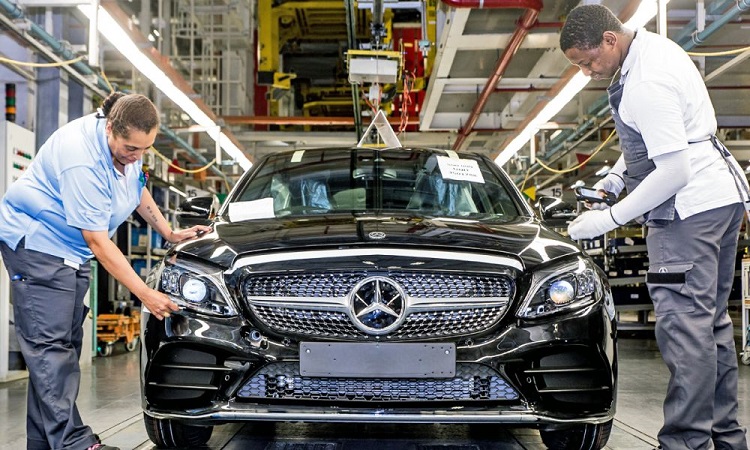
A fresh report suggests Mercedes-Benz is considering scrapping production of its C-Class in the United States, leading to speculation the German firm’s plant in South Africa could pick up the slack.
The Stuttgart-based firm is mulling the end of C-Class sedan production in the US (despite having produced the model there for only the past five years), with a plan to build more SUVs instead.
It quotes industry forecaster LMC Automotive as saying production of the C-Class sedan in Alabama will cease in the final quarter of 2020.
“The SUV has really expanded from a consumer standpoint,” said Jeff Schuster, president of global forecasting at LMC. “That’s where the volume is; that’s where the future is.”
This could leave the door open for the automaker’s East London plant to increase its output (it apparently has 25% production capacity available), since the South African operation already produces the vehicle in right- and left-hand-drive form.
In addition to Alabama and East London, the C-Class is built in Bremen (Germany) and Beijing (China).
In June 2018, Mercedes-Benz announced the investment of an additional €600-million in the brand’s facilities in East London, effectively confirming the next generation of the C-Class would be built in SA. And in March 2019, the 500 000th W205-generation C-Class rolled off the assembly line at its East London plant.
Today, people and businesses widely use GPS tracking in both personal and professional settings. Every smartphone, tablet, and computer now integrates GPS tracking technology. The GPS tracking market is rapidly growing and has an amazing potential in the future. Many apps implement navigation systems for mapping and transport information, but also for fleet monitoring.
GPS vehicle tracking can be the pivotal edge over your business competitors and therefore, investing in a good vehicle tracking device can help you monitor your employees, keeping track of your cargo thus ensuring timely delivery of your products and services. Vehicle tracking is defined as getting information about the vehicle on map, speed and distance traveled using internet or other software. In general GPS (Global Positioning System) or GLONASS are used to locate the vehicle. The automobiles are provided with modernized feature which works to find the path of them.
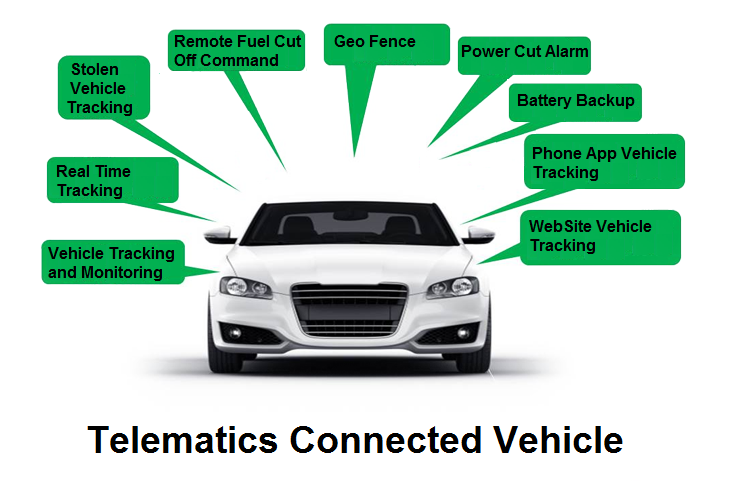
Other functions include vehicle tracking performance and maintenance, driver’s performance, but also facilitates fuel management and dispatching, sends alerts and notifications, prevents thefts and provides reports and enables analysis of these reports. More functionalities are possible, however, that depends on the company offering fleet management solutions.
Vehicle tracking is defined as getting information about the vehicle on map, speed and distance traveled using internet or other software. STrack Kenya Limited highlights below the merits of tracking your vehicle.
i). Security.
Tracking devices come with an immobilizer meaning that in the unfortunate event that your vehicle is stolen you can stop it remotely through the click of a button or a simple SMS.
ii). Quick recovery.
It is crucial that a vehicle is found within 24 hours before it is disassembled. GPS devices always upload their location to servers in real time allowing the quick recovery of vehicles.
iii). Diverse array of features.
Through vehicle management platform customers can access a wide array of reports such as trips, distance, speed, parking/idle time, fuel etc.
iv). Alerts.
Customers can subscribe to SMS or email alerts that trigger when their vehicle sets off an alarm. For example, the system can send an SMS when a vehicle crosses a specific border, is refueled, or when fuel is siphoned.
v). Integration.
System is built to be integrated with other systems for example courier companies can offer real time tracking to their customers.
STrack
STrack specializes in provision of advanced vehicle tracking, fleet management and digital fuel monitoring services for motor vehicles, motorcycles, and assets using GSM/GPS technologies, supported by thoroughly tested and certified devices, online tracking, fleet and driver management software based on various online Maps and a Linux server environment for enhanced reliability and user security. The company is licensed by the Communications Authority of Kenya (CA) and is also a founding member of Kenya Automotive Security Association (KASA).
“Tracking devices offers Fleet management & maintenance capable of managing fleet events of next service, insurance expiry, spare parts & batteries warranties etc,” says Kassim Hassanali, NAJ Tracking Ltd, Operations Director.
NAJ Tracking Ltd is an award winning digital motor security company, dealing with Fleet Tracking, Fuel management and 24Hrs vehicle recovery solutions. Motor security personnel create them through family and corporate values, supported by 24-hour surveillance solutions. Uniquely pronounced with 10 awards, including the East Africa maritime awards in Vehicle tracking and Fuel management by their European Technology. Since their establishment they have grown with branches county wide in Kenya.
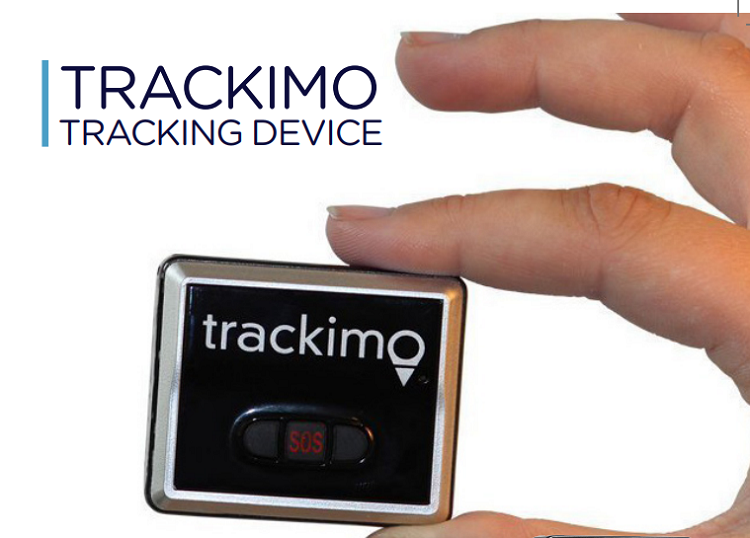
According to Trackimo, GPS has revolutionized our daily lives. GPS or Global Positioning System provides satellite tracking services that are useful in a variety of commercial and personal applications. Most companies now realize the importance of GPS technology for achieving greater efficiency. And, thus provide better benefits to people. PEACE OF MIND.
Trackimo-Tracking-Device
Trackimo
Trackimo represents a new GPS tracking device to locate the things that matter most from anywhere in the world. Trackimo devices are 3G, with 100% US coverage, most other GPS devices in the market are 2G with only 10% US coverage. Revolutionary, uses 5 different technologies to accurately Locate anything Worldwide Indoor & outdoor. Trackimo also has SOS panic button sending email and SMS text alerts.
“It is important for vehicle owners to protect their vehicles from theft. Installing a car track device helps in the recovery of a vehicle in case of theft. Transport and Haulage companies can fit vehicle tracking systems in their fleet vehicles transporting goods and cargo worth millions and they can know where their vehicles as well as their prized goods are at any time from our phone tracking app or our online web based vehicle tracking platform. Car track not only tracks the vehicles but the transit goods as well,” says Anthony Waikwa, of Shield Car Track.
Shield Car Track’s Fleet Tracking technology delivers GPS+LBS tracking and asset management solutions tailored to meet the needs of all types of businesses, from startups and mid-sized companies to large transport and haulage enterprises. Its internet-based fleet tracking system gives entrepreneurs full access and control from anywhere in Kenya, using their phones or any internet-connected computer.
“Through Shield Car Track phone app or online vehicle tracking platform our customers can track their vehicle through their mobile phones, by using our vehicle tracking app or through our online GPS car tracking website. Our vehicle tracking technology updates the location of the tracked vehicle every 10 seconds so as to provide 24 hours vehicle surveillance,” adds Mr. Waikwa.
Leon Mynhardt Technical Manager – South Africa Electronic Tracking Systems Ltd, says, apart from the obvious theft recovery aspect of using tracking devices, they have many other features through their telemetry information that make them essential in today’s commercial applications.
Safety:
By getting live GPS speeding reports from the system, fleet controllers can react immediately to speeding alerts generated, ensuring drivers are driving safely. Fleet Managers can also receive daily, weekly or monthly speeding reports with this information target and train repeat offenders ensuring the safety of the drivers and other road users.
Reduce vehicle maintenance:
Tracking devices give Fleet Managers vital driver behavior telemetry like harsh-braking, harsh-acceleration, harsh-cornering and excessive idling events. By monitoring these events live or historically thought reports, fleet owners can train specific drivers to reduce these events and as such reduce overall maintenance and fuel costs on their fleet. The system also provides for a driver scoring system based on these exceptions and makes it very easy to see who are the problem drivers and who might need additional training and in what areas they need help.
Increase productivity:
Monitoring your entire fleet live at all times helps ensure your vehicles are where they should be and remain productive. Fleet managers can also access a wide range of reports that help them assess fleet utilization, identify problem areas, and address factors that affect productivity. One example is our Zone Report, which details which vehicles have entered which Customer Zones (customized polygon zones created by the client), when they entered, how long they are there for and then when they leave again. This makes it easy to see at a glance where there might be zones where the vehicles are taking too long to either pickup or drop-off. Managers can then assess and fix the processes in these zones to increase productivity.
Mtrack-SA Electronic Tracking Systems Ltd
Mtrack
Mtrack provides world-class products, and a complete tracking and asset recovery service. Mtrack have two main product lines, MtrackFleet and MtrackWireless. MtrackFleet focuses on managing fleets and helping companies and fleet owners handle their vehicles’ daily operations. MtrackWireless manages and recovers assets. Because the devices are completely wireless, users can attach them to any asset that needs tracking.
Commercial Vehicles Growth
The growing number of commercial vehicles, such as trucks, buses, and vans, drive the market for GPS tracking devices. Vehicles engaged in the timely transportation of men, material, machinery, or money-where on time delivery can make a significant difference in cost and productivity-are prompting players to adopt GPS tracking devices. School buses, city and state transport buses, cash vans, cargo vans, police petrol vans, radio taxis, courier pickup and delivery vans, and others are prospects for vehicle tracking systems. The increasing sales of commercial vehicles would increase the adoption of GPS tracking devices.
Gerrie Van Wyk of Pulsit Electronics says that, “The transport and logistics industry has become a very competitive and lean industry which necessitates that fleet owners and operators aligns themselves with a tracking partner that understands their business, able to meet the demand for service and provide them with not only a dot on the screen but also real-time information and telemetry that has an effect on their bottom line as well as looking after their reputation by providing them with tools to protect their clients cargo in transit and prevent losses as a result of hijackings and theft.”
Pulsit Electronics
Pulsit Electronics
Pulsit Electronics is a South African based Telematics Solutions Provider established in 2002 with specific focus on Tracking, Fleet Management and Risk Mitigation Solutions in the transport and logistics industries. Pulsit is VESA/ABS Accredited and meets with SAIA (South African Insurance Association) standards. Pulsit works with TAPA (Transporters Asset Protection Association) a global organization that regulates standards and employ best practices for the protection of high value cargo in warehouse as well as in transit.
According to International Organization of Motor Vehicle Manufacturers (OICA), sales of commercial vehicles is on an uptrend. By tracking and managing these vehicles in real time, enterprises can efficiently utilize their resources. GPS tracking devices also ensure the safety of vehicles. In an emergency, GPS devices pinpoint the ambulance’s position and display the exact location where the distress signal originated.
Everyone seems to be doing it. From Mercedes and now Jaguar, the rush to be back on a straight 6 engine is on. Its about the engines being more modular. The 6 cylinder engine can easily be made from a 4, with two more cylinders added on – this makes the engine platform more modular. Its been around for years. Perkins engines in the UK, who no longer make automotive on road engines, have a 3 and 4 cylinder designed in much the same way. They also only make a straight 6 for the diesel generator market and industrial pump customers.
The new engine has a single cylinder head and the power delivery is said to be smoother, leading to a better drive. Its coupled with a twin turbo charger to boost the power up even further and allow the engine to compete in the world without too much derate in performance.
There is also a 48 volt hybrid system that makes use of an inverter. The 3.0-litre engine is boosted by twin-scroll turbo, plus an SQ7-style electric compressor designed to fill the small amount of turbo lag still experienced in modern engines – it’s claimed to fully spool up to 120,000rpm in 0.5 seconds. Total output is 395bhp and 406lb ft.
Motor vehicle distributor, Toyota Kenya, has launched the fifth generation RAV4 in the Kenyan market. Speaking during the launch on Thursday, Toyota Kenya Managing Director Mr. Arvinder Reel said the new RAV4 offers customers an opportunity to try something new and to experience the joy of driving anywhere, anytime, and as far as they want.
“The RAV4 has been a long-time market leader in the urban passenger SUV market and it remains one of our key mass production models. With the fifth generation of our RAV4 model, the vehicle has come full circle and we can confidently say that the all-new RAV4 is indeed evolved and ready for anything that the future holds,” said Mr. Reel.
The all-new 2019 RAV4 banks on its upgraded, more premium design paired with better performance and capability.
Based on creating a “Robust Accurate Vehicle with 4 Wheel Drive,” the new RAV4 development concept blends the power and sophistication of an SUV, achieving top-class generous rear cargo space and outstanding driving performance realized by a new 4WD system.
The new Toyota RAV4 comes with a variety of updates including a stylish new look, a new engine and added safety and technology features. The fifth generation RAV4 also comes with a 2.5-liter engine that produces 207 horsepower.
The vehicle’s new engine plus a lighter curb weight compared to previous versions help the new RAV4 achieve the most fuel-efficient performance among its peers.
Styled with a sportier design, the RAV4 allows the driver to bravely take on the exciting roads at any time.
Noting that customer safety plays a major role in the Toyota business, the new vehicle comes equipped with Dynamic Torque Vectoring AWD system which automatically senses what the terrain the vehicle is on and how much torque is needed to wheels to ensure stability, achievement of high 4WD handling, stability, and off-road performance and this resulting in improved fuel efficiency.
It also has Stability control which automatically senses when the vehicle’s handling limits have been exceeded and reduces engine power and/or applies select brakes to help prevent the driver from losing control of the vehicle.
For passenger safety, the RAV4 comes with front-impact airbags, side impact airbags and overhead airbags as well. It also has a Security system and the vehicle is equipped with an ignition disable device that will prevent the engine from starting if the correct original manufacturer key is not used.
The first-generation RAV4 debuted in 1994, when body-on-frame four-wheel drive vehicles were positioned as off-road vehicles. Since then, the RAV4 has played a pivotal role in the development of a new market for the passenger-friendly sport utility vehicle (SUV/crossover SUV).
“The launch of the 2019 model is a show of Toyota Kenya’s continued efforts towards changing the SUV landscape in Kenya with better technology and increased driver comfort,” added Mr. Reel.
The Islamic lender Gulf African Bank has signed a financial deal with Isuzu East Africa to finance customers’ purchase of a wide range of trucks sold by the Japanese motor vehicle dealer.
Gulf African Bank Managing Director Abdalla Abdulkhalik said under the one-year deal the lender would provide up to 95% of funding while the customer would provide the remaining 5%. The financing arrangement targets both Muslim and non-Muslim clientele as Isuzu seeks to sell 1,000 units.
“The financing is open to everybody. We are targeting the entire country to help people acquire vehicles for their businesses. It’s not limited to the Muslim faith,” said Mr. Abdulkhalik.
Customers will enjoy a two-month grace period before they start making the monthly installments over a five-year duration to service the loans for the models that include Isuzu D-max, N series trucks and F series trucks.
Isuzu Finance and Strategy Director Charles Kariuki said the firm would release the funds within 72 hours of an application under the deal as it seeks to increase sales.
Isuzu was the only major dealer that grew sales in the first quarter ended March, thanks to special financing deals with lenders such as Co-op Bank.
The dealer’s unit sales in the review period rose to 1,019 from 891 a year earlier while orders in the overall industry fell 14.5% to 2,741 units.
Most dealers including Toyota Kenya and Simba Corporation recorded significant sales decline. Unit sales at Isuzu rose to 1,019 from 891 while those of Toyota declined to 672 from 812. Simba Corp’s sales also fell to 487 from 514.