As one of the biggest purchases you’ll ever make, it makes sense to take care of your car so it lasts as long as possible. Here’s ten things you can do to prolong its life, and save yourself a few dollars along the way.
1. Keep It Serviced
Probably the most obvious one on the list, but also one that’s often overlooked. Modern cars can easily exceed their scheduled service intervals without you actually noticing – but the reality is that you’re doing your engine no favors by neglecting it.
Always stick to the recommended service intervals, and there’s no harm in performing them a few hundred miles early or more frequently if you’re planning to keep the car for a long time. A well maintained car will not only last longer, but it will also be more fuel efficient, have better performance, and hold its resale value better.
2. Don’t Ignore Issues
Can you hear a knocking noise over bumps that wasn’t there before? Maybe there’s a bit of a grinding sensation when you go around left hand turns?
Don’t just turn up the stereo and hope it will fix itself – it won’t. A neglected wheel bearing that has started to go bad can cause the hub to overheat, which can cause damage to the CV joint and a much larger and more expensive repair.
A radiator fan that’s on the blink could cause the car to overheat in traffic, which can blow the head gasket… There are lots of examples of components failing that can have snowballing effects.
If you think something’s on the way out don’t wait to find out what happens when it fails!
3. Don’t Skimp On Oil
Oil is the lifeblood of the engine, and old contaminated oil will shorten its life. Don’t use cheap oil, always go with the manufactures recommendations, and never exceed the oil change intervals.
When you change the oil always replace the oil filter. For added benefit, rather than using an engine flush (which can be overly harsh on some engines), consider refilling with a cheaper oil, then changing again after a couple of hundred mile with quality name brand oil.
If that sounds like a load of work, perhaps you should look into buying a vacuum oil extractor – It makes oil changes a quick and painless affair as the oil is extracted through the dipstick tube, rather than messing around underneath the car.
4. Keep It Clean
It may sound a bit dumb, but keeping your car clean will prolong its life. Dirt and grime encourage rust (particularly in the winter months with salt on the roads). While your car may have a galvanized body, few of the components in the under carriage are rust resistant. Bushings, and suspension components will have a shorter life expectancy if they’re neglected and left covered in muck – so get out there with the hose and keep it clean, even the parts you can’t see!
Keeping the paintwork in tip top condition with regular washes, and occasional polish/wax sessions will also add to the car’s resale value. Finally, never leave bird droppings on your paintwork – remove it as soon as you see it. It will eat through the paintwork and leave permanent damage behind.
5. Warm Up
The most damage is caused to an engine when you start it from cold. Cold oil is less viscous, and it is all just sitting in the oil pan when you start the motor. First, it needs to be pumped around the engine to lubricate that parts, but secondly, it has to get warm before it becomes effective.
Getting the engine up to temperature quickly is good for the engine, so contrary to popular opinion, don’t start it up and leave it idling. It will take forever to warm up a cold engine when it’s not under any load (particularly if it’s a diesel).
The best practice it to start the engine, let it idle for just 30-60 seconds to allow the oil to circulate, then drive gently for the first few miles until the engine is up to its normal working temperature. Never rev the motor excessively when cold. Once the temperature needle starts to move, or the heater blows warm, you are free to drive normally.
6. Cool Down
This is most important for cars with a turbocharger. If you’ve driven ‘enthusiastically’ at higher revs the turbo will be hot – very hot! So for the last couple of miles of your journey drive ‘off-boost’ as if you are taking your mom to the store.
This allows everything to circulate and cool down, rather than switching off a scorching hot engine, which can shorten the life of the bearings in the turbo by cooking the oil.
You don’t want to just let it sit there idling either, as the lack of airflow will make the engine bay heat up. It’s less of an issue on modern cars with water-cooled turbos but it’s still smart to always start and end your journey with gentle driving.
7. Gears or Brakes
A wise man once said “brakes are cheaper than a gearbox”. If you’re in the habit of slowing your car down by shifting through the gears, consider altering your driving style to rely on the brakes more than engine braking. It’s still fine to do so, but just be mindful that it puts extra stress on the gearbox and the clutch.
To keep the transmission in good shape, changing up through the gears is best done smoothly by matching the revs when possible, and not quick shifting like you are running the quarter mile!
8. Regular Check Ups
Preventative maintenance is never a bad thing. Familiarize yourself with your car and the engine bay – remove the plastic engine cover (if there is one) and have a good look at all the hoses and wires.
Look for fluid leaks, and oily residue that could point to a leaking gasket. You don’t need to be a mechanic to know when something looks wrong.
Check the car every couple of weeks as a minimum, including tire pressures and fluid levels and bring anything suspicious to the notice of your mechanic.
9. Thorough Workout
While it stands to reason that sensible driving is best for a car’s life expectancy, driving gently all the time can actually be a bad thing!
Known by many as the ‘Italian Tune Up’ a dose of spirited driving can actually be beneficial. On older engines it can help to remove carbon deposits, and on diesel engines it is needed to clean the Diesel Particulate Filters (DPFs). Get out on the highway when there isn’t a lot of traffic and drive at medium to high rpm for a period of time to blow out the cobwebs, and regenerate the DPFs.
10. Lighten the load
What’s in your trunk or cargo area? If you’re like most people you’ll be carrying more than your fair share of junk around with you. The heavier the car, the more stress there will be on the mechanical and suspension components, not to mention the engine.
While we’re not talking about massive gains, it makes sense to ensure you’re not carrying about unnecessary extra weight. If nothing else you may get a couple of extra mpg out of the engine!
Automakers are constantly coming up with technologies to reduce accidents in daily driving. But if you’re wondering about ways you can stay safe in traffic situations, the reality remains that accidents, road construction and other factors will inevitably tie us up in delays. Moreover, getting through those delays with minimal frustration usually relies more on human behavior than digital innovation. To clarify, knowing the best approaches for how to stay safe in traffic can make a big difference in stressful situations.
You need to understand what you can control and what you cannot control,” says Patrick Barrett, a former president of the North American Professional Driver Education Association. “There are six factors that affect driving: the road, the weather, the traffic, the time of day, the vehicle and the driver. Guess which of these you have the most control over? Yes, it’s you, the driver. For this reason, practicing safe habits while navigating traffic is a core part of learning safety on the roads. It also helps you remain secure when you encounter traffic.
With that in mind, here are some steps you can take to stay safe on the road and explore how to stay safe in traffic:
Allow space for merging
Nearly all long delays require vehicles in a blocked lane to move into a free-flowing one. What keeps this from happening? Motorists’ perception that it’s dangerous to merge. “You need to kindly leave enough space to signal that it’s fine to merge into your lane,” says expert Daniel Gray.
Avoid excessive “lane jumping”
As bad as a jam can be, drivers who incessantly shift from one line of vehicles to another only increase the length of the backup. “You want to focus on the path of least resistance,” says Barrett, who has authored books on driver safety and markets driver-ed tools for parents at DriverEdinaBox.com. “This is the path that lets you move and lets you see. But this doesn’t mean you constantly lane-jump. Often, choosing the path of least resistance means choosing to stay in your lane. Above all, staying in your lane is one way to follow advice on how to stay safe in traffic conditions.”
Chill out
Keep in mind that traffic happens and there’s really very little you can do about it. Cursing, fuming and honking will only elevate your sense of frustration and potentially create unnecessary trouble. “Remember that you’re not the only one who is late for something,” Gray says, “and that you’re no more special than the person in the next vehicle. In summary, practicing calm behavior is also central to learning traffic safety and understanding how to stay safe when you encounter heavy traffic.”
Driving on the highway for the first time can be nerve racking. This is why it’s common for new drivers to only navigate local roads until they gain enough real-world experience. They then venture onto the interstate. Once a new driver is ready to take on a highway, being fully prepared can help a beginner. This makes a smooth and safe transition from local roads to the interstate.
Here are some highway driving tips that new drivers should consider before driving on the highway for the first time.
Pick the right time to start driving on the highway
If you’re planning your first highway drive, you want to pick the right time and place. Consider starting off on a highway that isn’t too busy. Alternatively, drive during a time of day when fewer drivers are on the road. You also want to drive on a bright, clear day. Avoid any rain, snow or fog that could decrease visibility.
Establishing proper speed and distance is key to managing a lane change on an interstate. Drivers should leave four to six seconds-worth of space between their car and the vehicle in front. They must do this as they maneuver. You should also routinely check the rear-view, side-view mirror and blind spot before switching over. More space means you have more time to avoid a collision or react to debris on the highway.
Start off driving in the right lane
When you’re driving on the highway for the first time, you should only drive in the right lane. Young drivers really have no business heading into the left lane, which is intended for passing. “Staying in the right lane will help them interact with traffic coming onto the freeway. They’ll maintain their speed easier there,” says Maria A. Wojtczak, who owns and operates DrivingMBA, a driver’s-ed business in Arizona.
Always use blinkers on the highway
Young drivers must get in the habit of using their blinkers constantly, even if they believe their intentions are obvious. “Blinkers are the only way we have to communicate with other drivers,” says Chris Duquin, owner of Stevens Driving School, which has several locations in the state of New York. “It’s amazing how often drivers cause problems by not using them on highways.”
Keep a wide viewpoint
Newer drivers tend to stare at what’s right in front of them. But highway speeds and unpredictability demand a wider viewpoint. “They need to look closely in front of their vehicle, but also farther down the road and into the rear-view,” Duquin says. “Good drivers continuously adjust their observation points.”
Learning to drive on the highway is about more than proper driving. It’s also about making sure a young driver’s maturity level is up to the task. “They must understand never to take anything personally, especially on a highway,” says Michael Soubirous, a retired California Highway Patrol lieutenant who now writes a local newspaper column in Riverside, Calif., called “On the Road.” “If someone cuts you off, let it go. You never know the mental state of the other party and maybe they simply made a mistake. Drivers are not perfect, after all.”
Stay focused on the road
According to the CDC, drivers under the age of 20 have the highest proportion of distraction-related fatal crashes. That’s why it’s crucial to stay focused on the highway. Don’t use your phone, try to change music or be distracted by talking to friends while driving on the highway. Find out more ways you can prevent teen distracted driving.
Have a new driver in the family? Under the Nationwide Family Plan, they’re entitled to all the safety and benefits that you are. We’re here to help you look out for your loved ones.
The Archdiocese of Nairobi has opened an innovative parking facility at the Holy Family Minor Basilica. The modern underground structure, initiated through the guidance of His Eminence John Cardinal Njue, is a creative way of providing motorists with additional, convenient and secure parking spaces within the city centre.
Father Simon Ng’ang’a, the finance administrator at the Archdiocese of Nairobi, says feasibility studies on the project started in 2012. At that time, it was established that Nairobi had a parking deficit of over 9,000 spaces each day, Father Ng’ang’a says.
The team decided that provision of additional parking spaces would come in handy, not only for the congregants, but also as an extra source of revenue to support the church’s evangelisation and social work such as the furtherance of education, medical services, charity and other community support initiatives.
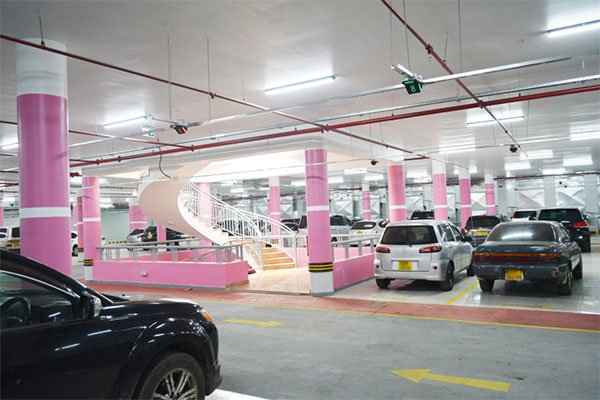
Now complete, the new parking facility at Holy Family Minor Basilica has a capacity of 516 slots, split into four levels underground. The church has beefed up security following the opening of the parking to the public.
“There is a lot of screening for pedestrians and drivers at the point of entry. We have also increased the number of security guards and armed security officers on patrol,” says Father Ng’ang’a.
The decision to build parking slots below the ground was born out of a need to preserve the original look and feel of the Basilica and also not to interfere with the core business of the church.
“Our core business is worship. We didn’t want to create a building and block the frontage of the church, but rather to preserve its design and façade,” Father Ng’ang’a elaborates.
Bearing in mind that the church had no other land within the city centre, excavation was the most optimal thing to do. His Eminence John Cardinal Njue challenged the leadership of the church to think through the concept of having the parking area underground.
“A team of professional building consultants came on board and carried out a geological survey to see if our idea could work,” Father Ng’ang’a narrates. The Archdiocese also commissioned professional project consultants.
They included MML and Townsend (as project managers), Trioscape Space Planning Services (architects), Laurez and Associates (quantity surveyors), Frame Consultants (civil structural engineers) and Geomax Consulting Engineers (electrical and mechanical engineers).
After much research, the team resolved that an underground parking lot was viable at the location. The proposal was to choose between three models of underground parking facilities: Fully mechanised, semi-mechanised or the conventional model.
“The fully mechanised model would have pushed up the costs, and for us to break even, we would have to ensure that the slots were over 600.
The county government couldn’t approve over 600 parking slots because of the challenge of traffic management in Nairobi,” says Father Ng’ang’a.
The church therefore opted for the conventional parking model as it was economically viable.
The facility is one of a kind in Nairobi. It features automated access control for entry and exit and grants access to authorised vehicles only. This enhances the safety of parked vehicles.
Drivers will also be able to access the parking facility using temporary barcode tickets or prepaid cards. The latter will enable drivers to have a tap-and-go experience without having to pass by the pay stations.
The facility has an intelligent parking guidance system (PGS), which combines traffic monitoring, communication, processing and information dissemination technologies to give drivers dynamic, real-time information about space availability.
The system utilises outdoor and indoor occupancy signs as well as bay indicators to guide drivers to free spots. This eases parking.
These special features bring unmatched convenience to the facility. Besides, parked vehicles are sheltered from small thefts, riots and adverse weather.
The area is served by two lifts. This makes it accessible to persons who are physically challenged. All the four levels are fitted with enough air conditioning machines, fire-fighting equipment and carbon detectors. There is CCTV surveillance, 24/7.
The lighting system has sensors that detect and adjust the level of lighting as deemed optimum. The Basilica is using solar power at the facility to cut energy costs. Additionally, the parking silo is served by a helical staircase that uses glass to allow natural light to penetrate to the fourth level.
There are charging areas for electric cars. On standby is a power back-up generator for the entire parking facility.
Competitive pricing
The facility provides for both long-term and short-term parking contracts. “We are giving a discounted rate in 2020,” says Father Ng’ang’a. A parking slot goes for Sh500 for a day. Motorists with pre-paid cards can park multiple times throughout the day up to 11pm.
Corporate companies and SMEs who have several cars will enjoy parking space for Sh15,000 per car per month. The rates go lower depending on the number of cars. This is competitive pricing, given that in Nairobi’s CBD, parking bays go for as much as Sh19,000 a month. Tenants at Cardinal Otunga Plaza will benefit for an even friendlier rate of Sh12,000 per car per month.
For short-term parking, the first two hours will cost Sh100. The third and fourth hours will push the cost to Sh300 and Sh400 respectively. From five hours onwards within the day, the cost will be Sh500.
Therefore, visitors on short stay at the Cardinal Otunga Plaza, which has conferencing facilities and meeting rooms on lease, are well catered for.
The facility’s location is also strategic for guests attending meetings and conferences within Nairobi CBD. It offers exclusivity and is within quick reach of exit routes – Uhuru Highway and Mombasa Road.
It is expected that the church will recoup its Ksh870 million capital invested in the project and break even within five years.
AUTEC Car Wash Systems, a leading global manufacturer of high-volume, income-driven, fully automated car wash equipment based in Statesville, North Carolina, has announced it’s acquisition by Dallas-based business leader and entrepreneur Vic Keller. The terms were not disclosed.
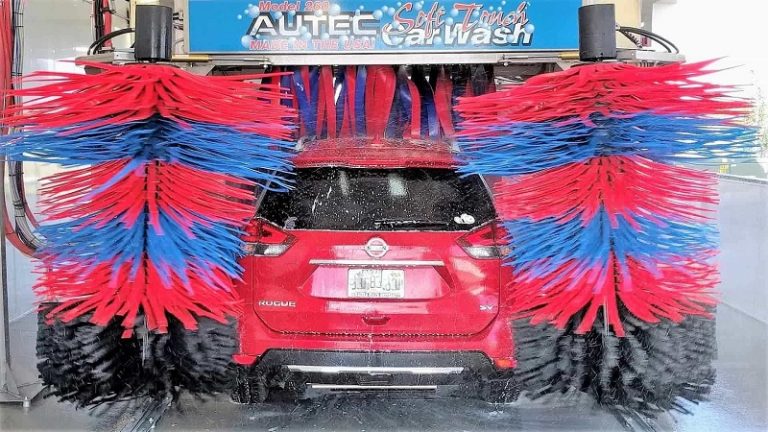
Since 1981, AUTEC Car Wash Systems has specialized and manufactured three fully automatic car wash systems – soft-touch car wash systems, touch-free car wash systems, and a combination car wash system that provides both. They also manufacture a premier soft-touch car polisher. AUTEC Car Wash Systems’ customers include thousands of automobile dealerships, convenience stores, lube centers, fleets and investors across the globe.
AUTEC Car Wash Systems is known in the industry for their unprecedented wash quality, durable materials, superior craftsmanship and eco-friendly options. Each system is manufactured in the USA and is built with 100% stainless steel by the finest engineers and manufacturing professionals in the industry.
Growing from a small company that started in the founder’s basement, to a multimillion-dollar corporation, the expert team at AUTEC Car Wash Systems has grown to include marketing, design, research and development, engineering and drafting, welding and metal fabrication, paint and surface preparation, electrical, assembly, technical service and complete chemical blending, formulating and packaging operations.
The seasoned team at AUTEC Car Wash Systems assists its customers every step of the way during their car wash buying experience – from helping with demographic studies, site selection, branding and equipment choices, all the way through everyday maintenance, repairs and system refreshes. AUTEC Car Wash Systems works to ensure their customers have consistent cleaning performance, best-in-industry throughput and the lowest-cost operation in the business – resulting in a solid return on investment.
Keller is a seasoned automotive executive and entrepreneur. He has more than 25 years’ experience building, growing and leading a diverse portfolio of companies across numerous verticals including manufacturing and distribution, automotive, technology, e-commerce and financial services. Keller is a firm believer in investing in people, not just businesses, and his leadership philosophy focuses on intentionally instilling a great culture, delivering a profitable financial model and developing top talent to execute the vision.
“I am thrilled to be operating in the automotive industry again and to be a part of the AUTEC team,” said Keller. “AUTEC has established themselves as an elite player in the car wash manufacturing space and has tremendous potential to further accelerate their footprint. We see a huge opportunity to drive innovation, technology and optimization to increase customer retention and CSI, also known as the customer satisfaction index, by providing an ultimate customer experience in order to help our customers reach their maximum return on investment.”
Keller continued, “I am passionate about the incredible business that Tom Hobby, the founder of AUTEC, has built. The AUTEC team has been extremely welcoming and genuinely supportive of this transition, and we are working together to capitalize on strategic opportunities ahead. My vision is to leverage the successful model that Tom and the AUTEC team have created, while driving innovation in key areas to lead the company into its next chapter.”
In addition to AUTEC Car Wash Systems, Keller is the founder of KLV Capital, a Dallas-based private equity firm. Previously, he founded the ZAK Automotive Companies, which included ZAK products, a professional-use automotive chemical company that was an official partner of NASCAR; ZAKTEK, an insurance services company; and NEXEMO, a business to business e-commerce purchasing platform for the automotive industry.
In 2015, after Berkshire Hathaway Inc. acquired the ZAK Automotive Companies, Keller continued as CEO and his senior executive responsibilities for Berkshire Hathaway Automotive, where he oversaw several operating departments in the multibillion-dollar organization, including the parts and service business. Keller developed and led the Berkshire Hathaway Automotive professional development department, which provided training, talent acquisition, sales strategy, customer experience and dealer academy services to more than 11,000 associates.
ABOUT AUTEC CAR WASH SYSTEMS
AUTEC Car Wash Systems is a leading global manufacturer of high-volume, income-driven, fully automated car wash equipment. Their global distributors work with auto dealerships, convenience stores, lube centers, fleets and investors who find customized solutions to fit each customer’s needs. AUTEC Car Wash Systems specializes in four different automatic car wash products: soft-touch car wash systems, touch-free car wash systems, combination car wash systems and soft-touch car polishers. Superior quality comes standard and all AUTEC Car Wash Systems products are built on a foundation of solid construction and include high-performance features. Built in the USA with 100% stainless steel, each system is completely automatic, providing customers with decades of proven durability and reliability.
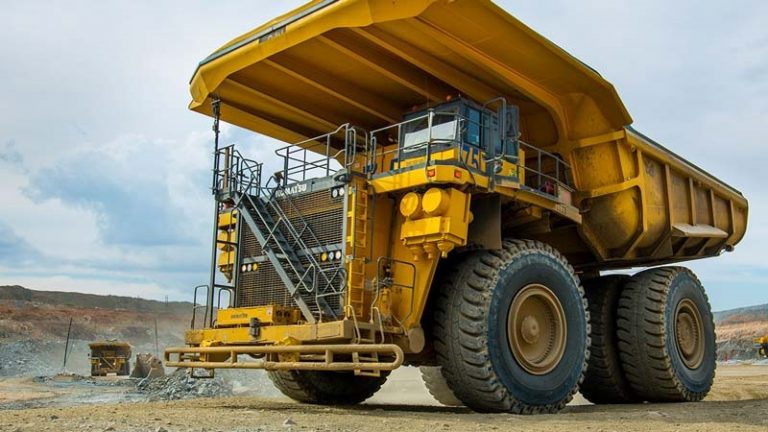
Anglo American, ENGIE, and Williams Advanced Engineering have announced plans to develop and fuel the world’s largest hydrogen-powered mine haul truck, a 290-tonne behemoth with a high voltage battery system.
Global mining company Anglo American announced back in October a partnership with French energy company ENGIE to develop and fuel the world’s largest hydrogen-powered mine haul truck, part of the company’s sustainable mining effort which will see the company reduce its global greenhouse gas emissions by 30% by 2030.
At the time, it was expected “first motion” of the hydrogen powered truck would take place some time in 2020 followed by a testing and validation programme at Anglo American’s Mogalakwena platinum group metals mine in South Africa.
Fast forward to earlier this month, and UK-based technology and engineering services company Williams Advanced Engineering (WAE) announced that they had been engaged by Anglo American to help develop a new Fuel Cell Electric Vehicle (FCEV) – an ultra-class electrically powered mining haul truck which, upon completion, would emerge as the world’s largest hydrogen powered mine truck.
The intended mine haul truck will be powered by a hydrogen Fuel Cell Moule paired with a WAE scalable high-power module lithium-ion battery system.
Intended to replace the existing vehicle’s diesel engine, this new hydrogen/battery arrangement will be controlled by a high voltage power distribution unit delivering in excess of 1,000 kWh of energy storage.
WAE expect the resulting vehicle will deliver “significant” peak power capability” and provide the “robustness” usually reserved for diesel powered mine haul trucks. Including regenerative braking – which will allow the battery system to recover energy as the haul truck travels downhill – testing will begin later this year at the Mogalakwena platinum group metals mining operation in South Africa, Anglo American’s flagship PGMs mine.
“We are delighted to be involved in this innovative and exciting project which showcases the scalability of battery technology from automotive and motorsport to ‘heavy duty’ industrial applications,” said Craig Wilson, MD of Williams Advanced Engineering.
“Operating within a harsh environment is something we are familiar with as sole battery supplier for the Extreme E programme and we remain committed to supporting long-term sustainability projects.”
“We have a longstanding commitment as a leader in responsible mining, with numerous examples of our progressive business decisions across many decades and we look forward to working with Williams Advanced Engineering to deliver this important step-change technology, a true world first for a vehicle of this size and load capacity,” added Julian Soles, Head of Technology Development for Anglo American.
“With their extensive industry experience, we believe Williams can help us to deliver this ground-breaking project, which is part of our plan to create a smart energy mix that moves us closer towards our carbon and energy targets for 2030 and, ultimately, our vision of operating a carbon-neutral mine.”
The automotive industry is undergoing the most fundamental transformation in its history and, as this article suggests, a flexible approach to software development will become essential to companies that want to stay competitive.
As well as applications development, industry is experiencing the impact of other key technologies such as:
robotics and automation;
supply chains, warehousing and logistics;
digitalisation;
electric engines;
autonomous systems; and
connectivity, or the internet of things.
Clearly, it would be almost impossible to go into any great depth in a 2,000-word article, but we will at least bring to your attention the new technologies that are already changing the automotive landscape.
Looking back in time
First of all, let’s go into reverse gear and set the scene. The car industry has always been one of the sectors that had the most advanced technology and processes.
The assembly line did away with the craftsman-like approach where one highly skilled person or a small group of highly skilled people would perform all necessary tasks in the production of a finished vehicle.
The first assembly lines in automotive manufacturing were introduced in the early 1910s, and since then, large numbers of people have been involved in the production of cars, each person performing a relatively simple task, in just about every large-scale operation.
And by sub-dividing the production in this way, it became possible to reduce the complexity of each task to the point where some tasks could be automated and robots given the job.
Robots everywhere
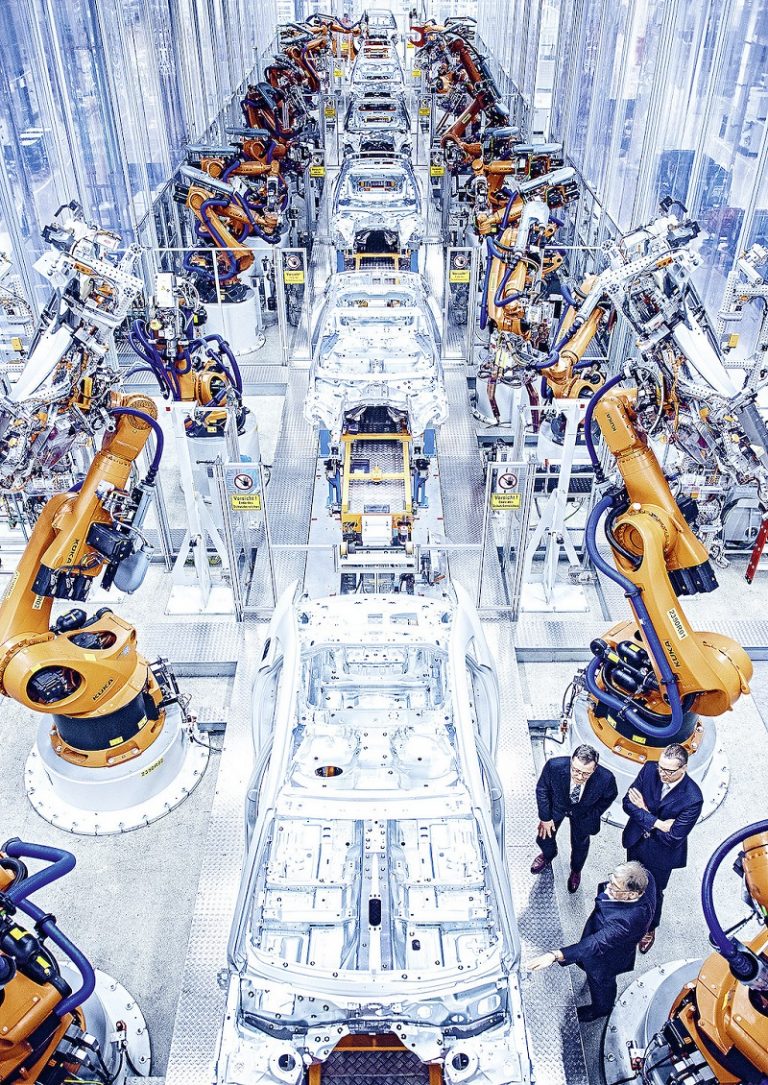
Welding is probably the most well known task for robots in automotive production. Robots also do heavy lifting and conveyors carry the cars along a linear production line while the robots work on them.
Here is a list of applications of industrial robot arms in automotive manufacturing:
welding: this is the single most important task for robots in the automotive manufacturing sector, and provides dramatically faster processes and higher quality of work;
painting: a relatively under-used application for industrial robot arms in the automotive sector, but quickly growing in use;
gluing: applying glue to vehicle components such as the windscreen is often done by collaborative robots and, therefore, is one of the newest robotic applications;
assembly: a large proportion of assembly tasks is too complicated for robots, but applications are growing as software and vision systems become more sophisticated and powerful;
machine tending: robots can tend machines such as CNCs and save an enormous amount of human work time in that way;
material handling: whether it’s moving material from CNCs, or parts from conveyors or pallets and boxes, robot arms are saving a huge amount of time and saving money, as well as improving accuracy; and
transporting material: autonomous mobile robots have grown rapidly over the past couple of years and on the way to dominating the warehouse, and some even have arms attached to them.
Making robots more friendly to humans
Collaborative robots are on the way to fundamentally changing the perception of all industrial robots.
Until recently, industrial robots – meaning those big, hulking arm-like machines – were considered so dangerous that they were always caged off and kept separate from human workers.
The big ones are still kept separate as a precaution, but even they can now be converted to take on some “collaborative” features, such as awareness of humans near them, which would make them slow down or stop completely.
Collaborative robots tend to be smaller so they can’t do what the big robots do, but they have found many and varied applications in the manufacturing and logistics sector.
In automotive manufacturing, collaborative robots can be found applying glue to windscreens and other components, and they can be found helping out with final visual inspections, and opening and closing doors to “hear” if they sound right and “feel” if they operate correctly.
Sensors enable this type of assessment by collaborative robots, but there is a specific ISO certification which enables a manufacturer to call its robots “collaborative”.
So even if the big machines are made safer through integrating perception technologies, whether robot manufacturers will choose to call them “collaborative” remains to be seen.
Some people call autonomous mobile robots, or AMRs, “collaborative” because they are equipped with collision avoidance sensors which enable them to humans and other obstacles. They are as safe as collaborative robotic arms currently finding their way into large parts of industry, as AMRs are doing.
One of the key advantages of the new collaborative robots is that can be “taught” complex tasks in very straightforward ways – by simply holding it and guiding it through a task once or twice.
Traditionally, industrial robot arms require highly qualified experts to program them using computers and are operated through a special type of computer called “programmable logic controller”, or PLC.
Some have predicted the demise of the PLC, partly basing their forecast on how collaborative robots are able to learn and perform many tasks without the need for an additional computing device.
The end of the assembly line
In the future, it’s possible that what could be described as a the “traditional linear conveyor system”, or production line, will largely disappear.
It’s probably difficult to imagine that, but the alternative currently being researched is rather interesting.
Research is being conducted by various companies into the future of automotive manufacturing, and one scenario being explored involves autonomous mobile robots carrying vehicles through the production process, from one robotic cell to another.
One robotic cell may install the electronics system, another put in the engine, then another welding the body parts together, and others doing things like assembly, painting and so on.
This “robotic cell-based process” may result in the autonomous mobile robot carrying the vehicle in a meandering fashion through the factory, whereas now, we mainly see a very straight production line.
Why would this robotic cell-based system be advantageous? For two reasons:
installing conveyor systems and a linear production line is more expensive than using autonomous mobile robots because it fixed infrastructure costs more to construct.
Autonomous mobile robots do not require any fixed infrastructure to be placed. Everything about them – from the machines themselves to their charging points – is moveable.
Another big advantage of what might be called the “flexible production” line involving autonomous mobile robots is that it enables manufacturers to change layouts for any reason.
Reasons might include discovering and implementing processes that are more efficient and changes in product or system design.
Usually, changing a fixed-infrastructure operation involves huge expense and a lot of time. It should be added, however, that there may be advantages to having fixed infrastructure that autonomous mobile robot-based system may not be able to beat – speed is one of the biggest.
However, autonomous mobile robots are getting faster and bigger – some have payloads approaching three tons, and they may become modular in that robotic arms could be attached to them.
Electric future
So far, we have highlighted the changes that have occurred within factories and warehouses, which are quite significant in themselves.
However, the biggest change happening now is in the world outside. Consumers all over the world are making it clear that they are want a change from petrol-driven cars to cleaner alternatives. In China, the world’s largest automotive market, this new generation of mobile machines is given the label “new energy vehicles”.
The two main types of new or alternative energy are hydrogen and electricity. The main company championing hydrogen is Toyota, the world’s largest automaker and, ironically, the market leader in electric vehicles for the mass market.
Which one of these alternative energies gains ascendancy in the next few years will determine how the automotive market globally will develop for the foreseeable future.
And wherever the future takes us all, many experts say that the days of the petrol-driven combustion engine are numbered.
Why does this matter to manufacturers?
According to some experts in automotive manufacturing, the production processes involved in making electric cars is significantly different from those of current, petrol cars.
One of the reasons for this is that industrial designers are opting for things such as gluing and other joining methods instead of welding. Given that welding is absolutely fundamental to traditional automaking, this is a dramatic departure.
Moreover, many of the internal components will almost certainly be made using 3D printing, or additive manufacturing, processes.
And, interestingly, the idea of a vehicle driving itself around the factory and getting itself made is not as far-fetched as it might sound at first.
Essentially, the the part of the vehicle that is self-driving will be built first so it can move around the factory without the need for separate specialist autonomous mobile robots, or automated guided vehicles.
In other words, the wheels and base of the car will be put together first and then the rest of it while it drives itself through the factory.
While some may think this is a flight of fantasy and not likely to happen any time soon, the fact is that the technology is already available to do all this – it just needs some talented system designers and particularly forward-looking companies to implement them.
Volkswagen executives visit a FAW facility to see the Geek Plus Robotics driverless forklift in action
Supply chains
A supply chain is the distribution and storage systems used by companies throughout their operation, from raw materials they receive from their own suppliers right through to the supply of the end product to their customers.
Robots are increasingly playing an integral part in most large companies’ supply chains. In fact, most researchers are finding that this is the fastest-growing market for robotics and automation technologies.
What could be described as the iconic or quintessential robot in the new supply chain landscape is the autonomous mobile robot, or AMR, which is a wheeled platform on which most often shelves are installed.
Sometimes called warehouse robots, these AMRs have been finding applications in an increasing number of warehouses across the world, and Amazon was one of the first to use them on a large scale – some would say AMRs are the main reason for Amazon’s success in the online retail market in recent years.
Now, it’s not just Amazon that uses warehouse robots, it’s just about every large and even medium-sized warehouse operation.
AMRs have been found to increase efficiency and accuracy, with productivity gains calculated to grow by about three to eight times, sometimes more. This means the return on investment is quite short and to add to their attraction, AMR suppliers are also providing them on a pay-as-you-go basis.
At the moment, AMRs are only really allowed to be operated within warehouses. But SICK, a specialise makers of sensors, has released a technology which is the first to be certified for outdoor use.
And when we look even further outdoors, there are companies which are developing large vehicles, such as trucks, for driverless transport for goods within a site or even along public roads.
Mercedes is one of the companies at the forefront of developing driverless trucks, but they are by no means the only company to do so.
As these technologies emerge – robotic arms for material and part handling, AMRs, and driverless vehicles – it’s possible that, within about five years, supply chains are could be more than 50 per cent autonomous. Some companies may already be able to make that claim.
Digitising the industrial world
Digitalisation has been a massive undertaking in the past few years and could be said to have reached a very high level now. In other words, it took a while to design virtual versions of factories, machines, parts and individual components, but much of it is done now.
And it’s not just a visual representation of things they designers were after, it was also essential to have integrated real-world physics into them. This is why a “digital twin” of something is so useful.
Now, with all the digital twins available, it is possible to use computers to design virtual versions of a factory or warehouse containing all the machinery and processes – right down to the human workers in situ.
Companies such as Siemens have been at the forefront of this trend, but there are many other companies which have done groundbreaking work in the sector. If the computer games industry can do it, so can traditional industry.
And it’s not just in manufacturing that digitalisation has found unprecedented applications, digital supply chains are all the rage.
Being able to visualise an entire distribution and storage network – or manufacturing process – in realtime on one computer screen provides a never-before-experienced level of power to manage and refine processes and make them increasingly efficient and productive.
Furthermore, with increasingly sophisticated artificial intelligence systems becoming more widely available, humans need only take critical decisions and leave all the routine to the digital enterprise, allowing it to almost run itself.
All of the above technologies comes with a requirement to write software applications, or apps. And while some apps can be used by many different companies because they deal with tasks that are common to many companies, some apps need to be specially built from the ground up for a specific purpose – a purpose that perhaps no other company needs it for.
In order to enable this, SICK has launched something called AppSpace (see video below), a flexible and fast software development platform that enables programmers to create solutions for the entire industrial process.
AppSpace offers system integrators and original equipment manufacturers the “freedom and flexibility” to independently develop application solutions that are tailored to the specific needs and requirements of any task.
Whether it’s designing the ideal online user interface, selecting the most suitable programming technology, or distributing the sensor app on various SICK sensors, AppSpace gives developers the power to develop their own customized solutions.
Additionally, SICK’s AppSpace & Vision Now can take a product such as a 2D or 3D vision camera and make it a solution by only using the vision tools necessary for the product to solve the application.
The auto industry is under immense pressure to adapt as customers demand convenient, reliable and safe transportation. Most automotive original equipment manufacturers (OEMs) are manufacturing companies that build cars, and they have been this way since the 1800s. We are in a phase of the industry where convenience, entertainment and safety are valued more than the drive trains and other things under the hood that make cars move.
The old way of doing things is not working. The automotive industry as a whole is under existential threat for the first time in 140 years. Tesla, the new kid on the block, is the barbarian at the gate that’s not following any rules. I believe this disruption is a huge wake-up call.
If the auto industry wants to survive, it will need to intercept the market soon and adapt. Even if the automakers get there, the market may not be kind, but it may afford them a chance to change the rules back again. While this sounds simple, it is far from it. Several technical hurdles need to be dealt with before anyone gets into the lead situation and starts rewriting the rules. And it all must be done at a price point consumers are willing to pay.
The Tesla Way
Tesla has taken a multipronged approach to mete out its assault on the auto industry. First, the company built an electric-powered car that is fun to drive, and then it gave the driver a user experience that almost feels like a smartphone.
Second, Tesla is essentially a software company. While the old auto industry is playing catch-up to the new user interface, Tesla is taking the fight to them with autonomous vehicles. The company is miles ahead of the rest of the industry (no pun intended), both from a technology and a marketing perspective. It is ironic to look at this giant industry from this perspective, but it’s necessary.[
An electronic, technology-centric approach to making a car is the disruption the auto industry needs to survive. Tesla is a technology company that makes cars. The company is driving innovation at an exponential rate with periodic remote software updates that change the personality of these cars. Other companies are manufacturing firms that make cars but don’t understand technology as Tesla does. The market is continuously evolving, and the impetus to migrate to autonomous vehicles is on the industry as a whole. The significant promise of autonomous cars is safety. The electric-powered autonomous vehicle will alter the way we drive today and will provide a safer and more efficient use of the infrastructure.
Some Signs Of Change
OEMs are responding by acquiring and investing in technology companies that augment their portfolios. For example, in 2016, GM bought Cruise Automation, a self-driving technology startup to help expand its footprint in Silicon Valley while taking a hands-off approach.
Also, consider Toyota’s announcement at CES 2020. The company plans to build its own smart city (the “Woven City) with only autonomous cars, for testing purposes. Roughly 2,000 people will live and work at the 175-acre proving ground.
Also at CES 2020, Mercedes-Benz unveiled a concept car influenced by the 2009 blockbuster movie Avatar. The car is both sustainable and autonomous, and it features an electric motor and no steering wheel, as the car’s center console will recognize “the human driver’s heartbeat and breath so man and machine literally merge into a fully intuitive experience,” according to a Mercedes press release.
And BMW Group’s autonomous driving campus outside of Munich showcases the company’s move to be a tech company.
Others are investing heavily in building large software development teams. Still, electronics technology is not their core competency, and just throwing a large team at the issue will not solve the problem. These companies need to make a bet on the right partnerships. Either the companies go completely vertical, similar to Tesla, and develop the entire technology stack themselves — which will be difficult for the incumbents given their manufacturing DNA — or they go horizontal and source “best of breed” technology from various entities and integrate them intelligently. The second approach will enable automotive OEMs to leapfrog Tesla altogether.
The key question is who has the vision in the automotive OEM companies. What I saw recently at CES 2020 gives me hope. I met several CTOs of automotive OEMs and tier-one parts suppliers who have the vision and want to beat Tesla by going horizontal. Some of these CTOs have realized that this is the only way to survive this huge transition and not be marginalized. Only time will tell how influential (or successful) they are in making this huge cultural shift.
Looking Ahead
Daimler announced in September of this year the company would stop developing internal combustion engines to focus on electric cars. This is big for the industry. Let this sink in: The company credited with inventing “the prototype of the modern gasoline engine recently released its latest generation internal combustion engine and it might be its last.”
The internal combustion engine remains a crucial pillar of mobility, and its sales finance the development of electric drive systems and autonomous cars. The disruption is real, and I believe very few automobile companies will survive in the U.S. and Europe. Over the next several years, it will be interesting to watch the auto industry as a whole, especially GM. While everyone is hedging with investments in third-party technology as well as internal development, GM is taking a contrarian approach with an all-in bet on Cruise.
On a side note, we will undoubtedly see cheaper and more fuel-efficient cars coming from Japan and Europe as gas prices continue to increase. But the real story will be who adapts and delivers the first autonomous vehicle. This is fascinating, and my odds are on companies that transform or adapt fast. They will absolutely survive and will be positioned well to rewrite the rules back again.
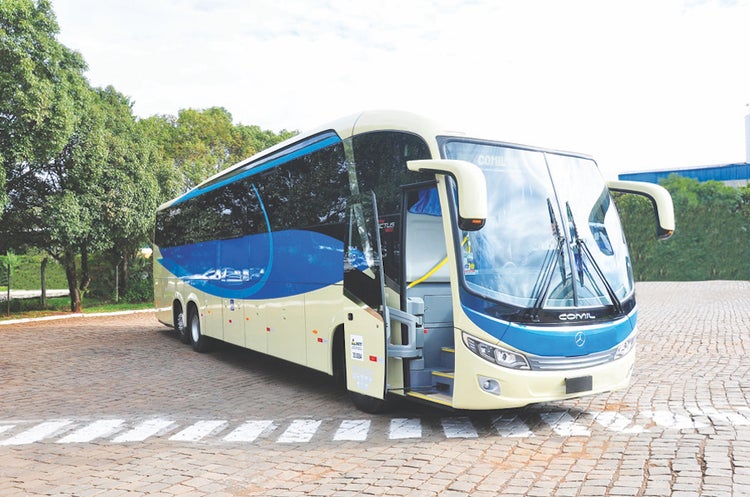
In collaboration with Utobras Nigeria Limited, the authorized representative of Comil buses in Nigeria, eststar Associates Limited, Authorized General Distributor of Mercedes-Benz in Nigeria, are proud to unveil the all new Mercedes-Benz Comil Campione Invictus 1200 bus to the Nigerian market.
The Campione Invictus 1200 bus is a solution aimed at long distance road lines, it comes with an advanced concept in its body design and architecture while highlighting a modern design with curves and more fluid lines following current trends in the automotive industry.
Following the tradition and reputation of the Brazilian bus operators which spans over 70 years, Comil has made products that come with the highest quality materials, which also follow the latest design trends in the bus industry. Their key selling point however is the cost effectiveness. Bus operators in Nigeria can now increase their fleet with the quality they require for their businesses without breaking the bank.
The Mercedes-Benz Comil Campione Invictus 1200 bus comes with the traditional robustness and durability of the Comil line, it also features new coverings, expanded passenger access, a large glass area and a cabin with improved ergonomics for the driver. The bus comes with a capacity to carry up to 24 tonnes, a length of up to 14 meters long, a width of about 2.6 meters and is built on the ever-reliable Mercedes-Benz 0 500 RSD bus chassis developed for middle- and long-distance travel.
Comil has made products that come with the highest quality materials, which also follow the latest design trends in the bus industry
The exterior of the Campione Invictus 1200 bus comes with standout features like the headlamp set with LED daytime lighting which comes in an exclusive Comil design. It also complies with DRL (daytime running light) legislations in major markets. The rear lights also get a new design and they are divided into two parts, with full LED lighting. The front view has been re-shaped to blend with modern design trends, this gives the bus a more rounded and dynamic design with lower drag coefficient and less air resistance. The front water flow is another key feature in the exterior design.
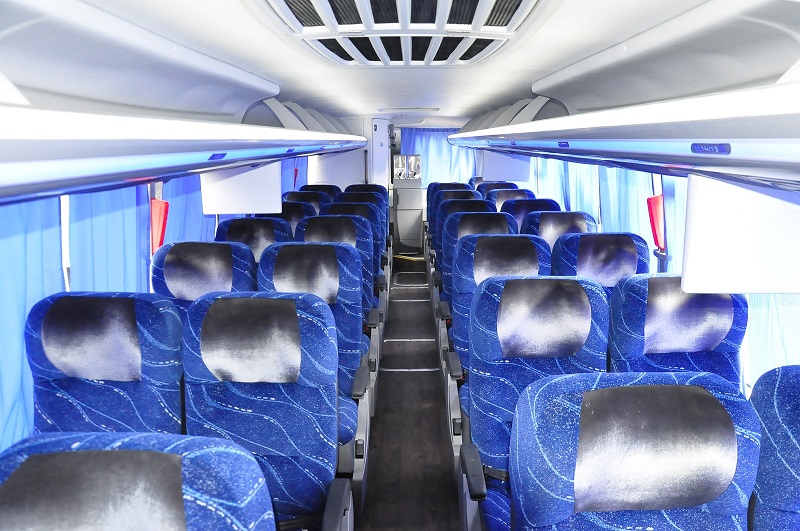
The interior of the Campione Invictus 1200 bus features a new partition with a curved glass door which can be equipped with a reinforced partition wall, this improves the use of the cabin space and the spaciousness of the hall. There is also improved ergonomics and space for the driver as the cab is better optimized and designed to comfortably serve drivers with above average height. The passenger area is fully remodeled with new finishes on the seat packages, the roof comes in a new modern design and with ambient lighting, there are more covering and curtain options, a media display, USB ports for passengers and the roof AC is another major highlight.
The O 500 RSD 2436 6×2 chassis is equipped with an OM 457 LA engine that comes with 6 in-line cylinders. The power output is 265 kW (355 hp) at 1,750 rpm and is operated via a 6-speed manual gear transmission. The Mercedes-Benz O 500 chassis is also very economical for bus operators as the electronic motors included in its engine ensure that the bus consumes lower fuel and has a longer life.
The O 500 RSD chassis is equipped with safety features like the Top Brake auxiliary engine brake coupled with the conventional engine brake system. This brake system provides many advantages, such as increased braking power, higher speed on slopes, less gear shifting, lower maintenance costs, longer life of brake and tire components and fuel economy. Also, there is an anti-lock brake system (ABS) which offers greater safety, because the vehicle remains stable in adverse driving conditions and critical situations. In cases of sudden braking, even on smooth surfaces or rough roads, the ABS system prevents the vehicle from skidding.
According to Mr. Mirko Plath, Managing Director, Weststar Associates Limited, the collaboration with Utobras Nigeria Limited to introduce the Comil Campione Invictus 1200 bus to the Nigerian market. He emphasized Weststar’s continued commitment to providing the best products in a bid to aid the transport system in Nigeria, he also pointed out that bus operators would see a lot of benefit in the Mercedes-Benz Comil combination, as the ever-reliable O 500 Chassis runs in the modern bus design of the Campione Invictus 1200.
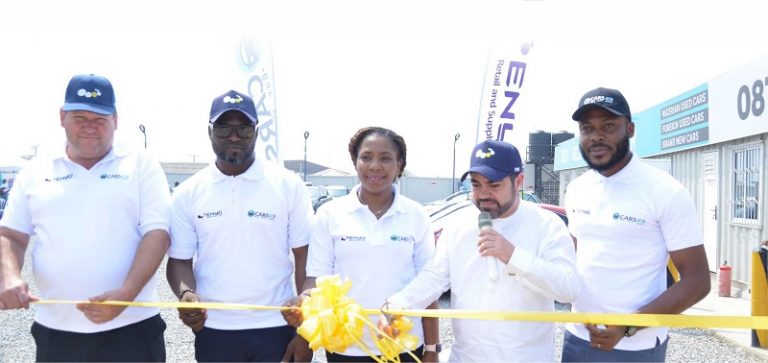
Enyo Retail and Supply, a leading fuel retailing company, has strengthened its partnership with Nigeria’s largest digital vehicle trading platform, Cars45, to launch a world-class auto-service centre. The site, which is located at Ogolonto, Ikorodu was unveiled on Saturday 25th January, 2020 to provide consumers with superior automobile services and improve the auto service industry in Nigeria.
This initiative is part of Enyo and Cars45’s commitment to customer satisfaction and providing efficient services in the Nigerian automotive industry. The unveiling of the auto-service centre will provide customers with access to world-class automotive services including vehicle maintenance, servicing, inspection, sales, swap and other value-added services which strengthen Enyo and Cars45 long standing partnership. The event which also featured a live auction of cars for consumers and free auto-diagnostics by Enyo’s Vehicon was well attended.
Commenting on the initiative, Chief Executive Officer, Enyo Retail and Supply, Abayomi Awobokun described the partnership with Cars45 as an extension of Enyo’s efforts to strategically position itself as a brand that not only provides fuel but also creates value for its customers across board.
According to Awobokun, “Both organizations involved in this partnership are deeply invested in technology and customer satisfaction and it is only natural that we further our partnership to develop the currently fragmented automobile industry. It is also in alignment with our brand persona as the most exciting and trusted fuel retail brand in Nigeria. I have no doubts that this partnership will become the role model for delivering world-class automotive services in Nigeria”.
The auto-service centre will feature Vehicon – Enyo’s premium vehicle diagnostics and maintenance service outlet manned by skilled operators trained by Enyo’s Mechanic and Technician Academy (MechTech) and Bosch, global leaders in auto equipment manufacturing. It will also stock an array of global Castrol lubricants, in addition to providing certified spare parts to deliver the best possible outcomes in any automobile.
Also speaking on the partnership, Chief Executive Officer, Cars45, Etop Ikpe, noted that the relationship is a strategic one aimed at helping the company to achieve its mission to build an ecosystem that enhances, enables and drives trade within the nation’s automotive sector.
“This partnership with Enyo stems from our commitment to expand our products and services across the country. On our journey to empower mobility across Nigeria and Africa, it is our desire that we are there for the consumer every step of the way. As such, our solutions have brought convenience and transparency to the purchase and sales of vehicles, we are championing vehicle financing to help more Nigerians own cars; inspection services that empower users to know more about the history and condition of their vehicles amongst other services that we provide. Our partnership with Enyo as well as the launch of the world-class auto maintenance, sales and repair facility is in line with our commitment to be that platform where anything automotive can be achieved”, Ikpe added.
On his part, Corporate Development Lead, Enyo Retail and Supply, Olabanjo Alimi, said, “We recognize that there have been changes in the automotive industry in terms of automobile sophistication and parts, which has created a skills gap. We introduced Vehicon to cater to the new advanced mobility world – as customers now have access to excellent products and services for their vehicles. These services will now be available at the auto-service centre”.
The launch of the auto-service centre comes after Enyo signed a partnership with Cars45 to sell, buy or swap cars at all Enyo Retail and Supply stations nationwide in March 2019. With the partnership, both parties aim to successfully transform the automotive industry in Nigeria.
ALSO READ: Cars45 expands into Ghana and Kenya’s multi-billion dollar African used car market