Monday, June 1, 2026
Home Blog Page 60

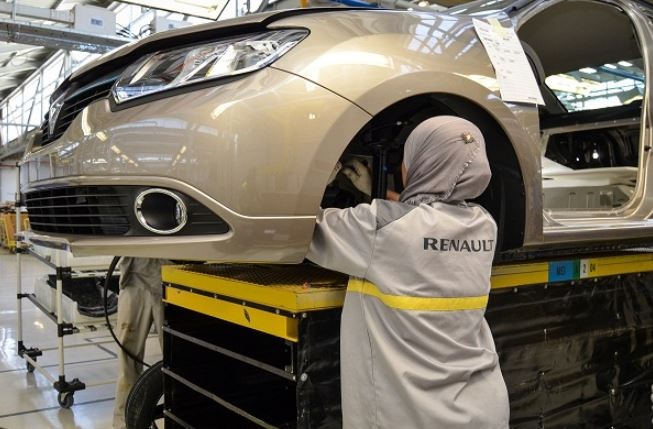
Renault halt production at Morocco plants


Renault Group is shutting down more factories in response to the coronavirus outbreak, adding its assembly plants in Morocco and a powertrain facility in Portugal.

Industrial activities will be halted temporarily in Morocco, where Renault has two assembly plants with a capacity of 400,000 vehicles annually, because of the effects of the coronavirus outbreak. Morocco has 44 reported cases of the virus, with two deaths.

One factory, in Tangier, produces Dacia models, including the Lodgy, Sandero, Sandero Stepway, Dokker and Logan MCV, and has a capacity of about 320,000 vehicles. The other plant, in Casablanca, makes the Dacia Logan, Sandero and Sandero Stepway.

Most of the production at the two factories is exported to Europe, the Middle East and Africa. Outside of Europe and some North African markets, the vehicles are branded as Renaults instead of Dacias.

Renault said about 11,000 employees would be affected by the shutdown in Morocco. Separately, Renault said it was closing its engine and transmission plant in Cacia, Portugal, as of Wednesday morning. The factory has about 1,000 workers and exports to 12 countries on four continents, Renault said.

Renault has closed nearly all its assembly plants that serve Europe, North Africa and the Middle East. As of Wednesday morning, factories in Turkey and Romania continued to operate.

Also read: Coronavirus damages China’s auto industry as outbreak worsens

Rethinking smart mobility in Africa


Smart mobility, already adopted by major cities globally, is on the emerging markets’ investment agenda for their transportation infrastructure. It has been proven that smart cities are a catalyst for social and economic development where technology has been used to deliver quality service that does not cause harm to the environment culminating ultimately to a better quality of life.

The World Bank reports that, “a country’s growth of measured gross domestic product is directly reduced by poor public transport infrastructure”. Emerging markets are now required to rethink their transportation systems and investigate new ways of planning and providing transport systems.

Smart mobility market in South Africa

The National Association of Automobile Manufacturers of South Africa (NAAMSA) noted that 2015 saw the adoption of 1.5 million electric vehicles and plug-in hybrids worldwide, about 0.1% of cars on the roads globally.

By 2040, this number will skyrocket to 35% of all cars on the road. Africa is urbanising faster than any other continent, at a rate of 4% every year, compared to the global average of 2%. Its rapidly growing urban population continues to strain existing infrastructure – transport and energy.

“To accelerate the adoption of smarter mobility across the continent, we are launching the inaugural Smarter Mobility Africa summit at the Sun Arena at Time Square on 1 and 2 October 2019,” says Ben Pullen, Co-founder and CEO of Generation.e.

Not only is this the first Smarter Mobility Summit but Generation.e will also be launching the Electric Vehicle Road Trip Africa (EVRT Africa), which will see 12 state-of-the-art vehicles set out on an unprecedented road trip from Johannesburg to Cape Town over eight days to demonstrate that it is, in fact, possible to adopt intelligent mobility.

Electric vehicle innovation

In the coming decades, it won’t be a question of if the public will adopt EV, but when.

As a pioneer in the automotive innovation space, Nissan joins other original equipment manufacturers (OEM) at the South African Department of Transport’s Smarter Mobility Conference being held in Gauteng on October 1-2. The event brings together mobility thought leaders from business and governments to discuss how the transition to electric and smart mobility can be accelerated.

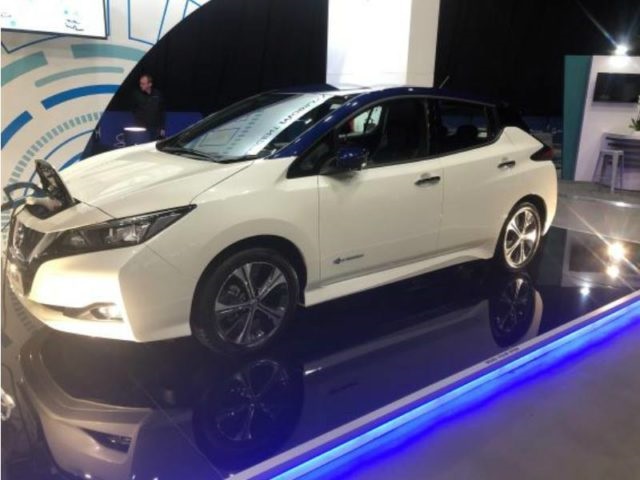
Nissan was the first OEM to introduce an electric vehicle into South Africa; the Nissan LEAF in 2010. The latest version of this electric vehicle supports Vehicle-to-Grid technology (V2G). Nissan Energy is a flexible solution combining second life Nissan LEAF batteries and solar panels to generate sustainable power.

“Nissan is committed to its sustainable development goals. We have worked with Filadelfia School in the community of Soshanguve to improve its access to reliable electricity and increase its use of renewable energy,” says Kabelo Rabotho, Marketing Director Nissan South Africa.

Source: ESI

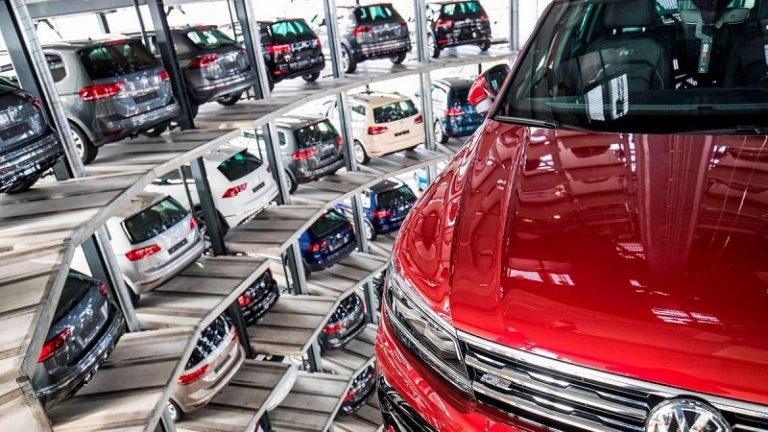
VW and Nissan plan car plants in Ghana to tap West African market


Volkswagen and Nissan are among automakers planning new plants in Ghana to target West Africa’s 382 million people. Their challenge is finding banks that will offer loans to make new cars affordable.

In a country where about 70%t of imports are second-hand, new car ownership is rare, said Believe Alorbu, who sells older models shipped from the US at half the price of a new one.

“People will sometimes leave the plastic wrapping on their seats,” when they buy new cars, she said at her dealership in the capital, Accra. “Even if the government increases tariffs on used cars, people will still not be able to afford new ones if they don’t get access to financing.”

Less than 5% of new car sales are financed by banks, according to the Ghana Automobile Dealers Association. In some cases, lenders demand employers agree to redirect part of the purchaser’s salary toward the debt, or that the owner take out insurance to cover a default. Interest rates of 22% to 30% also make loans “largely” unaffordable, said Koketso Tsoai, an auto-industry analyst at Fitch Solutions.

Once their facilities are running, VW, Toyota Motor Corp, Nissan, and possibly Renault will need to contend with second-hand cars like those sold by Alorbu. Ghana’s government is trying to make it more attractive with planned import duties on second-hand cars of 35 per cent, from 5% to 20%, and tax breaks that improve as the companies move from assembly to local production. It has also pledged to promote regional exports.

“We don’t look at it only for today,” Nissan Africa chairman Mike Whitfield said by phone from Cairo. “We continue to see Africa as the last frontier left in the automotive market, West Africa being a key part of it.”

About 10% of West Africa’s population are able to spend more than $11 (Dh40.39) a day, according to data compiled by World Data Lab. It is this group that the industry is targeting on a continent that adds some 10m new consumers annually. By 2030, Africa’s middle- and upper-income class is expected to exceed 300m of the world’s 4 billion consumer market, the data shows.

Standard Bank Group, Africa’s largest lender, is also preparing for future growth by replicating its South African car-financing business in other parts of the continent, including Ghana.

About three quarters of auto loans still go to companies, Patrick Koduah, head of vehicle and asset finance at the company’s Stanbic Ghana unit, said in an interview. “There’s a huge opportunity to grow personal demand.”

About 30,000 passenger vehicles were imported into Ghana in 2018, according to estimates from Fitch Solutions. Ghana had 7,073 new vehicle registrations in 2018, of which 4,268 were passenger cars, according to the International Organisation of Motor Vehicle Manufacturers.

While the government has said its auto-incentives program would include the creation of an asset-based vehicle financing component, a trade ministry spokesman couldn’t provide details on how it would work.

Pan-African lender Ecobank Transnational said in an email that the average car loan in Ghana amounts to $30,000. Banks typically demand a high down payment and limit loans to no longer than five years if they do grant credit, while dealers sometimes allow buyers to spread repayments over six months.

More than 90% of new vehicle sales in South Africa, the continent’s biggest market, are probably financed, Thomas Schaefer, the head of Volkswagen’s local unit, estimated. The country had a penetration rate of 132 passenger cars per 1,000 people in 2019, compared with 22 per 1,000 people in Ghana, according to Fitch Solutions.

“If I would take out the financing options in South Africa, our market would disappear,” Mr Schaefer said.

The Wolfsburg-based carmaker plans to start a ride-hailing service in Accra, modeled after a similar one in the Rwandan capital, Kigali, to ensure its output is absorbed.

“The assumption is that in Africa, out of the more than 1bn people, there are only about 100m people who can afford a new car, but you may have a couple 100m people who need to go from A to B and a bit of money in their pocket,” said Mr Schaefer. “You need to tap into this market.”

Nissan sees its assembly plant starting by the end of the year, depending on when Ghana’s auto-policy is signed into law. Volkswagen plans to start by April. Toyota, which described Ghana as “an extremely important market in West Africa,” declined to share details about its strategy.

Ghana won’t be the first country to position itself as a gateway to West Africa. Nigeria announced a very similar policy in 2013. However, after a change in government and years in the legislative system, President Muhammadu Buhari rejected the bill in July last year. Automakers have also signed agreements with Ivory Coast’s government.

“It is not about who should be the hub, it’s about who offers the best deal,” said Chris Ndala, managing director of CICA Motors Liberia, a subsidiary of the French group CFAO.

The car companies are beginning small in Ghana, with 5,000 units a year or less, and are expected to partner with local firms.

“We’ll all go as the business and the market goes,” Nissan’s Mr Whitfield said. “The critical thing is that it’s starting.”

Alorbu, the second-hand dealer, doesn’t see the used-car business getting displaced anytime soon.

“They make it sound like used-car dealers are the enemy, but we are helping the consumer,” she said. “If the government is not ready or willing to provide financing, selling new cars will be a problem.”

Secondhand Car Dealers to become distributors of Assembled Vehicles in Ghana


The government of Ghana has disclosed that it will make Secondhand car Dealers distributors of assembled vehicles in Ghana by the international automobile firms. The move is aimed at creating jobs and to bring more safety on the roads in the country.

This comes after some reports showed that the government has plans to ban the importation of more than 10 years old cars into the country.

“We have an opportunity to explore ways of onboarding them to become the new dealers of these vehicles so, in the end, we are able to develop a local industry for cars manufactured here in Ghana, create jobs and create incomes and bring more safety on our roads,” said The Information Minister, Mr Kojo Oppong Nkrumah, who spoke to the media following the reports.

Adding that the Automotive Development Policy will not be affected by the ban on secondhand vehicles and vehicles older than 10 years comes into force.

About the Automotive Development Policy

Early this year, Ghana put in place the Automotive Development Policy for the establishment of car assembling and manufacturing plants in Ghana. Automobile manufacturing companies such as Toyota, Suzuki, Nissan and VW have initiated plans to set up assembling plants, starting this year, in Ghana.

The plants will serve the Ghanaian market and other West African countries and also boost employment and offer an import substitution and export promotion to improve the balance of payment.

Meanwhile, concerns have been raised with the possible loss of jobs for the Secondhand car Dealers in Ghana.

Also Read: First Bosch automotive shop opens in Ghana

Assemblers call for implementation of National Automotive Policy

0

Vehicle assemblers want the government to implement the National Automotive Policy to give the local auto industry a kick start. DT Dobie Sales General Manager, Usha Nagpal says the policy, which among others advocates for a gradual phase-out of second hand vehicles, will compliment various measures that the government has put in place to boost the local auto industry.

As part of boosting the manufacturing agenda, the government has identified the automotive industry to help create more jobs, and industrialize the country. Kenya with three auto assembling plants currently produces about 6,000 vehicles, which is 35% of the local capacity.

So far, the government has removed import duty for vehicle parts destined for the local market while banning the importation of some spare parts that can be sourced locally.

The Ministry of Trade and Industry has further drafted the National Automotive Policy that among others seek to give local assemblers preferential treatment and phase out the importation of second hand vehicles.

Usha Nagpal, DT Dobie General Manager for Sales, says delays in implementing the policy is hurting the assembling business. The ministry of trade estimates that the industry has the capacity to create 130 thousand jobs from the current 4000, if more incentives are churned out.

Also Read: Kenya to promote automotive sector

President Uhuru unveils first assembled Mahindra vehicles


President Uhuru Kenyatta has unveiled the first locally assembled Mahindra vehicles at State House, Nairobi. This follows President Uhuru’s order to the Kenya Revenue Authority and National Treasury to initiate plans of reducing taxes on cars fully assembled locally.

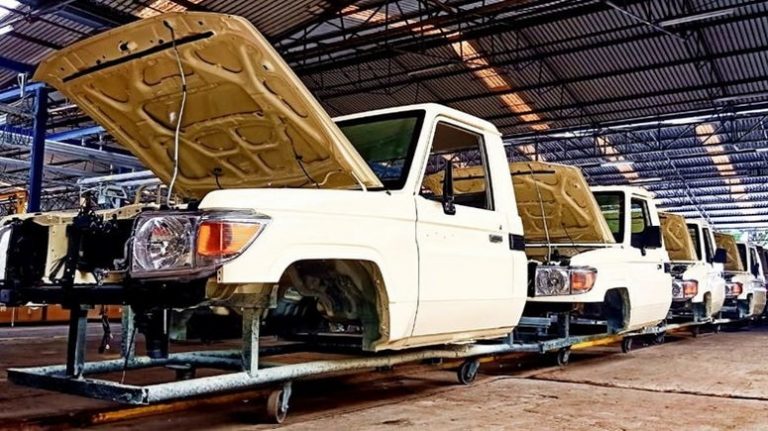
The Mahindra Scorpio Single and Double cabin pick-ups were assembled at the Associated Vehicle Assembly (AVA Kenya) plant in Mombasa. AVA is a wholly- owned subsidiary of Simba Corporation Limited.

“Further, to make locally assembled vehicles more affordable and available to Kenyans, I have also directed that the National Treasury and the Ministry of Trade, Industry and Cooperatives hold discussions with financial institutions to create special products for locally-assembled vehicles,” said President Kenyatta.

Agreeable framework

In consultation with National Treasury and Ministry of Industry, President Kenyatta asked motor vehicle assemblers to work out a mutually agreeable framework that will ensure the benefits accruing from the tax incentives are passed on to the consumer. With the launch of the two vehicle models, President Kenyatta said Mahindra Motors has joined the list of globally-renowned automotive brands that have chosen Kenya as their home.

Other global automobile brands that are locally assembled in the country include Toyota, Peugeot, and Volkswagen.

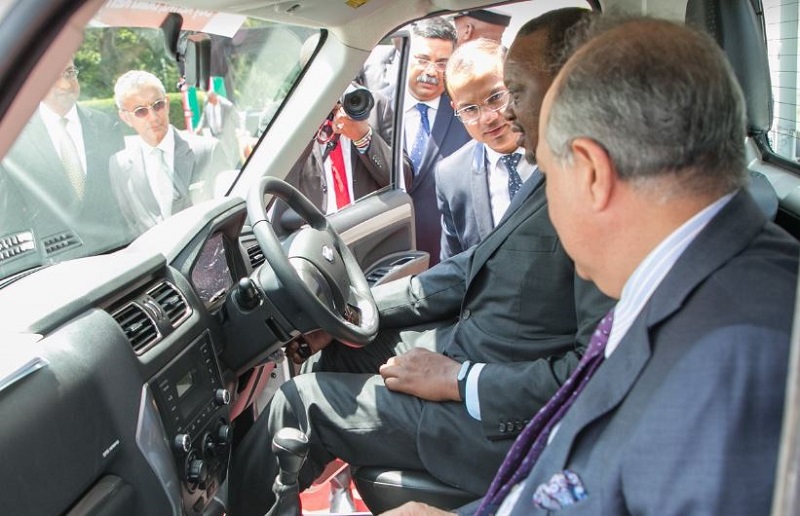
President Uhuru on steering wheel of fully locally assembled Mahindra car. | Image Courtesy PSCU

The president said his administration has prioritised the local assembly of motor vehicles as a means of creating jobs and enhancing technology transfer.

“I shall continue to provide incentives to expand this sector,” the president said, as he commended Simba Corporation Limited for choosing to expand its investments in Kenya.

“We appreciate your sustained investment in Kenya as it is a vote of confidence in our ever improving business environment. This fact has encouraged my administration to continue to make every effort to revitalise the contribution of the manufacturing sector to the economy,” the president told the Simba Corporation leadership team that was led by Group Chairman Adil Popat. 

Buy Kenya, Build Kenya

In keeping with the “Buy Kenya, Build Kenya” campaign, the President said the government is promoting market access through preferential procurement of locally assembled vehicles.

“My government is committed to working together with all players to enhance capacity of the motor industry.  I am, in particular, pleased to note the progress we are making in the motor vehicle sector,” the president said.

President Uhuru drives first locally assembled Mahindra car at State House, Nairobi | Image PSCU

He congratulated Simba Corporation for the refurbishment of the Mombasa-based AVA to a level of globally endorsed centre of excellence with a capacity to assemble and supply to the East African region.

AVA currently assembles vehicles for 10 vehicle manufacturers and is certified and endorsed by 20 global manufacturers. President Kenyatta challenged other sector players to take advantage of the refurbished AVA facility, which is currently producing 10,000 units annually, to increase their production.

He encouraged the private sector, not only in the manufacturing sector but across the entire economy, to tap into the ingenuity of young Kenyans and join in conceptualizing and delivering transformative innovations that will help boost the economy.

Also Read: Mahindra to unveil its first batch of locally-assembled double and single cab pick-up models

DT Dobie unveils locally manufactured Volkswagen model


Alternative to the 5-seater Tiguan, DT Dobie in its bid to grow its range of locally assembled vehicles has unveiled the new 7-seater Volkswagen Tiguan Allspace which is manufactured at the KVM facility in Thika.

“We are committed to further expanding our line of locally assembled cars to grow our brand in the country,” said Matt Olivier, Director Business Development DT Dobie.

The new Tiguan has a two-litre turbocharged 132-kilowatt engine mated with a seven-speed automatic transmission and is a four-wheel drive. The car has two cost specifications with the Trendline going for KSh4.5 million and the Highline going for KSh5.5 million.

In 2016 DT Dobie launched the Volkswagen Polo Vivo which is the first locally assembled German car in Kenya. This was followed by the Caddy Kombi and the Tiguan.

By assembling more of brands locally the firm is supporting the government’s Big Four Agenda in the manufacturing sector. The government has been working on implementing its National Automotive Policy which is expected to boost local assembling of motor vehicles in the country.

Dealers assembling vehicles locally are exempted from the 25% import duty that is levied on fully-built imported vehicles, an incentive that gives room for assemblers to produce cheaper vehicles.

This incentive has spurred more vehicle manufacturers to start local assembly of vehicles.

The Ministry of Trade estimates that new vehicles assembled in Kenya will contribute KSh50 billion in taxes per year in the next five years, from the current KSh8 billion.

Also Read: DT Dobie sells 45 VW Comfortline units in Kenya

Mahindra to unveil its first batch of locally-assembled double and single cab pick-up models


Simba Corp is assembling the Mahindra single and double cabin pick-ups in Kenya for the first time in its history. The assembly, at Associated Vehicle Assembly (AVA) comes at a strategic time when the government is working on implementing its National Automotive Policy, which is expected to boost local assembly and discourage importation of used cars.

The first dozen of the locally assembled pick-ups are in the final stages of assembly at the AVA plant in Mombasa. Mahindra’s local franchise holder Simba Corporation is keen on delivering the product to the market to increase consumer access in a bid to defend and gain market share in the increasingly competitive commercial pick-up vehicle segment. Mahindra has been selling commercial pick-ups and passenger cars in Kenya since 2012 via Simba Corporation Ltd.

Dinesh Kotecha, the Group Chief Executive Officer of Simba Corp said: “We are confident that Mahindra will solidify its presence in the Kenyan market with the local assembly of pick-ups.”With the government increasingly creating favourable conditions for assemblers, motor vehicle dealers’ preference for local assembly is expected to grow leading to job creation, growth of skills and ultimately spur economic growth.Dealers assembling vehicles locally are exempted from the 25% import duty levied on fully-built imported vehicles, an incentive that gives room for assemblers to produce cheaper vehicles.

Mahindra’s Chief of International Operations Arvind Mathew said that Kenya was a key platform in the company’s plan to expand in Africa as the company targets both businesses and private motor vehicle buyers.

“Kenya is very key in our Africa strategy and it is informed by a research study we concluded in 2018 to understand the market need and tailor products that offer far beyond expectations,” Mr Mathew said at the Mahindra headquarters in Mumbai last week. “We have made extensive service networks and made sufficient spares available as part of the beginning where more brands are going to be available in the market.”

Already, there are seven Mahindra pick-up models and sports utility vehicles (SUVs) in the Kenyan market.

The car maker was embroiled in a storm in Kenya in the 1980s when one of the models was supplied to the police force but failed to live up to expectations due to lack of spare parts while the quality of its vehicles was also questioned. However, it has been selling vehicles to individuals and businesses over years.

Part of its global expansion plan has been the setting up of a 125-acre research and development plant in the southern India city of Chennai. The facility has 33 laboratories and about 2,000 workers. The firm has been seeking to produce vehicles that comply with emission standards set by European regulators as well as electric cars. It has also set its sights on the future with technology with its DiGiSENSE innovation, which allows for realtime-tracking as well as vehicle diagnostics.

The Mahindra Group, a $20.7 billion conglomerate, also has a strong presence in information technology and agribusiness and is the world’s largest tractor company by volume.

The firm’s East Africa General Manager, Sandesh Parab, said the start of its local assembly will add to the affordability of the vehicles that are made for the local environment.

“We hope to capture about seven to eight percent of the market share in one year,” said Mr Parab. “Our customers will also get negotiated financing deals from Kenya Commercial Bank and we hope to have more players on board to facilitate them grow business using our pick-up trucks.”

The government has been working on implementing its National Automotive Policy, which is expected to boost local assembly of motor vehicles in the country, discourage importation of used cars and fully built new vehicles.

Dealers assembling vehicles locally are exempted from the 25 percent import duty that is levied on fully-built imported vehicles, an incentive that gives room for assemblers to produce cheaper vehicles and create a local value chain benefitting economic growth in the country.

This incentive has spurred more vehicle manufacturers to start local assembly of vehicles.

Last month, Isuzu East Africa started assembling its D-Max pick-up trucks in Kenya, ending its tradition of importing ready made light commercial vehicles from South Africa.

DT Dobie, will be unveiling a new car, the Volkswagen Tiguan Allspace, which is now being locally assembled. The firm said the local assembly of the car was in line with the government’s Big Four agenda that includes supporting local manufacturing.

Also ReadMahindra targets 30% of small commercial vehicle market

How Honda Ditched Conventional Thinking to Design a Lighter Crankshaft

0

In the all-hands-on-deck fight to reduce greenhouse-gas emissions, design can play a crucial role in driving vehicle fuel efficiency. The International Energy Agency says that about 24% of global CO2 emissions come from transportation—including road, rail, air, and marine. Road vehicles are the biggest culprit. The EU reports that 30% of its CO2 emissions come from transportation, of which 72% comes from road transportation. To increase fuel efficiency and reduce carbon emissions from vehicles, decreasing the weight of automotive component parts proves very effective.

In Japan, Honda has several ongoing projects to lighten its components, from body frames and engines down to the bolts. To achieve a reductive design, the structure and materials used in every part must be scrutinized. The latest target for Honda R&D—the automaker’s research and development division—is the crankshaft.

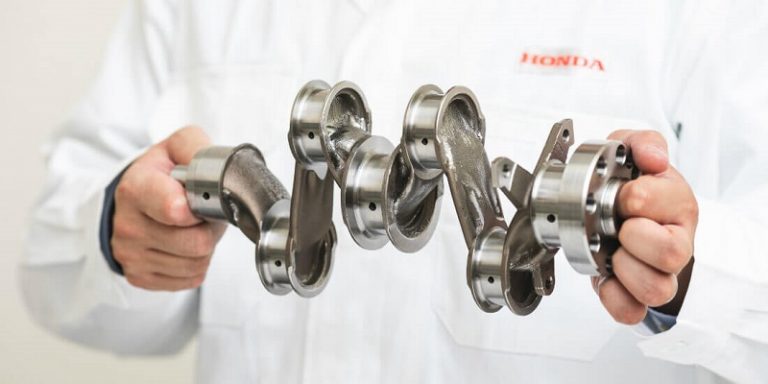
The crankshaft is one of the most important functional parts of an engine. It converts the oscillation of pistons into rotational force. To do so, it must be extremely strong and durable.

“Crankshafts need to satisfy multiple functional criteria,” says Hirosumi Todaka, a mechanical and fluid machinery designer at Honda R&D’s advanced technology lab. “For example, its shape must be able to withstand combustion pressures, and the rotational balance must be maintained. These factors have dictated the crankshaft’s form to this day. Over the long history of engine development, the crankshaft design had become a foregone conclusion. Despite this, we set the challenging goal of designing a crankshaft to be 30% lighter than current models.”

Hirosumi Todaka, Materials | Processes, Innovative Research Excellence at Honda R&D

Honda’s R&D arm has studied additive manufacturing closely since its inception. While searching for design technology such as topology optimization, it found generative design (where multiple designs are generated and iterated upon) and realized that it could greatly change conventional design norms.

Generative design had already helped the industry to redesign components such as seatbelt brackets, engine control units, and motorcycle frames; significant weight reduction resulted in each case. “A new approach was required that used methods like generative design and additive manufacturing,” Todaka says. “We had to cast off preconceived notions and look at things in a new light.”

Honda R&D began its project—the first of its kind, in collaboration with Autodesk—focused on cultivating a flexible approach. “It is crucial that for our design, we discard biases to think about the purely essential functions of the part,” says Hisao Uozumi, who researches design production processes and new materials at Honda R&D. “To establish the basics of this approach, we held a critical-thinking workshop together.”

A workshop held at Honda R&D in Wakō, Saitama, in Japan.

Building a Better Crankshaft

Autodesk prepared a first-lot model that fulfilled Honda’s requirements for the part using Netfabb and Fusion 360. “We shared Honda’s expertise to provide data on weight and various operating constraints, then went over each point with the Autodesk team as the model took shape,” Todaka says.

In his work on engine parts for two- and four-wheel vehicles, Todaka had relied on his past experience to come up with designs to then analyze and refine. When he first saw the result, he was blown away. “The part had an organic shape, like a human bone,” he says. “It was something beyond my wildest imagination.”

Honda R&D project team members traveled to London, where they received training in generative design; toured the Autodesk Technology Center in Birmingham, England; and discussed topics beyond design, such as additive manufacturing. At the facility, Todaka says: “Prototypes could be made from designs quickly. I felt it was an ideal environment where feedback could be quickly applied to your work.”

The data from the prototypes made Honda rethink its layout and strength criteria, resulting in a new set of boundary conditions for the parts. The team continued its work and designed a second-lot model. “The Autodesk team had many members with various backgrounds, including aerospace,” Uozumi says. “They could see where we were going with our designs, and we put shape to our ideas in a relatively short amount of time.”

Conventional topology optimization provides only one solution and requires time-consuming manual corrections. Fusion 360’s generative design offered what Todaka says was “a configuration I had not even considered as a designer.” The new crankshaft design exceeded goals with a surprising 50% weight reduction, but doubts remained about whether the part’s rigidity and strength would hold up against typical crankshafts.

Team members mounted the prototype to an engine for performance testing and obtained a lot of data. They shared the results with the Autodesk team, which is using Honda’s data to refine its generative-design processes. “Applying generative design to a rotational part like a crankshaft has been an immensely valuable experience for both Honda and Autodesk,” Todaka says.

Hisao Uozumi, PhD, assistant chief engineer in the Fabrication Technology and Management Department, Wakō Administration Division at Honda R&D

Integrating manufacturing into the design process proved invaluable. “It provides us with models that can take into account design limitations, such as those introduced by using additive manufacturing, mold-based manufacturing, or 5-axis machining,” Todaka says.

For Honda, this project has revealed additive manufacturing’s possibilities. “While some still hold reservations about this new shape, the attention it has brought to the technology has been worth the effort,” Todaka says. “While there is still much that can be done to lighten parts, we can now see a way forward to reach our goals. In the future, I expect that innovative products created using generative design will be the norm. I think it is up to us to research further applications for this technology as part of our work.”

Source

How often and how much air should I put in my tyres?


The answer to this depends on a variety of factors including the type of driving patterns, size and load on tires and if you prefer fuel economy over a smoother ride. The recommended inflation pressures are generally mentioned by the vehicle manufacturer on a decal on the door jam or in the glove box, and should be followed for the most part. These recommendations may sometimes not be accurate considering the change in brands of tires and types, but are overall the best advice for all-round driving.

The common PSI (pounds per square inch) is 27 to 32 for most passenger minivans, mini-pickups and cars, while the recommended intake for full-size SUV’s and pickups is somewhere in the range of 5 – 8 PSI higher to accommodate the extra weight and size. Speaking of tire pressures, it is important to note that they may differ from front to rear tires. Car experts claim that adding a couple extra pounds of pressure results in better fuel economy as the rolling resistance of the tires is decreased, but this may also be a downside as it makes the tires harder and somewhat takes away from the smooth rolling action on the road.

If you tend to carry extra cargo, carpool, towing a trailer, then it is recommended that you add a few extra pounds of pressure to the rear tires only to offset the extra weight. It is important to note that whenever you add extra pressure in the above circumstances, do not exceed the level indicated by the tire manufacturer, which is the maximum the tire is designed for and is printed on the sidewall. Adding the extra pounds past the manufacturer’s recommendation could result in tire failure and damage.

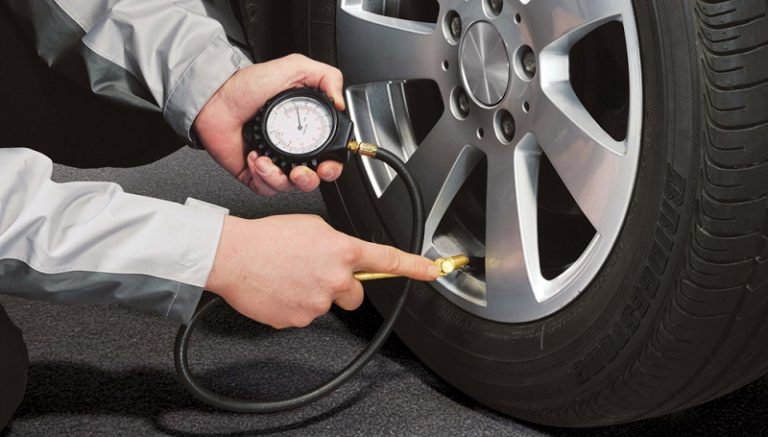
Checking your tires regularly is important simply because tires leak air and fast. Common air loss in regular driving is approximately a half pound a month, and if you’re notice more than this, then you need probable have a leak in the rim. For this reason, it is important to check your tires well ahead of long trips and at least once a month. The best time to check your tires is in the morning or when they are cold. When the tires are hot, the air inside tends to expand result in higher readings than normal pressure.

Internal tire pressure is also affected by the outside temperatures, where cold weather lowers it and hot weather increases it. So you may have to increase or decrease the PSI by a few notches depending on seasonal variations. Although checking your tires for air pressure is relatively easy, it is important to use accurate gauges, and avoid relying completely on gas stations gauges such as air hoses or compressors. Adding to this, do not measure air pressure by eye, because tires wells especially radial tires wells on radial tires tend to swell up even when the tire is fully inflated.

If you continue to add air even thought the tire has been inflated completed, it will be overinflated and result in unforeseeable damage. However, this doesn’t mean that you wait until the tires are near flat to add air as this may result in damage as well. Increasing or decreasing tire pressure in a vehicle is a serious maintenance task, and if you’re unsure or unaware of the procedure, its best left to the professionals.

- Advertisement -