Monday, June 1, 2026
Home Blog Page 59

SsangYong Motor sells Seoul service centre to raise funds

0

SsangYong Motor has managed to sell one of its service centres located in the Guro district in Seoul to an asset management company PIA Investment Management. This decision come amid the rising debts and mounting losses the motor company is currently facing.

Through this sale it has managed to raise close to US$147 million as the korean auto major faces severe liquidity issues, according to reports in a section of Korean media. This is the second non-core asset SsangYong Motor has sold this year for more liquidity as it inches towards bankruptcy, say sources.

Infact SsangYong Motor’s external auditor has refused to sign the financial statement, citing discrepancies and its doubtful existence. The service center is being sold on the condition that SsangYong Motor will continue leasing it for the next three years.

With the company seeing poor sales over the last couple of years and Mahindra unable to turnaround the company in spite of ten years of management, a possible stake sale could also work out, say sources. Given the current global pandemic and the non reluctance of the company’s board to infuse any fresh long term funds, Mahindra may just be ready to sell at a decent price.

The company’s labor and management is understood to have reached out for help from the government and Korea Development Bank, but sources say it is yet to receive any response as the government is keen to fund only those companies affected by Covid, not otherwise.

Ssangyong needs to stay afloat and its short-term borrowings due to mature this year stand at 254 billion won, much more than 40 billion won that was recently injected by Mahindra, SsangYong’s parent company in India. However it’s immediate concern is to repay 90 billion won to Korea Development Bank this July.

Ssangyong reported a net loss of US$157 milion for the first quarter of 2020, it’s 13th consecutive quarterly loss.The company recently signed an annual wage deal with its union, to put off the annual wage increase for the company over the next one year.

Amidst the ongoing Covid 19 pandemic which has hit the auto industry hard, the Mahindra board in April decided to shelve its plans to infuse US$400 million equity in SsangYong to meet its next three year plan. This is in stark contrast to the announcements the company had made to this effect a month before.

While the official reason given has been the ongoing global uncertainty, it is no secret that the Korean auto maker is proving to be a high maintenance asset for Mahindra.

SsangYong Motor Company and its labour union had wanted Mahindra to inject equity to fund its 500 billion KRW (US$406M) of requirements over the next three years. Post this decision, the fate of Ssangyong hangs in balance and it will need to raise funds urgently. SsangYong had posted its highest ever yearly loss of US$341 billion Won in 2019.

M&M had paid Rs 2,100 crore (US$463 million) for the purchase of the Korean car maker a decade ago. But each passing year has been tough with falling sales numbers and negative financial records. SsangYong’s line up of vehicles include its flagship G4 Rexton, Tivoli, Korando and Rexton Sports.
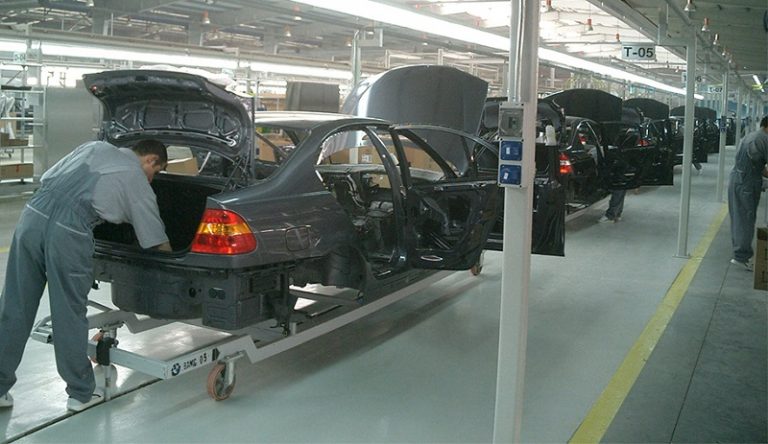
Egypt’s vehicle inventory starts moving as licensing resumes


Egypt’s automotive sector is revving up for an anticipated comeback in the near future as car licensing services and notary offices resume following coronavirus (COVID-19) closures. But the windshield remains blurry as the crisis potentially continues.

Despite the arrival of automotive parts for local assembly and issues with lack of production, the local industry is still searching for a strategy that will provide the ideal solution to supply chain hiccups.

Amr Soliman, Chairperson of Al Amal Group

Amr Soliman, Chairperson of Al Amal Group, local market agents for Lada and BYD and producers of the King Long microbus, praised the decision to resume work at traffic units. He noted that this could get the market sales moving and reduce vehicle stocks as clients finally get to pick up cars already purchased which could not be picked up due to the health crisis.

He said that automotive components imports for local assembly are going well, as local assembly plants are operating at 70% production capacity amid precautionary measures against the ongoing pandemic.

Soliman also said that the Chinese market has resumed production and export of vehicles, but other markets still face obstacles.

He added that many importers, because of their fear of lower consumer demand and many vehicles left in stock, have been cutting their import quotas. Those vehicles left in stock would need to be sold off to secure the needed liquidity for further imports to happen.

Soliman also pointed out that imported car sales are higher than those of locally assembled vehicles, as the former attract more consumers due to the small price difference against the latter. This is especially given the customs cuts and exemptions on European, Turkish, and Moroccan cars, compared to locally assembled cars that still pay customs on imported parts. This lack of competitiveness encourages the need to pass a strategy that attracts foreign investments in the local market.

Soliman said that locally assembled cars would be unable to benefit from low import volumes through higher sales, as the entire market has stagnated. Consumers also prefer to keep a hold on liquidity as much uncertainty about the future remains.

Ramy Mohareb, Spokesperson for Nissan Egypt, said that there are no problems in importing car parts for local assembly, despite some shipments facing delays.

The only obstacle hindering of the car sales recovery was the suspension of licence issuing at traffic departments for over a month, he added. Mohareb anticipates sales will increase in the coming period, with a breakthrough happening by Eid al-Fitr as automotive sales are always slow during Ramadan.

Ramy Mohareb, Spokesperson for Nissan Egypt

He also shrugged off the possibility of local cars taking a higher market share as car imports slow down. Like Soliman, Mohareb sees the main incentive for local assembly being the launch of an automotive strategy that would encourage investors and produce cars at a lower price.

Automotive industry expert, Hussein Mostafa, sees the obstacles facing car imports are the same problems facing importing parts for local assembly.

Mostafa notes that the factor affecting locally assembled and imported car sales is stock available to consumers, with prices going up subject to increased demand for low stocks.

He added that this would only happen subject to international trade being affected, which could hike the prices of imported and locally assembled cars.

Mostafa emphasised that the decision to open traffic departments for licensing new and used cars will contribute to stimulating sales by up to 10% against April and March.

He also emphasised Egypt’s inability to achieve self-sufficiency in feeding industries and manufacturing many parts that are either in part or fully imported.

Mostafa noted that China remains the main market for global feeding industries, accounting for a third of world exports of manufacturing components.

Marketparts.com: A Global Redeployment Tool for Spare Parts in the Automotive Industry


Just months after its official launch, Marketparts.com, the first global B2B marketplace for manufacturers and distributors of automotive parts (cars, lorries, motorcycles) is already proving the success of its model.

Already 300 subscribers in Europe and internationally.

Operational since January 2020, Marketparts already has 300 subscribers, 50% from Europe and 50% from the rest of the globe. They account for 75% of the LV/LCV market and for 25% of industrial vehicles. The vast majority of them (85%) are distributors and the rest are equipment manufacturers who are very interested in the possibility of targeting local markets on a 100% digital channel.

Also Read: Mecho Autotech gets $2.15M to expand vehicle maintenance and repair services in Nigeria

During this unprecedented blockage period, Marketparts.com is offering a solution for selling spare parts available immediately and in the best conditions of service, availability and price. This period is also a time for all players in the automotive industry to think about new and original strategic channels for purchasing/selling spare parts.

“We’ve seen an increase of over 50% in demo and trial requests for the platform”, states Christophe Riberolle, CEO of Marketparts.com.

“We’re aware that this situation of instability will continue for a few more months. During this period, we lowered our platform subscription fees to enable a maximum of buyers to use it to efficiently source and purchase Fast Movers as international destocking offers from certified key players”.

Marketparts.com has already connected buyers and sellers from 35 countries on five continents. The market place aims to double its offer and recruit 300 new suppliers to its platform, including about 20 renowned equipment manufacturers, by the end of the year.

Also Read: TRADE X Opens New Office in Lagos, Nigeria to Accommodate Growing Automotive Demand in Africa’s Largest Economy

About Marketparts.com

Launched in October 2019 by Christophe Riberolle, Marketparts.com is the first global B2B market place for manufacturers and distributors of spare parts for cars, heavy goods vehicles and motorcycles. It offers a unique opportunity to distributors of all sizes, anywhere in the world, to access products from global manufacturers in the best conditions of price, availability and service.


Toyota unveils COVID-19 ambulance


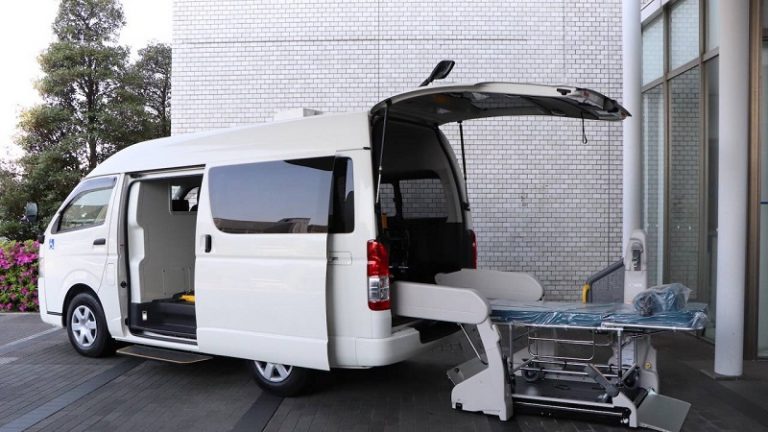
Toyota has designed a special vehicle specifically for COVID-19 patients, with the tailor-made transportation taking into account the highly-contagious nature of coronavirus.

The special  ambulance was developed for Showa University Hospital in Japan, based on requests from medical facilities in the country, and includes a number of unusual features.

The donor vehicle is the Toyota HiAce, a light commercial van that’s offered in Japan as well as other markets. It’s already demonstrated its flexibility, too: while it’s sold as a load-hauler, it can also be configured as a minivan, a taxi, and as a spacious luxury alternative to the traditional SUV.

For the Showa University Hospital version, however, the focus was different. Toyota said its primary intention was to build an “airborne droplet circulation control vehicle,” given coronavirus is particularly virulent and can be easily spread by airborne particles. Since the disease has a two day period before symptoms will appear – but during which time the infected person is contagious and can infect others – that’s proved particularly serious in the current pandemic.

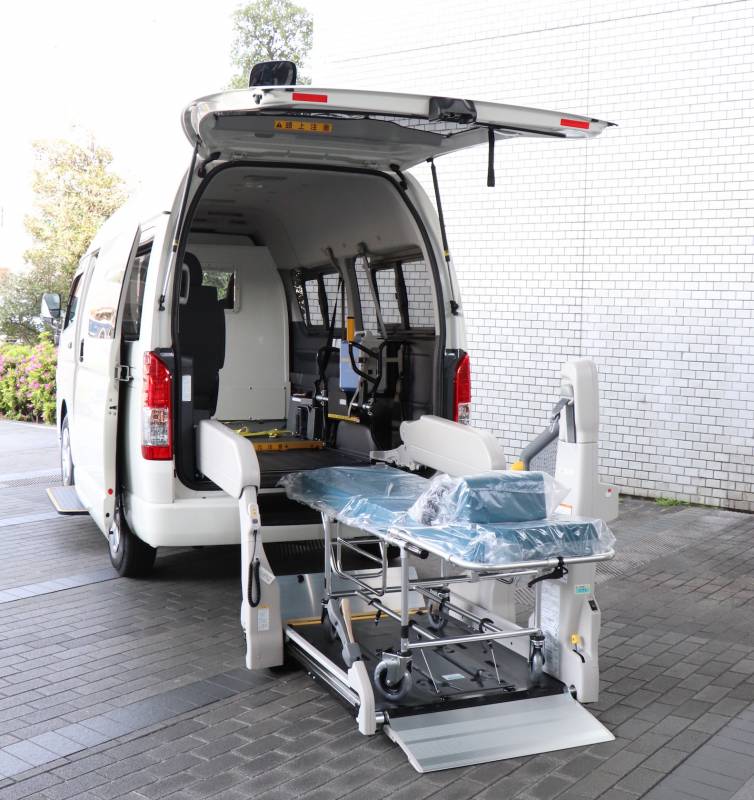
Toyota’s solution is an interior barrier in the HiAce, which separates the cabin into two spaces. The front – with the driver’s seat and a passenger seat – is isolated from the rear, with an exhaust fan sucking air out of the back space continuously. That helps stop it from being circulated into the front compartment.

It’s not the only accommodation made for seriously ill COVID-19 patients, of course. There’s also a motorised lift for the wheeled gurney, which allows them to be easily moved in and out of the van.

Inside, space is tighter than in the typical American ambulance, but there’s still room for the essential equipment along with a seat for a healthcare worker.

“The transport vehicle for seriously ill COVID-19 patients provided today joins 11 transport vehicles for mildly infected patients already provided by the Toyota Group to such entities as medical facilities and local governments,” the automaker says. This, though, is the first focused on more seriously impacted patients.

It’s not only vehicles, however. Aisin Seiki, a Japanese automotive supplier majority-owned by Toyota, announced that it was beginning production of a simplified bed frame and partition system this month. The equipment will be used for emergency healthcare facilities established during the pandemic.

Meanwhile, Toyota said that it would be freezing any patents, copyright, or other IP limitations on projects that were focused on dealing with the coronavirus, as part of the Japanese “IP Open Access Declaration Against COVID-19.”

“We hereby declare, without seeking compensation, that we will not assert any patent, utility model, design, or copyright during the time of this crisis, against any activities whose purpose is stopping the spread of COVID-19, including diagnosis, prevention, containment, and treatment,” the automaker said in a statement.

Volvo reopens some plants, some countries ease restrictions

0

The outbreak of the coronavirus has dealt a shock to the global economy with unprecedented speed. Following are developments Monday related to the global economy, the work place and the spread of the virus.

The Department of Homeland Security said Monday that Canada and Mexico have each agreed to extend restrictions on non-essential travel across their shared borders with the U.S. for an additional 30 days. The restrictions originally began on March 21. The government says non-essential travel includes travel that is considered tourism or recreational in nature.

New Zealand will remain in a strict lockdown for another week before easing the rules a little to allow some parts of the economy to reopen. Starting next week, workers at some businesses such as construction and manufacturing will be able to resume their jobs.

Denmark took another step toward reopening society when hair salons, dentists, physiotherapists, tattoo parlors and driving schools, among others, were allowed to reopen Monday.

Some shops are reopening in much of Germany as Europe’s biggest economy takes its first step toward restarting public life after a four-week shutdown.

Shops with a surface area of up to 800 square meters (8,600 square feet) are being allowed to reopen Monday, along with auto showrooms, bike shops and bookshops of any size, under an agreement reached last week between the federal and state governments.

SALES:

Dutch health care equipment maker Philips says orders at its unit that makes machines such as ventilators and patient monitors jumped 23% in the first quarter. However, the company’s net profit was hit hard as demand for other items, like personal health care products, slumped.

HEAVY INDUSTRY:

Sales of new automobiles in the U.S. could fall to levels not seen since the financial crisis in 2009, according to ALG, which tracks auto sales and resale values.

ALG’s worst-case scenario has total light vehicle sales falling to 11.3 million this year, a level not seen since automakers sold only 10.4 million new vehicles in 2009. The worst-case or “cautious” scenario from ALG is nearly 6 million vehicles below sales in 2019.

Even ALG’s optimistic outlook pegs sales at 13.1 million, with its “mixed” forecast at 12.6 million. U.S. auto sales tumbled almost 40% in March, even though many state stay-home orders didn’t take place until late in the month.

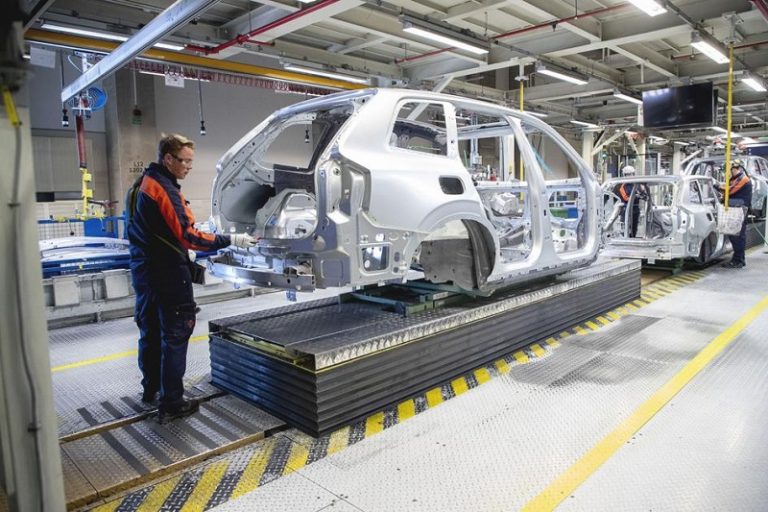
Volvo Cars is restarting production at its suburban Goteborg plant in Sweden on Monday after talks with trade unions.

The Swedish car maker had in recent weeks reviewed every single working station in the Torslanda plant, near Goteborg, “from a health and safety perspective,” adding that when “social distancing is not possible, other protective measures have been put in place.”

Volvo Cars also plans to reopen a plant in Ghent, Belgium, on Monday but “at reduced production output.” Its South Carolina plant is anticipated to open May 11.
AIRLINES:

United Airlines recorded a $2.1 billion loss in pretax income during the first quarter as revenue tumbled in March during the pandemic. Excluding items such as write-downs connected to a loan and investment in Brazilian carrier Azul, the pretax loss was just over $1 billion. Revenue fell 17% to $8 billion, with daily revenue dropping $100 million a day in the second half of March. United cut its schedule 80% in April and 90% in May. It got $5 billion in cash and loans from the government and on Friday applied for up to $4.5 billion in additional federal loans — both under last month’s $2.2 trillion virus-relief measure.

Four Danish and Swedish subsidiaries with low-cost carrier Norwegian Air Shuttle filed for bankruptcy Monday. The carrier said the move doesn’t affect the company in Norway, nor about 700 pilots and 1,300 cabin crew based France and Italy.

Some 1,571 pilots and 3,134 cabin crew in the two Scandinavian countries are employed in subsidiaries of the Norwegian group. Three of the subsidiaries are based in Denmark while the fourth is in Sweden.

TRAVEL:

Some passengers from a luxury cruise ship that traveled the globe for 15 weeks while the new coronavirus spread on land have started to disembark in northeastern Spain.

Monday’s port-of-call in Barcelona marks the beginning of the end of the around-the-globe cruise of the Costa Deliziosa, whose owner Costa Crociere, an Italian company, says there’s no COVID-19 cases on board. Hundreds of the boat’s 1,831 passengers were expected to get off the boat in Spain and the rest were expected to do so at the last stop, in Genoa, Italy.

The Deliziosa has been virtually a floating virus-free bubble, allowing passengers to use the ship’s facilities and entertainments. The ship set sail from Venice in early January and stopped making ports of call after leaving western Australia last month except for technical refueling stops.

MARKETS:

Stocks are mixed in midday trading after Wall Street trimmed its sharp losses from earlier in the morning following another collapse in oil prices.

Asharami Synergy Limited Kenya: Clarity on misleading media report

0

The attention of Asharami Synergy Limited Kenya, has been drawn to a report published in the online edition of Kenya’s Daily Nation newspaper of April 14, 2020 under the headline: “Kenya turns away ship with 75m litres of low quality fuel”.

The said report leaned on documents and information provided by un-named sources to arrive at a conclusion regarding the specification of the gasoline (particularly the Final Boiling Point parameter) supplied by Asharami Synergy Limited, Kenya.

Asharami Synergy affirms that the product on PMS K07/2020 MT Ocean Tiara (“the Cargo”) was sourced from the Saudi Arabian Oil Company (“Saudi Aramco”), one of the world’s foremost Oil and Gas Trading companies with an acclaimed reputation for quality and global standards, thus lending credence to Asharami Synergy’s unwavering commitment to impeccable standards in all aspects of its operations. We note that the product is on-specification for all parameters right from the loading port where the test by Bureau Veritas recorded a Final Boiling Point (FBP) of 199 degrees Celsius.

In addition, reputable surveyors in Kenya have also confirmed that the cargo is on specification for all parameters. These include tests by Intertek Group PLC, one of the world’s leading Total Quality Assurance Companies, (returning FBP of 200 degrees
Celsius) and the Kenya Petroleum Refineries Limited (KPRL), returning FBP parameter of 199 degree Celsius.

As an affiliate of Sahara Group, an international energy conglomerate with footprint across Africa, Asia, Europe and the Middle East, Asharami Synergy Limited Kenya operates within an impeccable track record of over 20 years of globally acclaimed best practice that has qualified Sahara Group as a member of the World Economic Forum Partnering Against Corruption Initiative (PACI).

For the benefit of our stakeholders across the globe, Asharami Synergy hereby affirms that the product supplied was on specification and categorically states the following for the record:

• The tests upon which the decision on the specification of the cargo was made were carried out in facilities without any certificate of international calibration – meaning equipment did not show any evidence of barometric pressure compensation and did
not have any calibration schedule.

• In addition, the facilities did not have the required certification to perform the stated test for gasoline, requiring calibration deductions to be applied to any final result attained.

• As a result, a correlation was made between automotive gas oil and mogas, which does not meet international standards as each product exhibits completely different properties.

The above places the results at variance with international best practice and consequently, the outcome was not endorsed by Asharami Synergy and Saudi Aramco representatives.

Conclusion

In a bid to ensure the process is seamlessly concluded, Asharami Synergy has requested a re-test in an independent ISO certified facility that is accredited for gasoline testing as this should provide an outcome that will be acceptable to all parties.

Asharami Synergy, working with the support of its suppliers; Saudi Aramco, intends to do everything within its rights to substantiate its position and establish that the Cargo is on specification, and that Asharami Synergy has been wrongfully sanctioned by the rejection of the Cargo and any subsequent punitive action that may arise from the said
rejection.

Asharami Synergy Limited has imported 7 PMS cargos, 3 co-loaded cargos of both AGO and PMS, and 1 AGO cargo delivering the products within the Kenya Specification in line with the company’s commitment to safety, professionalism and service excellence.

The company continues to contribute to the growth and development of Kenya’s economy through the provision of top quality petroleum products with a distinctive mark of safety and reliability.

Asharami Synergy remains committed to the above stated principles of excellence and is grateful to the good people of the Republic of Kenya and the regulatory authorities for the opportunity to serve.

Source: Sahara Group

China launch flexible quick charging stations

0

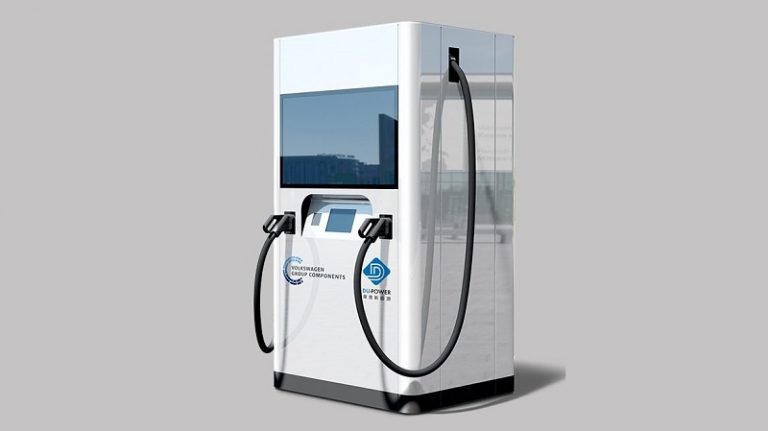
Volkswagen Group Components and the start-up Shanghai DU-POWER New Energy Technical Co., Ltd. plan to work together to produce flexible quick charging stations for China market.

An agreement to this effect was signed by representatives from both companies in Suzhou, China. Series production of the flexible quick charging stations is currently scheduled to start in the second half of 2020. Establishing production with a local partner is a key step in the rapidly growing electric vehicle market.

“A comprehensive charging infrastructure is the key to the success of e-vehicles. The planned joint venture with DU-POWER therefore represents a significant milestone as we continue to make progress along the path to electric mobility. The innovative design of our flexible quick charging station has huge potential in China, not least because of the rapid growth of electric mobility,” commented Thomas Schmall, CEO of Volkswagen Group Components.

“The electrification of the global automotive industry is a megatrend. As an ambitious high-tech company with a competent technical development core, we will work with Volkswagen to create a solid foundation to support the success of electric vehicles. The partnership for establishing a joint venture in China enables us to collaborate close on the technical aspects of the project to provide flexible, reliable and efficient solutions for the charging infrastructure,” stated Yong Kang, CEO of Shanghai DU-POWER New Energy Technical Co., Ltd..

Following the conclusion of the requisite approval process with authorities, including merger control, Volkswagen AG and Shanghai DU-POWER New Energy Technical Co., Ltd. will ultimately each own 50% of the shares in the joint venture. The new company will be located in the Suzhou Wuzhong Economic & Technological Development Zone, near Shanghai, China.

As previously announced, flexible quick charging stations will also be produced at the Hannover site in future. Production is to begin this year.

Introducing the flexible quick charging station

With compact dimensions, the flexible quick charging station can be installed almost anywhere it’s needed or where a charging infrastructure is not yet in place. When connected to the low voltage grid, the station becomes a permanent charging point without the additional cost and effort required for a comparable fixed quick charging station.

The built-in battery pack can store a buffer of energy meaning that it can be disconnected from the grid. This then eases the strain on the power grid, particularly at peak times. If electricity generated from renewable sources is fed into the charging station and temporarily stored there, the station enables carbon-neutral mobility.

To ensure the sustainable use of valuable resources, the charging station is also designed to be able to use old batteries from electric vehicles as energy accumulators in future. Thanks to quick charging technology, e-vehicles can be charged with up to 150 kW.

Also read: DT Dobie unveils locally manufactured Volkswagen model

Source: Press release

Honda India halts BR-V Production due to COVID-19


Honda India has announced the immediate cessation production of the BR-V. The BR-V is a versatile 7-seater compact SUV and is a core model in Honda Motor Southern Africa’s local line-up.

Speaking on the announcement, Dinesh Govender, General Manager for Honda SA, said: “Honda Motor Southern Africa has no plans to discontinue the BR-V and is currently securing sufficient stock of the BR-V from India while the alternate factory is being set up for production.

“The BR-V remains one of our pillar models in the local line-up, and is currently the only seven-seater sport utility vehicle (SUV) in its price class. This affords the BR-V a significant advantage over its competitors, and consistently makes it one of our top two best-sellers in South Africa along with the Honda Amaze compact sedan.”

The BR-V sport utility vehicle (SUV) range for 2020 recently introduced subtle changes to the interior and exterior design which enhance its styling and functionality. Improvements have also been made to the on-road drivability and comfort of this practical, family orientated SUV.

All BR-V models come standard with a five-year/200 000 km warranty, and three-year AA Roadside Assist. A new four-year/60 000 km extended service plan is included on the Honda BR-V Comfort and Elegance models, and is available as an option on the Trend. Service intervals are every 15 000 km.
Also read: Coronavirus damages China’s auto industry as outbreak worsens

Ford Southern Africa to manufacture face shields to fight Covid-19


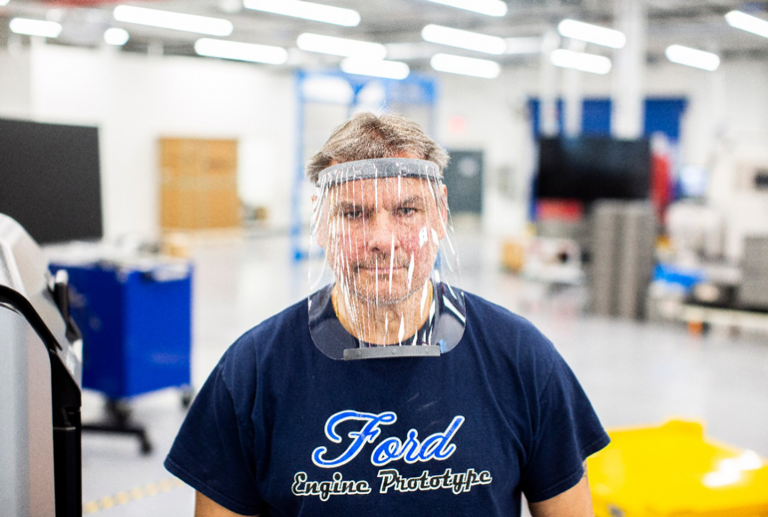
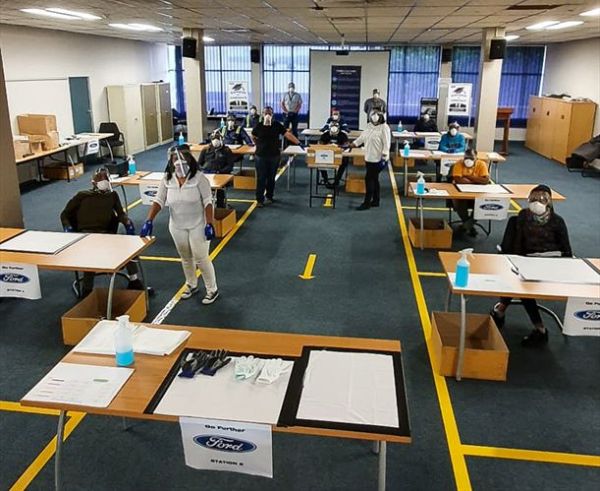
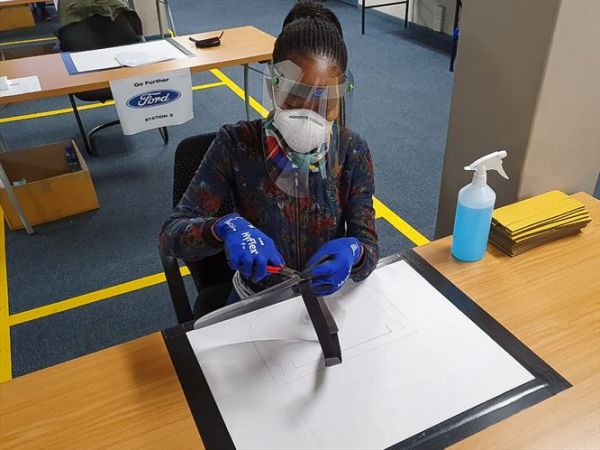
Ford Southern Africa has commence manufacturing of face shields at its Silverton vehicle assembly plant in Tshwane for medical staff and other essential personnel fighting to curb the Covid-19 pandemic.

Previously, Ford stated it had no plans to produce medical equipment, suspended vehicle production at Silverton just under two weeks ago, at the start of the national lockdown. The company had already announced a temporary shutdown because of collapsing demand in export markets which account for more than half of Silverton’s production.

“With SA on lockdown and our plant not operating at the moment, we felt it was essential to use our manufacturing capacity and expertise to contribute to the efforts of the South African government, private healthcare institutions and humanitarian organisations to contain the spread of COVID-19, and to care for those infected with the virus,” said Ockert Berry, Head, Ford operations.

Ford has started producing a first batch of 57,000 face shields, which protect the wearer’s eyes, nose and mouth. It hopes eventually to manufacture at least 500,000. To do this, however, it says it will need support from components suppliers and other partners. Volkswagen SA said last week it also hoped to produce face shields.

“With the face shields in critically short supply, we are dedicating our resources and manpower to produce the face shields as quickly as possible,” Berry explains. “We are urgently engaging with our component suppliers and business partners, and inviting them to come on board and assist us with raising funds for this important project.

The World Health Organization and the South African Department of Health have deemed these face shields, along with the N95 face masks which can be worn under the shield, a crucial part of personal protective equipment for medical personnel who are at the greatest risk of exposure to the coronavirus. They will also be made available to the police, military and those responsible for transporting workers in the essential services industries.

“The coronavirus pandemic is unprecedented, and is having a dramatic impact on the health of communities around the world while placing a massive strain on the medical resources of even the most advanced countries,” states Ockert Berry, VP Operations at FMCSA.

South Africa’s Minister of Trade, Industry and Competition, Ebrahim Patel, commended Ford for its contribution: “Thank you for your offer to donate face shields which can be used in counteracting the spread of COVID-19. It is encouraging to see the efforts of Ford Motor Company not only here in South Africa, but globally as well.”

“We welcome any contributions from individuals and companies across South Africa to support this initiative, whether it’s R10, R10 000 or R100 000, every little bit counts,” Berry says. “Our goal is to produce at least 500 000 face shields, and possibly even more, so that we can assist the healthcare efforts across the country and even beyond our borders if necessary.”

Already, Trek Plastics has begun supplying the medical-grade materials to Ford at a discounted rate, with a capacity for producing 15 000 kits per day. Additionally, Corruseal Group has committed to supplying boxes at no cost for packaging the face shields, and Creative Graphics International has donated materials.

Two of Ford’s transport service providers, Trans-Atlantic Logistics and DSV, have agreed to waive the transport costs to help with distribution to hospitals, clinics and other locations countrywide. Other suppliers that have contributed thus far include Feltex Automotive and Aeroklas Duys for the foam materials, and Lithotec for the labels.

The shields, which wrap around the user’s face, are being produced to global health standards, using a clear polyethylene shield, polyurethane foam padding and an elastic latex fabric headband to keep it in place. Each unit is packaged with clear instructions on how to wear the shield correctly, along with cleaning and storage guidelines. They are designed to be reusable, and sanitized after each use.

Ford employees involved in the production process work according to strict COVID-19 health and personal hygiene guidelines. All staff are screened regularly for coronavirus symptoms, and are required to wear latex gloves, face masks and the face shields, and maintain appropriate social distancing at all times.

“It’s in periods of crisis, such as what we’re experiencing right now across the world with the COVID-19 pandemic, that the extraordinary efforts of people that are committed to making a difference in their communities really stands out,” says Neale Hill, MD of FMCSA.

“We commend the remarkable efforts of every individual at the front-line of the battle against the coronavirus, as well as each company and organisation that is helping to contain its spread, tend to the sick and support the nation with the multitude of essential services during these challenging times,” Hill adds. “We also value the support of every person that is able to contribute to the success of this project.”

All contributions will exclusively be used to purchase the kits for the face shields. Ford is covering all the labour costs for assembly and packaging, and supplier companies are assisting with materials, boxes and other packaging materials, as well as transport.

Individuals and companies wishing to contribute to this initiative can send an e-mail to socialme@ford.com, using the reference: Ford SA COVID-19. The relevant banking details will be supplied.

Ford is also working with South Africa’s Minister of Trade, Industry and Competition, Ebrahim Patel, as well as the Department of Health, on this unique transition of its manufacturing operations to produce the face shields.

“Minister Ebrahim Patel has been particularly supportive of our commitment to produce the face shields at the Silverton plant during this public health emergency, and is pleased that we are using Ford’s local employees and suppliers to produce the shields,” says Dhiren Vanmali, Ford’s Executive Director of Government Affairs, Africa.

“We are working closely with the Department of Trade, Industry and Competition, which is liaising with the Department of Health, in identifying the essential services recipients of these face shields, and facilitating the distribution of the products wherever they are required across the country,” he adds.

In the US, Ford Motor Company is targeting the production of more than 1-million face shields per week, and has already produced over 1.2-million units since the project commenced just over two weeks ago.

Renai Moothilal, Director of the National Association of Automotive Component and Allied Manufacturers, says several member companies are part of a project to produce medical ventilators, working with partners that include the Industrial Development Corporation, the Council for Scientific and Industrial Research and medical experts.

“More than 20 members are directly involved or on standby to aid production. High-volume production, assuming all approvals fall into place, can possibly happen within a month,” said Moothilal.

Also read: Ford to expand engine plant in South Africa

Glasgow Consulting Group launches automotive practice in Middle East


Founded in 2010, with affiliate office in the UAE and Saudi Arabia among its international locales, Glasgow Consulting Group (GCG) is a full-service business research and advisory firm with core expertise in market intelligence, market entry and trade development catering to a wide cross-section of industries. Among them, the automotive sector, with the firm now launching a dedicated research and consulting practice in the space for the Middle East & Africa region.

According to GCG, the move is aimed at providing clients with regional market intelligence, thought leadership and insights into the fast evolving regional sector, helping local businesses to identify the top mega-tends in areas of mobility solutions. Currently subject to disruption due to emerging trends and technologies such as ride-sharing and electric and driverless cars, the firm believes the Middle East is showing promise in both the passenger and commercial space.

As to Africa (a continent of one billion people where in 2014 there were barely 40 million registered vehicles) GCG notes that although still underdeveloped it foresees much room for growth across the value chain, including in the areas of vehicle sales, aftersales, assembly and production. Going one step further, GCG states that it considers Africa the final frontier for the global automotive industry, which finds itself under significant pressure in mature markets.


As an example of its regional commitment, GCG will during this year publish Passenger Car Market and Aftermarket reports for all of South Africa, Nigeria, Kenya, Ghana, Algeria, Morocco, and Saudi Arabia, along with insights into the commercial segment in the Kingdom and a special report covering shared mobility in the UAE. “The ability to anticipate competitors’ moves and analyse markets is key to winning in the Middle East & Africa,” the firm states.

The new practice will be led by GCG MENA managing director Vishal Pandey, who has been with the firm for close to a decade after initially crossing from Deloitte in Dubai. Prior to joining Deloitte, where he spent three years as an engagement manager on the back of a MSc. degree in real estate and regeneration with the University of Glasgow, Pandey served in leadership roles for another international research firm and as a manager for commercial markets with Colliers.

Since joining GCG, he has been exceptionally busy, as a speaker, mentor, columnist, faculty member and member of numerous business councils and organisations, including currently the Arab-Brazilian Chamber of Commerce and as part of the tourism experts panel for the World Tourism Organisation. While at GCG, Pandey has covered a highly diverse range of sectors across the UAE, Saudi Arabia and wider GCC and Middle East & African region.

- Advertisement -