Monday, June 1, 2026
Home Blog Page 56

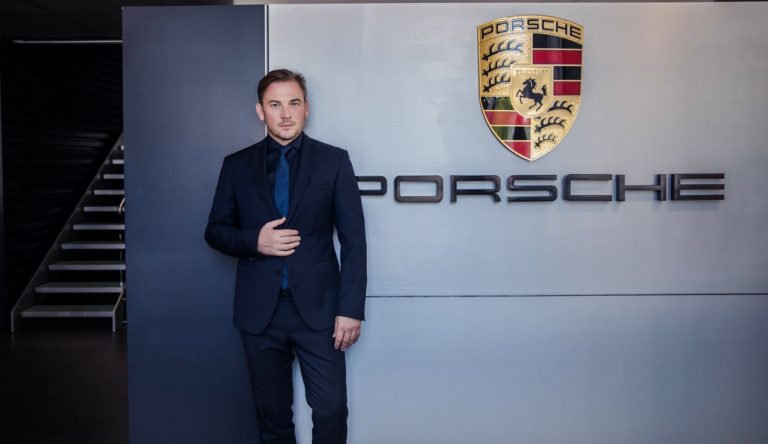
Porsche Division India appoints Manolito Vujicic as the new Head


Porsche Middle East and Africa FZE announces the appointment of Manolito Vujicic as the new Head of its Division in India. The 48-year old will start his tenure from February 2021, following his departure from the position Porsche Brand President at PAIG (China) Automobile Investment Co., Ltd in Hangzhou (China). The appointment comes at a vital time for the brand, with the all-electric Taycan and latest generation Panamera expected to arrive in India over the course of 2021.

Commenting on the appointment, Dr Manfred Braeunl, Chief Executive Officer of Porsche Middle East and Africa FZE, says: “I am very pleased that Manolito has accepted this position. His extensive experience in the retail business and network development will be crucial for the coming years. We have ambitious plans for the market and I am certain that he is the right candidate to lead the local team into the next phase for Porsche in India.”

Dr Manfred Braeunl, Chief Executive Officer of Porsche Middle East and Africa FZE

German-born Manolito Vujicic brings a wealth of experience to the new role. He has been working in the automotive industry for almost 20 years, 17 of which he spent working for the Porsche Holding Salzburg. In his latest role, he was responsible for budget and investment planning, the realization of dealer targets as well as the expansion of the existing dealer network for the organization in China.

Prior to this, Vujicic held the position of Managing Director for Porsche SCG Ltd., Serbia’s national importer of Volkswagen, Audi, Seat and Porsche. He has extensive knowledge in all areas of retail business, comprising Sales, Network Development, Marketing and Communications, as well as After Sales.

Married with three kids, Manolito Vujicic is excited about starting his new role in Mumbai: “This is a unique opportunity for me to combine my experience in working in different environments, my knowledge as an importer and my passion for the retail business. I am excited to lead the team in this new era for Porsche India.

“Throughout my years in the automotive sector, I have learned that the key to growing business is to stay open-minded and be willing to learn. Our marketplace is constantly changing and it is crucial to adapt quickly. Together with our partners, we will continue to excite our customers, encourage our employees, offer an excellent service, and achieve positive results,” he continues.

In his new role, Manolito Vujicic will be managing Porsche’s presence across the country. The network comprises five dealerships, eight service centres and the soon-to-be completed Porsche Studio in Delhi. The brand has plans to expand its footprint in the market and further enhance the customer experience through varies measures.

Source: Porsche

Kia wins four 2021 Consumer Guide® Automotive Best Buy awards


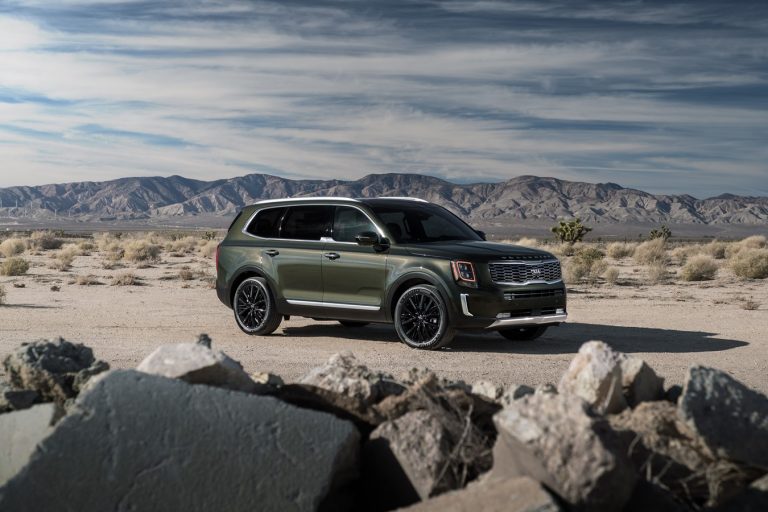
Kia Motors America (KMA) is pleased to announce that Soul (Subcompact Crossover), Seltos (Subcompact Crossover), Rio (Subcompact Car) and Telluride (Midsize Crossover) have been named 2021 Consumer Guide® Automotive Best Buy Award winners.  A seventh consecutive win for Soul marks the longest running streak in the Subcompact Crossover category.

“Claiming four 2021 Best Buy awards reflects Kia’s commitment to innovation, design, safety and driver satisfaction.  Furthermore, the wide range of Kia vehicles honored proves our world-class model line-up offers a vehicle that suits the needs of every driver,” said Sean Yoon, President & CEO, Kia Motors America, Kia Motors North America.  “With Telluride taking top honors for the second time and Soul sweeping its category for an incredible seventh year in a row, the Kia brand continues to demonstrate its ‘Give It Everything’ spirit.”

Consumer Guide editors log more than 100,000 miles every year evaluating vehicles using objective criteria such as price, features, performance, accommodations, fuel economy, reliability records, and resale value, to assess each vehicle in real-world driving experiences.

“With four crossovers on the 2021 Consumer Guide Best Buy list, Kia proves it can build vehicles that balance comfort and utility while still delivering strong value,” said Tom Appel, Publisher, Consumer Guide® Automotive.  For more information on the award, visit http://consumerguide.com/best-buys/.

About Kia Motors America

Headquartered in Irvine, California, Kia Motors America continues to top quality surveys and is recognized as one of the 100 Best Global Brands. Kia serves as the “Official Automotive Partner” of the NBA and offers a complete range of vehicles sold through a network of nearly 750 dealers in the U.S., including cars and SUVs proudly assembled in West Point, Georgia.*

Nissan sets up new regional business unit for Africa


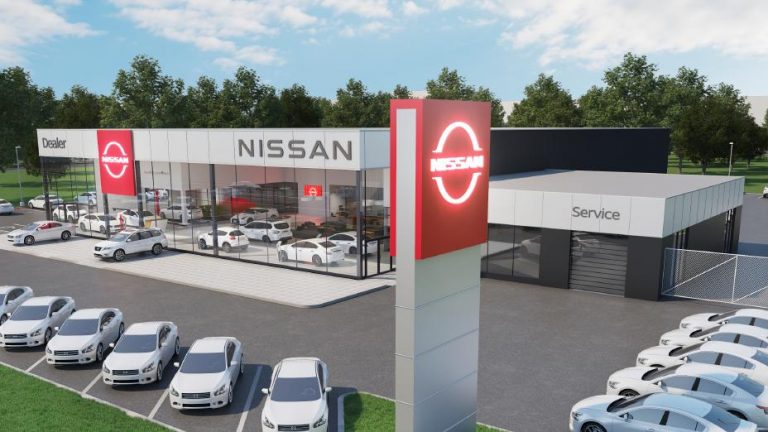
Renowned Japanese automotive group, Nissan is to set up a new regional business unit for Africa. The company seeks to boost its manufacturing capacity and penetrate one of the world’s biggest undeveloped new car markets.

The move marks a reorganization of the company’s disparate operations on the continent, bringing them within one entity headed by Mike Whitfield, who has previously served as Managing Director of Nissan’s units in both South Africa and Egypt.

In a statement, Nissan has stated that, “Beyond internal operating enhancements, this also positions Nissan to focus on the massive opportunity that Africa presents to the organization globally.”

ALSO READ: Nissan appoints Japan Motors as vehicle assembly partner in Ghana

Nissan together with its competitors, Volkswagen, BMW and Toyota, have been lobbying African governments to grant conditions favourable to local assembly and manufacturing while curbing imports of cheap used cars. Most carmakers have focused on manufacturing and sales in South Africa, which constitutes for 85% of Africa’s new car purchases.

Carmakers are also hoping to take advantage of the African Continental Free Trade Area expected to come into force early next year and will reduce tariffs and ease the flow of goods between its member states.

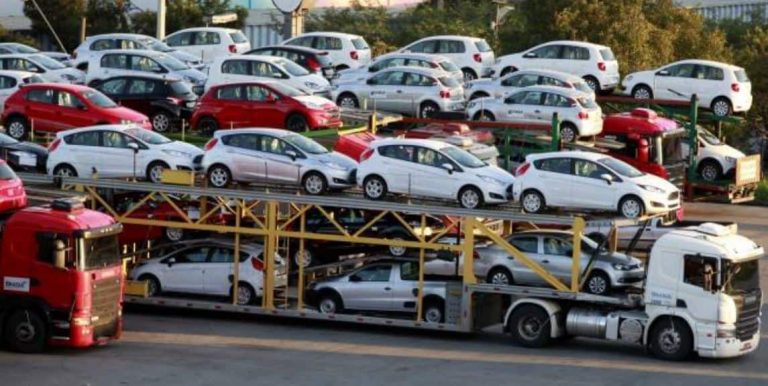
Zimbabwe bans import of used cars older than 10 years


The government of Zimbabwe has imposed a ban on the importation of used vehicles older than 10 years as the country moves to revitalize its automotive industry and cut greenhouse gas emissions.

However, commercial vehicles such as tractors, haulage trucks, earth-moving equipment and other specialized vehicles used in mining and construction will be exempt from the new requirement, this is according to the Finance and Economic Development Minister Mthuli Ncube as quoted by the Zimbabwe Broadcasting Corporation (ZBC).

Speaking during his delivery of the 2021 national budget in parliament, Minister Ncube said about 1.3 billion U.S. dollars was spent on importing buses and light commercial and passenger vehicles from 2015 to September 2020.

“This is despite the existence of capacity by the local motor industry to assemble the above-mentioned range of motor vehicles. Furthermore, due to lack of effective standards and regulation, road unworthy vehicles, which, in some instances fail to meet environmental and safety standards, find their way onto the market,” the ZBC quoted Ncube as saying.

Over the past decade, Zimbabwe has witnessed an unprecedented rise in the volume of vehicular traffic on the roads, driven by the availability of cheap imported cars mainly from Japan.

Critics say imports of substandard used vehicles are contributing to road carnage as well as worsening pollution that hampers efforts to mitigate the effects of climate change.

In a related development, Ncube said earlier this month that Zimbabwe will soon start to locally manufacture buses for the mass public transport system as part of government efforts to revive the country’s once vibrant automobile industry and to reduce the import bill.

Zimbabwe’s vehicle manufactures have been struggling to stay afloat as the government, which is their biggest customer, and the general public have over the years shunned locally produced vehicles, preferring cheaper imports instead.

Morocco to produce up to 1 Million vehicles per year by 2030


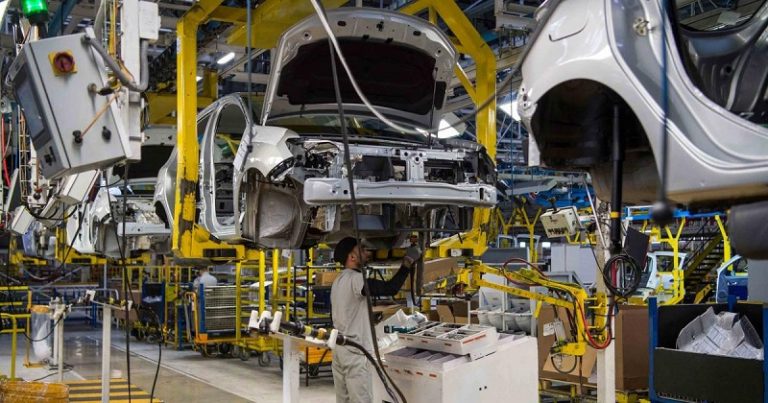
Morocco’s automotive sector will have the capacity to produce 700,000 to one million vehicles per year between 2025 and 2030, this is according to a recent study by French economist Henri-Louis Vedie predicts.

Vedie published last week through the Policy Center for the New South a research paper under the title: “The Automobile — A Strategic Moroccan Sector, Leader in Africa.”

The 30-page report explains, with data and statistics, how Morocco became a continental leader in the automotive sector. It also presents forecasts on the sector’s domestic growth based on the partnership agreements that Morocco has signed with foreign car manufacturers.

Morocco’s automotive sector is 90% export-oriented and 80% of its exports go to Europe, one of the most lucrative markets globally.

“This puts the local added value in constant growth,” the study’s abstract said.

The report highlighted how in recent years Morocco has overtaken South Africa’s automotive industry, which was a continental leader for a long period of time.

By the year 2030, Morocco will be the largest car producer in Africa followed by South Africa and Egypt.

In 2023, the North African country’s car production will reach 700,000 units, according to Vedie’s calculations, thanks to the new PSA factory in Kenitra. The facility, inaugurated in June 2019, increased the country’s annual production capacity by 100,000 cars and will add 100,000 more units by 2023.

The Somaca factory in Casablanca, with an annual production capacity of 70,000 cars, and the Renault-Nissan unit in Tangier, with a capacity of 340,000 cars, will also push Morocco towards the total capacity of 700,000 vehicles.

Morocco also has the potential to reach an annual production of one million cars between 2025 and 2030 after Chinese automotive operator BYD opens factories in Tangier. BYD announced its intention to open four electric car factories in Morocco in 2017.

The factories have the objective of producing 300,000 vehicles per year and creating 2,500 direct jobs. The project is currently on stand-by due to the COVID-19 pandemic, but if it goes ahead as planned, Morocco will become the first country in Africa to produce one million cars per year and one of the few in the world.

“Morocco has a qualified workforce and bases its automotive sector on advanced technical and technological skills. Its geographic position also gives it access to two major markets, Europe and Africa,” the study concluded, highlighting some of Morocco’s strengths.

SA motor industry needs to put foot on electric vehicles


The UK’s commitment to ban the sale of new petrol and diesel vehicles from 2030 to combat climate change means South Africa’s automotive industry needs to shift gears, and fast. News that the UK plans to ban the sale of new internal combustion engine-powered (ICE) vehicles from 2030 (and hybrids from 2035) might simplistically be dismissed as “First World problems”. However, if 6.4% of your GDP comes from vehicle manufacturing and your largest export market is the UK, this requires pause for thought.

The UK’s moving deadline mirrors the aggressive move to electric vehicles (EVs) in the EU. In the bloc, incentives to move motorists into diesel cars in order to reduce carbon emissions had the unexpected side effect of creating health problems related to the particulate and NOx emissions. As a result, France has said it will ban the sale of ICE cars in 2035, and Germany in 2030 as well.

Dr Norman Lamprecht, National Association of Automobile Manufacturers of SA (Naamsa) executive for trade, exports and research, says three out of every four cars exported from SA go to the EU and the UK. In 2019, more than 100,000 cars built in SA were delivered to UK customers alone. The UK’s move is designed to kick-start investment and innovation in a post-Brexit paradigm and to meet its climate change agreements.

“The UK’s commitment to ban the sale of new petrol and diesel vehicles from 2030 is part of our ambitious response to the threat of climate change,” says UK High Commissioner to South Africa Nigel Casey.

“As a major market for, and partner with, South Africa’s automotive industry, we hope this will help advance consideration of investment in the production of electric vehicles here, both to protect export markets and to support the use of electric vehicles locally,” says Casey.

There are other factors at play too. “The UK auto industry was lagging behind and it couldn’t regain market share incrementally, so it has chosen to disrupt the market,” says Hideki Machida of Mobility 2030 South Africa at KPMG.

“They’re saying: ‘We won’t be handling petrol and diesel engine cars from 2030,’” he says.

Electrification is shaking up the industry globally, and South Africa faces a stern test of its regulatory relevance and competitive advantages in a whole new area of production. Just a year ago the government, with Naamsa, finalised the extension of the Automotive Production and Development Programme (APDP), a scheme designed to incentivise the manufacturing and export of vehicles, and the development of a local supply chain.

Industry stakeholders all agree that local EV manufacturing is a “non-starter” without some kind of local market to sustain its development, and the local market is almost nonexistent. 

The APDP was extended to 2030, and was well received by the seven local legacy original equipment manufacturers (OEMs) operating here, among them Toyota, Volkswagen, Mercedes-Benz, Ford, Nissan and Isuzu. Recently, Toyota, Ford, Mercedes-Benz and Volkswagen have all announced major investments in the country. And yet the APDP does not talk about EVs at all.

“We need to adapt and do it quickly,” says Lamprecht. “For the SA automotive industry to remain relevant, it needs to be integrated into the global EV value chain. There is a general acknowledgement in the industry that it must think differently in the way it perceives the electric revolution. In this regard the industry has just finalised an Electromobility Road Map with… recommendations to be implemented,” Lamprecht said in a release.

Gaylor Montmasson-Clair, senior economist at Trade and Industrial Policy Strategies, a policy think tank, says that the UK’s announcement does require a policy response.

“We need to react to that,” he says. “We haven’t factored this in.” He says the government is engaged with a need for change. His report, “Harnessing Electric Vehicles for Industrial Development in South Africa”, was jointly commissioned by Naamsa and the Department of Trade, Industry and Competition.

Local manufacturers can either incorporate EV production into their lines or they need to find new markets for their products, which Montmasson-Clair says would be “shortsighted”. The APDP’s target of building 1.4 million cars annually by 2030 has been predicated on an expected uptick in demand from African countries for ICE cars and trucks built in SA that offsets declining demand in the EU. Machida agrees with Montmasson-Clair that this might not be realistic.

“Owning a car is a luxury and in countries like Kenya, Rwanda and Ghana we’re… seeing a strong movement to electric shared mobility,” says Machida. “They’re going to leapfrog the ICE technology.”

Lamprecht warns: “The industry could face significant job losses at plant level, export revenue [and] a substantial drop in the automotive industry’s contribution to the GDP…”

So, the question is, can SA build electric cars? All motor plants compete internally for models and volume allocation. Our local operations will need to show to their principals clearly that in the medium term local hybrid production and EV production is competitive and reliable.

Montmasson-Clair says SA has the opportunity to insert itself meaningfully into the EV value chain. While he says cell manufacturing is dominated by China, the manufacturing of batteries with imported cells is a sector in which SA already has globally competitive companies.

He says that mineral beneficiation is also an area where the country already has strong operations.

It’s also important to note that hybrid production is already happening in SA, at Mercedes-Benz in East London, and that Toyota plans to manufacture an as-yet unnamed hybrid model at its Durban plant in the coming years.

Machida agrees that all is not lost. “It started with catalytic converters. We need to look for new components that we can produce competitively.”

Industry stakeholders all agree that local EV manufacturing is a “non-starter” without some kind of local market to sustain its development, and the local market is almost nonexistent.

Montmasson-Clair says that the real opportunities for electrification in South African manufacturing remain in public transport solutions.

“South Africa needs to… kick-start the production of electric vehicles but first needs to sell more EVs in the domestic market,” Lamprecht says. The upshot is that there is unlikely to be any local EV manufacturing until there is an EV market of some sort, and, as Machida points out, 2030 is not the real deadline for local manufacturers, as in developed markets like the UK, EVs will hit price parity with ICE cars in two to three years’ time.

“It won’t make sense to buy an ICE car when a superior product is available at the same price point, which is also significantly cheaper when looking at running costs and maintenance costs. And… will there be a buyer for your second-hand car when the time comes to sell it?”

For local manufacturers, the deadlines in the UK and EU will distort the market out of all recognition years in advance of the actual deadline.

“There’s an urgency we’re not feeling yet,” Machida says.

Our nurturing and protection of the legacy manufacturers has created an impressive and important sector of our economy. But we are in the midst of a fundamental disruption, and the time to act is now for the local motor industry to remain relevant in the coming years, let alone in 2030. 

Source: DM168

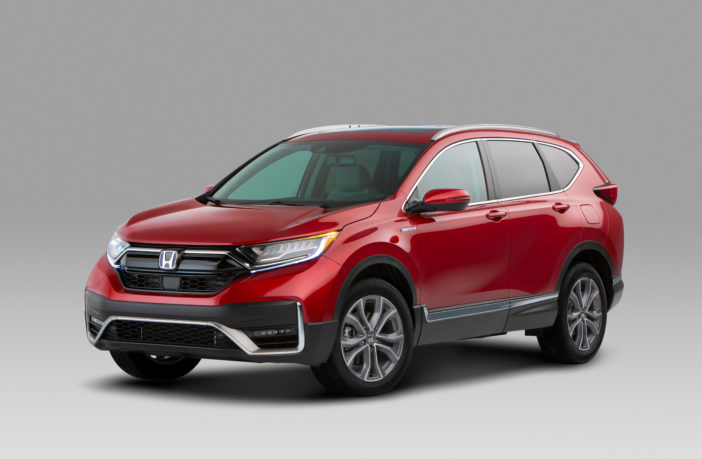
Honda Adds Hybrid Power to the 2020 CR-V


The Honda CR-V, gets an electric boost for the 2020 model year with the addition of the company’s dual-electric-motor hybrid powertrain. In addition, the Honda Sensing suite of advanced driver-assist systems became standard throughout the CR-V range, helping make the popular vehicle both safer to operate and, in hybrid form, very economical when it comes to gasoline.

The 2020 CR-V Hybrid Touring we sampled proved this point squeezing some 40-plus miles out of each gallon of gasoline (topping the federal Environmental Protection Agency’s 38 mpg combined rating; the EPA says it will get 40 mpg in city driving, 35 on the highway).

This mileage figure came during my normal driving mix of highway, suburban and rural conditions found on Cape Cod; I never did anything “special” to eke out additional mileage.

The CR-V was quiet and comfortable throughout the evaluation week, offering plenty of room for four and their stuff, and adequate room for a fifth adult in the middle position of the second seat if the trip was not lengthy.

Hybrid powertrain, chassis and brakes

The CR-V is Honda’s first all-wheel drive application of the hybrid setup;  the two-motor hybrid powertrain, shared with the current Accord Hybrid, combines two electric motors with a 2.0-liter, 16-valve DOHC Atkinson cycle engine with greater than 40% thermal efficiency, the highest for any mass-produced Honda engine.

The CR-V’s two-motor system operates without the need for a conventional automatic transmission for smooth and seamless power delivery similar to a pure electric vehicle. The compact intelligent power unit (IPU), containing the hybrid battery pack and its control systems, is mounted under the cargo floor, allowing the new CR-V Hybrid to retain excellent cargo utility, including a 60/40 split fold-flat rear seatback with a flat load floor. Peak total system horsepower is 212, up from 190 HP on the CR-V.

The hybrid system provides the “go” while also assisting in the “stop” through regenerative braking. Several levels of regen braking, to both slow down the CR-V and recharge the battery, can be achieved by using the paddle shifters on the back of the steering wheel. In addition, reducing pressure on accelerator pedal, will also provide regen braking, thus turning the motors into generators.

A four-wheel disc system (ventilated rotors in the front; solid in the rear), with anti-lock (ABS) and electronic  brake distribution (EBD), comprise the conventional braking setup on the CR-V.

The brakes operate inside 19-inch machine-finished alloy wheels with gray inserts wearing  235/55 R19 101H tires. Suspension is independent at all four corners, MacPherson-type struts up front and a multi-link double wishbone setup in the rear, with both ends featuring a stabilizer bar.

These pieces, as mentioned, provide a solid, controlled and comfortable ride. The CR-V is not a sports car, but real-world handling is reliable and reassuring. Regardless of the road conditions, the Honda crossover acquitted itself very well. I never felt the need for more power or more grip, even when jumping on the brakes when a car ran a stop sign just ahead of me.

Honda Sensing suite of advanced driver-assist systems (ADAS)

The Honda Sensing ADAS brings the following safety-related features to the CR-V: Collision Mitigation Braking System™ (CMBS™) with Forward Collision Warning (FCW) and pedestrian sensing capability; Road Departure Mitigation (RDM) with Lane Departure Warning (LDW);  Adaptive Cruise Control (ACC) with low-speed follow, and Lane Keeping Assist (LKAS).

In addition, the CR-V Hybrid Touring we drove featured automatic high beams; rear cross-traffic monitor/warning, and blind-spot warning, making this crossover a very well-equipped vehicle in terms of ADAS.

2020 Honda CR-V Hybrid

Luxury amenities abound inside and out

Leather covers the important parts of the Touring’s interior – the seats (front are heated and power adjustable) and the steering wheel (heated!).

Once seated, front passengers are presented with a redesigned dashboard dominated by a seven-inch color touchscreen controlling infotainment and general vehicle systems. Infotainment in the CR-V includes navigation, AM/FM/HD/satellite radio; Bluetooth streaming audio and smartphone connection; a CD player, and integrated Apple CarPlay and Android Auto capability.

Supplementing the on-screen controls are steering-wheel mounted remotes for infotainment and the voice-activation capability (for audio and navigation). Controls on the wheel also operate the color TFT driver-information interface (DII) center meter display which can show power/charge status, as well as power distribution and regeneration.

Of course, there are cubbies and storage areas throughout the cabin, as well as USB connections to charge and connect mobile devices. The Touring version even includes a wireless charging pad for mobile devices capable of this technology.

Competitive pricing a Honda tradition

The CR-V holds onto its popularity by offering a Honda-quality product at a competitive price. This remains true of the Hybrid Touring version which carried a $35,950 suggested price (including destination/handling) in 2020. The 2021, which does not have any major changes from the previous year, will retail for $36,350.

For compact crossover shoppers desiring hybrid economy, but not the full complement of amenities and features of a Touring model, Honda also offers the EX with a base price of $30,560 and the better-equipped EX-L at $33,150.

The non-hybrid remainder of the CR-V range begins at $25,350 and tops off with the CR-V Touring at $33,650.

Since the CR-V was introduced in 1997, Honda has come to understand the American consumer when it comes to designing a compact crossover. Through five generations, the company has sold some five million of them and a week in the Hybrid Touring showed me why they have been able to do so.

Goodyear releases new OTR tyre for long haul fleets


The Goodyear Tire & Rubber Company has announced its newest addition to its off-highway large haulage product line, the RH-4A+, engineered to deliver a lower operating cost per hour and higher productivity in hard rock underfoot conditions

This tyre features an extra-deep E-4+ tread depth with a high net-to-gross tread pattern and optimised footprint pressure to help provide long hours to removal.

The Goodyear RH-4A+ tyre is an important addition to Goodyear’s Total Solution of trusted products, reliable services and fleet management tools – all delivered by a global network.

The large haulage tyre helps operators be more productive and operate at a lower cost by providing the following benefits and features:

-Enhanced sidewall durability and lateral stability with Goodyear’s new Durawall Technology, wider bead design, and wider moulded rim width

-Increased hours to removal and cut protection with its high net-to-gross tread pattern and deep, E-4+ tread depth

-Cool operating temperatures from the tread’s centreline blading, shoulder lug pockets, and shoulder lug side notches

-Field results from global mining customers have shown that the RH-4A+ delivers up to 12% better hours to removal than RM-4B+.

“Low operating cost per hour is an important requirement for mine operators,” said Eric Matson, global OTR field engineering manager. “Customers also require other performance benefits, such as a tread and casing that together deliver long hours to removal, resistance to cutting, and excellent traction in severe, hard rock underfoot conditions. The new RH-4A+ provides these benefits to help mining fleets optimise productivity and lower their operating costs.”

The RH-4A+ is currently available in sizes 59/80R63, 46/90R57 and 27.00R49 through Goodyear’s global network of authorised OTR dealers. It is available in customized casing constructions and with Goodyear’s proprietary tread compounds to meet hauling conditions.

“Complimenting the RH-4A+ is Goodyear’s EMTrack tyre performance tracking software, giving operators the ability to track the tyre’s properties to reduce operational costs,” said Matson. “With EMTrack, mining operators can track the performance of their tyres, including the new RH-4A+, in order to project the timing of rotation, replacement and help to manage their inventory.”

Autochek secures $3.4 million pre-seed funding to deliver technology for African automotive industry


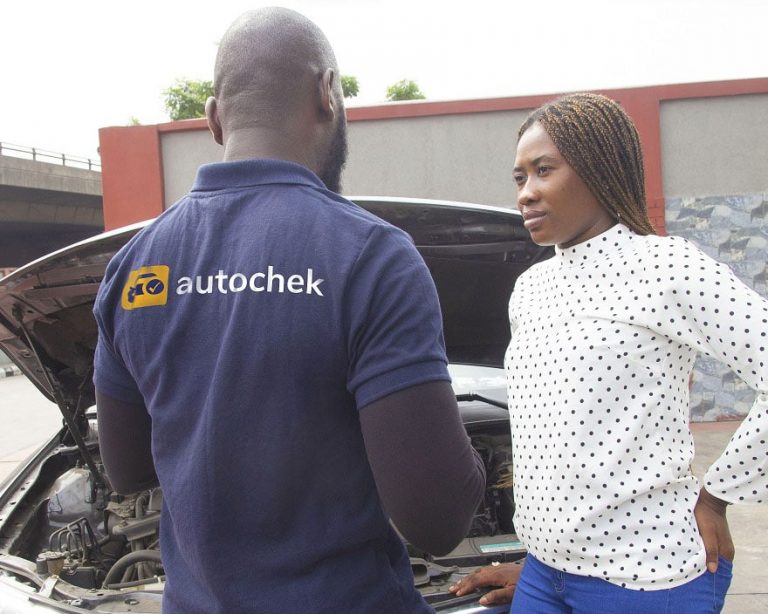
Autochek, the automotive technology company that aims to build solutions for the African market, has raised $3.4 million in a pre-seed funding round, co-led by TLcom Capital and 4DX Ventures with inclusion from Golden Palm Investments, Lateral Capital, Kepple Africa Ventures, MSA Capital and a number of local angel/seed investors. The start-up will use the investment to grow its Nigeria and Ghana markets and will see further investment in technology and growing its teams.

The pre-seed investment announced follows Autochek’s acquisition of the Cheki Nigeria and Cheki Ghana brands in September 2020. Combining technology and data to power every process of the automotive transactional ecosystem for millions of people, Autochek will transform the automotive buying and selling experience for African consumers, by creating a single marketplace for all automotive needs. This will include everything from sourcing and financing transactions to after sales support and warranties.

Through the acquisition of Cheki Nigeria and Cheki Ghana, Autochek already has more than 20,000 unique vehicles listed on its platform, and more than 12,000 dealers and private sellers, as well as a range of corporate partners and customers. Leveraging its extensive on-the-ground network of dealers and an experienced leadership team, the new platform and mobile app has been designed to address the pain points of buying, selling and repairing cars in Africa such as access to finance (for both consumers and dealers), maintenance and insurance, and bring greater value to car dealerships by enabling and enhancing automotive commerce across the continent. Autochek will also facilitate cheaper and more effective transactions for dealers and corporate partners, leveraging its industry relationships to buy and sell vehicles on behalf of the customer for the best price and ensuring value for money.

Via the Autochek mobile app (Android app now available. iOS app coming soon), car owners and potential owners will have access to loans, auctions, trade-ins and maintenance. Automotive dealers will have access to real time car auctions, fleet management, marketing support and standardised reports on car conditions and market value, as well as inventory management, CRM for lead management and garage management systems for car workshops. Financial institutions like banks and fintechs will also have access to a credit management dashboard that will make it easier for them to access customers.  By focussing on the demands of both customers and dealers, Autochek is building an ecosystem of solutions specifically designed to deliver an unrivalled customer experience for the African automotive market.

Etop Ikpe, Founder and CEO of Autochek, said, “This early stage investment allows us to get started with the work of developing technology products and services that will transform automotive trade on the continent, whereby we significantly improve transactions and after care support for car owners, dealers and other stakeholders across the African automotive industry.

“Building on the solid work that the Cheki Nigeria and Ghana teams have done over the last ten years, we  are already dispersed across multiple locations and applying the technology built and developed by our Autochek auto-tech experts, we are well positioned to scale quickly, as demand for reliable and well priced cars on the continent grow. With this pre-seed round and our seasoned strategic investors on board, we are working to transform the automotive sector on the continent”.

Andreata Muforo, partner at TLcom said, “Autochek is radically improving customer experience and dealer economics in an industry that creates value and jobs across the continent and we are excited to be part of that journey. The founding team has a clear plan for what they want to achieve and we look forward to working with them as they execute on their vision.”

Walter Baddoo, Managing Partner at 4DX Ventures said, “We are proud to enter this partnership with Autochek as the company embarks on its mission to transform Africa’s automotive industry. By providing access to a new range of products and services, the company will dramatically enhance the automotive transacting experience for dealers and the ownership experience for consumers across the continent. Autochek is helping to unlock massive opportunities in Africa’s auto sector and we are pleased to be supporting that mission”.

Africa is widely regarded as the final frontier for the global automotive industry, with high growth prospects over the next decade. Despite the impact of COVID-19, car sales are expected to grow across the continent, with a corresponding rise in demand for support services. However, a range of existing challenges, including limited access to finance and an opaque and fragmented marketplace means car owners and dealers do not always enjoy the best experience.

Accelerating access to electric mobility


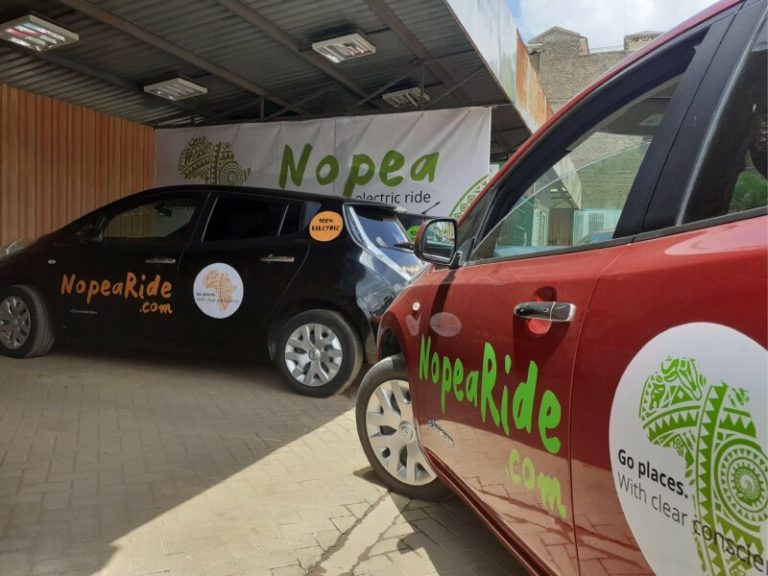
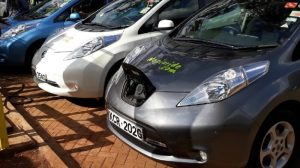
InfraCo Africa, part of the Private Infrastructure Development Group (PIDG), EkoRent Oy and EkoRent Africa (subsidiary of EkoRent Oy) have signed a Shareholders Agreement, investing Euro 1,000,000 to enable EkoRent Africa to scale up its pioneering NopeaRide electric mobility initiative in Nairobi. The initiative will accelerate access to zero-emissions taxi-hailing vehicles for businesses and private customers.

InfraCo Africa’s CEO, Gilles Vaes said, “We are excited to be working with our partners at EkoRent to support the expansion of Africa’s first fully electric taxi-hailing service. EkoRent Nopea is InfraCo Africa’s first investment in the electric transportation sector and we look forward to harnessing the potential of electric mobility to change the lives of Africa’s commuters; improving air quality and reducing dependence on fossil fuels.”

By 2050, it is estimated that African cities will be home to an additional 950 million people. Such rapid urban growth, coupled with limited public transport and dependence upon fossil fuels for vehicular transport, is expected to increase congestion and exacerbate poor air quality in Africa’s major cities. Recognising the challenge of urban transportation in Kenya, EkoRent launched NopeaRide in 2017. The continent’s first 100% electric taxi-hailing service, NopeaRide currently operates a growing fleet of electric vehicles and charging stations across Nairobi. Drivers and customers access the platform via a mobile application.

EkoRent founder and CEO, Juha Suojanen said, “We are thrilled to have signed an investment agreement with InfraCo Africa that not only enables us to increase NopeaRide’s footprint in Kenya, but also means we are partnering with an investor with years of experience and knowhow of the local markets in Africa. Our roots and company values originate from Scandinavia and Finland, but finding investors with knowledge of Africa can be a hard and long process. Now we have done it, and I look forward to growing NopeaRide together with InfraCo Africa.”

InfraCo Africa’s involvement will enable the company to grow its NopeaRide fleet up to 100 (70 additional) Electric Vehicles, in tandem with the expansion of the required charging infrastructure across the city. New charging stations will be rolled out in an efficient and cost-effective manner using data derived from Nopea applications (both drivers and passengers), Nopea vehicles, charging stations, and by monitoring of traffic flow and popular journey routes.

As well as cutting direct greenhouse gas emissions, NopeaRide’s electric vehicles and charging systems  reduce the running costs and maintenance burden of its fleet when compared with taxis which use combustion engines. For drivers, these cost savings are reflected in 30-50% higher incomes than they could earn driving conventional taxis.

The NopeaRide model is highly replicable and it is anticipated that, by enabling the company to scale its offering in Nairobi, the project will attract private investment into the electrification of  transportation for private and business hire in cities across the region.

- Advertisement -