Monday, June 1, 2026
Home Blog Page 53

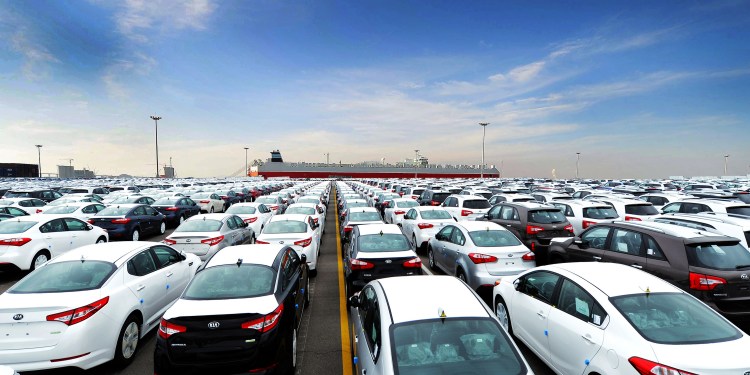
Kenya extends deadline for used car imports

0

The government of Kenya has extend the deadline for used car imports from two years to five years as it gears towards promoting locally assembled vehicles. Treasury CS Ukur Yatani, on Monday, January 25, said that the government will phase out secondhand cars by 2026. The car dealers had up to 2023 to import secondhand vehicles in an earlier plan unveiled in 2019.

The new proposal will offer them reprieve as they were to be out of business within two years. The industry rakes in approximately Ksh 60 billion annually. Yatani tabled his proposal in the 2021 Budget Policy Statement (BPS) that was released for public participation. BPS outlines Kenya’s plans for the 2021/22 Ksh 3 trillion budget.

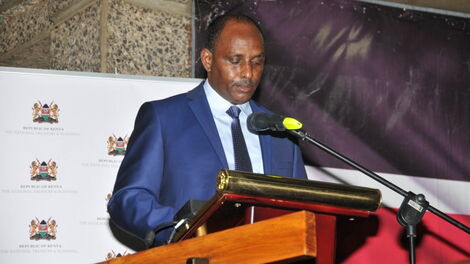
Treasury CS Ukur Yatani addresses the media on November 25, 2020, in Nairobi
Treasury CS Ukur Yatani addressing the media on November 25, 2020, in Nairobi
The CS wants the motor assembly sector streamlined as second-hand cars make up more than 85% of the imported fully built unit (FBUs).

“The government through the Ministry of Trade and Industrialisation, drafted the National Automotive Policy to effect changes in the motor assembly industry with the ultimate goal of phasing out the importation of second-hand vehicles by 2026.

Trade CS Betty Maina added that the government had set aside Ksh600 million to purchase locally assembled or manufactured cars to boost and revive the economy crippled the by Covid-19 crisis.

On December 10, 2020, President Uhuru Kenyatta commissioned the local assembly of Proton Saga saloon cars at the Associated Vehicle Assemblers (AVA) in Miritini, Mombasa County.

He lauded developers supporting the government’s agenda to revive the local vehicle assembly industry adding that the sector would help to support wealth and employment creation for the Kenyan youth.

In January 2021, local carmaker Mobius Motors also opened a new Ksh330 million manufacturing plant in Nairobi. Mobius Chief Operating Officer Nicolas Guibert said that at least eight units would be produced from the Mombasa Road plant daily.

NADDC to unveil Nigeria’s first electric vehicle


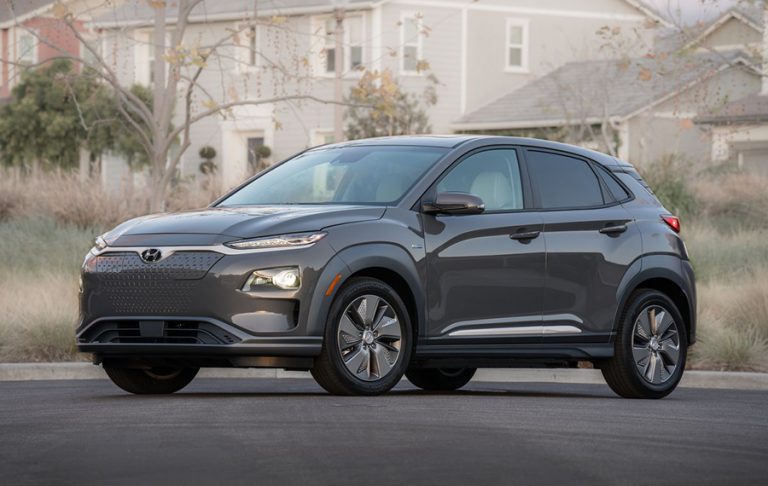
The Federal Government of Nigeria through the National Automotive Design and Development Council (NADDC) is today 5th February 2021, expected to unveil Nigeria’s first locally assembled electric car, the Hyundai Kona.

The electric car, which was assembled by the Stallion Group Automobile, has been tagged as an innovation that will enable Nigeria and Nigerians to benefit from the gains in renewable and sustainable energy. This innovation will help to foster an eco-friendly environment.

According to the Director-General of NADDC, Mallam Jelani Aliyu, the ceremony will be followed by a roadshow across the city of Abuja to provide Nigerians with the opportunity to see, feel, and drive the Electric Vehicle (EV).

What you should know

  • The Hyundai Kona was launched on November 13, 2020, by the Lagos State Governor, Babajide Sanwo-Olu, at VON Automobiles in Ojo, Lagos State where the car was manufactured.
  • The Electric car was regarded in the European motoring industry as the world’s number one, and it costs N24 million.
  • However, the material used to assemble the 100% electric and zero-emission car was mostly sourced locally.

Why this matters

  • The Hyundai Kona shows Nigeria’s readiness towards addressing the problems of climate change, as human activities have severely impacted changes in global temperature and weather patterns.
  • With the launch of the Nigerian-made EV, Nigeria joins the rest of the world in embracing the recent innovation in energy mobility towards electric cars, courtesy of Hyundai and the Stallion Group.
  • This innovation is an open letter from Nigeria to the rest of the world, as it shows the country’s seriousness about a clean environment through clean and other sustainable energy options.
  • This new development is a move towards replacing internal combustion engine-powered vehicles with electric vehicles, in a bid to reduce environmental pollution and keying into an eco-friendly green environment.

Pegasus Automotive Group recognized for expertise in the industry and dedication to customer service at MEA Business Awards 2020


Pegasus Automotive Group UAE, part of Pegasus Automotive Group an international dealer group with operations in London, Geneva, Kuwait, Abu Dhabi and Dubai, has been recognized for its expertise in the industry and dedication to customer service during the 2020 MEA Business Awards. The company bagged the ‘Best International Luxury Automotive Dealership’ category in recognition of its commitment towards promoting excellence in the industry.

According to the company’s senior officials, winning the ‘Best International Luxury Automotive Dealership’ category serves as a testament to how Pegasus Automotive Group was able to overcome challenges and how it rose to being a much sought-after provider of luxury car brands in the region. Adapting to the unprecedented challenges posed by the pandemic was one of the key challenges that the company faced in 2020, which they sought to address via utilizing innovation and helping customers maintain an emotional connection with the brand.

Pegasus brought the showroom experience across a virtual platform–giving customer the advantage of getting a closer look at their preferred models while in the comfort of their own homes. The company also conducted virtual sales consultations via online platforms and even walked the extra mile by sending the car to the customers’ home upon request, including test driving the vehicle.

Dr. Saeed Dana, Managing Director, Pegasus Automotive Group, said, “We are truly thankful for the recognition that we have received from this year’s MEA Business Awards. It is always a pleasure to be recognized in the industry for your contributions and efforts as it not only speaks about the business itself but also about the efforts made by our employees. During the pandemic, we shifted our priorities and focused more on closely monitoring macroeconomic indicators and changes in consumer behavior; constantly reviewing our contingency plans as new information becomes available; exercising rigor in managing our finances and utmost prudence on cost reductions.”

Dr. Saeed added, “We continue to remain steadfast in our efforts to innovate our sales approaches–placing key focus on specific customer segments and geographies using digital tools. Moreover, we remain active and prepare our operations for recovery by taking critical steps to promote a safe working environment.”

Nominees for this year’s MEA Business Awards were reviewed by a prestigious judging panel–checking and assessing supporting evidence submitted by each nominee in addition to the independent research conducted by the award’s research team. The team gathered information independently from a variety of publicly accessible sources, which were assessed alongside any material supplied by a nominating party or the nominee themselves. The research team cast their final judgement, based on various criteria such as business performance, longevity, business growth (either sustained or rapid), any significant innovations or feedback from stakeholders, clients and/or customers.

President Ramaphosa inspects progress of Tshwane Automotive City


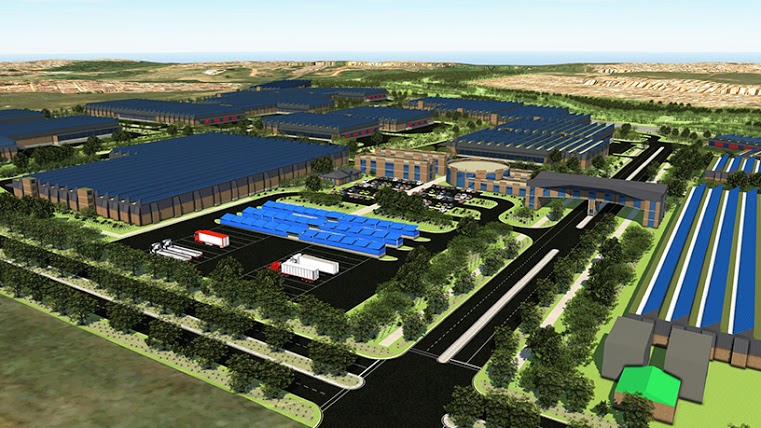
President Cyril Ramaphosa conducts a monitoring visit to Tshwane Automotive Special Economic Zone (TASEZ) to assess its progress. This is after Ramphosa unveiled the project, billed as Africa’s first automobile city, in November 2019.

TASEZ is designed to help SA’s automotive sector better meet the demands of the Fourth Industrial Revolution and compete with global players. In September, it was revealed that preparatory work and installation of infrastructure for the multibillion rand project had kicked-off.

The Automobile City is being developed through a partnership with Ford Motor Company South Africa, the Department of Trade, Industry and Competition (DTIC), the Gauteng Provincial Government and the City of Tshwane. It is an extension of the Special Economic Zone of OR Tambo International Airport.

During the project inspection, President Ramaphosa was accompanied by DTIC Minister Ebrahim Patel; Gauteng Premier David Makhura; MEC of Economic Development, Agriculture and the Environment Parks Tau; The Executive Mayor of the Town of Tshwane, Randall Williams; and the management of Ford Motor Company SA.

“TASEZ fulfills the district development model’s goal of coordinating development and economic opportunities in local areas. It also aims to attract foreign direct investment and increase exports of value-added products.

“In line with the priorities of the South African Reconstruction and Economic Recovery Plan to accelerate economic reforms, reindustrialize the economy and create jobs through aggressive investments in infrastructure, industrial parks and special economic zones are rebuilding the country’s production capacity, ”notes the Presidency.

The South African government sees special economic zones as a way to stimulate job creation and investment in specific industries. The automotive sector has attracted nearly R 23 billion thanks to the 2035 Automotive Development Master Plan, which influences the industrialization effort in other sectors to improve productivity, investment and competitiveness. It also promotes localization, in particular the development of small, medium and microenterprises.

Ford and Google to Accelerate Auto Innovation, Reinvent Connected Vehicle Experience


Ford and Google today announced a unique strategic partnership to accelerate Ford’s transformation and reinvent the connected vehicle experience. Ford has also named Google Cloud its preferred cloud provider to leverage Google’s world-class expertise in data, artificial intelligence (AI), and machine learning (ML). As part of this new, six-year partnership—and beginning in 2023—millions of future Ford and Lincoln vehicles at all price points will be powered by Android, with Google apps and services built-in.

To drive ongoing innovation, Ford and Google are establishing a new collaborative group, Team Upshift. Leveraging the talent and assets of both companies, Team Upshift will push the boundaries of Ford’s transformation, unlock personalized consumer experiences, and drive disruptive, data-driven opportunities. This may include projects ranging from developing new retail experiences when buying a vehicle, creating new ownership offers based on data, and more.

“As Ford continues the most profound transformation in our history with electrification, connectivity and self-driving, Google and Ford coming together establishes an innovation powerhouse truly able to deliver a superior experience for our customers and modernize our business,” said Jim Farley, President and CEO of Ford.

“From the first moving assembly line to the latest driver-assist technology, Ford has set the pace of innovation for the automotive industry for nearly 120 years,” said Sundar Pichai, CEO of Google and Alphabet. “We’re proud to partner to apply the best of Google’s AI, data analytics, compute and cloud platforms to help transform Ford’s business and build automotive technologies that keep people safe and connected on the road.”

As its preferred cloud provider and starting later this year, Google will help Ford leverage Google Cloud’s AI, ML and data analytics technologies to accelerate the automaker’s digital transformation, modernize operations, and power connected vehicle technologies with Google’s trusted, secure, and reliable cloud. With Google Cloud, Ford plans to:

  • Further improve customer experiences for customers with differentiated technology and personalized services;
  • Accelerate modernization of product development, manufacturing and supply chain management, including exploration of using vision AI for manufacturing employee training and even more reliable plant equipment performance;
  • Fast track the implementation of data-driven business models resulting in customers receiving real-time notices such as maintenance requests or trade-in alerts.

Ford and Google have a shared vision to bring enjoyable, safer and more efficient connected vehicle experiences built to minimize driver distraction and keep customers at the forefront of technology with over-the-air updates. Beginning in 2023, Ford and Lincoln customers globally will start to benefit from unique digital experiences built on top of the Android operating system and with Google apps and services built-in, which include world-class map and voice technology:

  • With Google Assistant, drivers can keep their eyes on the road and hands on the wheel, by getting things done with just their voice.
  • With Google Maps as the vehicles’ primary navigation, drivers can reach their destination faster with information on real-time traffic, automatic rerouting, lane guidance and more.
  • With Google Play, drivers will have access to their favorite apps for listening to music, podcasts, audiobooks and more. These apps are optimized and integrated for in-vehicle use.

Android in the car also enables Ford and third-party developers to build apps that provide a constantly improving and ever-more-personalized ownership experience.

“We are obsessed with creating must-have, distinctively Ford products and services,” said Farley. “This integration will unleash our teams to innovate for Ford and Lincoln customers while seamlessly providing access to Google’s world-class apps and services.”

About Ford Motor Company

Ford Motor Company (NYSE: F) is a global company based in Dearborn, Michigan. The company designs, manufactures, markets and services a full line of Ford cars, trucks, SUVs, electrified vehicles and Lincoln luxury vehicles, provides financial services through Ford Motor Credit Company and is pursuing leadership positions in electrification; mobility solutions, including self-driving services; and connected services.  Ford employs approximately 187,000 people worldwide. For more information regarding Ford, its products and Ford Motor Credit Company, please visit corporate.ford.com.

About Google Cloud

Google Cloud provides organizations with leading infrastructure, platform capabilities and industry solutions. We deliver enterprise-grade cloud solutions that leverage Google’s cutting-edge technology to help companies operate more efficiently and adapt to changing needs, giving customers a foundation for the future. Customers in more than 150 countries turn to Google Cloud as their trusted partner to solve their most critical business problems.

About Google

Google’s mission is to organize the world’s information and make it universally accessible and useful. Through products and platforms like Search, Maps, Gmail, Android, Google Play, Chrome and YouTube, Google plays a meaningful role in the daily lives of billions of people and has become one of the most widely-known companies in the world. Google is a subsidiary of Alphabet Inc.

BlackBerry partners with Baidu to Power Next Generation Autonomous Driving Technology


BlackBerry Limited (NYSE: BB; TSX: BB) has announced an expansion of its strategic partnership with Baidu, whose high-definition maps will run on the QNX® Neutrino® Real-time Operating System (RTOS) and will be mass-produced in the forthcoming GAC New Energy Aion models from the EV arm of GAC Group (Guangzhou Automobile Group Co., Ltd.).

The milestones build on the company’s January 2018 agreement to make BlackBerry QNX’s industry-leading ISO 26262 ASIL D certified operating system (OS) the foundation for Baidu’s ‘Apollo’ autonomous driving open platform.

Baidu is one of the few high-definition map vendors with an Automotive SPICE® certification from TÜV Rheinland – an industry certification that addresses rigid requirements for the software development process for Tier 1 and Tier 2 automotive suppliers. With world-leading levels of data granularity, Baidu’s high-definition maps provide a critical component for global automakers looking to launch next generation connected and autonomous vehicles in China.

The QNX Neutrino RTOS foundation for Baidu’s high-definition maps is a robust real-time microkernel operating system that provides deterministic performance as well as flexibility to address the limited resources of the embedded system.

“With BlackBerry QNX’s embedded software as its foundation, Baidu has made significant progress as part of its Apollo platform in establishing a commercial ecosystem for innovative technologies that OEMs can leverage for their next generation vehicles,” said Dhiraj Handa, VP, Channel, Partners and APAC, BlackBerry Technology Solutions. “We look forward to continuing to work closely with Baidu to help develop and deploy leading edge autonomous driving and connected vehicle technologies to meet the ever increasing mission-critical and security requirements of the automotive industry.”

“We aim to provide car manufacturers with a clear and fast path to the production of autonomous vehicles, with safety and security as the top priority. The BlackBerry QNX software performs well in functional safety, network security and reliability, while Baidu has achieved long-term development in artificial intelligence and deep learning. Together, we can help car manufacturers quickly produce safe autonomous vehicles and promote the development collaboratively of the intelligent networked automobile industry,” said Wang Yunpeng, Senior Director of Technology Department of Baidu’s Intelligent Driving Group.

As the leader in safe, secure, and reliable software for critical embedded systems, BlackBerry QNX provides OEMs and Tier 1s around the world with state-of-the-art foundational software and cybersecurity technologies. BlackBerry QNX technology is used in more than 175 million vehicles on the road in their advanced driver assistance (ADAS), digital instrument clusters, connectivity modules, hands-free, and infotainment systems.

About BlackBerry

BlackBerry (NYSE: BB; TSX: BB) provides intelligent security software and services to enterprises and governments around the world. The company secures more than 500M endpoints including over 175M cars on the road today.  Based in Waterloo, Ontario, the company leverages AI and machine learning to deliver innovative solutions in the areas of cybersecurity, safety and data privacy solutions, and is a leader in the areas of endpoint security management, encryption, and embedded systems.  BlackBerry’s vision is clear – to secure a connected future you can trust.

SOURCE: BlackBerry Limited

TSAM invests close to R3bn for production of new SUV at its Durban plant


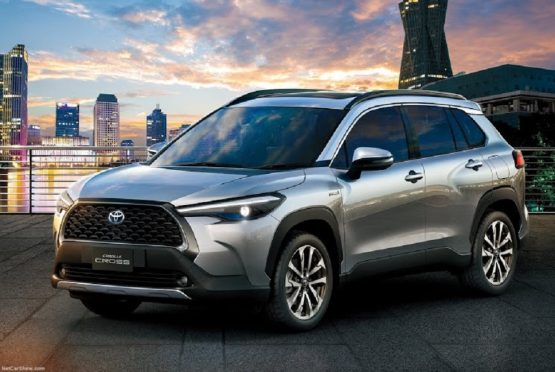
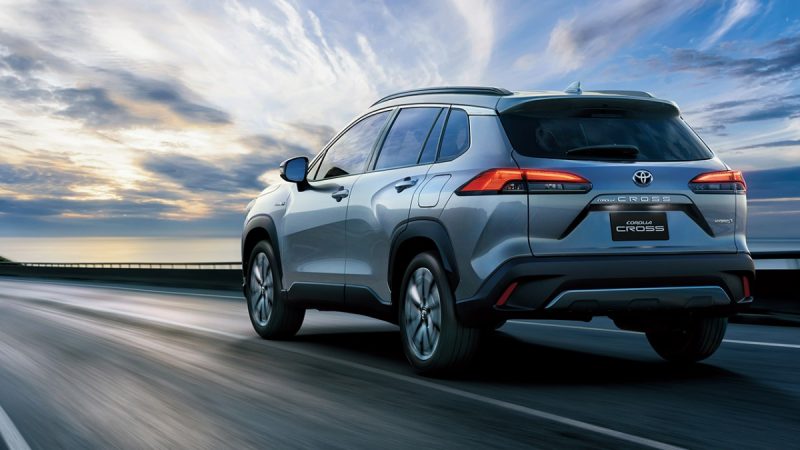
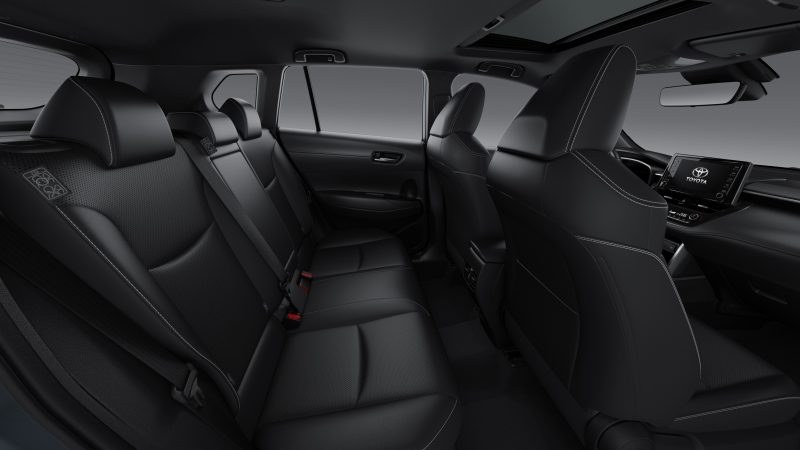
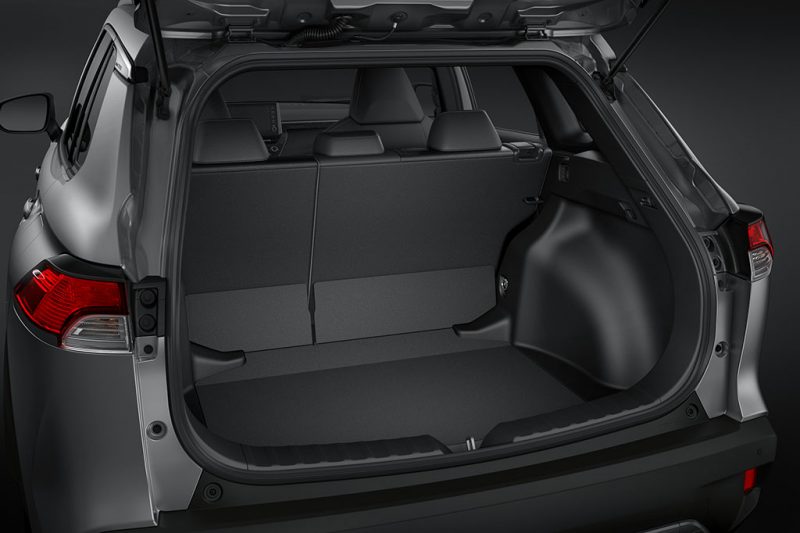
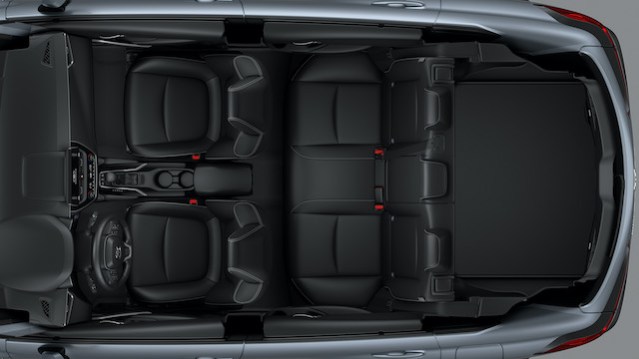
Toyota South Africa Motors (TSAM) has invested almost R3 billion about ($197.41 million) in South Africa for the production of the new Corolla Cross sport utility vehicle (SUV) at its manufacturing plant in Prospecton near Durban.

TSAM president and CEO Andrew Kirby said,  $187.53 million) in additional component purchases in the production of the Corolla Cross will commence in October 2021, with the investment generating about R2.85 billion (aboutSouth African economy and creating 1,500 new jobs. Kirby said about 500 of these new jobs will be created in Toyota’s Prospecton plant and 1,000 in the supply chain.

‘Wouldn’t have been possible without policy certainty’

“This takes us a step closer to the SA Automotive Masterplan goals that we have set ourselves and, quite frankly, would not have been possible without the policy certainty and progressive stance by the South African government with the introduction of the APDP2 [Automotive Production and Development Plan] trade-related investment measure,” he said.

“The all-new Corolla Cross is tangible proof of our commitment to our customers, the dealer network, the local automotive industry and the South African economy.”

Kirby added that Toyota pledged at the Presidential Investment Summit in November 2019 to invest more than R2.5 billion in the production of new passenger car.

“I’m pleased to say we are making good on that promise,” he said.

“We knew that was a conservative figure and we are well over the R2.7 billion and so closer to a R3 billion figure at the moment.”

Kirby said production of the new Corolla Cross is a significant milestone for Toyota SA because it is not often the company has the opportunity to produce a new body shape at its factory.
Best of both

It will also be the first time TSAM manufactures a hybrid drivetrain vehicle.

Kirby said the plant will produce both 1.8 litre petrol and hybrid models, plus left- and right drive versions of the Corolla Cross for the South African and African markets.

It will be exported to 43 countries in Africa, with Toyota projecting a 7%-a-year growth in the SUV market in Africa, which will provide significant growth opportunities for it to expand production of the new model.

TSAM executive VP of manufacturing and support Nigel Ward said the manufacture of the new model will include the development of three new Tier 1 and a number of Tier 2 suppliers, which is a significant step towards the transformation of the automotive value chain.

He added that this will be the first time TSAM is manufacturing using the Toyota New Global Architecture (TNGA), which will allow it to keep up with global technology and trends.

Ward is particularly proud that TSAM’s planned schedule of the new model was not affected by the Covid-19 pandemic, with production due to commence in eight months.
Local content

Kirby said the new Corolla Cross will have a high level of local content and that TSAM has been working on localising parts over the past few years.

He said the APDP2 will come into effect on July 1, adding that its rebate structure now supports a lot more local content but will have a marginal impact on TSAM this year.

“Our concern is two to three years’ time because, with the softer market and softer production environment, it’s becoming a little bit more challenging to increase the levels of local content. But that is the challenge we have and I think we will make progress,” he said.
Kirby believes there will be a big swing towards hybrid vehicles in the domestic market, with the Corolla Cross providing motorists with access to an affordable hybrid.

“We haven’t had that before at an affordable price so I think the volumes will be significant.”

He added: “To do this on South African soil is good because it’s obviously the future direction from a technology point of view.

Electric vehicle infrastructure

“We have been wanting to not just sell hybrids but actually localise [them]. That is the big challenge for the whole automotive industry. How do we localise the whole electrification process in the future?” he said.
Kirby, who is also president of the National Association of Automobile Manufacturers of South Africa (Naamsa), highlighted the difficulty South Africa’s automotive industry has in positioning itself for its different customers.

He said the industry wants to position itself as a manufacturing hub for Africa but the direction Africa is going to take with internal combustion engine (ICE) vehicles will be “a little bit distinct” from the direction taken in South African and in its export markets.

“We have got to keep up with the electrification process in Europe because they are dominant and are our biggest export market. We need to position ourselves as being the dominant manufacturing hub for Africa and that is going to be more ICE [based] for many years to come,” he said.

“And then in South Africa, we will be somewhere in between those two, so it’s not going to be easy.”

Qualcomm launches 4th gen Snapdragon Automotive Cockpit Platforms


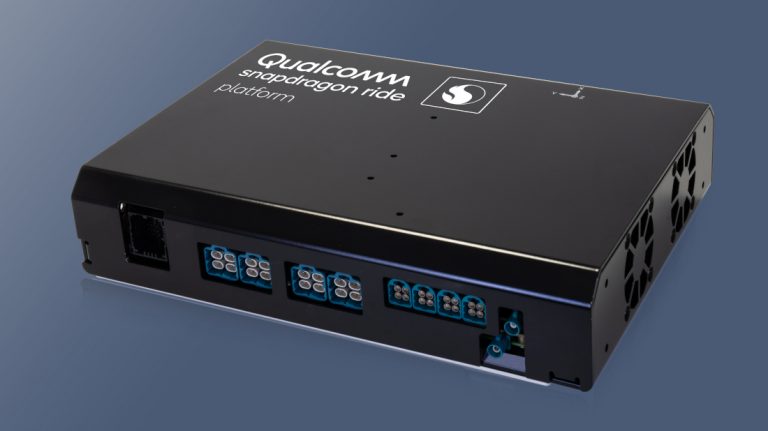
Chipmaker Qualcomm has introduced their 4th generation Snapdragon Automotive Cockpit Platforms during their Automotive Redefined: Technology Showcase event.

The automotive digital cockpit is evolving to a zonal electronic/electrical compute architecture, driven by the complexity, cost and need for a central compute consolidation, according to Qualcomm.

“Utilizing 5nm processing technology, the new digital cockpit platform aims to provide automakers with one of the highest performance system-on-chip (SoC), equipped to meet the user experiences of the next generation cockpit with a low-power and thermal profile, as well as Qualcomm Car-to-Cloud with Soft SKU capabilities, allowing the end-consumer to have the latest features and capabilities through over-the-air (OTA) updates post-deployment and throughout the lifecycle of the vehicle,” the company said in a statement.

The 4th Generation Snapdragon Automotive Cockpit Platforms are engineered as a homogenous and multipurpose solution to address this transition to a zonal architecture, serving as a central hub for high-performance computing, computer vision, artificial intelligence (AI) and multi-sensor processing with a flexible software configuration to address the compute, performance and functional safety needs for that zone or domain.
Fully scalable, the new digital cockpit platforms support all three Snapdragon Automotive performance tiers, ranging from Performance, Premiere to Paramount, for the entry-level, mid-tier and supercomputing platforms, respectively.

With its enhanced capabilities, the new digital cockpit platforms are now one of the most comprehensive solutions in the automotive industry, designed to provide superior in-vehicle user experiences, as well as safety, comfort and reliability, raising the bar for digital cockpit solutions in the automotive industry.

Automotive software specialist joins Kvaser’s TA network


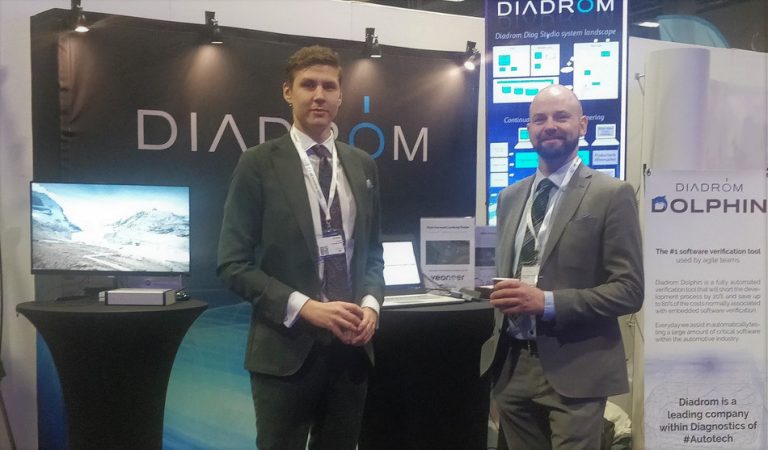
Diadrom Software AB, a wholly owned subsidiary of Diadrom Holding AB (publ), has joined Kvaser’s Technical Associate (TA) network. The company is a well-known automotive diagnostics software provider within Sweden and many of the Gothenburg-based company’s customers use Kvaser interfaces and dataloggers between their test tool and the device under test, primarily in the automotive sector, but also in medical and marine.

Diadrom’s software portfolio follows the complete product lifecycle with embedded software and tools that include communication stacks, bootloaders and cyber security, test automation and diagnostics, through to OEM aftermarket test.

Jonas Hellberg, Head of Product Development, Diadrom Software, a subsidiary of Diadrom Holdings AB: “We have supported Kvaser hardware for a number of years and see an opportunity to build out our ecosystem, providing one point of purchase for embedded software development projects. CAN features in many of our projects and with an evolution to CAN FD in applications such as radar, Kvaser’s strong reputation and experience in CAN and CAN FD helps us meet those customer needs with confidence.”

“With open libraries and a free API, Diadrom has a similar ethos to Kvaser. The company has experience throughout the product lifecycle, creating systems that interact with R&D, production and aftermarket processes; something that we at Kvaser share. We welcome them to Kvaser’s ecosystem and look forward to a fruitful collaboration,” commented Silvia Kuller, head of European Sales at Kvaser AB.

To find out more about Diadrom and its product offering, please visit https://www.kvaser.com/associates/diadrom-software-ab/

About Kvaser:

With 40 years of CAN development experience and over 100 CAN-related products to its name, Kvaser AB is the CAN expert, bringing its deep knowledge in the field of CAN to industries that include Automotive, Avionics, Building Automation, Domestic Appliances, Hydraulic Equipment, Industrial Automation, Maritime, Medical, Military, Railway, Telecoms and Textiles.

Kvaser is headquartered in Mölndal, Sweden, with regional offices in Mission Viejo, CA in the United StatesShanghai, China, and Hong Kong. Kvaser AB has a global network of highly knowledgeable Qualified Resellers and Technical Associates. To find the nearest Kvaser supplier to you, please visit www.kvaser.com/products-services/where-to-buy

About Diadrom:

Diadrom Holding AB is a leading software company within Diagnostics of high-tech products. Diagnostics is an area with long term growth due to the ever-increasing software complexity of advanced products. Diadrom was founded in 1999 and is traded on NASDAQ OMX First North Growth Market under the ticker DIAH. www.diadrom.se

SOURCE Kvaser

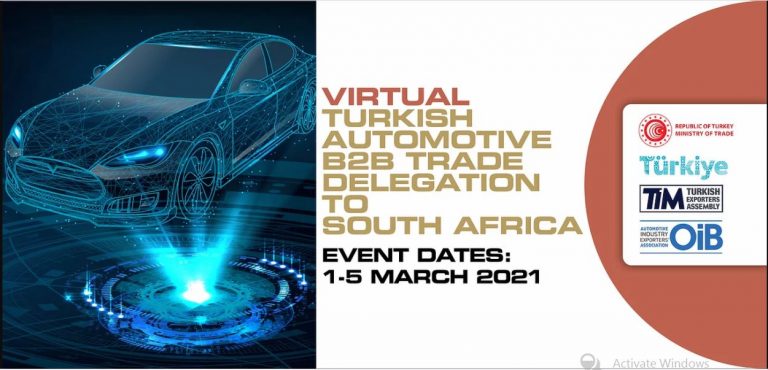
Turkish automotive sector set for virtual trade meetings with South African importers


Delegates from Turkey’s leading automotive parts manufacturers for passenger and commercial vehicles, trucks, trailers and buses are to embark on a round of virtual business-to-business meetings with South African buyers, importers and retailers, to showcase Turkey’s world class automotive manufacturing capabilities.

Following a series of successful in-person trade meetings between Turkish manufacturers and local buyers in recent years, the first virtual B2B trade meetings for businesses from Turkey and South Africa will take place from 1 – 5 March 2021. The meetings, hosted by the  Uludag Automotive Industry Exporters’ Association (OIB), will offer the South African automotive industry an opportunity to forge new partnerships with leading manufacturers.

As the fourth largest commercial vehicle manufacturer in Europe, Turkey produces over 1,3 million vehicles per year – over 70% of them for export around the world. With over 6,700 manufacturers in this space, Turkey’s automotive industry also manufactures automotive components, parts, modules and systems, making the sector one of Turkish manufacturing’s main driving forces and accounting for 15% of total Turkish exports. In 2020, the sector’s annual export volume totalled US$25,5 billion, reinforcing its standing as the national export champion for the past 15 years.

The Turkish automotive industry now exports its products across the globe, in particular to Germany, France, United Kingdom, Italy, Spain, Slovenia, Belgium, Poland, the United States and Israel.

Thanks to the sector’s advanced manufacturing capabilities, alignment with European Union product and environmental standards, and international certifications (including ISO 9002, QS 9000 and ISO 14000), Turkish automotive manufacturers have more than 200 foreign investors and agreements with major international companies. These include Renault, Fiat, Ford, Toyota, Honda, Hyundai, Mercedes-Benz, MAN, Robert Bosch, Valeo, Delphi, ZF, Denso and Faurecia. International investors are both growing their investments in the sector, and using Turkey as a springboard to reach new markets.

Manufacturers participating in the virtual trade meetings 1 – 5 March will include producers of some of Turkey’s top exported spare parts products, such as engine parts, tyres and tubes, accessories for bodies, rubber parts, road wheels and parts and transmission and crank shafts. Also participating in the meetings will be producers of brake parts, trailer parts, clamps, clutches, flywheels, filters, thermoplastic compounds, engine and other automotive oils, commercial vehicle spares, springs, pistons, electric and air horns, lighting bulbs, seals and rubber components, and a full range of auto spare parts for European car models.

For more information about the participating Turkish companies visit Turkish Automotive B2B . To confirm your interest in scheduling meetings with any of these companies, please contact Sue Bowden at Africa House at Tel: +27 11 728 5878; Cell: 082 770 0542 or  E-mail: sue@africainfo.co.za

The meetings, hosted by the Uludag Automotive Industry Exporters Association (OIB) is supported by the Republic of Turkey Ministry of Trade and the Turkish Exporters Assembly.

- Advertisement -