Monday, June 1, 2026
Home Blog Page 52

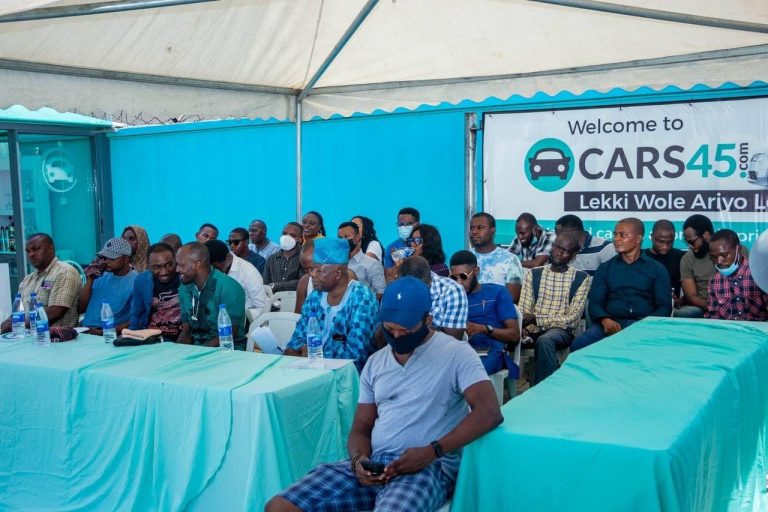
Jiji to welcome Cars45 users in Africa


Jiji, the largest online marketplace in Africa, has reached an agreement to merge operations with the leading used car sales platform Cars45, creating a new and leading pan-African car buying and selling business.

Jiji, supported by Lemma.Group, and Cars45 today announced that both companies had reached an agreement, under which they will merge their operations in Ghana, Kenya and Nigeria.

The merger of operations promises a new level of trade experience for auto buyers and sellers across the three countries. Joining the Jiji family will allow Cars45 users to benefit from Jiji’s market-leading products in online classifieds. In turn, Cars45 brings a unique O2O car buying and selling service, where cars can safely be sold instantly to dealers or via a consumer marketplace to other consumers.

Together, users in the auto sector can expect a new level of convenience in buying and selling cars, combining online and offline capabilities.

Anton Volyansky, CEO and co-founder of Jiji, said: “We are looking forward to creating a new advanced experience for Cars45 users. Undoubtedly, our collaboration on future products and services will bring additional value to the consumers. For Jiji, it’s the first bold step into the transactional business model and an important foundation for building the future of the company.”

David Ojo, CFO and Member of the Strategic Board at Jiji: “Cars45’s key value for Jiji is a network of inspection centers, where all cars are inspected by 202+ parameters. This provides a detailed report on a car’s condition with information from various databases: police, registration, etc. All of this ultimately aligns with Jiji’s focus on customers safety and overall quality user experience.”

Soumobroto Ganguly, CEO of Cars45, commented: “We are proud to have built a trusted buying and selling experience in autos. It makes sense to combine online and offline expertise. Merging with Jiji is aimed at creating a new kind of automotive retail experience for users in Africa. We are confident of jointly building an African Champion in the O2O Automotive Sector. Together we look forward to making transactions transparent and convenient for our customers, dealers and franchisees across all our current and future markets.

Following the closing of the transaction, the operations of Cars45 and Jiji will merge to create a single organisation which will offer unique services for car sellers, buyers and dealers in Ghana, Kenya and Nigeria.

Power shift and what it means for South Africa’s automotive industry


Much has been made of the so-called Fourth Industrial Revolution – the integration of physical and cyber systems that is making traditional manufacturing more automated and technology-driven. But this “revolution” is arguably not very industrial, perhaps even a force for de-industrialisation; it is predominantly about the accelerating impact of technology on manufacturing – not one that creates, but rather destroys, incumbent jobs.

What we call the Fourth should more accurately be named the Third Industrial Revolution and this refers to the nature of power generation. The first revolution was steam power and mechanisation; the Second was electricity-powered mass production; and now the Third will be driven by battery technology.

This power shift will have profound implications for all industries, in particular the automotive industry, arguably South Africa’s only industrial success case in recent decades. This revolution is bring shaped by the imperative to counter climate change.

All of the world’s largest economies have committed to becoming carbon neutral by 2050, or in China’s case by 2060. Targets set for each industry, in particular transportation, will require major shifts in production and entire value chains having to convert from internal combustion engines (ICE) to hybrid or battery electric vehicles (EVs). Europe is leading the way in terms of regulation. According to research firm IHS Markit, EV sales will account for approx. 40% of the market by 2030, by more than 50% by 2035 and up to 100% by 2050.

By sheer volume, China leads the way in EV sales with a forecasted 1,9m vehicles to be sold this year. According to Canalys, China accounted for over 40% of global EV sales last year. In comparison, sales in South Africa are incredibly low with just 637 EVs sold and hybrid sales numbering only 653 by the end of 2020. What accounts for such a low uptake?

EV sales are driven by a number of factors – government regulation; the pricing of carbon in the form of tax on ICE vehicles; government-provided consumer incentives schemes; the availability of charging infrastructure; and even a strong environmental consciousness in society. All of these aspects are to varying extents lacking in the South African context.

Perhaps the key factor in South Africa is pricing. Without any incentives, the cheapest pure EV is the Mini Electric which starts at R658 000. Citing Wesbank’s figures, the average purchase price – across all models – of a new car in South Africa is R358 390 (January 2021). Affordability is thus the overarching key challenge to EV adoption in the local market.

As long as EVs are priced toward the higher end of the market, the shift from ICEs to EVs will only take place in developed economies and emerging countries with increasing consumer purchasing power. For South Africa’s crimped middle class, EVs are largely unaffordable. This speaks to a divergence in the global auto market between the developed world which is rapidly adopting EVs and the developing world remaining with obsolete technology. The only current exception are a number of Chinese EV companies that are selling vehicles at low prices catering for the mass market.

The fundamental challenge facing the South Africa automotive manufacturing sector will be the transition to the making of EVs without the support of a strong domestic sales market. Roughly two-thirds of domestic vehicle production is exported amounting to R201.7-billion in value in 2019 (Naamsa). Our main export destinations are the UK and European Union countries which will rapidly shift to become EV markets. The UK will ban the sale of new petrol and diesel cars by 2030 and end sale of hybrids by 2035. Germany and France have their ban set at 2040.

According to the VDA, an organisation representing the German auto industry, the number of EVs registered in Europe increased by 143% last year when compared to 2019 (Financial Times). The Covid-19 pandemic is acting as a tipping point and accelerant for this technological shift.

VW is spending €35-billion to bring 70 battery-electric powered vehicles to the market by 2030 and has forecast that EV sales will account for 70% of its own sales in Europe by this time. This figure may however, be an overestimation, driven not just by consumer trends but also possible shortages of batteries. The production of batteries is lagging these dramatic changes in the market with significant supply chain risk arising. Whilst similar challenges face other markets, South Africa will lose its main markets and in the future have less market options to export to without a technological shift in local power train manufacturing.

As China controls a number of strategic metals in the supply chain, this power shift is now of strategic interest to competing industrial powers. This was a driver of China’s sizeable investments into African mining assets and infrastructure in recent years, especially for countries like the DRC and Zambia. Beyond securing key minerals deposits, China’s own “Made in China 2025” strategy was launched in 2015, a state-led and subsidised industrial strategy in an attempt to capture high-tech manufacturing.

Competing Western countries are responding with stockpiling of critical minerals and proactive industrial policies. Geopolitics will increasingly impact the high technology battery industry, a sector that will be of critical importance for many industries not to mention countries. We can expect more interventionist governments all of whom will seek to gain an advantage in critical technology and manufacturing scale.

To maintain and further grow our automotive manufacturing ambitions, South Africa will have to adapt to the fast technological shift that is occurring, much of which is being driven by the imperative of combating climate change. Possessing strategic metals is one thing, being able to mobilise the capital and harness the intellectual capital required to compete in the battery industry will increasingly determine countries’ competitive advantage in high-value manufacturing.

New Nissan Navara Now Available at Dealerships


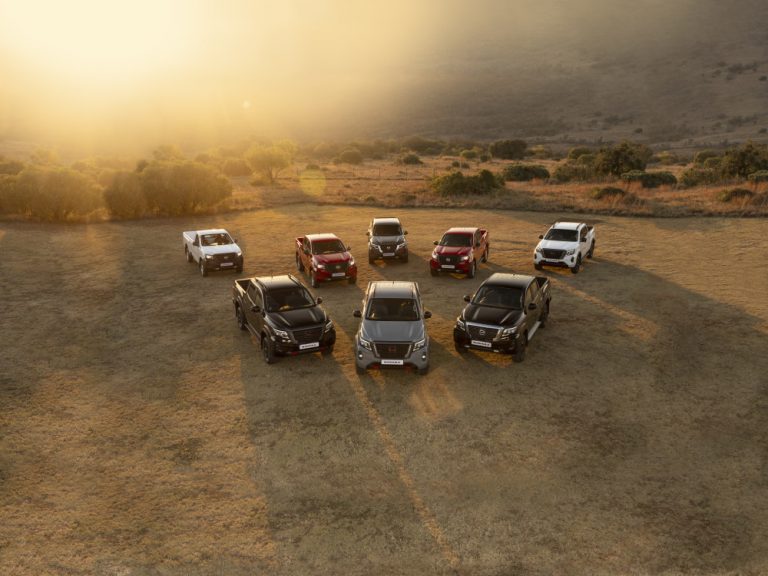
The new locally-produced Nissan Navara is now available at your nearest local dealership, and with significant technical and cosmetic upgrades, it’s a step change from the previous Navara. The major upgrade includes enhancements that ensure it meets the highest global quality standards and is adapted to local conditions.

The 2021 Nissan Navara includes developments in styling, technology, safety and overall performance. The result is an improved driving experience, enhanced ride comfort and load carrying capacity that positions the Navara as the leading bakkie in its segment.

“Our continuous improvement process has seen us re-engineer the entire range of models to produce a Navara that’s perfectly suited to South African and ultimately African conditions, with options that make sense for our market: single and double-cab, 2WD and 4WD options, and both automatic and manual transmissions,” Stefan Haasbroek, Marketing Director at Nissan South Africa.

The Navara is known for its rugged redefined looks, robust capabilities, reliability and versatility, making it one of the most respected and anticipated models within the Nissan line-up and around the world. These qualities have been enhanced across the board, with particular attention paid to engineering for South African road conditions, including off-road capabilities.
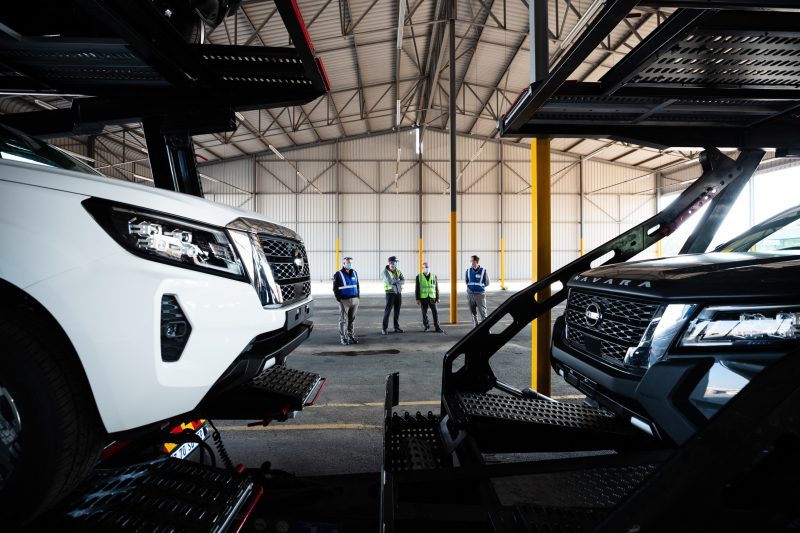
The all-new Nissan Navara also boasts an infotainment system with NissanConnect and 8” touch screen, modernised styling and high-power specs that are sure to impress both existing customers and those looking for a new workhorse or adventure vehicle. Nissan believes in the new Navara and the warranty plan of 6 year / 150,000 km speaks true to that. So whether you’re looking for the right vehicle to support your business growth or to explore South Africa’s remote and beautiful wildernesses, there is a Navara model for you.

The new Nissan Navara is powered by a tried and tested 2.5 litre turbocharged diesel engine, which allows us to meet our customers’ requirements for low running costs, reliability and performance. The 2.5l power-train is available in two levels of output. The high output engine, available on higher grade models, delivers 140kW power and 450Nm torque, while the mid-output engine, delivering 120kW power and 403Nm, the most powerful engine in the entry and mid grades bakkie segment. In addition, the Navara engine line-up is includes a 2.5l petrol engine delivering 118kW and 233Nm available on the entry grade XE Single Cab.

“We are excited and proud to be introducing the latest Nissan Navara which has been locally produced for the first time. We’re confident that with the technical changes and enhancements we’ve implemented, we are delivering the ultimate customer experience – a major upgrade to the current Navara many customers know and love,” Haasbroek said.

Keep safe and stay connected no matter where you are

The inclusion of Nissan Intelligent Mobility (NIM) makes this range the most technology-advanced Navara yet – and the safest too. Intelligent driving tools can be paired with additional driver assistance that help you see more, sense more and take swifter action. One particular feature is Intelligent Forward Collision Warning, which monitors sudden movements of up to two vehicles ahead and alerts the driver of potential collision risk. This complements the Intelligent Emergency Braking feature, will activate which will activate the brakes in case of no response from the driver to avoid collisions – particularly useful in urban traffic situations.

For road trips and lengthy commutes, the Intelligent Driver Alertness supports safety and convenience with both visual and audible alerts that encourage the driver to take a break when it detects changes in driving style. For night driving, Intelligent High Beam Assist automatically switches headlights to low beam from high beam when it detects an oncoming vehicle. Further features warn drivers if they stray outside their lane without signalling and detect vehicles in the blind spot area when changing lanes.
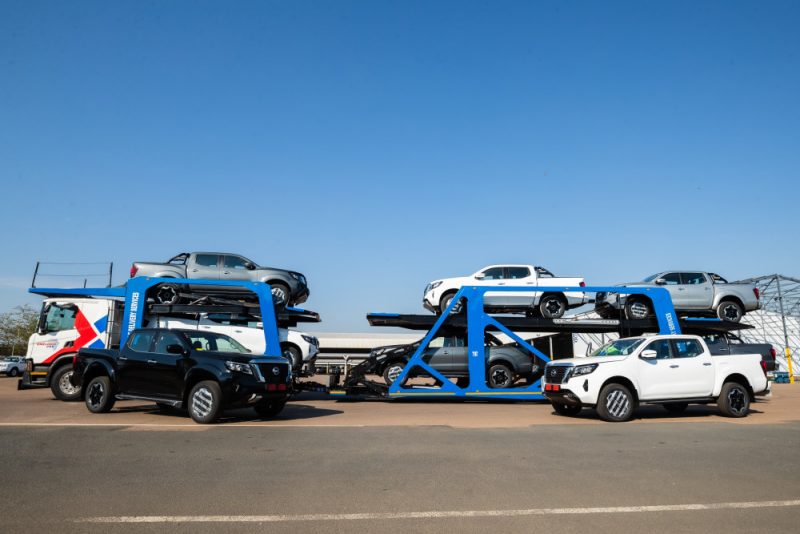
Entering and exiting parking spots can be particularly tricky for even the best drivers, and there’s nothing worse than getting that first scratch on a new car. The Intelligent Around View Monitor uses four cameras to help drivers notice people and cars surrounding the vehicle, and is also useful for trailer hitching. The Rear Cross Traffic Alert warns drivers of potential collisions when reversing.

Rounding out this emphasis on safety are additional side and curtain airbags – bringing the total to seven.

Good looking and hardworking

Nissan aficionados will notice a distinctly different Navara this month, with the best-in-class bakkie boasting a tough, robust appearance that will inspire confidence even on the most rugged terrain.

The all-new Navara includes V-Motion identity, an over-fender for PRO-4X Grades, redesigned wheels and increased bed height, and new LED headlamps and foglamps – all built to allow for increased driveability and ease of use. Inside, the steering wheel has been restyled and seats have been redesigned for improved comfort and recovered in either cloth or leather. It is also a markedly quieter drive compared to previous models with reduced engine and wind noise within the cabin.

Navara drivers need never get lost again with included navigation app Navi and up to four USB ports in the Navara, including two quick-charging ports, and three 12V power outlets – so your devices never run out of juice. Two devices can be connected to Bluetooth at once.

The climate control features ensure that whatever the weather outside, you will always enjoy a comfortable ride. A dual aircon, with additional vents for rear passengers, means that everyone on board will be satisfied with the settings. Meanwhile, heated side mirrors and rain sensors ensure driveability is uncompromised even in extreme conditions.

Built for performance

The Nissan Navara offers a unique 7 AT and 4-wheel drive with differential lock for easy off-road driving. For manual transmission models, a new low gear ratio improves acceleration response, ease of driving, and ease of starting uphill. The 6-gear manual transmission offers ergonomic shift operation with smoother and more precise gear selection and comfortable reverse gear engagement. When four-wheel drive mode is engaged, traction is distributed evenly to all four wheels and tyre slip is avoided in severe conditions.

Your Navara will earn its keep with improved load and tow capabilities. Bed dimensions have increased, with improved suspension and posture, even when fully loaded, and a more ergonomic rear step bumper for easier access to loads. The chassis and powertrain have been adapted for better towing performance, with trailer sway control added as a standard feature to improve stability. This feature detects self-oscillation and applies braking to control the trailer.

The Navara comes to market with a new steering system, new tyres, improved suspension, reduced body vibration and motion, resulting in better handling, improved steering response and controllability.

Top-notch security

To round out this impressive package, Nissan’s engineers have included LED headlamps, Follow Me Home feature, and Door Puddle Lamp to help you see the ground when you step out at night, auto door locks, an ignition key and a jack key that turns off the ignition and engine respectively.

“We cannot wait for our customers to get their hands on something that we have worked so tirelessly towards building, to create memorable journeys for them as we pride ourselves in every single detail inside and out to make the Navara the world-class vehicle it is,” Haasbroek concluded.

All New Nissan Navara now built in Africa for Africa


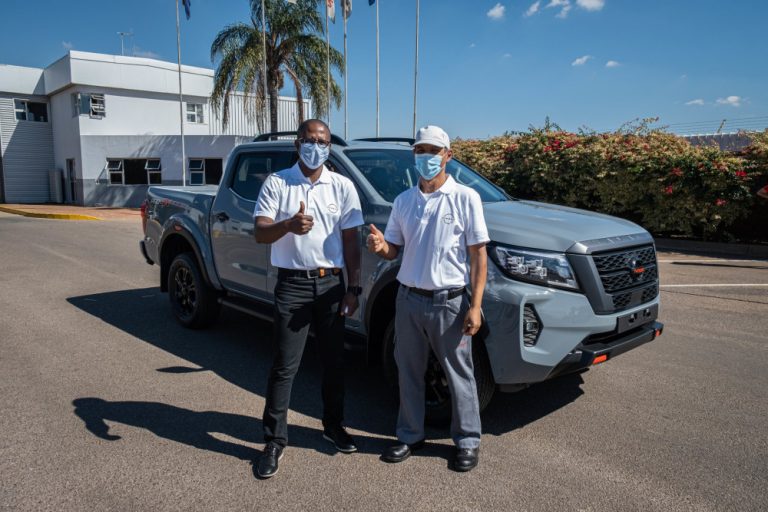
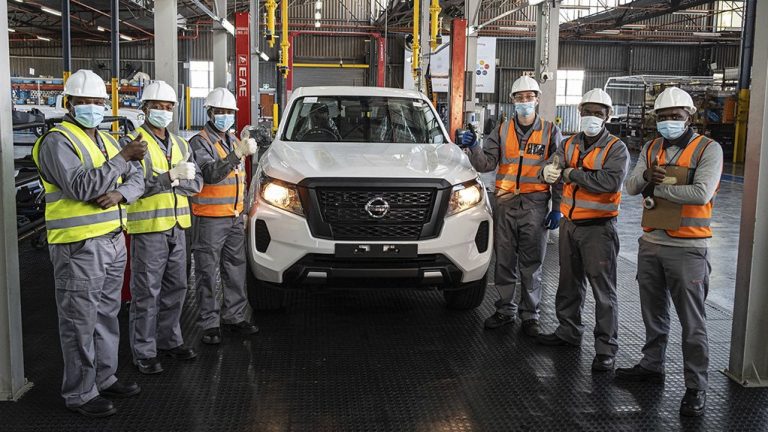
The first Nissan Navara vehicles to be manufactured in Africa by Africans have begun rolling off the Nissan manufacturing production facility in Rosslyn on their way to South Africa and the rest of Africa. The official start of production (SOP) was witnessed by Mike Whitfield, Africa Regional Business Unit Managing Director; Kabelo Rabotho, Nissan South Africa Country Director; Shafick Solomons, Nissan South Africa Plant Director; and a group of Nissan employees due to COVID-19 regulations, as the rest of the company celebrated the milestone virtually.

“This is a significant day for Nissan continentally,” said Whitfield. “Three years ago, Nissan South Africa had the privilege of answering President Cyril Ramaphosa’s ‘Thuma mina’ call on behalf of Nissan, by pledging R3-billion towards his appeal to rebuild South Africa. Today we are meeting that commitment, vehicles made in Africa for Africa going out into the market.”

Rabotho said that COVID-19 had been a major disruption worldwide, but Nissan South Africa employees had been more than up for the challenge.
“I would like to say how immensely proud I am of the committed men and women who endured many challenges under unprecedented conditions to locally produce the Navara in our world-class production facility.”

Solomons agreed: “Our team has been incredible and agile.”

For Solomons, the first vehicle rolling off the production line is the culmination of an intense period of upskilling and training of South African staff to meet and exceed Nissan’s exacting global quality standards, while making Rosslyn the Japanese automaker’s light commercial vehicle manufacturing hub for the continent.

“This first Navara built in our Rosslyn plant for the African market is a significant milestone in the Navara journey, which has been unfolding for a number of years. It speaks to the long-term commitment of Nissan Motor Limited to Africa together with the many men and women who have worked passionately on the project, ensuring that we build the iconic Navara for the African market within Nissan’s global quality standards.”

A week ago, Nissan had the privilege of graduating 12 Ghanaian engineers who have returned to their own country to start setting up Nissan’s first assembly plant in the West African country next year.

“From a people perspective, it has been very fulfilling and motivational to share our skills and our capabilities across the African continent. There are a lot of positives that come out of this process for us and for Africa,” Solomons continued. “It’s important that we develop this relationship and continue to be seen as one of the leaders in Africa, for Africa.”

Rabotho agreed: “At Nissan South Africa, we understand that our organisational growth is closely tied to that of the community we operate in. Through the Navara, we expect to continue to redefine the light commercial vehicle segment whilst contributing positively to the South African economy.”

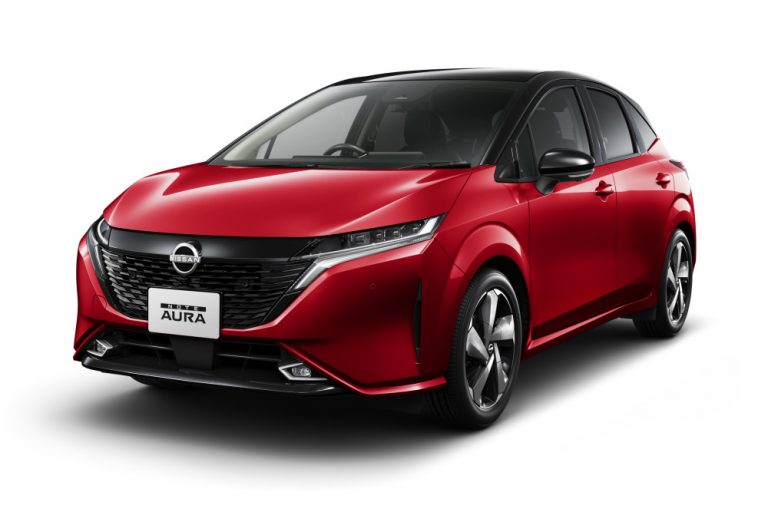
Nissan launches the all-new Note Aura in Japan


Nissan today launched the all-new Note Aura premium compact car in Japan, with sales planned to start in autumn. The all-new Note Aura comes exclusively with Nissan’s e-POWER electrified powertrain, a key part of the company’s electrification strategy under the Nissan NEXT global business transformation plan. The all-new vehicle inherits the comfort and advanced safety technologies of the Note ePOWER launched last year, with added premium furnishings and system enhancements.

Intrinsic qualities appeal to all on board
With a simple, beautiful design that goes beyond the compact-car norm, the Note Aura aims to exceed the expectations of all occupants.

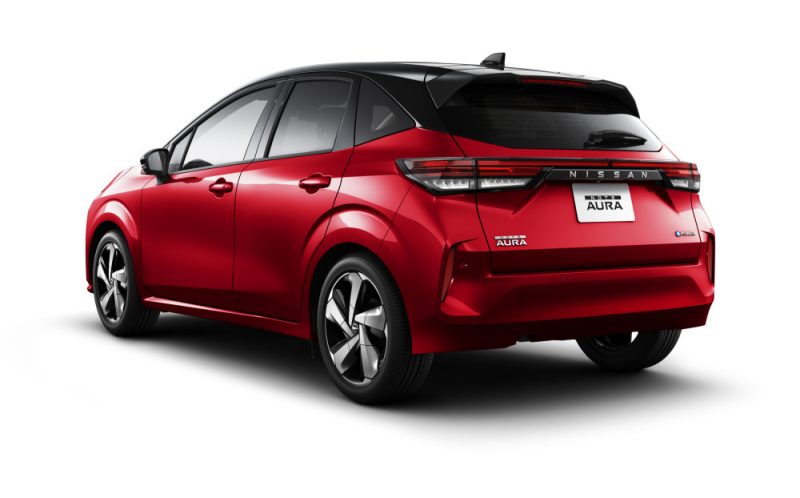
The exterior features an elaborately sculpted front grille, and an elongated, curved roofline. The rear fenders and new rear bumper convey a wide stance and low center of gravity, giving the vehicle a robust presence. The LED combination lamps that illuminate as a beam of light across the rear of the vehicle create an advanced and individualistic impression.
The model comes with 14 available body color variations, with five two-tone combinations, including Garnet Red with Super Black, and Midnight Black with Sunrise Copper.

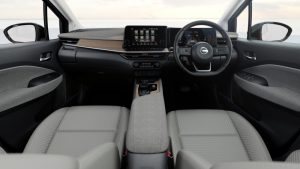
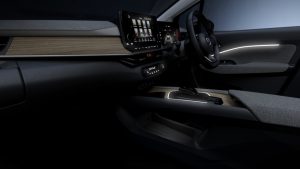
The interior Zero Gravity seats come in two variations; Herringbone patterned tweedlike fabric combined with synthetic leather or high-quality genuine leather with specially designed pleating to provide seating grip. The lower instrument panel and center console features a wood-grain finish while door trims, front armrests and the instrument panel are all finished in tweed-like fabric.
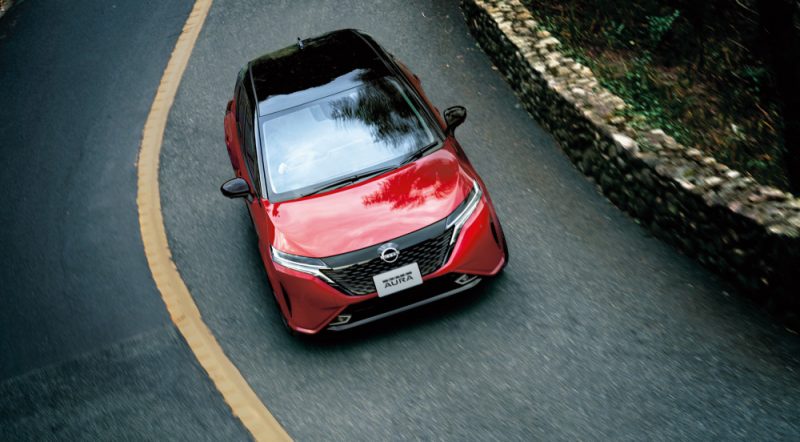
A premium audio system has been developed together with Bose1 for a high-quality onboard experience. The optional Bose Personal Plus sound system speakers are placed in the front passenger headrests, providing a premium acoustic experience with the depth and breadth of sound unique to Bose1 and its advanced signal processing technology.

Noise dampening in the roof, doors, and front door glass help ensure a high level of cabin quietness and comfort on the road.

Beauty with highly sophisticated functionality
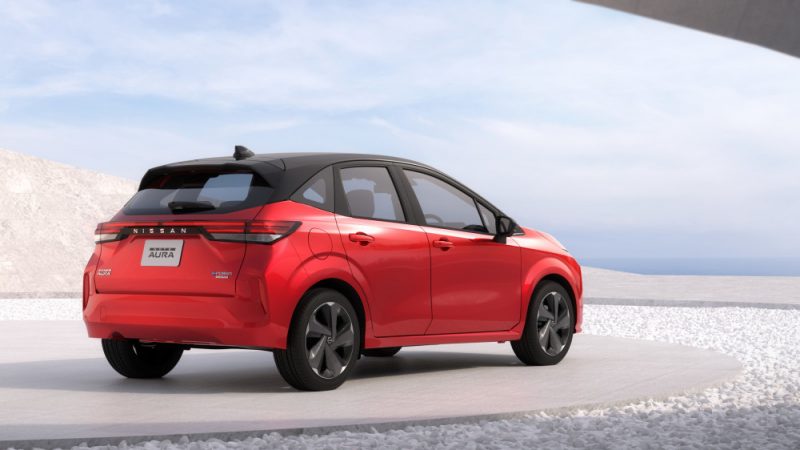
The front facia V-motion lighting combines signature LED position lamps, accent lamps, and sequential turn lamps, giving a premium look. The slim and sleek headlamps also have adaptive LED functions, combining both quality and functionality.

The 17-inch lightweight aluminum wheels feature gunmetal resin inserts that create a stylish, aerodynamic design.

Advanced technologies bring an enhanced car life to both drivers and passengers
For the Note Aura, the second-generation e-POWER electrified powertrain has been enhanced to provide maximum system output of 100 kW and maximum torque of 300 Nm. This delivers more powerful acceleration and an even smoother driving experience from the 100% electric motor driven system.

Engine Electric

motor

Transmission Drive Grade Price*

(yen)

HR12DE  

EM47

(Fr motor)

(Electric motor driven) 2WD G 2,610,300
G leather edition 2,699,400
HR12DE EM47

(Fr motor)

MM48

(Rr motor)

AWD G Four 2,868,800
G Four leather edition 2,957,900

*Japan-market recommended retail price (including consumption tax)

1 Bose is a registered trademark of Bose Corporation in the United States.

Watch here for further information on the e-POWER technology.

Nissan SA trains technicians for new Ghana plant


Twelve Ghanaian technicians have wrapped up their three-month training course at the Nissan Rosslyn plant on the assembly of the new Navara pick-up, in anticipation of the opening of a Nissan plant in their home country next year.

The first Navara pick-ups for customers are expected to start rolling off the assembly line at Nissan South Africa from the end of this month. The vehicle will go on sale across numerous African markets in the months that follow.

“The production of a vehicle is intricate, so the training course we have been offering will not be the end of our work in supporting the Ghanaian team’s capabilities,” says Nissan South Africa plant director Shafick Solomons.

“It’s one of the many steps we are taking to support a sustainable relationship between South Africa and Ghana going forward.

“We will continue to share resources and knowledge, as well as training to make sure that the Ghanaian team is as agile and efficient as any team in the rest of the world adhering to Nissan’s global production standard – the Nissan Production Way.”

The preparation for the Ghana assembly plant follows the signing of a memorandum of understanding between Nissan and the government of Ghana in 2018.

“This is a wonderful moment for us as a global company with incredible African roots,” says Nissan Africa MD Mike Whitfield.

“We set out to build a vehicle in Africa, for Africa, by Africans with the Navara, which we are about to achieve from our Nissan South Africa plant.

“Now we are laying the groundwork to do just that in Ghana, as we help the people and government of Ghana begin to realise their dream of creating a sustainable automotive industry in their country.

“We have always said that we wanted to work with countries on the continent who want to partner with us in this regard,” adds Whitfield.

“We were the first movers in Nigeria and we are looking at other countries in Africa where there is similar potential.

The Navara production facility in Ghana is located in the capital, Accra, and will be operated by Japan Motors Trading Company (JMTC).

The plant will produce Navaras from semi-knockdown kits supplied from the Rosslyn plant.

JMTC invested $3-million in the construction of the Accra facility, following Ghana’s drafting of its Automotive Development Policy to encourage investment in the sector.

“Nissan and Japan Motors support the Ghana Automotive Development Policy, which is why we want to do our part in creating jobs and stimulating African economies,” says JMTC MD Salem Kalmoni.

Source: EN

Piaggio Group strengthens its presence in Nigeria


Bhojsons Group is a renowned conglomerate Headquartered in Lagos with diversified business interests in varied sectors spanning Automobiles, Fast-moving consumer goods, Consumer Durable goods, Power solutions, Packaging solutions, Polymers, Agricultural machinery, Domestic machinery and infrastructural needs for the telecom industry.

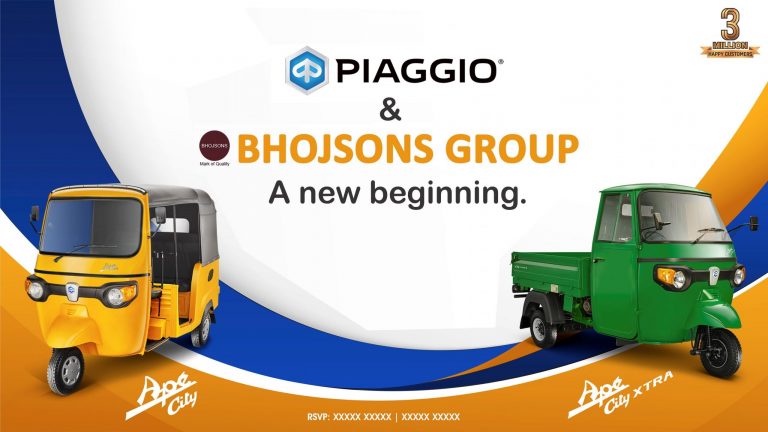
Through this partnership, Piaggio, the pioneer of 3 wheelers, aims to introduce a diverse product portfolio that includes passenger and cargo 3 wheelers under its flagship brand Ape’.

Piaggio commercial aims to increase its penetration along with Bhojsons Group in various parts of Nigeria to come close to its customer with its last-mile transportation offerings.

The opening of multiple Dealerships and their training under Bhojsons across Nigeria is also in process. This will also help Piaggio customers in the region to have access to the entire Service & Warranty package offered by Piaggio.

This association with Bhojsons Group for Nigerian Market marks Piaggio’s footprint expansion in more than 60 countries globally.

Piaggio’s range of products offers best in class performance in terms of power, pick-up, mileage & maintenance. With this association with Bhojsons Group, Piaggio wants to strengthen its relationship with customers and reinforce its commitment to providing path-breaking solutions in the last mile transportation segments with cleaner and efficient fuel options.

While announcing the launch of this association, Mr Saju Nair, EVP of Piaggio Vehicles Pvt. Ltd. said, “We endeavour to continue providing best in class offerings to our customers which are not only best in technology but also are most suited for higher earnings. We want to reach out to as many customers as possible and create a good foothold in all the cities across Nigeria.

“It is imperative to strengthen our presence in Nigeria as it is one of the largest markets in Africa with a larger focus on commercial vehicles. Piaggio has one of the largest ranges of 3-wheeled vehicles for both passenger & Cargo applications. Our last mile transport solution vehicles generate self-employment & create entrepreneurs which is one of the aspects of primary importance to national development.”

Further, he added that “in Bhojsons Group we see a very valued partner who has a strong legacy in Nigeria having business roots as old as 150years+ and is diversified into many businesses including automotive. Bhojsons is coming to Piaggio as a natural partner who is one of the largest importers, assemblers and distributors of motorcycles, passenger tricycles and cargo tricycles in Nigeria.

“They have achieved great successes through their on-the-ground knowledge of the Nigerian market and consumer trends coupled with their unparalleled marketing and brand development activities in their current line of businesses. Piaggio would work on the ground along with Bhojsons team to further strengthen the brand in the market.”

Commenting on this association, Mr Vishant Dalamal – Group Managing Director, Bhojsons Group said “am extremely delighted on this partnership with Piaggio as they represent a world-class quality product for the Nigerian market and Bhojsons is known to introduce quality brands from across the globe for Nigerian market for over 150 years of their presence in the country.

“Bhojsons automotive business is vertically integrated along the value-chain being an importer, assembler, brand developer, distributor and service provider. The vehicles are assembled at our state-of-the-art facility in Lagos. Further, this association would help small, medium businesses for a sustained logistics solution at a competitive operating cost unlike their current investments in large vehicles with big operating and maintenance cost.

“Piaggio has leadership in the cargo segment and is the preferred choice of corporates engaged in product distribution to consumers across the world for smaller payloads for last-mile market connectivity. With already a large 2W network on the ground, Piaggio business line becomes a natural extension to service this distribution network for us.”

Piaggio Vehicles Pvt. Ltd. is a 100% owned subsidiary of the Piaggio Group which is the inventor of 3 wheelers. Piaggio group started in 1884 in Pontedera, Italy. The company commenced operations in India in 1999 with the launch of the three-wheeler brand Apé, which was an immediate success and has grown from strength to strength over the years. PVPL created the market, grew it, and has sustained a dominant position in the Diesel 3 wheeler segment. Piaggio is a leading player in the light transportation industry with a complete range of three and four-wheelers in Diesel, Petrol, CNG, LPG fuel variants. The Company’s products are not only endorsed by over 2.7 million satisfied customers across India but also exported to more than 50 countries worldwide.

Piaggio has a state-of-the-art manufacturing plant at Baramati in Maharashtra, [with an installed annual production capacity of over 300,000 three-wheelers and 80,000 four-wheelers]. It is also self-reliant in some of the engine categories with the completion of its advanced engines plant on the same campus. Piaggio has an over 3000-strong workforce comprising experienced engineers, R&D specialists, plant workers, sales, service and marketing professionals.

Bhojsons Group of Companies traces its roots in Nigeria way back to the 19th Century, as a part of J.T. Chanrai Group. Since the 1950s, under the leadership of Mr B. B. Chanrai, the Group has evolved into a conglomerate expanding its operations in the African sub-continent. Bhojsons Group today is managed by young and dynamic Group MD, Mr Vishant Dalamal who is steering the group’s growth for over a decade. Today, Bhojsons Plc is one of the largest importers, assemblers and distributors of motorcycles, passenger tricycles and cargo tricycles in Nigeria.

Other group co.’s into manufacturing activities are one of the largest and leading PP (Polypropylene) Woven Bags, PP Woven Sacks and PP Woven Fabrics and Permanently Lubricated (PLB) HDPE Telecom Ducts manufacturer and supplier in Nigeria. Bhojsons group has a Pan Nigeria presence with 18 regional branches along with a warehousing facility at every location for the redistribution in Nigeria. They have an efficient logistic and warehousing network ensuring speedy supplies that cater to the after-sales requirements to gives their customers an unparalleled ownership experience.

McLaren Automotive appoints Mohamed Fawzi as Market Director for Middle East and Africa


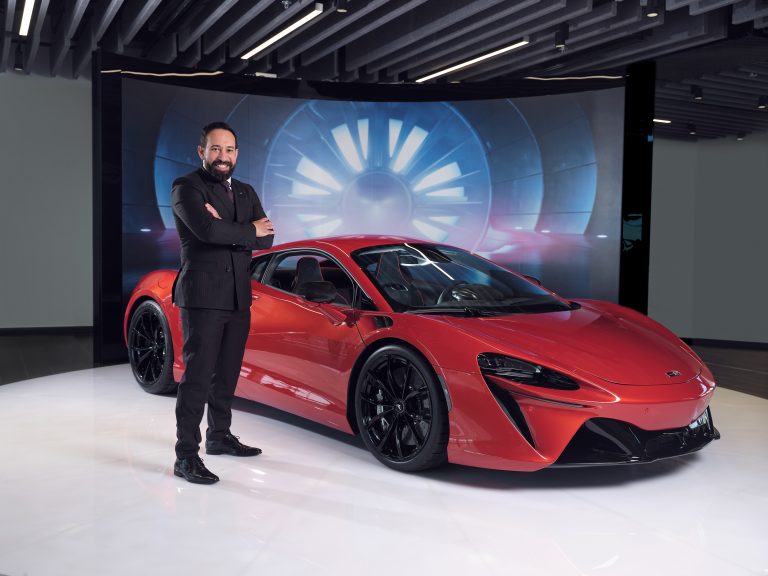
McLaren Automotive, the British creator of luxury, high-performance supercars, has announced the appointment of Mohamed Fawzi, as Market Director for Middle East and Africa.

With more than two decades of automotive experience, Mohamed will be spearheading the company’s local operations from the brand’s Regional Office, based in the Kingdom of Bahrain. Mohamed’s professional background includes several management positions held at some of the world’s most prestigious car manufacturers, with a strong focus on the luxury automotive sector. Prior to joining McLaren Automotive, Mohamed worked as Regional Head of Sales – Middle East & Africa for Rolls-Royce Motor Cars, providing him with a holistic understanding of the complexities and opportunities in the Middle East.

In this newly-created role, Mohamed will be focusing on consolidating the brand’s leading position in the region and will report directly to Brett Soso, Managing Director – Europe, Middle East and Africa, who is based at the company’s headquarters in Woking, UK. His appointment comes at a pivotal time for McLaren Automotive, having just unveiled its new lightweight series production high-performance hybrid supercar, the McLaren Artura.

“I’m delighted to welcome Mohamed to the team during what promises to be a very exciting time for our brand. Mohamed brings a wealth of regional experience into the role, and I am confident that his expertise and result-focused approach will allow us to maintain the highest standards of professional service and operational excellence for the benefit of our Retail Partners and discerning customers.”
Brett Soso, Managing Director – Europe, Middle East & Africa  

“McLaren Automotive is amongst the most iconic luxury automotive brands in the world, and I am tremendously excited to be joining the regional team, shortly after the global reveal of the all-new McLaren Artura. It’s a true honour to be entrusted with managing and developing our operations in the Middle East and Africa, and I look forward to contributing to our continued success in the region.”
Mohamed Fawzi, Market Director – Middle East & Africa

For more information on McLaren Automotive’s retail locations in Middle East & Africa, as well as its award-winning supercars, including the all-new McLaren Artura, please visit: https://cars.mclaren.com/.

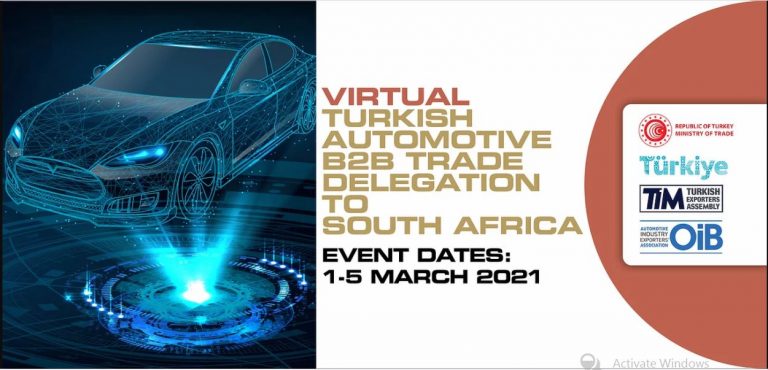
Opportunities for SA business as 20 Turkish automotive manufacturers schedule talks


A delegation of 20 leading Turkish manufacturers of automotive parts and spares will seek to improve trade with South African importers, wholesalers and retailers, when they participate in the first virtual business to business trade meeting in South Africa early next month.

Turkish trade with South Africa is on the rise, as manufacturers of a broad range of goods seek new partnerships with South African business. Bilateral trade between Turkey and South Africa totalled $1.3 billion in 2019, and Turkey is seeking to grow its trade volumes in Africa, particularly as the African Continental Free Trade Agreement (AfCTA) comes into effect.

Turkey’s manufactured goods, recognised globally for their quality and durability, are priced competitively and developed in line with global standards. In recent years, manufacturers and exporters of textiles, kitchenware, electronic goods, heating, ventilation and air conditioning and cooling, and other industrial products have carried out a number of successful trade missions to South Africa, to forge partnerships with local businesses.

The upcoming mission will focus on automotive components, parts, modules and systems, which are among Turkey’s most significant manufactured goods exports. With a 60-year history of automotive manufacture, Turkey now produces over 1,3 million vehicles per year – over 70% of them for export around the world. Turkey’s automotive industry now has over 6,700 manufacturers, making it one of Turkish manufacturing’s main driving forces which has been Turkey’s export champion for the past fifteen years. In 2020, the sector’s annual export volume totalled US$25,5 billion.

Because Turkey’s automotive supplier industry companies have played a role as a “co-designer” alongside global automotive industry players, they have developed extensive industry experience and know-how. Through ongoing modernisation and partnerships with more than 200 foreign investors and key international vehicle manufacturers, Turkey’s automotive manufacturers deliver innovation and product excellence, aligned with global European Union product and environmental standards, and international certifications (including ISO 9002, QS 9000 and ISO 14000).

Manufacturers participating in the upcoming virtual trade meetings, hosted by the Uludag Automotive Industry Exporters’ Association (OIB), will feature producers of some of Turkey’s top exported spare parts products, such as engine parts, tyres and tubes, accessories for bodies, rubber parts, road wheels and parts and transmission and crank shafts. Also participating in the meetings will be producers of brake parts, trailer parts, clamps, clutches, flywheels, filters, thermoplastic compounds, engine and other automotive oils, commercial vehicle spares, springs, pistons, electric and air horns, lighting bulbs, seals and rubber components, and a full range of auto spare parts for European car models.

South African automotive importers and retailers are invited to schedule meetings with the Turkish delegates, to discuss partnership opportunities.


Autochek opens Accra office to support transformation of Ghana’s automotive industry


The automotive technology company that aims to build solutions for the African market, Autocheck, has announced that it has commenced operations in Accra, Ghana to support the delivery of technology solutions for one of Africa’s most advanced automotive markets. Building on the work Cheki Ghana (acquired by Autochek in September 2020) has done over the last decade, Autochek is combining technology and data to create a single marketplace for car sales, car loans and car repairs in Ghana.

Consumers in Ghana can now buy cars and access car loans via the Autochek app (Android app now available. iOS app coming soon) or website, knowing that every listed car has undergone a 150-point inspection process. The inspection service can also be used for cars outside the Autochek network. Autochek will also enable more effective sourcing and affordable car loans, as well as car repairs and warranties.

Autochek has also onboarded auto dealers and auto workshops from across the country who can now rely on consistent leads that have been filtered to validate their interest. Car owners can book maintenance and repairs via the app and the website with the confidence that their cars will be in the hands of standardised workshops and technicians from Autochek’s partner network. By focussing on the needs of both customers and dealers, Autochek is building an ecosystem of solutions that will deliver an unrivalled customer experience.

Ghana’s automotive industry has experienced significant change as a result of the 2019 Ghana Automotive Development Policy which aims to attract investment into the industry, encourage local manufacturing and make affordable vehicles more readily available. With more cars being built locally, there is an opportunity to create more jobs and improve technical expertise in the automotive industry in Ghana and across Africa.

According to Etop Ikpe, CEO and Co-Founder of Autochek, “We are excited to be in Ghana and to be part of the ecosystem. The government is doing a lot of great work to support the automotive industry but there is also a need to make sure that vehicles meet a certain standard before they are bought or sold locally. This is where we hope to bring our expertise to create an effective and efficient marketplace for everybody.”

Ikpe added that “We have also seen an increase in demand for tech-enabled solutions as people and businesses respond to the COVID-19 pandemic and the challenges that have come with it. This tech-enabled approach will enable a better customer experience and facilitate transparency and ease of doing business, which in turn translates to an increase in transactions and more efficient business operations.”

Autochek opens Accra office
Yvonne Ahlie (Right), Head of Business Operations

Yvonne Ahlie, Head of Business Operations (Ghana) at Autochek, added that “The automotive industry in Ghana is one of the most advanced in Africa but there is still some work to be done, especially with regards to the day to day experience for consumers, dealers and workshops. The fragmentation of the industry means most players are operating in silos and are not able to reap the full benefits of what the market has to offer.

There is also a dearth of comprehensive data that dealers and workshops can use to underpin business decisions and this is impacting their performance. This is where Autochek will make a difference by combining data and technology to transform the automotive transaction ecosystem and enable excellence across the value chain”

Over the next year, Autochek aims to onboard more than 500 dealers and workshops across various cities in Ghana, making it easier for Ghanaians across the country to access the automotive services they need.

- Advertisement -