Monday, June 1, 2026
Home Blog Page 47

Renesas automotive semiconductors selected by Honda for ADAS


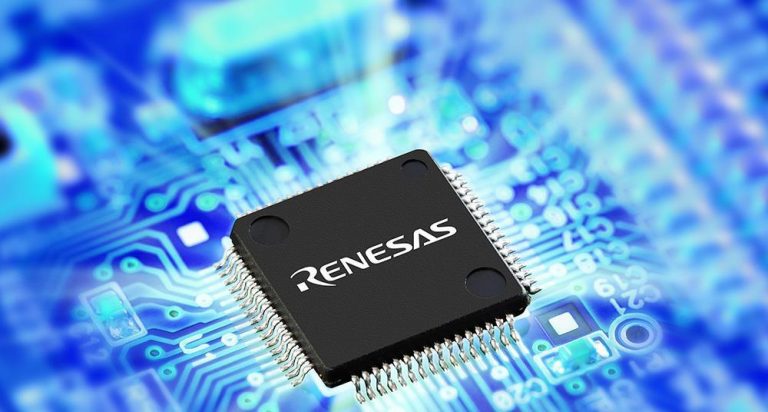
Renesas Electronics Corporation (TSE:6723), a premier supplier of advanced semiconductor solutions, today announced the expansion of its collaboration with Honda in the field of advanced driver-assistance systems (ADAS).

Honda adopted Renesas’ R-Car automotive system on a chip (SoC) and RH850 automotive MCU for its Honda SENSING Elite system featured in the Legend, which went on sale in March 2021. Honda SENSING Elite incorporates advanced technology that qualifies for Level 3 automated driving (conditional automated driving in limited areas). Now Honda has again selected R-Car and RH850 for use in the Honda SENSING 360 omnidirectional safety and driver assistance system, which builds on the knowledge and expertise gained through research and development work on the earlier technology. The first automobile model equipped with Honda SENSING 360 is scheduled for release in China in 2022, with adoption in a broader range of models to follow.

Furthermore, for the next-generation Honda SENSING 360 system, Honda has selected the R-Car S4 as the main SoC in the electronic control unit (ECU), the core of the ADAS. Through this, Renesas and Honda are expanding their collaboration in the ADAS field to improve safety technologies.

“Renesas is proud to be able to contribute to innovation in Honda’s advanced safety technologies,” said Takeshi Kataoka, Senior Vice President and General Manager of the Automotive Solution Business Unit at Renesas. “Renesas shares with Honda a design philosophy that emphasizes safety and reliability above all, and we plan to further expand our collaboration to bring sophisticated driver-assistance systems to all mass-production models in the near future.”

“Honda is a global innovator in research and development work on safety technologies aimed at the realization of a society with zero traffic collision fatalities,” said Yutaka Tamagawa, Operating Executive and Head, Electronic Control Development Supervisory Unit ,

Monozukuri Center, Automobile Operations at Honda. “Renesas’ semiconductor devices optimized for automotive applications are extremely reliable, backed by a solid system of software and support, and provide superior power efficiency. The expansion of our collaborative efforts will speed up the development of Honda SENSING and help lead its widespread adoption.”

In the Honda SENSING Elite flagship advanced technology system, the Renesas R-Car automotive SoC processes sensing data from cameras, millimeter-wave radar, and LiDAR as well as data for 3-dimensional high-definition maps and the global navigation satellite system (GNSS). The SoC also monitors the vehicle’s position and the road conditions, and computes route plans in real time. The RH850 automotive control MCU provides support for driving operations and collision avoidance by receiving signals from R-Car and performing advanced control of the accelerator, braking, and steering systems.

The application of Honda SENSING 360 is expected to expand globally, and Renesas’ R-Car is helping to enable omnidirectional safety and driver-assistance systems by 360-degree sensing with processing sensing data from cameras and millimeter-wave radar.

Moving forward, Renesas is committed to working with Honda on the development and widespread adoption of next-generation Honda SENSING systems.

Qualcom Technologies expands automotive software line


Qualcomm Technologies has introduced new or enhanced products to its rapidly expanding automotive technology range. Further enhancing the Digital Chassis connected vehicle platforms, it introduced a feature for Snapdragon Car-to-Cloud Services – Connectivity-as-a-Service – that brings new technology collaborations to support connectivity, integrated analytics and a cloud and device developer environment aimed to deliver new technology features, content and services globally.

As integral components of the Digital Chassis, the Auto Connectivity Platform and Car-to-Cloud Services help build connected and intelligent vehicles that are safer, customisable, immersive and continually upgradeable.

The supplier has also launched an integrated application framework for developing telematics and cloud-connected applications and services, the Telematics Applications Framework. Also introduced was a new Wi-Fi 6E automotive chipset engineered to increase bandwidth for Wi-Fi applications and deliver content at unmatched speeds.

“These latest enhancements empower automakers to redefine the driving experience for consumers, while also creating opportunities for the automotive ecosystem to develop and deliver new, revenue-generating digital services,” the supplier said in a statement.

Snapdragon Car-to-Cloud Services provide a seamless upgrade path with the ability to expand system performance and features, while also having the capability to enable new digital services. Connectivity-as-a-Service expands these capabilities to provide global connectivity on Telematics SOC-based NAD modules along with an API-driven developer environment, creating on-device and cloud-enhanced apps/services. Fueled by telemetry data and advanced data insights from connected vehicles, the tools provided in the developer environment solve for complexities that OEMs face when building connected services on telematics hardware.

New collaborations include Cognizant, a leading professional services company using its global automotive cloud and device expertise to help transform automakers into modern enterprises. Leveraging its deep understanding of the auto industry and proven reusable components, ready-to-use test frameworks and system integration expertise, Cognizant will work with Qualcomm to integrate and tailor Car-to-Cloud Services for automakers.

Qualcomm will also work with Cubic Telecom, a global connectivity solutions provider. The product created from Car-to-Cloud Services with Cubic’s software products (Pace, Insights and PLXOR) provides a single point of control for global connectivity on Telematics SOC based NAD modules, with support for bundled data and services. The product also solves for regional regulation complexities with built-in compliance across regional markets.

Integrated into the Snapdragon Auto Connectivity Platform, the Snapdragon Telematics Application Framework is utilized to simplify application development. Open source and scalable, this set of software tools is designed to seamlessly connect to Snapdragon Car-to-Cloud Services, allowing automotive developers to use telematics functionality across all platforms within the Snapdragon Digital Chassis. Through the Snapdragon Telematics Application Framework, developers can access a unified development environment with common application programming interfaces (APIs), which aids in reducing cost complexities when integrating technology features such as 5G, location services, memory and security into cloud-based applications and services.

Designed to address fragmentation and enable common application development across vehicle lines, the Telematics Application Framework is compatible with present and future platforms within the Digital Chassis. Anticipated to be available in early 2022, plus ongoing enhancements for new features and services, the new application framework allows developers to focus on their core expertise when creating applications that use telematics functionality to bring rich, immersive experiences with enhanced safety to modern vehicles.

To further increase bandwidth for connected applications and services, Qualcomm introduced the Qualcomm® QCA6698AQ, a Wi-Fi 6E 4-Stream Dual Band Simultaneous (DBS) plus Bluetooth version 5.3 combination chip for automotive applications. Building on the latest FastConnect systems, the QCA6698AQ offers simultaneous 802.11ax Dual MAC operation in both 2.4Ghz and the expanded 5/6GHz band to enable one of the claimed highest Wi-Fi speeds in an AEC-Q100 qualified device. The QCA6698AQ is engineered to deliver in-vehicle entertainment, “exceptional audio experiences”, and to “dramatically” increase bandwidth for concurrent Wi-Fi applications. Samples are available now with automotive grade qualification expected by late 2022.

PPG invests $10 Million to expand Automotive OEM Coatings Production in Germany


 PPG was recognized on the CLEAN200™ global list as the top paints, coatings and specialty materials manufacturer with the greatest percent of 2020 revenue from sustainably advantaged products. PPG ranked 74th overall on the list in green revenue, reporting 35% of sales from sustainably advantaged products in 2020. The company’s goal is to achieve 40% of sales from sustainably advantaged products by 2025.

“According to Corporate Knights, Clean200 companies are putting sustainability at the heart of their products, services, business models and investments, helping move the world onto a more sustainable trajectory,” said Diane Kappas, PPG vice president, global sustainability. “We are committed to achieving our sustainability goals and enabling our customers to reach their sustainability ambitions through products and processes that reduce emissions, water and energy use, offer wellness benefits, and increase the useful lifetime of their most valuable assets.”

In 2021, PPG launched a number of sustainable products, including:

  • PPG ERGOLUX™ Powder Coatings , ideal fordesks and cabinets, offer a waste-saving, first-pass transfer efficiency rate of up to 85% and the ability to reclaim and reuse overspray. The coating is also available in ErgoLuxe Eco, a unique formula that contains up to 14% recycled polyethylene terephthalate (rPET). Since 2017, PPG has used more than 6 million pounds of rPET to manufacture its coatings.
  • PPG CoraChar™ BFP-SE Battery Fire Protection Coating for Electric Vehicle Batteries , whichprotects batteries in electric automotive vehicles from fire and helps mitigate thermal runaway events, improving passenger safety. These solutions can be mass produced, efficiently applied and include battery fire protection suitable for various vehicle battery applications.
  • PPG COPPER ARMOR® antimicrobial paint containing Corning® Guardiant® technology and COMEX® Vinimex antiviral and antibacterial paint which reduce up to 99.9% of bacteria and viruses on the painted surface, including the virus that causes COVID-19.

The annual Clean200 ranking highlights publicly traded companies that are leading the way with solutions for the transition to a clean energy future. Corporate Knights and As You Sow evaluated 8,480 global firms based on an assessment of the amount of revenue each company earns from products and services, aligned with the Corporate Knights Clean Economy Taxonomy. was recognized on the CLEAN200™ global list as the top paints, coatings and specialty materials manufacturer with the greatest percent of 2020 revenue from sustainably advantaged products. PPG ranked 74th overall on the list in green revenue, reporting 35% of sales from sustainably advantaged products in 2020. The company’s goal is to achieve 40% of sales from sustainably advantaged products by 2025.

“According to Corporate Knights, Clean200 companies are putting sustainability at the heart of their products, services, business models and investments, helping move the world onto a more sustainable trajectory,” said Diane Kappas, PPG vice president, global sustainability. “We are committed to achieving our sustainability goals and enabling our customers to reach their sustainability ambitions through products and processes that reduce emissions, water and energy use, offer wellness benefits, and increase the useful lifetime of their most valuable assets.”

In 2021, PPG launched a number of sustainable products, including:

  • PPG ERGOLUX™ Powder Coatings , ideal fordesks and cabinets, offer a waste-saving, first-pass transfer efficiency rate of up to 85% and the ability to reclaim and reuse overspray. The coating is also available in ErgoLuxe Eco, a unique formula that contains up to 14% recycled polyethylene terephthalate (rPET). Since 2017, PPG has used more than 6 million pounds of rPET to manufacture its coatings.
  • PPG CoraChar™ BFP-SE Battery Fire Protection Coating for Electric Vehicle Batteries , whichprotects batteries in electric automotive vehicles from fire and helps mitigate thermal runaway events, improving passenger safety. These solutions can be mass produced, efficiently applied and include battery fire protection suitable for various vehicle battery applications.
  • PPG COPPER ARMOR® antimicrobial paint containing Corning® Guardiant® technology and COMEX® Vinimex antiviral and antibacterial paint which reduce up to 99.9% of bacteria and viruses on the painted surface, including the virus that causes COVID-19.

The annual Clean200 ranking highlights publicly traded companies that are leading the way with solutions for the transition to a clean energy future. Corporate Knights and As You Sow evaluated 8,480 global firms based on an assessment of the amount of revenue each company earns from products and services, aligned with the Corporate Knights Clean Economy Taxonomy.

Audi approves Hydrotreated Vegetable Oil for use in V6 diesels


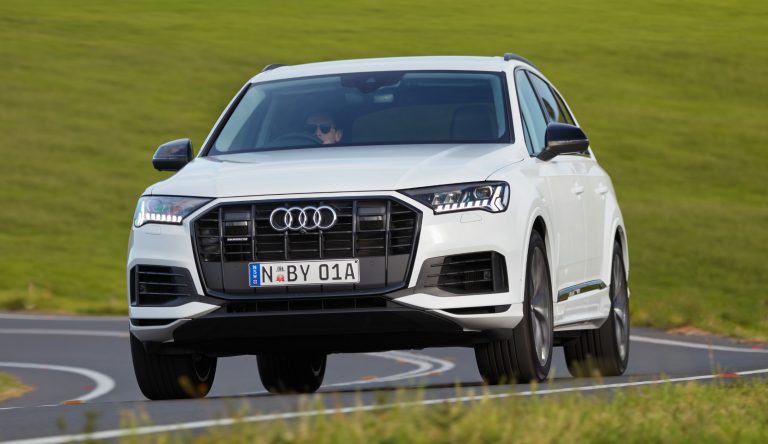
Renewable HVO fuel reduces CO2 in some Audi models by up to 95% compared with fossil diesel. Audi has announced that some of its V6 diesel engines have been approved for use with renewable fuels, as part of a drive to reduce the carbon emissions of its internal combustion engined vehicles.

In Europe, renewable fuels like HVO are more prevalent than they are in Australia. Since June 2021 the 4-cylinder diesel engines in Audi A3, Q2 and Q3 have been compatible with this fuel. Sweden, Denmark and Italy have been the countries with the greatest demand for engines that can use HVO.

The renewable fuel approved for use is called Hydrotreated Vegetable Oil (HVO). This is created by collected waste and residue oil that undergoes hydrogenation to make its properties suitable for use in diesel engines. In addition to being more environmentally friendly, this fuel is claimed to be a cleaner and more efficient fuel that enhances engine performance, especially during cold starts.

HVO can be added to diesel or used unmixed. All Audi vehicles eligible to use this fuel will have an XTL sticker in the fuel cap to indicate the car’s compatibility. XTL is used to indicate compatibility with different types of renewable fuels, the acronym encompasses different ways these fuels can be made.

The company has said V6 diesel engines with power up to 210kW in Q7, and Q8 models manufactured from mid-February 2022 are approved to run on HVO fuel. Audi claims the use of HVO reduces CO2 emissions by 70 to 95 percent compared to diesel.

This announcement is part of an ongoing plan to use more synthetic fuels and reduce carbon emissions. At the start of March new Q5s and A6 Allroads will be included in the HVO lineup and some Volkswagen Touareg models will be able to use this fuel too.

Magna Amps up Electrified Propulsion Push


Magna International, one of the world’s largest automotive suppliers and the largest manufacturer of all-wheel- and 4-wheel-drive systems for vehicles of all types and sizes, has seen the industry electrifying – transitioning to gas-electric hybrids, plug-in hybrids and full battery-electrics – as fast as development budgets and the market will allow.

So it is jumping on board that fast-moving train and is working hard to move to the front with electrically driven componentry designed to replace today’s conventional AWD and 4WD hardware with noticeable improvement in function and no loss of capabilities.

Fully 70% of its engineering projects these days are related to the EV market. Magna projects that global OEMs will spend some $500 billion on EV and battery development by 2030.

“Anyone who is in powertrain has to be thinking about transitioning toward eDrives,” says Magna CEO Swamy Kotagiri. “Among our priorities are minimal change to the product and not having to change the manufacturing process. Another piece is capabilities…how much modularity and scalability can we have, and can we add additional features down the road?”

For battery-electric pickups (Classes 1-3) and light-commercial vehicles, Magna is busily developing EtelligentForce, a comprehensive electric 4WD system “designed to maintain the full capabilities of these vehicles with uncompromised payload and towing.” It consists of an “eBeam” rear-axle electric-drive system combined with an eDS (electric drive system) Mid+ (indicating power level) front electric-drive system with optional decoupling electronically managed and connected by software controls.

The eBeam primary rear axle (inset) fits in the same space as a conventional beam axle, delivers up to 250 kW of power and is structurally robust to deliver up to 7,376 lb.-ft. (10,000 Nm) of torque for heavy-duty pickup usage. It is adaptable to current suspension systems, allowing sufficient clearances for full suspension travel, can incorporate different final-drive ratios and has an e-Park lock and an optional electric-locking differential.

Magna eBeam rear axle

The eBeam’s permanent synchronous motor (PSM) incorporates hairpin windings and is dual-cooled (oil and coolant) for continuous usage. Its inverter uses silicon (Si) or silicon-carbide (SiC) power electronics. It comes in 400V and 800V versions and can be mounted on the axle or remotely.

The eDS Mid+ secondary axle – suitable for both HEVs and BEVs – delivers 170 kW of power and up to 2,781 lb.-ft. (3,770 Nm) of peak torque to the front wheels from a high-efficiency PSM motor. It offers a boost option for higher power and torque on demand, its integrated inverter also uses either Si or SiC power electronics and it can be decoupled.

Magna currently supplies an 80kW “eDS Low CE” (cost efficient) compact secondary boost drive system that powers the front axle of the otherwise RWD Volkswagen ID.4 and Audi Q4 50 e-tron CUVs. It delivers up to 1,158 lb.-ft. (1,570 Nm) of torque with claimed best-in-class drag loss.

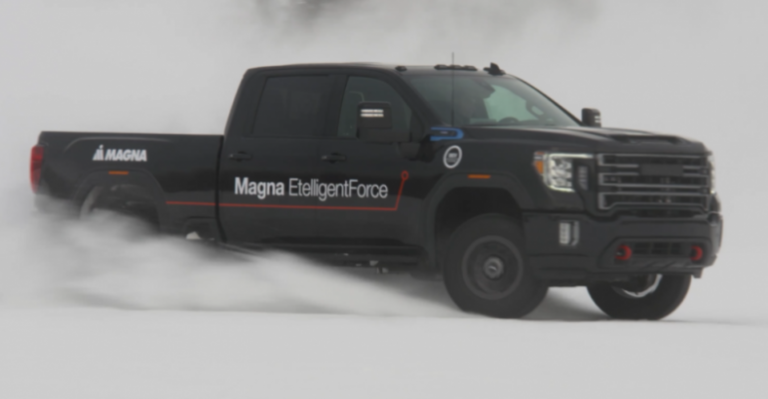
Magna recently provided test drives of an EtelligentForce-converted ’20 GMC 2500 truck vs. an otherwise equivalent internal-combustion-powered 4×4 pickup on a variety of dry, snow and ice surfaces at the Brimley Development Center winter test facility in Michigan’s Upper Peninsula. The BEV development truck’s engine and drivelines were replaced by Magna’s rear primary and front secondary electric drive systems.

“It’s a drop-in system that doesn’t change the architecture of the truck,” says Ryan Shaw, who manages Magna’s North American Advanced Engineering Group. “It will allow OEMs to assemble them without major changes, including to the suspension.”

The electric truck delivers stronger acceleration – 0-60 mph (97 km/h) in 4.6 sec. and a 13.7-second quarter mile at 99 mph (159 km/h) – on dry pavement and operates much more smoothly and quietly than the equivalent ICE truck. It accelerates with none of the driveline catching and clunking typical of a mechanical system distributing torque rear-to-front-and-back seeking traction through its transfer case.

The electrified Magna system also offers improved slick-surface control as its systems smoothly and imperceptibly allocated torque from its front and rear motors. “You can do things with axle speed control that you can’t with conventional 4WD,” Shaw explains.

“The differentiation for Magna is our knowledge of integration,” Kotagiri says of the Magna systems’ competitive advantages. “What you saw today when you drove these vehicles is not just the eDrive but also the integration of it with the software controls that made that truck drive like a conventional truck, only better. That is the magic sauce. With Magna Steyr, that part of Magna that manufactures complete vehicles for OEMs, we are the largest independent vehicle manufacturer in the world. And because we work on engineering projects both for and with OEMs, we understand completely the powertrain, chassis and other vehicle technologies.”

We also tested an AWD VW ID.4 on snow and ice, including on partially ice-covered grades, and found its slick-surface performance limited only by the traction available to its stock tires. We were already fans of this electric AWD CUV’s dry road handling and performance and were pleased to learn that it loses none of that smile-inducing capability on winter roads.

While Magna says its eBeam/EtelligentForce electric-truck system likely will not be ready before 2025, we should start seeing more production applications of its other electric drive systems by later this year. “We will be in production with three OEMs in a short time, this year or next,” Kotagiri says, “but I can’t identify them at this time. We are working with many OEMs, both traditional and new entrants, from all different parts of the world.”

Catalys Lubricants acquires Nemco Lubricants & Chemicals


Catalys Lubricants has acquired Nemco Lubricants & Chemicals (Nemco), a Prairie-based manufacturer of lubricants and automotive fluids. This transaction marks Catalys’ third acquisition in the last six months and completes Catalys’ coast-to-coast distribution and manufacturing network.

Catalys says it now has four production and packaging locations, 15 warehouses, and several resellers across Canada. Its supply chain in the Prairies includes a manufacturing plant for lubricants, antifreezes, windshield washer and auxiliary products.

“The acquisition of Nemco enables Catalys to fulfill our vision of creating a national distribution network,” said Jean-François Crevier, President, Catalys Lubricants in a statement.

“With a presence in all ten provinces, we’re better equipped to exceed our customers’ needs and provide them with quality products, local expertise and superior customer service. Today’s announcement is the culmination of several acquisitions made by Catalys in the past decade to establish ourselves as a leader in lubricant distribution. This signals the start of an exciting new chapter, and we look forward to engaging our entire network to service the customers and the communities that welcome us.”

As of January 29, 2022, Catalys acquired the entire Nemco company, including its activities, inventory and equipment, housed in a plant in Winnipeg and two warehouses in Regina and Saskatoon. Nemco will continue to operate under the name of Nemco, a division of Catalys Lubricants, with the same team and at the same locations.

In 2020, the company signed an agreement with Shell, enabling the distribution and sale of products across Western Canada.

Mercedes-Benz Egypt becomes the exclusive automotive sponsor of the Egyptian Golf Federation


Mercedes-Benz Egypt has signed a contract with the Egyptian Golf Federation as the exclusive automotive sponsor throughout the year in support of the organization’s golfing calendar and events. The sponsorship was celebrated with a special get together in February with attendees from Mercedes-Benz Egypt and the Egyptian Golf Federation.

“Mercedes-Benz is dedicated to the #PerfectDrive in everything we do, including driving the game of golf forward on an international and local level” said Sascha van Ryssen, Director Marketing & Sales, Mercedes-Benz Egypt.  “Mercedes-Benz and the game of golf have been synonymous with sophistication and innovation for many years. We are thrilled to be the exclusive automotive sponsor of the Egyptian Golf Federation. We look forward to supporting an exciting calendar of golfing competitions and events and the development of promising young golfers in Egypt.”

1“Supporting future golf champions is a shared goal of both the Egyptian Golf Federation and Mercedes-Benz Egypt. We are delighted to have the support of the leading luxury brand as our partner for our golfing calendar and events and in the development of our National Junior Development and Elite Amateur Programs,” Said Eng. Ayman Hussain, Chairman, Egyptian Golf Federation. “The partnership with Mercedes-Benz Egypt will support the Egyptian Golf Federation to activate key strategies to further grow the game of golf in Egypt.”

For more than 70 years, the Egyptian Golf Federation has been making golf accessible for professionals and amateurs, while developing clear pathways for junior development in a variety of ways including elite competition and even providing access to college scholarships.


Verizon Inks First 5G Automotive Deal with Audi


Verizon inked a deal to equip Audi vehicles in the U.S. with 5G connectivity, estimated to start with select model-year 2024, marking the carrier’s first 5G automotive deal.  Audi will embed the technology in its vehicles and support it with Verizon’s 5G Ultra Wideband network, which includes C-band and millimeter wave spectrum. Since launching in January, Verizon’s C-band 5G now covers 100 million people, with a target of 175 million in 2023 and expanding to more than 250 million by 2024 and beyond.

From Verizon’s perspective, the carrier is excited to have premium partner like Audi for its first 5G automotive deal, according to TJ Fox, SVP of Industrial IoT and Automotive at Verizon.
An Edge Perspective

He highlighted the match with Verizon and its network. “Especially in the 5G environment, which will enable the kind of connectivity that Audi can take advantage of for their customers all the way down to their telematics, to the things we’ll be doing from an edge perspective to C-V2X,” said Fox, who is a nearly 30-year Verizon veteran and took the lead of the carrier’s new Industrial IoT and Automotive unit last year. It’s a combo between the vehicle and Verizon network “to provide services and capabilities that we’ve never seen before in a mass environment.”

The relationship with Audi isn’t entirely new, as Verizon’s already the automaker’s connectivity provider for LTE programs, and Pom Malhotra, senior director of Connected Services at Audi America, expressed enthusiasm to be among the first automakers to take the leap into 5G. Audi was already the first to introduce 3G and LTE worldwide “so moving into 5G for us is part of what we consider core technology strategy,” Malhotra told Fierce.

5G Connected Vehicles

AT&T nabbed its first 5G connected car deal with GM in August, for select models by 2024 and the expectation for 5G in millions of GM vehicles over the next 10 years. Malhotra didn’t disclose how many vehicles Audi expects to have 5G at the start but did say this represents a shift in the vehicle hardware itself.

“We will basically be shifting the models to the 5G hardware all at the same time,” he said, adding that when that cut off happens, any vehicle then approaching either its model-year change over, or the start of production, will come with new hardware. “Within the span of year or so you’ll pretty much have every vehicle on 5G.”

Also Read: Audi and KIT are working on recycling method for automotive plastics

5G enhancing performance, in-car experiences, safety features

As Audi looks to shift to the next generation of communications technology, it views 5G as a way to enhance multiple aspects across performance, in-vehicle experiences and safety.

Audi decided to adopt 5G through the lens of three pillars, Malhotra explained. One is whether it improves on what already exists, which he said 5G delivers in very significant ways. Those include speed and bandwidth available to users; and better latencies which improve experiences like in-vehicle Wi-Fi, satellite imagery for 3D mapping, and voice responsiveness.

The second is whether it can help deliver new features Audi envisions for future cars. To that end, Malhotra called out augmented reality experiences, over-the-air software updates (more on that later), and new relevant safety features through technologies like C-V2X.

Malhotra said, “5G enables all of those features and delivers a stellar experience that current network communication protocols cannot provide.”

In-Car Entertainment

When it comes to 5G, part of the aim is to make access to information in cars extremely real-time to improve the ownership experience beyond – relying on those low latencies, high bandwidths and eventually edge capabilities. Malhotra mentioned, for example, overlaying information on existing reality to improve navigation, points of interest, or to enhance the travel experience for someone that’s new to a city. 5G will enhance gaming and in-car entertainment by enabling faster downloads and higher-quality streaming.

Also Read: Audi approves Hydrotreated Vegetable Oil for use in V6 diesels

On the safety technology front, Audi isn’t looking just at those in the car, but paying close attention to safety and happenings outside the vehicle as well.

He continued, “For the first time, 5G allows us to bring active safety technology into the car realistically with the required application performance.”

Vehicle Communication

Audi, a major auto player, has promoted C-V2X as an enabling technology. Malhotra said, “We absolutely have it on our roadmap,” both in its direct form—where vehicles communicate directly with roadside infrastructure or nearby road users without cellular networks—and in how C-V2X expands communication through mobile edge computing.

“There are several use case situations where in the future, because of the amount of communication going on around the vehicle that it would actually make it a lot more efficient for some of that to happen through edge networks,” Malhotra said. “This is where the MEC capabilities that Verizon is building become very very interesting for us to explore and these are areas we are discussing with them.”

Verizon’s MEC efforts include partnerships with major cloud players such Google, Microsoft and counts 17 cities where 5G Edge with partner AWS is currently available.

Audi already has a Local Hazard Information service, which currently runs on 4G, that allows Audi vehicles to warn each other about accidents, traffic jams, icy roads and other pertinent alerts – and which says 5G can help send earlier and more accurately.

Vehicles as the ultimate mobile device

As Audi introduces 5G technology to vehicles, it is also evolving technology and industry to ensure vehicles remain future-proof, especially since all-electric vehicles will stay on the road for longer periods.

Fox said, “The Audi vehicle itself will become the ultimate mobile device,” noting that, like today’s smartphone, the car will offer a highly personalized experience to its owner through advanced communication capabilities.

It’s also where constant updates, in terms of firmware and software come in, and potential to take advantage of the edge network in a 5G environment Verizon’s working to build, according to Fox.

Software Enhancements

Audi updates its vehicles with new software and platform enhancements—much like smartphones receive regular updates for new features and functionalities—delivering continual improvements even after the cars are on the road. In that way, it envisions cars operating in a better, more efficient mode three years after they comes off the line versus day one, Fox said.

“The vehicle is not obsolete as it comes off the line but continues to get better and faster and relying on the low latency, high bandwidth of 5G Ultra Wideband and capabilities with MEC,” he continued.

Malhotra explained that customers now expect over-the-air updates to refresh their cars, which requires significant bandwidth and proper management of in-vehicle function downloads. While updates already occur today, they use a different method—activating functionality that already exists in the vehicle. Audi aims to reach a point where the vehicle actually downloads new features, and 5G supports that shift. Malhotra added that over-the-air updates are also crucial for automated vehicles, which rely heavily on cloud communication and require two key architectural components: edge computing and 5G.

Both “are areas that Verizon is dominant in and bring to market in a big way, and we really look forward to how we can change these experiences,” he said.

Premium Customers Bundles

As for pricing models, for 5G-connected services, Malhotra said 5G opens up some interesting possibilities and they are looking at how it may evolve for the future. Audi largely sees bundling services together for premium customers, in a form similar to an unlimited package, as a model that makes sense. And it’s not very different from how customers buy a service package from Audi today that includes unlimited data, without the need to go through Verizon.

Granted, to usher in new technologies, that means letting go of older to make room for the new he said, pointing to 3G shutdowns that are coming from major carriers.

“As an automaker that relies heavily on telecommunications technology, we benefit greatly from staying on the leading edge and leaping into the next generation well before any signs of technology obsolescence appear,” Malhotra continued.

Most of Audi’s current vehicles are on 4G LTE today, which he said isn’t going away any time soon. However, now is the right time to jump on 5G to shift future models to the technology to achieve the customer experience continuity Audi’s aiming for, Malhotra noted.

Extensive Integration Testing

He acknowledged that shifting to 5G isn’t a simple switch, but said engineers can implement it in a way that’s fairly seamless and doesn’t affect the rest of the car design.

Also Read: 2019 Audi S4 Gets New 3.0 TDI With 347 HP

“We conduct extensive integration testing in every market we enter, including this one,” he said. “We’re doing significant work to enable the applications we aim to run over 5G—such as autonomous features, C-V2X, augmented and virtual reality, data analytics, and in-vehicle data processing and management.

Audi isn’t naming partners on the 5G vehicle modules yet. Verizon for its part is seeing interest in 5G for automotive “across the board” according to Fox, including commercial, robotic, autonomous robotic and last-mile driving.

Car Dealerships ordered to apply for Digital Licenses from NTSA


The Government has ordered all motor vehicle and motorcycle dealers operating in the country to apply for fresh licensing by the National Transport and Safety Authority (NTSA). Interior Cabinet Secretary Fred Matiangi said in a statement on Friday that the dealers will be required to obtain digital licenses by April 1.

“Those who qualify, will be issued with a digital licensing cards while existing licenses will be revoked at the expiry of the directive,” said Matiangi.

The directive was occasioned by recommendations by an Inter-Agency Team drawn from Transport and Security sectors that had earlier been established to re-validate all motor vehicles dealers, manufacturers, repairers of motor vehicles and tow truck owners.

The CS further ordered the surrender of all red KG number plates to the NTSA by April 1. The Kenya Garage (KG) usually inscribed in red letters as opposed to the usual black letter against a yellow background will be replaced with KC (Container Freight Stations), KT (Kenya Towing) and green KG plates.

“The Inter-Agency Team has recommended a digital register of all motor vehicle dealership in the country and the replacement of the red Kenya Garage (KG) plates with KC and Kenya Towing (KT) and green KG plates,” Matiangi stated.

Kenya Garage plate is used by garages and car dealers when they want to put a car on the road that has no insurance.

It is also used with some transferable insurance cover. The CS further pointed out that all X number plates stand nullified.

Bodaboda riders to acquire PSV badges in new law


Bodaboda and tuk tuk riders could soon be compelled to acquire a Public Service Vehicle(PSV) badge from the National Transport and Safety Authority. This would be if MPs approve a proposed law compelling the drivers of two and three-wheelers providing taxi services to obtain the necessary licenses to operate.

NTSA (Amendment) Bill, 2022 sponsored by Ruiru MP Simon Kingara provides that the two and three-wheeled taxis would be regulated by the transport authority.

“The authority shall regulate two and three-wheeled public service motorcycle taxi,” the bill says on the additional roles it seeks to assign the NTSA.

NTSA would be required to establish systems and procedures for the regional registration and licensing of the said taxis, their drivers, and issue PSV badges to the drivers.

Although there is no official database with an exact number of motorcycles in the bodaboda business, it is estimated there are slightly above one million riders.

The 2021 Economic Survey Report by KNBS shows that newly registered motorcycles increased from 217,425 in 2019 to 252,600 in 2020 – a growth of about 16 per cent.

“Our proposal to the task force was that we self-regulate. Even when we give them NTSA badges, the government cannot control bodabodas, they are so many and difficult not like matatus,” he said.

He said through the association’s Bodaboda Information Management System, they have been able to register many riders hence best placed to track and trace.

The system owned by the association was launched by Interior CS Fred Matiangi and his ICT counterpart Joe Mucheru in August 2020.

“We give them badges through their leadership – which is cascaded from all levels of public administration, we are best placed to track and trace these riders,” Mubadi said.

He added that the registration is elaborate and “includes records of whether a rider owns a motorbike or has been hired.”

“The state has taken that long to deal with the sector’s challenges. The only way we can succeed is to partner with the state,” the BAK boss said.

In November 2018, the government established the Task Force on Policy, Legal and Administrative Reforms Regarding Public Service Motorbike Transport.

It was mandated to review the existing policy, compile comprehensive data regarding the safety, reliability, cost, and all matters involving public service motorbike users.

- Advertisement -