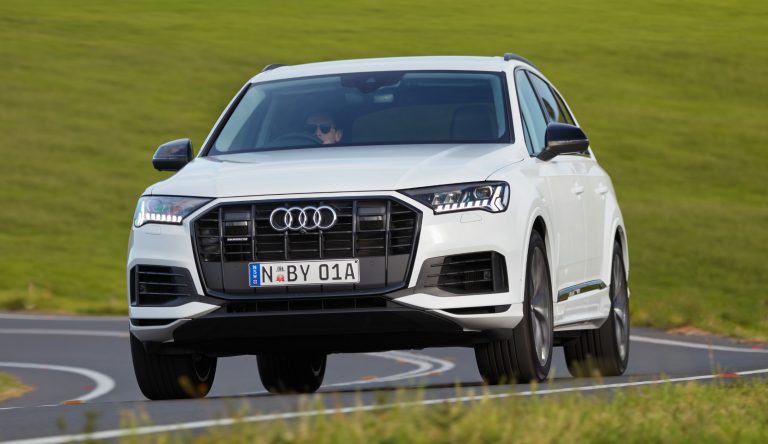
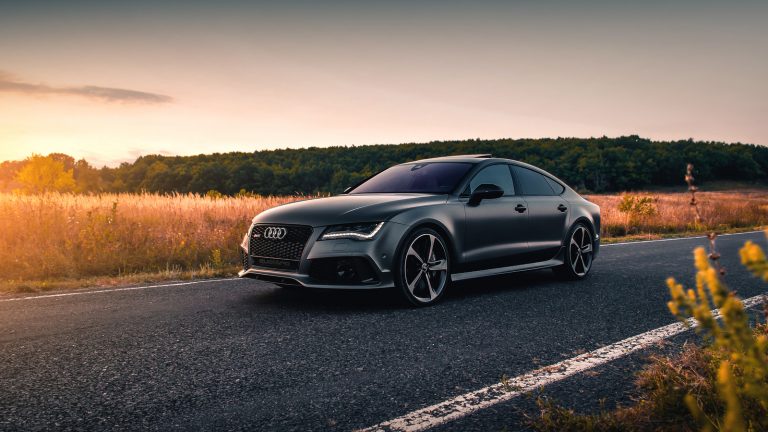
Verizon inked a deal to equip Audi vehicles in the U.S. with 5G connectivity, estimated to start with select model-year 2024, marking the carrier’s first 5G automotive deal. Audi will embed the technology in its vehicles and support it with Verizon’s 5G Ultra Wideband network, which includes C-band and millimeter wave spectrum. Since launching in January, Verizon’s C-band 5G now covers 100 million people, with a target of 175 million in 2023 and expanding to more than 250 million by 2024 and beyond.
From Verizon’s perspective, the carrier is excited to have premium partner like Audi for its first 5G automotive deal, according to TJ Fox, SVP of Industrial IoT and Automotive at
Verizon.
An Edge Perspective
He highlighted the match with Verizon and its network. “Especially in the 5G environment, which will enable the kind of connectivity that Audi can take advantage of for their customers all the way down to their telematics, to the things we’ll be doing from an edge perspective to C-V2X,” said Fox, who is a nearly 30-year Verizon veteran and took the lead of the carrier’s new Industrial IoT and Automotive unit last year. It’s a combo between the vehicle and Verizon network “to provide services and capabilities that we’ve never seen before in a mass environment.”
The relationship with Audi isn’t entirely new, as Verizon’s already the automaker’s connectivity provider for LTE programs, and Pom Malhotra, senior director of Connected Services at Audi America, expressed enthusiasm to be among the first automakers to take the leap into 5G. Audi was already the first to introduce 3G and LTE worldwide “so moving into 5G for us is part of what we consider core technology strategy,” Malhotra told Fierce.
5G Connected Vehicles
AT&T nabbed its first 5G connected car deal with GM in August, for select models by 2024 and the expectation for 5G in millions of GM vehicles over the next 10 years. Malhotra didn’t disclose how many vehicles Audi expects to have 5G at the start but did say this represents a shift in the vehicle hardware itself.
“We will basically be shifting the models to the 5G hardware all at the same time,” he said, adding that when that cut off happens, any vehicle then approaching either its model-year change over, or the start of production, will come with new hardware. “Within the span of year or so you’ll pretty much have every vehicle on 5G.”
Also Read: Audi and KIT are working on recycling method for automotive plastics
5G enhancing performance, in-car experiences, safety features
As Audi looks to shift to the next generation of communications technology, it views 5G as a way to enhance multiple aspects across performance, in-vehicle experiences and safety.
Audi decided to adopt 5G through the lens of three pillars, Malhotra explained. One is whether it improves on what already exists, which he said 5G delivers in very significant ways. Those include speed and bandwidth available to users; and better latencies which improve experiences like in-vehicle Wi-Fi, satellite imagery for 3D mapping, and voice responsiveness.
The second is whether it can help deliver new features Audi envisions for future cars. To that end, Malhotra called out augmented reality experiences, over-the-air software updates (more on that later), and new relevant safety features through technologies like C-V2X.
Malhotra said, “5G enables all of those features and delivers a stellar experience that current network communication protocols cannot provide.”
In-Car Entertainment
When it comes to 5G, part of the aim is to make access to information in cars extremely real-time to improve the ownership experience beyond – relying on those low latencies, high bandwidths and eventually edge capabilities. Malhotra mentioned, for example, overlaying information on existing reality to improve navigation, points of interest, or to enhance the travel experience for someone that’s new to a city. 5G will enhance gaming and in-car entertainment by enabling faster downloads and higher-quality streaming.
Also Read: Audi approves Hydrotreated Vegetable Oil for use in V6 diesels
On the safety technology front, Audi isn’t looking just at those in the car, but paying close attention to safety and happenings outside the vehicle as well.
He continued, “For the first time, 5G allows us to bring active safety technology into the car realistically with the required application performance.”
Vehicle Communication
Audi, a major auto player, has promoted C-V2X as an enabling technology. Malhotra said, “We absolutely have it on our roadmap,” both in its direct form—where vehicles communicate directly with roadside infrastructure or nearby road users without cellular networks—and in how C-V2X expands communication through mobile edge computing.
“There are several use case situations where in the future, because of the amount of communication going on around the vehicle that it would actually make it a lot more efficient for some of that to happen through edge networks,” Malhotra said. “This is where the MEC capabilities that Verizon is building become very very interesting for us to explore and these are areas we are discussing with them.”
Verizon’s MEC efforts include partnerships with major cloud players such Google, Microsoft and counts 17 cities where 5G Edge with partner AWS is currently available.
Audi already has a Local Hazard Information service, which currently runs on 4G, that allows Audi vehicles to warn each other about accidents, traffic jams, icy roads and other pertinent alerts – and which says 5G can help send earlier and more accurately.
Vehicles as the ultimate mobile device
As Audi introduces 5G technology to vehicles, it is also evolving technology and industry to ensure vehicles remain future-proof, especially since all-electric vehicles will stay on the road for longer periods.
Fox said, “The Audi vehicle itself will become the ultimate mobile device,” noting that, like today’s smartphone, the car will offer a highly personalized experience to its owner through advanced communication capabilities.
It’s also where constant updates, in terms of firmware and software come in, and potential to take advantage of the edge network in a 5G environment Verizon’s working to build, according to Fox.
Software Enhancements
Audi updates its vehicles with new software and platform enhancements—much like smartphones receive regular updates for new features and functionalities—delivering continual improvements even after the cars are on the road. In that way, it envisions cars operating in a better, more efficient mode three years after they comes off the line versus day one, Fox said.
“The vehicle is not obsolete as it comes off the line but continues to get better and faster and relying on the low latency, high bandwidth of 5G Ultra Wideband and capabilities with MEC,” he continued.
Malhotra explained that customers now expect over-the-air updates to refresh their cars, which requires significant bandwidth and proper management of in-vehicle function downloads. While updates already occur today, they use a different method—activating functionality that already exists in the vehicle. Audi aims to reach a point where the vehicle actually downloads new features, and 5G supports that shift. Malhotra added that over-the-air updates are also crucial for automated vehicles, which rely heavily on cloud communication and require two key architectural components: edge computing and 5G.
Both “are areas that Verizon is dominant in and bring to market in a big way, and we really look forward to how we can change these experiences,” he said.
Premium Customers Bundles
As for pricing models, for 5G-connected services, Malhotra said 5G opens up some interesting possibilities and they are looking at how it may evolve for the future. Audi largely sees bundling services together for premium customers, in a form similar to an unlimited package, as a model that makes sense. And it’s not very different from how customers buy a service package from Audi today that includes unlimited data, without the need to go through Verizon.
Granted, to usher in new technologies, that means letting go of older to make room for the new he said, pointing to 3G shutdowns that are coming from major carriers.
“As an automaker that relies heavily on telecommunications technology, we benefit greatly from staying on the leading edge and leaping into the next generation well before any signs of technology obsolescence appear,” Malhotra continued.
Most of Audi’s current vehicles are on 4G LTE today, which he said isn’t going away any time soon. However, now is the right time to jump on 5G to shift future models to the technology to achieve the customer experience continuity Audi’s aiming for, Malhotra noted.
Extensive Integration Testing
He acknowledged that shifting to 5G isn’t a simple switch, but said engineers can implement it in a way that’s fairly seamless and doesn’t affect the rest of the car design.
Also Read: 2019 Audi S4 Gets New 3.0 TDI With 347 HP
“We conduct extensive integration testing in every market we enter, including this one,” he said. “We’re doing significant work to enable the applications we aim to run over 5G—such as autonomous features, C-V2X, augmented and virtual reality, data analytics, and in-vehicle data processing and management.
Audi isn’t naming partners on the 5G vehicle modules yet. Verizon for its part is seeing interest in 5G for automotive “across the board” according to Fox, including commercial, robotic, autonomous robotic and last-mile driving.