Monday, June 1, 2026
Home Blog Page 45

Omega Seiki Mobility forms JV with Rabbit Express to tap African market

0

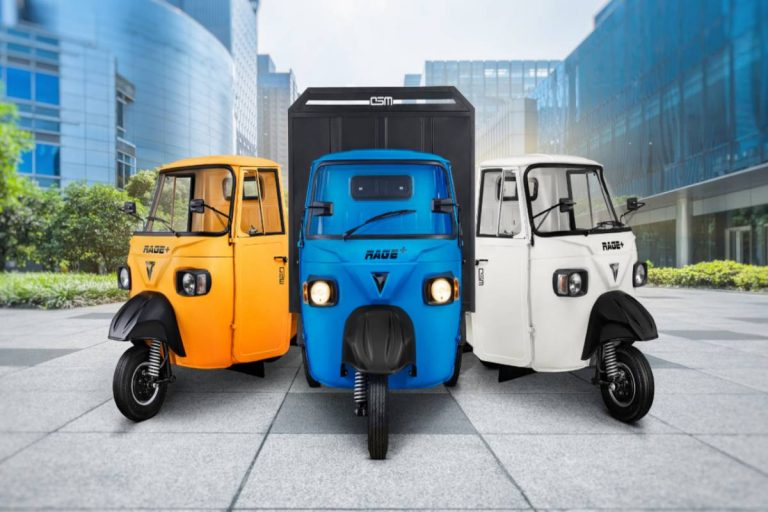
Faridabad-based electric vehicle maker, a part of the Anglian Omega Group, Omega Seiki Mobility (OSM) has signed a joint venture pact with the Egyptian e-commerce last-mile delivery firm Rabbit Express to tap the African market.

Under the JV, in which OSM will hold up to 26% stake and Rabbit Express the remaining stake, the latter will initially export its two and three-wheelers to the African market and later the two partners will set up a manufacturing facility in capital city Cairo, OSM founder and Chairman Uday Narang said. Besides, OSM will also lend technological support to its Egyptian partner, he said.

The JV will see an investment of USD 10 million to begin with, and once the manufacturing facility comes into being it is expected to be scaled up to USD 50 million, Hani Mohammed Moshref, Chief Executive Officer, Rabbit Express said.

Rabbit Express, which is 40% owned by Ibnsina Pharmacy, has a fleet of 5,000 vehicles serving several e-commerce clients in Egypt. A USD 2-billion market cap company, Ibnsina serves more than 35,000 customers with more than 375,000 orders per month through its warehouses, distribution and logistics fleets.

It’s a full service company owning warehouses, cold chains, and packaging. Logistics, financing and last mile.

“Under the alliance with Rabbit, we will initially be sending our electric vehicles from India to them. And then in the second phase, we will be setting up with them a first-of-its-kind factory for electric vehicles, using our EV technology for different products,” Narang said.

He said that OSM is working in different areas with Rabbit, who are a significant player in the last mile space in the second largest automotive market in Africa.

OSM has done a lot of work in the domestic EV space over the last several years including the backward integration with power trains, motors and batteries and working with such a significant player in Egypt is a step forward for the company, he said.

The company is looking at a volume of at least 20,000 vehicles annually through the tie-up, Moshref said.

“We can, at least, hit 20 per cent of this market (100,000 units per annum) or maybe more, within the next 2-3 years. But we have to start first and show people there and educate them about the concept of electric vehicles. According to our calculations and study, the running cost of these electric vehicles will be very low, maybe 10- 20 per cent. And that means a lot when it comes to profitability (of the operator),” he said.
Gqeberha-based automotive company to invest millions in EC


Eastern Cape Premier, Lubabalo Mabuyane has commended the 100% black-owned Gqeberha-based automotive company, Africa Auto Group, for investing R550-million in the Province.

This was announced at the South African Investment Conference in Johannesburg this week. Mabuyane says they commend the company’s role towards improving the economy and creating jobs.

He says it is important for the government to support black-owned enterprises to try and integrate them into the mainstream economy.

Auto Africa Group Business Development Director, Mandla Madwara says they are looking forward to working with the province.

He says they have pledged this investment in the auto industry of the province that will see the creation of much-needed jobs in Gqeberha. Madwara said about 70 to 100 jobs per shift would be created.

Morocco unveils $180 mln in new automotive sector investments


Morocco and five automotive part manufacturers signed 8 investment agreements worth 1.7 billion dirhams ($1.8 billion) to set up plants in different industrial locations to boost the wiring components, key to meeting the growing orders from electric vehicle makers.

Speaking during the signing ceremony, Moroccan Industry Minister Ryad Mezzour said the new investments reinforce Morocco’s attractiveness to foreign investors and bring a technological added value to wiring components made in the country.

Japan’s Yazaki will set up a new cabling plant worth $38 million in Tangiers and expand its existing plants in Kenitra and Tangier for $40mln.

Sumitomo will extend its plant in Casablanca for $15 million, while Lear said it will set up a plant for electrical cables in Meknes for $20.6 million and a new terminals and connectors factory for $28 million.

Stahlschmidt said it will launch a cables and locking systems factory for $11 million. TE connectivity for its part said it will set up a connectors moulding and assembly plant worth $20.8 million in Tangier.

The automotive ecosystem is Morocco’s leading exporting sector with $8.6 billion in 2021, that is a 16% increase compared to 2020.

Kenya’s car brand Mobius eyes TZ and Uganda


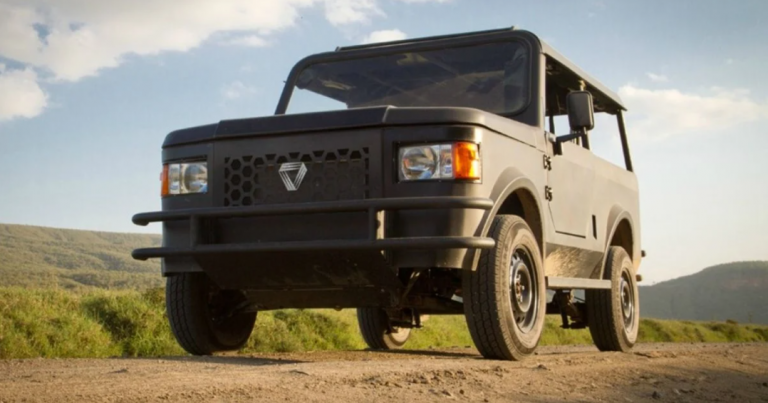
Kenya’s only home-grown automaker, Mobius Motors, plans to ramp up production of its second generation model with an eye on the regional market including Uganda and Tanzania.

The automaker, which in 2014 pioneered production of a stripped-down car model for African roads, is betting on the spruced up Model II which costs Sh1.5 million to drive regional expansion.

The first generation vehicle is no longer in the market. Only 50 units were made as proof of concept, travelling more than 1.6 million kilometres combined on Kenyan roads. Mobius also launched model III late last year, a larger but pricier sports utility vehicle with a Sh3.9 million price tag.

“Production of this vehicle (Mobius II) is being ramped up throughout 2022,” the automaker said in an emailed response.

“There are definitely other plans in the pipeline influenced by the reception of the latest models. However, we will discuss about them at the right time. These include expansion to other countries in the region as well,” the firm said, without offering specifics.

A sharp increase in the prices of imported second hand cars is turning the market towards locally produced cars, local resale and trade-ins, giving manufacturers like Mobius an opportunity to grow sales.

Used car prices have jumped by an average 37% over the past six months as demand outstrips supply globally on production cuts, pushing low range vehicles like Nissan Note and Vitz above the one million shilling mark.

Dealers now face increased competition from buyers in source markets such as Japan and the UK as automakers have scaled down production owing to shortages of semiconductors used in electronic devices as well as other materials such as copper, aluminum and cobalt.

Most buyers in the developed markets would typically buy new cars but have now resorted to purchasing second-hand models in response to shortages.

Economic uncertainty brought by the Covid-19 pandemic has also seen consumers in the developed world keep their cars for longer than usual, further reducing supplies to Kenya, which relies on imports.

Mobius vehicles come with a large percentage of local content thereby adding value to the extended supply chain.

“Mobius 3 retails from Sh3.95 million excluding VAT. The price is very competitive for a large SUV which has zero millage and full 3 years/60,000km warranty especially when compared to an equivalent second hand used imported vehicle,” Mobius said.

The firm said it will continue upgrading its models sticking to SUVs rather than venture into different car models as an expansion strategy.

“Product evolution is integral to Mobius strategy. We do have plans in place to continuously improve the product offering. We intend to make sure we remain relevant by offering our customers exceptional value for money without compromising on quality,” the firm said.

The firm was founded by British entrepreneur Joel Jackson, who saw a niche for the Mobius while working in rural Kenya in 2009.

2022 Hyundai Grand Creta Three-Row Crossover launched in South Africa


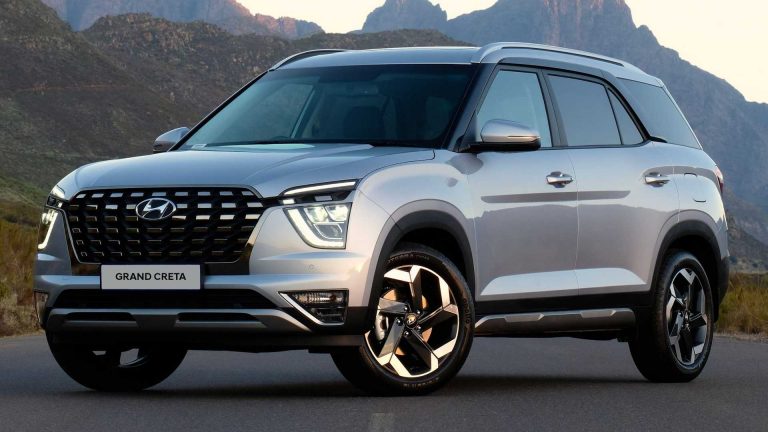
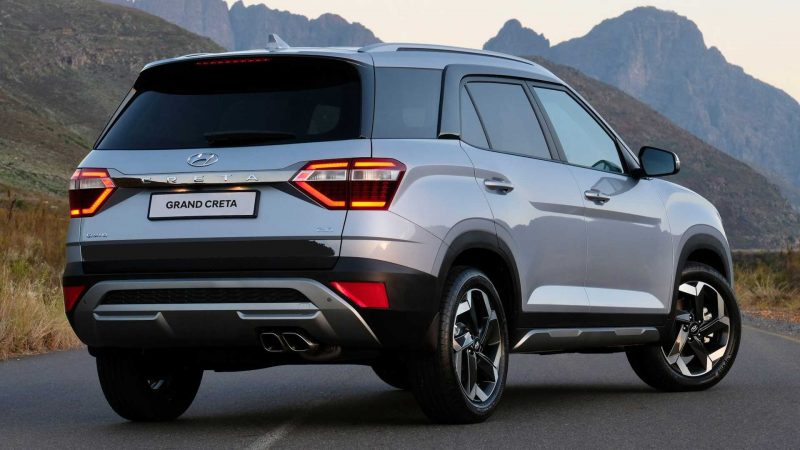
Redesigned from the ground up in 2019, the Creta received a three-row sibling in 2021 under the Alcazar nameplate. Over in South Africa, the seven-seat compact utility vehicle has launched as the Grand Creta.

Based on the Hyundai-Kia K2 platform that also underpins the Venue and Seltos, this fellow is listed from 449,900 rands. At current exchange rates, that sum converts to $30,870 before taxes and options. What do you get for this bundle of cash? Well, the list starts with a free-breathing powerplant.
It’s the very same 2.0-liter MPi four-cylinder engine found in the Alcazar for the Indian market. With 156 horsepower and 140 pound-feet (191 Nm) on tap, it’s nothing to write home about. Hyundai further sweetens the deal with an optional 1.5-liter turbo diesel that cranks out 113 ponies and 184 pound-feet (250 Nm) much earlier in the rev range. Transmission choices begin with a six-speed manual and top with a torque-converter auto.
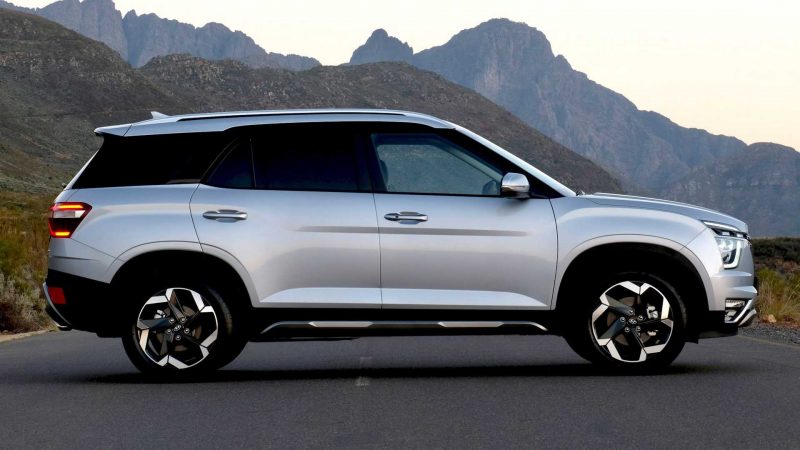
Two grades are offered at launch, starting with the Executive that comes with Qi wireless phone charging and an 8.0-inch touchscreen. Standard features also include a rearview camera, LED headlights, Apple CarPlay and Android Auto connectivity, as well as 17-inch alloy wheels. Elite is how the better-equipped variant is dubbed, which rocks 18-inch wheels.

The higher trim level also improves in terms of technology with a 10.2-inch digital instrument cluster. In terms of convenience, the highlights are a pair of fold-down trays for the second-row occupants and push-button start.
From a technical standpoint, Hyundai did cut some corners. For example, you can’t specify all-wheel drive. Customers also have to settle for a coupled torsion beam axle out back. On the other hand, even the Nissan Leaf is rocking a torsion beam rather than an independent rear suspension.
Finally, let’s talk practicality. 200 millimeters longer than the Creta, the Grand Creta also sports a 150-mm longer wheelbase. Up to 1,670 liters (59 cubic feet) are available with the second- and third-row seats folded. With all seats in use, make that 180 liters (6.3 cubic feet) behind the third row.

Japanese Sumitomo moves production to Morocco due to Russia-Ukraine war


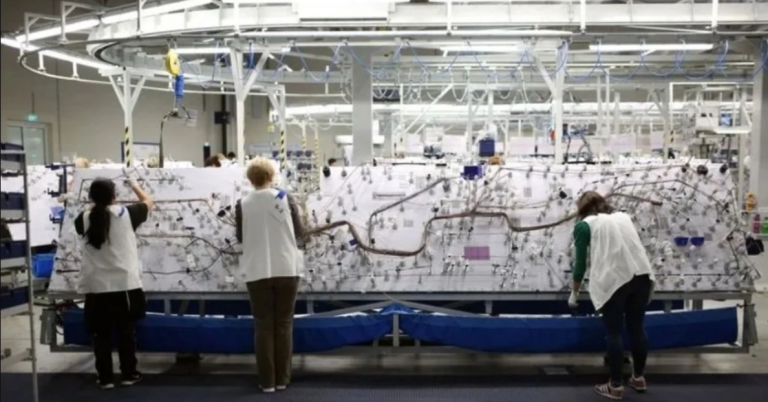
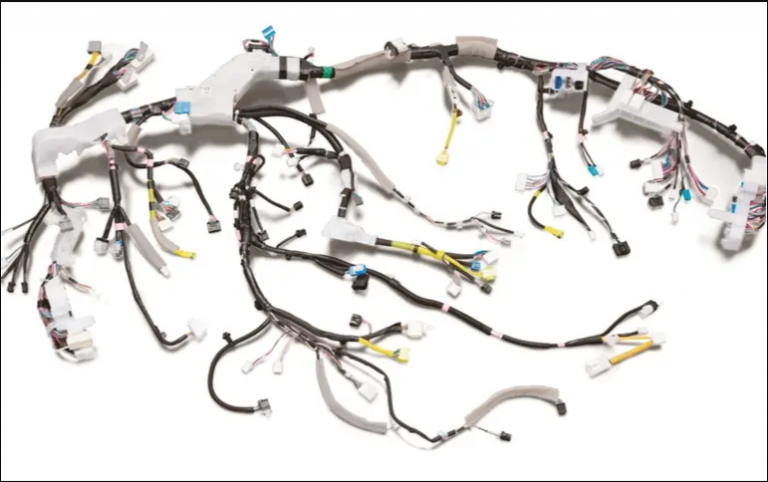
Japanese Sumitomo Electric Industries has decided to move its production of automotive wire harnesses to Morocco and Romania due to the Russian-Ukraine war and heightened risks in this European zone.

According to the Japanese financial newspaper Nikkei, the move will enable the manufacturer of electric wire and optical fiber cables to avoid disruption of supply chain due to the Russia-Ukraine war.

The transfer of production lines to safer zones comes after Sumitomo was forced to stop operations in its factory in Ukraine at the end of last month.

The cost of moving production is estimated at $83.9 million. Wire harnesses are a key component in auto industry. Around 6,000 people worked at the Ukrainian plant, which accounted for about 10% of Sumitomo Electric’s European output and supplied wire harnesses for models such as the Volkswagen Golf.

German car maker Volkswagen has halted or decreased production of autos due to a shortage of wire harnesses and other components. It plans to assemble more vehicles in the Americas and China instead.

Eastern European countries such as Poland and the Czech Republic are home to many auto parts factories due to low labor costs. But the growing risk of the Russia-Ukraine war spillover is pushing companies to restructure their supply chains to keep production running as the world’s automakers continue to suffer from a shortage of semiconductors resulting from the Covid-19 lockdowns.

European, African auto firms sign deal to move Africa auto sector forward


A Memorandum of Understanding was signed virtually between 12 Automotive Associations within the ambit of the EU-Africa Business Forum 2022 on February 16, with the aim of driving the development of the Automotive Industry in Africa. Part of the goals is to expand the African new vehicle market from one of the five million units and connect African regions for the common good.

Signatories to the MOU include: African Association of Automotive Manufacturers, AAAM; Dave Coffey, CEO, German-African Business Association (Afrika-Verein der deutschen Wirtschaft), Dr. Markus Thill; Member of the Management Board, German Association of the Automotive Industry (VDA), Andreas Rade, Managing Director, Kenya Association of Manufacturers (KAM), Ashit Shah, Chairman Automotive Sector, Tunisian Automotive Association (TAA), Myriam Elloumi, Vice President, National Association of Automotive Component and Allied Manufacturers (NACAAM), South Africa, Renai Moothilal, Executive Director, National Association of Automobile Manufacturers of South Africa (NAAMSA)
Others are: Mikel Mabasa, Chief Executive Officer, European Association of Automotive Suppliers (CLEPA), Sigrid de Vries, Secretary General, European Business Council for Africa (EBCAM), Dr. Markus Thill, Member of the Management Board AV, European Automobile Manufacturers’ Association (ACEA), Eric-Mark Huitema, Director General, Nigeria Automotive Manufacturers Association (NAMA), Tokunbo Aromolaran, Chairman, and Automotive Assemblers Association Ghana (AAAG), Jeffrey Peprah, President.

According to them, intra-African trade can be bolstered and diversified by developing a Pan African Auto Pact, which aims to expand the African new vehicle market from one to five million units and connecting African regions for the common good. A “coalition of the willing” will see the development of manufacturing sites and allied industries and services – both for the OEM and supplier sector – and thereby laying the foundation for Pan-African integrated automotive value chains which will incorporate neighboring countries, thus building a regional and continental production network.

The MOU encourages enhanced dialogue contributing to the development of a joint plan to grow the automotive sector in Africa, through integration into the global and European value chains resulting in quality jobs. Whilst encouraging a favorable investment climate to support market integration and innovation and the joint creation of models of standardization, harmonisation and safe mobility. Furthermore, it is intended to advance the debate about sustainability whilst considering alternative powertrains and digital solutions and to further develop affordable mobility solutions leading to a viable African vehicle market.

The setting-up of a permanent round table between the AU, EU, and industry associations in line with the spirit of an established European-African Business Network that will foster the dialogue between Africa and Europe.

Lastly, it encourages the EU to support financially the development of sustainable and smart mobility and affordable vehicle financing solutions to increase the mobility of the population in African cities and support therefore infrastructure development.
Whilst also calling on public authorities to provide programs and financial support for research on alternative powertrains and the value chain of green technology solutions in Africa.

Commenting after the signing of the MOU, David coffey the CEO of AAAM said “The trade and investment climate in Africa can only be improved together. We are convinced that Africa has great potential to develop a promising automotive industry that will provide long-term employment.

“The fact that African and European associations have agreed on key points to further develop the industry on the continent is an important milestone. Now political representatives are to support this by creating the framework conditions for the industry to develop and grow”.

Trade-in your old Toyota for a new one


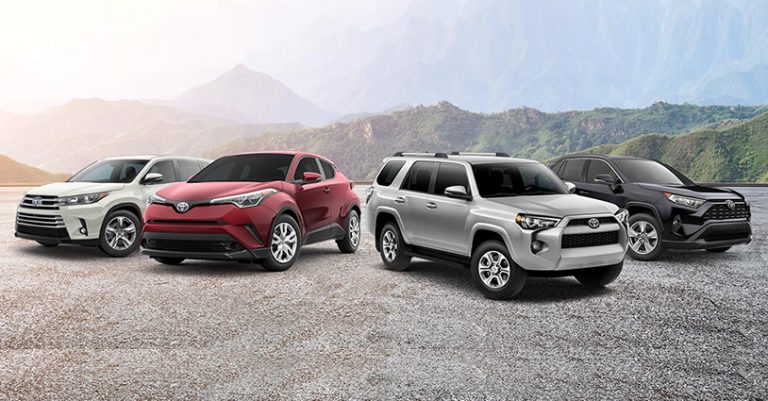
In a bid to ease new car ownership for Kenyans, CFAO Motors, the sole distributor of Toyota cars in Kenya, has unveiled its vehicle trade-in scheme. According to the Managing Director of CFAO Motors Kenya Limited, Arvinder Reel, the process is as simple as bringing in your current car for valuation and choosing to pay the balance for a brand new car up-front or through financing.

“We are venturing into trade-in of cars to increase sales of new vehicles in the country,” said Reel. He added the company is currently in the process of coming up with a check list that will guide on the value of a trade-in vehicle as well as other parameters.

The checklist may be designed to review the overall condition of the car and ensure the vehicle has not been involved in accidents.

“The vehicle to be traded-in must also not have been stolen, must have proper documentation and the engine should also be in good working condition among other parameters,” revealed Reel.

The company said it will run the trade-in business through an affiliate called Automark and which deals in certified pre-owned vehicles.

CFAO Motor Kenya will also introduce new brands in the market, among them used cars and parts. Its line of business will involve the sale of new and pre-owned vehicles, service and maintenance, parts and vehicle assembly.

The group has built a solid relationship with Toyota and now distributes the Japanese brand in 39 African countries, “offering quality technical expertise and reliable after-sales service,” read a statement in part.

CMC Motors, Stanbic Bank partner to launch Ford Finance


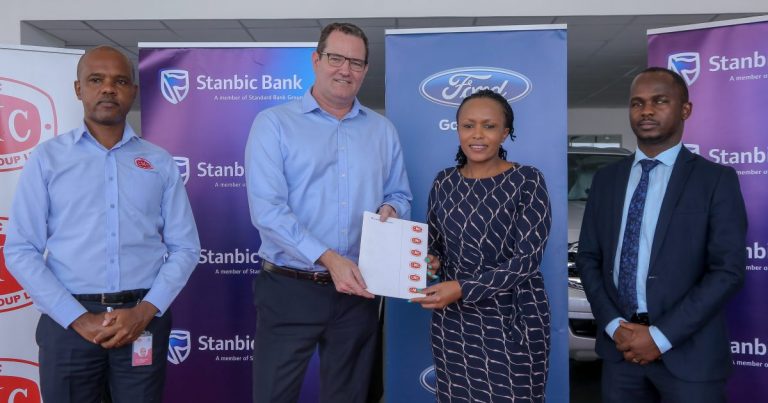
The Cooper Motor Corporation (CMC) group has entered into a partnership with Stanbic Bank to launch Ford Finance a deal that will enable clients to access competitive and flexible financing solutions for Ford vehicles in Kenya.

Speaking during the launch, in Nairobi, CMC Motors Group Chief Executive Officer (CEO), Alan Crossan, said that the partnership will see Ford Motor Company, CMC Motors Group and Stanbic Bank come together to ensure there are new affordable Ford Units for the clients within Kenya.

“This initiative will enable customers to enjoy interest rates from as low as 10.71% and comfortable repayment tenures of up to 60 months with no collateral required to access the asset,” he said.

The CEO added that the partnership comes at a good time when the economy is gradually recovering from the Covid-19 pandemic.

Stanbic Bank Kenya Head of Business and Commercial Clients, Florence Wanja, said that the partnership will enable Kenyans to acquire vehicles at an affordable price and with flexible financing options.

“This partnership will be important in enabling our clients to gain access to new Units that will give them service for longer with less downtime, thereby increasing productivity,” said Wanja.

She said that clients will also access insurance financing through Stanbic Bank’s unique bundled product that enables customers to spread their insurance cover over the full tenure of the vehicle finance.

“This is intended to give the clients lower monthly loan repayment amounts, making brand new Units affordable to them,” said Wanja.

She noted that CMC Motors group was in 2014 acquired by the Al- Futtaim Group, the leading automotive conglomerate as well as the authorized Ford dealer in Kenya.

Wanja mentioned that Ford Motor Company, through CMC Motors, will offer reduced pricing for their Ford Units to make the proposition even more attractive to their clients.

She stated that Stanbic Bank will be looking to assist its clients to get their businesses back on track in keeping with their brand promise, ‘Kenya is our home, and we drive her growth’.

Wanja assured all stakeholders that the partnership will empower businesses to achieve their intended goals through availing assets that are necessary to the implementation of their business plans.

In terms of business and commercial units, Wanja mentioned that Stanbic Bank offers banking and other financial services to medium-sized enterprises and high value small businesses.

“This unit serves the increasing need among Africa’s small business and individual customers for banking products that can meet their shifting expectations and growing wealth,” she said.

Toyota Kenya Rebrands to CFAO Motors Kenya


Toyota Kenya Limited has rebranded to CFAO Motors Kenya Limited effective February 2022, a move that will enhance its value proposition in the automotive market. In 2016, Toyota Tsusho Corporation (TTC) our parent company acquired the Corporation for Africa & Overseas (CFAO) (based in Paris, France) along with all its subsidiaries and networks across Africa. TTC went further to form an African Division with all operations in Africa reporting to CFAO Paris. CFAO is a key player in the fields of mobility, healthcare, consumer goods, infrastructure and energy in 39 countries on the African continent.

The rebrand and name change by Toyota Kenya Limited, was approved through a special resolution by shareholders and authorization by the Board of Directors. Overall, this change allows us to enhance our value chain in the automotive sector over and above the Toyota brand, which remains the core of our business,’’ said Arvinder Reel, Managing Director CFAO Motors Kenya Limited.

Mr. Arvinder added that CFAO Motors Kenya Limited will continue to remain the exclusive distributor of brand new Toyota vehicles and genuine parts in Kenya as well as exclusively offering Toyota manufacturer’s warranty. Besides this we are also the distributor of other new quality cars and equipment such as Suzuki vehicles, Yamaha motorbikes and Hino trucks. As part of our expansion strategy, we will now offer quality used cars under the trade name of Automark as well as parts offering through Winparts. The company also proposes a range of short & long term lease through its leasing partners including other services such as fleet management.

The rebrand will give CFAO Motors Kenya Limited a solid footing in the evolving mobility value-chains that is becoming more complex and diversified, at both a local and international level. “We believe this change in name puts us in a better position to offer diversified mobility solutions to all our customers and business partners. Our commitment to you remains, to become the place where customers love to visit, and people love to work.”

A new day dawns for Toyota Kenya as the company will now be known as CFAO Motors Kenya Limited. Arvinder Reel, Managing Director CFAO Motors Kenya Limited, expounded what the change means for the company and the larger brand.

- Advertisement -