
Monday, June 1, 2026
Home Blog Page 40

KEPSA Champions Gov’t’s Initiative To Develop National Automotive Policy


The Kenya Private Sector Alliance (KEPSA) has thrown its weight behind the Ministry of Industrialisation, Trade, and Enterprise Development’s initiative to develop a National Automotive Policy (NAP), which will help to grow the Automotive Industry.

KEPSA has strengthened its position on The Kenya Standard 1515 citing the critical role Automotives play in the economy by facilitating the free movement of goods and people.

In a press statement, KEPSA Chief Executive Officer (CEO) Carole Kariuki stressed that KEPSA fully supports any policy intervention aimed at building the market for local products while lowering the cost of doing business for the global competitiveness of Kenya’s products and services.

“The Policy which gives a regulatory and institutional mechanism to develop the industry is a plus for the country. Passing the Kenya Standards 1515 which lowers the importation age of trucks, buses, and prime movers is an important incentive to increase the volume of vehicles produced locally hence attracting investment into the Industry,” said Kariuki.

She noted that Foreign Direct Investment (FDI) is widely believed to be a catalyst that promotes economic development and as many countries compete to attract FDI, it becomes important for the policymakers in the country to understand the effect of FDI on productivity.

“Policies that reduce vehicle importation age are normal for countries that want to develop a sustainable automotive industry like South Africa, Morocco, and Egypt who are also our competitors when it comes to the African Continental Free Trade Area,” added Kariuki.

Kariuki noted that Kenya has registered continuous growth in its Gross Domestic Product (GDP) in the recent past, thereby creating a promising environment for investments where agriculture, manufacturing, wholesale, retail, and financial services are the highest contributors to Kenya’s GDP and have been prioritised under the economic pillars of Kenya Vision 2030.

She added that The Kenya Vision 2030 policy provides the national development goals in promoting inclusive and sustainable growth to make Kenya a globally competitive and prosperous nation.

“Globally, the automotive industry has been a pillar of industrialisation for many economies and a key driver of macroeconomic growth and technological advancement,” Kariuki stressed adding that the industry has consistently contributed directly and indirectly to the GDP, foreign investment, employment, and innovation in developed countries such as Germany, the United States, Japan, South Korea, Italy, China, and several other emerging economies (Egypt, Morocco, South Africa, India, Thailand).

In Kenya, according to the CEO, the automotive industry has the potential to significantly contribute to the manufacturing sector’s growth and the government targets to increase its share of the GDP from the current 9.2 percent to 15 percent by 2022 as part of the Big Four Agenda.

Karuiki projected that these estimates will also be instrumental in achieving the aspirations of Vision 2030, of creating a globally competitive and prosperous country with a high quality of life.

“If we take a look at a country like the United States, the auto industry is one of its most important industries. It has historically contributed 3 – 3.5 percent to the overall GDP. According to international estimates, the average annual turnover of the world automobile industry is more than 2.75 trillion,” she said.

Further, Kariuki stated that the automotive industry has a long value chain creating both backward and forward linkages in which the former include design and manufacture for vehicle bodies and other components, and the consumption of steel, iron, aluminum, plastic, glass, carpeting, textiles, computer chips, rubber, and much more whereas the latter is created through vehicle dealers, garages, leasing firms, insurance firms, and financial institutions among others.

The KEPSA CEO said that the Automotive Industry has a great potential for creating more jobs than the importation of used vehicles because of the big value chain adding that the Industry can create 5 to 11 more jobs within its value chain for each job in the assembly plants.

“With a current total assembly volume of 11,000 units in 2021, the local industry is barely utilising 30 percent of its capacity which is 34,000 units per annum on one shift. In this case, by implementing the Standard, the industry has the potential to grow by more than 50 percent,” she remarked.

She further stated that the Local Automotive Industry can grow the country through technology transfer since the automotive industry is one of the fastest adopters of technology.

The Kenya Standard 1515 is a Standard or Regulation under the Kenya Bureau of Standards which provides guidelines on vehicles that are locally produced and imported into the country. In essence, the Standard governs vehicle importation age limits and provides for the allowable vehicle emission standards.

IGL Coatings Ultimate Surface Protection Coating Ecocoat Armor


IGL Coatings, the world pioneer of graphene reinforced coatings, launches it latest, toughest and most durable coating – Ecocoat Armor.

Pushing The Limits With Ecocoat Armor

Since incorporation, their mission has been to improve formulation to extend the life of surfaces. Through the years, IGL has succeeded in creating coatings that resists UV weathering, chemicals, and even corrosion. But one feature that alluded them was scratch resistance.

According to their Founder, Keong Chun Chieh, “the R&D team at IGL has been researching more ways that provides not only a high resistance to scratches but! it must also have a consistent, fine, luxurious finish.”

This gave way to the introduction of Ecocoat Armor. The Ultimate Surface Protection Coating can be applied onto a variety of surfaces such as wood, metals, paint and concrete, extending the life of the surface.

Ecocoat Armor is also tested on its flexibility, impact resistance, chemical resistance. Reinforced with Graphene Nanotubes, Ecocoat Armor is stronger and tougher against chemicals and corrosion. Performing exceptionally well against harsh environments.

“The uses of Ecocoat Armor is limited only your imagination” shares Keong. The new textured coating with exceptional durability and strength opens up new doors for installers to explore outside the boundaries outside of  the automotive industry. Keong also added further on the safer ingredients used and the variety of surfaces it can be applied to.

“It’s strong yet luxurious finish creates boundless opportunities for home and industrial use!” continues Keong as he further mentions how Ecocoat Armor in all surface protector suitable for furnitures, decks, fences, lawnmowers, shelving, machineries, vehicles and more.

Designed To Last

IGL Coatings created Armor to last longer. Protecting against UV, abrasion, impact and mechanical damage, surfaces are given a longer lease. Compared with similar styled coatings, Armor outperforms its competitors, and with a greener edge.

Armor tested exceptionally well against chemicals and was tested to be safe with the IGL range of series. It’s waterproof, anti-slip abilities gives it that extra grip for areas that frequently get wet, or is near or above water applications.

Formulated with less harmful ingredients, the easy to use and apply Ecocoat Armor is suitable for all projects both big and small.

Sustainability Values

“Sustainability is important to everyone, especially to the IGL Family, ” mentions Keong, he continues “the creation of Armor adds value, increases the lifespan of equipment, valuables, asses, goods and so much more. This makes them last longer, increasing their output, life and appearance.

Availability Of Ecocoat Armor

IGL Coating’s Ecocoat Armor is currently available in North America and Malaysia.

About IGL Coatings

A market leader in green nanotechnology coatings and cleaning & maintenance solutions for various industries. IGL Coatings is the pioneer in low and zero VOC ceramic coatings. Their nanotechnology graphene technology has been recognised as the pioneer in the industry. Since 2015, IGL Coatings continues to provide effective, cutting edge, eco-friendly products. A Multi Award winner, IGL Coatings is one of the leading brands in North America and is currently available in over 50 countries worldwide.

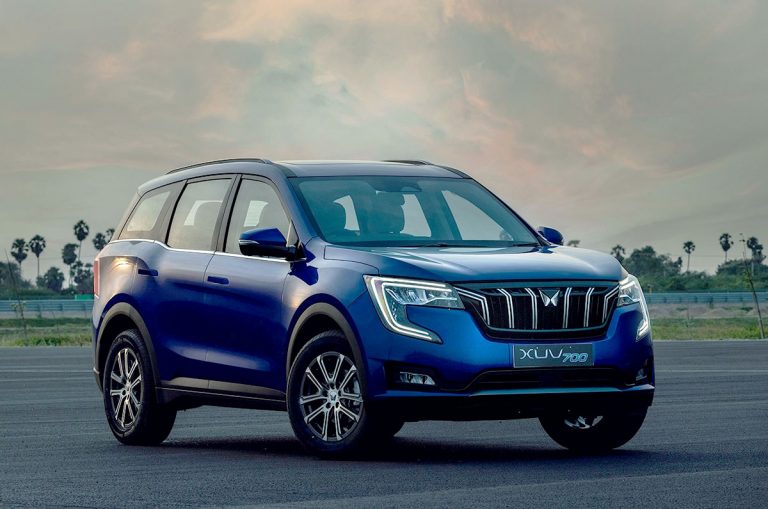
Mahindra XUV700 and Scorpio-N launched in South Africa


With the launch of the Mahindra Scorpio-N in the country, the Indian carmaker also revealed the Scorpio-N and the XUV700 in South Africa. To be manufactured in India and exported to several global markets, both the SUVs will soon be launched internationally.

Mahindra XUV700

The Mahindra XUV700 made its debut in India last year in August. Available at a starting price of Rs 13.18 lakh (ex-showroom), XUV700 can be broadly had in MX and AX trims. It is offered in 2.0-litre petrol and 2.2-litre diesel engines with both manual and automatic transmissions. However, the four-wheel-drive setup is limited to the diesel automatic version. Presently, the XUV700 commands a waiting period of over one year, owing to the high demand and supply shortage of semiconductors. Here’s our detailed review of the Mahindra XUV700.

Mahindra Scorpio-N

Coming to the newly launched Scorpio-N, the new generation model looks entirely new, gets a thoroughly revamped cabin, more tech, and added safety features with petrol and all-wheel-drive options. Available at a starting price of Rs 11.99 lakh (ex-showroom) across five variants, here are the variant-wise features and prices of all manual variants.
The ex-showroom prices of the automatic and 4×4 variants will be revealed on 21 July while the bookings for the SUV will open on 30 July. Here’s our first-drive review of the new Mahindra Scorpio-N.

KenGen to import electric cars after installing charging station


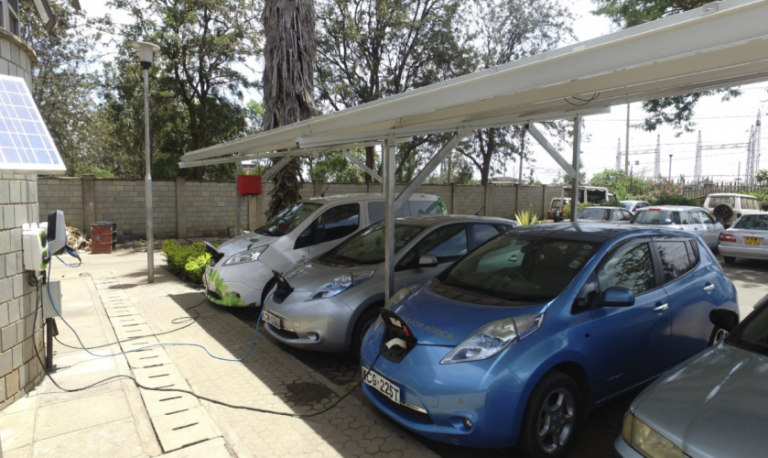
Kenya Electricity Generating Company (KenGen) has installed an electric vehicle charging station in Nairobi as the State agency joins other actors steering the push for e-mobility.

Catherine Nyambala, an engineer at KenGen, said the power producer will in the coming days import electric cars to test the station and help with data that is key to boosting policy legislation for e-mobility.

The revelation comes barely a month after Kenya rolled out the first electric bus as the shift to e-mobility gathers pace. E-mobility is a critical plank in the global push to reduce pollution through the use of clean-powered vehicles that will significantly cut the reliance on diesel and super.

“At KenGen, we have an electric vehicle charging station already installed and soon we are bringing in the electric vehicles to help in data collection for e-mobility,” Mrs Nyambala said during a panel discussion at the Sustainable Energy Conference held last week.

“E-mobility is the fastest way that as a country we are going to do the transition because of displacement of fuel.”

Kenyan electric vehicle start-up BasiGo introduced a Sh5 million passenger electric bus in March in anticipation of increased demand for environmentally friendly transport. The 25-seater bus is designed by the world’s largest manufacturer of electric buses BYD Automotive and has a 250-kilometre range with a recharging period of fewer than four hours.

Kenya Power said that it has enough power to charge electric vehicles. It said that has enough electricity to charge 50,000 buses and two million motorcycles during off-peak hours.

Dangote Refinery can curb Nigeria’s petrol import and scarcity crises


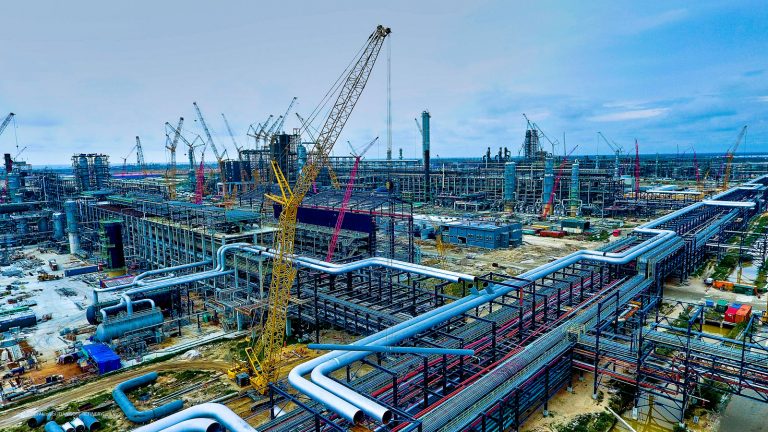
The coming on stream of the 650,000 barrels-per-day Dangote Petroleum Refinery is expected to curb Nigeria’s petrol import and scarcity crises, according to a new report. The report by Chapel Hill Denham titled “Dangote Refinery can provide the needed breather for Nigeria’s public finances” revealed that the Dangote refinery, when completed, will be the largest in Africa, surpassing the Skikda refinery in Algeria (366kb/d capacity) and Nigeria’s current largest refinery, the Port Harcourt Refinery (210kb/d capacity).

According to the report, the refinery will offer a ray of hope amid the recent fuel crises, which have been made worse by the FGN’s failure to refine even a drop of crude oil locally, Nairametrics reported.

Chapel Hill Denham explained that Nigeria is still largely dependent on imported fuel despite having four refineries with a combined capacity of 445 kb/d. However, at full operation, the Dangote refinery is expected to generate up to 66 million litres of PMS, ATK, AGO, HHK, slurry, and other petroleum products with a capability to refine 650 kb/d of crude.

“We believe change is imminent, with the Dangote Refinery looking to begin operation towards the twilight of 2023. If fully utilised, we believe the refinery can redefine Nigeria’s domestic production of white products(petrol, Automotive Gasoline Oil, AGO and Dual Purpose Kerosene, DPK) and potentially turn the country into a net exporter.” the report added.

Despite the great expectation that the refinery will somehow curb Nigeria’s petrol import and scarcity crises and boost economic growth, economic experts in the country remain conservative about the refinery’s prospects.

According to economists at Business Day, the estimates of the economic impact if the refinery starts this year will produce only 10 per cent of its capacity, and 20 per cent next year. It will only achieve full capacity after 2025, and under these assumptions, the refinery’s addition to growth measured by GDP is more likely to be 0.1 and 0.4 per cent in 2022 and 2023, respectively.

On his part, the President of Dangote Group, Aliko Dangote, said that the refinery can meet 100 per cent of the Nigerian requirement for all liquid products such as gasoline, diesel, kerosene and aviation jet. It will also have a surplus of each of these products for export.

He disclosed that after completion of all the projects, it would have the capacity to generate over 280 000 direct and indirect jobs.

Fidelity Bank signs MoU with Autochek Africa to complement its Auto Loan Package


Fidelity Bank Ghana has signed a memorandum of understanding with Autochek Africa, an automotive technology company, to complement its Auto Loan Package. According to Divisional Director for Retail Banking, Nana Esi Idun-Arkhurst, her outfit seeks to form partnerships that will create convenience for customers.

“Indeed one of our key strategies for employee banking business, is to provide innovative, customised and simplified lending solutions to customers to enable them to meet their everyday needs and this undertaking fits perfectly into this strategy, “she said.

“We have already signed partnerships with automobile vendors who deal with brand new vehicles. Consequently, this partnership creates a wider range of choices for our customers as Autochek presents us with opportunities in the second-hand market and also comes with a well-structured platform which provides easy access to our customers,” she added.

Country Manager for Autochek, Ayodeji Olabisi emphasised that the company conducts a thorough investigation of their car dealers before partnering with them.

He further explained, “once you see a vehicle on our platform and apply, we require basic information like age, where you live, Ghana card, utility bills and bank statement”.

Acting Director for Personal Banking at Fidelity Bank, Harold Ansa said customers who sign up for the package get to enjoy some promotional rates.

“Fidelity Bank with this partnership with Autochek, we’re offering some promotional rates for our customers. From now till August, we’ll do the auto loans for customers at our promotional rates when they visit any of our agents or branches. No strenuous requirements to qualify for this. Howbeit, you need to fill a form and download the Autochek app,” he said.

Why passenger cars remain the most prominent vehicle in the EV battery market


By Aditi Basu

Africa is one of the top countries undergoing a major transition in the vehicle segment. The major shift from traditional cars to electric battery-powered vehicles has been an impressive and a major one. This dramatic inclination is a result of increased awareness of environmental issues and the need to fulfil greener ambitions set by African economies. Future Market Insights projects the electric vehicle battery market to surpass nearly $13 billion in 2027, likely to grow at a CAGR of 8.5%.

Electric vehicles are highly dependent on the strength-to-weight ratio to perform efficiently on the road. Along with this, the increasing dependency on passenger cars for daily travel and commute along with the penetration of plug-in hybrid electric cars is playing a crucial role in the rapid adoption of the same. In this article, we will look at why passenger cars remain the most prominent vehicle type in the electric vehicle battery market.

Environment-friendly initiatives by the African government to add immense growth 

The adoption of electric passenger vehicles in Africa has grown gradually over the years owing to the initiatives launched by African governments. They are increasingly investing in research and development activities to cater to environmental issues, taking charge of spreading awareness of vehicle electrification. They are doing this by pointing out the positive impacts on climate change driven by a global tide in the use of electric vehicles (EVs).

Aditi Basu, the Marketing Head at Future Market Insights (FMI), an ESOMAR-certified market research and consulting Market Research Company.

African economies like Ghana and Kenya are aiming toward high development and growth by the end of 2030. Even if the target is met halfway, the overall automotive market in the regions is anticipated to grow at a tremendous pace. The Automobile Association of Zimbabwe, along with the other members of the African Council of Touring and Automobile Clubs, revealed that the unregulated importing of cars in many African countries has a negative impact on the continent’s environment, health, society and economy.

Additionally, there are a varied number of reasons why people and organisations from Africa are choosing to invest in electric vehicle-powered passenger cars rather than traditional passenger cars. In 2021, the UN Environment Programme (UNEP), along with the global electric facility, announced its plans to help South Africa to shift to zero-emission electric mobility. Through this partnership, the programme will focus on building electric charging stations, cutting down on production and manufacturing costs and offering affordable plug-in hybrid electric cars. This, in turn, is expected to drive the sales of electric battery-powered passenger cars.

Furthermore, the uYilo eMobility programme was awarded funding within the Smart Energy Solutions for Africa project. The project started in October 2021 and will run till September 2025. Through this programme, Africa’s electric mobility solutions along with repurposing batteries utilised in electric vehicles will be extended. This, in turn, will drive the growth of passenger vehicles in the region.

Looking at the current scenario, Africa is dealing with the major issue of combating pollution. Thus, to penetrate the market, manufacturers of electric passenger vehicles are launching and introducing initiatives, driving the growth the same.

Increasing the prices of fossil fuels to make a difference in the market 

According to sources, Sub-Saharan African (SSA) countries are looking for alternative energy sources for reducing the growing burden of fuel dependency by leveraging their abundant renewable energy resources. Electric Vehicles (EVs), powered by batteries, offer a potential solution to such problems. Furthermore, there are many reasons why the increasing prices of fossil fuels are making difference in the whole market scenario.

Africa’s transport facilities are mostly fuel-based which has led to the creation of a financial burden on citizens and a fiscal burden on economies. Secondly, the demand for electricity in the region is projected to increase fourfold by the end of 2040. To cater to the demand, African countries are optimally utilising their available resources and putting them to use in the passenger vehicle segment.

As the African region shifts its focus toward more cutting-edge technologies and forms strategic collaborations with automotive OEMs, the electric vehicle battery market will have brighter prospects. Mounting environmental concerns such as global warming and rising pollution levels have prompted manufacturers to propose alternative energy sources to power vehicles.

Top players venturing into the African market of EV passenger cars

Most of the top automakers based out of Africa are concerned about educating consumers and changing their perception of the benefits of vehicle electrification. They are doing this by offering them the chance to experience the enhanced performance of electric vehicles. For instance, in October 2021, Electric vehicle company Tesla deployed its first two Supercharger stations in Morocco, marking its first entry into the African market. Supercharger stations are generally the first step toward Tesla entering a new market, reports Electrek. The electric vehicle company has opened new stations at the Onomo Hotel in Casablanca and the Al Houara Resort and Spa in Tangier.

In February 2022, Agilitee Africa, one of the leading South Africa-based Electric Vehicles manufacturers, launched its first self-charging four-wheeler electric vehicle named the Agility-Go. The car has a travel range that can cover 300km if fully charged and also self-charges, 1100p HD Reverse Camera with a large central screen, sensitive and quick response combined hydraulic brakes, Front & Rear impact guard with side protection for all occupants, Bluetooth hands-free calls, child lock Hill-Start assist control (HAC) and Automatic Gear.

Conclusion

Across the globe, the electric vehicle battery market is expanding at a breakneck pace. As a result of the increased demand for EVs, major vehicle manufacturers are entering the African market, which is ultimately expected to stimulate demand for EV batteries in the long run. Future market insights project the demand for stored electricity-based EV batteries to gain significant traction, attributed to the fact that electric vehicles for travelling larger distances are acquiring popularity.

Over the years, a massive amount of transformation is happening in the African automotive industry. The players in the region are optimising as per the need and looking forward to making smart decisions necessary to achieve e-mobility. Looking at the way momentum is building, Africa is projected to adapt to newer technologies and change with time.

Ghana’s brand-new home of the Navara to start ramping up production


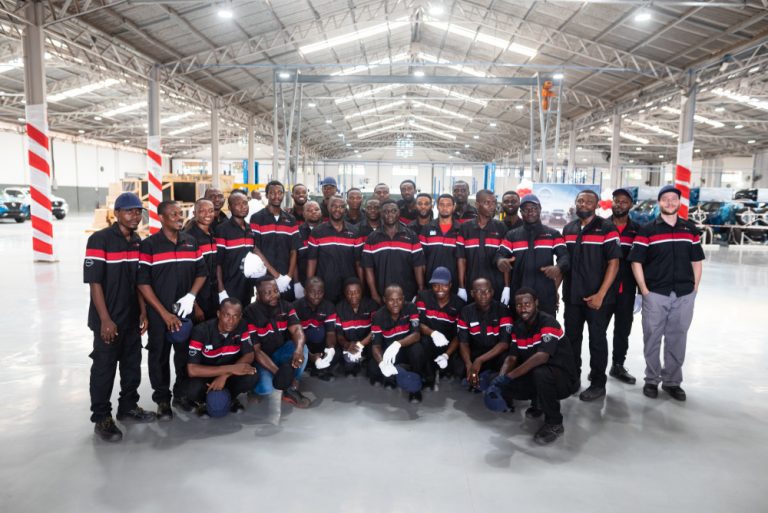
Japan Motors brand new state-of-the-art automotive assembly plant has assembled 156 units since officially starting production at the end of March this year, 100 of which have gone straight to the local market for sale.The plant, the most technically advanced assembly facility in West Africa, officially began assembly of the all new built of more Nissan Navara at the end of March following a gala opening of the facility by the President of Ghana, HE Nana Addo Danquah Akufo-Addo.

Now it is able to start increasing production to meet market demand after getting the final greenlight from Nissan’s commissioning engineers who certified that the Ghanaian technical team had achieved the final quality and production milestones that had been set following the official start of production.

“It was a highly successful, though emotional, moment for the Ghanaian team,” Japan Motors assistant managing director Mohammed Byrouthy, who has personally overseen the project literally from the ground up.

The final approval is the culmination of an intense almost four-year process that began with the signing of a memorandum of understanding between the Government of Ghana and Nissan in 2018, followed by the selection of Japan Motors in 2020 as the approved partner and then 17 months later the official commissioning of the plant.

The all new Navara is unique in that it is the toughest vehicle ever designed by Nissan engineers in Japan. As Hide Kuwayama, Nissan’s Independent Markets Africa director for Sales, explains; the Navara has been designed specifically for the severest road conditions in Africa.

“This vehicle hasn’t just ben tropicalised, it has a reinforced chassis, with extra lateral and torsion bars; its suspension is tougher and the roll over angle is the very best in the market. It is one of the safest vehicles in its class and exceeds the safety standards in all international markets in which it is sold,” he says.

“The Nissan Navara that is produced in Tema, Ghana, is precisely the same as the one manufactured in Rosslyn, South Africa. It is safe and technologically advanced bearing a suite of Nissan Intelligent Mobility features that enhance the driving experience like hill descent control, electronic brakeforce distribution, vehicle dynamic control, front and rear SRS airbags, a reversing camera and parking sensors, among so much more.

“When you buy a Nissan Navara from Japan Motors, you are buying more than a phenomenal vehicle, you’re buying peace of mind in every regard – and that’s priceless,” says Kuwayama.

But there’s also the added benefit of supporting the local automotive industry, creating jobs, paying taxes and earning valuable foreign exchange when these vehicles are ultimately exported for sale across the region. The plant, says Nissan Africa managing director Mike Whitfield, is proof of the fantastic public private partnership between the government of Ghana, Japan Motors and Nissan Africa.

“It’s a flagship project, not just for Nissan, but for Africa; a symbol of so much that can be achieved if we have the same sense of purpose and commitment.”

TRADE X Opens New Office in Lagos, Nigeria to Accommodate Growing Automotive Demand in Africa’s Largest Economy


TRADE X, a B2B cross-border automotive trading platform based in Ontario, Canada, has announced that it has opened a new office in Lagos, Nigeria, to help meet the growing demand for vehicles in Nigeria, now the largest economy in Africa.

TRADE X Nigeria will make vehicle purchasing and importation easier for Nigerian automotive dealers purchasing vehicles from suppliers in North AmericaEurope, and Asia by providing African dealers a wider range of vehicle accessibility that would have otherwise been difficult to obtain.

Damilola Thompson, the Emerging Market Lead for TRADE X, will oversee the new Lagos location, which will open a key automotive trade corridor between North AmericaEurope, and Asia to Nigeria, where vehicle demand far outweighs supply. As a primarily middle-income, mixed economy and emerging market, Nigeria has experienced rapid growth, with expectations that the country will double its population by 2050. The explosive population growth, combined with the upwardly trending national economy, puts local vehicle demand at unprecedented highs. The opening of TRADE X Nigeria is an important milestone in TRADE X’s mission to make cross-border automotive trading trusted, seamless and transparent globally.

“We feel that it’s important to have an on-the-ground presence in key markets, to build relationships and establish trust with local dealers and fleet owners such as in Nigeria,” Thompson said. “Our goal is to create a trusted, borderless marketplace where buyers and sellers have access to the largest supply of inventory to ensure they are getting the best possible deal. The TRADE X team in Lagos is poised to revolutionize the way new and pre-owned vehicles are imported and traded in Nigeria.”

To begin the process of cross-border trading, local automotive dealers can sign up online on the tradexport.com website and can start building greater inventory for their customers.

“TRADE X Nigeria will be a game-changer for Nigerian automotive buyers and consumers,” said Olufemi Folarin, VP of Trade and Business Development at TRADE X. “With the opening of our Lagos office, we are demonstrating our deep commitment to supporting and serving the Nigerian marketplace and helping to accelerate vehicle turnover and revenue. We encourage dealers and other buyers to utilize the streamlined features the TRADE X platform offers instead of having to deal with the bureaucracy of the port and customs themselves. Not only is the process of obtaining vehicles quicker but sourcing specific inventory can also be done through the platform’s proprietary Instant Request feature, all while removing the risk dealers were previously exposed to when trading cross-border through manual means.”

Poor transparency around logistics, vehicle condition, valuation, and pricing has served as a barrier to entry in international automotive trading. In recent years, Nigerian dealers who have managed to buy vehicles from global sources have had to do so in a largely fragmented way, relying on personal contacts and managing the purchase and importation logistics themselves. Transactions were characterized by a lack of trust, visibility, and buyer/seller protection, which, in turn, limited trade.

“We are committed to making cross-border automotive trading inclusive, trusted, and seamless,” said TRADE X Executive Vice President and Chief Operating Officer Luciano Butera. “With the addition of the Lagos office, we are helping to forge long-term partnerships that will be a benefit not only to buyers and sellers but to the broader Nigerian populace.”

TRADE X provides a seamless end-to-end process for the sourcing and distribution of cross-border vehicle inventory. The company’s AI-driven ‘Brain’ software provides dealers, fleet owners, and mobility solutions providers first-ever support in all aspects of vehicle trading. This includes trade financing, compliance, customs requirements, international payments processing, vehicle inspections, digital trade documentation, and homologation. TRADE X provides peace of mind and security for all users, whether they are trading within their own continent or overseas. TRADE X simplifies the experience and ensures each transaction is transparent, compliant, insured, and monitored from start to finish.

About TRADE X

With headquarters in Ontario, Canada, TRADE X is the first global vehicle marketplace to aggregate cross-border supply and demand for car dealers, fleet owners, rental companies, mobility solution providers, importers, and exporters, opening new trading corridors to buy and sell vehicles. The TRADE X ‘Brain’ platform is a machine-learning, AI-driven technology that connects buyers and sellers through a transparent marketplace that aids sellers in finding the world’s highest bidders and gives buyers access to the best vehicle source markets and price arbitrage opportunities. Users can quickly and seamlessly transact online in a secure environment with all the complexities of international trade – compliance, anti-money laundering regulations, vehicle inspection, currency exchange, digital trade documentation, payments, and financing – all managed by TRADE X. The company serves authorized buyers and sellers everywhere with a user-friendly app available 24/7 via mobile, tablet, or desktop. TRADE X’s largest investors include Aimia Inc., a publicly traded holding company listed on the Toronto Stock Exchange (TSX: AIM).

Toyota Glanza based Starlet rally car unveiled in South Africa


In India, the Toyota Glanza and the Maruti Baleno might be the prime faces of the premium B-segment hatchback race and today showcase what we can expect in our smaller cars in the future. Toyota Gazoo racing of South Africa feels a bit differently and has decided to take the hatchback rallying and have thus created the Starlet rally car.

The headline figures for this rally car are a 2.0-litre turbocharged petrol engine with AWD and a sequential gearbox. The engine is a major step up from the 1.4-litre NA petrol sold in the South African market. The turbo engine, in its most powerful guise, produces 261bhp/324Nm and we suspect that this rally car produces quite a bit more. Obviously, the brakes and suspension have been updated to cope with the punishment meted out to the car during the course of rallying.

The rally-spec Starlet made its debut in the hands of Former South African National Rally champions, Guy Botterill and co-driver Simon Vacy-Lyle at the Cape Overberg Rally but had to retire due to technical issues. They will continue their campaign at the Secunda Rally on the weekend of 10 June to 12 June.

When Toyota adapted the Baleno in 2019, it decided to revive some of its classic small car monikers which include the Glanza and Starlet to sell the hatchbacks in various markets.

- Advertisement -