

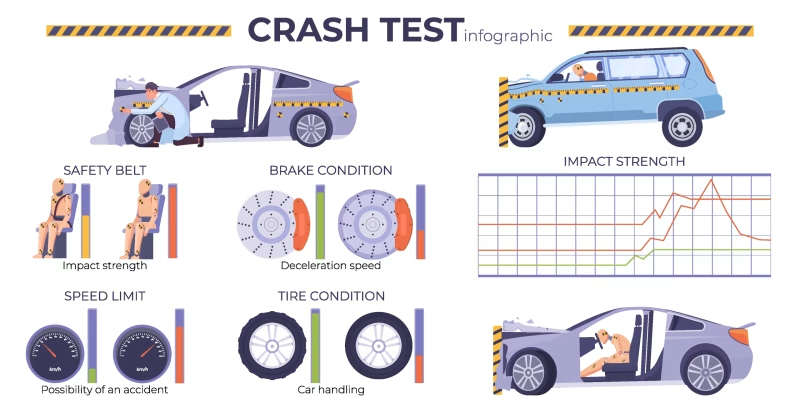
Buying a vehicle involves more than comparing price, fuel economy, styling, or performance. Safety should be one of the most important factors in every purchasing decision. Fortunately, crash test ratings provide buyers with reliable information about how well a vehicle protects its occupants during a collision.
As vehicle technology continues to advance, modern passenger cars include sophisticated safety systems that significantly reduce the risk of injury. However, not every vehicle delivers the same level of protection. Understanding crash test ratings allows consumers to compare vehicles objectively and make informed decisions based on proven safety performance rather than marketing claims.
For African buyers, where road conditions, traffic density, and accident rates vary widely, selecting a vehicle with strong crash protection has become increasingly important.
Why Crash Test Ratings Matter
Road traffic accidents remain a major public safety concern worldwide. While responsible driving reduces risk, accidents cannot always be avoided. When a collision occurs, the vehicle’s design often determines how effectively it protects its occupants.
Crash test ratings evaluate how a vehicle performs under controlled collision conditions. Independent safety organizations assess structural integrity, occupant protection, child safety, pedestrian protection, and the effectiveness of active safety technologies. These evaluations help buyers understand which vehicles offer the highest levels of protection before making a financial commitment. Choosing a vehicle with excellent crash performance not only improves personal safety but can also lower long-term repair costs and enhance resale value.
How Crash Testing Works
Crash testing recreates real-world accident scenarios using carefully controlled laboratory conditions. Engineers place sophisticated crash test dummies inside the vehicle. These dummies contain sensors that measure the forces acting on different parts of the body during impact.
Vehicles undergo several different collision tests, including:
- Frontal offset collisions
- Full frontal impacts
- Side-impact crashes
- Side pole impacts
- Rear-impact evaluations
- Rollover resistance assessments
Engineers also examine how well the passenger compartment maintains its structural integrity, how airbags deploy, and how seatbelts restrain occupants during a crash. The results provide valuable insight into a vehicle’s ability to reduce serious injuries.
Understanding Safety Ratings
Many crash-testing organizations use star ratings or numerical scoring systems to simplify comparisons. Generally, higher ratings indicate better protection during various crash scenarios. However, buyers should look beyond the overall score.
Some vehicles perform exceptionally well in frontal impacts but achieve lower scores in side-impact protection or pedestrian safety. Others may offer excellent occupant protection while lacking advanced driver assistance technologies. Reviewing the detailed results gives buyers a more complete picture of a vehicle’s overall safety performance.
Active Safety Is Becoming Just as Important
Modern vehicles increasingly focus on preventing accidents before they happen. Advanced Driver Assistance Systems (ADAS) have become a major factor in crash test evaluations.
These technologies include:
- Autonomous Emergency Braking (AEB)
- Lane Keeping Assist
- Blind Spot Monitoring
- Adaptive Cruise Control
- Driver Attention Monitoring
- Rear Cross-Traffic Alert
- Traffic Sign Recognition
Vehicles equipped with these systems often achieve higher safety ratings because they help prevent collisions before they occur. For fleet operators, these technologies also reduce downtime, repair costs, and insurance claims.
Structural Design Saves Lives
One of the most important aspects of crash performance is vehicle structure. Modern passenger cars use carefully engineered crumple zones that absorb crash energy before it reaches occupants. At the same time, reinforced passenger safety cells maintain cabin integrity during severe impacts.
High-strength steel, advanced aluminium alloys, and composite materials strengthen vehicle structures while reducing overall weight. These engineering improvements allow manufacturers to enhance safety without sacrificing fuel efficiency.
Child and Pedestrian Safety Receive Greater Attention
Crash testing now extends beyond protecting vehicle occupants. Many assessment programs evaluate child restraint performance using child crash test dummies installed in approved safety seats. Pedestrian protection has also become increasingly important.
Manufacturers now design bonnets, bumpers, and front-end structures to reduce injuries if a pedestrian is struck. Several modern vehicles even deploy active bonnet systems that lift slightly during impact to create additional space between the bonnet and hard engine components.
Why African Buyers Should Pay Close Attention
Africa imports millions of new and used vehicles every year. While many imported vehicles offer excellent safety, others were originally built for markets with less demanding safety requirements. Buyers should verify that the specific model they intend to purchase has been independently crash tested rather than assuming every version offers the same level of protection.
They should also confirm whether locally available models include the same airbags, stability control systems, and driver assistance features offered in other regions. Understanding these differences helps consumers avoid purchasing vehicles with reduced safety specifications.
Safety Features Cannot Replace Responsible Driving
Even the safest vehicle cannot eliminate every risk. Crash test ratings evaluate how well a vehicle protects occupants during an accident, but safe driving remains the first line of defence. Regular maintenance is equally important.
Tyres, brakes, suspension components, lighting systems, and seatbelts must remain in excellent condition to perform effectively when needed. Drivers should also ensure airbags have never been improperly repaired following previous collisions. Ultimately, vehicle safety depends on both advanced engineering and responsible ownership.
A Safer Investment for the Future
Consumers are becoming increasingly informed about vehicle safety. Manufacturers are responding by investing heavily in stronger vehicle structures, smarter safety technologies, and more comprehensive crash protection. These innovations not only save lives but also improve insurance outcomes, reduce repair costs, and strengthen consumer confidence.
For African markets, where vehicle ownership continues to grow, greater awareness of crash test ratings can contribute to safer roads and better purchasing decisions. Before choosing your next vehicle, take time to review its crash performance, safety technologies, and occupant protection results. A vehicle with a higher crash rating may cost slightly more initially, but the protection it provides during an emergency can prove invaluable.
Making safety a priority is one of the smartest investments any vehicle buyer can make. A well-designed vehicle protects not only the driver but also passengers, pedestrians, and other road users. As vehicle technology continues to evolve, crash test ratings will remain one of the most reliable tools for comparing safety performance and making informed purchasing decisions. Choosing a safer vehicle today can help protect lives on every journey.
For independent information on vehicle safety assessments and crash testing, explore the resources provided by the Global NCAP, which promotes safer vehicles through internationally recognized crash test programs.
More Insights:
Car Safety: Where Do We Stand with the Technology Evolution?
Top 10 Innovations in Car Safety Technology
Common Sense About Safe Driving
Self-Driving Car Crash: Who Is Liable?

