

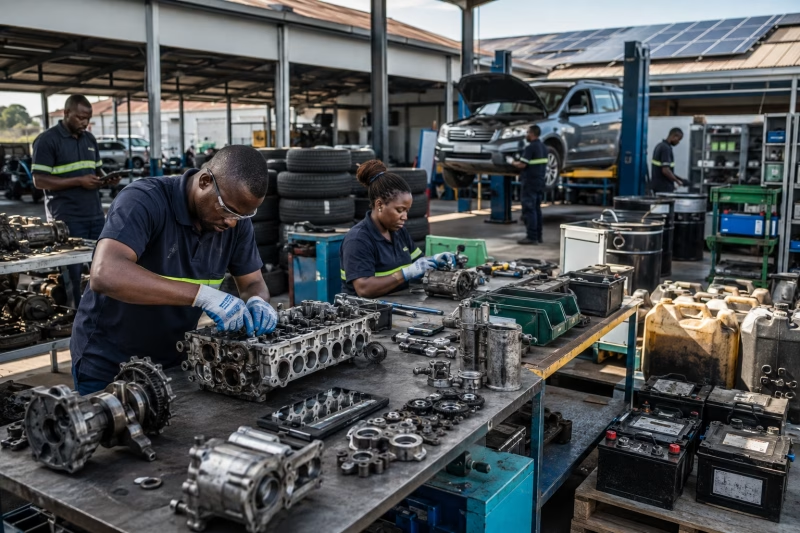
For years, sustainability in the automotive aftermarket was often treated as a compliance issue. Businesses focused on waste disposal, environmental requirements and basic regulatory obligations while keeping their attention firmly on sales, margins and operational efficiency. That approach is changing.
Across Africa, aftermarket businesses are operating in a market where vehicles remain on the road for longer, replacement parts are in high demand, workshops face rising operating costs, and customers are becoming more conscious of quality, value and environmental impact. Africa’s automotive aftermarket is already evolving from a traditional maintenance-driven sector into a more technology- and innovation-led ecosystem.
The opportunity is therefore bigger than simply complying with environmental requirements. Sustainability can help aftermarket businesses reduce waste, improve resource efficiency, strengthen customer trust and create new revenue opportunities. The key question is: How can aftermarket businesses improve sustainability while maintaining profitability and operational efficiency?
Sustainability Is Becoming a Business Issue
The aftermarket handles significant volumes of materials through vehicle servicing, repair and maintenance. Used oils, batteries, tyres, metal components, plastics, filters, packaging and damaged parts can all become waste if businesses do not manage them properly. At the same time, Africa’s ageing vehicle fleet creates an important opportunity. Keeping an existing vehicle safely operational through maintenance, repair, refurbishment and component replacement can extend its useful life and reduce the need for premature vehicle replacement.
Research on Africa’s used-vehicle and automotive sector shows that repair, refurbishment, reuse, repurposing and remanufacturing are already part of the circular-economy landscape in parts of the continent. That means circularity is not entirely new to the African aftermarket. The opportunity now is to make these practices more organized, measurable and commercially valuable.
Waste Can Become a Cost-Control Opportunity
Waste management is one of the most practical areas for an aftermarket business to address first. Used engine oil should be collected and handled through appropriate channels rather than discarded improperly. Batteries, tyres, metal components and other materials should also be separated so that recoverable resources do not end up mixed with general waste. Better segregation can reduce disposal costs while creating opportunities to recover materials.
Workshops can establish dedicated collection points for used oil, batteries, tyres, scrap metal, damaged components and packaging. They can then work with reputable recyclers and authorized waste-management providers. This approach turns sustainability from an abstract environmental objective into a practical operational process.
Remanufacturing and Reuse Can Create Value
One of the biggest opportunities lies in extending the useful life of components. Not every removed automotive component needs to become waste. Depending on its condition and application, a component may be suitable for refurbishment, remanufacturing, repair or reuse.
This can be particularly relevant in Africa, where vehicle owners and fleet operators often face pressure to control repair costs while keeping vehicles operational. The Ellen MacArthur Foundation has highlighted automotive remanufacturing and refurbishment as opportunities to improve material management, recover resources and reduce pollution in Africa.
However, sustainability should never mean compromising safety. Businesses must establish proper inspection, testing, traceability and quality-control procedures before returning used or refurbished components to service.
Parts Selection Can Influence Sustainability
Sustainability also begins before a part is installed. Aftermarket distributors and workshops can consider factors such as product durability, repairability, packaging, material composition, expected service life and end-of-life recovery when selecting suppliers.
A component that lasts longer can reduce replacement frequency, material consumption, labour requirements and vehicle downtime. This does not mean businesses should automatically choose the most expensive product. Instead, they should evaluate total lifecycle value.
A low-cost component that fails prematurely can create additional material consumption, labour costs, vehicle downtime and customer dissatisfaction. A more durable product may deliver better economic and environmental performance over its service life.
Digitalization Can Reduce Waste
Technology can strengthen sustainability without necessarily increasing complexity. Digital inventory systems can help distributors and workshops identify slow-moving stock, avoid unnecessary purchasing and reduce obsolete inventory. Digital service records can also help businesses understand component performance and identify recurring failures.
Workshop-management systems can improve scheduling, reducing unnecessary vehicle movements and idle time. Digital inspections can reduce paper use while giving customers clearer information about repairs. For aftermarket businesses, sustainability and digitalization can therefore reinforce each other.
Tyres, Batteries and Lubricants Need Special Attention
Certain aftermarket products deserve particular focus because of their environmental and resource implications. Tyres can be inspected for suitability for retreading or other recovery routes. Batteries contain valuable materials but also require responsible handling because of their chemical composition. Lubricants must be collected and managed appropriately to prevent environmental contamination.
Businesses can also work with suppliers to establish take-back programs. For example, a distributor selling batteries or lubricants could create a structured collection system for used products. This can strengthen customer relationships while creating a more controlled material-recovery process.
Global Regulation Is Raising the Bar
African aftermarket businesses should also pay attention to regulatory developments beyond their immediate markets. The European Union has adopted new vehicle-circularity rules covering vehicle design, recycled content, reuse, remanufacturing, recycling and end-of-life vehicle management.
The new framework also strengthens requirements around dismantling, traceability, material recovery and access to information needed for removing and replacing components, while placing greater emphasis on reuse, remanufacturing and refurbishment across the vehicle lifecycle. These requirements apply to the EU market, not automatically to African aftermarket businesses. However, they illustrate the direction in which the global automotive industry is moving. African suppliers that serve multinational customers or international supply chains may increasingly need to demonstrate stronger environmental and traceability practices.
Sustainability Must Protect Profitability
The biggest mistake is to treat sustainability as a programme that sits separately from the business. Instead, aftermarket companies should connect sustainability to measurable commercial objectives.
Track:
- Waste generated per workshop or branch
- Used oil and battery recovery
- Parts returned or refurbished
- Inventory losses and obsolete stock
- Energy and water consumption
- Packaging use
- Component failure rates
- Transport efficiency
- Cost savings from resource recovery
Once sustainability becomes measurable, management can identify where environmental improvements also produce financial benefits.
What Can African Aftermarket Businesses Do Now?
Start with practical measures rather than expensive transformation programs.
First, measure waste. You cannot reduce what you do not understand.
Second, separate materials. Establish clear collection and storage procedures.
Third, evaluate suppliers. Consider durability, packaging, traceability and end-of-life options.
Fourth, strengthen refurbishment and remanufacturing. Develop quality-control procedures so that suitable components can safely remain in circulation.
Fifth, digitize inventory and service records. Better information can reduce waste and improve operational efficiency.
Sixth, train employees. Sustainability only works when technicians, warehouse teams and managers understand their responsibilities.
Finally, communicate the results. Customers increasingly want evidence rather than generic environmental claims.
From Compliance to Competitive Advantage
The future of sustainability in the automotive aftermarket is not simply about meeting environmental requirements. It is about building a more efficient business. For African aftermarket companies, the opportunity is particularly significant because the sector already operates around repair, reuse, refurbishment and extending vehicle life. Research into premature end-of-life vehicles in Nairobi also highlights the environmental and sustainability challenges created when vehicles reach end of life without sufficiently robust management systems.
The businesses that recognize this shift early can turn sustainability into something much more valuable than a compliance exercise. They can use it to reduce waste, control costs, improve resource efficiency, strengthen customer confidence and develop new circular-business opportunities. The competitive aftermarket of the future will not simply sell more parts. It will find better ways to use, recover, repair, reuse and extend the value of every part it sells.
More Insights:
How Sustainability is Shaping the Tire Industry
Why Engine Health Directly Impacts Profitability
Greener Lubricants and Sustainable Parts
The Tyre Recycling Opportunity in Africa

