

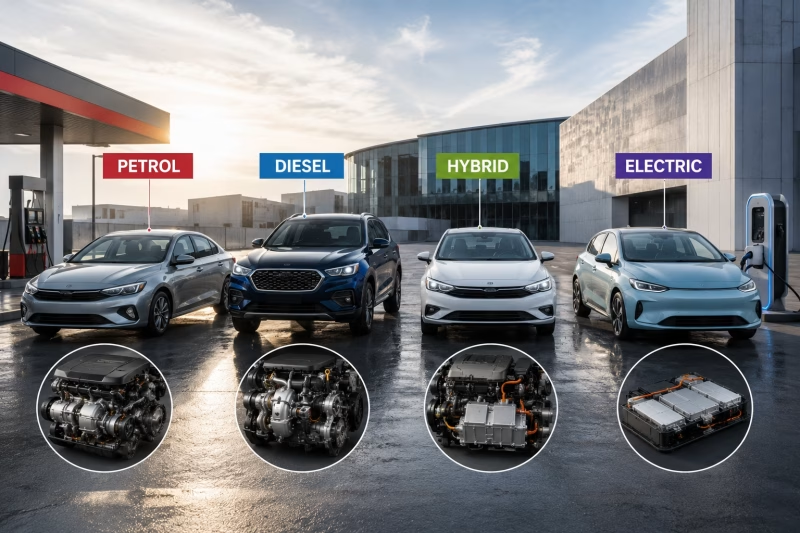
Choosing a new vehicle has become more complicated than ever. Buyers no longer choose only between brands or body styles. They must also decide which powertrain best suits their lifestyle, budget, and driving needs. Petrol, diesel, hybrid, and electric vehicles each offer distinct advantages and challenges, making the decision more important than ever.
There is no single solution that fits every driver. The right choice depends on how far you travel, where you drive, fuel and electricity availability, maintenance costs, and your long-term ownership plans. For African motorists, additional considerations include road infrastructure, fuel quality, charging availability, and climate conditions. Understanding the strengths and limitations of each technology will help you make a smarter investment.
Petrol Vehicles Remain the Most Versatile
Petrol-powered vehicles remain the most common choice in many passenger car markets because they offer affordability, reliability, and widespread fuel availability. Modern petrol engines are quieter than diesel engines, deliver smooth acceleration, and generally cost less to purchase. They also require less complex emissions-control equipment, which often translates into lower maintenance costs.
Petrol vehicles are particularly suitable for urban commuters, occasional long-distance travellers, and families seeking dependable everyday transportation. However, petrol engines typically consume more fuel than comparable diesel models during long-distance driving and produce higher carbon dioxide emissions than hybrid and electric alternatives. For buyers looking for a balance between affordability and convenience, petrol vehicles remain a practical choice.
Diesel Still Makes Sense for High Mileage
Although diesel vehicles have become less popular in some global markets, they continue to offer important advantages for many drivers. Diesel engines produce high torque at lower engine speeds, making them ideal for towing, commercial transport, and long-distance driving. They also provide better fuel economy than petrol engines, particularly when travelling long distances at consistent speeds.
Fleet operators, logistics companies, agricultural businesses, and frequent intercity travellers often benefit from diesel’s efficiency and durability. However, modern diesel engines rely on sophisticated emissions-control technologies, including diesel particulate filters (DPFs) and selective catalytic reduction (SCR) systems. These components require proper maintenance and may increase servicing costs. For drivers covering relatively short urban journeys, diesel may not always be the most economical option.
Hybrid Vehicles Offer the Best of Both Worlds
Hybrid vehicles combine an internal combustion engine with an electric motor to improve efficiency and reduce fuel consumption. Unlike fully electric vehicles, conventional hybrids recharge their batteries automatically through regenerative braking and the petrol engine. Drivers do not need external charging infrastructure. Hybrids perform exceptionally well in stop-and-go traffic, where the electric motor frequently powers the vehicle at lower speeds. This significantly improves fuel efficiency and reduces emissions, particularly in urban traffic.
For many African cities experiencing increasing traffic congestion, hybrid technology offers a practical solution that requires no major changes in driving habits. Although hybrids usually cost more than comparable petrol vehicles, lower fuel consumption often offsets the higher purchase price over time.
Electric Vehicles Are Transforming Mobility
Electric vehicles represent the biggest technological shift in the automotive industry. Powered entirely by rechargeable batteries, EVs produce zero tailpipe emissions, operate quietly, and deliver instant acceleration. They also contain fewer moving mechanical components, reducing routine maintenance requirements.
As battery technology continues to improve, vehicle range continues to increase while charging times become shorter. Governments worldwide are supporting EV adoption through incentives, charging infrastructure investments, and stricter emissions regulations.
Several African countries are also encouraging electric mobility through tax incentives and renewable energy initiatives. However, charging infrastructure remains uneven across much of the continent. Long-distance travel may still require careful route planning because charging availability and electricity reliability vary across regions. For buyers with reliable home or workplace charging, electric vehicles can offer significantly lower operating costs.
Running Costs Matter More Than Purchase Price
Many buyers focus primarily on the purchase price. However, total cost of ownership often tells a different story. Fuel consumption, servicing, insurance, depreciation, and resale value all influence long-term ownership costs. Petrol vehicles generally have lower purchase prices but higher fuel expenses. Diesel vehicles often recover their higher purchase cost through improved fuel efficiency during high annual mileage.
Hybrids reduce fuel consumption while maintaining the convenience of conventional refueling. Electric vehicles usually have the highest upfront price but the lowest energy and maintenance costs over their lifetime. Calculating expected annual mileage helps buyers determine which option delivers the best overall value.
Infrastructure Should Influence Your Decision
Vehicle technology must match local infrastructure. Petrol and diesel refueling stations remain widely available across Africa. Hybrid vehicles rely on the same existing fuel network. Electric vehicles, however, depend on accessible charging infrastructure and reliable electricity supplies.
Buyers should carefully evaluate charging availability at home, work, and along frequently travelled routes before purchasing an EV. As charging networks continue expanding, electric vehicles will become increasingly practical across more African markets.
Environmental Impact Is Becoming More Important
Consumers increasingly consider environmental performance alongside price and reliability. Electric vehicles produce no tailpipe emissions, while hybrids significantly reduce fuel consumption and greenhouse gas emissions.
Modern petrol and diesel engines have also become cleaner through improved engine efficiency and advanced emissions-control technologies. In addition, manufacturers are reducing environmental impact by using renewable energy, recycled materials, and sustainable manufacturing processes. A vehicle’s overall environmental impact depends not only on its powertrain but also on how it is manufactured, powered, maintained, and eventually recycled.
Choose the Vehicle That Fits Your Lifestyle
No single powertrain suits every driver. Petrol vehicles remain ideal for everyday commuting and affordability. Diesel vehicles continue to excel in long-distance travel, commercial applications, and heavy-duty work. Hybrid vehicles offer an excellent balance between fuel efficiency and convenience without requiring charging infrastructure. Electric vehicles provide the lowest operating emissions and maintenance requirements where charging infrastructure is available. The smartest purchase is not necessarily the newest technology. It is the vehicle that best matches your driving patterns, operating environment, maintenance budget, and long-term ownership goals.
The Future Will Include Every Powertrain
The automotive industry is not moving toward a single technology overnight. Instead, petrol, diesel, hybrid, and electric vehicles will coexist for many years as markets transition at different speeds. For Africa, this diversity provides greater flexibility because different regions have varying infrastructure, energy resources, and mobility needs. Urban commuters may increasingly embrace hybrids and electric vehicles, while diesel will remain essential for freight transport and heavy-duty applications. Petrol vehicles will continue serving millions of private motorists, particularly where affordability and refueling convenience remain priorities.
Before making your next purchase, evaluate your daily driving distance, annual mileage, local infrastructure, servicing requirements, and long-term operating costs. Choosing the right powertrain today can reduce ownership costs, improve driving satisfaction, lower environmental impact, and ensure your vehicle continues to meet your needs as mobility technologies evolve.
For additional guidance on vehicle efficiency and cleaner transport technologies, explore the resources available from the International Energy Agency (IEA) Transport, which provides research on sustainable mobility and energy-efficient transportation.
Read More:
What to Consider When Purchasing a Used Diesel Engine Vehicle
Ireland to ban sale of new petrol vehicles by 2030

