
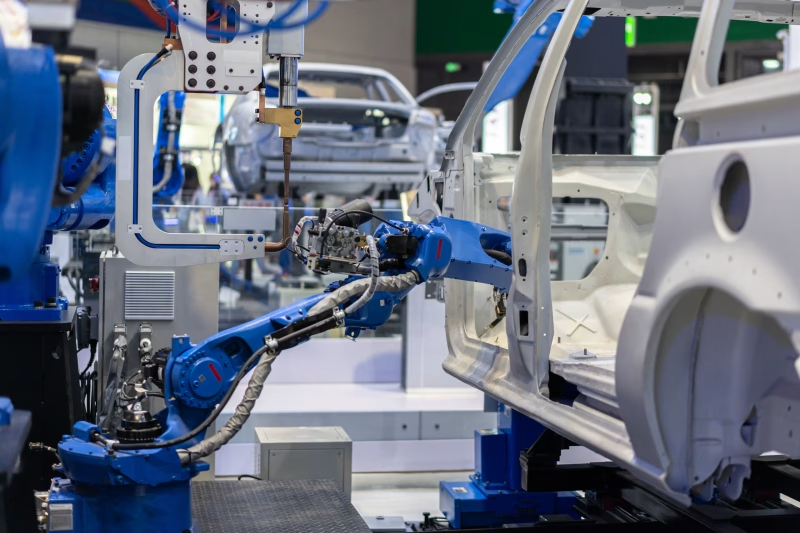
Kenya opposes a one-year delay in implementing new East African Community (EAC) rules governing motor vehicle and motorcycle assembly. Kenya argues that the postponement could slow the region’s efforts to strengthen local manufacturing and increase the use of locally produced components.
EAC Defers New Assembly Regulations
The EAC Assembling and Manufacturing of Products Regulations, 2025, were originally scheduled to take effect on 1 July 2026. The regional bloc has deferred implementation to 1 July 2027, giving partner states additional time to address operational challenges and establish a regional framework for duty remission on inputs that are not available within East Africa.
Kenya Pushes for Immediate Implementation
Kenya, however, says it is ready to implement the regulations. The country has indicated that it intends to pursue implementation through the EAC’s Variable Geometry mechanism rather than accept the delay. The country argues that the automotive localisation programme has already faced previous postponements and that manufacturers have had sufficient time to prepare.
New Rules Promote Local Manufacturing
The regulations create a harmonised framework for vehicle and motorcycle assembly across the EAC. They place greater emphasis on local content, value addition, technology transfer and the use of components produced within the region. The rules also establish different assembly levels, with higher levels requiring greater local manufacturing activity and value addition.
Implications for Kenya’s Automotive Aftermarket
The dispute has direct implications for Kenya’s automotive aftermarket. The motorcycle localisation schedule identifies components such as batteries, tyres, seats, air-cleaner filters, brake-related components, headlight stays and wire harnesses. Greater local production could create opportunities for Kenyan component manufacturers while reducing dependence on imported parts over time.
EAC Members Take Different Positions
Uganda previously raised concerns about the limited availability of locally produced parts, while Rwanda and Burundi said they needed more time for stakeholder sensitisation. Tanzania, meanwhile, indicated that it was ready to implement the rules and warned that further postponement could undermine regional industrialisation objectives.
Next Steps for EAC Implementation
The EAC has asked partner states to identify inputs and raw materials that are unavailable within the region and submit recommendations by 30 September 2026. The outcome will influence how quickly manufacturers adapt to the new localisation requirements.
For Kenya, the debate goes beyond tariffs. It raises a broader question about whether regional automotive policy can provide the certainty manufacturers, component suppliers and investors need to build a stronger East African automotive value chain.
Read More:
EAC locks out duty-free car imports from South Africa
Kenya plans to increase vehicle exports to boost automotive sector
Smart Manufacturing is the Future of Automotive Manufacturing
How to Stay Safe in Traffic

