

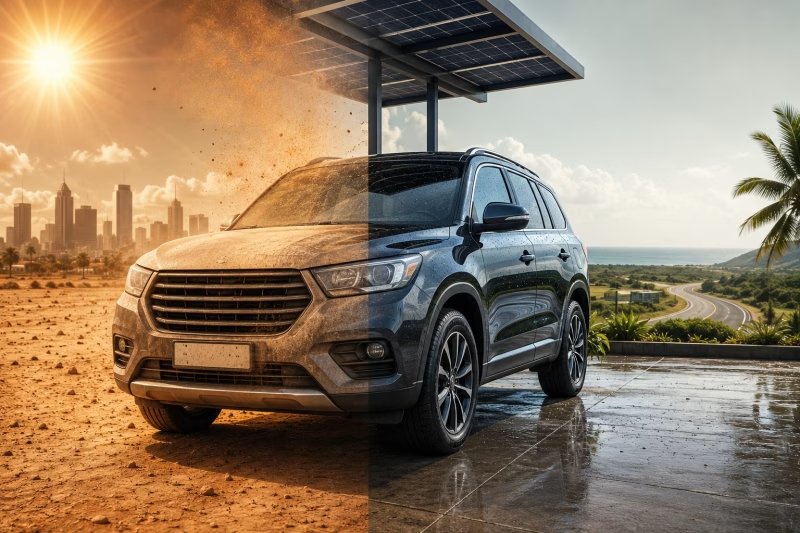
Africa’s climate presents unique challenges for vehicle owners. One of the greatest threats to a vehicle’s exterior comes from the environment itself. Intense sunlight, soaring temperatures, coastal humidity, heavy rainfall, dust storms, and airborne pollutants constantly attack a vehicle’s paintwork. Over time, these harsh conditions erode the paint’s gloss, fade its colour, and weaken the protective coating. This coating preserves a vehicle’s appearance, durability, and resale value.
For many motorists, faded paint may seem like a cosmetic issue. In reality, it often signals that the vehicle’s first line of defence against corrosion is beginning to fail. As Africa’s automotive market continues to grow, understanding how climate affects vehicle finishes has become increasingly important. This is true for consumers, fleet operators, dealerships, and automotive refinishing professionals.
Africa’s Sun Is Tougher Than Many Drivers Realise
Africa experiences some of the world’s highest levels of solar radiation. This exposes millions of vehicles to intense ultraviolet (UV) rays every day. In many regions, vehicles remain exposed to direct sunlight for hours every day, particularly where covered parking is limited. Ultraviolet (UV) rays gradually break down automotive paint by degrading the chemical bonds within the clear coat. The clear coat is the transparent protective layer that shields coloured paint beneath it. As the clear coat weakens, surfaces begin to lose their gloss. Eventually, they become dull, chalky, and faded.
Dark-coloured vehicles often show damage more quickly because they absorb greater amounts of heat. Black, navy blue, and deep red finishes can reach significantly higher surface temperatures than lighter colours. This accelerates paint oxidation and clear-coat deterioration. For commercial fleets operating throughout East, West, Southern, and North Africa, continuous UV exposure can substantially increase repainting and maintenance costs over a vehicle’s lifetime.
Heat Speeds Up Paint Ageing
Extreme heat affects far more than passenger comfort—it also accelerates the ageing of automotive paint systems. When metal body panels expand during the day and contract at night, they place microscopic stress on the paint layers. Although these changes occur gradually, years of thermal cycling can weaken adhesion between paint layers. This increases the likelihood of peeling, cracking, and blistering. Extreme heat also dries out rubber seals and plastic trim. As a result, exterior components appear older even when the vehicle remains mechanically sound.
Dust and Sand Wear Away the Finish
Across many African countries, dust is part of everyday driving. In arid and semi-arid regions, airborne sand particles constantly settle on vehicle surfaces. Many owners unknowingly worsen the damage by wiping dusty vehicles with dry cloths instead of rinsing away abrasive particles first. Dust and sand particles act like fine sandpaper, creating thousands of microscopic scratches that gradually reduce gloss and clarity.
Frequent travel on unpaved roads exposes paintwork to additional abrasion from loose gravel and airborne debris. Over time, stone chips on bonnets, bumpers, wheel arches, and doors leave bare metal vulnerable to corrosion. Fleet operators in mining, agriculture, construction, and logistics sectors often experience these challenges daily.
Coastal Air Creates a Different Threat
While inland regions battle dust, coastal cities face another enemy: salt. Sea salt suspended in humid air settles on vehicle surfaces and accelerates corrosion when left untreated. Once paint develops even tiny imperfections, moisture and salt can penetrate beneath protective coatings, allowing corrosion to develop beneath the paint. Vehicle owners living near coastlines should wash their vehicles more frequently than those operating inland. In particular, they should wash after extended periods of exposure to salty air.
Rain Can Damage Paint Too
Many drivers assume that rain naturally cleans their vehicles. In reality, rainwater often contains dust, industrial pollutants, and airborne contaminants that remain on the paint after the water evaporates. In urban and industrial centres, acidic pollutants can contribute to water spotting and gradual surface deterioration. Tree sap, bird droppings, and insect residues also become more difficult to remove after prolonged exposure to heat and sunlight. This increases the risk of permanent staining. Regular cleaning remains essential even during rainy seasons.
Prevention Costs Less Than Repainting
The encouraging news is that most weather-related paint damage is preventable. Simple maintenance routines significantly extend the life of automotive finishes. Vehicle owners should wash their vehicles using pH-balanced automotive shampoos rather than household detergents, which can strip protective wax layers. Applying quality wax or modern ceramic coatings provides an additional barrier against UV radiation, oxidation, contaminants, and moisture. Whenever possible, parking under shade or using vehicle covers reduces prolonged sun exposure.
Routine inspections help identify stone chips and scratches early, allowing repairs before corrosion develops. For fleet operators, scheduled exterior maintenance should become part of preventive maintenance programs rather than an afterthought.
Technology Is Transforming Paint Protection
Automotive refinishing technology continues to advance rapidly. Modern clear coats now offer stronger UV resistance than previous generations. Meanwhile, ceramic coatings create durable protective layers that reduce contamination and simplify cleaning.
Paint Protection Film (PPF) has also become increasingly popular for high-value vehicles. These transparent films absorb impacts from stones and road debris while protecting paint against scratches and weathering. At the same time, water-based automotive paint systems are gaining wider acceptance across Africa. Besides reducing environmental emissions, many advanced formulations deliver excellent durability and colour retention under demanding climatic conditions.
Manufacturers continue to invest in advanced coating technologies that combine environmental sustainability with exceptional long-term durability. For more information on advances in automotive coating technologies, explore the technical resources available through the International Detailing Association.
Protecting Resale Value Starts with Paint
Vehicle paint does far more than enhance appearance. It protects one of the owner’s largest investments. Whether the vehicle serves as a family car, delivery van, construction pickup, passenger bus, or commercial truck, well-maintained paint improves resale value, reinforces professional image, and reduces expensive body repairs. Across Africa, where vehicles often remain in service for many years, preserving exterior finishes should become part of every owner’s maintenance strategy.
As climate conditions continue to intensify, proactive paint protection will become increasingly important. Manufacturers, dealerships, workshops, detailing professionals, and fleet managers all have an opportunity to educate customers on practical maintenance practices. These practices preserve vehicle value while supporting safer, more sustainable mobility. Protecting automotive paint is no longer just about maintaining a vehicle’s appearance. It is a practical investment that extends service life, reduces maintenance costs, preserves resale value, and protects one of a vehicle owner’s most valuable assets. As Africa’s vehicle fleet continues to expand and age, effective paint protection will remain essential for improving vehicle longevity. It is also important for supporting sustainability, and maximizing long-term ownership value.
Read More:
Clear Coat vs Base Coat: What Every Car Owner Should Know
Driving Demand for Paints and Coatings in Ghana
Prevent Cracking and Fading of Your Car Leather Seats
Automotive Coatings Market

