Ghana, the second most populous nation in West Africa after Nigeria, has experienced significant growth in its automotive sector. This growth is largely fueled by a strategic investment policy. This policy has encouraged the establishment of new vehicle assembly plants. As a result, it is poised to increase demand for advanced paints and coatings solutions.
Government Incentives Driving Automotive Investment
Over the past five years, the number of international original equipment manufacturers (OEMs), local assemblers, and distributors in Ghana has risen steadily. This surge is primarily attributed to the 2019 Automotive Development Policy (ADP). Notably, it offers attractive incentives to attract private investors. These include corporate tax holidays of five to 10 years. In addition, there is a 65% tariff reduction for local assembly compared to imports, zero import duties on plant machinery and equipment, and value-based refunds. As a result, Ghana’s automotive market, now valued at over US$4 billion, is expanding rapidly. This creates new opportunities for paint and coatings companies. These firms can supply products that enhance vehicle aesthetics, such as vibrant colors. In addition, they provide corrosion protection for metal components.
The Automotive Development Policy Driving Investment
The ADP aims to transform Ghana into a fully integrated automotive hub by drawing major OEMs to establish assembly plants and boost production volumes. Specifically, it targets investments in assembling new passenger cars, SUVs, and light commercial vehicles like pickups, minibuses, and cargo vans. This expansion is expected to drive demand for a wide range of OEM and refinish coatings. These include those with environmentally friendly technologies that minimize ecological impact.
Several global OEMs have increased their presence in Ghana in recent years, including Volkswagen, Toyota, Suzuki, Nissan, Peugeot, KIA, Hyundai, Changan, Foton, Kantanka, ZX Auto, Honda, Ashok Leyland, and Great Wall Motors. Some of these companies sell vehicles directly to consumers. Others have partnered with local distributors. This growth aligns with rising consumer awareness of environmental sustainability. In turn, consumers and manufacturers are showing growing interest in electric vehicles and environmentally friendly coatings for vehicle interiors, exteriors, and metal surfaces. Additionally, government restrictions on importing vehicles older than 10 years are further stimulating local assembly investments.
Innovation and Advanced Automotive Technologies
Notable examples include Toyota Motor Corporation, which has opened multiple assembly plants in Ghana, and Nissan Motor Co. Ltd., which recently launched a cutting-edge facility capable of producing 31,000 vehicles annually. Nissan describes this plant as the most advanced in West Africa. In tandem with this investment, Nissan has developed an innovative car paint that uses metamaterials to reflect sunlight and reduce heat absorption. Currently in the testing phase, this paint has shown promising results: vehicles coated with it exhibited a 12°C (21.6°F) cooler exterior surface and a 5°C (9°F) cooler interior compared to those with traditional paint.
According to Nissan, the technology works through two types of microscopic particles—one that reflects near-infrared rays to prevent heat buildup and another that generates electromagnetic waves to redirect solar energy away from the vehicle. The company emphasizes that the paint must be thin enough for spray application while meeting high-quality standards. If successful, Nissan plans to offer it as a special option for cars and light commercial vehicles. This may happen potentially through its Ghanaian affiliates.
The Rise of Electric Vehicles in Ghana
Meanwhile, the electric vehicle sector is gaining momentum despite challenges like high electricity costs. For instance, Chinese EV manufacturer ROX 01 has partnered with Ronor Motors Ghana Ltd., designating it as the exclusive distributor in Ghana and West Africa. Locally, Kantanka Automobile, a Ghanaian manufacturer that assembles vehicles from knock-down kits, has announced plans to produce an all-electric city car. Both government and private entities are investing in charging infrastructure. This supports EV adoption in this nation of 35 million people.
Ghana’s Expanding Paint and Coatings Market
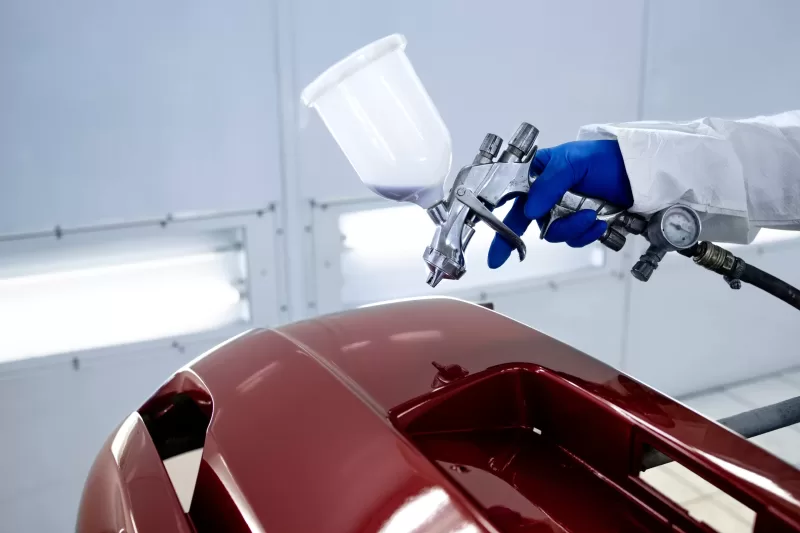
This expansion is creating ripple effects in Ghana’s paints and coatings market. Companies such as PPG Industries, AkzoNobel, Plascon, BBC Industrials, Neuce Ghana Paints, Inesfly Africa Ltd., CHIC, Suvinil Paints Ghana, Cresta Paint Industries Ltd., Bamson Co Ltd., Express Inter Africa Ltd., and Macro Polymers Ltd. are positioning themselves to capitalize on the growing demand for e-coats, primers, basecoats, and clearcoats in Ghana’s expanding automotive sector. These firms distribute products through direct channels or dealers. They are increasingly leveraging online marketing to meet demand for durable and eco-friendly options. AkzoNobel, for example, serves the Ghanaian market via Dulux Ghana. This network also covers Togo and Burkina Faso.
Environmental Sustainability and the Future of Coatings
Looking ahead, demand for automotive paints and coatings may shift due to regulatory pressures. Importers bring approximately 100,000 vehicles into the country each year, and used vehicles account for nearly 90% of those imports. However, government efforts to reduce these imports, combined with the high cost of new vehicles, could increase demand for refinish coatings as consumers and fleet owners invest more in maintaining and restoring existing vehicles rather than purchasing new ones.
Ultimately, Ghana’s ADP remains the primary catalyst for this growth, particularly for paints used in passenger and hybrid vehicles. As the country works toward its goal of reducing emissions by 64 MtCO2e by 2030, the emphasis on sustainable coatings will likely play a key role in shaping the industry’s future.
More Insights:
Automotive Coatings Market
Clear Coat vs Base Coat: What Every Car Owner Should Know
Water-Based Paint Systems vs Solvent-Based in Automotive
PPG invests $10 Million to expand Automotive OEM Coatings Production in Germany

