
Sunday, May 31, 2026
Home Blog Page 83

How in-wheel electric motors can make EVs potent


There are some solid arguments for electric vehicles (EVs) in some market sectors and autonomous vehicles in particular to use in-wheel motors. To learn more, we spoke to Ben Boycott, Chief Commercial Officer, Protean Electric, a developer of in-wheel electric motors.

Could you give us some background to Protean Electric?

Protean Electric was founded in 2008 in the UK and has spent a decade developing its automotive technology. Today, we are a world-leading developer of in-wheel motors and ProteanDrive is ready for volume applications. We have R&D centres in the UK and China, production facilities in China, and an additional sales office in the US. Protean aims to enable established OEMs and new emerging OEMs to offer safer and more accessible vehicle solutions, delivering new transport systems and services, and helping to unlock new revenue streams for the industry. The momentum in electrification is very powerful, and autonomous vehicle development is growing rapidly. We are perfectly placed and ready to take advantage of these trends across all global markets and all passenger and light commercial vehicle segments.

What stage have you reached with ProteanDrive?

Protean has spent over one million man-hours innovating, testing and developing the ProteanDrive in-wheel motor and currently has over 160 patents protecting our technology, with another 150 patents pending. We have current applications as diverse as light commercial vehicles, modern last-mile transportation solutions, autonomous mobility pods, and passenger vehicles, all of which are reaping the benefits of ProteanDrive technology. Gruelling real-world trials by leading vehicle manufacturers and technology partners have proven the technology’s reliability and durability in the most arduous climatic and road conditions, confirming its production-readiness. High volume, low cost manufacture is enabled through our global network of licensees, and we are working with clients in the passenger car, autonomous mobility and light commercial vehicle sectors as they evaluate ProteanDrive motors on test vehicles and prepare for mass production programs.

How does the ProteanDrive work and what makes it different from similar technologies in the market place?

ProteanDrive incorporates all the core technology of an electric powertrain within a single unit located within the wheel rim. It comprises a permanent-magnet synchronous motor and power electronics, and connects directly to the wheel hub to deliver the torque. The absence of transmission losses and mass, and an optimised design, deliver high efficiency in real-world use. Uniquely, ProteanDrive incorporates the inverter and control electronics within a proprietary configuration as part of the assembly that packages in the wheel rim. A friction brake and caliper have been designed to fit alongside ProteanDrive in the wheel to deliver the additional braking requirement beyond that delivered by regenerative braking of the motor.

The benefits are clear but it sounds expensive compared to a conventional electric drivetrain. Is it?

We currently predict a small price premium compared to an electric axle, but that cost is offset by cost savings in other components and systems in the vehicle and the added value of the vehicle features that ProteanDrive delivers. For example, with ProteanDrive technology there is the opportunity to downsize the battery for equivalent range, reduce the vehicle mass, and in some cases provide solutions that are impossible with an e-axle, such as 90-degree steering. In short, in-wheel motors bring cost efficiencies for operators, offer greater capacity and flexibility in vehicle design that can’t be achieved with conventional powertrain configurations, and actually open up new sources of revenue that can’t otherwise be realised.

In terms of commercialisation, we understand that Protean has formed a partnership with Human Horizons and Wuxi Weifu e-Drive Technology. What are your ambitions for this partnership?

Protean is a technology innovator and developer; we do not have ambitions to undertake high volume manufacture ourselves. Our partnerships with Wuxi Weifu e-Drive Technology and our other global licensee partners, VIE, also in China, and Linamar in the United States, enable us to deliver in-wheel motors at scale to customers providing innovative mobility solutions. These customers include Human Horizons, and Local Motors (with whom we announced a partnership last year), and also many other customers that we are unable to talk about at this time.

What and where are the market opportunities for Protean Drive?

In the short-term, the clearest opportunities for Protean’s new enabling technology will be among the rapidly emerging sectors that are driving new approaches to mobility and therefore design, packaging, and powertrain configuration. Urban passenger transport vehicles including last mile delivery and autonomous pods can benefit greatly from the more efficient packaging space and increased manoeuvrability enabled by in-wheel motors. ProteanDrive is already working with established and new start-up businesses in these spaces, broadening our reach into new applications and markets.

Several passenger car manufacturers are also conducting trials with our technology, and we forecast supplying to premium and high performance passenger cars before the technology later filters down to higher volume applications. Geographically, China is a huge market, of course, due to the scale and speed of the electrification of mobility there. Europe and the US are also very active markets.
Plug Power launches 30 kW ProGen fuel cell system


Plug Power Inc. launched its 30 kW hydrogen fuel cell system, the newest commercial product from the ProGen suite of products. The ProGen 30kW engine provides a cost-effective solution to meet the needs of today’s electric vehicle (EV) use-case, including high utilization, extended runtimes, reliable performance in harsh environments, rapid fueling, and zero emissions.

Delivery vans and light/medium duty cargo box trucks are some of the leading applications for the 30KW ProGen hydrogen engine.

Delivery of the first commercial orders for this product are scheduled in July 2019 to European and Asian on-road e-mobility applications. The modular pre-engineered ProGen engines allow OEMs to rapidly convert commercial fleet vehicles to zero emission powertrains, reduce time to market, and benefit from the ProGen volume leverage in the overall market.

The complete 30kW ProGen engine solution contains the fuel cell stack, required balance of plant, dc/dc converter, and cooling.

According to KPMG’s 2018 Global Automotive Executive Survey, hydrogen fuel cell electric vehicles have replaced battery electric vehicles as the no. 1 key trend in the automotive industry until 2025.

A McKinsey report further backs this, predicting that by 2050, hydrogen could power a global fleet of more than 400 million cars, 15 to 20 million trucks, and around 5 million buses, which constitute on average 20 to 25% of their respective transportation segments.

As enterprises around the world invest in a combination of hydrogen and battery powered electric vehicles, they’ve seen increased range and vehicle uptime while simultaneously enjoying decreased fuel and maintenance costs.

Plug Power looks forward to leading this e-mobility revolution with continued additions to the growing line of ProGen products.

Apollo unveils new Aspire XP summer tyre


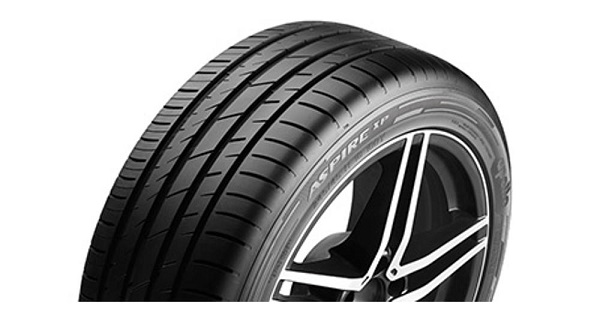
Apollo is launching a brand-new summer tyre onto the market called the Apollo Aspire XP. Leveraging on the very latest developments in terms of construction and material technologies, the Aspire XP combines outstanding levels of on-road comfort with a high degree of safety.

Featuring a total line-up of 52 SKUs, the Aspire XP replaces Apollo’s range of Aspire 4G and Apterra HP tyres. The brand is also increasing its market coverage in the 17”, 18” and 19” segment by adding 20 new sizes in both the car and SUV segments. 

Extensive research & development

The new Aspire XP summer tyre ensures an outstanding driving experience for cars and SUV´s on both dry and wet roads. Safety and comfort were given an absolute priority during the research and development phase. An improved silica tread compound enhances handling on wet roads by 22% compared to the Aspire XP’s predecessors, while braking distance in wet road conditions has been improved by 7%.

A similar picture emerges in terms of performance on dry roads. The Aspire XP’s stiffer outer shoulder blocks and central lane reduce the braking distance by 4% and ensure a higher degree of steering response accuracy. Superior comfort is also guaranteed: sipes placed on the inside shoulder of the tyre reduce interior noise and the use of more flexible sidewall materials has improved shock absorption.

The Aspire XP will go on sale at the beginning of March and was first launched at the Geneva International Motor Show held from 8 to 18 March. The Apollo Aspire XP is being manufactured in Europe at the Apollo Vredestein plants in the Netherlands and Hungary

Continental’s Cutting-Edge Tyres set the benchmark for safety and performance


Continental’s latest and most advanced passenger car tyres provide unparalleled safety and performance, according to the latest independent tyre tests conducted in Germany.

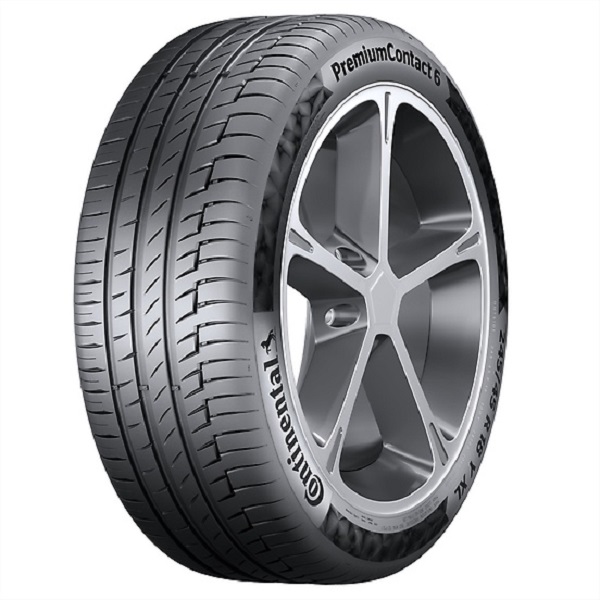
In a recent summer tyre test conducted by German car magazine, Auto Zeitung, the PremiumContact 6 from Continental led the field by a comfortable margin compared to eight competitor summer tyres and one all-season tyre. The test was conducted using 235/45 R18 tyres, fitted to a Skoda Superb station wagon.

Scoring a total of 277 points out of 300 and earning first place on the wet and dry road tests, the Continental tyre finished a clear 25 points ahead of its nearest rival. “Maximum safety, a high level of comfort and superior dynamic handling,” summed up the Auto Zeitung testers.

The PremiumContact 6 is a passenger car and SUV summer tire for compact-class models and above. It is approved for speeds of up to 300 km/h. It is original equipment (OE) fitment for a wide range of vehicles and is approved by numerous renowned automakers for fitting ex-works.

The winning streak continued for the PremiumContact 6 in AutoBild magazine’s big summer tyre test, where it was awarded the top “exemplary” rating, as well as being named “Eco-Champion.” The journalists tested a total of 50 different 225/45 R17 tyres from European, American and Asian manufacturers fitted to a BMW 1-Series.

The AutoBild experts from Hamburg described the PremiumContact 6 as “a premium tyre that offers balanced, safe handling on wet roads, short wet and dry braking distances, fuel-saving rolling resistance, high mileage and good economy.”

Specialist 4×4 magazine AutoBild Allrad also praised the PremiumContact 6 based on the outcome of its test of 10 different 225/55 R 17 tyres, a size suitable for compact SUVs. Amongst the offerings from Europe, America and Asia, the Continental tyre scored the highest rating: “exemplary”. “Top handling properties on dry roads; short wet and dry braking distances,” the magazine commented.

Continental PremiumContact 6

While AutoBild Allrad accredited most of the models tested with good safety-relevant properties, there were critical words for one product from Asia: “Cheap tyre from the Far East with marked weaknesses in the wet. Understeer on dry and wet roads, dangerously long braking distances,” was the conclusion as the magazine handed out a “not recommended” rating.

Under the heading “Pitstop”, AutoBild Sportscars reported on its latest summer tyre test, which evaluated 11 tyres in the 245/45 R 18 size. Once again, the PremiumContact 6 from Continental was awarded the best possible rating: “exemplary”. “A balanced peak performer delivering impressive dynamic performance on wet and dry roads, steady and safe handling in the wet and dry, a precision steering response in the wet, and short wet and dry braking distances,” was how the journalists summed up their findings.

The PremiumContact 6 recorded high scores for safety-relevant criteria in particular: In the dry braking, aquaplaning and wet handling tests, for example, it scored good and very good marks as it laid the foundations for the best rating that the magazine awards.

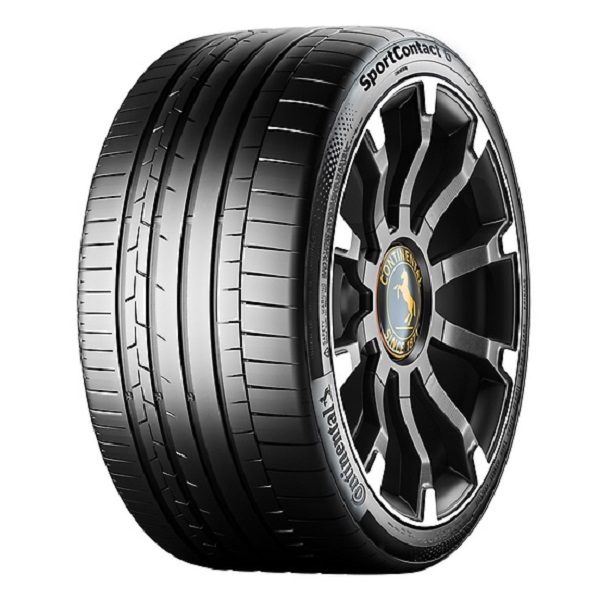
The ultra-high-performance Continental SportContact 6 also earned the highest accolades, winning the tyre test published by sportauto magazine by a substantial margin. The sports tyre from Hanover was the only one of nine contenders to score the top “highly recommended” rating.

Responsible for delivering this fine result were the tyre’s balanced, sporty characteristics on wet and dry surfaces, as the Continental tyre turned in the best performance of all the products on test in both test segments. Summing up their verdict, the testers from Stuttgart wrote: “Shortest stopping distances and safe understeer in the wet; sporty, direct steering response and high dynamic stability in the dry; crystal clear feedback, outstanding directional stability and unequivocal vehicle reactions.”

The test line-up included nine size 245/30 R 20 Y tires from European, American and Asian manufacturers. The test vehicle was a Honda Civic Type R. While the SportContact 6 scored the top “highly recommended” rating, one competitor was awarded “recommended” status and all the other products were rated “moderately recommended”.

With the SportContact 6, Continental has a super sports tyre for the ultra-high-performance segment in its portfolio that demonstrates substantial improvements over its predecessor, primarily in terms of handling, precision steering response and high-speed capability.

To put this tyre’s superior performance onto the road, Continental’s development engineers reformulated the chemical composition of the tread strip, redesigned the tread pattern, and revamped the construction of the tyre. The SportContact 6 is approved for speeds of up to 350 km/h and is fitted ex-works by numerous manufacturers of sports and super sports cars.

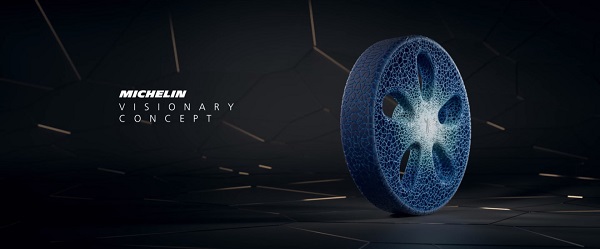
Michelin begins online sale of tires in China

0

Tata Motors and Valvoline Partner for New Lubricants


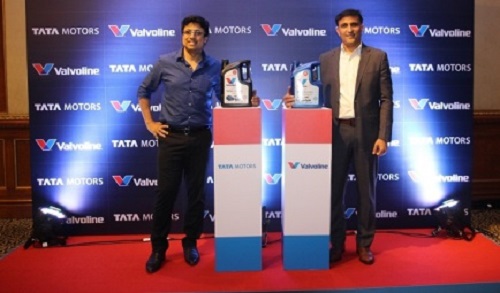
Valvoline Cummins Private Limited (VCPL), and Tata Motors announced the launch of their co-branded lubricants. These are specifically for the passenger cars segment.

Moreover, Tata Motors will brand these lubricants as Tata Motors Genuine Oil and sell them in the retail market for all the company’s cars.

Notably, Mr. Subhajit Roy – Senior General Manager & Head Customer Care (Domestic and International Business), PVBU, Tata Motors – and Mr. P. Shanmugasundaram – Head Service Marketing were present. In addition, Mr. Sandeep Kalia – Valvoline Cummins CEO – also attended. Furthermore, Mr. SK Mukherjee – Chief Technical Officer VCPL, Mr. Jitesh Mehta – Director Retail Sales & Marketing, and Mr. Rupesh Kushwaha – VP OEM Partnerships VCPL – attended as well. All of them gathered for the launch of this co-branded lubricant.

Speaking on this partnership, Mr. Subhajit Roy, Senior General Manager & Head Customer Care (Domestic and International Business), PVBU, Tata Motors said, “Customer centricity remains the driving force for us at Tata Motors and we are continuously striving to provide a satisfying post purchase experience for our customers. We are pleased to partner with VCPL in developing an exclusive range of lubricants for our passenger vehicles, which will help our cars deliver superior performance for a substantial period of time. With this new range of oils, we are dedicated towards providing the best lubricant technology expertise and support in today’s competitive marketplace.”

Mr. Sandeep Kalia, Chief Executive Officer of Valvoline Cummins Private Limited, said, “We feel honored to partner and work closely with an automotive giant like Tata Motors.” Valvoline has had a long history of partnering with key automotive companies to bring innovative premium lubricants to market, and this milestone represents the success of our business model in India. This partnership will be a true testimony to Valvoline’s world-class products, and we are looking forward to providing superior quality and aftermarket product support to Tata customers through our partnership.”

Read More:

Tesla supplier to buy GM Korean plant for EV output

0

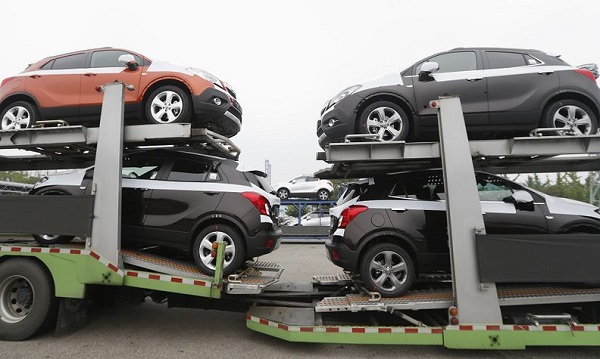
A South Korean supplier of Tesla has agreed to buy a shuttered factory from General Motors’ local unit to start contract manufacturing of electric vehicles, possibly for the U.S. and Europe.

The deal comes after GM closed its Gunsan factory, one of its four South Korean plants, in late May as part of a global restructuring drive which culminated in a major financial support package from the South Korean government.

GM did not disclose the sales price of the Gunsan factory, but auto parts maker Myongshin said it would buy the land and buildings of the GM facility for 113 billion won ($99.5 million).

Myongshin, also a Hyundai Motor supplier, is part of a consortium that would initially spend a total of 200 billion won on the factory to produce 50,000 EVs starting 2021 and 150,000 EVs in 2025, according to a statement by a provincial government.

“We aim to close this deal as soon as possible to ensure that there will be ongoing economic activity,” GM Korea said in a statement.

The consortium was in talks with an unidentified global automaker to manufacture electric vehicles at the facility, a source with direct knowledge of the matter earlier told Reuters, adding that it was not Tesla.

The plant could take advantage of South Korea’s free trade deal with the United States and Europe, as well as the country’s electric car supply chain, he said.

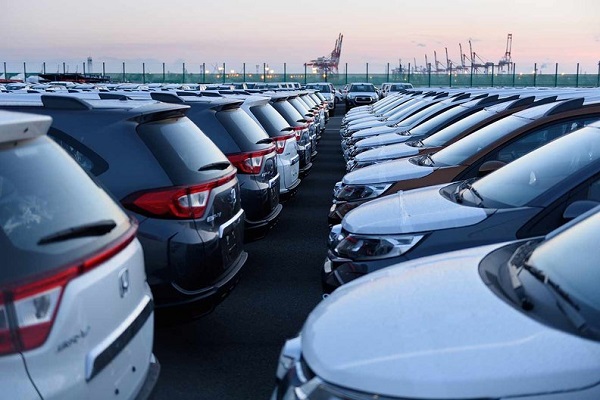
Auto industry unites to oppose Trump import tariffs

0

The U.S. auto industry is escalating a lobbying push to keep President Donald Trump from imposing steep new tariffs on imported cars and parts that executives warn could cripple a sector already facing a slowdown.

Groups representing many arms of the industry automakers, dealers, parts suppliers and aftermarket companies alike are in lockstep in their opposition of new levies being considered by the White House, a rarity for an industry that often disagrees on major policies.

And despite months of aggressive lobbying to block new tariffs, industry officials worry the new levies are much more than just a bargaining chip in Trump’s trade talks with the European Union, Japan and China.

“Nobody in the auto industry supports a 25 percent import tariff, unlike in the steel and aluminum tariff situation where you had the steel industry advocating for relief,” said Jennifer Thomas, vice president of federal affairs at the Alliance of Automobile Manufacturers. Her group represents a dozen car makers including General Motors Co., Volkswagen AG and Toyota Motor Corp.

Trump is reviewing the recommendations of a Commerce Department probe into whether imported light vehicles and parts represent a threat to national security. Commerce conducted the investigation under section 232 of the Trade Expansion Act, the same provision the president used last year to slap duties on steel and aluminum.

Under section 232, Trump has until May 18 to decide how to respond to the Commerce recommendations. But White House economic adviser Larry Kudlow said Thursday that the president may take longer, without elaborating.

The probe covered imports of vehicles including SUVs, vans and light trucks, as well as auto parts.

Subaru of America President Tom Doll visited Washington earlier this week and warned the company’s more than seven year-long streak of monthly U.S. sales gains may end if new tariffs are imposed.

Fly ins

“I came up here specifically to talk to our Congress people about these tariffs and the impact that they’re potentially having on our entire distribution chain and how that eventually is going to work itself through the distribution chain into our pricing,” Doll said in an interview with Bloomberg TV on Tuesday. “This is something that we’re getting a lot of sympathy with from the Congress folks, so we’re hopeful that this resolves itself.”

A 25% tariff on all autos and parts could boost new vehicle prices by an estimated $4,400 on average, according to a 2018 study by the Center for Automotive Research. Imported vehicles prices could rise by $6,875 per vehicle and U.S.-made autos may see a $2,270 bump, according to the report, which estimated more than 700,000 U.S. jobs could be lost as well.

Business conditions in the auto industry are beginning to deteriorate due to softening auto sales, rising interest rates, vehicle transaction prices at or near record highs in addition to rising costs from Trump’s steel and aluminum tariffs and new levies on certain auto parts from China, said John Bozzella, president of the Association of Global Automakers.

“We have a significant challenge ahead of us if these go into effect,” he said.

Beyond the new-vehicle market, driveway mechanics would see the price to replace brakes pads and rotors jump by $130 under the new levies, said Gabrielle Hopkins, vice president of federal affairs at the aftermarket industry’s Auto Care Association.

The effects could be even greater. Those predictions don’t account for potential retaliation by other countries, which Bozzella said would be inevitable.

“Our trading partners will not stand idly by and accept this. There will be retaliation,” said Bozzella, whose group represents Honda Motor Co., Hyundai Motor Co. and others.

Trump’s tariffs on steel and aluminum have already added roughly $400 per car on average in additional costs to Ford Motor Co., GM and Fiat Chrysler Automobiles NV, said Matt Blunt, president of the American Automotive Policy Council that represents those companies.

“That $400 in an extremely competitive global industry has an impact on our ability to compete in export markets,” said Blunt, a former Missouri governor.

Trade concerns are clouding the outlook for parts suppliers, in particular for the smaller players deeper in the auto supply chain who are reporting the highest degree of pessimism since U.S. auto sales collapsed in 2008 and 2009 during the financial crisis, said Ann Wilson, senior vice president of government affairs at the Motor and Equipment Manufacturers Association, which represents auto suppliers.

Already, some companies are shuttering plants due to higher steel and aluminum costs and as automakers shift component purchases overseas to avoid those soon metal levies, Wilson said.

Kibo Africa plans to make electric motorbikes from Nairobi factory

0

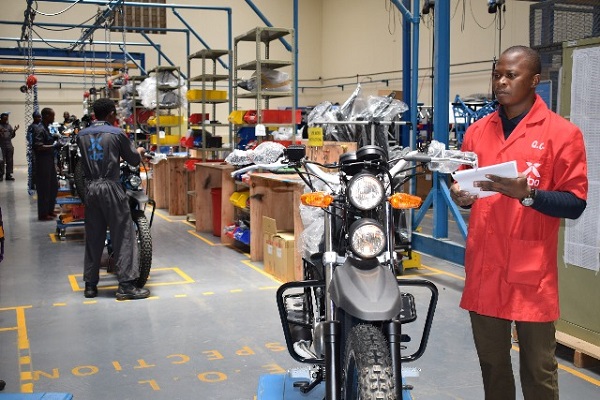
The motorbike sector is expected to continue expanding in the coming years with 4.8 million people in Kenya now using motorcycles for their daily operations, creating income generating activity for thousands of unemployed youth. This growth prospect has motivated companies such as Kibo Africa to invest in an assembly plant and new models in a bid to grow the local industry.

“There’s a lot of potential in Kenya that’s why we are confident to introduce new models in the market. However, despite the industry rising, we still encounter a few things that should be behind our back by now,” said Kibo Operations Director, Alvin Mageto.

The company has recently introduced the K250 which will sell alongside its K150 model and plans to launch other new bike models including an electric bike in the next two years.

Mageto says the Kibo K250 provides more overall capability, power and fun. It boasts of a 250-cc air-cooled single cylinder engine, a trellis frame that is significantly stronger as compared to the competition, 250kg load weight, a balance shaft that diminishes engine vibrations resulting in a smoother ride among other features.

Currently, the Dutch Motorcycle maker Kibo Africa, which has been in Kenya for 5 years, says it is banking on a State policy to prioritize locally manufactured goods to grow its sales.

The company has since made an investment of over $109.1 and continues to invest more as it expands.

Kibo Africa also prides itself in talent investment where the company trains fresh university graduates at the motorcycle assembly process, off Mombasa Road.

“Some of the workers you see here are people that are fresh from University,” said Mageto.

The company is a manufacturing industry that designs bikes within and resource materials from other countries.

Security company launches motorbike patrols


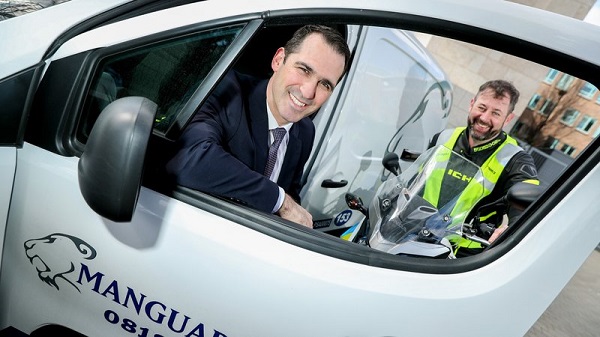
A private security company has launched the first motorbike security patrol service in the country. Based in Naas, Co Kildare, Manguard Plus employs 1,200 people across Waterford, Cork, Belfast, London and Chester.

John O’Brien, Operations Manager with Manguard Plus said the introduction of the motorbike service will further enhance and reinforce the mobile patrols, particularly in city centre and urban locations.

“Traffic congestion is an ever increasing problem in our cities and large towns and the provision of our innovative motorbike function will afford us ease of access to locations,” he said. “The service will not be used to respond to alarm activations but will mean easier access to key locations which is crucial in the security industry.”

The company expects to add to its fleet of motorbikes in the coming months. The firm hopes to create up to 300 jobs with the development of this division.

- Advertisement -