Sunday, May 31, 2026
Home Blog Page 81

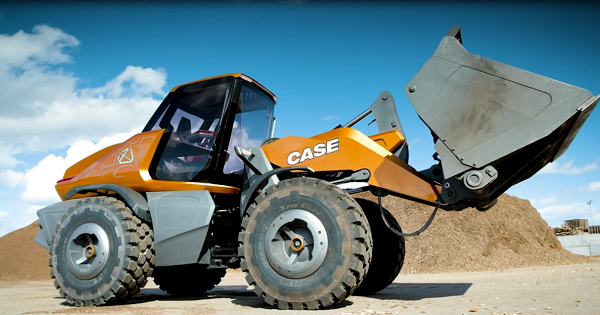
CASE Construction Equipment unveils methane-powered wheel loader concept


CASE Construction Equipment, a brand of CNH Industrial N.V. (:CNHI / MI:CHI) has announced an insight into a sustainable, connected and technologically advanced future of construction at the Bauma trade show in Munich, Germany, with the unveiling of its methane-powered wheel loader concept – ProjectTETRA.

Jointly developed by the CNH Industrial international design and CASE engineering teams, this concept is a clear departure from anything seen to date in the construction industry. The concept reflects both the increasing importance of alternative fuels, and demonstrates their viability in the construction environment: the concept wheel loader is powered by a proven methane engine, produced by sister brand FPT Industrial, and delivers exactly the same performance as its diesel equivalent.

This is combined with cutting edge styling and an advanced operator environment, which makes extensive use of touchscreen and voice control technologies. Furthermore, innovative safety features include biometric technologies together with an obstacle detection system, which is derived from CNH Industrial’s autonomous vehicle research and development program.

CASE has demonstrated the feasibility of this concept in a range of real-world construction environments as well as proving the business case, in terms of sustainability, reduced overall total cost of ownership and operational viability.

The CASE methane-powered wheel loader concept is testament to CNH Industrial’s longstanding commitment to alternative fuel technologies, and is further proof of the practicability and flexibility of natural gas, demonstrating its viability in both on and off road applications.

CNH Industrial N.V. (: CNHI /MI: CNHI) is a global leader in the capital goods sector with established industrial experience, a wide range of products and a worldwide presence. Each of the individual brands belonging to the Company is a major international force in its specific industrial sector: Case IH, New Holland Agriculture and Steyr for tractors and agricultural machinery; Case and New Holland Construction for earth moving equipment; Iveco for commercial vehicles; Iveco Bus and Heuliez Bus for buses and coaches; Iveco Astra for quarry and construction vehicles; Magirus for firefighting vehicles; Iveco Defence Vehicles for defence and civil protection; and FPT Industrial for engines and transmissions. More information can be found on the corporate website: www.cnhindustrial.com
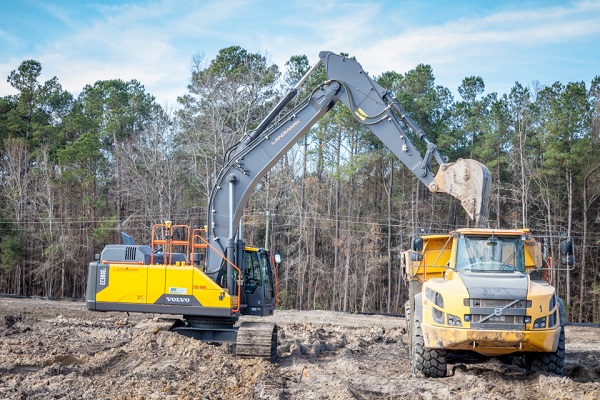
Volvo Construction Equipment and Trimble announce integrated Trimble Earthworks


Trimble and Volvo Construction Equipment (Volvo CE) announced today an integrated Trimble Earthworks Grade Control Platform for Volvo Dig Assist 2D grade control on Volvo excavators. Both companies are conducting global customer validation testing in preparation for the release.

The announcement was made at bauma 2019, the world’s leading trade fair for construction machinery, building material machines, mining machines, construction vehicles and construction equipment.

Integrating Trimble Earthworks on Volvo Excavators will complement the Volvo Dig Assist capability to enable the use of 3D constructible models, as-built data, remote support, design and asset management, and other Trimble® Connected Site® technologies.

“In the complex world of construction projects, our customers are looking for more integration and collaboration between their suppliers,” said Jeroen Schnoek, director Connected Site and Machine Services, Volvo CE. “Collaborating with Trimble will deliver our common customers the best of both worlds: their well-known Trimble 3D grade control solution integrated with the factory-integrated Volvo Dig Assist and Co-Pilot platform.”

“Working with Volvo CE on an integrated 3D grade control solution really showcases the benefits both companies bring to our mutual customers,” said Jean Francois Sourdoire, OEM business development manager, EuropeAfricaMiddle East for Trimble Civil Engineering and Construction. “The tight integration of Trimble Earthworks with Volvo Dig Assist gives contractors a way to more easily adopt construction technology for faster ROI.”

Availability

Trimble Earthworks Grade Control Platform for Volvo Dig Assist will be available in 2019 from Trimble’s SITECH®construction technology dealers and Volvo CE dealerships.

About Volvo Construction Equipment

Volvo Construction Equipment (Volvo CE) is a leading international manufacturer of premium construction equipment, and with over 14,000 employees it is one of the largest companies in the industry. As a total-solution provider, Volvo CE also offers servicing, financing, used equipment, rental and other related services. Volvo CE is part of the Volvo Group. For more information, please visit:  www.volvoce.com.

About Trimble’s Civil Engineering and Construction Division

Trimble is a leading innovator of productivity solutions for the civil engineering and construction sectors. Trimble’s solutions leverage a variety of technologies, including Global Navigation Satellite System (GNSS), construction lasers, total stations, wireless data communications, the Internet, and application software. As part of the Trimble Connected Site strategy, these solutions provide a high-level of process and workflow integration from the design phase through to the finished project—delivering significant improvements in productivity throughout the construction lifecycle.

For more information, visit:  construction.trimble.com.

About Trimble

Trimble is transforming the way the world works by delivering products and services that connect the physical and digital worlds. Core technologies in positioning, modeling, connectivity and data analytics enable customers to improve productivity, quality, safety and sustainability. From purpose built products to enterprise lifecycle solutions, Trimble software, hardware and services are transforming a broad range of industries such as agriculture, construction, geospatial and transportation and logistics. For more information about Trimble (NASDAQ: TRMB), visit:  www.trimble.com.

Hitachi and ABAX sign telematics deal


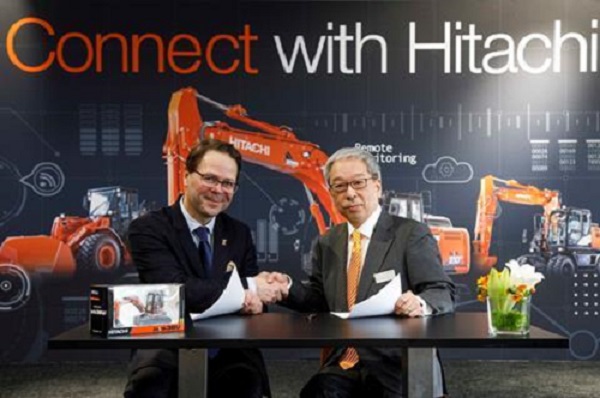
Technology company Abax has signed a deal to deliver telematic solutions to Hitachi Construction Machinery Europe (HCME).

In a statement Abax said that its software platform will be incorporated into several HCME machinery lines, including the Zaxis-6 line of mini excavators. The software allows the machines to communicate with Hitachi’s remote monitoring system, Global e-Service.

HCME’s Global e-Service gives owners access to operational data on their machines, which is said to help increase productivity, enhance efficiency, maximise availability and reduce running costs.

Tom van Wijlandt, manager of business development at HCME, said, “Now the full range of Hitachi excavators is available with our unique remote monitoring system. As long as it has a Hitachi serial number, then it can be found on Global e-Service.”

Abax CEO Morten Strand said, “Our market-leading platform enables us to offer new opportunities and create mutual benefits for Hitachi, its dealers and customers.” He added, “Hitachi is one of the market leaders in the construction equipment industry, and we are looking forward to a long-term partnership that will bring new developments and great opportunities going forward.”

The software is available for all current Hitachi mini and compact machinery, and can also be retrofitted to previous generation models by the authorised Hitachi European dealer network.

Hitach and ABAX teams at Bauma in Germany

Ford to expand engine plant in South Africa

0

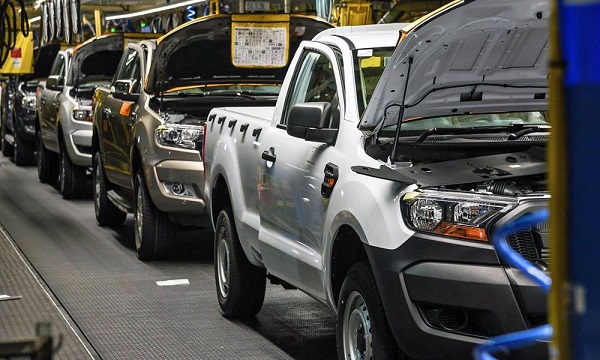
Ford Motor Company of Southern Africa (FMCSA) has announced plans to invest more than $107 million to expand operations for the production of Ford’s next-generation compact pickup truck and Puma diesel engine.

The investment and new manufacturing contract will transform FMCSA’s current production landscape to enhance South Africa’s significance as a strategic export base for vehicles, engines and components for Ford Motor Company. Plans call for the Silverton, Waltloo plant to transition from its current production, to a high-volume, flexible single platform line that will accommodate the new pickup.

The investment will increase total annual capacity at the Silverton plant to 110,000 units, with approximately three-quarters of the vehicles being produced for export, primarily to markets in Africa and Europe. The Struandale Engine Plant will increase annual production for its next-generation, turbocharged common-rail Puma diesel engine and components to approximately 180,000 units, with the majority being exported.

“Winning this investment is a major achievement for everyone at FMCSA, as well as our partners in government, NUMSA, and our local suppliers, and highlights our strategic position within the future global footprint of Ford Motor Company,” explained Hal Feder, president and CEO of FMCSA. “It also underscores Ford’s ongoing commitment to expanding our operations in South Africa.”

As part of the investment, FMSCA plans to continue working with the South African government to accelerate and enhance human resources training and development of the auto industry’s current and future workforce to ensure they possess the necessary skills required to support the launch.

Both Ford and government recently reconfirmed their full commitment to future growth and development of the South African vehicle manufacturing and associated industries. This included an agreement of strategic objectives to develop worker skills, improve supply base capabilities, and accelerate the transformation of black economic empowerment.

“It’s critical for the South African government to continue to support initiatives that help foster a strong and globally competitive auto industry – one that is prepared to capitalize on future opportunities and realize the potential for growth and success,” asserted Feder. “We’ll also continue to work closely with NUMSA to ensure there is total alignment and commitment to deliver the cost competitiveness and world-class quality and safety standards that have attracted this investment.”

The transition of FMCSA operations over the next few years will have no immediate impact on the workforce size, which currently totals nearly 4,500 employees between its two manufacturing facilities. However, FMCSA expects to hire up to 500 additional employees by the time the realigned production kicks off in 2011.

Local suppliers to FMCSA stand to benefit from the expanded capacity, as increased local content will be sourced to meet increased production and output. FMCSA currently achieves about 35 percent local content, which will improve to more than 60 percent when production begins. Working with roughly 110 different South African suppliers, annual spending on local components will increase from an estimated $31.4 million each year to approximately 206.7 million.

“The magnitude of this project is indicative of how South Africa can benefit from having a globally competitive auto industry. In addition to the direct implications to FMCSA, this investment will have a multiplier effect with indirect job creation for local suppliers, and overall economic benefits from increased demand of locally produced content,” said Feder.

FMCSA is a wholly-owned subsidiary of Ford Motor Company, and first set up operations in South Africa in 1923.

About Ford Motor Company

Ford Motor Company, a global automotive industry leader based in Dearborn, Mich., manufactures and distributes automobiles in 200 markets across six continents. With about 260,000 employees and about 100 plants worldwide, the company’s core and affiliated automotive brands include Ford, Jaguar, Land Rover, Lincoln, Mazda, Mercury and Volvo. Its automotive-related services include Ford Motor Credit Company. For more information regarding Ford’s products, please visit www.fordvehicles.com.

Nissan to add Navara pickup at South Africa factory

0

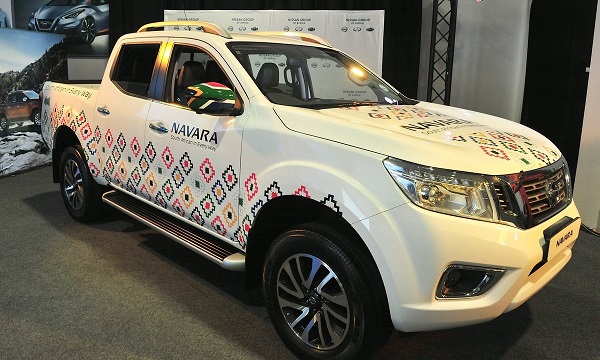
The South African arm of Nissan will spend $213 million equipping its local plant to build the Japanese carmaker’s new Navara model.

Capacity at Nissan’s plant in Rosslyn, near Pretoria, will increase by 30,000 units in the first phase, Mike Whitfield, managing director at Nissan South Africa said, while the plant’s permanent headcount will increase by 400.

“Today, we’re able to announce that the Nissan South Africa Rosslyn facility will build the entire model range Nissan Navara for both local and export (markets),” Whitfield said at an event to announce the investment.

While production operations elsewhere will also build the new Navara, a pick-up, Nissan South Africa will supply the local and continental market.

Whitfield said his unit had to beat other global Nissan production operations to win the right to produce the Navara – a victory for his unit and also South African President Cyril Ramaphosa ahead of elections in May.

Ramaphosa, who was at the event on Wednesday, is trying to secure $100 billion in investment into South Africa within five years.

While he has had some success, he is contending with a sluggish economy and a legacy of corruption and mismanagement, knocking confidence in Africa’s most industrialised economy.

Ramaphosa said Nissan’s investment marked a “milestone” in his drive, and was a vote of confidence in South Africa.

In common with many global carmakers, Nissan doesn’t currently have any significant production operations in sub-Saharan Africa outside South Africa, which it entered in 1963 and is the only substantial market for new cars in the region.

However Nissan, and many rivals, are hoping that will change. A number have recently opened or committed to open plants elsewhere, including in Nigeria, Ghana and Kenya.

22nd Autoexpo Kenya 2019

0

The rapid industrialization and modernization currently sweeping through many African countries has resulted in an increased demand for capital goods such as machinery, lubricants, spare parts, ball bearings and other automotive mechanical goods and accessories. The market for automobile spare parts, in particular, has been an attractive sector for global exporters, as Africa has witnessed a remarkable increase in imports by 30%.

For 21 years, AUTOEXPO Africa has been chosen by global manufacturers and exporters as the precise platform to enter the market of the millennium Africa.

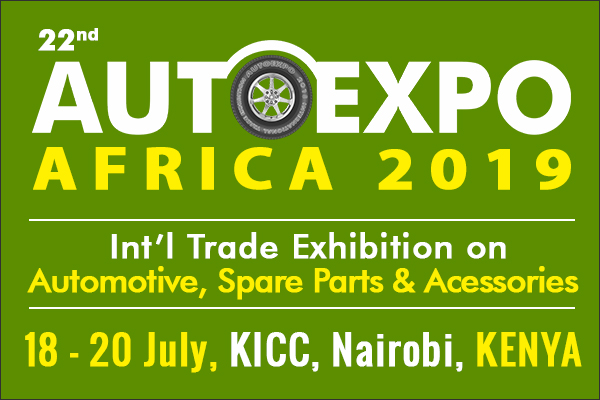
22st AUTOEXPO Africa – the largest automobiles, spares and accessories exhibition in the entire east African region is scheduled to be held from 18th – 20th July 2019.

Celebrating its 22nd anniversary; the leading trade exhibition for automobile, truck and bus parts, equipments, components, accessories, tools, and services continues to bring world leading manufacturers, suppliers, and service providers in touch with one of the most important markets in the world.

 Come, be a part of progress in Africa!

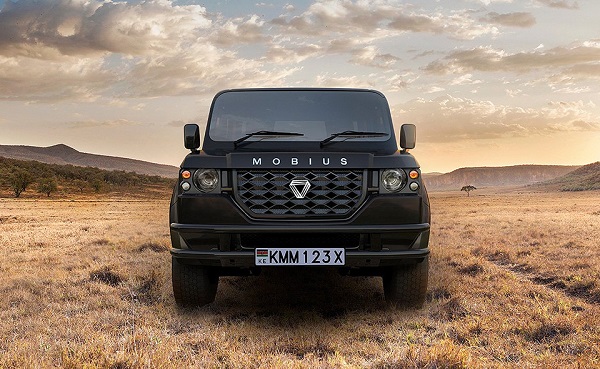
Mobius Motors set to launch SUV for African market

0

Africa’s roads are notorious. More than half of them are unpaved. However, Kenyan car manufacturer, Mobius Motors is set to launch SUV for African market.

It’s no surprise then that Kenyan car manufacturer, Mobius Motors, is looking to introduce an affordable, no thrills, but robust and classy SUV for the African mass market.

The Mobius II is set to be on the road this year. This, their second model, is aiming to be a significant step up of the inaugural car released in 2014.

Will it pave the way for a new homegrown car industry?

The idea behind the wheel

Mobius Motors was founded in 2009 by British entrepreneur Joel Jackson. Jackson was working in rural Kenya where he found people had vehicles that weren’t up to the task of negotiating the country’s rough terrain and long distances.

“Millions of people are having their productivity undermined because of the time it takes to move around and get from place to place, and that problem could be solved with a better type of product,” says Jackson.

Mobius Motors hasn’t just got its sights on Kenya, but anywhere with poor quality roads.

“Car companies are still focused on the BRIC (Brazil, Russia, India and China) economies. Africa is an overlooked market in general, and there is an opportunity to do something different,” Jackson explains.

The entry level model costs 1.3 million Kenyan Shillings ($12,500). “The price is roughly the equivalent to a 5 to 6 year old sedan car in Kenya,” Jackson claims.

That being said, Kenya’s GDP per capita at $1,455 means the car at this price, while cheaper than other imported options, is some way off for the average earner.

Initially, Jackson bootstrapped the company.

“We started with a very humble shed in Kilifi, a fishing town on the coast of Kenya, and then we moved to Mombasa, and eventually we set up in Nairobi where we have research and development and production facilities,” Jackson says.

The car features rear wheel drive, and has a 1.8 litre power frame. The company sources parts both locally and globally.

Mobius Motors also revealed that the top speed will be released shortly.

In August, addressing TEDGlobal 2017 in Arusha, Tanzania, Jackson said “there is a supply demand-disconnect, with the vast majority of automotive spending on the continent today essentially funding an international network of car exporters, instead of fueling the growth of local industry.”

Africa’s rising car industry

Mobius Motors is part of growing movement towards homegrown cars.

Kiira Motors, based in Uganda, is developing Africa’s first hybrid car set to sell at $20,000 each.

Nigeria is also leading the charge. Its first car brand Innoson launched a range of private cars in 2014 made from mostly locally sourced parts. A report by PWC highlighted Nigeria’s potential to become the automotive hub of Africa.

Previous and less successful attempts include the Nyayo Car, initiated by the Kenyan government in 1986. It never made it into production.

As African nations aim to move from low to middle-income status, the continent’s car industries could look to move up the gears.

Nissan kicks off expansion bid to raise market share

0

Nissan Kenya is expanding its dealership footprint locally as it targets major towns across the country to boost its market share in the space dominated by players like Toyota Kenya and Isuzu East Africa.

“Having a bigger presence in the market means you are exposed to more customers which will help us to grow our market share as well,” said Tim Jaques, chairman Nissan Kenya.

According to Mr Jacques, the dealer will be exploring Nairobi (Westlands and Karen), Kisumu and other major towns with sites to provide sale and after sale services.

“Nissan Kenya is our official partner in country with full sales, spares and service dealerships in Nairobi, Mombasa and Nakuru with one under construction in Kisumu. We also have a further nine sub-contracted dealerships.” said Jim Dando, Director Sales and operations, Nissan Group of Africa.

Nissan also revealed that it was eyeing partnerships with banks to offer financing for purchase of its vehicles.

“We are exploring vehicle finance opportunities in Kenya, We are looking at how to finance buyers and how to make it affordable,” said Mr Dando.

He indicated that the company is looking for a partnership in the next year to offer lease opportunities for Kenya.

The firm was showcasing its latest range of vehicles for the Kenyan market including the new models of the Navara, Patrol and the X-Trail.

Nissan is one of the biggest brands in the local pick-up segment, competing against Toyota and Isuzu.

The local dealership was taken over last year by Motus Africa after it bought out Kenyan businessman Mohamed Zubedi’s 49% stake in the franchise.

Nissan will be co-hosting the inaugural Kenya Automotive Summit in May.

BASF increases production capacity of antioxidants for lubricants

0

BASF’s global business unit Fuel and Lubricant Solutions is investing in Mexico and China to increase production of antioxidants for lubricants. The capacity expansions address growing demand for antioxidants from the increasing number of vehicles in Asia and the increasing global demand for long-life lubricant additives.

In Mexico, BASF expanded the production capabilities of its site in Puebla. In China, the expansion is through a technology licensing and manufacturing agreement with Feiya Chemical Co. Feiya has recently built a new site in Rudong, Jiangsu Province, which is fully operational and producing on-spec products.

“We continue to address the regional and global needs of our customers through investments and product innovation,” said Marius Vaarkamp, Global Marketing Director, Lubricant Oil Additives, BASF. “Expanding our global production capacity of antioxidants for lubricants shows our commitment to meeting the increasing needs of an evolving market.”

“We value BASF as our partner, and we are committed to meeting the expectations of BASF and its customers,” said Hong Seng Cao, Chairman and General Manager, Feiya Chemical Co.

About Fuel and Lubricant Solutions

The global business unit Fuel and Lubricant Solutions is a leading supplier to the transportation and mineral oil industries worldwide. Offerings cover fuel performance packages, refinery additives, polyisobutenes, engine coolants (Glysantin® brand) and brake fluids as well as lubricant additives, finished lubricants, synthetic base stocks and components for metalworking fluids. The business unit has its main facilities in Ludwigshafen, Germany, Cincinnati and Florham Park in the USA, Nanjing and Shanghai in China, as well as Sao Paulo, Brazil. Research and development is mainly driven out of Ludwigshafen, Germany, Tarrytown, USA and Shanghai, China. Further information is available on the Internet at  www.basf.com/fuel-lubricant-solutions.

BASF Fuel and Lubricant Solutions is part of BASF’s Performance Chemicals division. The division’s portfolio also includes Plastic Additives, Kaolin Minerals, Paper and Water Chemicals as well as Oilfield and Mining Solutions. Customers from a variety of industries including Chemical, Pulp & Paper, Plastic, Consumer Goods, Energy & Resources and Automotive & Transportation benefit from our innovative solutions. To learn more, visit www.performancechemicals.basf.com.

About BASF

At BASF, we create chemistry for a sustainable future. We combine economic success with environmental protection and social responsibility. The more than 115,000 employees in the BASF Group work on contributing to the success of our customers in nearly all sectors and almost every country in the world. Our portfolio is organized into six segments: Chemicals, Materials, Industrial Solutions, Surface Technologies, Nutrition & Care and Agricultural Solutions. BASF generated sales of more than €60 billion in 2017. BASF shares are traded on the stock exchanges in Frankfurt (BAS), London (BFA) and Zurich (BAS). Further information at www.basf.com.

BASF increases production capacity of antioxidants for lubricants

0

BASF’s global business unit Fuel and Lubricant Solutions is investing in Mexico and China to increase production of antioxidants for lubricants. The capacity expansions address growing demand for antioxidants from the increasing number of vehicles in Asia and the increasing global demand for long-life lubricant additives.

In Mexico, BASF expanded the production capabilities of its site in Puebla. In China, the expansion is through a technology licensing and manufacturing agreement with Feiya Chemical Co. Feiya has recently built a new site in Rudong, Jiangsu Province, which is fully operational and producing on-spec products.

“We continue to address the regional and global needs of our customers through investments and product innovation,” said Marius Vaarkamp, Global Marketing Director, Lubricant Oil Additives, BASF. “Expanding our global production capacity of antioxidants for lubricants shows our commitment to meeting the increasing needs of an evolving market.”

“We value BASF as our partner, and we are committed to meeting the expectations of BASF and its customers,” said Hong Seng Cao, Chairman and General Manager, Feiya Chemical Co.

About Fuel and Lubricant Solutions

The global business unit Fuel and Lubricant Solutions is a leading supplier to the transportation and mineral oil industries worldwide. Offerings cover fuel performance packages, refinery additives, polyisobutenes, engine coolants (Glysantin® brand) and brake fluids as well as lubricant additives, finished lubricants, synthetic base stocks and components for metalworking fluids. The business unit has its main facilities in Ludwigshafen, Germany, Cincinnati and Florham Park in the USA, Nanjing and Shanghai in China, as well as Sao Paulo, Brazil. Research and development is mainly driven out of Ludwigshafen, Germany, Tarrytown, USA and Shanghai, China. Further information is available on the Internet at  www.basf.com/fuel-lubricant-solutions.

BASF Fuel and Lubricant Solutions is part of BASF’s Performance Chemicals division. The division’s portfolio also includes Plastic Additives, Kaolin Minerals, Paper and Water Chemicals as well as Oilfield and Mining Solutions. Customers from a variety of industries including Chemical, Pulp & Paper, Plastic, Consumer Goods, Energy & Resources and Automotive & Transportation benefit from our innovative solutions. To learn more, visit www.performancechemicals.basf.com.

About BASF

At BASF, we create chemistry for a sustainable future. We combine economic success with environmental protection and social responsibility. The more than 115,000 employees in the BASF Group work on contributing to the success of our customers in nearly all sectors and almost every country in the world. Our portfolio is organized into six segments: Chemicals, Materials, Industrial Solutions, Surface Technologies, Nutrition & Care and Agricultural Solutions. BASF generated sales of more than €60 billion in 2017. BASF shares are traded on the stock exchanges in Frankfurt (BAS), London (BFA) and Zurich (BAS). Further information at www.basf.com.

- Advertisement -