Sunday, May 31, 2026
Home Blog Page 76

Auto policy legislation will boost Nigeria’s automotive industry

0

Mr Jelani Aliyu, Director-General, National Automotive Design and Development Council (NADDC), says legislating the auto policy will strengthen it as well as prevent it from being changed by subsequent governments.

Aliyu said while speaking shortly after inspecting the newly introduced Honda HR-V into the Nigerian market. According to him, the automotive plan which contains a number of policy measures aimed at revitalising the industry for job creation, local value addition, and technology acquisition has six components. He listed the components to include standards, industrial infrastructure, local content development, skills development, investment promotion and market development.

Aliyu said that the council was working closely with the National Assembly to see how the policy would become law to prevent policy somersault. “We need to ensure that the auto policy become law. As you are aware, the auto policy is a set of fiscal incentives that are designed to boost production.

“The big question in Nigeria is, are we after short term benefits? “The only way we can ensure that this country continues to be a successful nation is to provide industrialisation and jobs. “The only way we can provide jobs is to boost industries and support those local and international investors in coming into Nigeria and producing,” he said.

According to him, the policy is very important for local production. Aliyu said that the council was making progress as lots of investors were coming into the country from across the world, especially from Japan the heart beat of automotive. On the vehicle finance scheme, he said its implementation would commence before the end of June. Aliyu said that the council had reached an understanding with three banks that the loans would be given to eligible Nigerians after they must have deposited 10 per cent of the cost of the vehicle.

Aliyu said that the loans would be provided by the banks to Nigerians at a single digit interest rate of eight per cent. “We are working with three banks to offer vehicle financing and this is the type of vehicle that we hope will be part of that scheme,” he said. Aliyu said that the Federal Government was encouraging auto manufacturers to continue to increase the level of their investments in the country

Opportunity for SA to drive car manufacturing industry in Africa


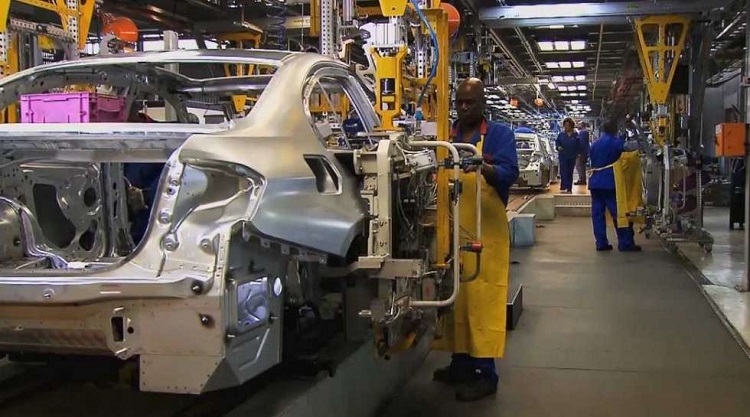
The manufacture of vehicles is one of the most advanced forms of manufacturing within the global economy. There are many structural features of the automotive manufacturing process that cause it to locate in relatively few economies. These same structural features also mean that there is a high level of trade between producer countries in both built-up vehicles and componentry.

However, unlike in the pre-1995 era, there is a reasonable degree of balance between imports and exports. Such a balance of payments stability is the usual macro-economic objective of automotive policy programmes.

For South Africa to deepen its local content capacity we need to produce more vehicles. This objective presents South Africa with a strategic possibility that will benefit it and other industrializing economies in Africa. The level of vehicle production in Africa is low compared to existing demand.

For instance, sub-Saharan Africa consumed about 1.6million vehicles in 2016. Of the total vehicle demand, 791000 units were new vehicle sales and 838000 pre-owned imports.

Contrasting demand to supply, only 664000 vehicles were produced in sub-Saharan Africa in 2016 (of which the majority, 547000 units, were produced here).

The current vehicle fleet in most of Africa is suboptimal. The vast majority are second-hand, and vehicle standards and homologation have little impact on the quality of the vehicle fleet. The balance of payments effect is adverse and safety, fuel efficiency and emissions levels are all suboptimal.

However, the advanced nature of auto manufacturer also requires advanced infrastructure. Many African economies don’t have such infrastructure. However, this is not a show-stopper as the structural features of the auto industry allow a progression of different forms of assembly over time, allowing careful planning to provide the necessary infrastructure in phases.

Auto manufacture occurs in economies where specific policy programmes have been developed. This is, therefore, an opportunity for South Africa to work with African partner economies to develop an efficient African manufacturing and intra-sectoral trading system. The best way of understanding this is to put the counterfactual proposition.

If South Africa were to see the rest of Africa only as a buyer of the country’s vehicles – the prospect of a Continental Free Trade Agreement suggests that this might be an enticing prospect – it would be making a costly strategic mistake.

In the first place, we would be competing with much larger exporting countries across the world, which are unlikely to let us dominate such a market. But, more fundamentally, this is not a sustainable situation for the larger African economies.

For Africa’s larger industrialising economies, the absence of auto manufacturing means all vehicle needs would have to be imported. This has two fundamentally adverse effects.

The first is that it destabilises the balance of payments and, secondly, they lose the key industrialisation advantages that the auto sector provides. In fact, they would be attempting to grow with an inefficient transport sector.

It is by no means a coincidence that the global auto industry’s development is characterised by various forms of the partnership arrangement between producer countries.

As pointed out at the beginning of this discussion, there are structural features of the auto-manufacturing process – related in the main to economies of scale – that are conducive to a global manufacturing system characterised by high levels of intra- sectoral trade. In Africa, at present, there is favourable conjunction of events that need to be seized as a strategic opportunity.

Firstly, economies such as Nigeria, Ghana, Kenya and Ethiopia are seeking to implement auto programmes. Secondly, South Africa, working with its global OEM (original equipment manufacturer) partners are firm of the view that an African auto partnership of some form is in the best interests of the African economies. Auto policies are complex and multifaceted industrial policies and need great attention to detail and accommodation to the structural realities of this global industry. However, the ingredients are there for Africa to take a very meaningful step towards its industrialisation.


Africa’s car industry needs more investment


Trade and Industry Minister Rob Davies has identified an increase in local vehicle manufacturing as key to the realization of the bold new vision espoused in the finalized South African Automotive Masterplan 2035 (SAAM) and the targets it sets out.

The automotive sector constitutes a vital part of the South African economy, generating around 7% of the country’s annual GDP and accounting for a third of its total exports, but we need to grow domestic production to account for one percent of the global output by 2020. This, as we strive to establish-as the Minister has put it – “a globally competitive and transformed industry that actively contributes to the sustainable development of South Africa’s productive economy, creating prosperity for industry stakeholders and broader society.”

The most recent projections indicate South Africa’s production needs will increase to 140-million units a year.

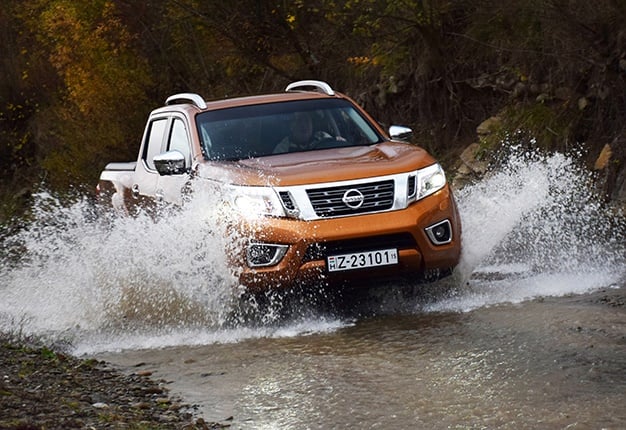
Nissan plans to boost the African automobile industry by manufacturing the full model line-up of the next generation Navara on South African soil. Production is expected to start in 2020 and will take place at Nissan South Africa’s Rosslyn facility just outside Pretoria.

The Navara joins the popular NP200 and NP300 models, which are already being built at the Rosslyn facility and sold in the domestic market as well as some 45 pan-African markets. Nissan believes in the long-term potential of the African continent and in South Africa’s important role as a base from which we can invest and grow our market share.

navara,np300Our expansion in Africa, the Middle East and India (AMI) – through increasing manufacturing capacity in South Africa – is evidence of this. This follows on expansion in Pakistan, and the signing of a Memorandum of Understanding with the Ghanaian and Kenyan governments. Nissan already has a strong industrial presence in the region with plants in India, Algeria and Egypt. We were the ‘first-mover’ in Nigeria – where we have a joint venture plant which is proudly building cars in Nigeria, for Nigeria – and are also beginning a sustained phase of ‘new model introduction’ across growth segments in established markets, evolving our retail network and industrial strategy.
This latest investment into the South African economy – which totals R3-billion – is aligned with the Nissan M.O.V.E. to 2022 mid-term plan, via which Nissan aims to double its presence in the AMI region over the course of the current six-year period. With flexible new production architecture and current output rates set to increase by more than 50%, our Rosslyn facility is poised to become an anchor plant for the region. We expect our production output to grow to an annual total of more than 60 000 vehicles – for distribution throughout the local as well as export markets and accounting for 15% of Nissan’s total production output in the region.

It is an investment, which was in part made possible by the introduction of the new, extended Automotive Production and Development Programme (APDP). The APDP provides a stable investment framework and aggressive production goals for the period 2020 to 2035. It is also an investment, which is aligned with the development objectives of the SAAM. The South African economy is postured to benefit from the generation of an annual total of R5.8-billion in new economic activity. We support government’s work to diversify the economy and raise production, while growing the local supplier base. This investment re-affirms Nissan’s commitment to economic growth and job creation in South Africa, which is one of the four essential components of the SAAM, insofar as it relates to the sustainable development of the economy.

The Rosslyn facility currently employs 1832 staff. The addition of the Navara to our production line results in the need for a second shift and initially creates an additional 400 jobs, the majority of which are in manufacturing operations. But an estimated total of 1 200 new jobs are set to be created throughout the full value chain.Nissan is also bringing in teams from Japan to work with locally-based suppliers to develop the local component. And in partnership with the Automotive Industry Development Centre, we have built an incubation and training centre at the Rosslyn facility. Through this incubation and training centre, we have already developed eight new black-owned suppliers and are targeting an additional five, to be operational when we start producing the Navara. Nissan is looking at starting local production of the Navara with a 38 percent local component.

This is planned to increase to 48% by 2022 and going forward, we endeavour to continue to grow our local component further in line with the SAAM targets.As the world moves towards the fourth industrial revolution, increased automation and emerging technologies are becoming increasingly important in manufacturing plants and Nissan has invested heavily in the training and upskilling of staff as well as the gradual modernization of our plant at Rosslyn. Our new plant will incorporate state-of-the-art technology to make sure it stays ahead of the ever-changing automotive manufacturing industry and ensuring a product of the highest quality for our customers. This investment is set to transform the plant into a next-generation, world-class production facility and a production hub for Nissan. Working with our partners in government and labour – along with our component suppliers – we are ready to take production in South Africa to the next level to fully meet local demand, better serve our customers and boost the South African economy.

In this way, we are working to fulfill our role in moving the country closer to 2035 – driving transformation, growing the local supply base and exporting proudly South African-built vehicles to the continent and beyond.

Equity Bank partners with Toyota Kenya to finance customers

0

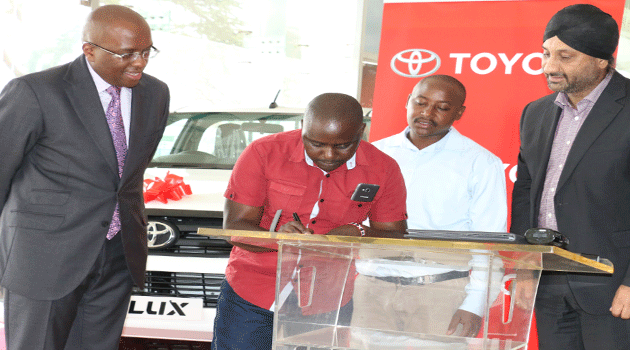
Equity Bank and Toyota Kenya Limited customers can now access up to 95% financing payable within 60 months on the single cab Hilux pickups. This follows a partnership agreement signed between Equity Bank and Toyota Kenya that will see the two organizations finance businesses and individuals keen to expand but are often stagnant due to lack of enough capital.

Speaking at the launch ceremony, Equity Bank Kenya Managing Director, Polycarp Igathe said the Bank is excited to be partnering with Toyota, one of the biggest automobile companies globally, to provide the much-needed financing to businesses and individuals who often experience financial challenges when trying to reach their targets.

Polycarp added that the partnership will boost easy access to finance to all Kenyans as well.

“We share a common goal with Toyota which is to empower SMEs and those in the agribusiness value chain from farmers to processors. This partnership will go a long way to enable easier and more convenient access to finance. We are always looking for ways to add value and provide affordable and flexible financing solutions to our customers and Kenyans,” said Igathe.

Toyota Kenya Managing Director Arvinder Reel also added on the organization celebrating 50 years of Toyota Hillux that continues to gain traction in the Kenyan market.

“The financing partnership with Equity Bank marks a special moment for us as we celebrate 50 years of Toyota Hilux, a vehicle that has over the years been known as one with an untouched legacy and unrivaled toughness. It is in this spirit that we continue offering customers easier options to purchase top quality, durable and reliable vehicles,” he said.

Also read: NIC Bank and Toyota Kenya enter into a financing deal for HINO trucks

Equity Bank is giving customers who qualify for the financing, a 90-day holiday before they begin repayments.

In addition, customers who purchase the Hilux single cab vehicle under the partnership terms also have an opportunity to choose between a 1-year free maintenance service from Toyota or 1-year comprehensive insurance from a reputable underwriter, as part of the deal.

The Bank has allowed customers to repay the loan through any of the Bank’s alternative channels such as EazzyBanking App, Equitel and through any of the Equity agents or branches all over the country.

The Hilux single cabin pick-up is an all-terrain vehicle with the largest load capacity in the pick-up segment. It is efficient in terms of fuel consumption with enhanced safety features making it suitable for both private and commercial use.

Ford to export Ranger from Port Elizabeth

0

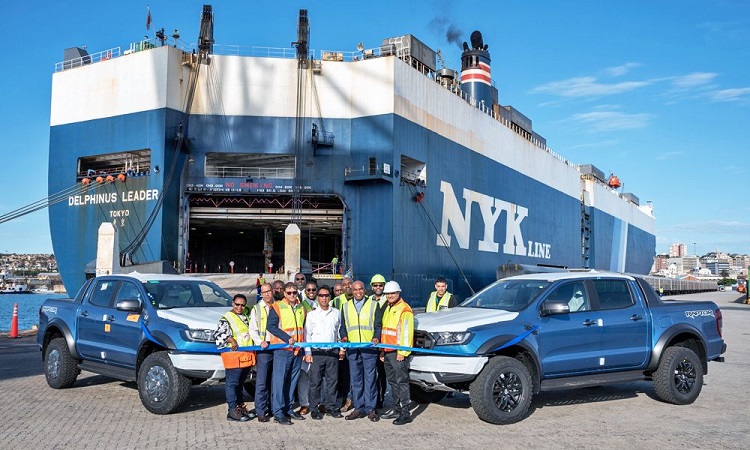
Ford South Africa is to begin using the port in the southern city of Port Elizabeth to export its locally assembled Ranger line, following unexpectedly high demand. This will alleviate pressure on its primary export port, Durban, on the east coast of the country.

The company has a plant in Pretoria, 600km inland, and uses rail to ship assembled vehicles to Durban Harbour’s ro-ro terminal, which serves as the country’s primary import and export hub for most OEMs, importers and distributors. However, the terminal is reaching capacity and Ford is producing more cars than it can comfortably ship through Durban.

According to Duduzile Nxele, spokesperson for Ford, international demand for the OEM’s Ranger pickup reached a record high in 2018. She notes that the Silverton Assembly Plant, Pretoria, shipped 68,364 units to export markets – a 16.2% increase compared with 2017.

Combined Ranger production for the domestic and export markets for 2018 reached 98,505 units, which was 8,383 more than the previous year. This is the highest annual production volume to date for Ford’s South African operations, with December 2018 reaching a new monthly record of 11,091 Ranger sales to local and export markets.

“We have invested over 3 billion rand [$210m] in preparation for even higher production capacities for the imminent launch of the first-ever Ford Ranger Raptor, along with the new Ranger and Everest models launched this month,” Nxele adds.

Pursuing a multi-port strategy as a result of the increased demand and production, Ford is pursuing what it calls a ‘multi-port strategy’ to redirect some of its output to Port Elizabeth. The first shipment of 1,000 vehicles is already underway, heading to Europe.

The bulk of the Ford Ranger exports from South Africa are destined for Ford of Europe’s ‘EU20’ markets: Austria, Belgium, Britain, Czech Republic, Denmark, Finland, France, Germany, Greece, Hungary, Ireland, Italy, Netherlands, Norway, Poland, Portugal, Spain, Romania, Sweden and Switzerland.

Vehicles will be moved via state-owned logistics company, Transnet Freight Rail. Port Elizabeth itself already has a thriving OEM community, with companies such as General Motors and Volkswagen transporting their vehicles inland via Transnet’s infrastructure. This arrangement allows Transnet to optimise its rail capacity.

“Traditionally, Port Elizabeth-based vehicle manufacturers transport units to Gauteng by rail, and these rail assets return empty,” says Nxele. “Ford will now be using the return leg to move export vehicles from Silverton to Port Elizabeth for shipping to selected markets around the world.”

Rajesh Dana, manager at the port of Port of Elizabeth, says the arrangement with Ford will help the city to progress towards its long-term strategy of becoming a global automotive hub.

“Not only will this project result in increased export volumes through the port of Port Elizabeth, but it will also allow for value-added logistics services within the port,” Dana said. “This will allow us to showcase our world-class automotive industry port services and allow the port to take a step closer in becoming a premier automotive hub for South Africa.”

BAIC opens compact SUV plant in South Africa

0

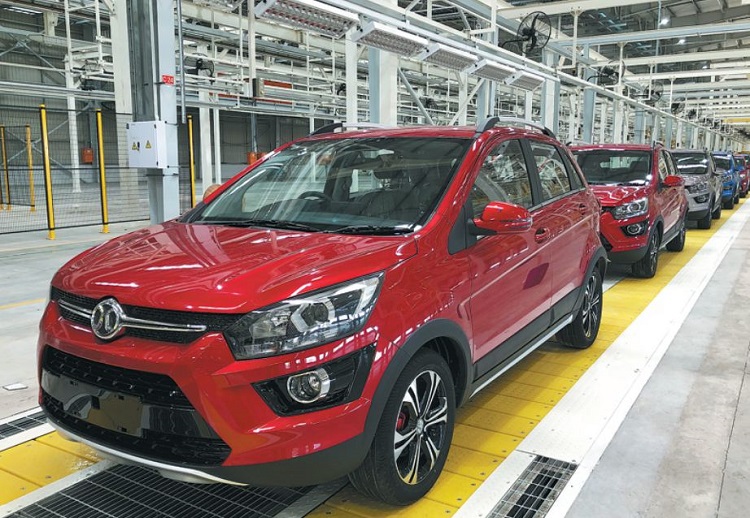
Chinese vehicle-maker BAIC has officially opened its 11 billion rand ($834m) assembly plant in South Africa, which will start making the X25 compact SUV from imported semi-knockdown (SKD) kits. BAIC has been exporting the vehicle to South Africa from China since 2017.

The plant, which is located in the Coega Industrial Development Zone (IDZ), near Port Elizabeth, is part of the joint venture formed in August 2016 between BAIC International and South Africa’s Industrial Development Corporation (IDC).

The company’s goal is to manufacture 50,000 units a year by 2022, doubling that in due course to reach full capacity. BAIC envisages selling around 40% of the plant’s output in the local market, where it has 17 dealerships (with plans to add to that), while the other 60% will be exported to the rest of Africa, as well as the Middle East and Latin America.

BAIC had originally intended to open the plant towards the end of 2017 and assemble vehicles from complete knockdown (CKD) kits. However, construction of the facility was halted when the IDC and other stakeholders became aware that BAIC planned to import labour and materials. Local suppliers also questioned tender documents and threatened to take action against the company. These hold-ups put the opening back by about a year and forced a change in production plans.

The company said it had extensively engaged with South African automotive component manufacturers and suppliers in the past two years. While the X25 will be assembled from kits, it will still use some local components. According to local media sources, the initial localised procurement plan will include 39 parts, mainly accessories for interior parts such as roof lining, carpets and seats.

The plant will employ around 120 workers by year-end and the IDC’s CEO, Geoffrey Qhena, said the “numerous” local and foreign components manufactured would also generate additional investments and jobs in the supply chain.

South African president Cyril Ramaphosa and Chinese president Xi Jinping officially opened the plant via a video link while they attended a summit of the BRIC nations hosted by South Africa in late July. Ramaphosa said: “This [milestone] confirms the value of the relationship between our countries and the practical, solid co-operation that we enjoy at an investment level.”

President Xi said the opening of the plant demonstrated that China had kept its word, adding that Africa, as well as Asia, had huge potential for growth and China would play a role in driving rapid growth on the African continent.

A few weeks ago, Germany’s Mercedes-Benz announced it would spend €600m ($701m) on its assembly plant in East London, South Africa, to produce the next generation of its C-Class cars.

KEBS bans import of used car parts

0

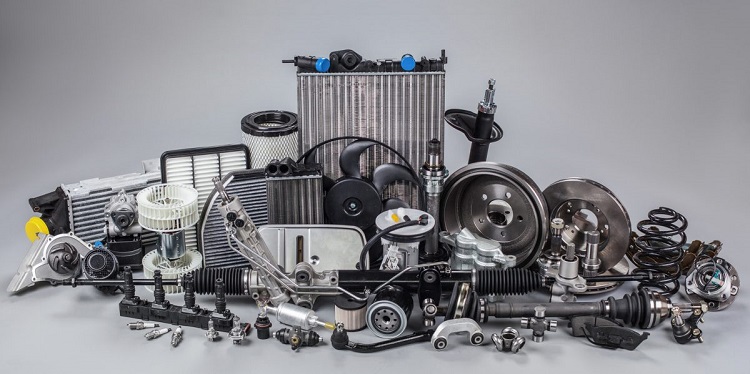
Thousands of second-hand motor vehicle spare parts dealers are staring at a bleak future after the Kenya Bureau of Standards (Kebs) moved to enforce a tough restriction on the importation of used car parts.

The standards agency, in a notice sent out to pre-shipment cargo inspectors, has specified 17 categories of second-hand spare parts that are banned from entry into the country in a policy shift intended to rid the market of the used car parts.

The policy change is part of the government’s agenda to gradually phase out second-hand vehicles with the ultimate aim of creating substantial demand for new, locally-assembled vehicles.

The Ministry of Industrialisation has been developing regulations in the controversial National Automotive Policy intended to restrict import of used cars that are older than five years, arguing that this will boost local manufacturers and create high-quality jobs in the long run.

The law currently allows import of second-hand vehicles that are up to eight years old. Kebs Corporate Communications Manager Phoebe Gituku said the restriction applies only to used car parts and does not put any barriers for importers of new spares.

List of items

The Kebs notice is pegged on the agency’s standard KS2190:2013. This requires that parts like tyres, tie-rod-ends, bearings, spark plugs, clutch plates, brake pads, tubes, brake hose pipes, rubber bushes, filters, pressure plates, rack ends, ball joints, break and clutch cables among others are to be imported only as new.

“The used motor vehicle spare parts are not to be imported. This is outlined in the Standard and implementation began in March 2018. Kebs has only restricted the used spare parts, not new ones,” said Ms Gituku.

The move could be a blow to the hundreds of thousands of motorists who heavily rely on used motor vehicle spares, which are relatively cheaper and of better quality than new imports that mainly come from China, Taiwan, India and Indonesia.

Tens of thousands of Kenyans are engaged in the used parts trade, mainly based in Nairobi’s Kirinyaga Road, Grogon and industrial areas with others scattered across major towns around the country. The used parts are mainly imported from Japan and Dubai.

The Economic Survey 2019 shows that Kenyans spent Sh10.1 billion last year on importation of motor vehicle spare parts, most of which were second-hand, based on motorists’ preference.

Vehicle industry stakeholders

Several motor vehicle industry stakeholders said the ban was retrogressive and it will only deny motorists the ‘better quality’ used spares.

Others saw the ban as a concealed effort to start implementing recommendations in the draft National Automotive Policy that is yet to be agreed on by all stakeholders.

The Kenya Auto Bazaar Association secretary-general, Charles Munyori, said the proposal will unfairly punish users of second-hand spare parts.

“I don’t think they are being genuine and you can see the whole conspiracy from the new motor vehicle dealers to take over the spares market as well. The government is not likely to achieve much because even the salvage motor vehicles still generate a significant portion of the second-hand parts. Some of the so called new parts are fake and break down very fast,” said Mr Munyori.

A source within Kebs said the ban was originally intended to target parts with fast wear and tear but was expanded to target others that the government felt could be sourced locally.

The Kenya Used Motor Parts Importers Association (KUMPIA), a lobby group of used car parts dealers, said members stand to suffer huge losses from the proposed policy changes.

High investment

KUMPIA Secretary-General Eliud Riika said the restriction does not just make import difficult but also complicates compliance for shipping of certain parts that are hard to import in the prescribed manner by the standards body.

“It is not realistic to allow people to import used cars from Japan and then restrict imports of parts. We have invested a lot in this trade, we usually buy used cars in Japan before (extracting) parts from them, we don’t just buy parts as isolated materials the way some people may imagine,” said Mr Riika.

According to him, it takes considerable labour and time to source the parts which many motorist favour due to their durability and fairer cost.

In the draft automotive policy, Kenya hopes to gradually and systematically reduce and eliminate the importation of used vehicles and used parts share in the domestic market by promoting assembly and production of automotive products locally.

The government has continually blamed the importation of used motor vehicles and used spares for the dismal performance of the local vehicles assembly plants that are operating at an average of 16 percent, producing just about 5,000 vehicles against an installed capacity of 34,000 vehicles in a single shift.

“To address the challenges affecting the vehicle industry, including the lack of dedicated legal, institutional regulatory framework, importation of parts by franchise holders instead of procuring from local parts manufacturers, influx of used fully-built units, among others, the National Automotive Policy was developed,” reads a February 2019 draft of the policy released by the Ministry of Trade and Industrialisation.

Majority of the restricted spares listed in the Kebs notice also appear in the draft policy as manufactured locally, indicating a link between the ban and the drive for the new policy meant to kick off in July.

Buying commercial vehicle insurance


Buying insurance is a significant investment, and you’ll want to invest wisely. Insurance doesn’t have to be a daunting task. There’s a good deal to consider, but remember, you don’t have to go through it alone. Your insurance provider can provide much more than a policy document.

First you need to be able to define what types of vehicles you are using and for what purpose. The most common types of commercial vehicles are defined as light commercial and include most types of vans as well as pickup trucks. Small, medium and large vans, as well as pickup trucks used for the purpose of transporting materials, goods and workers usually fall into this category. The vehicles you use and their purpose for your business will determine what coverage you need, so be sure you have that specific information before getting a quote. What’s the difference between commercial and personal vehicle coverage?

Coverage for your commercial vehicle is very similar to the insurance you need for your personal vehicle. However, there are a few added risks associated with commercial vehicles such as: added weight of loaded vehicle, size and nature of load, modifications of vehicle for commercial purposes, and ownership of contents i.e. property belonging to you or your customer. Added risks also include potential health and safety hazards to your employees and other workers. Commercial vehicle coverage is specially designed to cover these added risks so it is very important that you have it.

Factors to consider when buying commercial motor insurance

How do you find the business insurance that’s best suited to your operation? Here are some tips to consider before making your decision.

According to Sobhag Insurance Brokers, before considering buying insurance, you must look around for competitive premium rates with reliable insurance companies or use an insurance Broker who will be happy to advice and explain to you why insure with a certain insurer and provide you with competitive premiums and assistance when you have a claim.

Kevin Wamure, Principal Officer/CEO at Reica Insurance Brokers Ltd advises potential buyer to look out on the financial stability of the insurance company, company history and reputation as well as reviewing testimonials on service delivery, coverage and pricing.

“One should consider the excess amount; the amount you will need to cater for incase of repair after an accident. The excess is usually a percentage of the total value of the car or the minimum set amount, whichever is higher of the two. You can choose to opt of this by paying an excess protector, an additional benefit that can be added to your cover to avoid further misery after an accident,” says Allianz Insurance Company of Kenya Ltd.

“A potential buyer should also consider the passenger legal liability cover that comes separate from the motor commercial insurance. This cover protects you in instances where you may be liable in terms of the law for the injury or death of passengers that were transported in your vehicle. The cost is usually charged as per the vehicle’s capacity. If you have a 14 seater car, you will pay the set amount charged per seat multiplied by the number of seats you would like to insure, 14 being the maximum capacity,” she affirms.

At Africa Merchant Assurance Company Ltd, Martin Mwibanda, Head of Sales and Marketing, recommends comparing  different quotations and services then choose what best fits the potential buyer’s needs such as customer service standards, company reputation, accessibility to the provider, financial stability, products offered suitability, location convenience i.e. branch network and claims payment.

What does commercial vehicle insurance cover

“Motor insurance provides cover for cars, trucks, motor cycles and all other types of vehicles. Specifically, motor commercial insurance covers where use of vehicle is for hire, reward and the carriage of goods in connection with insured’s business. It primarily provides protection against losses incurred as a result of road accidents, theft, fire and liability that could be incurred as a result of use of the vehicle,” says Kevin Wamure, Principal Officer/CEO at Reica Insurance Brokers Ltd

According to Allianz Insurance Company of Kenya Ltd commercial insurance cover vehicle used for transporting goods and paying passengers. The cover is usually categorized into four classes, the motor commercial own good, motor commercial general cartage, personal service vehicle and special type vehicles. Motor Commercial own good policy covers vehicles used to transport business owned goods e.g. pick-up trucks, double cabin and lorries. Motor Commercial General Cartage covers vehicles that can be hired or used for income purposes e.g. trailer-trucks and lorries for hire. Personal service vehicle (PSV) category insures vehicles used to transport passengers e.g. tour vehicles, matatus and taxis.

Moreover, Sobhag Insurance Brokers understands that, commercial insurance is a cover required by law on each and every commercial vehicle with a minimum requirement of Third Party Insurance and the top most cover being Comprehensive Insurance Cover. Third party cover protects you against damages payable to others for any damage caused by your vehicle to a person or property(i.e.  pedestrian, vehicle, building, lamp post etc.).

“Comprehensive Insurance covers you for third party as well as damages incurred to your vehicle as well however it is subject to an excess of 5% minimum Ksh. 20,000. This is primarily there to avoid the insured in putting small petty claims as it does not justify the costs that the insurance company would incur in the claims process such as paying an assessor fee etc,” says Tina the Director at Sobhag Insurance Brokers.

Africa Merchant Assurance Company Ltd, interprets that commercial insurance cover any accidental loss or damage to the insured vehicle and its standard accessories, death or bodily injury to a third party, damage to third party property, medical expenses as per policy limit, legal costs related to any incident likely to give rise to a claim under the policy, authorised repair limit as per policy limit, towing limit as per policy limit.

The following are also covered at an additional premium;

  • Windscreen and window glass (this is sometimes offered at no cost).
  • Policy excess.
  • Riot, strike & civil commotion.
  • Coverage i.e. East Africa coverage.
  • The goods if the goods are inclusive.
  • AA tracking.

A motor insurance usually have three cover options. These are:-

Third Party only – This is the minimum cover required by the law in Kenya. It covers the insured against liabilities arising from bodily injury, death and third party property damage. This means that if your vehicle is involved in an accident, your insurer will only meet the third party injury claims and repair costs for the third party vehicle(s) (if you were to blame for the accident.

Third Party Fire & Theft – Provides cover for loss or damage to the vehicle caused by fire or theft, and legal liability for bodily injury, death and third party property damage.

Comprehensive – Cover against loss or damage to the vehicle and legal liability for bodily injury, death and third party property damage.The amount of cover is based on the current value of your vehicle. Extensions to this cover include cover for windscreen, radio cassette, medical expenses etc.

Motor commercial in terms of classification is categorized under general cartage, own goods and private hire.

What determines commercial vehicle insurance policy

The cost of insuring your vehicle is determined by its estimated market value. Age is another defining factor. A vehicle more than 12 yrs. old can only be issued a motor third party cover. It can’t qualify for motor comprehensive or motor third party, fire and theft.

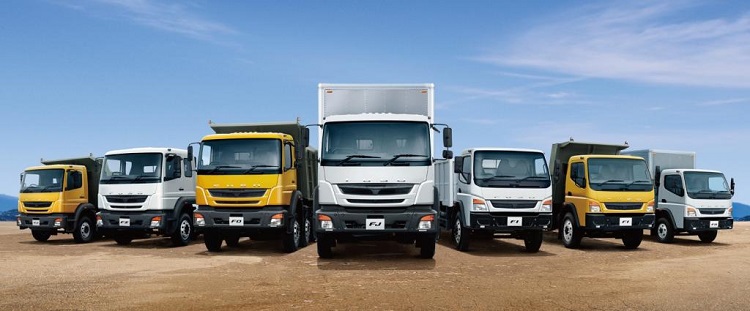
A commercial vehicle is a motor vehicle constructed or adapted as a:

  1. Goods carrying vehicles i.e. Lorries

–this is further broken down to;

  • Carriage of own goods excluding hire or reward.
  • Carriage of own goods together with regular carriage for hire and reward.
  • General haulage.
  1. Passenger carrying vehicles i.e. institution vehicles.
  • Agricultural and forestry vehicles i.e. tractors.
  1. Vehicles of special constructions i.e. cranes.

Depending on the different uses detailed above, this is what will form the basis in determining under which  category of commercial vehicle insurance a potential buyer’s insurance need will fall under.

After this classification is done, the rates will be subject to the following factors;

  1. The use of the vehicle(s).
  2. Goods carried – some goods are high risk i.e. LPG.
  3. The coverage i.e. Kenya only vs East African coverage.
  4. The value of the vehicle.
  5. Fleet rates.
  6. Claims experience.
  7. Weight of the vehicle.


Auto-Springs East Africa opens factory in Limuru

0

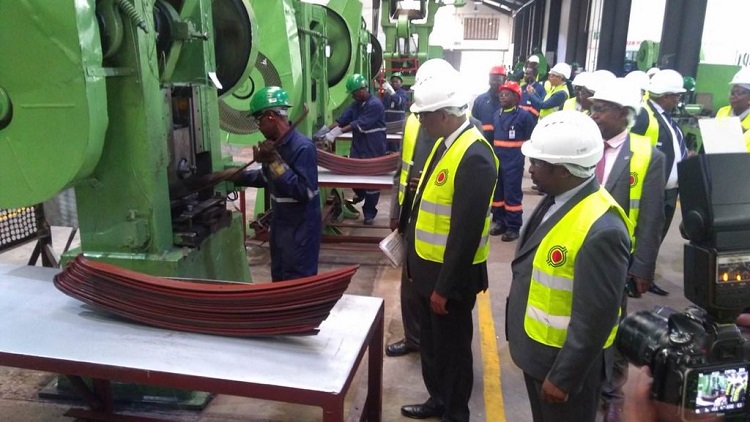
Car parts manufacturer Auto-Springs East Africa opens a new manufacturing plant in Limuru. The plant is set to create 600 additional jobs. The auto parts firm, which has moved its operations from Athi River to the new plant, already has about 200 employees on its payroll.

The newly opened Sh.500 million plant will be hiring both skilled and semi-skilled workers. The new jobs projection is, however, partly dependent on the government’s resolve in implementing a legal notice that requires car manufacturers to source more than a third of their inputs locally.

“If the government enforces Legal Notice 489 which requires automotive assemblers to have 40% local content in their vehicle assemblies, then we can increase our production to three shifts that would require a workforce of 800 persons,” said Kevin Kihara, the Auto-Springs East Africa board chairman.  The company produces wiring harness, leaf springs, bolts and nuts and agricultural machinery.

According to the Economic Survey report, Kenya imported car parts and accessories worth Sh. 2 billion last year an increase from the Sh.1.7 billion purchased in 2016 but lower than the Sh.3.6 bn peak recorded in 2014.

Its current market stretches across East, Central and Southern African countries of Uganda, Tanzania, Zambia and the Democratic Republic of Congo. Among its biggest customers are Isuzu and Mitsubishi who order wiring harness for both buses and trucks. Toyota Kenya is also on its clients list.

Auto-Springs East Africa got funding for the expansion from Mauritius-based SME financier, SFC Finance.The expansion loan comes months after Ascent Rift Valley Fund, a private equity firm, acquired a majority stake in the company in February this year.

“We are trying to reduce the level of imports of goods that can be made by companies like ASL without compromising on quality,” said Industrialization secretary Adan Mohamed.

Mr. Mohamed said locally manufactured goods benefit local businesses, boosting the manufacturing sector’s contribution to the economy. The auto parts firm currently produces 150 tonnes of springs each month. It has set its eyes on hitting a monthly production of 450 tonnes, its maximum capacity. The says it is in advanced talks with Japanese manufacturer, Honda, to supply its local operations.

About Auto Springs East Africa (PLC)

Auto Springs East Africa (PLC) is Kenya’s largest original equipment manufacturer to the Kenyan motor vehicle assembly sector. Auto Springs was established in the year 1979 and has been producing a wide range of products for motor vehicles specifically leaf springs, nuts and bolts (centre bolts, U bolts, wheel studs, shackle pins etc.) and wiring harnesses for various models of commercial vehicles. In addition to the above, the company manufactures a wide range of agricultural equipment including sugar Mill components. It is also involved in a wide range of chassis reinforcements, extensions and modification of springs to make them suitable for Kenyan roads.

The factory is located in Limuru near the interchange of Kamandura Mai Mahiu Narok road and Eldoret Malaba road. The factory has modern and automated machinery to ensure quality and efficiency in production to meet the market demand. The factory has a strong technical team that is able to develop new products to meet the changes in technology in the motor vehicle industry. Our major customers in the assembly business are Isuzu East Africa, Simba Colt motors, Toyota Kenya and other industry players who distribute to garages and spare parts shops across the East Africa region.


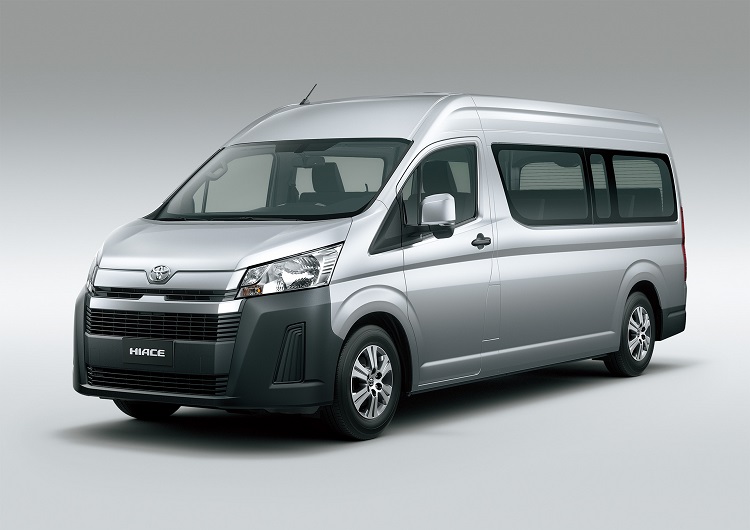
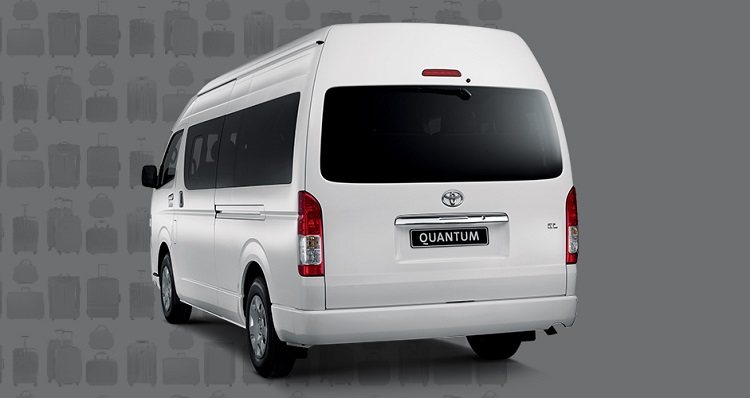
New Toyota Quantum 2019


Toyota has released an all-new Quantum range in South Africa, and like the previous GL and van variants, the new ones are imported. But this does not mean the end of the road for the outgoing Quantum generation as the 16-seater Ses’fikile continues to be produced locally for the commuter taxi market – while bringing back an old name that many South Africans will be familiar with. Yes, it will now be known as the Hiace Ses’fikile, and will continue offering the familiar 2.7-litre petrol and 2.5-litre turbodiesel engine options.

The new Quantum range continues where the old GL and van models took off, while changing from a cab-over to a front-engined ‘semi-bonnet’ design.

There’s a wide range of variants on offer (take a deep breath), with the GL Bus offered in 11-seat long-wheelbase and 14-seat super-long-wheelbase configurations, while the 3-seat Panel Van is available as a conventional LWB high-roof SLWB, and a 6-seat Crew Cab is also part of the mix.

Not only is the platform all new, but it houses a completely different engine in the form of Toyota’s 2.8-litre turbodiesel that Hilux drivers will be familiar with. The motor produces 130kW at 3400rpm and 420Nm from 1400 to 2600rpm, at least on all versions barring the 14-seater bus, which is instead tuned to produce 115kW and 420Nm. In all cases a six-speed manual gearbox is employed.

Locally, the sixth-generation Quantum will be available as a three-seat van in long- and super-long wheelbase configurations, as well as a six-seat crew cab in long-wheelbase form. The bus range, meanwhile, will comprise 11-seater (long-wheelbase) and 14-seater (super-long-wheelbase) versions.

The new Quantum has a leaf spring rear suspension set-up, while the front end has conventional MacPherson struts.

Moving inside

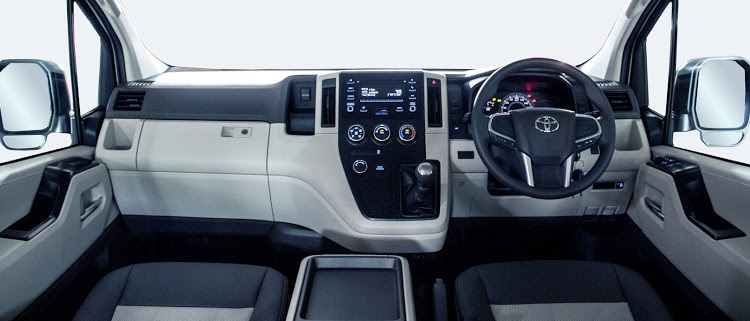
A longer and wider cabin translates to improved leg and head room, while the colours, patterns and shapes have been designed to create a more open feel. The GL Bus variants have a ‘natural’ beige colour scheme, with a combination of cloth and synthetic leather, while the Panel Van models come upholstered in grey fabric.

Depending on the model, air conditioning with separate control and air flow for the rear occupants is provided.

Safety features include Vehicle Stability Control, Hill-Assist, Trailer Sway Control, ABS and dual airbags.

The exterior colour range is fairly limited, with the GL offered in Ivory White, Quicksilver Metallic or Light Blue Metallic, and the panel van only in Ivory White and Quicksilver Metallic.

All models are sold with a three-year/100 000km warranty, while the Quantum models come with a nine-service, 90 000km service plan.

PRICES

Hiace Ses’fikile

2.7 16s – R 419 100

2.5D 16s – R 444 200

Quantum Panel Van

2.8 LWB 3-seater – R 473 900

2.8 LWB 3-seater (AC) – R 481 400

2.8 SLWB 3-seater – R 509 500

2.8 SLWB 3-seater (AC) – R 517 000

Quantum Crew Cab

2.8 LWB 6-seater – R 482 600

2.8 LWB 6-seater (AC) – R 490 100

2.8 LWB 6-seater (Front & Rear AC) – R 495 600

Quantum Bus

2.8 LWB GL Bus 11-seater – R 597 700

2.8 SLWB GL Bus 14-seater – R 613 500

- Advertisement -