Sunday, May 31, 2026
Home Blog Page 74

Ford opens research center in Israel


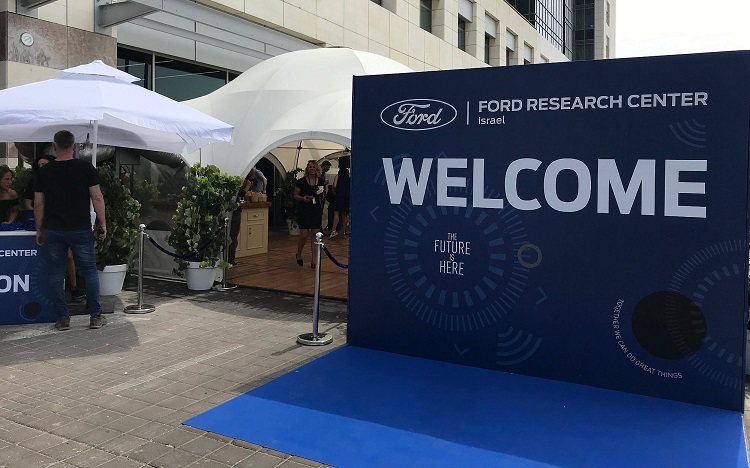
Ford Motor Co. has formally opened a research center intended to help the automaker tap into the region’s burgeoning mobility startup community. Israel in recent years has grown to rival Silicon Valley in terms of tech entrepreneurship, with success stories such as Mobileye, which is headquartered in Jerusalem and was acquired by Intel in 2017 for $15 billion.

Investors have poured roughly $6 billion into Israeli smart mobility startups since 2013, according to EcoMotion, a nonprofit organization that hosts a yearly mobility conference in Tel Aviv.

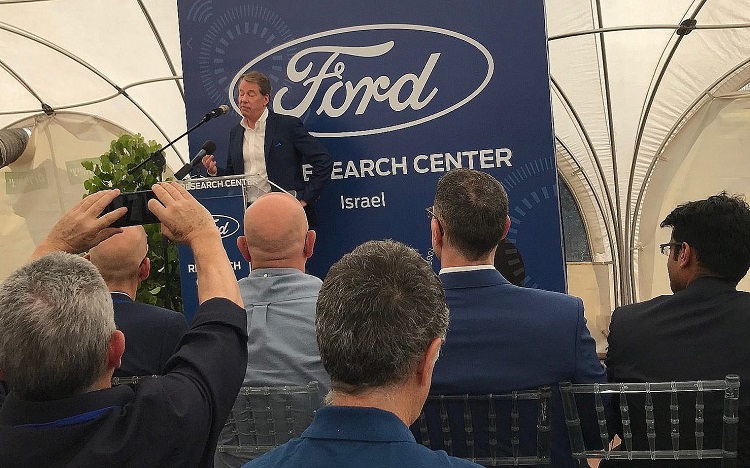
“We recognize the importance of being in one of the world’s leading innovation communities and ecosystems,” Ford Executive Chairman Bill Ford said in a statement. “This new center is not only an expansion of our existing Research and Innovation centers but provides an opportunity to join a growing innovation community in Israel.”

Ford gave a keynote speech Tuesday at the EcoMotion conference and attended the opening of the center.

“This really becomes the lifeblood of what Ford Motor Co. will be in the future,” Ford said at the ribbon cutting ceremony.

The site would start small, with roughly 10 to 12 workers, but likely would grow quickly, similar to Ford’s research center in Palo Alto, Calif., which opened in 2015 with a small staff that has grown to about 250 today.

He said the site’s researchers would work with those in Palo Alto and Dearborn, Mich., to explore future technologies, and would work closely with SAIPS, an Israeli computer vision company Ford acquired in 2016.

He said the two companies would focus on research on interior monitoring, sensors, OTA updates, cybersecurity and autonomous technology.

The automaker has worked with local tech scouts here for nearly a decade and was among the first automakers to host a developer challenge here in 2015.

Wells Fargo agrees to pay customers $386M over unwanted auto insurance


Wells Fargo & Co. will pay customers at least $386 million to settle class-action claims that the bank signed them up for auto insurance they did not want or need when they took out car loans.

The proposed settlement was disclosed in filings last week in U.S. District Court in Santa Ana, Calif., and requires a judge’s approval. National General Insurance Co., an underwriter, will pay an additional $7.5 million, making the total customer payout at least $393.5 million, according to the filings.

Wells Fargo denied wrongdoing, but said it settled to avoid the risks, cost and distraction of litigation, and has set aside enough money for the payout. The defendants will also pay up to $36.5 million for the customers’ legal costs, court papers showed.

In an email, Wells Fargo called the settlement “an important step in making things right for customers.” “We will continue sending individualized letters to customers that clearly set out the remediation amount due to them, as well as a check for that amount,” it added.

Wells Fargo agrees to pay customers $386M over unwanted auto insurance


Wells Fargo & Co. will pay customers at least $386 million to settle class-action claims that the bank signed them up for auto insurance they did not want or need when they took out car loans.

The proposed settlement was disclosed in filings last week in U.S. District Court in Santa Ana, Calif., and requires a judge’s approval. National General Insurance Co., an underwriter, will pay an additional $7.5 million, making the total customer payout at least $393.5 million, according to the filings.

Wells Fargo denied wrongdoing, but said it settled to avoid the risks, cost and distraction of litigation, and has set aside enough money for the payout. The defendants will also pay up to $36.5 million for the customers’ legal costs, court papers showed.

In an email, Wells Fargo called the settlement “an important step in making things right for customers.” “We will continue sending individualized letters to customers that clearly set out the remediation amount due to them, as well as a check for that amount,” it added.

Pioneering a future of Autonomous Delivery


Nuro co-founder and president Dave Ferguson explains why automated delivery for consumer goods like grocery and beyond is poised to provide next-level accessibility and convenience at reduced cost, all while improving safety, creating jobs and reducing pollution

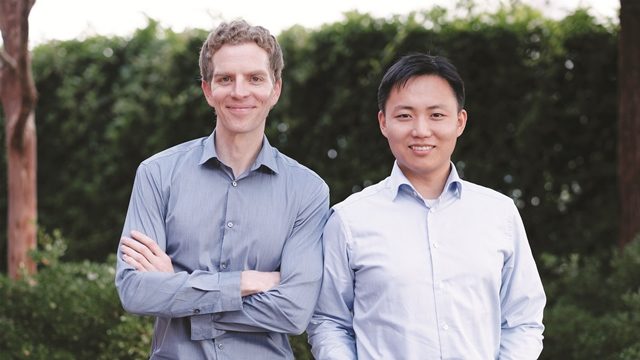
As AI and automation become increasingly prevalent in more aspects of the consumer’s life, the automotive category stands out as a category particularly vulnerable to disruption. Nuro, a technology company based in Silicon Valley, is working on developing autonomous solutions and using robotics to improve human life. Founders Dave Ferguson and Jiajun Zhu, who also served as principal engineers for Google’s self-driving car concept (now Waymo), developed Nuro to offer a fully autonomous, on-road vehicle designed to transport goods more quickly and conveniently than before.

PSFK spoke to Dave Ferguson, co-founder and president of Nuro about the future of automation and what a world full of self-driving cars might look like.

PSFK: Could you explain some of the broader trends you’re seeing in automotive innovation and how you apply them to your work?

Dave Ferguson: We’re seeing a great deal of innovation within the autonomous vehicle industry. When Jiajun [Zhu] and I founded Nuro, our mission was clear from the start: We want to accelerate the benefits of robotics for everyday life. The platform, and space in which we operate, is local goods transportation. If we could eliminate people from vehicles, and focus on the convenient and affordable delivery of goods, we could have massive impact quickly.

What led you to start Nuro? What gaps were you seeing in the market?

We spend billions of hours running errands each year. That is so much wasted time when we could be doing things that we love. When we founded Nuro, we wanted to give people back this time through the creation of a delivery service that people everywhere could use. Only 2% of groceries are delivered currently—mainly because of prohibitive cost. If we could reduce the cost, and use vehicles that are the safest drivers on the road, that felt like a really strong realization of self-driving technology.

Can you explain the experience of using Nuro, from the customer’s POV?

Overall, it’s a fairly user-friendly experience, and we’ve certainly learned and adjusted based on the customer experience we’ve seen in Scottsdale, Arizona.

When ready to purchase, customers currently place an order for their groceries either via Frysfood.com or via the Fry’s Food mobile app. When our customer vehicle, R1, shows up at their curb, they’ll receive a PIN code via text message to enter on R1’s screen. Proper entry of the code leads the compartment door to open. Once customers have gotten all the groceries out, they press the button on the screen to close the door. They can also reset this if they accidentally pressed the button too early.

What does Nuro add to the customer experience that didn’t exist before? What problems does it solve for?

Most notably, the December 2018 introduction of R1 to our Kroger pilot in Arizona marked the launch of the first unmanned, on-road delivery service to the general public.

With the customer experience in mind, we’ve taken a completely unique approach to our custom vehicle. Once a delivery order is placed, we’ll send customers a text message that includes both a unique PIN code that unlocks the R1’s compartment door and vehicle location tracking. Once the vehicle is curbside at its delivery location, customers can input their PIN to retrieve their groceries. The doors on the R1 are custom designed to lift up, ensuring easy access when moving groceries in and out of the compartments.

How do you envision the future of automated vehicles and delivery?

We only envision the appetite for automated vehicles and delivery growing stronger. More innovation yields increased accessibility and convenience to consumers as well as reduced cost. People will be able to shop more efficiently and get hours back in their day.

What do the next five years hold for Nuro and its growth?

In the next five years, we plan to expand Nuro’s scale in terms of service, operations and R&D. We have been servicing the Scottsdale, AZ area and plan to expand nationally to other regions. We also plan to expand our delivery beyond grocery, using R1 to deliver other types of goods. Our goal for Nuro is a product that in turn helps improve safety, create jobs, reduce pollution and make home delivery more affordable to all.

Is there anything else you would like to add?

With our recent Series B, we plan to continue to grow as a company, increasing the size of our team, fleets and service. We strongly believe Nuro is a product made for everyone, which will not only benefit us in safety and convenience, but also support a better environment in the long run.

About Nuro

Nuro is enabling a future of optimal customer service and satisfaction with innovative delivery & logitics capabilities that not only enhance convenience, but also reduce environmental impact.

Mombasa car dealer charged with Sh. 2 billion tax evasion

0

A Pakistan car dealer in Mombasa suspected to have evaded paying tax amounting to over Sh. 2 billion has been charged for failing to submit a tax return and declare the amount of money he had earned from the business.

Riasat Ali Khan who has been doing car dealer business in Mombasa since 2013 was also charged along with his employees whom he made directors on three companies linked to him. Khan who was represented by lawyer Charles Opulu denied the 10 counts of failing to pay tax and declaration of his earning along with his other directors of the three companies.

Mombasa Senior Resident Magistrate Martin Rabera, however, released Raisat Ali Khan on Sh. 10 million bond with similar sureties. His co-accused are  Khan Sultan Ali, Ali Aden, Ifttikar Adalat Ahmed, MuhamedAdil, Mohamed Afhan , Tanveet Ahmad and Rana Auto Selection company. The accused who were not present were however summoned by Rabera to appear in court on June 18 after Kenya Revenue Authority prosecutor Moses Ado successfully applied for it.

The worlds war on noise


The world of noise divides the nations. Every individual loves different sounds. For some the sound of a petrol and diesel engine is something to be cherished – especially when made louder by accessories and exhaust additions. For many people however this noise can become a nightmare. Especially at nigh in residential areas, cars with noisy exhausts can ruin peoples sleep.

Noise is pollution and the UK government at least is determined to stop it with the use of new technology. All cars made since 2016 are limited to 74 decibels. 70 is the sound of a loud telephone ring. In an announcement over the weekend, the UK government revealed plans to monitor the sound of vehicles, and punish those exceeding legal noise limits. It seems the new proposals are aimed at those in modified hatchbacks And that can’t be a bad thing.

Unmodified cars and models made since 2016 should meet the legal noise limits in any gear, so this is more about straight-through pies, decats and components designed to be too loud for the road. It could crush the aftermarket industry, who rely on the “boy racers” for their income.

Other equipment such as diesel generators already has to meet regulations and can be subject to inspection. Units with high quality perkins engines still need to be turned into nearly silent units to meet the noise regulations at night somewhere like London.

Ford confirms closure of UK engine factory


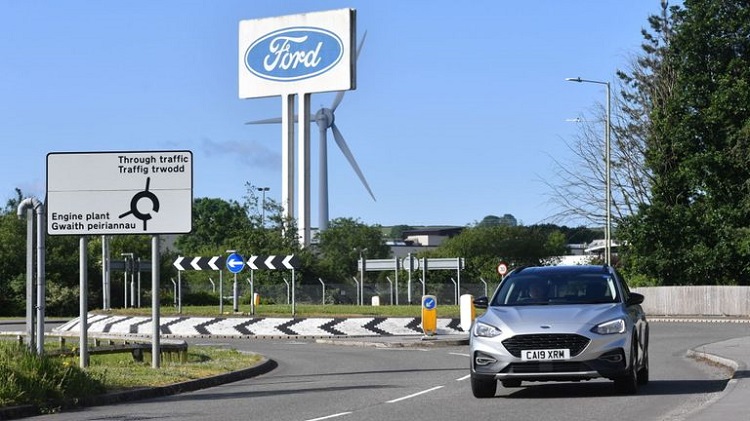
Ford confirmed it will close a UK engine factory as part of an overhaul of its unprofitable European operations in an $11 billion global restructuring. The plant in Bridgend, south Wales builds engines for several Ford models in Europe, including the Fiesta and B-Max. Production of Ford’s 1.5-liter gasoline engine will end in February while a contract to supply Jaguar Land Rover finishes in September 2020, the U.S. automaker said on Thursday.

“Changing customer demand and cost disadvantages, plus an absence of additional engine models for Bridgend going forward, make the plant economically unsustainable in the years ahead,” Ford Europe President Stuart Rowley said in a statement on Thursday.

The Bridgend plant built about 20% of Britain’s 2.7 million automotive engines last year. While Ford reiterated its commitment to other UK plants such as Dagenham and the remainder of an almost 9,000-person British workforce, the planned closure of Bridgend by September 2020 was condemned by labor groups.

“Ford broke promise after promise to the UK,” Unite Union General Secretary Len McCluskey said by email. “The company has deliberately run down its UK operations so that now not a single Ford vehicle — car or van — is made in the UK.”

Britain’s biggest trade union vowed to fight the move.

“We will resist this closure with all our might, and call upon the governments at the Welsh Assembly and Westminster to join us to save this plant,” McCluskey said.

Ford said it currently expects costs associated with the plant closure to reach $650 million, with approximately $400 million of the charges paid in cash as separation and termination payments for employees.

The remaining non-cash charges of approximately $250 million will include pension expenses and accelerated depreciation and amortization.

Ford said most of the pre-tax special item charges will be recorded this year and most of the cash outflows will occur in 2020.

The UK government will work closely with Ford, trade unions and other stakeholders, a spokesman said on Thursday, following the automaker’s announcement.

“The news of their intention and consultation on closing the Bridgend plant will be very worrying for the dedicated workforce,” the spokesman said. “Ford has committed to supporting employees throughout the consultation process and beyond, including with redeployment opportunities to other Ford sites in the UK.”

Brexit plans

Workers have long pushed for Bridgend to produce hybrid technology and electric vehicle components alongside a new third-party manufacturer to fill any surplus space but such investment has not been forthcoming.

“Significant efforts to identify new opportunities have not been successful,” Ford said.

In common with other automakers with a UK manufacturing presence, the future of Ford’s remaining operations in the country may depend on how the British government proceeds with a plan to leave the European Union by Oct. 31. The automaker warned earlier this year that a so-called no-deal exit would have “catastrophic” implications for its operations in the country, where it is the top-selling auto brand.

The Bridgend closure follows the decision by Honda to shutter its Swindon plant in 2021 with the loss of 3,500 jobs. Nissan no longer plans to build the X-Trail SUV in Sunderland, northern England, while Jaguar Land Rover is cutting 4,500 positions worldwide, many of them in the UK.

Ford is also closing factories in Germany, France and Russia as part of a deep retrenchment in Europe to weed out slow-selling models. The company wants to focus mainly on its commercial van and pickup truck businesses on the continent, where Ford made a pretax loss of $398 million last year.

Germany is opening its first electric highway for trucks


Trucks are guzzling ever more diesel, polluting towns and cities and fueling climate change. Germany thinks it may have found the answer by using overhead lines to power big rigs.

A system that allows trucks to draw electric power from overhead cables went into operation on 10 km (6.2 miles) of the autobahn, according to the German government.
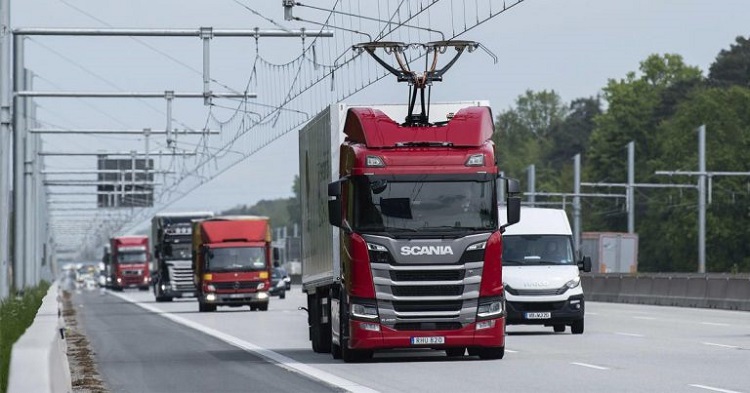
It’s the first such test on a public road in Germany. Developed by Siemens (SIEGY), the system allows big rigs with special equipment mounted on their roofs to connect to electrified lines while traveling at speeds of up to 90 km/hr (56 miles per hour).
The trucks run on electric motors when connected to the overhead lines, and a hybrid system when they return to a traditional road. Sensors detect when the overhead wires are available. Siemens says its eHighway system combines the efficiency of electric rail with the flexibility of trucking. Another benefit is a sharp reduction in emissions of CO2 and nitrogen oxides.
Trucks on a section of road used to test the eHighway system in Germany.
Trucks on a section of road used to test the eHighway system in Germany
Road benefits
Siemens argues that the system can be integrated with existing road infrastructure, making it a practical way to reduce emissions and energy consumption in places where railways aren’t feasible. The section of road opened Tuesday is part of a crucial link between Frankfurt airport, a global freight hub, and a nearby industrial park. Two more stretches of highway with the system will open soon. The German government spent €70 million ($77 million) to develop trucks that can use the system. Siemens said that a truck owner could save €20,000 ($22,370) on fuel over 100,000 kilometers (62,137 miles).
A technician works on a big rig before the tests commence.
A technician works on a big rig before the tests commence
Environmental boost
Truck transportation is the world’s fastest growing source of oil demand, according to the International Transport Forum, which is part of the Organisation for Economic Co-operation and Development. According to the group, road transportation of goods will also account for 15% of the projected increase in global CO2 emissions until 2050.
Slashing carbon emissions from transportation including freight is a key part of the 2015 Paris Climate Agreement, which aims limit global warming to well below 2 degrees Celsius above pre-industrial levels. Projects like the one in Germany could be part of a solution that includes increased railway and electric vehicle use.
“Electrified trucks are particularly efficient solution on the road to carbon-neutral transportation,” said Rita Schwarzelühr-Sutter, state secretary at the German Federal Ministry for the Environment.
Tests and demonstrations of the eHighway technology have also been conducted on a smaller scale in Sweden and near the US ports of Los Angeles and Long Beach.

Battery Electric Vehicle (BEV) Innovations Ahead

0

Toyota and Subaru announced a joint venture to develop a new battery electric vehicle (BEV) platform for mid-size and large passenger vehicles. This collaboration will also produce a jointly developed C-segment BEV SUV, sold under each company’s respective brand.

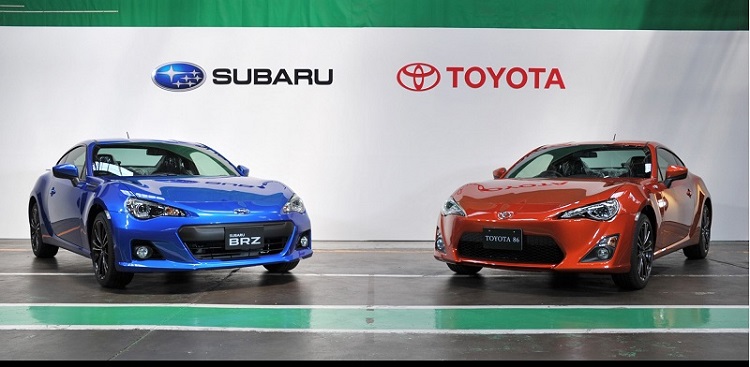
This partnership leverages Toyota’s expertise in vehicle electrification and Subaru’s renowned all-wheel-drive technology. The goal is to create compelling BEVs that offer unique advantages. This latest agreement builds upon a long-standing relationship between the two companies, dating back to a 2005 business collaboration agreement that resulted in joint projects such as the Toyota 86/Subaru BRZ and the Subaru Crosstrek Hybrid.

Also Read: Why passenger cars remain the most prominent vehicle in the EV battery market

The automotive industry is undergoing a significant transformation driven by the CASE trends (Connectivity, Autonomous driving, Shared mobility, Electrification). This joint venture directly addresses the “E” in CASE, focusing on electrified powertrains. The global landscape for BEVs is complex, with varying energy situations, government policies, environmental regulations, and infrastructure development impacting market needs and creating significant challenges related to cost, supply chain management, and sales strategies. The high cost of batteries and the varying needs of different markets require innovative solutions.

To overcome these challenges, Toyota and Subaru are adopting a non-traditional business model, collaborating beyond company boundaries. The joint BEV platform will be designed for scalability, adaptable to various vehicle types (including C and D-segment sedans and SUVs) to optimize development efficiency. Subaru will redirect its existing BEV development resources to this joint project, enhancing efficiency across engineering, development, and procurement while continuing its efforts to develop an attractive BEV SUV. This collaborative platform represents a significant step towards creating competitive and efficient BEVs for the global market.

Mitsubishi invests in TVS Automobile

0

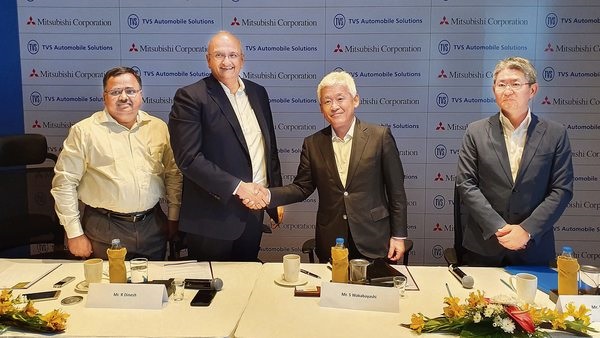
Japan’s Mitsubishi Corp. has announced its plans to increase its 3% stake in TVS Automobile Solutions Pvt. Ltd (TASL) to 25%. Mitsubishi, which had bought a 3% stake in TASL last year, is investing in excess of 250 crore to increase its stake through primary investment and secondary purchase, subject to approval by the Competition Commission of India (CCI) and other authorities, TASL Director R. Dinesh said.

The secondary purchase included the acquisition by Mitsubishi of some portion of the stake held by Kitara Capital, the first equity investor to have picked up a minor stake in TASL, Dinesh said.

The new arrangement will help TASL to source parts from Japanese auto parts suppliers directly for India’s automotive aftermarket, while Mitsubishi, along with TASL, would replicate the latter’s business model in other similar markets such as West Asia and Africa as part of global business expansion, according to Dinesh.

Mitsubishi is also one of the largest distribution houses in Japan and, in that capacity, it has access to all the auto parts made by Japanese suppliers, he said. TASL is a leading independent aftermarket player in India and part of the $8.5 billion TVS Group. With a revenue of 1,300 crore, the company plans to expand its overseas footprint and double sales to2,500–2,600 crore in the next two years.

The automotive aftermarket in India stands at $8 billion, with an annual growth rate of 10-15%, according to TASL executive director Srinivasa Raghavan.

“The aftermarket is highly fragmented with more than 100,000 garages if we consider passenger vehicles, and more than 400,000 garages if we include the two-wheeler segment. There are around 40,000 retailers and at least 4,000 distributors,” said Raghavan, who believes that these are all the livelihood players who are desperately looking for a platform that can empower them through skilling, supply chain enhancement, and technologies to sustain and grow.

TASL caters to the unorganized aftermarket, which stands at 70% of the whole segment, through genuine spare parts, technologies, processes, and training, he said.

- Advertisement -