Sunday, May 31, 2026
Home Blog Page 73

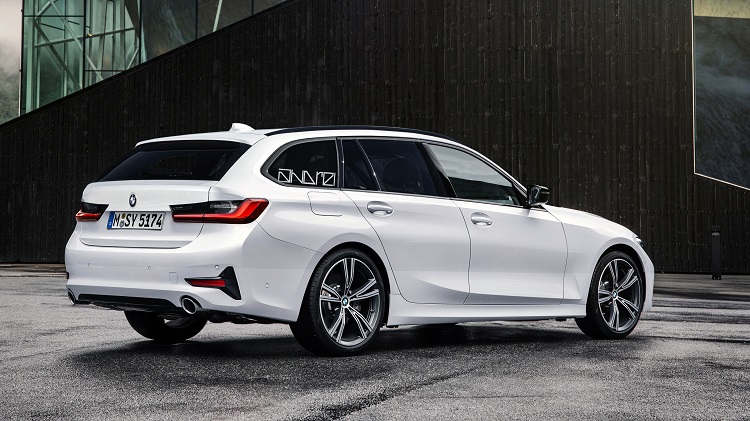
BMW’s new 3-series Touring: The fast estate


Just like its saloon sibling, the new 3-series Touring is larger than the car it replaces, if only be small amounts. its wider – by 16mm, a tiny 11mm higher and longer by a huge 76mm.

The wheelbase distance is also 41mm longer, so we anticipate plentiful room inside for everything the aspiring 3 series owner would want to carry. Despite these changes BMW says the estate is actually lighter than before, slimming down and shaving off 10kg compared to its for-fathers. Body rigidity is up by 25%, and the weight is balanced perfectly at 50:50 –  assuming you have an empty boot. If not, that does change a little and moves some of the weight balance back to the rear.

The new touring will come in SE, Sport, M Sport ranges. Each level things change and the M Sport adds a high-gloss trim, a black kidney grille, high-gloss black air intakes and a rear diffuser in Dark color. Its called Dark Shadow which we think is probably quite dark and glossy.

Given the UK car plant problems in recent times, we are sure that BMW are gearing up to sell more into the UK in the event of a successful Brexit. Closures of Honda, Swindon and the fear around the new Astra could add up as a bonanza for the German car manufacturers.

Some industries in the UK like diesel generators are still performing well, whereas others are struggling. Turnkey projects is becoming hard, despite the UK governments infrastructure investments. BMW has not yet announced when the car will come to east Africa, but likely in early 2020.

LEVC aims to dominate Europe’s electric-van market


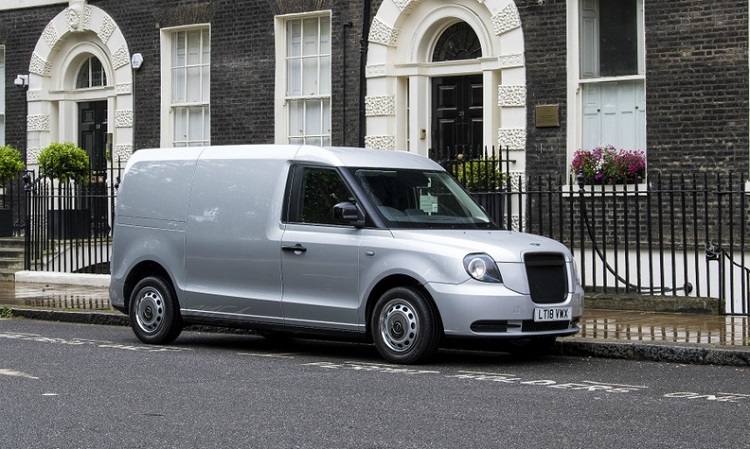
Geely-owned LEVC says it wants to be Europe’s leading supplier of electrified commercial vehicles after deciding to press ahead with its plug-in hybrid midsize van, which has been hit by delays. The company, better known for its plug-in hybrid London taxi, will begin deliveries of the van in 2021 to its target market of urban delivery companies.

“London and the UK will be first to market, then we will extend the vehicle to Europe and further afield. Our goal is to be the leading European electric commercial vehicle provider,” LEVC CEO Joerg Hofmann said in a statement.

LEVC says it has now delivered almost 2,000 of its TX taxi, mainly to drivers in London. The TX uses Volvo-sourced technology such as a 1.5-liter three-cylinder plug-in hybrid drivetrain within a bonded aluminum body. The van would be built in the same UK factory in Coventry.

The van will use the same drivetrain as the taxi, giving it up to 80 miles (129 km) of electric-only range, the company said.

The van be followed by the rollout of a “full range” of electrified commercial vehicles, LEVC said, without being specific.

Competition for the LEVC van includes Ford’s midsize Transit Custom plug-in hybrid van, which arrives later this year. Ford will also sell a fully electric van in 2021 to join Street Scooter, a company set up by the Deutsche Post DHL Group, which has a partnership with Ford.

The addition of the gasoline engine for the LEVC van will make it more attractive to van operators who need the extra range to load at out-of-town depots before returning to the city center. Once they reach a zone restricted to ultra-low emission vehicles (usually those rated at emitting less than 75 grams per kilometer of carbon dioxide) the van will activate an EV mode that cuts out the gasoline engine.

The London borough of Hackney was the first district within London to restrict access to certain streets to plug-in vehicles only. Madrid also operates an ultra-low emission zone within its center.

The van’s launch will be followed by the rollout of a “full range” of electrified commercial vehicles, LEVC says, without providing details.

LEVC had originally planned to begin sales of the van later this year but announced in January that it would delay the launch. “Like the rest of the industry, we are facing a number of macro challenges, stiffer competition and developing technology,” said the former LEVC CEO, Chris Gubbey.

The van will carry the same high build costs incurred by taxi from the hybrid drivetrain, other Volvo technology and the bonded aluminum bodyshell. The price hasn’t been disclosed but it is expected to be close to the 55,599-pound (62,000 euros, $71,000) figure for the taxi. LEVC said that reduced fuel bills and servicing would mean it would have the lowest running costs in its class.

Sizing a diesel generator – why you should call a professional


Given that electric vehicles are now penetrating the market, sizing diesel generators is a common problem for construction, water pumping and houses but sizing the units is a problem. Too large a generator and you not only use too much fuel, but running below about 30-50% for sustained periods “Low-Load” – causes engine problems that aren’t covered under warranty, leading to significant costs. Too small a unit will be insufficient to run the items you wish to power, meaning the unit will as the load increase slow down and potentially stall.

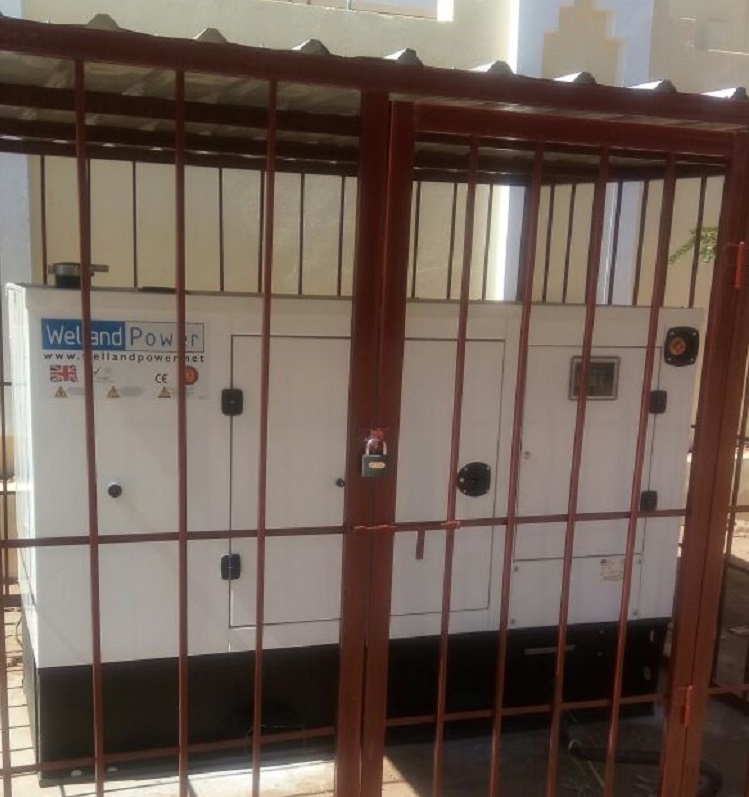
Diesel Generators in Welland Power UK Factory


Typically when considering diesel generators people choose an off the shelf solution. In some cases this can be fine, however in many cases a better custom made designed package would give a significantly better result, especially lower fuel consumption during operation and lower voltage drops when the load is applied.

The load on a diesel generator is actually divided into two distinct parts. The kW, or Active power and the kVAr, the reactive power. Vector summed these two values add up to the kVA. The kW is concerned only with the engine power. The kVAr is concerned only with the alternator electrical loading. The relationship between these two is referred to as the power factor. Most industrial generators are rated at 0.8 power factor – but this is the generators rating, it is the load that determines the power factor. If the power factor differs from 0.8, you would potentially benefit from having a more custom generator solution to your power needs. You can also read a bit more into generator sizing here.

Total launches new lubricant for automotive air conditioning compressors


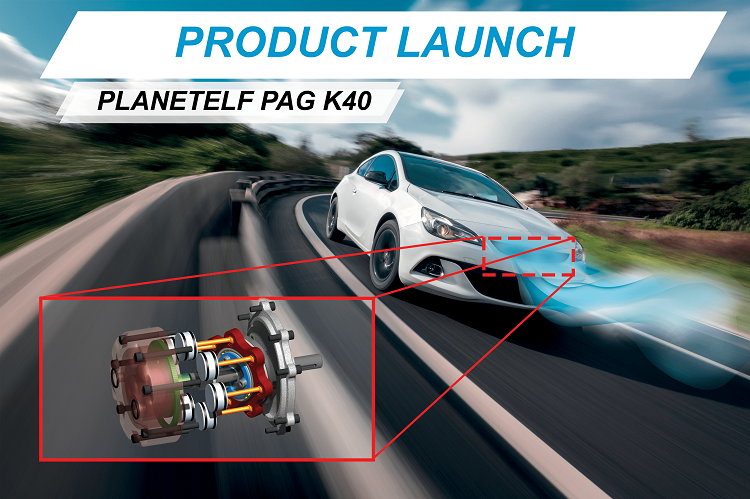
Total launches Planetelf PAG K 40, high performance lubricant for Automotive air conditioning compressors. Planetelf PAG K 40 has been designed to meet the requirements of both R134a and HFO-1234yf refrigerant gases present in the automotive air-conditioning industry. Whatever the gas used, Planetelf PAG K 40 offers good miscibility, provides superior protection and reduces wear on compressors.

In addition, it has remarkable properties:

  • Maintaining an excellent lubricity despite the drop in viscosity caused by the mixing of the refrigerant in the oil
  • Protection of compressor parts and seals against wear.
  • Optimized performances whatever the temperature
  • Thermal and chemical stability established
  • Excellent anti-foaming properties

Planetelf PAG K 40 has already been referenced in original equipment by several manufacturers and OEM!

About Total Lubrifiants

Total Lubrifiants is a leading global manufacturer and marketer of engine oils and lubricants. It has 41 production plants worldwide and more than 5,800 employees in 150 countries. Total Lubrifiants offers innovative, efficient and environmentally responsible products and services developed by more than 130 researchers at its R&D center. Total Lubrifiants is a partner of choice for the automotive, industrial and marine markets.

lubricants.total.com

About Total

Total is a global integrated energy producer and provider, a leading international oil and gas company, a major player in low-carbon energies. Their 98,000 employees are committed to better energy that is safer, cleaner, more efficient, more innovative and accessible to as many people as possible. As a responsible corporate citizen, we focus on ensuring that our operations in more than 130 countries worldwide consistently deliver economic, social and environmental benefits.

Kyocera, BYD Japan jointly develop integrated power supply system for electric vehicles


With a joint development project, Kyocera and BYD Japan, the Japanese subsidiary of the Chinese electric vehicle manufacturer BYD Co. Ltd, want to take CO2-neutral mobility a step further. The two companies plan to develop an integrated energy supply system for electric vehicles from renewable energies.

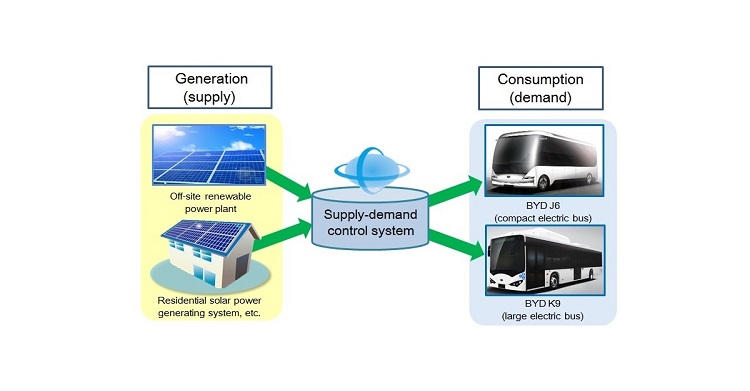
Kyocera will contribute its expertise in photovoltaics, BYD will install the system in its electric buses. The project aims to maximise the effectiveness of renewable energies, significantly reduce power losses and maintain a stable energy balance between supply and demand. Kyocera will also develop the energy management system for this project. It will optimally manage the balance of supply and demand between power generation and consumption through the use of aggregation technology.
This technology has been developed in recent years in test projects of the Virtual Power Plant (VPP). Kyocera’s renewable energy generation system will also be integrated into this system. Meanwhile, BYD will supply two models of electric buses: K9, a large electric bus already available on the world market, and J6, a compact electric bus specifically designed for the Japanese market, which will be available in spring 2020.
In addition, BYD will contribute its technological expertise in the development of electric buses and its experience with energy consumers to the project consultation. Since the 2015 Paris Agreement, countries and private companies around the world have been working to develop innovative solutions to combat global climate change.
As automobiles contribute significantly to global CO2 emissions, improving their energy efficiency has become a priority. In Japan, the Ministry of Economy, Trade and Industry (METI) is promoting the use of electric vehicles as part of its well-to-wheel zero emission policy. It aims to reduce greenhouse gas emissions by around 80% per vehicle and up to 90% per passenger car by 2050 compared to 2010 levels.

Kyocera, BYD Japan jointly develop integrated power supply system for electric vehicles


With a joint development project, Kyocera and BYD Japan, the Japanese subsidiary of the Chinese electric vehicle manufacturer BYD Co. Ltd, want to take CO2-neutral mobility a step further. The two companies plan to develop an integrated energy supply system for electric vehicles from renewable energies.

Kyocera will contribute its expertise in photovoltaics, BYD will install the system in its electric buses. The project aims to maximise the effectiveness of renewable energies, significantly reduce power losses and maintain a stable energy balance between supply and demand. Kyocera will also develop the energy management system for this project. It will optimally manage the balance of supply and demand between power generation and consumption through the use of aggregation technology.
This technology has been developed in recent years in test projects of the Virtual Power Plant (VPP). Kyocera’s renewable energy generation system will also be integrated into this system. Meanwhile, BYD will supply two models of electric buses: K9, a large electric bus already available on the world market, and J6, a compact electric bus specifically designed for the Japanese market, which will be available in spring 2020.
In addition, BYD will contribute its technological expertise in the development of electric buses and its experience with energy consumers to the project consultation. Since the 2015 Paris Agreement, countries and private companies around the world have been working to develop innovative solutions to combat global climate change.
As automobiles contribute significantly to global CO2 emissions, improving their energy efficiency has become a priority. In Japan, the Ministry of Economy, Trade and Industry (METI) is promoting the use of electric vehicles as part of its well-to-wheel zero emission policy. It aims to reduce greenhouse gas emissions by around 80% per vehicle and up to 90% per passenger car by 2050 compared to 2010 levels.

Volvo introducing basis car for Uber’s self-driving vehicles

0

Volvo and Uber have presented the jointly developed the car that Uber will use as platform for rise sharing services. The car is already capable of self-driving but will be further refined by Uber.

Uber and Volvo Cars entered a joint engineering agreement in 2016 and have since developed several prototypes aimed at accelerating the companies’ self-driving car development. The Volvo XC90 SUV now presented is the first production car that in combination with Uber’s self-driving system is capable of driving automated.

The basis vehicle is equipped with safety features that allow Uber to install its own self-driving system, enabling the possible future deployment of self-driving cars in Uber’s network as an autonomous ride sharing service.

The most important features of Volvo Cars’ autonomous drive-ready production vehicle include several back-up systems for both steering and braking functions as well as a 12V back-up battery. If one of the primary systems should fail for some reason, the back-up systems are designed to immediately bring the car to a stop.

The car has a 360° near-field perception capability, provided by an array of ultrasonic sensors and cameras, the latters equipped with self-cleaning nozzles.

Upon delivery to Uber, the ride-hailing company will add additional features such as an autonomous driving computer and a sensor kit that enables the vehicle to drive fully autonomously (Level 4) in urban environments. This sensor kit include a roof-mounted rotating lidar sensor as well as additional cameras and radar sensors.

When paired with Volvo’s vehicle platform, Uber’s self-driving system may one day allow for safe, reliable autonomous ride sharing without the need for a Mission Specialist, the specially trained Uber employees operating and overseeing the car in areas designated and suitable for autonomous drive.

The autonomous drive-capable production vehicle revealed today is part of Volvo Cars’ 2016 commercial agreement with Uber for the delivery of tens of thousands of autonomous drive-ready base cars in coming years. In a video , Volvo explains that it is developing a similar vehicle concept for the introduction of its future autonomous drive cars in the early 2020s. These technologies, to be introduced on the next generation of Volvo models based on the SPA2 vehicle architecture, will include features designed to enable unsupervised autonomous drive in clearly designated areas such as highways and ring roads.

Do self-driving vehicles really make traffic safer?

0

A study examines the effects of autonomous vehicles on road safety and their cyber risks. Not in every case road safety is increased by automating driving, the researchers say.

Automated vehicles promise more safety by eliminating human error as the cause of accidents, claim technology companies across the automotive value chain. However, a study by the International Transport Forum (ITF) makes it clear that self-propelled cars could prevent 90% of all fatal accidents. The ITF is an intergovernmental organisation and serves as a think tank for transport policy.

The ITF experts warn above all against unclear responsibilities in the vehicle: If robots and humans share responsibility for controlling a vehicle, this leads to even more complex driving decisions than before. The consequence could be that driving becomes less safe instead of safer. Especially in situations in which people take control of the vehicle from the computer, accidents can increasingly occur in particular with “average”, risk-averse drivers.

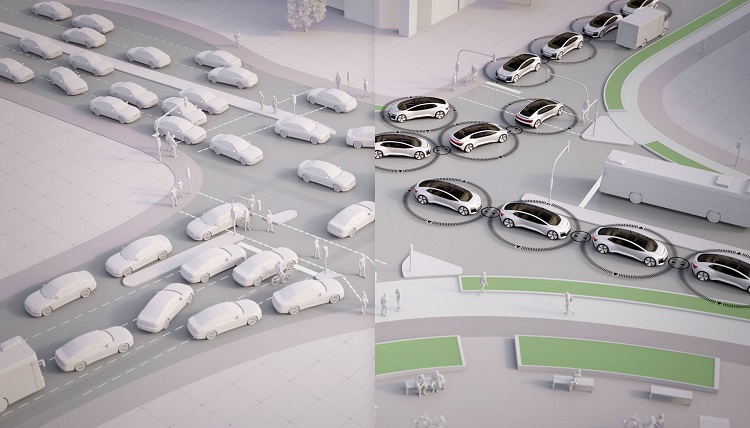
While fully autonomous driving has the potential to significantly reduce the number of serious accidents, the researchers believe that, in many situations, people remain superior to automatic driving on their own. To close the gap, both a large number of sensors and full connectivity to the surrounding infrastructure are required.

However, such fully automated and connected vehicles pose different risks – namely in the area of cyber security. The study therefore warns: “The prevention of accidents should never depend solely on whether access to the network or external communication channels exists. In other words, autonomous vehicles must be able to make safe decisions at all times, even if they are completely “offline”.

Automation makes it more urgent than ever to design road traffic as a safe system. A safe system organises all components of road traffic in such a way that if one accident prevention mechanism fails, another one intervenes to prevent an accident (or, if this is not possible, at least serious consequences such as serious injuries). Applied to automated driving, this approach means that the traffic system can catch computer errors.

The study warns against using the safety of an automated vehicle for marketing purposes as a sales argument against competitors. “The relative safety of vehicles… should not be a competitive tool. The legal framework should describe the maximum achievable safety level that the manufacturers have to guarantee as a prerequisite for the road approval of their vehicles”, it says there.

Furthermore, the report recommends that:

  • autonomous vehicles should be obliged to transmit safety-relevant data – i.e. to make V2X communication capability mandatory;
  • a system of staggered practical tests for self-driving cars;
  • to develop principles for cyber security in autonomous vehicles;
  • To inform the public clearly and specifically about the capabilities of automated vehicles.

India’s automobile major Mahindra wins Gold Award in South Africa

0

India’s automobile major Mahindra won the Gold Award for fairing on various indicators, including level of satisfaction among its network of dealers and the manner of allocation of vehicles to them.

Mahindra, which has been in South Africa for the past 16 years, received the award on June 7 from the country’s National Automobile Dealers’ Association (NADA) which tests dealers’ satisfaction with the way a brand supports and communicates with them.

The automobile giant, which has more than 60 dealers in South Africa, secured the top position out of the 29 vehicle brands surveyed for the awards.

“We are very proud of our Gold Award as it is a direct indication of the health and happiness of our dealer network,” Rajesh Gupta, CEO of Mahindra South Africa, said.
This Award is a welcome recognition of the team’s hard work to improve every aspect of our dealer support, knowing that a happy dealer ultimately leads to a happy customer,” he said.
According to NADA’s research, which was compiled with the help of Lightstone Automotive, Mahindra scored well above average on most metrics, including being open and honest in its communication with its network, being fair and responsive in the way it allocated vehicles and having a good corporate social investment programme.

“Many people do not realise that our dealers are independent businesses and not part of the Mahindra Group.

“As such, we have to ensure that their businesses are healthy and their personnel are happy in order to ensure that they offer the best possible service to our customers,” Gupta said.

DENSO celebrates 10 years of TT Spark Plug technology


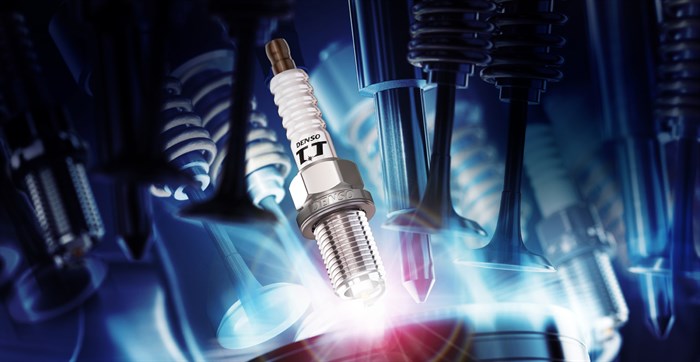
DENSO is celebrating 10 years of its patented Twin Tip (TT) Spark Plug technology. Unique to the independent aftermarket, DENSO’s TT Spark Plugs are available in nickel and iridium, offering 87% car parc coverage throughout Europe. Since the introduction of Nickel TT in 2009 and Iridium TT in 2015, the range has continued to grow in popularity, with its market share increasing 25% year on year over the past six years.

Setting the standard

Before revisiting the TT story, it is important to note that DENSO has been setting the standard for spark plug technology since as far back as 1959. DENSO has long-focused on providing OE-quality spark plugs to the aftermarket, with all ranges designed and manufactured in the company’s own QS 9000 and ISO 9000 certified factories worldwide, with zero defects as standard.

Also Read: DENSO to mass-produce automotive alternators equipped with newly developed high-efficiency diodes

DENSO Spark Plugs play an important role generating ignition within the internal combustion engine (ICE). Small but mighty, the vital components create a very small spark of electricity that is sent to the ignition coil to generate the high voltage required to ignite the fuel and create combustion. Spark plugs must operate in demanding conditions, withstanding incredibly high temperatures, severe pressure, rapid engine speeds and high engine loads. For outstanding performance every time. DENSO produces a range of spark plugs with electrodes manufactured using advanced materials which significantly reduce wear. Applying advanced technology such as DENSO’s Twin Tip results in even greater performance over a longer period of time.

A premium solution for the mass market with Nickel TT

The first country to benefit from TT technology was Russia, with Ukraine and the UK quickly following. DENSO introduced the Nickel TT Spark Plug in 2009, drawing inspiration from its Super Ignition Plug (SIP) – the highest spark plug technology available, typically used in premium engines with specific emissions and performance requirements.

Most standard nickel spark plugs feature flat, large electrode surfaces, which can restrict the ability of the spark ignition to expand. Instead, DENSO’s patented Nickel TT Spark Plugs feature a nickel centre and a twin protruding ground electrode with a slimmer diameter. The smaller electrode reduces the voltage requirement and creates a significantly more powerful spark which is stronger even when operating in lower outside temperatures. Thus Nickel TT Spark Plugs are able to provide a similar performance to a platinum spark plug, but for the price of a standard nickel plug.

DENSO engineers quickly realised that by developing spark plugs with more powerful technology than that used for OE products, it was possible to consolidate several part numbers and provide a smaller, yet wider-ranging portfolio for the aftermarket. Today, the TT range offers solutions for multiple vehicle makes and models, making it possible for independent technicians to access spark plugs that even outperform OE alternatives.

Also Read: When to Replace Your Spark Plugs and How to Do It Yourself

Superior spark power with Iridium TT

The TT range was bolstered significantly in 2015, when DENSO introduced iridium spark plugs. The Iridium TT features the world’s smallest electrode diameter at 0.4mm, meaning that it demonstrates superior spark power and provides more effective ignition of air-fuel mixture. Furthermore, it features a unique iridium rhodium alloy with the highest iridium ratio in the market for the centre electrode, in addition to a bespoke platinum alloy for the ground electrode. This allows for an extended lifespan of up to 120,000 km – more than three times that of a standard nickel plug.

The Iridium TT is designed to deliver greater horsepower, improved torque and better fuel efficiency than any other spark plug on the market, resulting in faster starts, smoother idling and lower emissions, even when compared with OE-manufactured equivalent products.

Delivering OE-quality solutions

Today, the company offers a consolidated TT range of 35 part numbers—16 for Nickel TT and 19 for Iridium TT—covering 87% of the car parc. It designed the offering to provide independent vehicle technicians with top-quality replacement parts and upgrades for originally fitted parts. As it celebrates a decade of TT technology, the company also plans to expand the range even further. Several new engine builds are favouring iridium material for spark plugs, prompting DENSO to continually expand the Iridium TT portfolio to cater for new applications. This is in addition to consistently reviewing the wider TT range and carrying out product development to fill any gaps that may exist in the car parc.

DENSO enhances automotive technology and brings OE-quality solutions to the independent aftermarket. The company’s TT range is evidence of this, delivering the ultimate in spark plug technology to cover most vehicle makes and models.

It is this advanced technology that levels the playing field between independent workshops and franchised main dealer counterparts, enabling independent technicians to access the most cutting-edge vehicles parts, increasing customer confidence and loyalty.

- Advertisement -