Sunday, May 31, 2026
Home Blog Page 72

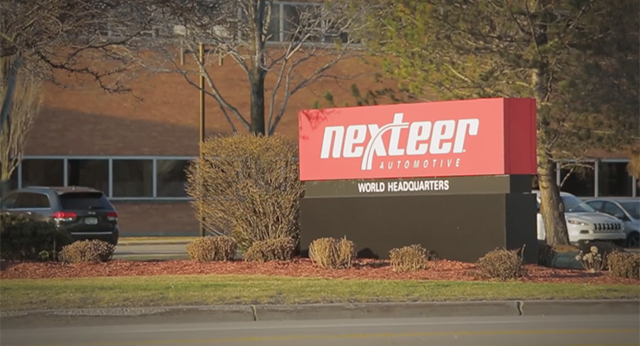
Nexteer Automotive opens first manufacturing plant in Africa

0

Nexteer Automotive hosted a ceremony with customers, employees and government officials – including Moroccan Minister of Industry, Investment, Trade and Digital Economy, Mr. Moulay Elalamy – to celebrate the grand opening of its first African plant in Kenitra, Morocco.

The new facility will manufacture Electric Power Steering (EPS) systems for Groupe PSA, as well as Driveline systems for FCA, Groupe PSA and Renault-Nissan-Mitsubishi Alliance. The company expects to hire around 500 people at the Kenitra plant by 2020.

“Nexteer’s new Morocco plant is another milestone in our ongoing plan for global footprint diversification and expansion in regions strategically important to our key customers,” said Tao Liu, Global Chief Operating Officer, Nexteer Automotive. “As Nexteer’s first plant in Africa, this facility will enable us to further support customer needs for our industry-leading motion control solutions across Africa and Europe.”

The systems produced at the Kenitra plant for Groupe PSA will include Single Pinion EPS systems – Nexteer’s premium steering system that is currently featured in A-C segment vehicles for Nexteer customers like BMW and Groupe PSA. The Driveline systems that will be produced at this plant will include halfshafts for new generations of some of the bestselling models from FCA, Groupe PSA and Renault-Nissan-Mitsubishi.

Construction on the 10,000 mKenitra facility began in Q1 2018 and took only nine months. The facility is now being filled with machines and gearing up for the start of production in September of this year.

Herve Boyer, President of Europe, Middle East, Africa & South America, Nexteer Automotive, said, “We received great support from the Moroccan authorities with this crucial investment. The pro-investment approach towards starting new businesses in this region is extremely valuable, and we want to express our great appreciation to the Moroccan government for enabling us to enter this great market in such a short lead time.”

Moroccan Minister of Industry, Mr. Moulay Hafid Elalamy, said, “A leading manufacturer of steering systems has joined the worldwide leading automotive suppliers based in Morocco. With this new establishment, a new highly technological craft is being developed in the Kingdom and hence contributes to the integration of the value chain and the ascent of the Moroccan automotive industry”.

Mr Elalamy added, “the attractiveness and competitiveness of the Moroccan automotive platform is reinforced by the completion of industrial projects conducted by renowned suppliers such as Nexteer”.

As the Kenitra plant will continue to grow its operations and programs in the upcoming years, Nexteer Automotive Morocco is actively searching for new candidates – specifically in the fields of  quality manufacturing, product engineering, machine operations, finance, HR, logistics and IT. Interested candidates should apply to Nexteer by visiting www.nexteer.com/careers.
Mwananchi Credit wins at the Automotive Industry Excellence Awards

0

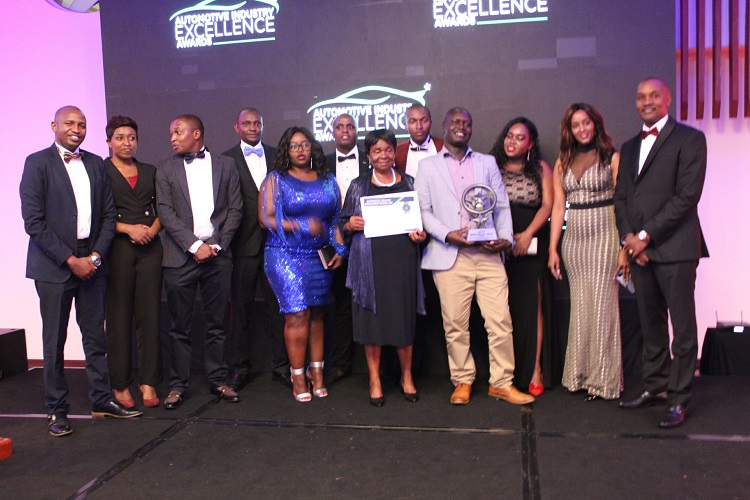
The inaugural Automotive Sector Excellence Awards that was held last night saw Mwananchi Credit emerge winners in the most preferred credit microfinance in logbook loans category that they had been nominated for.

Mwananchi had been nominated in four categories, credit only microfinance, most promising credit institution in logbook loans, most promising credit only microfinance in automotive finance and Most preferred credit microfinance in logbook loans where they emerged winners.
Speaking after the event, Mwananchi Credit Chief Executive officer Denis Mombo lauded the organisers saying, “This is a first for this industry. It’s a noble gesture by the organizers and its time different segment in the automotive industry were recognized. It also shows confidence in which the Kenyan public has on Mwananchi Credit. This is another mile stone in our ten-year history and we will strive to keep serving our customers better.
Owning a car come with class and convenience, it is the desire of everyone in a growing economy like ours to own one someday. The same is on the priority list in most of the middle class families in Kenya. According the Kenya National Bureau of Statistics (KNBS) and the National Transport and Safety Authority (NTSA) in the last 5 year, there has been an exponential growth in the number of car on Kenyan road.This increase leads to an exponential growth for the sectors that are directly related and provider services to car owners.”

The Automotive Sector Excellence Awards are meant to recognize and celebrate the key players in various realms of the automotive sector who have over the years achieved outstanding results in their nice and have positively impacted the lives of their clients.

SAIC will build MG cars in Egypt

0

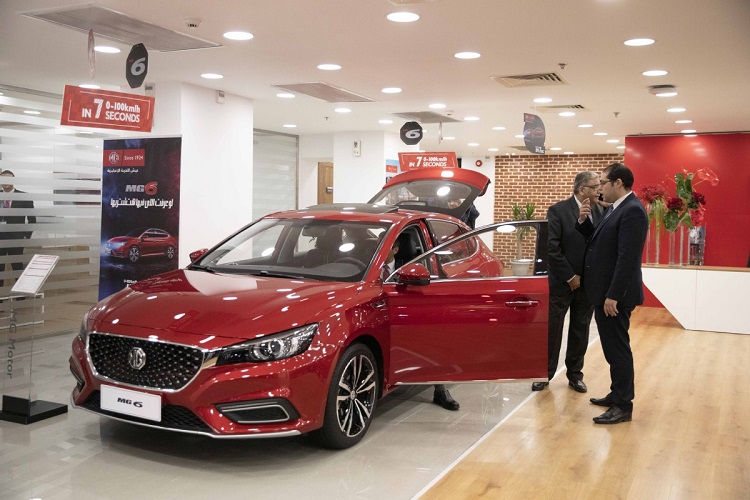
SAIC Motor will assemble vehicles for its MG brand in Egypt with local dealer Mansour Automotive Group as the state-owned Chinese automaker further expands overseas.

SAIC is forming a joint venture sales company with Mansour to allow it to first export MG cars to Egypt from China. It also signed a framework agreement with the Egyptian dealer to establish a separate partnership to produce MG vehicles locally, SAIC said.

In addition to Egypt, the manufacturing joint venture will sell vehicles in other North African nations as well as countries in central Africa. SAIC did not divulge additional details about the production partnership. The deal will make Egypt the third foreign country where SAIC will build MG brand cars.

MG runs a joint venture in Thailand with local business Charoen Pokphand Group. The partnership has two factories assembling right-hand-drive vehicles. In May, MG launched output at a plant in India SAIC purchased from General Motors in 2017.

Volvo’s Polestar EV brand designed to do things differently


Volvo- affiliated Polestar’s first battery-electric sedan will feature a design element that is the antithesis of an EV—a transmission tunnel. The tunnel has nothing to do with a transmission, of course. Instead, it’s a battery storage area, housing some of the 324 rectangular pouch cells that power the Polestar 2.

The design choice is functional and aesthetic. Electric vehicles typically adopt a skateboard design, with their bulky battery packs lying flat under the floor. But that adds to the height of the vehicle, which compromises aerodynamics and driving range, said Polestar Design Chief Maximilian Missoni at Volvo’s Hällered Proving Ground an hour from Gothenburg.

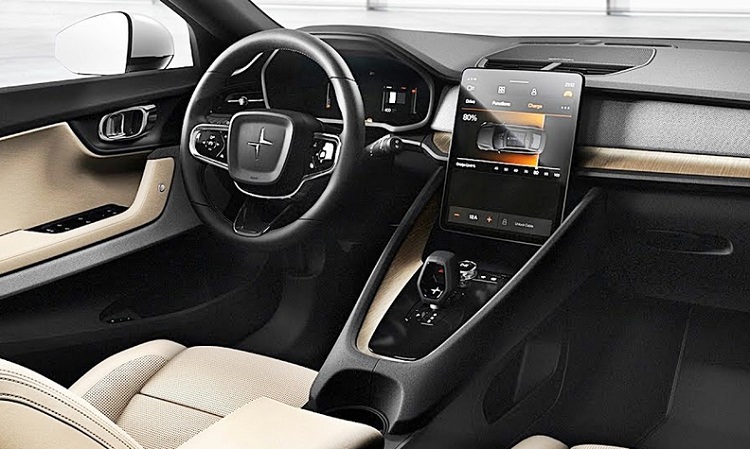
By removing batteries from the rear-seat footwells, designers were able to lower the height of the Polestar 2 and create a “sleek fastback silhouette,” Missoni said this month on the sidelines of the facility’s handling track. The battery layout also allows passengers to sit more comfortably, while the tunnel design acts like a raised center console and gives the performance sedan a cockpitlike interior.

The car will likely reach the U.S. in mid-2020. And its design reflects Polestar’s willingness to do things differently — from its minimalist, tech-focused interior design to its unconventional retail strategy.

Polestar, owned by Zhejiang Geely Holding Group, is Volvo’s response to the BMW M and Mercedes AMG subbrands, and the challenger has a lot riding on the five-seat fastback.

The Polestar 2 is crucial to achieving Polestar CEO Thomas Ingenlath’s goal of making the brand profitable in five to seven years and reaching annual global sales of more than 100,000. Polestar expects to build about 50,000 Polestar 2s in its first full year.

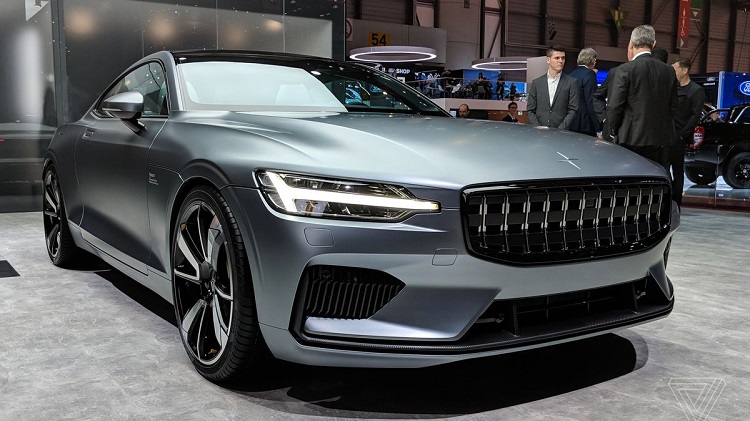
The $63,000 sedan is part of an ambitious product portfolio for Polestar, bookended on the other side by the $155,000 limited-run plug-in hybrid Polestar 1 coupe. Other models will slot in between, including the Polestar 3, a crossover coupe based on the next generation of Volvo’s Scalable Product Architecture platform. Production of that vehicle will begin at the end of 2021, with U.S. arrival in summer 2022.

Sedan strategic

“Polestar is the right brand at the right time,” Goodman said. “The battle for us over the next 12 to 18 months is to get the notoriety out there, to be impactful with the marketing and events that we do, and create the level of interest that we require to get to the volume objectives that we’ve got.”

While launching a sedan in a crossover- mad world might seems counterintuitive, Polestar executives point to the sales success of Tesla’s Model 3 as proof of demand for a high-performance, well-designed electric sedan.

Polestar’s choice to go with a sedan was also strategic. Established automakers such as Jaguar, Volkswagen and Mercedes-Benz are already focused on the electric crossover segment. The Swedish newcomer would prefer to avoid that knife fight for now.

“I’m very pleased to be launching a fastback car which offers an alternative to the Tesla Model 3, where there will be no other alternative for the next 18 months,” Goodman said. “Sometimes, it’s quite nice to be not like everybody else.”

Goodman is confident Polestar has nailed the timing, as EVs capture customer imagination and charging infrastructure is expanding. EVs are expected to account for 57 percent of global passenger car sales, or 56 million vehicles, by 2040, according to Bloomberg New Energy Finance.

“We have no legacy to worry about,” Goodman said. “If I’m a big OEM, one of the things I would have to wrestle with is, ‘How do I promote my electric vehicles while at the same time doing 80 percent of my volume with more traditional engines?’ We are all-in on electrics, so we can be very unequivocal in what we say about the cars and how we believe in them.”

At the same time, Polestar is itself part of an old established automaker in Volvo, which offers Polestar deep pockets and resources — in addition to having entree into the Chinese market through Geely. “We can be in China, we can be in Europe, we can be in the U.S. at the same time,” Goodman said.

U.S. rollout

One thing Polestar doesn’t have is a solution to global trade tensions. Those could confound the upstart’s global ambitions — especially its U.S. rollout. The company plans to build its vehicles in China, which is in a tit-for-tat tariff war with the U.S. The Trump administration has threatened to levy tariffs of up to 25 percent on an additional $300 billion worth of goods imported from China.

Company executives said they’ve priced their vehicles to factor in current U.S. tariffs on China-made vehicles. But if tariffs change, “We’ll have to reevaluate everything,” Polestar USA chief Gregor Hembrough.

Geographically diversifying production would offer some insulation from a U.S.-China trade war, but Goodman waved away that prospect. “As soon as you start doing that, you’re into double tooling, and the costs are very high,” he said.

There have been about 2,000 preorders for the Polestar 2 globally since reservations opened in late February. The company declined to say how many of those reservations are from the U.S. but noted early interest is coming from EV-friendly California and the Northeast.

The U.S. marketing offensive, which begins next month, will be more sniper-shot than spray-and-pray. Don’t expect a Polestar commercial during the Super Bowl, Hembrough said. “This is not going to be a brand for the masses,” he said.

Starting in July, Polestar will launch “highly experiential type of activities,” such as a roadshow where the public will have an opportunity to interact with the vehicle. Test drives will not be offered initially.

The Polestar 2 is benchmarked against the Tesla Model 3, but Hembrough doesn’t expect to lure Tesla customers in the near term. “Model 3 owners are only 12 to 14 months into their ownership,” he said. “I don’t think they are going to be defecting at this early stage.”

More likely poaches, Hembrough said, will be owners of the BMW 3 series, Audi A4 and Mercedes-Benz C class who are curious about an electric powertrain.

Novelis makes a play for battery enclosures


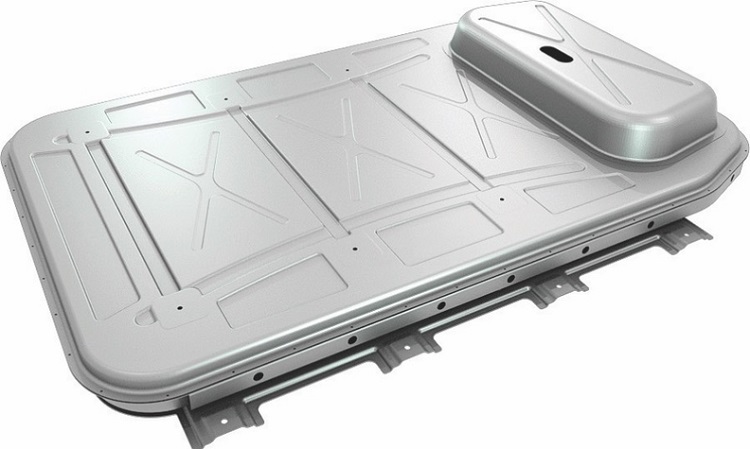
Aluminum supplier Novelis has designed what it bills as the world’s first aluminum sheet battery enclosure for the burgeoning electric vehicle market. The global metal supplier said the aluminum design offers automakers and electric-vehicle battery suppliers a 50% weight reduction from comparable steel enclosures.

The electric battery presents a new market opportunity for aluminum suppliers such as Novelis, which is owned by India’s Aditya Birla Group and supplies aluminum to more than 30 automakers, including Ford Motor Co., Jaguar Land Rover and Nio.

By 2030, electrified vehicles, including plug-ins, could account for 25 to 30 percent of Novelis’ Atlanta-based automotive business. The supplier’s automotive division has seen a 25 percent compounded annual growth rate for the past five years.

“The battery provides us a new application that just did not exist under the hood of an internal combustion engine” car, said Novelis Vice President Pierre Labat. “We not only have an opportunity to sell more in the normal body in white, but also in the battery enclosure.”

The company’s new enclosure design is targeting battery-electric vehicles with larger power packs, such as pickups, sport utility vehicles and crossovers.

Offering design

Novelis will not manufacture the enclosure but offer the design and assembly process to battery manufacturers and automakers. Interest in the product is strong as automakers plot ambitious electric vehicle rollouts, according to the supplier.

“There is a race to mass production to achieve cost parity with the internal combustion engine as fast as possible,” Labat said. “We want to be ahead of the curve with this solution.”

Market opportunity

Aluminum’s inherent properties — corrosion resistance and recyclability — make the metal attractive in electric-vehicle manufacturing. The enclosure regulates thermal conductivity by helping to cool and heat the battery cells.

Using aluminum to enclose a lithium ion battery pack in an EV can reduce weight by about 50%, Novelis said.

Weight savings translates into longer driving range, a major challenge for the competitiveness of electric vehicles. Novelis claims the enclosure can extend vehicle range by 6 to 10% on a single charge. The lightweight aluminum translates into a lower cost per weight at mass-production volumes.

“We believe it’s the best balance of cost with weight efficiency,” said Don Whitacre, senior technical development manager for Novelis.

The battery enclosure design was co-developed at Novelis’ research and operations centers in Novi, Mich.; Stuttgart; and Shanghai.

Yandex plans bold step for self-driving cars


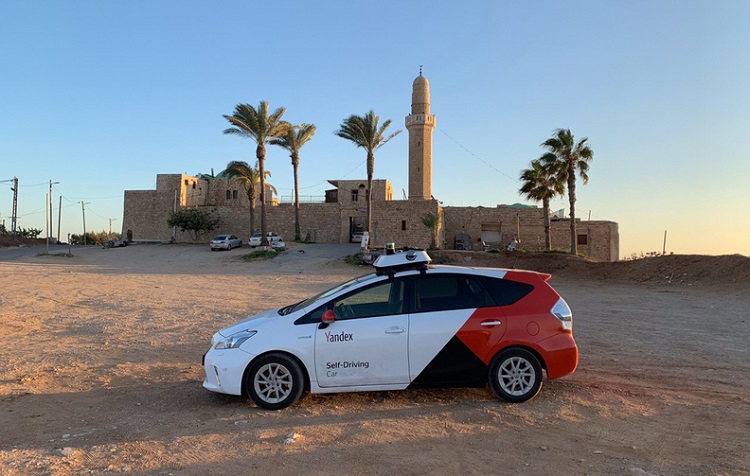
Russian company Yandex is pressing down on the accelerator of deploying driverless vehicle across the industry. Starting in August, the company intends to remove human safety drivers from five of its autonomous vehicles operating in the Russian city of Innopolis and conduct completely driverless commercial operations.

Deploying vehicles without safety drivers on public roads represents a major milestone — and it’s one only Waymo has attempted in the United States, and even then, in limited fashion. Dmitriy Polishchuk, head of Yandex’s self-driving development, says the company is ready for ongoing driverless operations.

“We’ve done a lot of tests on this, and there are a few minor things we have to address and fix, but we’ll address those before we launch”. “But overall, we’ve seen the cars running 24-7 with no accidents.”

Yandex is a large Russian company that’s perhaps akin to both Google and Uber, a search-engine giant that also runs taxi services in more than 600 cities. Experiments with autonomous-driving systems began in 2016, and the company formally launched its program in 2017.

Preparing for driverless

Tweaks remaining before driverless operations, Polishchuk says, aren’t safety-related. There’s one specific spot where vehicles need to make a U-turn, and engineers are considering how to make the turn without confusing human drivers in the vicinity.

In another area, near a bus stop, there’s a crosswalk in which pedestrians congregate. As they mill about, sometimes the vehicle will brake because it believes they want to cross the street. “It’s not that we’re unsafe,” Polishchuk said. “It’s just uncomfortable for the people in the car.”

In the U.S., driverless cars on public roads are a rarity. In October 2018, Waymo was granted the first permit to conduct such operations in California, but the company is not yet driving in the state without human safety drivers. In December, Waymo briefly conducted rides without safety drivers in a handful of vehicles in a geo-fenced area of its Phoenix operations.

“Most of our rides still have a safety driver, because we’re being very thoughtful and very cautious,” says Waymo CEO John Krafcik.

Nuro, a company testing low-speed delivery vehicles, has demonstrated unmanned operations in Arizona as well, though reports indicated the company uses a chase vehicle with a dedicated wireless link to its test cars. Earlier this month, Florida’s governor signed legislation that permits self-driving operations without safety drivers aboard.

Road ahead includes Israel

For the Yandex self-driving program, the driverless development will be the latest milestone in a busy year. The company made its American debut during CES in January, offering demo rides around Las Vegas in a retrofitted Toyota Prius.

In March, Yandex entered a partnership with supplier Hyundai Mobis to jointly develop software and a hardware platform for Level 4 automated vehicles. While the goal of that partnership is to ultimately develop a platform that can be used for multiple vehicles — perhaps across manufacturers — Polishcuk said Wednesday the joint work will begin on the Hyundai Sonata.

“It was one of the options and closest to release,” he said. “It already has the components that help make it controlled by wire, so we picked this car as the first step. But in the future, both the hardware and software developed for the Sonata can be applied to other vehicles.”

Last week, Yandex entered another market, starting test operations in Tel Aviv, Israel. With narrow streets and significant numbers of bikes, scooters and mopeds sharing those roads, the city presents system developers with a challenge they wanted to explore. Incorporating their findings from those challenges will help develop software that can scale across multiple markets. Per Israeli regulations, safety drivers remain in the left seat.

The company’s presence in Tel Aviv is as much about attracting talented roboticists and engineers as it is testing the system’s mettle.

“Israel is well-known for its startup culture, so when you are doing research and development, you can find talent there, which is important,” Polishchuk said.

By the end of the year, Yandex hopes to have 100 vehicles on the roads in Innopolis, Skolkovo and Tel Aviv. Beyond those test markets, it is considering future testing in Las Vegas. They have teams not only in Minsk, but also St. Petersburg and Moscow.

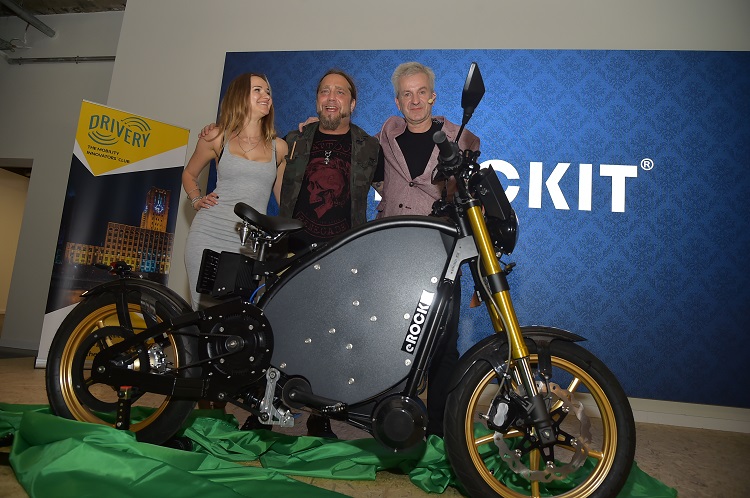
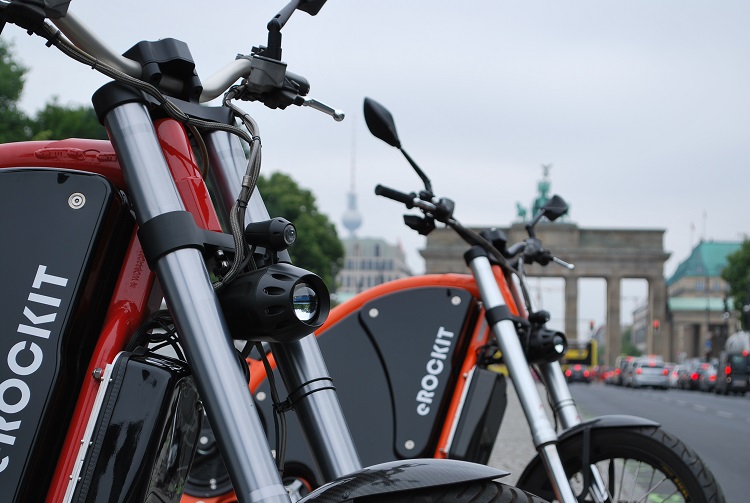
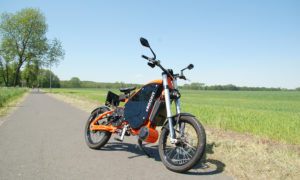
Pedal-powered electric motorcycle: World premiere of the new eROCKIT


Flashes of lightning and prominent guests in the Berlin Ullsteinhaus! In “TheDrivery” the launch of the 2019 series of eROCKIT was celebrated. The unique, pedal-powered electric motorcycle stands for gigantic acceleration, 100% driving pleasure at 0% emission. The VIP guests of the evening like Berlin’s Mayor Michael Müller, rock star Martin Kesici, the actors Bruno Eyron, Axel Pape, Bulent Sharif, media expert Prof. Dr. med. Jo Groebel, Eduard Prinz von Anhalt and singer Doreen Steinert were enthusiastic about the award-winning design and the appeal of the eROCKIT in the world of electromobility.

The eROCKIT vehicle concept puts people at the center of the mobility of the future. The innovative, clutch-free direct drive of the eROCKIT intelligently adapts to the intuitive pedal control. The operation of the eROCKIT is very simple: The human pedaling, depending on the driving behavior of his muscle power is multiplied by a factor of 50 and makes the driver with an indescribable, magical driving experience. The eROCKIT is thus a human hybrid.

With a top speed of over 80km / h, a battery life of over 120 kilometers and a charging time of four hours on the normal household socket, the eROCKIT is the ideal vehicle for commuters, business and leisure. Andreas Zurwehme (Managing Director of eROCKIT Systems GmbH):

“We have set ourselves the goal of making our world better! EROCKIT has the power of change: it shows that sustainability is not a renunciation but an enrichment.”

The eROCKIT is developed and produced in Hennigsdorf near Berlin, Germany. The vehicles of the 2019 series can be ordered for € 11,850 at www.erockit.de.

eROCKIT Facts:

– Brushless, permanent magnet synchronous motor with 16kW peak power

– Battery capacity 6.6 kWh

– Top speed 88 km / h

– Range 120 kilometers

– Aluminum frame

– Alloy rims – Carbon components

– Telemetry app

– Weight 120 kg

eROCKIT Systems would like to thank its partners and sponsors of the Launch Party: TheDrivery, Beets & Roots, BVG, HELD Biker Fashion, Louis Motorcycle, Schuberth, 360WeAre, SNG.AG, Plumento Foods, Naturstrom, FaSTTUBe

About eROCKIT:

The eROCKIT Systems GmbH develops and produces electric vehicles in Hennigsdorf near Berlin with a team of international two-wheeler experts. eROCKIT is a pedal-operated electric motorcycle equipped with the latest battery technology. eROCKIT® and Human Hybrid® are registered trademarks of eROCKIT Systems GmbH. 

The Investment Bank of the State of Brandenburg (ILB) supports eROCKIT Systems GmbH through the promotion programs “Brandenburg Innovation Certificate (BIG F + E)” on behalf of the Ministry of Economic Affairs and Energy of Brandenburg (MWE) as well as “Foundation innovativ” on behalf of the Ministry for Work, Social, Health, Women and Family (MASGF). Funding is provided by the state of Brandenburg or the European Regional Development Fund (ERDF). 

The aim of the funding programs is to strengthen the innovative capacity of companies in the state of Brandenburg, such as e-mobility startups. The projects are titled “Development of a new battery plus software” and “Pre-production setup and creation of vehicle scaffolding”. EROCKIT Systems GmbH is a member of the Bundesverband Deutsche Startups eV

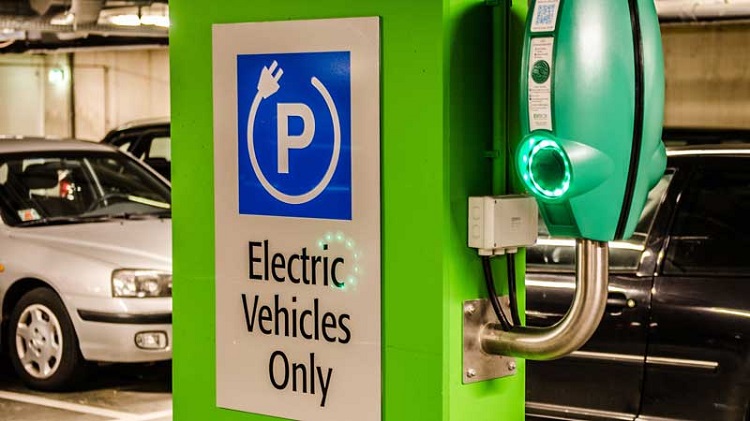
Ireland to ban sale of new petrol vehicles by 2030


The Irish Government has reaffirmed its plans to ban the sale of new petrol and diesel vehicles by 2030, as part of a new strategy aimed at protecting the environment.

The measures form part of a wider Climate Action Plan which also details a target to ban the sale of non-recyclable plastics by the same year – something the entire EU is striving towards.

In the report, it’s clear Ireland sees itself lagging behind other nations in the drive to save the environment. It states that “96.7% of our transport energy demand in 2017 (was) served by fossil fuels”.

The way to combat this is by the rapid introduction of electric vehicles, states the report.

Does this mean Irish bikers will have to pay through the nose for expensive electric motorbikes?

Not necessarily. The report also claims that “consumer costs have fallen significantly. EV battery prices have fallen by 79% in the last 7 years, with 2030 forecasts predicting a further 67% fall by 2030.

“This will mean cheaper consumer prices. When the upfront cost and the ongoing running cost are looked at together, it will be as cheap to have an EV as to have a petrol/diesel vehicle.”

The target is to encourage the adoption of up to 940,000 EVs onto the roads in Ireland by 2030, with tax incentives to encourage their use over petrol or diesel-powered vehicles.

This news follows the announcement that the UK’s proposed petrol and diesel ban for new vehicles in 2040 could be shifted forwards to 2032. The city of Amsterdam has also come forward to state it’ll be banning non-electric vehicles by 2030.

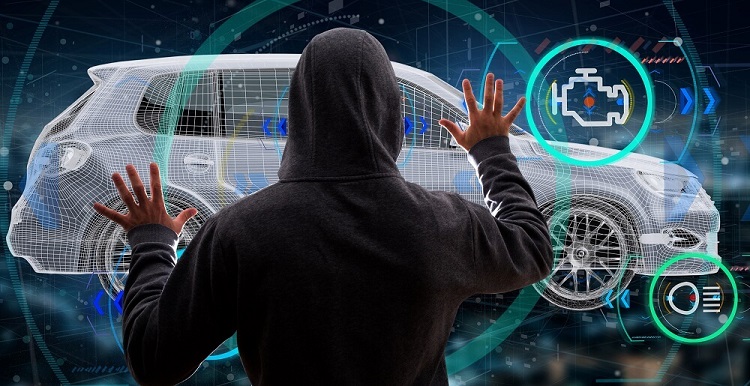
Auto engineers warn your car might be easier to hack than you think


As auto makers roll out ever more sophisticated features to make your daily commute easier, the upgrades are also making your new car more vulnerable to cyberattacks, according to a new report.

“As more connected vehicles hit the roads, software vulnerabilities are becoming accessible to malicious hackers using cellular networks, Wi-Fi, and physical connections to exploit them,” data protection research group the Ponemon Institute said in a report released Wednesday. “Failure to address these risks might be a costly mistake, including the impact they may have on consumer confidence, personal privacy, and brand reputation.”

The institute, which surveyed auto engineers and IT professionals, said 84% of respondents worry that automakers aren’t keeping pace with the industry’s rapidly changing security threats. Automakers are loading new cars with infotainment systems, self-driving features, Wi-Fi, cellular connections and more that leave companies and consumers vulnerable to security breaches, according to the study commissioned by automotive trade group SAE International and cybersecurity firm Synopsys.

“Unauthorized remote access to the vehicle network and the potential for attackers to pivot to safety-critical systems puts at risk not just drivers’ personal information but their physical safety as well,” the study found.

Back in 2015, hackers took over a Jeep Cherokee in order to show how they could infiltrate the system and control steering, brakes and transmission — all from a laptop miles away. Fiat Chrysler, which makes the Jeep, issued a warning to vehicle owners to go to update their cars online, but some systems are still vulnerable.

“The industry has been slowly moving to a software-based environment, and as that’s happened a lot of researchers found weaknesses and those weaknesses are now being used by various types of attackers,” said Art Dahnert, automotive security practice lead with Synopsys.

The survey was sent out to over 15,000 IT professionals, product developers and automotive engineers, and a final sample consisted of 593 responses.

A majority of those surveyed said automakers don’t have enough resources to combat the threats, and 62% of those surveyed said their organizations do not have the cybersecurity skills needed to protect themselves.

The study is one of the latest efforts to show how smart technology can make vehicles vulnerable, especially when smart cars are on the rise. The Insurance Information Institute estimates 25% of cars on the road in 2030 will autonomous, or self-driving. And IHS Markit estimates that connected cars will make up 65 percent of new car sales by 2020.

Symantec, for example, introduced a car security offering in 2016. BlackBerry, a longtime cell phone maker, ventured into automotive safety through BlackBerry QNX, a software focused on safety that is now in over 120 millions cars.

“The biggest thing related to security is managing the life cycle of software and managing the life cycle of security; You constantly have to manage the security on a daily basis,” said Kaivan Karimi, senior vice president and co-head of BlackBerry Technology Solutions. “It’s an ongoing process of securing the life cycle of the car.”

Automakers are also going public with their efforts to keep their cars safe. Mitsubishi went public Jan. 21 with its latest technology to protect connected cars against increasing threats.

“Automotive companies are still building up needed cyber security skills and resources,” according to the survey. “Sixty-three percent of respondents stated that they test less than half of hardware, software, and other technologies for vulnerabilities.”

Dahnert said the automotive industry should work on hiring more people who understand automotive-related security issues and train employees to watch out for potential issues.

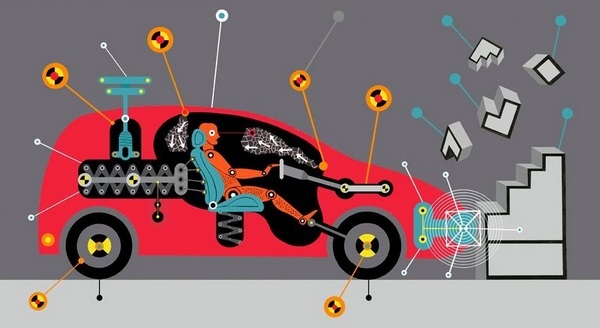
Car Safety: Where Do We Stand with the Technology Evolution?


Modern automotive technology is rapidly enhancing car safety, yet this progress remains unevenly distributed. This is particularly concerning given that driver error contributes to 90% of serious crashes. Advanced safety systems like forward collision warning and automatic emergency braking can reduce these errors, yet they were standard equipment in only 44% of 2019 model vehicles. Consumer Reports advocates for making these crucial technologies standard in all cars.

Safety Technology

This difference highlights a constant problem: the slow adoption of crucial safety innovations. Consumer Reports points to the protracted rollout of seat belts as a prime example. Despite testing in 1956, mandatory installation wasn’t mandated until over a decade later, yet they’ve since saved over 300,000 lives. Even today, seat belt technology—including pretensioners and load limiters designed to reduce injury—is not widely understood, particularly in rear seats, underscoring the ongoing need for broader accessibility.

Also Read: The Role of Automotive Software in Enhancing Vehicle Safety

Looking Ahead

Looking to the future, promising technologies like vehicle-to-vehicle (V2V) communication and self-driving cars hold the potential to revolutionize road safety. V2V systems enable cars to share information. Improving traffic flow and collision avoidance, while fully autonomous vehicles aim to eliminate human error entirely. However, Consumer Reports cautions that widespread implementation of fully self-driving technology remains years, if not decades, away.

The core issue remains fair access to life-saving automotive technology. While technological advancements offer the promise of dramatically increased road safety, the slow and uneven adoption of these features underscores the need for stronger regulatory action to ensure all drivers and passengers benefit from these advancements, regardless of vehicle cost or model year.

- Advertisement -