Sunday, May 31, 2026
Home Blog Page 71

Gentex gains key tip from the autobahn

0

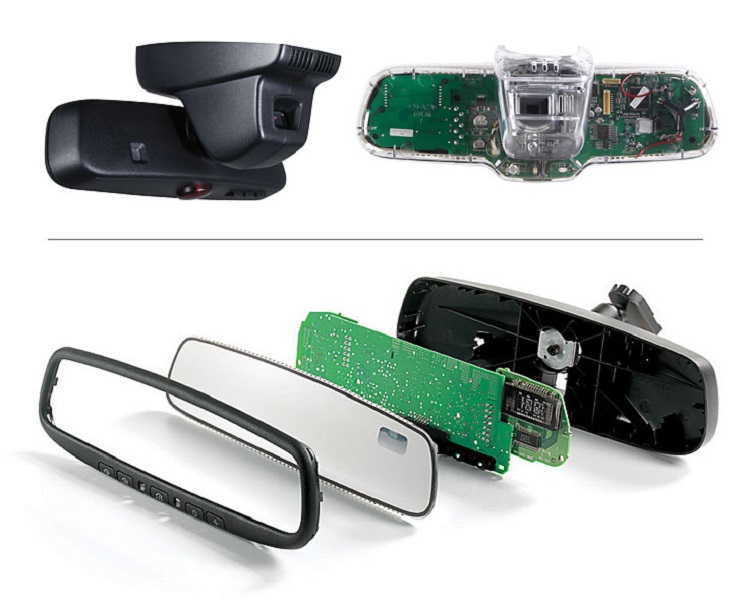
Mirror supplier Gentex can thank the German autobahn for providing it with a crucial piece of information that could give the company a huge advantage when pitching an up-and-coming technology to automakers such as BMW, Porsche and Mercedes-Benz.

The U.S. company’s full-display mirror (FDM) combines a conventional mirror with a high-tech camera monitoring system, giving drivers two different ways to see what is behind them. The second image comes from a rear-facing camera, which provides a wider field of view than a conventional mirror.

Most of Gentex’s feedback about its system, which is offered in models such as the Cadillac CT6 and Range Rover Evoque, had come from customers in North America because the solution has been slow to catch on in Europe.

“Europe has been the laggard,” Brad Bosma, Gentex vice president of vision systems and dimmable glass.

To address this, Gentex teamed up with the Adrive Living Lab, which is part of Germany’s University of Applied Sciences Kempten, to get feedback on its product from customers in Europe’s largest market.

While most of the feedback from the testers in Germany matched what Gentex has heard from customers using the product in North America, the big difference was that there was more motion in the image that was created from the camera when traveling at high speeds. Bosma said that to correct the issue Gentex can change the field of view at higher speeds and/or blur the perimeter of the image so that the driver does not see the motion.

“It’s not a huge technical challenge,” he said. “We just didn’t know we needed to do this.”

With this knowledge, Gentex will be in a better position to add German automakers to the customers it already has for the FDM, which also include Nissan, Chevrolet and Buick. Gentex says it is the global leader for the product and it expects to deliver 500,000 FDMs this year, just four years after the product debuted.

Based in Zeeland, Mich., Gentex ranks No. 90 on the Automotive News list of top global suppliers, with 2018 fiscal year revenue of $1.79 billion.

South Africa’s automotive exports set new records

0

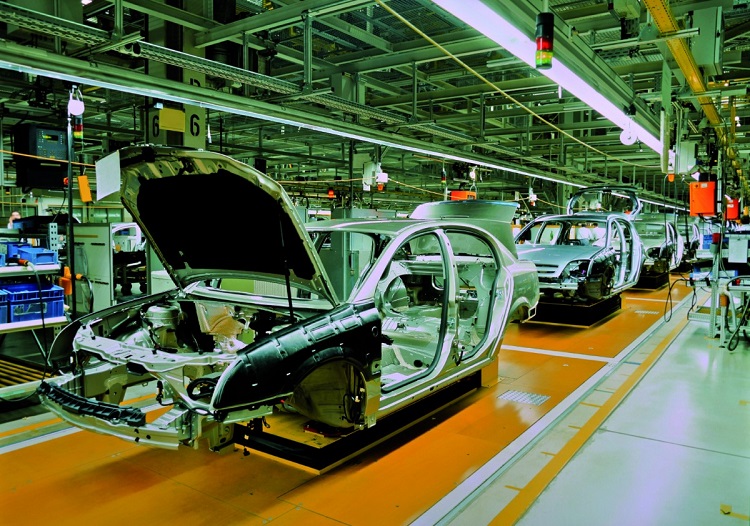
Automotive exports from South Africa had a positive 2018, setting a number of new records on the way up. In doing so, the industry managed to compensate for some of the losses seen in the South African new-vehicle sales market last year as the domestic economy continued its uphill battle, says National Association of Automobile Manufacturers of South Africa (Naamsa) and Automotive Industry Export Council executive manager Dr Norman Lamprecht.

He is also the author of the 2019 Automotive Export Manual, which was released last month. In 2018, the value of vehicle and automotive components exports reached a record R178.8-billion (up from R165-billion in 2017), with these vehicles and components travelling to a record 155 export destinations, up from 149 countries in 2017.

The export value to 25 of these 155 destinations more than doubled on a year-on-year basis, including to the UK, Mexico and Switzerland.

Currency movement did not influence the numbers significantly, as the rand remained relatively stable against major currencies in 2017 and 2018, notes Lamprecht. Instead, the local automotive industry’s performance can be attributed mainly to the record 351 139 left- and right-hand-drive vehicles exported from South African plants in 2018, at a record export value of R127.5-billion.

This is a 4% increase on the 338 096 units exported in 2017, at a value of R115-billion. Lamprecht says 2018 exports were boosted by the start of production and export of the Volkswagen Polo and the BMW X3 sports utility vehicle (SUV), as well as a number of new derivatives at other vehicle producers.

“Small cars and SUVs are two of the most popular categories in the world in terms of new-vehicle sales, which lifted exports from Volkswagen and BMW,” he explains.

Automotive components exports from South Africa did not achieve quite the same level of success, increasing by 2% from the R50.3-billion recorded in 2017 to R51.3-billion in 2018. Total motor industry exports comprised 14.3% of all South African exports in 2018, says Lamprecht, up from 13.9% in 2017.

In stark contrast, the domestic new-vehicle market failed to mirror any of the success achieved in the export market in 2018. South African new-vehicle sales declined by 1% to 552 226 units, from the 557 703 units sold in 2017.

6.8% of GDP

Total automotive revenue within the ambit of the automotive business sphere in South Africa, which includes new and used vehicle sales, and parts sales, as well as repairs, amounted to R503-billion in 2018.

As the largest manufacturing sector in the country’s economy, vehicle and components production accounted for 29.9% of South Africa’s manufacturing output in 2018, down from 30.1% in 2017.

The broader automotive industry’s contribution to gross domestic product comprised a significant 6.8% (manufacturing 4.3% and retail 2.5% ), slightly down from the 6.9% recorded in 2017.

Lamprecht says the motor industry in South Africa continues to reflect how automotive policy and foreign direct investment combine to positively benefit the country’s economy.

Government recently extended its Automotive Production and Development Programme from 2021 to 2035, providing policy certainty that should stimulate continued investment from most of the world’s major vehicle producers in South Africa, he notes.

South Africa hosts production plants owned by Ford, BMW, Mercedes-Benz, Toyota, Isuzu, Nissan and Volkswagen.

Top Spots for Germany and UK

The domestic automotive industry’s top 2018 export market in value terms (components and vehicles) was Germany, at R57.6-billion.

This was also the first time the export value to a single country exceeded the R50-billion mark, notes Lamprecht – another record. Germany was followed by Japan and Thailand. The UK, with 119 578 vehicles, was South Africa’s top destination for vehicle exports in 2018. Exports to this country reached 98 358 vehicles in 2017.

Mercedes Top Vehicle Exporter

Mercedes-Benz South Africa (MBSA), with its locally produced C-class, continued to be the pacesetter in terms of vehicles exported in 2018, followed by Volkswagen and Ford.

With almost 99 000 vehicles exported in 2018, it means MBSA was responsible for 28% of all new-vehicle exports from South Africa in 2018 – or more than one in four vehicles.

The high-value, logistics-friendly catalytic converters, with an export value of R19.2-billion, remained the most popular components exported last year, followed by engines and engine parts and tyres.

The EU and Africa

The trade arrangement that South Africa enjoys with the European Union (EU) continued to allow for duty-free vehicle and automotive components exports to the 28 countries in the EU in 2018.

The EU, receiving automotive exports valued at R105.2-billion in 2018, or 58.8% of the total export value of R178.8-billion, was the South African automotive industry’s main export region in 2018.

Africa was the industry’s second-largest export region, with an export value of R31.69-billion, or 17.7%, of the total export value.

Vehicle exports to 33 African countries increased only marginally from the 21 847 units recorded in 2017 to 23 988 units in 2018. South Africa’s top export market in Africa by value was Namibia, followed by Botswana and Zimbabwe.

Africa remains a priority focus for the South African automotive industry, given “the huge potential” of the continent, with its population of 1.29-billion people and a low motorisation rate at 42 per 1 000 persons, compared with the global average of 180 vehicles per 1 000 persons, says Lamprecht.

“Regional integration in Africa could unlock many opportunities for South Africa,” he adds. “The elimination of trade barriers, as well as possible partnerships with other countries in Africa interested in developing their motor industries, would provide opportunities of mutual benefit for the domestic automotive industry.”

Imports from India

On the import side, the top country of origin for vehicle imports in 2018 was India yet again, with 98 586 units, or 33.8% of the total passenger cars and light commercial vehicles imported into South Africa.

India excels at producing small cars, with Volkswagen’s Polo Vivo the only vehicle in this segment manufactured in South Africa. While India may have the numbers, the value of vehicle imports from Germany, which included premium brands, was almost double those from India. Germany was followed by Thailand in the rankings for imports by value.

Thailand is a one-ton-bakkie hub, and sends a number of fully built-up vehicles to the local market, as well as parts to the local bakkie plants. Total vehicle and automotive components imports, excluding aftermarket parts, reached R162-billion in 2018, down from R178.8-billion in 2017.

Competitive Local Market

The trading environment in South Africa is extremely competitive, notes Lamprecht.

“Last year offered no fewer than 49 passenger car brands and 3 716 model derivatives, the widest choice-to-market-size ratio anywhere in the world.

“Similarly, in the light commercial vehicle segment, there were 30 brands, with 656 model derivatives available to local consumers.

“The Toyota Hilux remained |the most popular vehicle sold in the South African market in 2018, with sales of 40 022 units.”

Although South Africa’s automotive industry is significant in the context of the country’s economy and also in the African context, accounting for 54.3% of the continent’s vehicle production in 2018, the industry remains relatively small in the global context.

South Africa, with production of 610 854 units in 2018, was ranked twenty-second in respect of global vehicle manufacturing, with a market share of 0.64%.

Looking Ahead

There are many challenges the local automotive industry has to confront on a daily basis, both domestically and internationally, says Lamprecht.

Current trade tensions between the world’s largest economies are creating uncertainty and have a direct, as well as indirect, impact on the domestic automotive industry.

Currency volatility and increased protectionism, as well as fiercer competition in export markets, are examples of the impact, explains Lamprecht.

Brexit remains a challenge, as it is not known how this move will affect trade relations between South Africa and its biggest new-vehicle export market.

“Government and the automotive industry are closely monitoring developments around Brexit. Naamsa is positive there will be a smooth transition in trade relations between South African and the UK,” says Lamprecht.

Within Africa, Morocco has also emerged as a competitive, ambitious vehicle production force that could challenge the domestic industry’s dominance in terms of exports from Africa to Europe, with the North African country having quite a bit of a logistical advantage over South Africa when it comes to reaching Europe.

Despite this and other challenges, Lamprecht expects new-vehicle exports to reach yet another record in 2019, closing the year at about 400 000 units.

New-vehicle exports in the first three months of the year were already 30.5% up on the same period last year.

“We think exports will retain their momentum in 2019, even if the domestic market may not enjoy the same success,” says Lamprecht.

New-vehicle sales contracted by 4.8% in the first quarter of this year, compared with the first quarter of 2018. Naamsa expects a slight improvement in the second half of the year, following the conclusion of the national elections in May.

Dual-clutch gearbox complaints haunt Ford

0

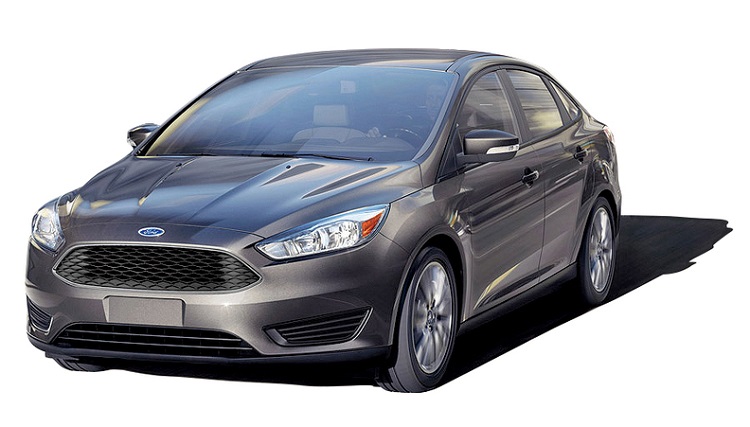
The Ford Focus and Fiesta are fading away in the U.S., but the headaches caused by the small cars’ PowerShift dual-clutch transmissions live on. Ford Motor Co. never conquered the long-term reliability problems on the gearboxes that thousands of customers complained would shudder, jerk and hesitate.

Although engineers helped solve some early glitches with software updates and redesigned parts, Ford issued more than 20 technical service bulletins related to the transmissions, which were code-named DPS6. In 2014, Ford extended the transmissions’ warranty by two years and 40,000 miles.

Litigation over the transmissions remains unresolved. Ford reached a settlement in 2017 for a class-action lawsuit covering 1.9 million owners, but the settlement is being challenged in a federal court in California on the grounds that not enough owners would be compensated. A separate mass-tort case involving thousands of customers is pending in Michigan.

Former Ford CEO Mark Fields has been ordered to testify by July 31 in a series of cases involving customers who opted out of the class-action suit. A Florida judge last month denied Fields’ motion to avoid testifying.

Ford also has been forced to pay up around the world; last year it lost a class-action lawsuit in Thailand and separately was fined $10 million by a court in Australia.

“They have a major PR and customer-satisfaction nightmare on their hands,” Gabe Shenhar, associate director of the auto test program at Consumer Reports, said. “It’s still not well sorted out.”

But customers soon began complaining about jerkiness and a lack of power, and the transmission — along with the troublesome MyFord Touch infotainment system — contributed to Ford’s plunge to No. 20 in Consumer Reports’ 2011 reliability survey from 10th the previous year.

Many customers weren’t used to the dual-clutch gearbox, incorrectly assuming it would behave like a regular hydraulic automatic transmission.

The PowerShift used two dry clutch packs in place of a normal automatic torque converter, which tended to make buyers think the car wasn’t properly accelerating. On the reliability front, the clutches would overheat and often showed signs of premature wear.

Ford made some changes in 2012 that it believed would solve most of the problems, but complaints continued. The company also directed dealers to make fixes that often included replacing clutches and updating the transmission control module.

“They made it marginally more palatable, but each update came with some loss of fuel efficiency and power,” Shenhar said. “Customers weren’t happy.”

The warranty extension Ford eventually offered was a “pretty clear conclusion” it didn’t have a permanent fix, Shenhar said.

Angry customers have turned to the courts, arguing that Ford knew about the defects but sold the vehicles anyway and then blamed owners for not driving them properly.

Although Ford reached a settlement in 2017 that would give customers $2,325 if they opt in and meet certain qualifications, that settlement is being challenged by groups that argue the deal would let Ford off the financial hook. The automaker’s lawyers argued to keep the settlement in front of three appeals judges in April. An answer is expected by December.
The automaker, in a statement, said it does not comment on pending litigation but is committed to providing top-quality vehicles for its customers.

“We continue to deny the allegations in this lawsuit, but rather than continuing with the litigation, Ford entered into a settlement agreement with lawyers representing these plaintiffs,” the statement said.

“That settlement is fair and appropriate and we look forward to final court approval.”

Fields testimony
A number of customers opted out of the class-action lawsuit, and their suits have been combined into a federal case in California.

That’s where Fields comes in. The former CEO was Ford’s president of the Americas when the cars with the dual-clutch transmissions were launched.

“The deposition is critical to investigating and confirming that Ford’s executives at the highest level knew of the problems with the transmissions and intentionally concealed that information and sold the Focus and Fiesta to the public anyway,” Russell Higgins, an associate attorney at Knight Law Group, which represents a number of individuals in the case, told Automotive News.

Fields, who was replaced by Jim Hackett in May 2017, is a senior adviser at TPG Capital, a global asset management firm.

“Mr. Fields is sort of where the buck stopped in terms of corporate knowledge,” Higgins said.

“It’s important to have him be able to talk about his actions and what he knew.”

Hengst industrial filters meet the strictest global standards


Hengst Filtration offers their customers industrial filter solutions that are tailored to meet the specific regulations applicable in the respective country of use. Last year, the company already unveiled a cleanable industrial filter that is in compliance with European hazard category H, as established by the Institute for Occupational Safety and Health of the German Social Accident Insurance, or IFA.

The leading specialist in filtration and fluid management is now introducing a filter designed for industrial wet and dry vacuums that conforms to the latest requirements imposed on HEPA filters by the Occupational Safety and Health Administration (OSHA) in the United States.

More rigorous limits

The United States in 2016 introduced stricter limits on the protection of persons handling silicate dusts that deviate from the European provisions as set out in standard EN 60335-2-69. OSHA has spelled out the applicable requirements in the stipulations of the 1910.1053 – Occupational Safety and Health Standards and 1926.1153 – Safety and Health Regulations for Construction. These standards mandate that the filters used must satisfy the requirements levied on HEPA filters (separation performance 99.97 % at 0.3 µm). The vacuum used furthermore needs to be equipped with a cyclone pre-separator or a filter insert that is cleanable.

A new combination secures compliance

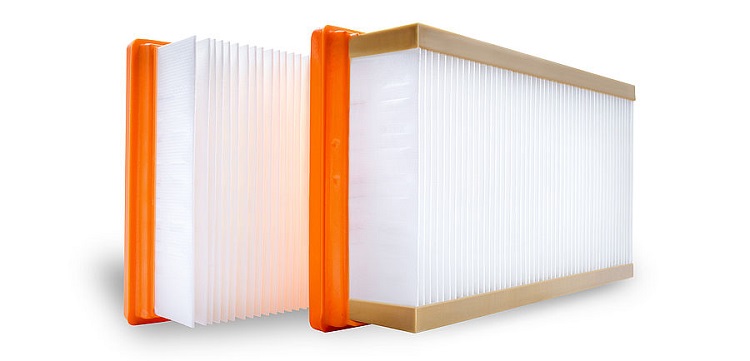
Newly developed by Hengst, the filter can be cleaned and offers a filtering efficiency of 99.97 % for a particle size of 0.3 µm, thus meeting the requirements established by OSHA. Until now, fiberglass media embodied the state of the art in HEPA filter technology. However, these media are merely designed as classic depth filtration media. This means that the hazardous substances are retained on the interior of the medium, where they cannot be cleaned off at all or only to a limited extent.

This is why Hengst has selected a combination of a special PTFE membrane and a matching backing material for their new cleanable filter. Filtration is provided by the filtered dust settling on the surface of the filter medium in the form of a filter cake, which can subsequently be removed easily using, for instance, a pressure pulse.

Category H filters for Europe

Launched last year to cater to the European market, Hengst’s category H filter fulfills the strict requirements specified for IFA hazard category H (as per EN 60335-2-69) even when subjected to high inflow velocities and can be cleaned as well.

Filters categorized in class H are required to deliver a retention factor of 99.995 % and have been made mandatory for the expulsion of hazardous dust particles (carcinogenic and pathogenic) in workplace environments with limits < 0.1 mg/m³. Suitable vacuums are used for these types of dust if the purified air is supposed to be channeled back into the workroom.

Hengst Filtration offers their customers industrial filter solutions that are tailored to meet the specific regulations applicable in the respective country of use. Last year, the company already unveiled a cleanable industrial filter that is in compliance with European hazard category H, as established by the Institute for Occupational Safety and Health of the German Social Accident Insurance, or IFA. The leading specialist in filtration and fluid management is now introducing a filter designed for industrial wet and dry vacuums that conforms to the latest requirements imposed on HEPA filters by the Occupational Safety and Health Administration (OSHA) in the United States.

More rigorous limits

The United States in 2016 introduced stricter limits on the protection of persons handling silicate dusts that deviate from the European provisions as set out in standard EN 60335-2-69. OSHA has spelled out the applicable requirements in the stipulations of the 1910.1053 – Occupational Safety and Health Standards and 1926.1153 – Safety and Health Regulations for Construction. These standards mandate that the filters used must satisfy the requirements levied on HEPA filters (separation performance 99.97 % at 0.3 µm). The vacuum used furthermore needs to be equipped with a cyclone pre-separator or a filter insert that is cleanable.

A new combination secures compliance

Newly developed by Hengst, the filter can be cleaned and offers a filtering efficiency of 99.97 % for a particle size of 0.3 µm, thus meeting the requirements established by OSHA. Until now, fiberglass media embodied the state of the art in HEPA filter technology. However, these media are merely designed as classic depth filtration media. This means that the hazardous substances are retained on the interior of the medium, where they cannot be cleaned off at all or only to a limited extent. This is why Hengst has selected a combination of a special PTFE membrane and a matching backing material for their new cleanable filter. Filtration is provided by the filtered dust settling on the surface of the filter medium in the form of a filter cake, which can subsequently be removed easily using, for instance, a pressure pulse.

Category H filters for Europe

Launched last year to cater to the European market, Hengst’s category H filter fulfills the strict requirements specified for IFA hazard category H (as per EN 60335-2-69) even when subjected to high inflow velocities and can be cleaned as well.

Filters categorized in class H are required to deliver a retention factor of 99.995 % and have been made mandatory for the expulsion of hazardous dust particles (carcinogenic and pathogenic) in workplace environments with limits < 0.1 mg/m³. Suitable vacuums are used for these types of dust if the purified air is supposed to be channeled back into the workroom.

The product is only part of the story – other things matter more


Looking around any town or city you will see an array of products for sale. From industrial generators, to fruit and vegetables. Brands have pushed to get stronger and for most people the name of key brands are available. They like their brands, they search them out in preference to other peoples products. Brands range from huge multinationals to individual traders, each has its own appeal. Today we’ll look at diesel generators and find out about the brands associated with this industrial product.

Like the brand ‘hoover’ which has come to mean any vacuum cleaner, diesel generators are often referred to as their engine brand, which is not correct. Most engine manufacturers do not produce generators. This mistake lends itself to people falsely believe that the support for the unit will come from the engine manufacturer – but that isn’t the case on most of the components. Typically, the engine manufacturer will only cover the engine – which is only around 30-40% of the value of a modern diesel generator. “Perkins generator”, “Cummins generator” and “Baudouin generator” are all commonly heard phrases in the generator world – but none apart from Cummins make their own generators and you may pay a hefty premium.

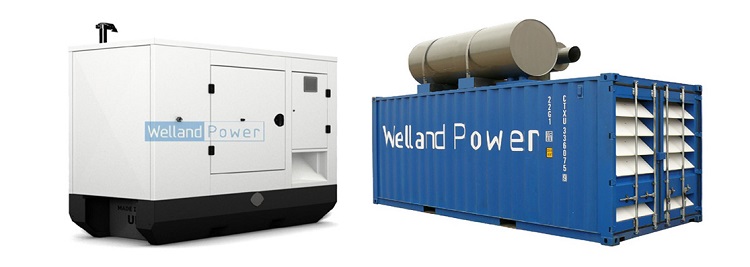
Welland Power Diesel Generators

So what are the worlds top generator brands? Are UK made diesel generators better than those made in china or turkey? Which AC alternator should I choose? Where should I buy a generator from? Do I need open or a silent generator? Is silent, silent or just quieter?

This is where the brand comes in – not just the brand of the generator, the brand of the engine, but the brand of the supplier and how reliable you think they will be when it comes to servicing, support, backup and maintenance? Do they have a local branch with local support? Will they come out? Do you need to return it? Discussing all these points can be daunting – but without the answers how will you make an informed decision? Will you pay more money for someone who will come and service your product on site saving you valuable time? Or will you choose the cheapest option and risk throwing the unit away when your dealer is unable to get spare parts for the units?

High quality international brands like Caterpillar, Cummins and Welland Power are all examples of generator manufactures who build high quality products and offer support through local dealers – the only sort of support that counts. They will have dealers with qualified technicians who can repair your unit normally on site and on the first visit. These brands are great because they focus on customer service and growing their customer bases by word of mouth as much as by advertising.

Whichever generator you decide to buy just make sure that it is right for your needs when considering all the key points and reviewing your options. Qualified people will be able to offer better advice as to what product to select to keep you running forever with the electricity you need.

Vauxhall lays out consequences of no Deal for UK in Brexit

0

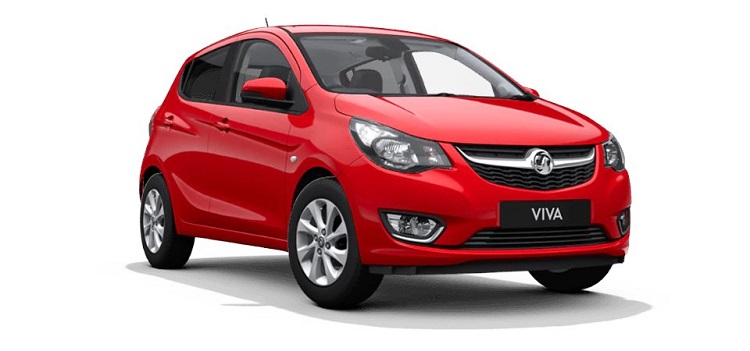
Vauxhall may not build the next-generation Astra at Ellesmere Port in Cheshire – depending on if the UK exits the European Union on unfavorable terms. A blunt message from a huge manufacturer that Brexit would affect manufacturing plans said Vauxhall’s parent company, Groupe PSA. It may build the new MK8 Astra at European factories instead. “The decision on the allocation to the Ellesmere Port plant will be conditional on the final terms of the UK’s exit from the European Union”. Russelsheim, Germany, will be one of the plants to build the next-generation Astra, another plant in Poland may also be the other destination for the new car.

Welland Power Diesel Generators

The UK’s automotive industry, has seen a sharp decline in recent months, with Honda announcing it will close its Swindon plant in 2021, and Ford confirming its Bridgend engine plant, in south Wales, is to close in September 2020 with the loss of 1,700 jobs. Other indris, traditionally strong in the UK such as, diesel generators and engine building. Other manufacturers of engines, such as Frances Baudouin and picking up steam to fill the void.

Also Read: New Vauxhall Vivaro van officially revealed at 2019 Commercial Vehicle Show

Ford’s decision to close Bridgend – which is clearly linked in, with its global restructuring strategy, refusing to tie it to Brexit and Honda, also at pains not to make explicit links to Brexit, in its Swindon announcement, Groupe PSA’s words on the MK8 Astra, is a clear warning that a bad Brexit deal – or no deal at all- will directly impact jobs, and manufacturing.

All PSA would say is that their announcement “demonstrates the continuous effort and commitment of Groupe PSA to Vauxhall Motors.”

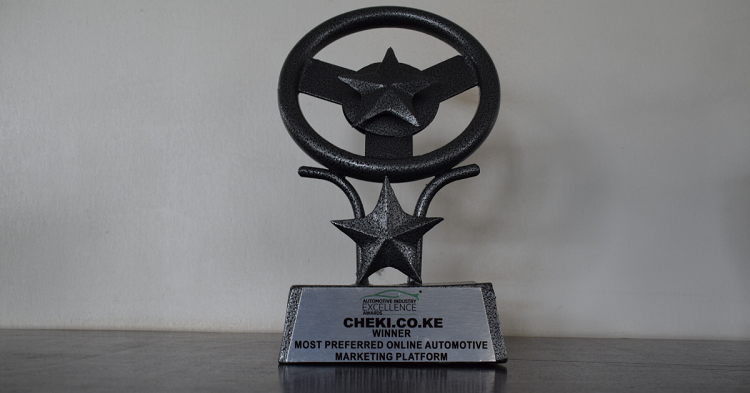
Cheki Kenya wins Most Preferred Automotive Marketing Platform award

0

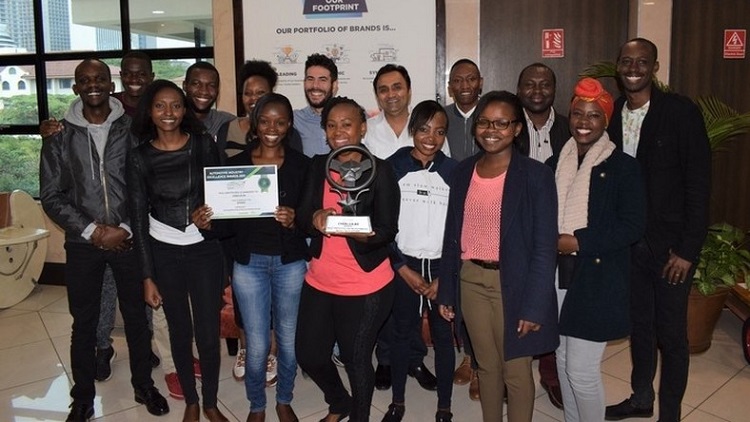
Cheki Kenya, the online car buying and selling website has been awarded as the most preferred car marketing platform in the recently concluded Automotive Industry Excellence Awards.

The Company was awarded for the role it has played in linking local car sellers to buyers with ease and at their comfort, in an event that went down at Movenpick Hotel Nairobi in June, 2019.

According to Annah Kalahi, Cheki Kenya’s Marketing Lead, the award came at a time when they have introduced two more features that focus more on their customers.This award is timely for us as it comes for us, as we recently introduced new features on our website Cheki True Price and Cheki Insurance as we continue to focus our user’s needs,” said Annah Kalahi.
Cheki True price is a feature that shows car buyers the True Price of a car they are looking to buy. It allows buyers to make well-informed decisions whenever they want to buy a car whereas sellers will be guided on how to price their cars well.

Cheki Car Insurance, will enable customers to buy a car on the Cheki site and insure it on the same platform.

Cheki Kenya offers a good platform where one can sell or buy new or used cars online with ease as compared to physical shopping.

General Motors unveils electric bike


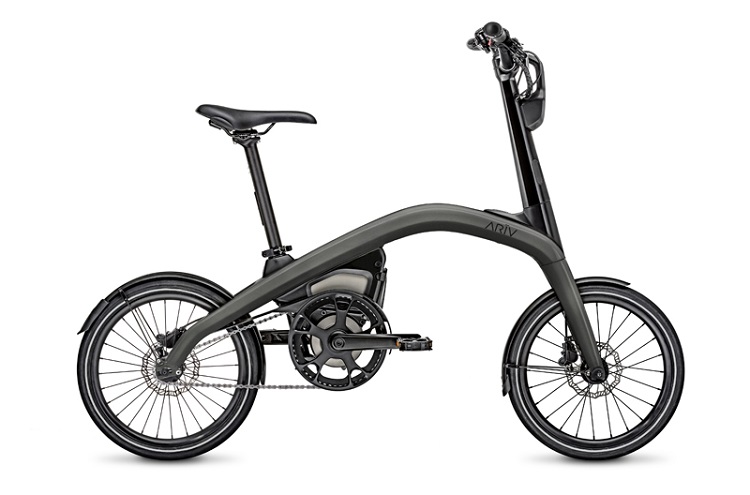
Ariv is the brand name for an all-new electric folding bicycle from automotive giant General Motors. Designed from the ground up by GM engineers, and some faces very well known to the bike industry, Ariv bikes bring genuine innovation to a relatively stale sector.

The Ariv range consists of two models: the Merge and the Melve. We’ll concentrate on the Merge because the latter is just a simpler, non-folding version of the same bike that’s been created to hit a lower price point.

Ariv Merge electric folding bike folded and unfolded in home
The Ariv Merge in its folded and unfolded state Ariv/General Motors

Ariv folding bike folding procedure

GM clearly understands that in order for bicycles to be successful with people who aren’t already cyclists, it has to be user-friendly and intuitive. For that reason, particular attention has been paid to the fold of the Merge.

The procedure starts with the pull of one tab at the front of the bike’s steerer assembly. Then, thanks to some very smart engineering, the handlebars can be rotated about the stem and, at the same time, the steerer assembly and central hinge are both simultaneously unlocked.

Ariv Merge folding bike release lever
Some very clever engineering means just one pull at this lever releases several catches at once

Little more than some well-positioned force is then all that is required to get the bike totally folded.

That said, I managed to make an absolute meal of it on my first, second and third attempts. More practice was definitely required.

A folded Merge certainly doesn’t pack down quite as small as some of its competitors, but the folding process goes without all of the fiddly clamps and annoying fixtures that are commonplace on most folding bikes.

While folded, the Merge can then easily be wheeled around thanks to the paralell positioning of its wheels.

Ariv Merge folding bike steerer assembly and cables/hoses
Peeping inside the steering assembly gives a glimpse into the complexity of this little folder

The Merge comes in at a claimed 22kg /48.5lbs, while the Melve is lighter at 19.5kg /43lbs.

Patented GM Motor system

You will not recognise the motor on this bike from anywhere else. The GM-branded unit was developed in-house and uses planetary gears to achieve its claimed 75Nm power output.

Despite its grunt, the motor is around 40 percent smaller in size than the majority of its competitors. This frees up more room for the 250Wh lithium battery, and also means the bike’s chainstays can remain compact.

General Motors' electric bike motor from Ariv Merge electric bike
It isn’t the quietest but GM’s electric motor is seriously impressive Oliver Woodman/Immediate Media

A simple interface on the handlebar is used to control the motor between one of four power levels, while the bike’s battery status and power button are neatly integrated within the top tube of the bike.

The big red button on the handlebar is used to activate the bike’s walk assistance feature.

Ariv Merge handlebar controller
The thumb controls for the GM motor couldn’t be easier to use. The red button is for the bike’s walk-assist mode.Oliver Woodman/Immediate Media

Integration, integration everywhere

The Merge’s smartphone integration goes far beyond the Quadlock handlebar mount, thanks to integrated GPS and GSM tech within the frame.

Ariv Merge Quadlock mount
Make use of the Quadlock phone mount and the Ariv app and you’ll unlock a lot more information from your rides.Oliver Woodman/Immediate Media

With its own dedicated app, a connected rider will receive detailed information on human and motor power outputs, as well as ride statistics including elevation. It’ll also function as an odometer, measuring distance travelled.

The bike will output power via a USB port so that a device will maintain its charge level while in use.

Ariv Merge display unit and battery status indicator
The power button and battery status indicator are particularly nicely integrated into the frame itself. Oliver Woodman/Immediate Media

GM has a dedicated team of software engineers that will commit to continually updating the app, with features such as GPS tracking already in the pipeline.

Other examples of neat integration can be found at the front light, which doubles as a structural handle. The same can be said of the five LED unit that is built into the bike’s seatpost and includes a sliding foot so that this component can double as a retractable kickstand.

Ariv Merge seatpost with five illuminated LED lights
The Ariv Merge seatpost incorporates five illuminated LED lights Oliver Woodman/Immediate Media

Ariv Merge pricing and availability

You won’t be finding these bikes in General Motors dealerships anytime soon. Instead, GM will sell these bikes directly to the consumer via three debut territories: Germany, Netherlands and Belgium.

The Ariv Merge retails for €3,300 and the Ariv Melve at €2,800. International pricing for both bikes is still to be confirmed.

A company called Life Cycle will act as a support network for those early adopters. Eventually, the bikes will be sold in other territories including America, where the bike will be produced in a faster 20mph version with a throttle.

Ariv Merge first ride impressions

GM staff joined us for a short cycle around Brussels during the launch event, which gave us a decent opportunity to find out exactly how the Ariv Merge rides.

As someone who is more than familiar with the ride of a Brompton, and more recently, Brompton’s first electric bike, I was really curious how the Merge would compare.

I also can’t forget the ride of this rather horrible electric folding bike, which lends itself as a benchmark for how to not create an electric folder.

Ariv Merge folding electric bike being ridden over a bridge in the sunshine
The Merge has a far more stable ride than anything else I’ve ridden with 16in wheels Ariv/General Motors 
Heading out on the ride, it was immediately obvious that a good deal of development had gone into the geometry of this bike. The steering is relatively fast and precise but has none of the twitchiness that a Brompton exhibits. The overall sense of stability far surpasses anything I’ve ridden with wheels of this size.

I enjoyed the slightly floaty sensation offered by the Vee branded tyres too, which I’m assured offer a good level of puncture protection — something that’s particularly important with a folder because puncture repairs can be fiddly and time consuming due to space restrictions and tooling required.

For what it’s worth, nobody in any of our groups managed to pick up a flat during the ride.

Vee Tyres Goodie Goodie
The Goodie Goodie from Vee Tyres seemed to be an impressive choice

At 6ft 3in / 191cm, I’m slightly outside of the height range this bike is designed to accommodate but, despite this, I never felt too cramped or uncomfortable.

Developing its own motor is no small feat and GM seems to have come up with a really great first effort. The powerplant is eager and develops real shove right up until its limiter, though tapers off nicely towards the top end, so you don’t have that rev-limiter-style top out that you get with some designs.

It also does a good job of smoothly cutting power, which again is more than can be said for some competitors.

It’s very vocal though, and probably the loudest in its class. This isn’t something that bothered me, in fact, I actually quite enjoyed its peculiar little whine.

The handlebar mounted controls and top tube display make for intuitive and simple operation, and it’s always easy to see the status of the battery.

Ariv Merge brakes and grips
All of the controls are well chosen and work really well Oliver Woodman/Immediate Media

The Merge is specced with an 8spd Shimano Alfine hub gear as standard along with a flat bar shifter. The hub shifts nicely in combination with the drivetrain and doesn’t snag or pull like some mid-drive options can.

For the flat ride we enjoyed around Brussels, this gearing did seem a little excessive. The motor’s torque provides so much flexibility in terms of cadence that it almost didn’t matter which gear you were in. And when you consider that the Melve — a cheaper, non-folding version of the Merge — is equipped with a singlespeed transmission as standard, I reckon that for a lot of people, one gear might actually be enough.

The Tektro hydraulic disc brakes offer well-modulated, powerful stopping in all weather conditions and are leagues ahead of any rim brakes.

Tektro hydraulic disc brakes on Ariv Merge folding bike
The Tektro hydraulic discs make for stopping that’s simply in another league from most folding bikes Oliver Woodman/Immediate Media

A short section of off-road track was the ideal place to feel for flex in the mainframe and steerer. While some was present, it was far less than expected and the bike remained comfortable and very stable. This is definitely the least intimidating folder I’ve ridden, and yet, it was in no way boring.

Overall, I was left incredibly impressed with the Ariv Merge from GM. I have some reservations around the fold, and the pricing is undoubtedly high, but the overall quality and ride characteristics give me the impression that this is going to be a very good bike indeed.

Crucially though, this is a bike from a car company that is not simply a cheap rebrand of something that already exists. The automotive sector is finally taking electric bikes very seriously indeed and it could be for the benefit of us all.


Apple Acquires Self-Driving Startup Drive.ai


Apple has bought autonomous car startup Drive.ai, according to a report by CNBC. The purchase will add engineers to the company’s ranks, along with other individuals who have knowledge about the technology and how it works.

The purchase price isn’t known, but Axios is reporting that Apple probably paid less than the $77 million Drive.ai raised in venture capital. The company recently had a $200 million valuation.

The self-driving startup had recently filed a notice in California about plans to close the business and lay off its workers, which numbered around 90. It had also teamed up with the city of Arlington in Texas for a self-driving shuttle service.

In January, Apple made cuts to its Project Titan car endeavor, and let 200 employees go. Apple called the cuts restructuring at the time. Apple is also testing Lexus SUVs with autonomous tech in California, but the cars have a driver behind the wheel.

In other Apple News, the company has expanded the test phase of its credit card with Goldman Sachs to its retail employees, according to a report by Bloomberg. The company, which has tens of thousands of retail workers, launched an internal beta program for the Apple Card, and it is the first major trial for the upcoming product, set to launch publicly in the summer.

The group using the card, despite the size of the workforce, will be a controlled one, and the workers were asked to not talk about the card, even though they’re allowed to use it publicly. The card can be used directly from the iPhone, though there’s also a physical card available, too. The physical card has a sharp-looking metal design.

Goldman Sachs takes care of the payment processing, credit obligations, disputes and customer service for the card. In addition, Apple is already discussing expanding the card into Europe.

Apple Acquires Self-Driving Startup Drive.ai


Apple has bought autonomous car startup Drive.ai, according to a report by CNBC. The purchase will add engineers to the company’s ranks, along with other individuals who have knowledge about the technology and how it works.

The purchase price isn’t known, but Axios is reporting that Apple probably paid less than the $77 million Drive.ai raised in venture capital. The company recently had a $200 million valuation.

The self-driving startup had recently filed a notice in California about plans to close the business and lay off its workers, which numbered around 90. It had also teamed up with the city of Arlington in Texas for a self-driving shuttle service.

In January, Apple made cuts to its Project Titan car endeavor, and let 200 employees go. Apple called the cuts restructuring at the time. Apple is also testing Lexus SUVs with autonomous tech in California, but the cars have a driver behind the wheel.

In other Apple News, the company has expanded the test phase of its credit card with Goldman Sachs to its retail employees, according to a report by Bloomberg. The company, which has tens of thousands of retail workers, launched an internal beta program for the Apple Card, and it is the first major trial for the upcoming product, set to launch publicly in the summer.

The group using the card, despite the size of the workforce, will be a controlled one, and the workers were asked to not talk about the card, even though they’re allowed to use it publicly. The card can be used directly from the iPhone, though there’s also a physical card available, too. The physical card has a sharp-looking metal design.

Goldman Sachs takes care of the payment processing, credit obligations, disputes and customer service for the card. In addition, Apple is already discussing expanding the card into Europe.

- Advertisement -